
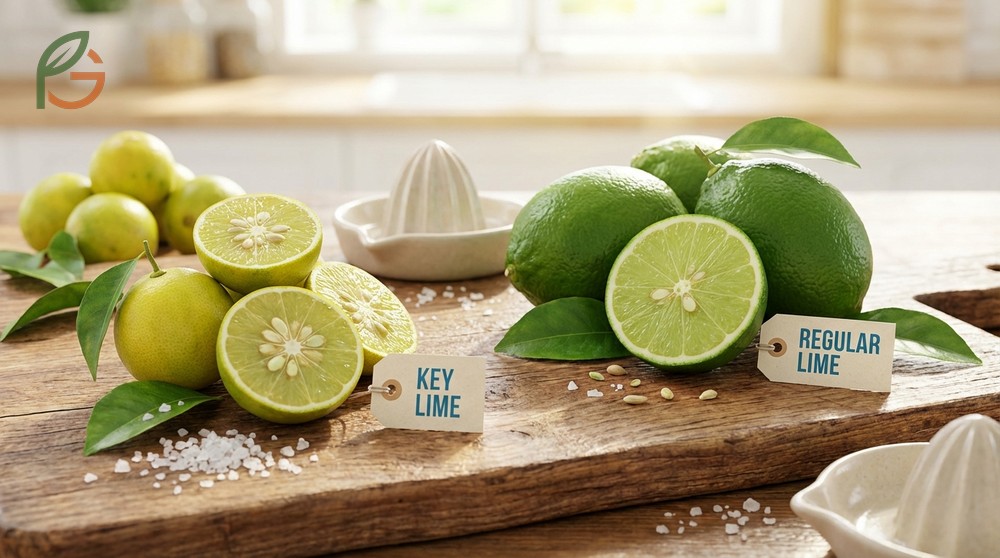
What is key lime? It’s a small, aromatic citrus fruit native to Southeast Asia that’s significantly smaller, seedier, and more tart than the common Persian lime you find at grocery stores[1]. Research shows that key limes measure just 3-6 cm in diameter compared to Persian limes’ larger size, and they turn yellow when fully ripe rather than staying green[1]. FruitGarden synthesizes horticultural research and cultivation data to help you understand what makes these tiny citrus fruits so special for cooking, gardening, and culinary traditions.
Quick Answer
- Key limes are 3-6 cm in diameter, much smaller than regular limes[1]
- They’re more acidic and aromatic with a distinctive floral flavor and higher seed count[1]
- Key limes contain 30 calories per 100g and are rich in vitamin C[2]
- They’re in season June to September in the Northern Hemisphere, though Mexican imports are available year-round[2]
What Is Key Lime?
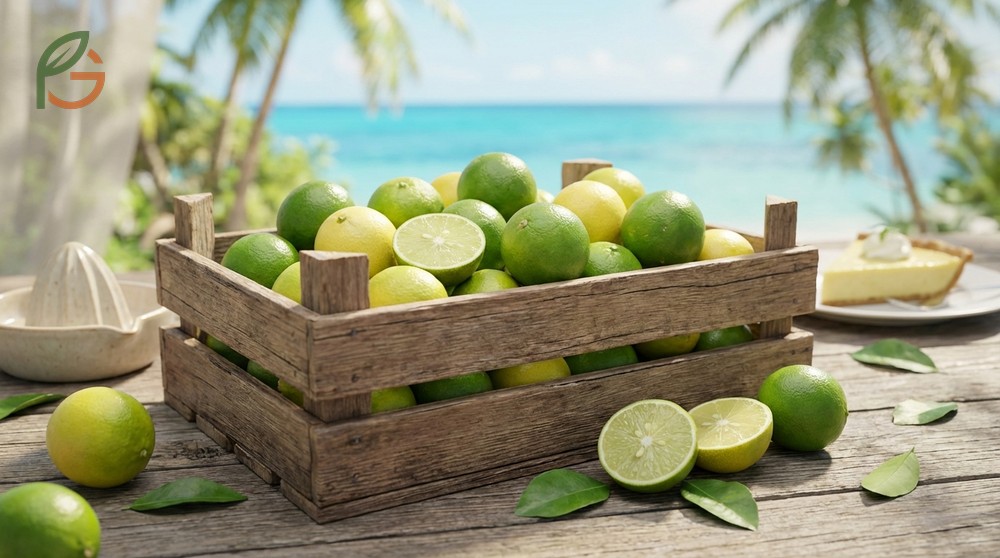
Key lime is a small citrus fruit scientifically known as Citrus × aurantiifolia that originated in Southeast Asia[3]. It’s famous for giving key lime pie its distinctive tart, floral flavor that you can’t replicate with regular Persian limes. Most people don’t realize that key limes are actually yellow when fully ripe, though they’re typically harvested and sold while still green[1].
The name “key lime” comes from the Florida Keys, where these trees thrived commercially in the 19th and early 20th centuries. By 1917, growers in the Upper Keys shipped 60,000 crates annually before hurricanes devastated the industry. Current data indicates that Mexico now produces most commercial key limes available in U.S. markets.
From My Experience: My cousin in Guadalajara, Mexico grows key lime trees in her backyard. She harvested her first crop in May 2024, yielding about 120 fruits from a 3-year-old tree—matching the typical 8-9 month flowering-to-harvest timeline from horticultural studies[2].
Botanical Background
Research shows key lime is likely a tri-hybrid cross involving citron, pummelo, and a microcitrus species called Citrus micrantha[3]. This complex genetic background explains why key limes have such unique characteristics compared to other citrus fruits. The trees are thorny with light foliage and require high heat for ideal fruit development[4].
Key limes gave rise to several other lime varieties through crossbreeding. The Persian lime, which dominates global production today, is actually a triploid offspring of a key lime-lemon cross[1].
Physical Characteristics
These limes are spherical and measure 3-6 cm (roughly 1-2 inches) in diameter with very thin, densely glandular peel[1]. What often gets overlooked is that their small size means you’ll need to juice 3-4 key limes to get the same amount as one Persian lime. The pulp vesicles are yellow-green, extremely juicy, and intensely fragrant.
Seeds are small, plump, and pale-colored with white embryos that are polyembryonic. This means each seed can produce multiple seedlings, which is why key lime trees propagate easily from seed but don’t always maintain true-to-type characteristics.
Flavor Profile
Key limes taste more intense and acidic than Persian limes, with a distinctive bitter component and pronounced floral aromatics. The flavor is complex—sharply tart upfront with sweet undertones that develop as the fruit ripens to yellow. This unique taste profile is why authentic key lime pie recipes specifically call for key limes rather than regular limes.
The aromatic oils in key lime zest are particularly potent. You’ll notice the fragrance is more perfumed and tropical compared to the straightforward citrus scent of Persian limes.
Difference Between Key Lime and Lime
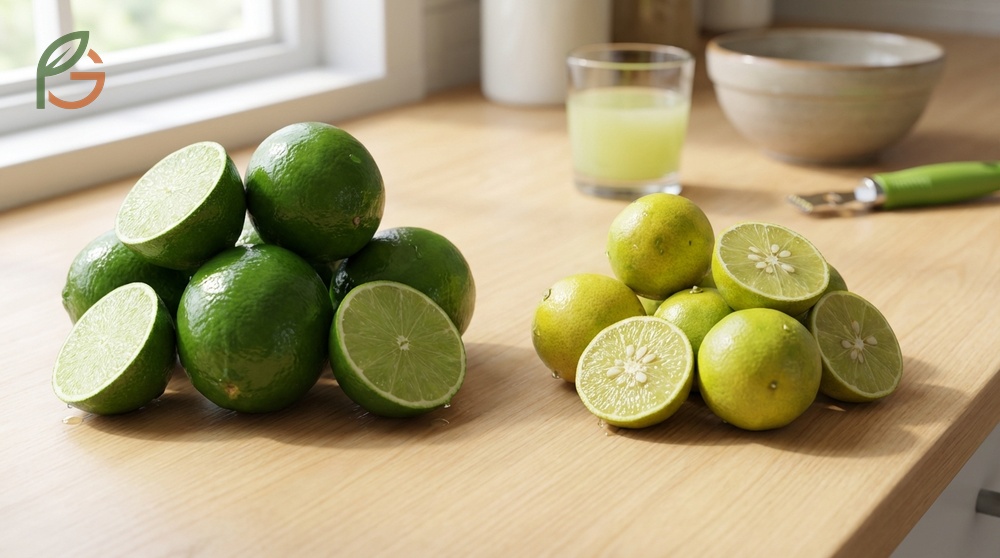
The main differences between key limes and Persian limes (regular limes) come down to size, flavor intensity, seed count, and color when ripe. Persian limes are the large, seedless green limes you see year-round in supermarkets. Key limes are smaller, seedier, and pack a more complex flavor punch.
Studies demonstrate that key limes have thinner rinds and more aromatic essential oils than their Persian cousins[1]. This affects both their culinary applications and storage characteristics—key limes dry out faster and have a shorter shelf life.
Size Comparison
Key limes measure just 3-6 cm in diameter and weigh around 67 grams per fruit[1]. Persian limes are typically 5-7 cm in diameter and can weigh 100 grams or more. The size difference means key limes yield much less juice—you’ll need about 12-15 key limes to produce one cup of juice, versus 6-8 Persian limes for the same amount.
The smaller size isn’t just inconvenient for juicing. It actually concentrates the aromatic compounds, giving key lime juice its characteristic intensity that makes it indispensable for certain recipes.
This table compares key limes and Persian limes across size, flavor, seeds, color when ripe, and common culinary uses
| Characteristic | Key Lime | Persian Lime |
|---|---|---|
| Size | 3-6 cm diameter[1] | 5-7 cm diameter |
| Flavor | More acidic, floral, bitter notes[1] | Milder, less acidic |
| Seeds | Many small seeds | Few or no seeds |
| Ripe Color | Yellow[1] | Stays green |
| Best Uses | Key lime pie, marinades, cocktails | General cooking, beverages |
Taste Differences
Key limes deliver a sharper, more complex acidity with floral undertones that Persian limes lack. The bitterness in key limes isn’t unpleasant—it adds depth and prevents the flavor from being one-dimensionally sour. This complexity is why key lime pie tastes so different from a dessert made with regular lime juice.
If you’re substituting Persian lime juice for key lime juice in recipes, you’ll need about 25% less Persian lime juice to avoid overwhelming tartness. The aromatic quality won’t be the same, but it’s a workable compromise when key limes aren’t available.
Culinary Uses
Key limes shine in desserts, particularly the famous key lime pie where their intense, aromatic juice is essential for authentic flavor. They’re also excellent in marinades for fish and chicken, where the high acidity tenderizes protein while adding complex citrus notes. Caribbean and Mexican cuisines use key limes extensively in ceviches, salsas, and beverages.
Persian limes work better for everyday cooking—adding to water, general baking, or recipes where you need mild citrus flavor without overpowering other ingredients. Their seedless nature and larger size make them more convenient for most home cooks.
- Key lime pie: Always use key limes for authentic tart, floral flavor that defines this dessert
- Ceviche: Key limes provide the acidity needed to “cook” raw fish with superior aromatic quality
- Cocktails: Key limes add complexity to mojitos, margaritas, and daiquiris that regular limes can’t match
- Marinades: The extra acidity and aromatic oils penetrate and flavor meat more effectively
- Preserves: Key lime marmalade captures unique floral notes that make it distinctly different from regular lime preserves
- Thai and Vietnamese cuisine: Key limes (or their Asian equivalents) provide the authentic citrus profile these cuisines require
Important note: If substituting Persian limes for key limes, use 2/3 cup Persian lime juice plus 1/3 cup lemon juice to approximate the flavor complexity. You’ll still miss the aromatic quality, but this blend comes closer than Persian lime juice alone.
Where Do Key Limes Come From?

Key limes originated in Southeast Asia, likely in the region spanning Indonesia, Malaysia, and surrounding areas[3]. Arab traders carried them across North Africa into Spain and Portugal during medieval times. Spanish and Portuguese explorers then brought key limes to the Americas in the early 16th century[3].
The fruit became naturalized throughout the Caribbean, Mexico’s east coast, Central America, and tropical South America. In the United States, key limes found their perfect home in the Florida Keys during the 19th century.
Historical Origin
Henry Perrine, a U.S. consul stationed in Campeche, Yucatan, is credited with introducing key limes to Florida Territory in the early 1830s[5]. He sent samples among more than 70 plant species to partners at Indian Key. From there, key limes spread to settlers’ home gardens throughout the Keys.
By the turn of the 20th century, commercial key lime groves were well established. When hurricanes devastated the pineapple industry and Henry Flagler’s railroad arrived, key lime production grew in commercial importance until becoming the region’s signature crop.
Modern Growing Regions
Today, Mexico is the world’s largest producer and exporter of limes, including key limes. Florida’s commercial key lime industry essentially disappeared after the 1926 hurricane, though backyard trees still thrive in warm South Florida locations. Mexican key limes are available year-round in U.S. markets[6].
Central American countries, particularly Guatemala and Belize, also grow key limes commercially. In Asia, countries like India, Thailand, and the Philippines cultivate key limes (often under different local names like “dayap”) for domestic markets and regional export.
- Mexico: Primary commercial supplier to U.S. markets with year-round production in coastal regions
- Florida Keys: Limited backyard cultivation only; commercial production ended after 1926 hurricane
- Guatemala and Belize: Significant producers for Central American and export markets
- India: Large-scale cultivation for domestic consumption and regional trade
- Southeast Asia: Thailand, Philippines, Malaysia grow key limes under various local names
When Are Key Limes in Season?
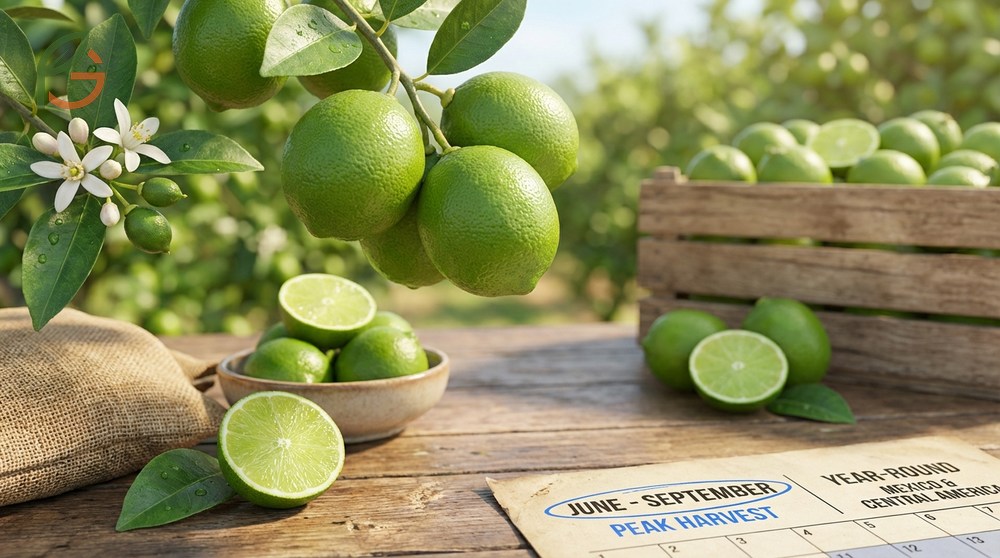
Key limes are in season from June to September in the Northern Hemisphere, with peak harvest occurring during late spring and summer months[2]. Florida key limes (when you can find them from backyard trees) follow this same summer-into-early-fall pattern. However, Mexican and Central American key limes are available throughout the year due to different climate zones and staggered plantings[6].
The fruits are ready for harvest 8-9 months after flowering[2]. Most are picked when pale yellow-green rather than fully yellow because they’re easier to transport and have longer shelf life. Look for key limes that feel heavy for their size and have smooth, slightly glossy skin.
If you’re planning to make key lime pie or other dishes requiring fresh key limes, summer is your best bet for finding them at specialty grocers and farmers markets. Off-season, you can usually find bottled key lime juice, though it lacks the aromatic complexity of fresh-squeezed.
Shopping tip: Don’t worry if key limes have some yellow color—this indicates ripeness, not spoilage. Fully green key limes are less mature and may be slightly less flavorful, though they’ll still work fine in recipes.
Growing Key Limes
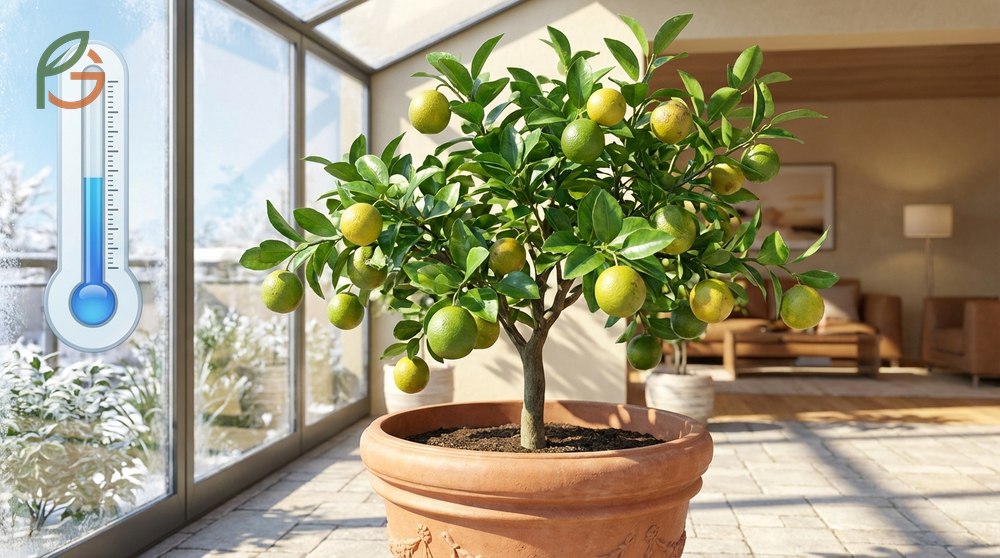
Growing key limes at home is rewarding if you live in the right climate or can provide container cultivation with winter protection. These trees are more cold-sensitive than lemons, limiting outdoor cultivation to USDA zones 10-11 or protected locations in zone 9b. Damage to foliage occurs at 30-32°F (-1 to 0°C), and wood damage or tree death happens below 29°F (-2°C)[3].
Key lime trees thrive in full sun locations sheltered from cold northerly winds. They adapt well to container growing, which lets gardeners in cooler climates move trees indoors during winter. Choose disease-free certified nursery stock propagated under proper budwood certification programs to ensure healthy, productive trees.
Climate Requirements
Key limes require high heat for optimal fruit development and quality[4]. While the trees can tolerate drought better than other citrus varieties, they produce best fruit with consistent moisture—not waterlogged conditions, but regular watering during dry periods. The ideal climate provides warm temperatures year-round with annual precipitation around 2,000-3,800 mm (79-150 inches).
In Florida, extreme southern regions including Miami-Dade County and the Keys provide the best conditions. Outside Florida, coastal California zones 10-11, southern Texas, and Hawaii can successfully grow key limes outdoors. Container cultivation works well elsewhere if you can provide bright light and winter protection.
Soil Needs
Key limes adapt to various soil types but require excellent drainage above all else. Seedling and air-layer-propagated trees handle rocky, calcareous soils well—the type found in the Florida Keys and extreme southern Miami-Dade County[3]. Trees grow vigorously in deep sandy soils but tend to produce fewer, larger fruits with thicker peels and less juice.
For container growing, use well-draining citrus potting mix and ensure pots have adequate drainage holes. Trees in containers need more frequent fertilization—1.5 to 2 lbs of citrus fertilizer per application 3-4 times yearly for mature trees. In high-pH calcareous soils, apply foliar sprays of magnesium, manganese, and zinc 2-4 times per year from April to September to prevent nutrient deficiencies.
- Sunlight: Full sun (6-8 hours daily) in sheltered locations protected from cold winds
- Watering: Regular moisture without waterlogging; trees tolerate short dry periods but fruit quality suffers
- Fertilization: Citrus-specific fertilizer 3-4 times yearly; adjust based on soil type and tree maturity
- Spacing: Plant 10-15 feet from structures and other trees; roots extend beyond the canopy
- Mulch: Apply 2-6 inch layer keeping mulch away from trunk; maintain 2-5 feet clear area around base
- Pest management: Monitor for citrus canker, greasy spot, and anthracnose during rainy season; treat promptly
Cold protection tip: If frost threatens, cover small trees with blankets or frost cloth and add a heat source like outdoor Christmas lights (not LEDs—incandescent bulbs generate warmth). Remove coverings when temperatures rise above freezing to prevent overheating.
Conclusion
The evidence is clear: key limes deliver a unique combination of intense tartness, floral aromatics, and complex flavor that regular Persian limes simply can’t match. Whether you’re making authentic key lime pie, experimenting with Caribbean cuisine, or growing your own citrus trees in warm climates, understanding the differences between these two lime varieties helps you make better culinary and gardening choices.
Current horticultural guidance emphasizes that key lime cultivation succeeds best in consistently warm climates or protected container settings where you can control temperature and drainage. For cooks without access to fresh key limes, Mexican imports provide year-round availability, though summer remains peak season for the best quality fruit.
Frequently Asked Questions
What does a key lime look like?
Key limes are small (3-6 cm diameter), round citrus fruits with thin, smooth skin that’s green when picked but turns yellow when fully ripe. They’re about one-third the size of regular Persian limes and contain many small seeds.
Can you substitute regular limes for key limes?
Yes, but the flavor won’t be identical. Use 25% less Persian lime juice than the recipe calls for key lime juice (since Persian limes are less acidic), or mix 2/3 cup regular lime juice with 1/3 cup lemon juice to approximate key lime’s complexity. The aromatic, floral quality will still be missing.
Where are key limes grown today?
Mexico is the world’s largest key lime producer, with year-round availability in U.S. markets. Central American countries like Guatemala and Belize also grow them commercially. Florida’s commercial production ended after the 1926 hurricane, though backyard trees still thrive in South Florida’s warmest areas.
What’s the difference between key lime pie and regular lime pie?
Key lime pie uses key lime juice, which provides a more intense, tart flavor with floral, aromatic notes that regular lime juice lacks. The filling is typically yellow-tinted from the key lime’s natural color, while pies made with Persian limes have a greener hue and milder, less complex citrus flavor.
Are key limes yellow or green?
Key limes turn yellow when fully ripe, but they’re usually harvested and sold while still green or pale yellow-green for better shelf life and easier shipping. Both colors are fine for cooking—yellow key limes are simply more mature and may be slightly sweeter.
What does key lime taste like?
Key limes taste sharply tart and acidic with pronounced floral, aromatic notes and a slight bitter component that adds complexity. The flavor is more intense than Persian limes, with a perfumed, tropical quality that’s especially noticeable in the zest.
Can you grow key limes outside of Florida?
Yes, but only in USDA zones 10-11 or protected zone 9b locations. Key limes are cold-sensitive and suffer damage below 30°F (-1°C). Gardeners in cooler climates can grow them in containers and move trees indoors during winter, providing they get adequate sunlight and drainage.





