
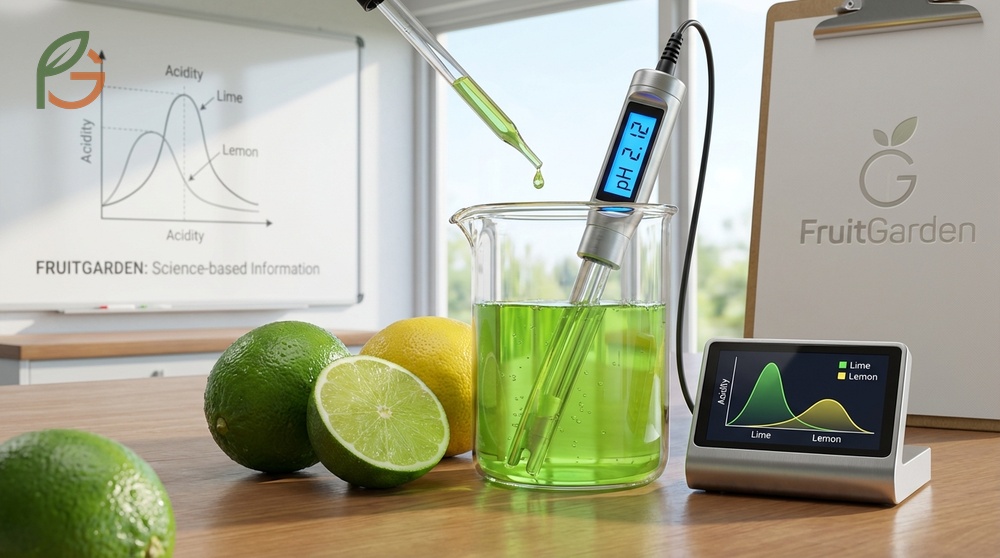
The pH of lime juice typically ranges between 2.0 and 2.35, making it one of the most acidic citrus fruits available.[1] Research shows that this high acidity level makes limes more acidic than lemons despite containing slightly less citric acid.[2] At FruitGarden, we provide gardeners and fruit enthusiasts with accurate, science-based information about fruit chemistry and cultivation.
Quick Answer
- Lime juice has a pH between 2.0-2.35, placing it in the highly acidic category[1]
- Citric acid content measures 1.38 grams per ounce in fresh lime juice[2]
- Limes register a lower pH than lemons (pH 2.0-2.6), making them more acidic[1]
- Despite high acidity when consumed, limes produce an alkaline effect during metabolism with a PRAL value of -1.7[3]
pH of Lime Juice
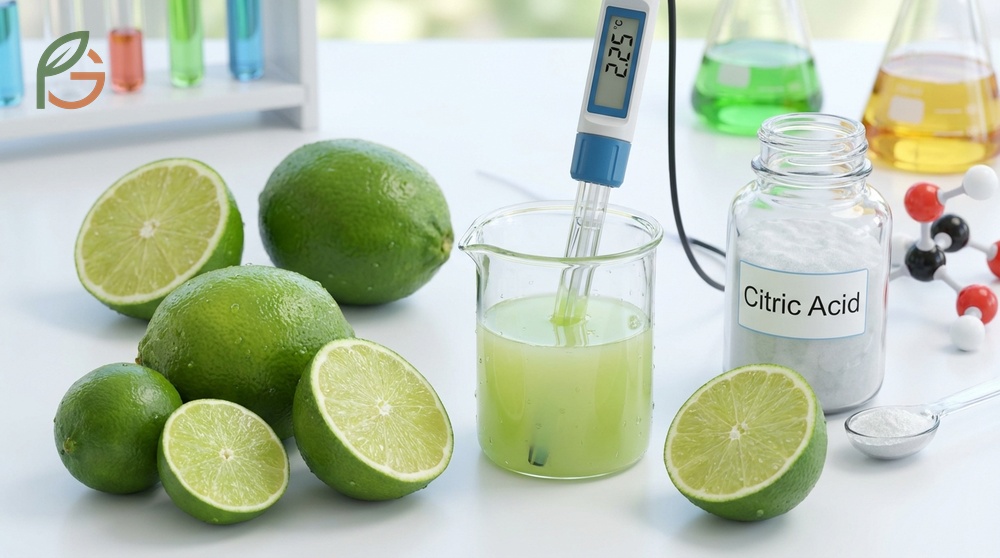
Studies demonstrate that the ph of lime juice consistently measures between 2.0 and 2.35 across different varieties.[1] Key limes specifically register at pH 2.4, while Persian limes can range from 2.0 to 2.35.[3] This places lime juice firmly in the “highly acidic” category on the pH scale.
The acidity comes primarily from citric acid, a weak organic acid that constitutes approximately 8% of the dry fruit weight in citrus fruits.[2] Fresh lime juice contains 1.38 grams of citric acid per ounce, while lime juice concentrate has 1.06 grams per ounce.[2]
The concentration of citric acid in limes reaches approximately 0.30 mol/L, which significantly impacts solution pH when lime juice is added to other liquids.[4] This high concentration makes lime juice an effective natural acidifier in culinary and preservation applications.
Measuring pH Levels
Agricultural researchers measure lime juice pH using digital pH meters calibrated at 25°C (77°F).[5] Temperature affects pH readings, so standardized measurements occur at room temperature. Professional testing also evaluates titratable acidity through titration with sodium hydroxide solution.
Current data indicates that enzyme-clarified lime juice maintains pH values around 2.2 with titratable acidity reaching 7.51% when expressed as citric acid equivalents.[5] Commercial processors must meet USDA standards requiring lime juice to contain at least 5.00% titratable acidity calculated as anhydrous citric acid.[6]
Factors Affecting Acidity
Several growing conditions influence the final acidity of lime juice. Variation exists between varieties, growing regions, and harvest timing. Soil composition, rainfall patterns, and fruit maturity at harvest all contribute to pH fluctuations within the 2.0-2.35 range.
Processing methods also impact acidity levels. Enzyme clarification, pasteurization, and concentration techniques can slightly alter pH values while maintaining the juice’s acidic nature.
Important Note: Don’t rely on taste alone to judge acidity. Lime juice remains highly acidic even when diluted or sweetened, which matters for preservation and food safety applications.
Is Lime Juice Acidic
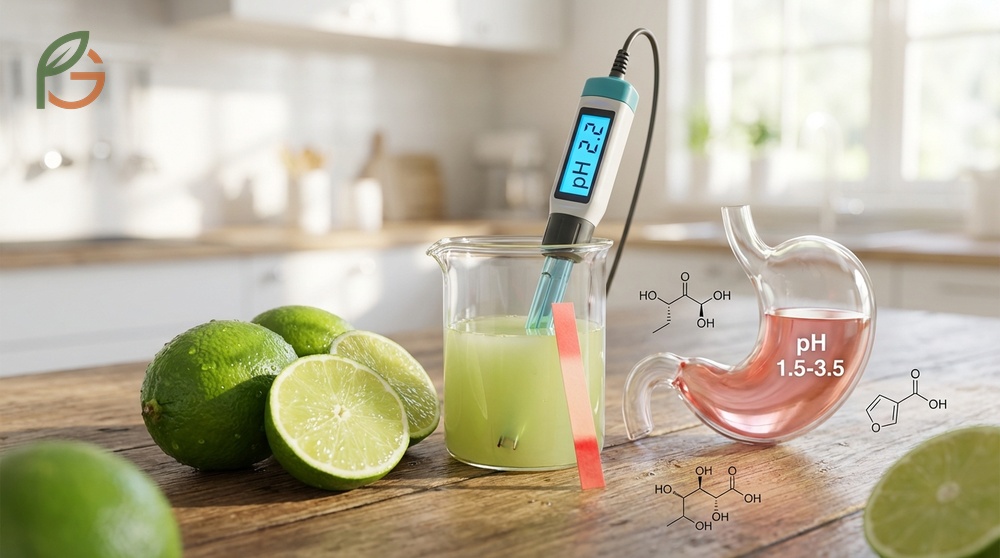
Yes, lime juice qualifies as highly acidic due to its pH range of 2.0-2.35, placing it well below the neutral pH of 7.0.[1] For context, this acidity level approaches that of stomach acid, which has a pH of 1.5-3.5. The acidic nature comes from organic acids, primarily citric acid, that occur naturally in the fruit.
Research shows that lime juice’s acidity serves multiple biological functions for the fruit. The low pH protects against microbial growth, preserves the fruit’s nutrients, and contributes to the distinctive tart flavor profile that characterizes citrus fruits.
Citric Acid Content in Limes
Limes contain 1.38 grams of citric acid per ounce of fresh juice, making them rich sources of this organic compound.[2] This concentration delivers more citric acid per liter than most other commercially available fruit juices. The citric acid content remains stable during refrigeration but decreases slightly during thermal processing.
Agricultural data shows that citric acid comprises as much as 8% of the lime’s dry fruit weight.[2] This high concentration makes limes valuable for culinary applications requiring acidic ingredients, from marinades to preservatives.
- Acts as a natural preservative by inhibiting bacterial growth
- Enhances mineral absorption when consumed with foods containing iron, calcium, or zinc
- Provides antioxidant properties that protect other nutrients from oxidation
- Creates the characteristic sour taste through activation of acid-sensing taste receptors
- Functions as a chelating agent that binds to minerals in food and water
Alkaline Effect After Metabolism
Despite their acidic pH before consumption, limes produce an alkaline effect during metabolism. The PRAL (Potential Renal Acid Load) value for limes measures -1.7, indicating an alkalizing effect in the body.[3] This occurs because the body metabolizes citric acid into bicarbonate, an alkaline compound.
This metabolic transformation explains why nutritionists often include limes in alkaline diet recommendations. The minerals in lime juice (potassium, magnesium, calcium) remain after citric acid metabolism, contributing to the alkalizing effect that benefits pH balance in blood and tissues.
Lime Juice pH Level
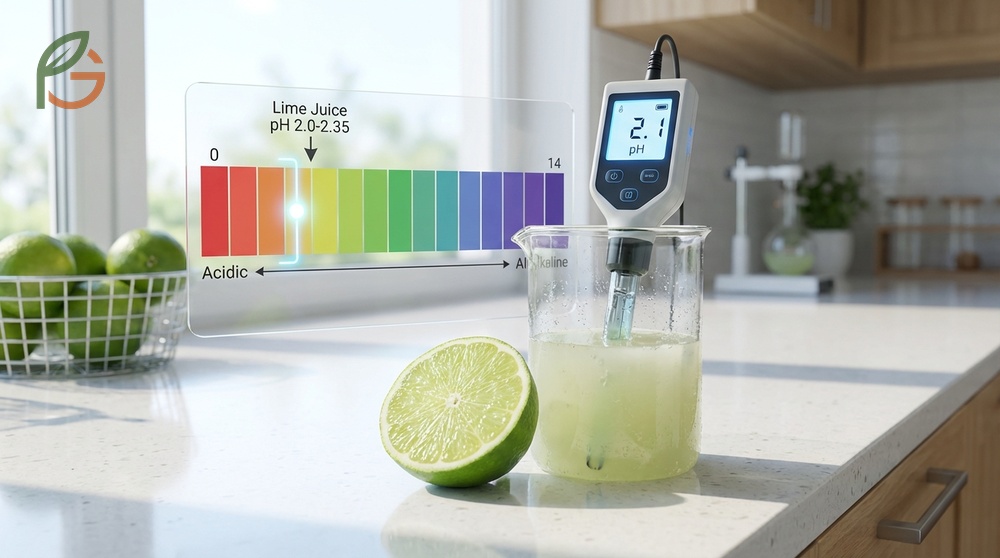
The lime juice pH level of 2.0-2.35 positions it among the most acidic common beverages and ingredients.[1] On the 14-point pH scale, where 0 represents maximum acidity and 14 represents maximum alkalinity, lime juice sits close to the acidic end. This measurement remains consistent whether you’re working with fresh-squeezed juice or bottled varieties.
Evidence suggests that processing methods minimally impact pH levels. Pasteurization, filtering, and concentration change the acidity by less than 0.2 pH units in most commercial operations. The juice retains its highly acidic character throughout the supply chain from grove to grocery.
pH Scale Foods Comparison
Understanding where lime juice sits on the pH scale relative to other foods helps gardeners and home cooks make informed decisions. Most fruits and vegetables fall between pH 3.0 and 6.5, with very few approaching lime’s extreme acidity.
This table compares pH values across eight common food categories from highly acidic citrus fruits to neutral dairy products, showing lime juice as one of the most acidic options
| Food Item | pH Range | Acidity Level |
|---|---|---|
| Lime Juice | 2.0-2.35[1] | Highly Acidic |
| Lemon Juice | 2.0-2.6 | Highly Acidic |
| Vinegar | 2.4-3.4 | Highly Acidic |
| Apple | 3.3-4.0 | Moderately Acidic |
| Tomato | 4.3-4.9 | Mildly Acidic |
| Banana | 4.5-5.2 | Mildly Acidic |
| Potato | 5.4-5.9 | Weakly Acidic |
| Milk | 6.5-6.7 | Nearly Neutral |
- Preserves foods by creating environments hostile to bacterial growth
- Tenderizes meats in marinades by breaking down protein structures
- Prevents browning in cut fruits through antioxidant action
- Balances flavors in cooking by offsetting sweetness and richness
- Acts as a natural cleaning agent due to its ability to dissolve mineral deposits
Lemon vs Lime Acidity
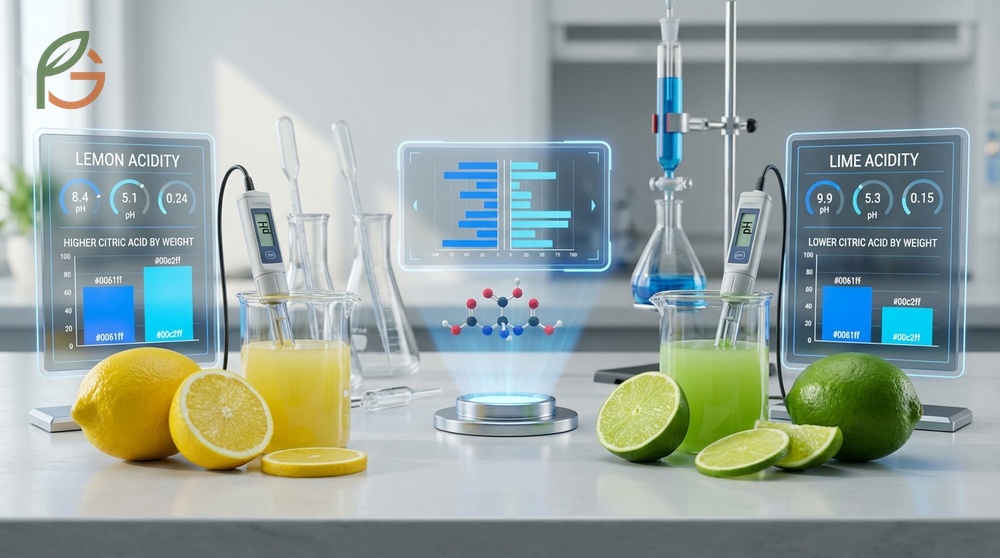
The lemon versus lime acidity debate reveals surprising differences between these similar citrus fruits. While both qualify as highly acidic, limes edge out lemons in terms of pH levels, registering slightly lower values that indicate greater acidity.[1] This distinction matters for recipes, preservation techniques, and understanding fruit chemistry.
Current data indicates that despite the pH difference, lemons contain marginally more citric acid by weight than limes do.[2] This apparent contradiction occurs because pH measures hydrogen ion concentration (acidity strength), while citric acid content measures the total amount of one specific acid compound.
pH Differences
Research shows that lime juice pH ranges from 2.0 to 2.35, while lemon juice measures between 2.0 and 2.6.[1] Key lime varieties specifically register at pH 2.4, compared to lemons at pH 3.1 in some studies.[3] The lower maximum pH value for limes means they can’t reach the less acidic levels that some lemon varieties achieve.
This pH difference translates to practical applications in cooking and preservation. Lime juice’s consistently lower pH makes it more reliable for applications requiring guaranteed acidity levels, such as ceviche preparation or pickling recipes that depend on specific pH thresholds for food safety.
Citric Acid Comparison
Lemons contain 1.44 grams of citric acid per ounce of juice, while limes contain 1.38 grams per ounce.[2] This 0.06-gram difference might seem minor, but it adds up in large-scale food processing. Lemon juice concentrate contains 1.10 grams per ounce compared to lime concentrate’s 1.06 grams per ounce.
The slightly higher citric acid content in lemons doesn’t make them more acidic overall because other organic acids contribute to total acidity. Limes contain different ratios of malic acid, ascorbic acid (vitamin C), and other organic compounds that affect the final pH reading.
| Metric | Lime | Lemon |
|---|---|---|
| pH Range | 2.0-2.35[1] | 2.0-2.6 |
| Citric Acid (g/oz) | 1.38[2] | 1.44 |
| PRAL Value | -1.7[3] | -2.3 |
| Metabolic Effect | Alkalizing | More Alkalizing |
Gardening Tip: Lime trees typically produce fruit year-round in subtropical climates, while lemon trees have distinct harvest seasons. This affects juice availability and pricing for home gardeners planning citrus orchards.
Acid Reflux Triggers
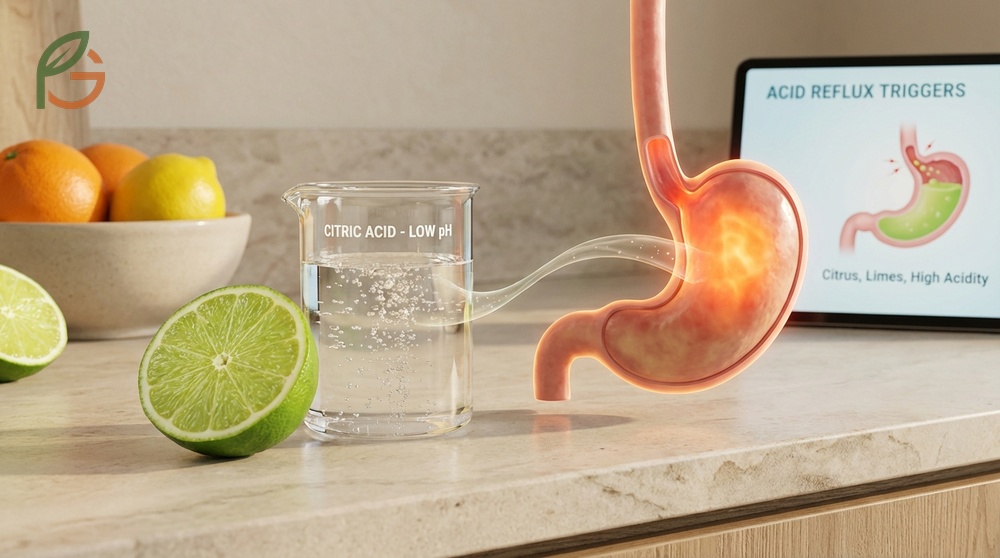
Citrus fruits including limes rank among common acid reflux triggers due to their high citric acid content and low pH levels. The acidity can stimulate excess stomach acid production in susceptible individuals, leading to heartburn and discomfort.[7] Research shows that the citric acid in lime juice irritates the esophageal lining when stomach contents flow backward.
The intensity of symptoms varies based on individual tolerance and consumption amount. Some people experience reflux after small quantities of lime juice, while others tolerate moderate amounts without issues. Timing matters too—consuming acidic foods close to bedtime increases reflux risk compared to earlier in the day.
- Dilute lime juice with water to reduce acidity concentration
- Consume citrus earlier in the day rather than close to bedtime
- Pair lime juice with alkaline foods like leafy greens or bananas
- Limit portion sizes to 1-2 tablespoons per serving
- Choose less acidic fruit alternatives like melons or pears when symptoms occur
Neutralizing Lime Acid
Several methods can neutralize lime acid for those who enjoy the flavor but need to reduce acidity. Adding small amounts of baking soda (sodium bicarbonate) to lime juice triggers a chemical reaction that raises pH while producing carbon dioxide bubbles. The typical ratio requires 1/8 teaspoon of baking soda per cup of lime juice to noticeably reduce acidity without creating unpleasant flavors.
Dilution provides another simple neutralization approach. Mixing lime juice with water, coconut water, or other neutral-pH liquids decreases the concentration of citric acid and hydrogen ions. This method preserves more of the lime’s original flavor profile compared to chemical neutralization techniques.
Adding calcium-rich ingredients like milk or yogurt can partially neutralize lime acid through chemical reactions between calcium and citric acid. Industrial processes use lime carbonate or calcium hydroxide to neutralize citric acid in commercial applications, though these methods aren’t practical for home use.
Conclusion
The evidence clearly establishes that the pH of lime juice ranges from 2.0 to 2.35, making it one of the most acidic natural ingredients available to gardeners and cooks.[1] This acidity, driven by 1.38 grams of citric acid per ounce, explains lime juice’s effectiveness in culinary applications, food preservation, and various household uses.[2]
Current agricultural guidance emphasizes that understanding fruit acidity helps both commercial growers and home gardeners optimize harvest timing, storage conditions, and usage applications. At FruitGarden, we continue to provide research-based insights that connect fruit chemistry with practical growing and usage knowledge for the gardening community.
Frequently Asked Questions
What is the exact pH of fresh lime juice?
Fresh lime juice has a pH between 2.0 and 2.35, with Key limes typically measuring pH 2.4 and Persian limes ranging from 2.0 to 2.35. This pH level remains consistent across properly stored fresh juice and makes limes slightly more acidic than lemons.
Can lime juice pH change during storage?
Lime juice pH remains relatively stable during proper refrigerated storage, changing by less than 0.1-0.2 pH units over several weeks. Exposure to air, heat, or contamination can alter pH more significantly, which is why sealed containers and refrigeration help maintain acidity levels.
Is lime juice more acidic than vinegar?
Lime juice and vinegar have comparable acidity levels, with lime juice at pH 2.0-2.35 and vinegar at pH 2.4-3.4. The most acidic limes can be slightly more acidic than some vinegars, though white distilled vinegar often reaches pH levels similar to lime juice.
How does bottled lime juice pH compare to fresh?
Bottled lime juice maintains a pH range of 2.0-2.6, slightly broader than fresh lime juice due to processing variations and preservative additions. USDA standards require commercial lime juice to contain at least 5.00% titratable acidity, ensuring it remains highly acidic regardless of processing method.
Why do limes taste more sour than lemons despite similar pH?
Limes taste more intensely sour because they contain different ratios of flavor compounds beyond citric acid, including specific aromatic molecules and lower sugar content. The perception of sourness involves both pH level and the balance of acids, sugars, and aromatic compounds that affect taste receptors differently.
Does cooking change lime juice acidity?
Cooking reduces citric acid concentration through evaporation and chemical changes, potentially raising pH by 0.3-0.5 units depending on temperature and duration. However, cooked lime juice typically remains acidic with pH values between 2.5 and 3.0, still suitable for most culinary applications requiring acidity.
Can I use lime juice acidity for food preservation?
Yes, lime juice’s pH of 2.0-2.35 makes it effective for certain preservation methods like ceviche or pickling when following tested recipes. The high acidity inhibits bacterial growth, though you should always follow established food safety guidelines that specify exact proportions and procedures for safe preservation.





