
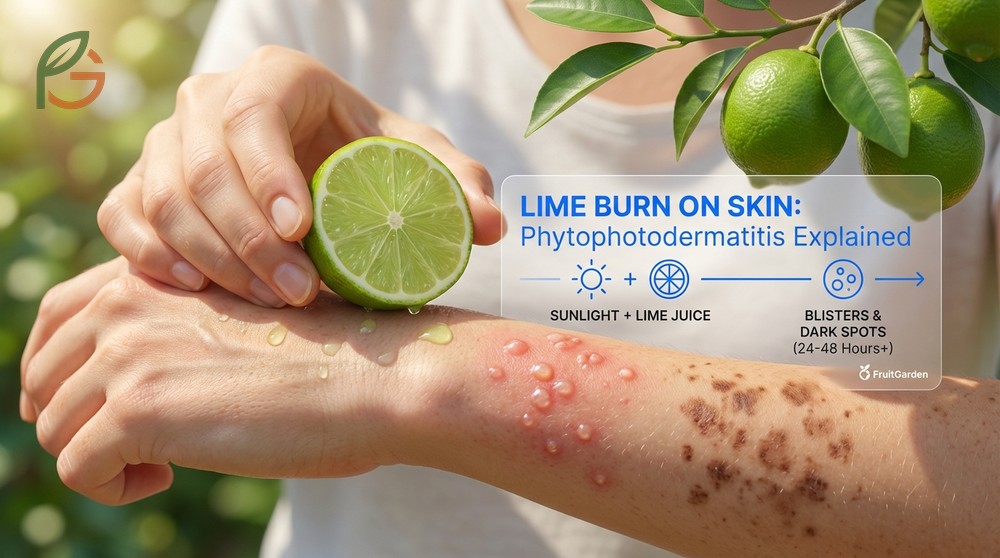
Lime burn on skin happens when lime juice contacts your skin and you’re exposed to sunlight, triggering a phototoxic reaction called phytophotodermatitis. Research shows this condition develops within 24-48 hours[1] after exposure, causing painful blisters and dark spots that can last weeks to months. FruitGarden synthesizes current dermatological research to help you understand, treat, and prevent lime-related skin reactions from citrus fruit handling.
Quick Answer
- Lime juice contains furanocoumarins[2] that react with UV-A light to create painful burns
- Symptoms appear within 24-48 hours[1] and include blisters, redness, and burning pain
- Dark spots (hyperpigmentation) persist for weeks to months[2], sometimes years in severe cases
- Treatment includes hydrocortisone cream, cold compresses, and ibuprofen[3] for symptom relief
Lime Burn on Skin
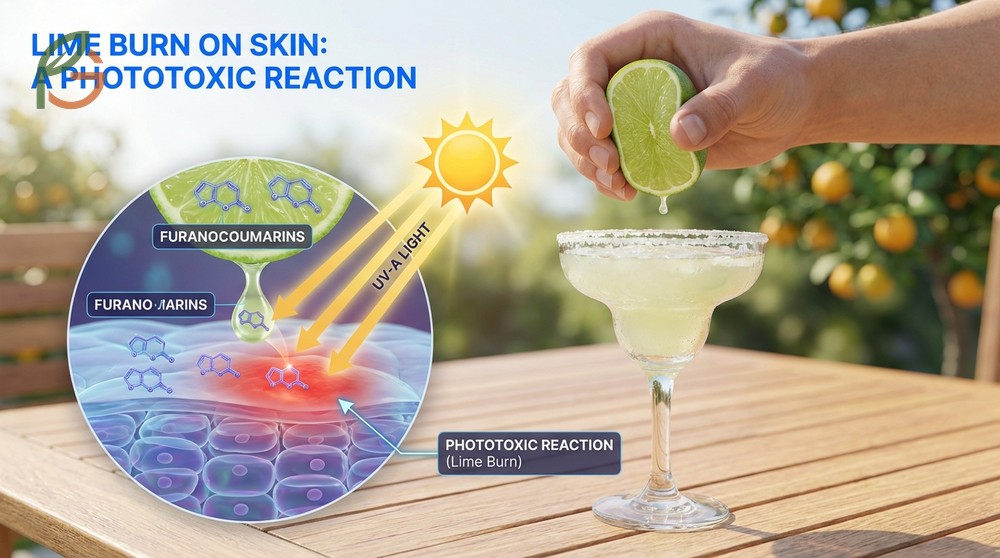
Studies demonstrate that lime burn on skin isn’t actually a thermal burn but a phototoxic reaction triggered by chemical compounds in lime juice. When furanocoumarins in fresh lime juice contact your skin and interact with ultraviolet A (UV-A) light, they create a chemical reaction that damages skin cells[1]. This reaction can happen whether you’re squeezing limes for margaritas, working with citrus trees in your garden, or handling fresh lime fruits outdoors.
Research shows this condition affects people of all ages, but it’s particularly common during summer months when citrus handling and sun exposure overlap. The severity depends on how much lime juice contacts your skin and how long you’re exposed to sunlight afterward[2]. Even a small amount of juice can cause noticeable reactions if you spend hours in direct sunlight.
Current data indicates that lime burns appear in distinct patterns matching where juice touched your skin. You’ll often see streak marks from dripping juice, handprint shapes from direct contact, or irregular patches from splashes[1].
What Causes Lime Burns
The culprits behind lime burns are natural compounds called furanocoumarins (also known as psoralens) that exist in all citrus fruits, with particularly high concentrations in limes. These chemicals don’t cause problems on their own. Evidence suggests that when UV-A rays from sunlight hit skin coated with these compounds, they activate and bind to DNA in skin cells, triggering an inflammatory response[2].
Most people don’t realize that timing matters significantly. You don’t need to be outdoors while handling limes for this reaction to occur. If you squeeze limes indoors and then go outside without washing your hands thoroughly, the furanocoumarins remain on your skin and activate when exposed to sunlight hours later[4].
- Limes (highest concentration of furanocoumarins)
- Lemons and other citrus fruits like grapefruits
- Celery (especially leaves and stems)
- Wild parsnip and hogweed plants
- Figs (both fruit and tree sap)
- Parsley and other apiaceous herbs
How Lime Burns Differ from Regular Burns
Unlike thermal burns from heat or chemical burns from acids, lime burns only occur in sun-exposed areas of your skin. This helps doctors differentiate phytophotodermatitis from other conditions. The rash appears exclusively where both lime juice and UV-A light contacted your skin simultaneously[5].
Another key difference is the timing and pattern of symptoms. Regular burns hurt immediately, but lime burns develop painlessly during exposure. The painful symptoms only emerge 12 to 48 hours later, which often confuses people about what caused their rash.
Important Note: Lime burns aren’t caused by an allergic reaction. This is a phototoxic reaction that can happen to anyone with sufficient lime juice and sun exposure, regardless of whether you’ve been exposed before.
Phytophotodermatitis Lime Juice
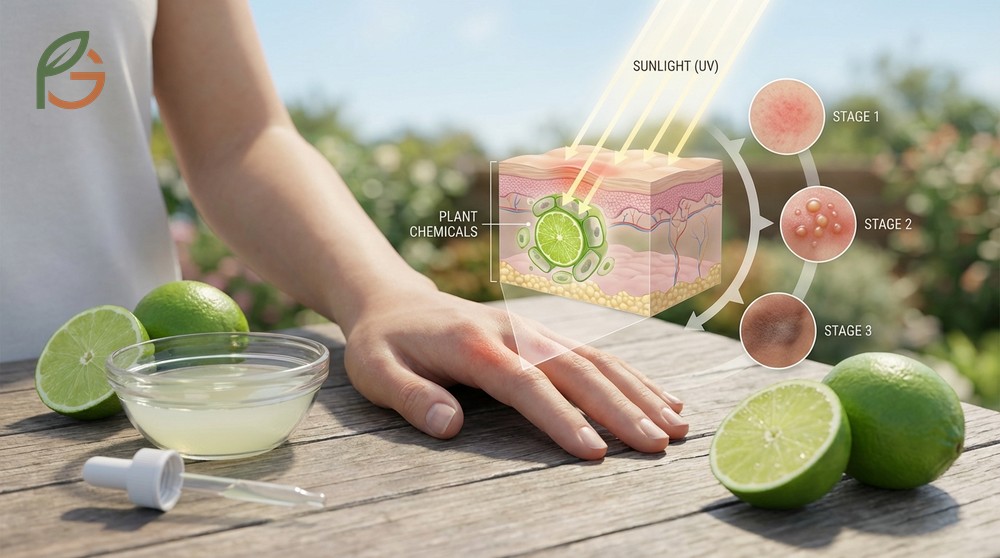
Evidence suggests that phytophotodermatitis from lime juice progresses through distinct stages that help with diagnosis. Understanding these stages helps you recognize the condition early and start treatment before severe symptoms develop. The medical term “phytophotodermatitis” literally means plant-light-skin-inflammation, which accurately describes what happens when citrus chemicals react with sunlight[1].
Research across multiple dermatology studies confirms that lime juice contains higher concentrations of phototoxic compounds compared to other common citrus fruits. This makes limes particularly problematic when you’re preparing drinks outdoors, working in citrus groves, or gardening with lime trees. The juice remains active on your skin until you wash it off with soap and water[3].
Symptoms and Stages
During the initial exposure phase (0-12 hours), you won’t notice anything wrong. Your skin looks normal and feels fine, which is why most people don’t realize they need to wash the lime juice off. Current data indicates that symptoms begin emerging between 12 to 48 hours after sun exposure[1].
The acute inflammatory phase brings the most painful symptoms. You’ll see redness (erythema) and swelling (edema) develop first, followed by painful blisters forming in affected areas. These blisters can range from small vesicles to large, fluid-filled bullae depending on exposure severity[3].
This table compares the three stages of lime burn progression showing timeframe, visible symptoms, and pain levels for each stage
| Stage | Timeframe | Symptoms | Pain Level |
|---|---|---|---|
| Initial Exposure | 0-12 hours[1] | No visible symptoms, normal appearance | None |
| Acute Inflammation | 12-48 hours[1] | Redness, swelling, painful blisters, burning sensation | Moderate to severe |
| Post-Inflammatory | 1-2 weeks to several months[2] | Dark brown patches (hyperpigmentation) | Minimal to none |
The post-inflammatory hyperpigmentation phase is what most people remember longest. After blisters heal, they leave behind distinctly dark brown or grayish patches where the burn occurred. Studies demonstrate these marks can persist for weeks to months, with some cases lasting years[2].
Characteristic Patterns
Dermatologists can often diagnose lime burns just by looking at the distinctive patterns they create. Research shows the most common pattern is linear streaks running downward, following gravity’s pull on dripping juice[1]. If you squeezed limes while standing, you might see juice trail marks down your arms or legs.
Handprint patterns appear when someone touches lime juice and then places their hand on their body or someone else’s skin. These show up as clear palm and finger shapes. Splash patterns create irregular, geometric shapes that look bizarre but make sense once you know the juice splashed from cutting or squeezing citrus[4].
- Drip marks: vertical streaks down arms, legs, or torso from juice running downward
- Handprints: clear palm and finger outlines from touching affected areas
- Splash patterns: irregular shapes from juice splashing during cutting
- Linear brushing marks: parallel lines from rubbing against lime tree branches or leaves
- Irregular patches: asymmetric areas from accidental spills or contact
Medical Insight: The bizarre, well-demarcated patterns of phytophotodermatitis help distinguish it from other skin conditions like fungal infections, cellulitis, or allergic reactions, which typically present with more uniform or random distributions.
Treating Lime Burns
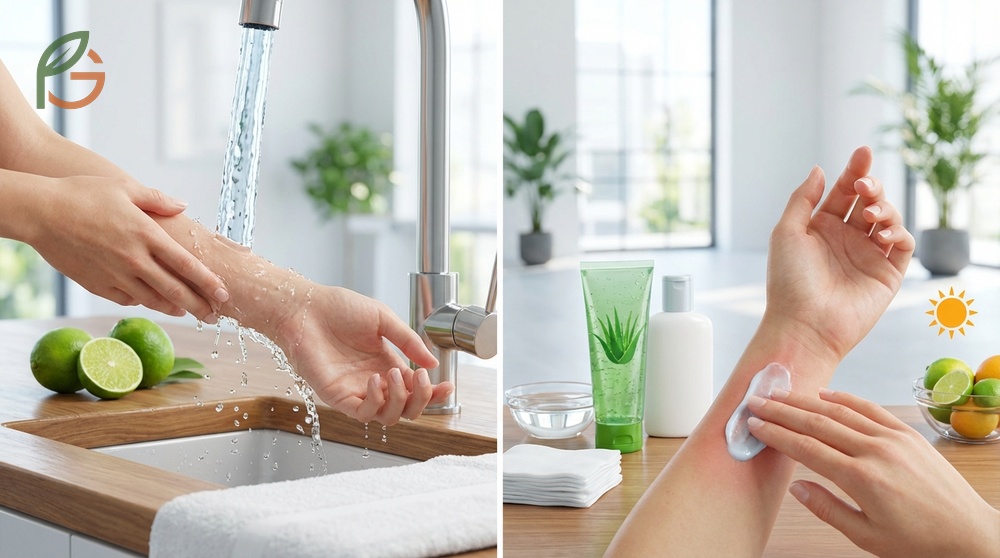
Current medical guidance emphasizes that treating lime burns follows the same principles as treating sunburns since both involve UV-induced skin damage. The good news is most cases resolve on their own without specialized medical care. Evidence suggests that symptomatic treatment focusing on pain relief and preventing secondary infection works best for the majority of patients[3].
What often gets overlooked is that immediate action after lime exposure can prevent burns entirely. If you wash your hands and any affected skin areas with soap and water within minutes of lime contact, you’ll remove the furanocoumarins before sun exposure activates them. This simple step prevents the entire phototoxic reaction[2].
Immediate First Aid
As soon as you notice redness or feel burning sensations, get out of the sun immediately. Research shows continued sun exposure will worsen the reaction and extend healing time[1]. Move to a shaded area or go indoors for the rest of the day.
Apply cold, wet compresses to affected areas for 15-20 minutes at a time. This reduces pain and swelling significantly. You can use clean washcloths soaked in cool water, or wrap ice packs in thin towels. Don’t apply ice directly to skin as this can cause additional damage[3].
- Exit direct sunlight immediately and seek shade or go indoors
- Wash affected areas gently with cool water and mild soap
- Apply cold compresses for 15-20 minutes, repeat every few hours
- Take over-the-counter ibuprofen or acetaminophen for pain relief
- Avoid breaking blisters, which increases infection risk
- Keep affected areas clean and dry between compress applications
- Stay out of sunlight for at least 48-72 hours after symptoms begin
Medical Treatments
For mild to moderate lime burns, over-the-counter hydrocortisone cream (0.5% or 1%) helps reduce inflammation and itching. Studies demonstrate that applying this twice daily to affected areas speeds healing and improves comfort[2]. You’ll also want to apply healing ointments like Aquaphor or petroleum jelly to keep blisters protected and promote skin repair.
Severe cases require prescription treatments. If you develop extensive blistering, extreme pain, or signs of infection (increased redness, warmth, pus, or fever), see a dermatologist or visit urgent care. Medical professionals can prescribe stronger topical or oral corticosteroids, provide specialized burn dressings, and monitor for complications[3].
For the dark spots (hyperpigmentation) that remain after healing, dermatologists recommend using brightening serums containing kojic acid, arbutin, or vitamin C. These ingredients gradually fade pigmentation over several weeks to months. Consistent daily sunscreen use with SPF 30 or higher is crucial, as sun exposure darkens the spots further and prolongs fading time[2].
Treatment Warning: Don’t use butter, oils, or home remedies on lime burns. These can trap heat and bacteria, increasing infection risk and slowing healing. Stick to proven medical treatments like cold compresses and hydrocortisone cream.
Lime Skin Reaction
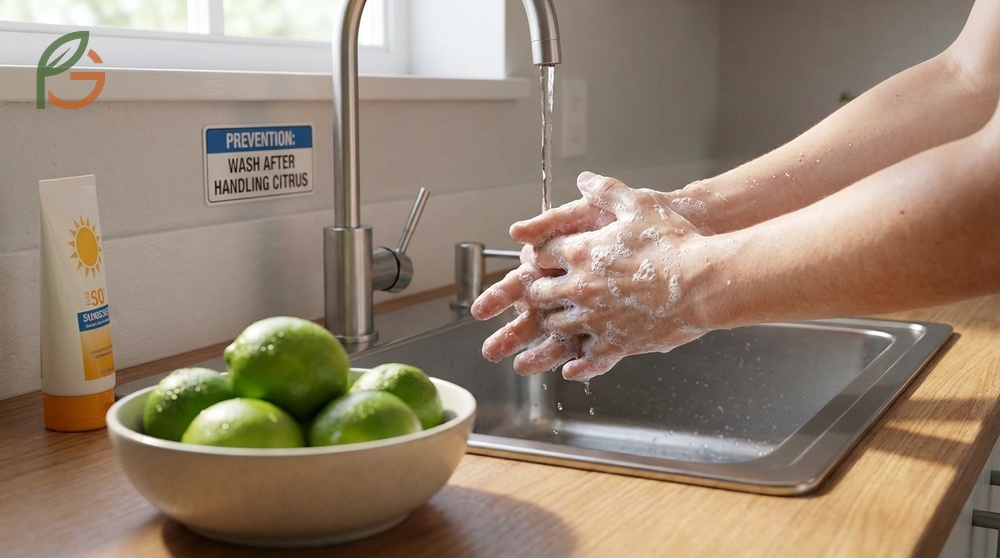
Understanding how to prevent lime skin reactions is far easier than treating them after they occur. Research across multiple studies confirms that prevention strategies are nearly 100% effective when followed consistently[2]. The key is creating habits around citrus handling that become automatic, especially if you work with limes frequently in your garden or kitchen.
Most people focus on sun protection, but hand washing proves equally important. Studies demonstrate that thoroughly washing with soap and water within 30 minutes of lime contact removes enough furanocoumarins to prevent reactions, even with subsequent sun exposure[3].
Prevention Strategies
If you’re working with lime trees or harvesting citrus fruit outdoors, wear protective clothing. Long sleeves, gloves, and pants create physical barriers between lime juice and your skin. This matters especially for gardeners who prune lime trees or handle large quantities of fruit[1].
For bartenders, home cooks, and anyone preparing drinks with fresh limes, timing your activities makes a big difference. Handle and squeeze limes in the evening after sun exposure for the day, or do your prep work indoors and thoroughly wash before going outside. Even better, wear disposable gloves while cutting citrus fruits and discard them before stepping outdoors[2].
- Wash hands and exposed skin with soap and water immediately after handling limes
- Wear disposable gloves when cutting, squeezing, or juicing citrus fruits outdoors
- Apply broad-spectrum sunscreen with SPF 30+ to potentially exposed areas
- Handle limes indoors or in shaded areas when possible
- Wear long sleeves and pants when working with lime trees or harvesting fruit
- Educate children about washing hands after playing with fallen citrus fruits
- Keep citrus-containing drinks in covered containers to prevent splashing
When to See a Doctor
Most lime burns heal on their own with home treatment, but certain warning signs indicate you need professional medical care. Evidence suggests that severe reactions requiring hospitalization typically involve extensive body surface area coverage (more than 10% of skin) or development of systemic symptoms like fever[3].
If blisters cover your hands or face and prevent normal function (like moving fingers or wrists due to pain and swelling), seek medical attention promptly. Research documents cases where severe hand involvement required hospitalization for burn dressings, oral steroids, and range-of-motion therapy to prevent permanent limitations[3].
Watch for infection signs, which sometimes develop when blisters break open. Increased redness spreading beyond the original burn area, warmth to touch, pus or cloudy fluid draining from blisters, red streaks extending from the wound, or fever above 100.4°F (38°C) all warrant immediate medical evaluation[1].
Sun Lime Burn
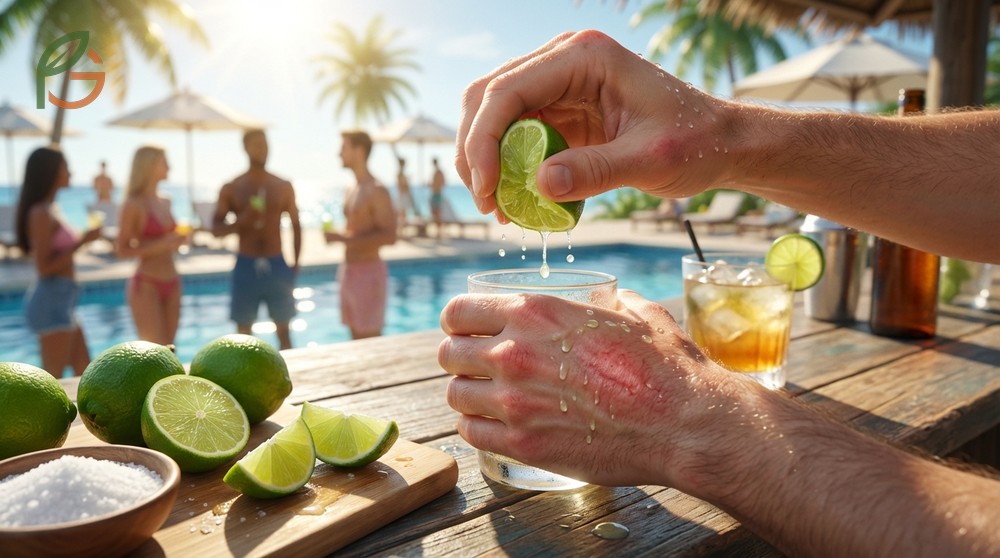
The term sun lime burn (also called margarita burn or margarita dermatitis) gained popularity because so many cases occur during outdoor celebrations involving lime-based cocktails. Current data indicates that summer months see the highest incidence rates, with cases peaking during beach parties, poolside gatherings, and outdoor bar events[5]. Understanding why this happens helps you protect yourself during high-risk activities.
The combination of fresh lime juice, strong sunlight, and prolonged outdoor exposure creates perfect conditions for severe reactions. Studies demonstrate that UV-A intensity matters more than total sun exposure time. Even 30 minutes of intense midday sun (10 AM to 2 PM) can trigger significant burns if you have lime juice on your skin[1].
What surprises many people is that sun lime burns can develop during winter vacations in tropical locations. Research documents numerous cases of travelers returning from Caribbean or Mexican holidays with mysterious rashes, later diagnosed as lime-induced phytophotodermatitis[5]. These “winter margarita burns” remind us that UV-A rays remain strong year-round in tropical and subtropical regions.
Beach and pool environments increase risk because wet skin absorbs more furanocoumarins from lime juice. Water also washes away some natural skin oils that normally provide minor protection. If you’re swimming or sweating heavily, the lime compounds spread more easily across larger skin areas, potentially creating more extensive burns[2].
- Making margaritas or mojitos at outdoor bars or beach parties
- Squeezing lime wedges into drinks while sitting by the pool
- Harvesting or pruning lime trees during midday hours
- Handling citrus fruit at outdoor farmers markets or garden stands
- Children playing with fallen limes or citrus fruits in yards during summer
- Bartending at outdoor venues during peak sun hours
Seasonal Tip: If you’re planning outdoor events involving fresh limes during summer, set up a handwashing station with soap and water near your drink prep area. This simple addition prevents nearly all cases of margarita burn among guests and staff.
Conclusion
The evidence is clear: lime burn on skin is a preventable condition that requires awareness of how citrus chemicals interact with sunlight. Research demonstrates that simple habits like washing hands after lime contact, wearing gloves during citrus handling, and avoiding sun exposure immediately after lime juice contact eliminate nearly all cases. While the blisters and dark spots can be painful and cosmetically concerning, most people recover fully within weeks to months with proper treatment.
Current medical guidance emphasizes prevention over treatment, since avoiding the reaction is far easier than managing its consequences. FruitGarden encourages gardeners and citrus enthusiasts to maintain protective practices year-round, especially when working with lime trees or harvesting fruit. With these precautions in place, you can safely enjoy growing, preparing, and consuming limes without fear of phytophotodermatitis.
Medical Disclaimer
Important Medical Disclaimer: This content is for informational and educational purposes only. It’s not intended as a substitute for professional medical advice, diagnosis, or treatment. Always consult a qualified healthcare professional or dermatologist before making decisions about treating skin conditions, especially if you develop severe blistering, signs of infection, or symptoms that don’t improve with home care. Individual cases of phytophotodermatitis can vary significantly in severity and may require specialized medical management.
Frequently Asked Questions
How long does lime burn on skin last?
Research shows the acute painful phase with blisters lasts 7-14 days, while the dark hyperpigmentation spots can persist for several weeks to months. In some severe cases, pigmentation changes may take up to a year to completely fade, though most cases resolve within 2-3 months with proper sun protection and treatment.
Can you get lime burn from bottled lime juice?
Studies indicate that fresh lime juice contains significantly higher concentrations of furanocoumarins compared to bottled or processed juice. While bottled juice can theoretically cause phytophotodermatitis, the heat processing and preservatives reduce phototoxic compounds substantially, making reactions much less likely than with fresh limes.
What’s the difference between lime burn and sunburn?
Lime burns create distinctive patterns (streaks, handprints, irregular shapes) matching where juice contacted skin, while sunburns appear uniformly across all sun-exposed areas. Lime burns also develop 24-48 hours after exposure and leave dark brown pigmentation lasting months, whereas typical sunburns appear within hours and fade within weeks without significant pigmentation.
Can lime burns scar permanently?
Evidence suggests that phytophotodermatitis rarely causes permanent scarring if treated properly and blisters aren’t forcibly broken or infected. The hyperpigmentation may last many months but typically fades completely. However, repeated sun exposure to affected areas during healing can prolong discoloration and potentially create permanent pigment changes.
Do other citrus fruits besides limes cause phytophotodermatitis?
Yes, all citrus fruits contain furanocoumarins and can cause phototoxic reactions. Research shows limes have the highest concentration, followed by lemons and grapefruits. Oranges contain lower levels but can still trigger reactions with sufficient exposure. Other non-citrus plants like celery, parsnips, and figs also cause similar burns.
Can you prevent lime burn if you realize you have juice on your skin?
Studies demonstrate that washing affected skin thoroughly with soap and water within 30 minutes of lime contact removes enough furanocoumarins to prevent most reactions. The sooner you wash after contact, the more effective prevention becomes. If you can’t wash immediately, staying out of direct sunlight until you can clean your skin also helps prevent activation of the phototoxic reaction.
Does sunscreen protect against lime burns?
Current research shows that broad-spectrum sunscreens with strong UV-A protection can reduce lime burn severity but don’t eliminate the risk entirely. The furanocoumarins in lime juice create a chemical reaction directly within skin cells when activated by UV-A light, which occurs even through sunscreen. Your best protection is washing off lime juice immediately and avoiding sun exposure, rather than relying on sunscreen alone.





