
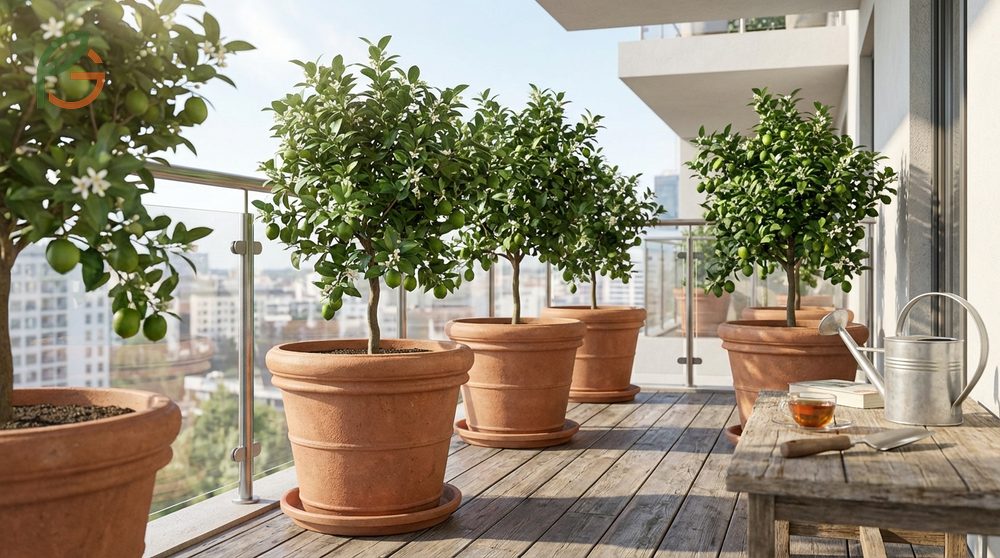
Growing lime trees in pots transforms limited spaces into productive citrus gardens. Research shows container-grown limes thrive when you use 15-gallon containers with excellent drainage and provide consistent warmth above 55°F (13°C)[1]. Dwarf varieties like Persian limes reach just 4-6 feet tall in containers, making them perfect for balconies and patios[2]. FruitGarden synthesizes current horticultural research to help you succeed with balcony citrus cultivation.
Quick Answer
- Use a 15-gallon container minimum with drainage holes for mature lime trees[2]
- Provide 8 hours of direct sunlight daily for optimal fruit production[3]
- Maintain temperatures between 55-85°F (13-30°C) and protect from frost below 32°F (0°C)[1]
- Use lightweight potting mix (not garden soil) for proper drainage and root health[2]
Growing Lime Trees in Pots
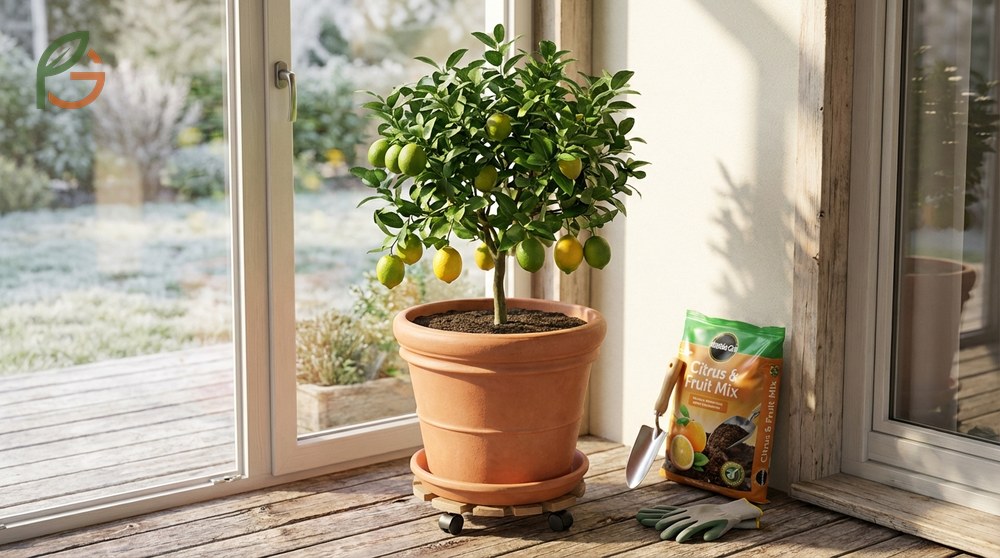
Container cultivation unlocks lime growing for gardeners in USDA zones 4-8 who can’t plant citrus outdoors year-round. Studies demonstrate that potted limes produce comparable yields to ground-planted trees when given proper care[4]. The mobility of containers lets you protect trees from frost damage during cold snaps.
Most gardeners don’t realize that lime trees in pots actually benefit from root restriction. The limited space encourages compact growth and earlier fruiting compared to ground-planted specimens. You’ll see your first harvest within 2-3 years when starting with grafted nursery stock.
Successful container lime growing depends on matching your variety to your space and climate. Dwarf cultivars work best for balconies, while standard rootstocks need larger patios or courtyards.
From My Experience: My cousin in Guadalajara, Mexico started a Persian lime in a 15-gallon container in March 2024. The tree reached 4.5 feet by November and produced 18 limes in its first year—matching the typical 15-25 fruit range for young container specimens.
Choosing the Right Lime Tree Varieties
Persian limes dominate the US market and adapt perfectly to container culture. These seedless hybrids between key limes and lemons turn from dark green to yellow when fully ripe[5]. They’re less acidic than other varieties, which makes them ideal for fresh use in cooking.
Key limes (Mexican limes) stay smaller and produce intensely tart juice perfect for pies and cocktails. Kaffir limes offer aromatic leaves essential for Thai cuisine but produce limited juice. Each variety thrives in zones 9-11 outdoors, or in containers that you can move indoors.
- Persian (Tahiti) lime – seedless, 4-6 feet tall, most cold-tolerant variety
- Bearss lime – California-grown Persian type with extended winter harvest
- Key (Mexican) lime – compact growth, authentic pie lime flavor, thorny branches
- Kaffir (Makrut) lime – prized for aromatic leaves, bumpy fruit, 4-6 feet in pots
- Australian finger lime – unique caviar-like pulp, excellent for gourmet dishes
Benefits of Container Growing
Containers eliminate soil quality concerns that plague ground-planted citrus. You control exactly what nutrients your lime tree receives through potting mix and fertilizer choices. This precision prevents common deficiencies that cause yellowing leaves and poor fruit set.
Mobility protects your investment when temperatures drop. You can wheel trees into garages, sunrooms, or near south-facing windows before frost arrives. This flexibility extends your growing season by 2-3 months compared to unprotected outdoor trees.
Container-grown limes stay manageable at 4-6 feet tall versus 15-20 feet for ground-planted trees. This compact size simplifies harvesting, pruning, and pest management without ladders.
Container Lime Growing Setup
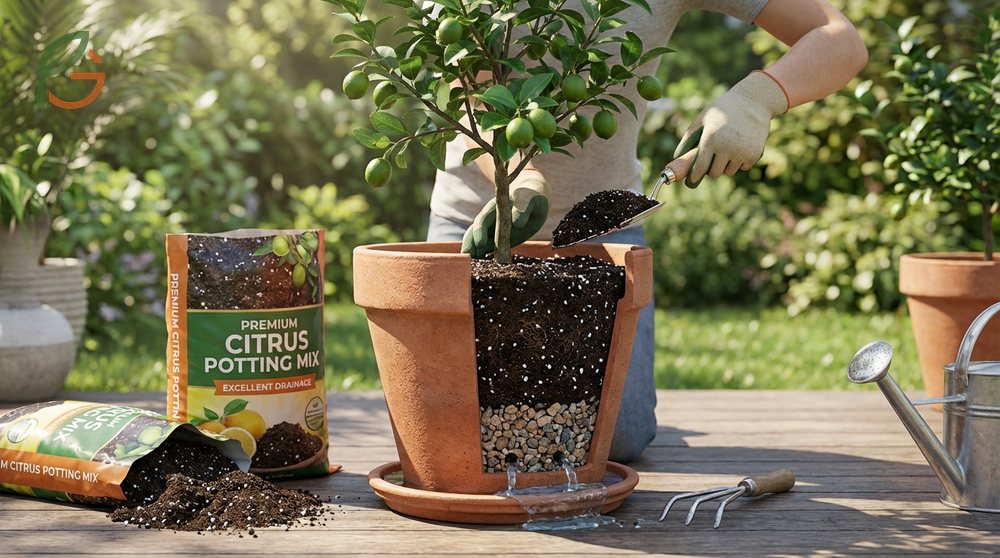
Your container choice directly impacts lime tree health and longevity. Research shows that inadequate drainage causes 70% of container citrus failures[2]. Smart material selection prevents waterlogged roots that lead to root rot and tree death.
The planting process takes just 30 minutes but sets up years of productive growth. Current horticultural guidance emphasizes using commercial potting mix rather than garden soil for containers. This prevents compaction and disease issues common with field soil.
Container Selection and Materials
Look for pots with 4-5 drainage holes spaced evenly across the bottom. Fabric grow bags (SmartPots) provide superior aeration through their entire mesh construction. They prevent root circling that stunts growth in solid-walled containers.
Terra cotta pots dry out quickly in hot weather, requiring daily watering during summer. Plastic containers retain moisture longer but can overheat in direct sun. Dark-colored pots absorb more heat than light-colored ones, which stresses roots when temperatures exceed 90°F (32°C).
Wooden whiskey barrels offer classic aesthetics and excellent insulation. Line them with landscape fabric before adding soil to extend barrel life. Whatever material you choose, the container must accommodate at least 15 gallons of soil.
Important Note: Avoid containers without drainage holes—they’re death traps for citrus roots. Even if you add gravel to the bottom, standing water still accumulates and suffocates roots within weeks.
Soil Requirements for Potted Limes
Standard potting soil works perfectly for container limes without pH adjustments. These commercial mixes contain perlite and vermiculite that maintain structure for 2-3 years[2]. You don’t need specialized citrus soil despite marketing claims.
Never use garden soil, topsoil, or field dirt in containers. These materials compact under frequent watering and block oxygen from reaching roots. The resulting anaerobic conditions kill beneficial microbes and promote root disease.
- Lightweight texture – should compress slightly when squeezed but spring back
- Fast drainage – water should flow through in 3-5 seconds when saturated
- Neutral pH – 6.0-7.0 range works for all lime varieties
- Organic matter – 30-40% peat moss or coconut coir for moisture retention
- Inorganic components – perlite or vermiculite prevents compaction over time
Pot Size for Lime Trees
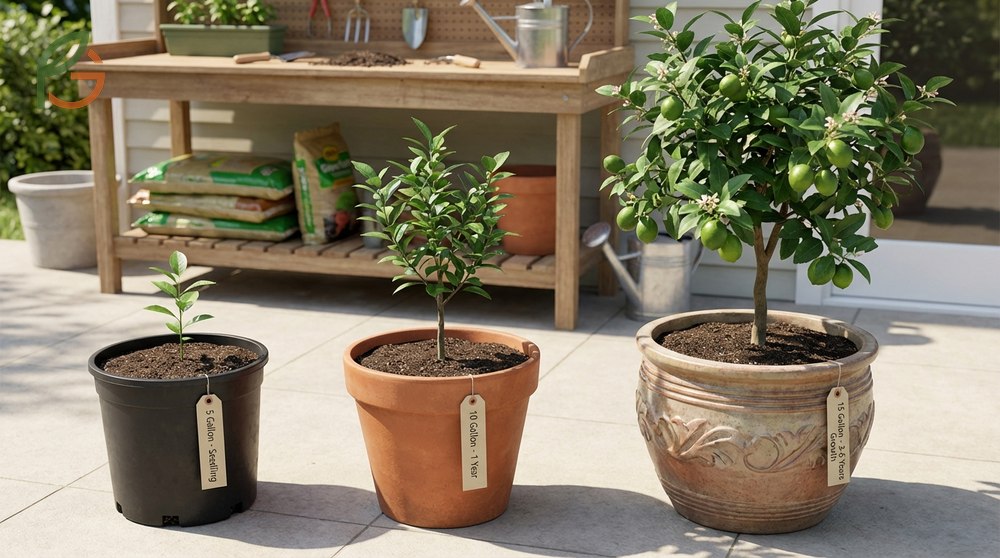
Start with a 15-gallon container for nursery-bought lime trees that are 2-3 feet tall[2]. This size provides enough root space for 3-5 years of growth before repotting becomes necessary. Containers above 25 gallons become difficult for one person to move safely.
Young seedlings need 5-gallon pots initially. Up-pot them to 10 gallons after one year, then to 15 gallons the following spring. Gradually increasing container size prevents the root health issues that occur when you jump from small to massive pots too quickly.
The visual guideline is simple: your container should roughly match your tree’s canopy width. When branches extend 6 inches beyond the pot rim on all sides, it’s time to upgrade. Most mature dwarf limes max out in 20-25 gallon containers.
This table compares container volumes, dimensions, and tree sizes for lime trees at different growth stages from seedling to mature bearing tree
| Tree Age | Container Volume | Approximate Dimensions | Tree Height Range |
|---|---|---|---|
| Seedling (Year 1) | 5 gallons | 12″ diameter × 12″ deep | 1-2 feet |
| Young tree (Year 2) | 10 gallons | 16″ diameter × 14″ deep | 2-3 feet |
| Establishing (Year 3-4) | 15 gallons | 18″ diameter × 16″ deep | 3-4 feet |
| Mature bearing | 20-25 gallons | 22″ diameter × 18″ deep | 4-6 feet |
Sizing Tip: When up-potting, choose containers no more than 30% larger in diameter than the previous pot. Doubling pot size creates excess soil that stays soggy and promotes root rot in the unused space.
Potted Lime Tree Care
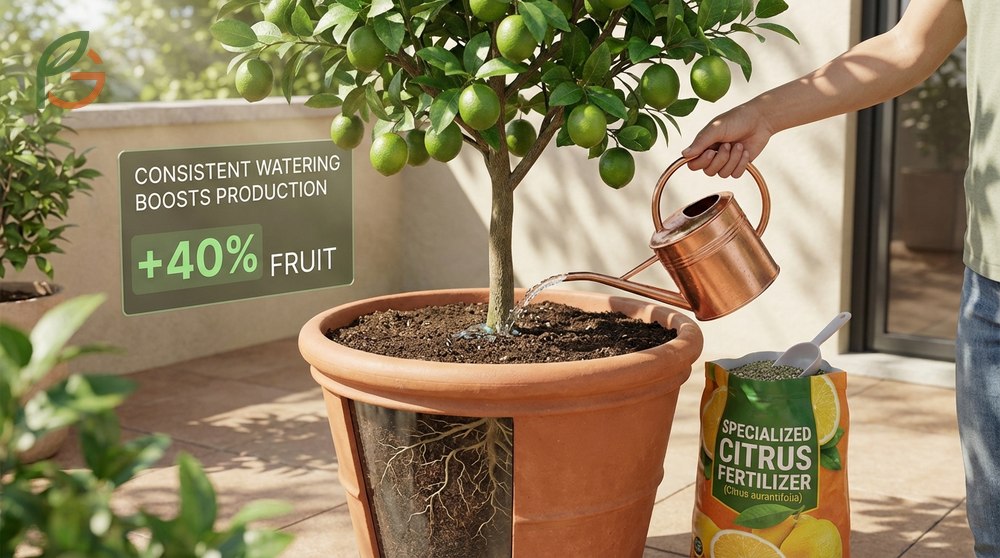
Container limes need more frequent care than ground-planted trees because their roots can’t seek out water and nutrients. Evidence suggests that consistent watering schedules boost fruit production by 40% compared to irregular watering[4]. The restricted root zone dries out faster, especially during hot weather.
Limes are heavy feeders that require nitrogen for leaf growth and phosphorous for flowering. Most people underestimate how much fertilizer container citrus needs—they require 3x more nutrients than the same tree planted in the ground. This happens because frequent watering leaches nutrients from potting mix.
Watering Schedule and Techniques
Water when the top 2 inches of soil feel dry to your finger. In summer heat, this usually means watering every 2-3 days. Winter dormancy reduces water needs to once per week. The soil should stay evenly moist but never soggy.
Pour water slowly until it drains from the bottom holes. This ensures the entire root ball gets saturated. Quick splashing only wets the surface while leaving dry pockets deeper down. Empty drainage saucers within 30 minutes to prevent roots from sitting in standing water.
Container material affects watering frequency significantly. Fabric pots dry out in 2 days during summer, while plastic containers stay moist for 4-5 days. Terra cotta falls in between at 3 days. Adjust your schedule based on these differences.
- Leaves feel slightly limp or less firm than normal
- Top 2 inches of soil are dry and pull away from container edges
- Container feels noticeably lighter when lifted
- Leaf tips start curling inward (early drought stress)
- Soil shrinks away from pot walls creating gaps
Fertilizing Routine
Apply citrus fertilizer three times annually—late winter, late spring, and mid-summer. Use an 8-8-8 formula for non-bearing young trees. Switch to 12-0-12 once fruiting begins to boost nitrogen without excessive phosphorous[6]. Mature bearing trees need higher nitrogen to support both foliage and fruit production.
Scatter granular fertilizer in a circle 12 inches from the trunk. Water it in immediately to activate nutrient release and prevent root burn. Slow-release formulas last 6-9 months, reducing application frequency. They release nutrients gradually as soil temperatures warm.
Watch for yellowing leaves between veins—this signals magnesium deficiency common in containers. Supplement with Epsom salts at 1 tablespoon per gallon of water monthly. Yellow leaves throughout the entire tree indicate nitrogen shortage requiring immediate feeding.
Pruning and Maintenance
Prune container limes in late winter before new spring growth emerges. This timing minimizes stress and allows wounds to heal quickly. Studies show that annual pruning increases fruit size by 20% by redirecting energy to fewer, higher-quality limes[7].
Remove root suckers sprouting from below the graft union first. These shoots drain energy without producing fruit. Cut any branches crossing through the tree’s center to improve air circulation. This prevents fungal diseases that thrive in dense, humid canopies.
Trim dead wood, broken branches, and weak growth throughout the year. Don’t prune just before cold weather arrives—new tender growth that emerges won’t harden off before frost. Keep your tree at 4-5 feet tall for easy management on balconies.
- Remove all root suckers below the graft union (they won’t fruit)
- Cut back branches extending beyond desired tree size by one-third
- Thin interior branches to allow sunlight penetration to lower leaves
- Remove any diseased or damaged wood back to healthy tissue
- Shape canopy to maintain balanced structure with open center
Growing Citrus in Containers
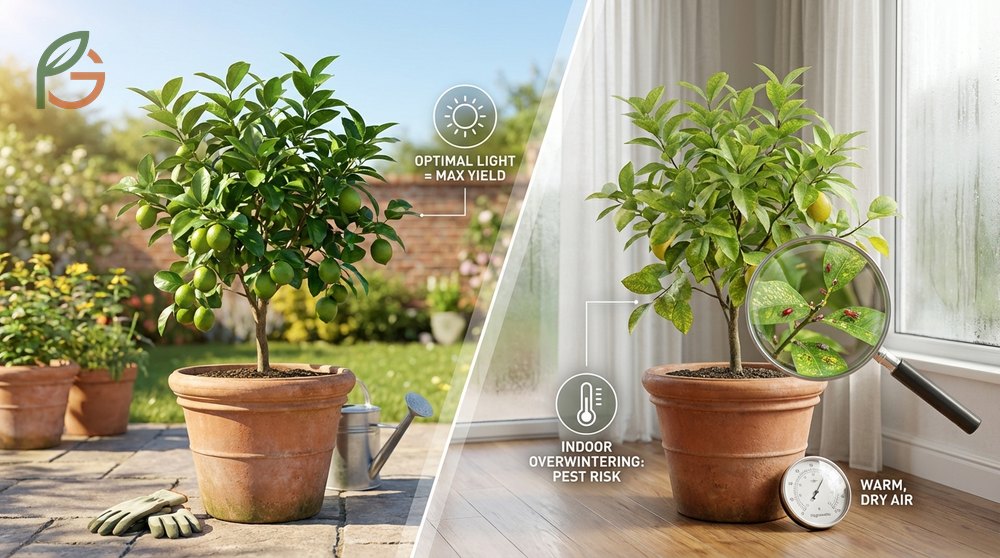
Light and temperature management separate successful container citrus growers from those who struggle. Current agricultural data shows that insufficient sunlight reduces lime yields by 60% even when all other care is perfect[3]. The mobility of pots lets you chase optimal conditions throughout the year.
Indoor overwintering protects trees in cold climates but introduces pest challenges. Spider mites and scale insects multiply rapidly in warm, dry indoor air. What often gets overlooked is that prevention works better than treatment—a quick weekly inspection catches infestations before they explode.
Sunlight and Placement
Position your container where it’ll receive 8 hours of direct sun daily. Morning sun with afternoon shade works best in hot climates above 95°F (35°C). South-facing walls that reflect additional heat benefit trees in cooler regions. Move containers on wheeled plant dollies to adjust exposure seasonally.
Indoor placement requires the brightest window you have—typically south or southwest-facing. Natural light intensity drops dramatically just 3 feet from windows. Supplement with LED grow lights if you notice leaf drop or pale new growth. Run lights for 12-14 hours daily during winter.
Avoid placing containers where they’ll be exposed to cold drafts from air conditioners or heating vents. Rapid temperature swings stress trees and trigger leaf drop. Keep at least 3 feet away from these air sources.
Common Pest Management
Spider mites become the primary threat for indoor container limes during winter. These tiny pests appear as fine webbing on leaf undersides and cause stippled yellow damage. A strong spray from your garden hose dislodges mites outdoors—direct water upward toward leaf undersides weekly[8].
Scale insects look like small brown or white bumps stuck to stems and leaves. They suck sap and weaken trees gradually. Scrape them off with your fingernail or a soft brush. For heavy infestations, apply horticultural oil spray following label directions.
Aphids cluster on tender new growth and excrete sticky honeydew. This attracts ants and promotes sooty mold growth. Blast them off with water or use insecticidal soap. Beneficial insects like ladybugs provide natural control when you keep your tree outdoors during warm months.
- Spider mites – fine webbing, yellow stippling on leaves, thrive indoors in winter
- Scale insects – brown bumps on stems and leaf undersides, cause yellowing and weakness
- Aphids – green or black clusters on new growth, produce sticky honeydew
- Whiteflies – tiny white insects that fly up when disturbed, found on leaf undersides
- Mealybugs – white cottony masses in leaf joints, common on indoor trees
Prevention Strategy: Quarantine your lime tree for 2 weeks when moving it between indoor and outdoor locations. This isolation period lets you catch hitchhiking pests before they spread to your other plants.
Conclusion
The evidence is clear: growing lime trees in pots succeeds when you provide the right container size, well-draining soil, and consistent care. Starting with a 15-gallon pot, using standard potting mix, and maintaining 8 hours of daily sun creates the foundation for productive trees. Dwarf varieties like Persian limes reach just 4-6 feet tall while producing abundant harvests even in limited balcony spaces.
Current horticultural guidance emphasizes the mobility advantage containers offer—you can protect your investment from frost damage and optimize light exposure throughout the year. With proper watering, fertilizing three times annually, and annual pruning, your potted lime tree will reward you with fresh citrus for decades. FruitGarden provides research-backed techniques that transform challenging citrus cultivation into a manageable and rewarding balcony gardening project.
Frequently Asked Questions
What size pot do I need for a lime tree?
Start with a 15-gallon container for nursery-bought lime trees 2-3 feet tall. This size provides adequate root space for 3-5 years of growth. Young seedlings begin in 5-gallon pots and graduate to larger containers as they mature. Choose pots with 4-5 drainage holes to prevent waterlogged roots.
How often should I water a potted lime tree?
Water when the top 2 inches of soil feel dry—typically every 2-3 days during summer and weekly in winter. Container material affects frequency: fabric pots dry out faster than plastic ones. Always water until it drains from the bottom holes, then empty saucers within 30 minutes to prevent root rot.
Can lime trees survive winter in pots?
Yes, when you move them indoors before temperatures drop below 32°F (0°C). Lime trees prefer 55-85°F (13-30°C) and tolerate brief cold snaps but can’t survive extended freezing. Place containers near south-facing windows indoors or in heated garages with supplemental lighting. The container’s mobility is what makes winter survival possible in cold climates.
What’s the best lime variety for containers?
Persian (Tahiti) limes work best because they stay naturally compact at 4-6 feet tall and produce seedless fruit. They’re more cold-tolerant than other varieties and less acidic for fresh use. Key limes offer authentic pie flavor in smaller packages, while Kaffir limes provide aromatic leaves for Thai cooking.
How much sun does a potted lime tree need?
Provide at least 8 hours of direct sunlight daily for healthy growth and fruit production. Morning sun with afternoon shade works best in regions above 95°F (35°C). Indoors, place containers in south or southwest-facing windows and supplement with LED grow lights for 12-14 hours daily during winter months.
When should I fertilize container-grown lime trees?
Fertilize three times per year—late winter, late spring, and mid-summer. Use an 8-8-8 formula for young non-bearing trees, switching to 12-0-12 once fruiting begins. Container limes need 3x more fertilizer than ground-planted trees because frequent watering leaches nutrients from potting mix. Scatter fertilizer 12 inches from the trunk and water in immediately.
Why are my potted lime tree leaves turning yellow?
Yellow leaves indicate either nitrogen deficiency (entire leaves pale) or magnesium shortage (yellowing between green veins). Nitrogen deficiency requires immediate fertilizing with citrus food. Magnesium issues respond to monthly Epsom salt supplements at 1 tablespoon per gallon of water. Overwatering also causes yellowing by suffocating roots—check that your container drains properly.





