
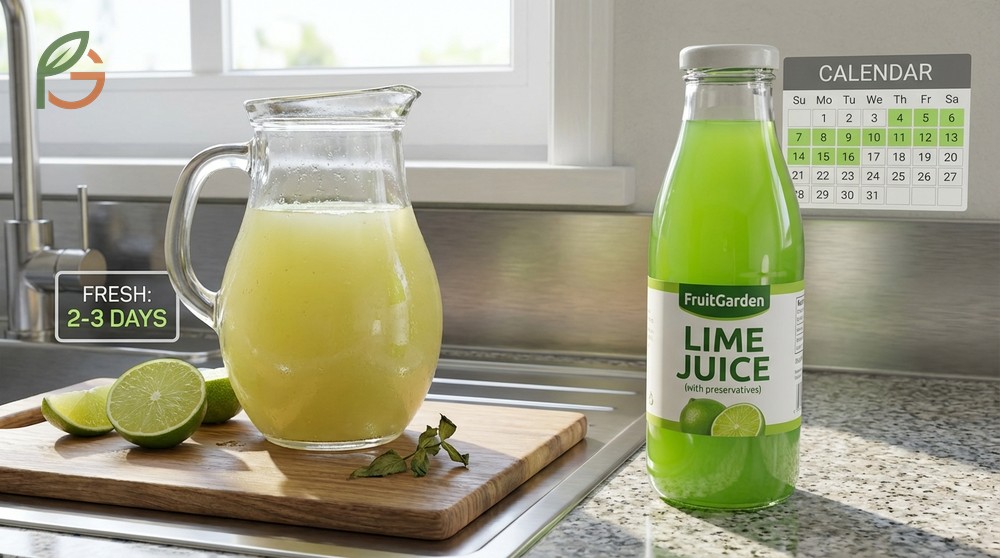
Does lime juice go bad? Yes, it does. Freshly squeezed lime juice lasts only 2-3 days in the fridge before losing flavor and developing off-tastes, while bottled varieties with preservatives can last several weeks once opened[1]. Research shows that oxidation starts immediately after squeezing, causing citrus juice to lose its vibrant color and zesty punch within 24 hours[2]. FruitGarden helps home gardeners and fruit enthusiasts understand proper storage techniques to maximize freshness and prevent waste.
Quick Answer
- Fresh lime juice lasts 2-3 days refrigerated at 40°F (4°C) or below[1]
- Bottled lime juice stays fresh 6-8 weeks after opening when refrigerated[3]
- Freezing extends shelf life to 3-4 months with minimal quality loss[4]
- Signs of spoilage include off-smells, bitter taste, cloudiness, or fizzy texture[5]
Does Lime Juice Go Bad
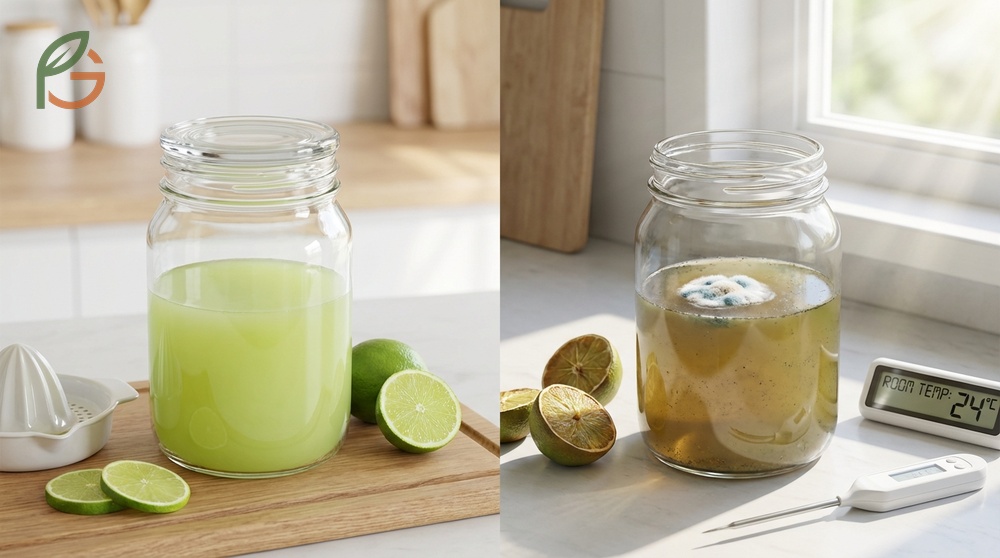
Lime juice spoils due to exposure to oxygen, light, and microbial contamination. Fresh citrus juice starts oxidizing the moment it’s squeezed, causing enzymes to break down flavor compounds and nutrients[2]. This natural degradation process accelerates at room temperature, where bacteria and yeasts multiply rapidly in the acidic environment.
Studies on citrus juice quality show that yeasts and molds are the primary cause of spoilage in fresh juices[6]. Even though lime juice has a low pH that inhibits many bacteria, acid-tolerant microorganisms like Aspergillus and Rhodotorula can still thrive. The spoilage manifests as off-flavors, cloudiness, and fizzy texture from CO₂ production.
Temperature plays the most critical role in preservation. The FDA recommends keeping refrigerators at 40°F (4°C) or below to minimize bacterial growth[7]. At this temperature range, fresh lime juice maintains acceptable quality for 2-3 days, though it starts losing its bright, zesty character within 24 hours.
Why Fresh Lime Juice Spoils Quickly
Oxygen exposure triggers immediate chemical reactions in fresh lime juice. When you squeeze a lime, you’re breaking down cell walls and releasing enzymes that interact with air. This oxidation process causes vitamin C degradation and changes the juice’s pH balance, creating conditions where spoilage organisms can establish themselves more easily.
Unlike commercially processed juices, fresh lime juice lacks heat treatment. Pasteurization typically requires heating juice to 160-164°F (71-73°C) for 10 seconds to achieve a 5-log pathogen reduction[8]. Without this processing step, fresh juice contains naturally occurring microorganisms from the fruit’s surface.
Important Storage Note: Always store fresh lime juice in an airtight glass container to minimize oxidation. Exposure to air speeds up flavor loss by up to 50% within the first 12 hours.
Preservatives in Bottled Lime Juice
Commercial bottled lime juice contains preservatives that significantly extend shelf life. Common additives include sodium benzoate, potassium sorbate, and sulfites, which inhibit mold and yeast growth in acidic environments. These preservatives allow unopened bottles to remain shelf-stable for 12-18 months[9].
After opening, bottled lime juice still benefits from these preservatives but requires refrigeration. The juice maintains quality for 6-8 weeks in the fridge compared to just 2-3 days for fresh juice[3]. However, flavor quality gradually diminishes even with preservatives present.
How Long Does Lime Juice Last
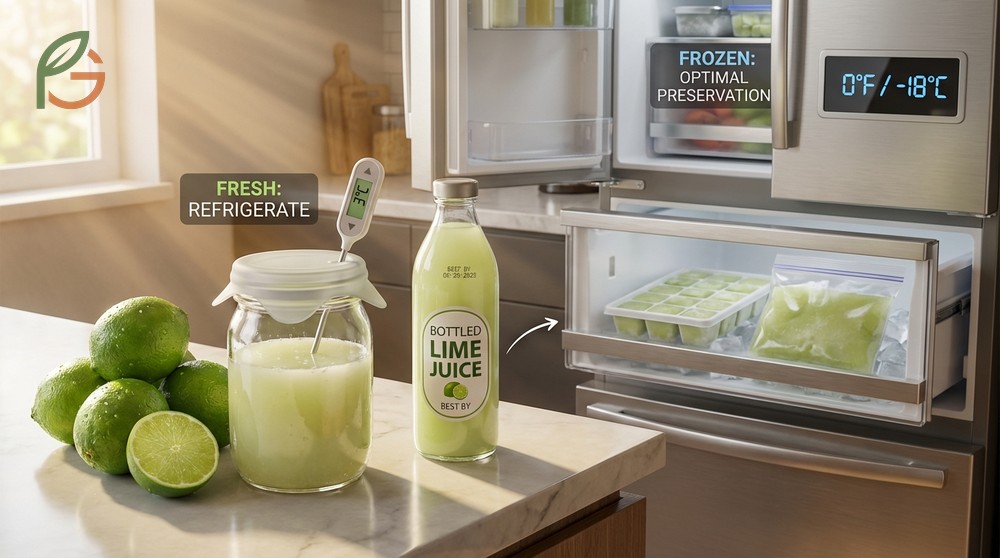
Storage duration varies dramatically between fresh and bottled lime juice. Temperature, container type, and exposure to light all influence how long the juice remains usable. Following proper storage guidelines can triple the shelf life of fresh juice and maintain bottled juice quality for months.
USDA guidelines for frozen citrus juice recommend maintaining temperatures at 0°F (-18°C) or lower for optimal preservation[10]. When properly frozen, lime juice retains best quality for 3-4 months, though it remains safe to consume beyond that timeframe with some flavor degradation.
Fresh Squeezed Lime Juice Shelf Life
Fresh squeezed lime juice delivers peak flavor immediately after extraction but deteriorates rapidly. Most bartenders agree that fresh lime juice loses its optimal taste within 18-24 hours, even when refrigerated[11]. The citrus brightness fades first, followed by the development of bitter off-notes.
You’ll notice quality decline through color changes and aroma loss. Fresh lime juice starts with a bright, pale yellow-green color that darkens as oxidation progresses. After 3 days in the fridge, even properly stored juice develops a dull appearance and musty smell that signals it’s past its prime.
- 0-6 hours: Peak flavor and maximum vitamin C content, best for cocktails and garnishes
- 6-24 hours: Slight flavor loss but still acceptable for cooking and beverages
- 1-2 days: Noticeable taste decline, suitable only for cooked dishes where heat will mask off-flavors
- 2-3 days: Maximum safe storage period, significant quality loss, use only in baked goods or marinades
- Beyond 3 days: High risk of fermentation and mold growth, discard immediately
Bottled Lime Juice Storage Timeline
Unopened bottled lime juice remains shelf-stable for extended periods when stored in a cool, dark pantry. The combination of pasteurization and preservatives creates an inhospitable environment for microorganisms. Most brands include a “best by” date 12-18 months from manufacture, though quality often extends beyond this date if the bottle remains sealed.
Once you break the seal, refrigeration becomes mandatory. Opened bottled lime juice lasts 6-8 weeks in the fridge at 40°F (4°C) or below[3]. Check for off-odors before each use, especially after the 4-week mark when flavor quality starts declining noticeably.
This table compares storage duration, refrigeration requirements, and quality retention across three types of lime juice: fresh squeezed, bottled opened, and frozen
| Type | Refrigerated Shelf Life | Frozen Shelf Life | Quality Retention |
|---|---|---|---|
| Fresh Squeezed | 2-3 days[1] | 3-4 months[4] | Best within 24 hours |
| Bottled (Opened) | 6-8 weeks[3] | 4-6 months[3] | Stable for 4 weeks |
| Bottled (Unopened) | 12-18 months[9] | Not recommended | Best before expiration date |
How to Store Fresh Lime Juice
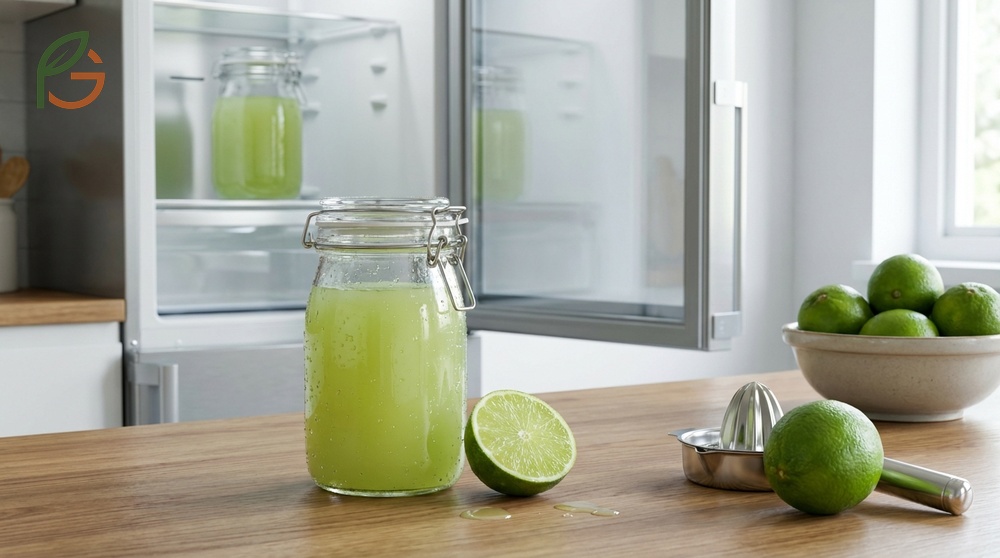
Proper storage starts with choosing the right container. Glass jars with airtight lids work best because they don’t absorb odors or leach chemicals into acidic liquids. Fill containers to the top to minimize air space, which reduces oxidation rates by limiting oxygen contact with the juice surface.
Refrigerate lime juice within 2 hours of squeezing to prevent bacterial growth. The FDA’s food safety guidelines specify that perishable items left at room temperature for more than 2 hours enter the “danger zone” where pathogens multiply rapidly[7]. If your kitchen temperature exceeds 90°F (32°C), reduce this window to 1 hour.
Refrigerator Storage Best Practices
Store lime juice on interior refrigerator shelves rather than door compartments. Door storage exposes containers to temperature fluctuations every time you open the fridge, which accelerates spoilage. Interior shelves maintain more consistent temperatures around 35-40°F (2-4°C), the optimal range for citrus preservation[1].
Label containers with the date you squeezed the juice. This simple habit prevents you from using lime juice that’s past its 2-3 day window. Keep the container tightly sealed between uses to minimize air exposure and prevent absorption of refrigerator odors that can alter the juice’s flavor profile.
- Use glass containers with rubber-sealed lids to create an airtight environment
- Store juice toward the back of shelves where temperatures stay coldest and most stable
- Keep containers away from raw meat and strong-smelling foods to prevent cross-contamination
- Fill containers to the brim, leaving minimal headspace to reduce oxidation
- Wipe bottle rims clean before sealing to prevent mold growth on residue
- Check refrigerator temperature weekly with a thermometer to ensure it stays at 40°F (4°C) or below
Storing Cut Limes
Cut limes require different handling than juice. Wrap halved or quartered limes tightly in plastic wrap or place them in sealed containers to prevent moisture loss. The exposed flesh dries out within 24 hours without protection, making the fruit unusable for juicing.
Refrigerated cut limes stay fresh for 3-4 days when properly wrapped. The peel acts as a natural barrier against contamination, but the cut surface remains vulnerable to mold growth. If you notice any fuzzy growth or dark spots on the flesh, discard the entire lime section to avoid consuming mold spores.
Pro Storage Tip: Place cut limes flesh-side down on a small plate before wrapping. This position creates a seal that reduces air exposure and keeps the surface moist longer.
Can You Freeze Lime Juice
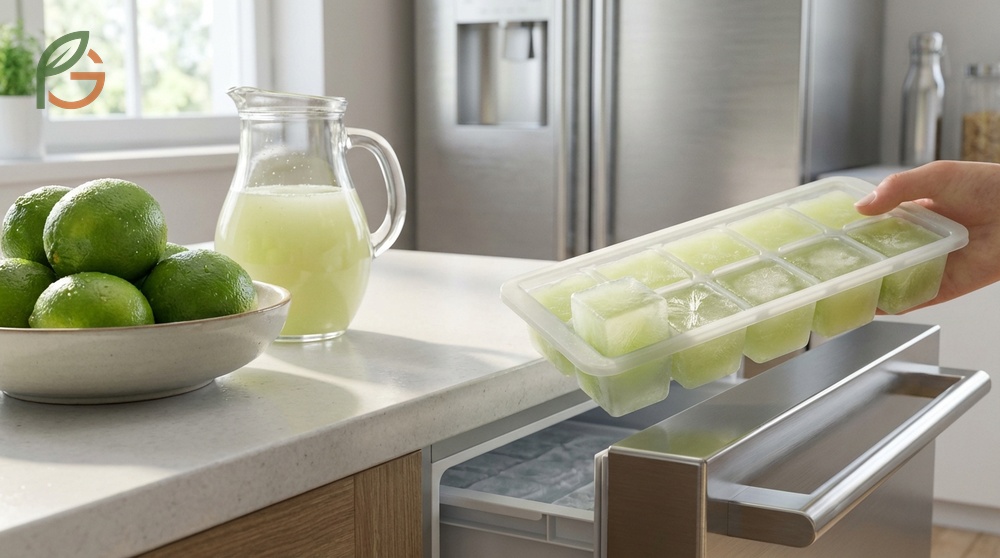
Freezing preserves lime juice for 3-4 months without significant quality loss. The process halts oxidation and prevents microbial growth by reducing water activity below levels that support bacterial reproduction. While frozen juice won’t match the brightness of fresh-squeezed, it maintains more flavor than refrigerated juice stored beyond 3 days.
Ice cube trays offer the most practical freezing method for home cooks. Each standard cube holds approximately 2 tablespoons of juice—a convenient measurement for recipes. Once frozen solid after 3-4 hours, transfer cubes to freezer bags to prevent freezer burn and off-flavors from other frozen foods[4].
Freezing Lime Juice Cubes
Start by straining fresh lime juice through a fine-mesh sieve to remove pulp and seeds. Pulp can create texture changes when frozen and thawed. Pour the strained juice into clean ice cube trays, filling each cavity about 90% full to allow for expansion during freezing.
Place trays on a flat freezer shelf to prevent spilling. Maintain freezer temperature at 0°F (-18°C) or lower for optimal preservation[10]. After cubes freeze completely, pop them out and transfer to labeled freezer bags with the date. This method prevents the formation of large ice crystals that can damage flavor compounds.
- Squeeze and strain fresh lime juice to remove pulp and achieve smooth texture
- Fill ice cube tray cavities to 90% capacity, leaving expansion room
- Freeze for 3-4 hours on a level shelf until completely solid
- Transfer frozen cubes to labeled freezer bags, removing excess air before sealing
- Store bags flat in freezer to save space and prevent cube breakage
- Use frozen cubes within 3-4 months for best flavor quality
Thawing Frozen Lime Juice
You don’t need to thaw lime juice cubes for most cooking applications. Drop frozen cubes directly into hot dishes, marinades, or beverages where they’ll melt quickly. This method actually works better than pre-thawing because it minimizes the time juice spends at temperatures that promote oxidation.
For recipes requiring room-temperature juice, thaw cubes in the refrigerator for 2-3 hours. Never thaw at room temperature, as this creates conditions where bacteria can multiply. Thawed juice lasts only 1-2 days in the fridge, so thaw only what you’ll use immediately.
Freezing Note: Add 1/4 teaspoon of lime zest to each ice cube cavity before pouring juice. The zest contains essential oils that boost flavor after thawing.
Signs of Bad Lime Juice
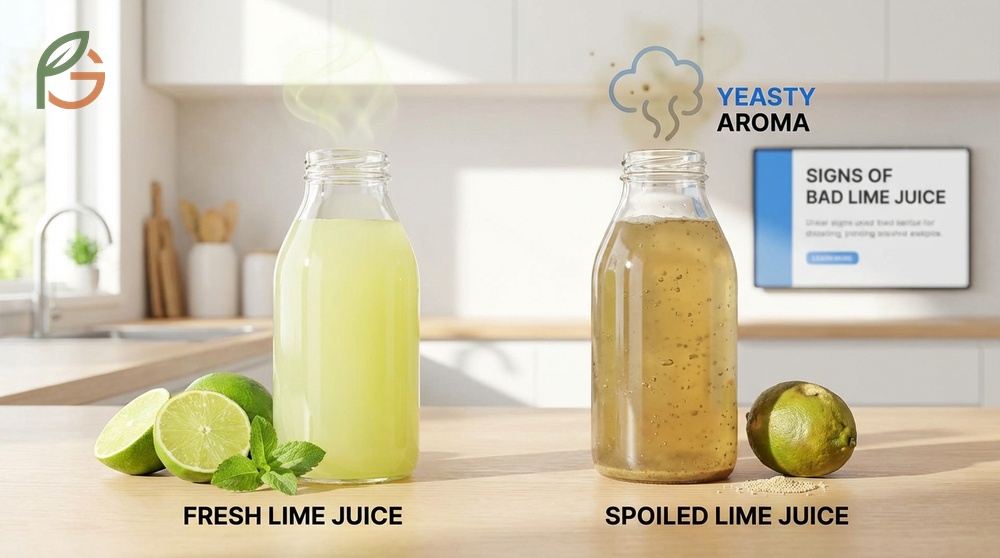
Spoiled lime juice announces itself through sensory changes that are difficult to miss. Your nose provides the first line of defense—fresh lime juice has a bright, citrusy aroma that’s immediately recognizable. When juice goes bad, it develops funky, yeasty, or bread-like smells that indicate fermentation[2].
Visual inspection reveals additional spoilage clues. Fresh juice appears clear to slightly cloudy with a pale yellow-green color. As oxidation progresses, the juice darkens to brown or develops an unnatural murky appearance. Research on juice microbiology shows that cloudiness often signals yeast and mold contamination, particularly from Aspergillus species[6].
Smell and Taste Tests
Always smell lime juice before using it, especially if it’s been stored for more than 24 hours. Fresh juice smells tart and citrusy with no off-notes. Fermented juice gives off alcoholic or vinegary odors from yeast converting sugars to alcohol and acetic acid. If you detect any musty, moldy, or compost-like smells, discard the juice immediately.
Taste testing should be your last resort after passing the smell test. Take a tiny sip rather than a full gulp. Bad lime juice tastes excessively bitter or sour beyond normal citrus tartness[12]. Some spoiled juice develops a flat, lifeless flavor with no citrus character. Don’t swallow if the taste seems off—spit it out and throw away the batch.
- Yeasty or bread-like smell indicating active fermentation
- Fizzy texture or visible bubbles showing CO₂ production from microbial activity
- Brown discoloration beyond normal light yellowing from oxidation
- Extreme cloudiness or floating particles suggesting mold growth
- Bitter or sour taste that’s harsh rather than pleasantly tart
- Flat flavor profile with no recognizable citrus notes
- Visible mold spots, typically appearing as fuzzy white, green, or black patches
Visual Indicators of Spoilage
Cloudiness in lime juice can indicate different issues depending on its appearance. Natural pectin creates slight cloudiness in fresh juice, which is harmless. However, thick, murky cloudiness that develops after storage signals microbial contamination. This type of cloudiness often accompanies off-smells and means the juice has crossed into unsafe territory.
Brown lime juice sits in a gray area. Light browning from oxidation doesn’t make juice unsafe but severely impacts flavor. If brown juice still smells fresh and hasn’t been stored beyond 3 days, you can use it in cooked dishes where heat will mask the off-taste. However, brown juice with additional warning signs like fizzing or odor changes should be discarded immediately.
Mold appears as fuzzy growth on the juice surface or clinging to container walls. Even small mold spots contaminate the entire batch because mold produces microscopic spores throughout the liquid. Never scrape off visible mold and use the remaining juice—the entire container requires disposal[6].
Conclusion
The evidence is clear: does lime juice go bad is answered with a definite yes, but proper storage dramatically extends usability. Fresh lime juice lasts 2-3 days refrigerated while freezing preserves it for months, giving you flexibility in how you use this versatile ingredient. Recognizing spoilage signs like off-smells, cloudiness, and bitter taste prevents food waste and protects your health.
Current guidance emphasizes temperature control as the single most important factor in lime juice preservation. Whether you’re growing your own citrus or buying fruit at the market, FruitGarden encourages home gardeners to harvest at peak ripeness and process juice promptly for maximum freshness and nutritional value.
Frequently Asked Questions
Can lime juice go bad in the fridge?
Yes, fresh lime juice goes bad in the fridge after 2-3 days even when properly stored. Oxidation and microbial activity continue at refrigerator temperatures, just at slower rates than at room temperature. You’ll notice the juice losing its bright flavor and developing off-smells as it approaches the end of its shelf life.
How long is fresh lime juice good for?
Fresh lime juice is good for 2-3 days when refrigerated at 40°F (4°C) or below in an airtight container. Peak flavor lasts only 18-24 hours after squeezing. Beyond 3 days, fresh juice develops bitter flavors and risks fermentation. For longer storage, freeze juice in ice cube trays for up to 3-4 months.
Does lime juice expire?
Lime juice doesn’t expire in the traditional sense but loses quality over time. Bottled lime juice includes expiration dates indicating when flavor deteriorates, typically 12-18 months for unopened bottles. Fresh juice doesn’t have expiration dates but spoils within days. Always rely on smell and taste tests rather than dates alone.
How long does bottled lime juice last after opening?
Bottled lime juice lasts 6-8 weeks after opening when refrigerated at 40°F (4°C) or below. The preservatives in commercial juice significantly extend shelf life compared to fresh juice. Always check for off-smells before use, especially after the 4-week mark when quality starts declining noticeably.
Is cloudy lime juice safe to drink?
Slight cloudiness from natural pectin is safe in fresh lime juice. However, thick, murky cloudiness that develops during storage indicates microbial contamination and means the juice should be discarded. If cloudy juice also smells off or tastes bitter, it’s definitely spoiled and unsafe to consume.
Can I freeze lime juice in ice cube trays?
Yes, freezing lime juice in ice cube trays is an excellent preservation method. Each cube holds about 2 tablespoons of juice, perfect for recipes. Freeze for 3-4 hours, then transfer cubes to freezer bags. Frozen lime juice maintains quality for 3-4 months at 0°F (-18°C) or below.
What does fermented lime juice smell like?
Fermented lime juice smells yeasty, like rising bread dough, or develops alcoholic and vinegary odors. You might also detect musty or compost-like smells. These odors indicate that yeasts are converting sugars to alcohol and CO₂. Any juice with these smells should be discarded immediately regardless of its appearance.





