
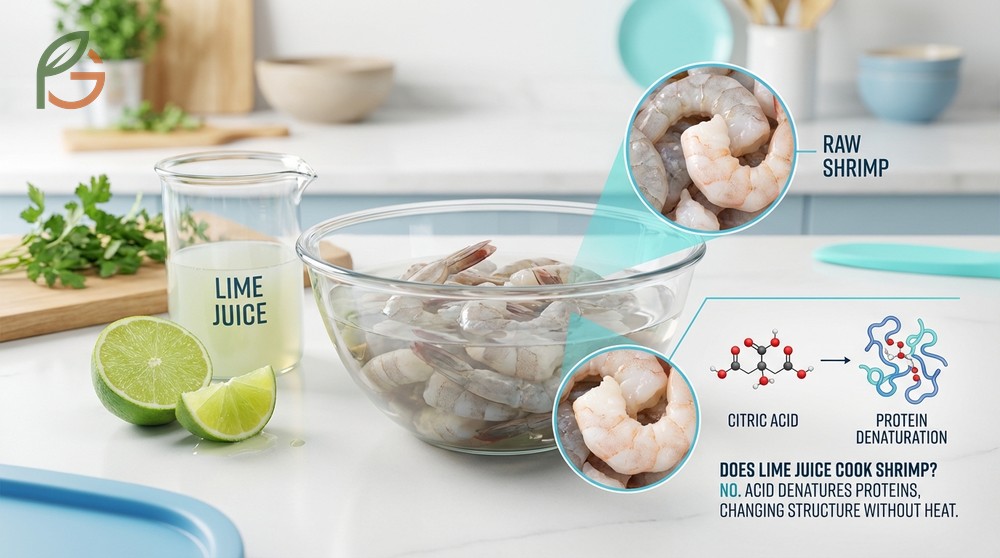
Does lime juice cook shrimp? No, lime juice doesn’t cook shrimp in the traditional sense—it denatures the proteins through acid, making them appear and feel cooked while the shrimp remains technically raw[1]. Research shows that citric acid changes the protein structure without heat, creating the firm, opaque texture you see in ceviche[2]. FruitGarden brings you evidence-based insights into how citrus acids transform seafood and what this means for food safety.
Quick Answer
- Lime juice denatures shrimp proteins through acid, not heat—the process is chemical, not thermal cooking[1]
- Shrimp turns opaque and firm after 30 minutes to 2 hours in lime juice, but remains technically raw[3]
- Acid reduces bacteria on the surface but doesn’t eliminate all pathogens or parasites[4]
- Safe ceviche requires frozen seafood (held at -4°F/-20°C for 7 days) to kill parasites before marinating[4]
Does Lime Juice Cook Shrimp
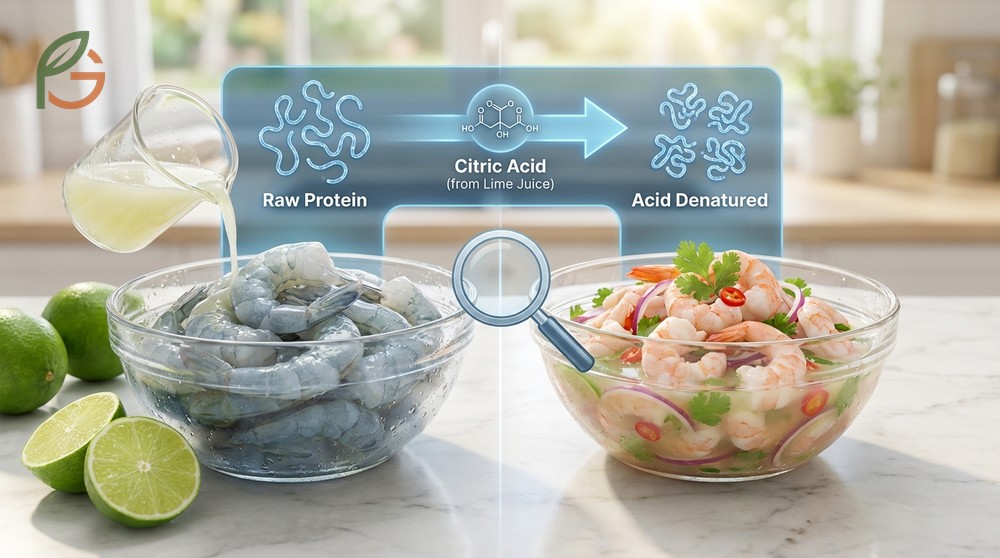
Lime juice doesn’t cook shrimp through heat—it changes the protein structure through a chemical process called acid denaturation. When shrimp proteins encounter citric acid from lime juice, the acidic environment causes protein chains to unfold and reconfigure[2]. This creates the same opaque, firm texture you’d get from heat, but the shrimp remains raw.
Most people don’t realize that “cooking” and “curing” aren’t the same thing. Traditional cooking uses temperatures above 140°F (60°C) to denature proteins and kill microorganisms. Acid-curing in ceviche operates at refrigerator temperatures around 40°F (4°C), achieving only the visual and textural changes without the microbial safety of heat[1].
The difference matters for food safety. While acid creates a “cooked” appearance, studies show that acidic marinades don’t eliminate all bacteria or parasites that may be present in raw seafood[4]. This explains why proper ceviche preparation requires additional safety steps beyond just marinating in lime juice.
What Is Protein Denaturation
Protein denaturation occurs when weak hydrogen bonds holding a protein’s three-dimensional shape break apart. These bonds are sensitive to environmental changes—too much heat, extreme pH levels, or high salt concentrations all cause proteins to unfold[2].
Once unfolded, proteins expose previously hidden sections of their structure. These exposed sections stick to other protein molecules, causing them to clump together and become opaque. You can see this clearly when raw shrimp changes from translucent gray to white or pink after lime juice exposure.
Acid Versus Heat Cooking
Heat-based cooking and acid-based curing produce similar visual results through different mechanisms. Heat adds kinetic energy that vibrates protein molecules until bonds break, typically starting around 140°F (60°C) for most seafood proteins. Acid doesn’t add energy—it changes the electrical charges on protein molecules, destabilizing their structure at any temperature.
This distinction creates texture differences. Heat-cooked shrimp has a drier, firmer texture because high temperatures force out more moisture. Acid-cured shrimp in ceviche retains more moisture, resulting in a tender, almost silky texture that distinguishes it from traditionally cooked seafood.
Important Note: Acid denaturation changes protein structure without killing heat-sensitive pathogens. You can’t rely on lime juice alone to make raw shrimp safe to eat—proper freezing before marinating is essential for parasite control.
How Does Lime Juice Cook Shrimp
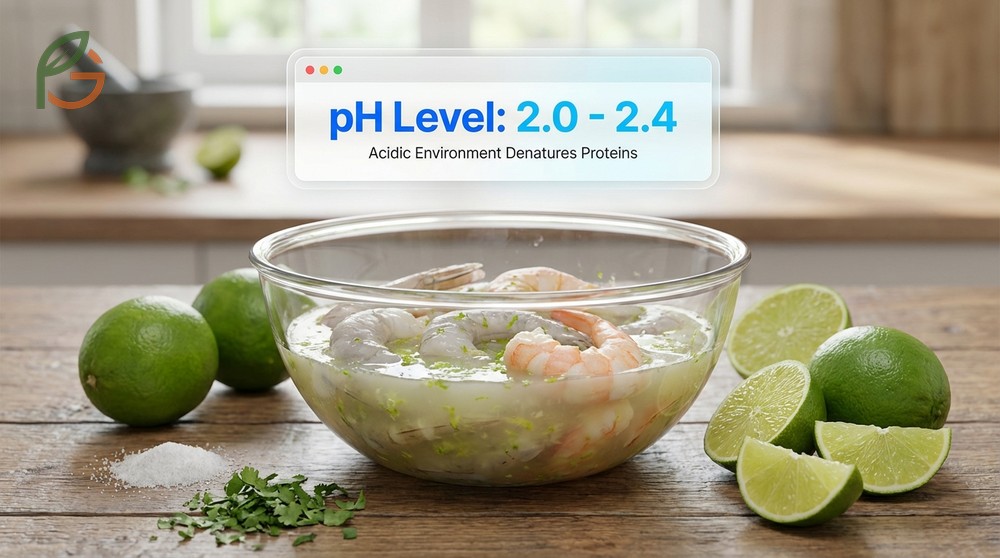
The citric acid in lime juice lowers the pH around shrimp tissue to extremely acidic levels, typically between 2.0 and 2.4. At these pH levels, the acidic environment overwhelms the normal protein structure, forcing amino acid chains to unfold and reorganize[1]. The process starts immediately upon contact but takes 30 minutes to 2 hours for complete visual transformation.
Unlike thermal cooking where heat penetrates from outside to center, acid denaturation works from the surface inward. Lime juice can only affect proteins it contacts directly. This is why ceviche recipes emphasize cutting seafood into small, uniform pieces—larger chunks may have raw centers even after extended marinating.
Studies on bacterial reduction in ceviche show that while some pathogens die within 15 minutes of acid exposure, others adapt or survive in the acidic environment[5]. The visible protein changes don’t correlate with complete microbial elimination, which is why food safety experts recommend starting with frozen seafood.
The Denaturation Process
When lime juice first contacts shrimp, hydrogen ions from the citric acid immediately begin disrupting the electrostatic forces maintaining protein structure. Within the first 5-10 minutes, surface proteins start unfolding. After 15-20 minutes, you’ll notice the shrimp exterior turning opaque as denatured proteins aggregate.
The process continues deeper into the tissue over the next 30-90 minutes. Complete opacity throughout the shrimp indicates full protein denaturation, though the exact timing depends on shrimp size, temperature, and lime juice concentration. Smaller pieces (1/2-inch cubes) denature completely in 30-40 minutes, while larger pieces may need 2 hours[3].
pH Levels and Protein Changes
Fresh lime juice has a pH between 2.0 and 2.4, creating an extremely acidic environment. Most proteins in shrimp tissue are stable within pH 6.0-7.0, so the dramatic pH shift forces immediate structural changes. The lower the pH, the faster denaturation occurs, but pH below 2.0 can cause texture problems, making shrimp mushy or overly firm.
As proteins denature and release moisture, they dilute the lime juice slightly, raising the pH over time. This is why some recipes call for refreshing the marinade or using a high ratio of lime juice to shrimp—maintaining consistently low pH ensures complete protein transformation throughout the marinating period.
- Lime juice pH (2.0-2.4) versus shrimp tissue pH (6.5-7.0) creates the driving force for denaturation
- Surface area matters—smaller pieces denature faster because acid contacts more protein molecules
- Temperature affects reaction speed—refrigerated marinating (40°F/4°C) takes longer than room temperature but improves food safety
- Juice-to-shrimp ratio influences how quickly proteins unfold and how evenly denaturation occurs
- Marinating time determines texture—30 minutes gives tender results, 2+ hours creates firmer, more “cooked” texture
How Long to Cook Shrimp in Lime Juice
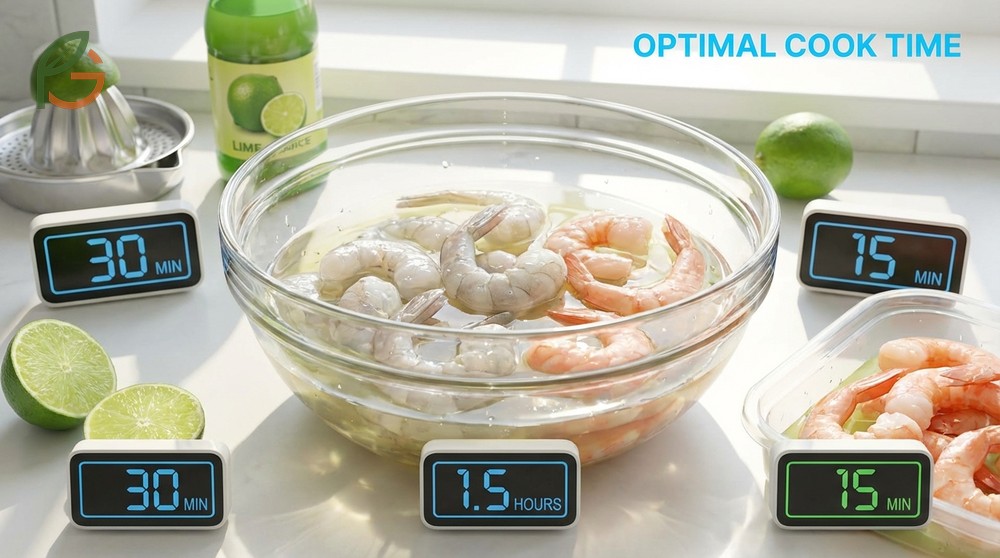
Raw shrimp needs 30 minutes to 2 hours in lime juice for complete protein denaturation, depending on piece size and desired texture[3]. Most recipes target 1 to 1.5 hours as the sweet spot where shrimp turns fully opaque without becoming overly firm or “pickled.” If you’re using pre-cooked shrimp, you only need 15-20 minutes for the lime juice to flavor the meat.
Timing isn’t just about texture—it affects safety perception. While longer marinating doesn’t guarantee better pathogen elimination, it does ensure complete protein denaturation throughout each piece. Undermarinated shrimp with gray, translucent centers indicates incomplete acid penetration and raises questions about whether the surface treatment was sufficient.
What often gets overlooked is that you can overdo it. After 3-4 hours in lime juice, shrimp proteins become over-denatured, creating a mushy or rubbery texture that’s unpleasant. The proteins essentially “overcook” in acid just as they would with excessive heat, losing their desirable firm-yet-tender quality.
Marinating Times Explained
For standard 31-40 count shrimp (medium size) cut into 1/2-inch pieces, 30-40 minutes in fresh lime juice produces tender, just-opaque results. This timing works well if you prefer ceviche with a softer texture that’s obviously different from heat-cooked shrimp. The pieces will be white to pink throughout with no translucent centers.
Extending marination to 1.5-2 hours creates firmer texture that more closely resembles traditionally cooked shrimp. Many traditional recipes call for this longer period, especially when using slightly larger pieces or when mixing in other vegetables that need time to soften and blend flavors. Some cooks even marinate overnight for maximum firmness.
Temperature during marinating matters for both safety and timing. Refrigerated marinating at 40°F (4°C) slows the denaturation process by about 30% compared to room temperature, but dramatically reduces bacterial growth risk. Most food safety guidelines recommend keeping ceviche refrigerated throughout preparation and limiting room temperature exposure to under 2 hours total.
Signs of Properly Cured Shrimp
Fully cured shrimp transitions from translucent gray to opaque white or pink, depending on the original shrimp type. When you cut a piece in half, the center should show the same opaque color as the exterior with no translucent or gray areas. The texture should feel firm but not rubbery when pressed with a fork.
Another indicator is moisture release. As proteins denature, they expel water into the marinade, which becomes cloudy and slightly viscous. If your marinade remains crystal clear after 30 minutes, the shrimp may need more time or you may need more lime juice for proper protein transformation.
- Color change from gray/translucent to white or pink throughout the piece with no transparent centers
- Firm texture when pressed, similar to poached shrimp but slightly more tender
- Cloudy marinade from released proteins and moisture, not clear like fresh juice
- Shrimp pieces appear slightly smaller and more compact as proteins contract during denaturation
- No raw seafood smell—properly cured shrimp has a bright, citrusy aroma from the lime juice
Timing Tip: Check shrimp at 30 minutes by cutting the thickest piece in half. If the center is still translucent gray, continue marinating and check every 15 minutes. Don’t exceed 2.5 hours or texture will become unpleasantly firm.
Safe Ceviche Preparation
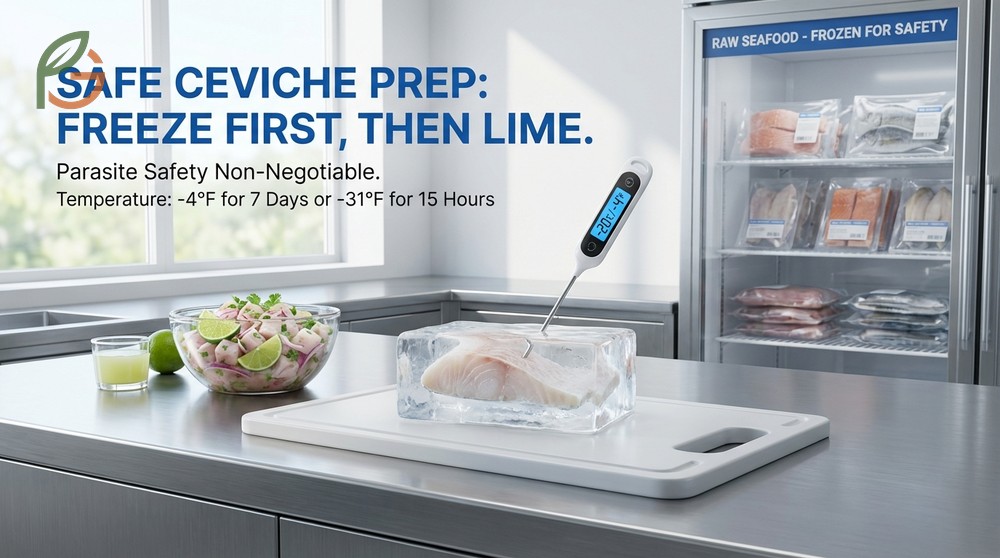
Safe ceviche starts with proper seafood handling long before lime juice enters the equation. Current guidance emphasizes freezing raw seafood at -4°F (-20°C) for at least 7 days or at -31°F (-35°C) for 15 hours to kill parasites before making ceviche[4]. This freezing step is non-negotiable for parasite safety, as lime juice alone can’t eliminate parasitic organisms.
Beyond freezing, source quality matters tremendously. Purchase seafood from reputable suppliers who follow proper cold chain management. Shrimp should smell fresh and ocean-like, not ammonia-like or fishy. Check that previously frozen seafood was properly thawed in the refrigerator, not at room temperature, to minimize bacterial growth before marinating.
Cross-contamination prevention is equally critical. Use separate cutting boards and utensils for raw seafood, wash hands thoroughly between handling raw ingredients, and keep marinating ceviche refrigerated at all times. The acidic environment slows but doesn’t stop bacterial growth, so time-temperature control remains essential throughout preparation and storage.
Does Lime Juice Kill Bacteria
Lime juice reduces some bacterial populations but doesn’t eliminate all pathogens. Research shows that lime juice at pH 2.0-2.4 can reduce certain bacteria like Vibrio parahaemolyticus within 15 minutes of exposure[5]. However, other organisms adapt to acidic conditions or survive in protected areas where acid penetration is incomplete.
The challenge is that different pathogens respond differently to acid. Studies testing Salmonella, E. coli, and Listeria in ceviche conditions found variable results—some bacteria died quickly while others persisted or even resumed growth after initial decline. This variability means you can’t rely on lime juice as a food safety intervention comparable to proper cooking or freezing.
Even when bacteria are reduced, the acid mainly affects surface organisms. Bacteria deep within shrimp tissue or those present in the shrimp’s digestive tract may remain viable despite surface denaturation. This is why purchasing cleaned, deveined shrimp from quality sources is crucial—it reduces the initial bacterial load before marinating begins.
Parasite Risks and Freezing
Raw seafood can harbor parasites including Anisakis simplex and Pseudoterranova species, which cause illness if consumed alive[4]. Unlike bacteria, these multicellular organisms aren’t killed by acid exposure at ceviche pH levels. They can survive in lime juice and remain infectious if the seafood wasn’t properly frozen before preparation.
Commercial freezing standards specifically target parasite destruction. Holding seafood at -4°F (-20°C) for 7 days kills most parasitic larvae found in fish and shrimp. Flash-freezing at -31°F (-35°C) achieves the same result in just 15 hours. Most commercially available frozen shrimp has already undergone this treatment, making it safer for ceviche than “fresh” unfrozen seafood.
When buying seafood for ceviche, ask if it was previously frozen and at what temperature. “Sushi-grade” or “sashimi-grade” labels suggest the fish underwent proper freezing, though these aren’t regulated terms. If using truly fresh, never-frozen seafood, freeze it yourself using home freezer settings below 0°F (-18°C) for at least 7 days before making ceviche.
- Always use seafood that was frozen at -4°F (-20°C) for 7 days or -31°F (-35°C) for 15 hours to kill parasites
- Keep shrimp refrigerated at 40°F (4°C) or below during marinating and storage—never leave at room temperature
- Use separate cutting boards and utensils for raw seafood to prevent cross-contamination with other foods
- Consume ceviche within 24 hours of preparation for optimal safety and quality
- Avoid serving ceviche to high-risk individuals including pregnant women, young children, elderly, or immunocompromised people
- Purchase from reputable suppliers with proper cold chain management and documented freezing protocols
Safety Warning: Lime juice creates the appearance and texture of cooked shrimp without providing the microbial safety of heat cooking. Always start with properly frozen seafood and maintain strict temperature control throughout preparation.
This table compares marinating duration, resulting texture, visual indicators, and best use cases for shrimp ceviche across four time periods from 15 minutes to over 2 hours
| Marinating Time | Texture Result | Visual Indicator | Best For |
|---|---|---|---|
| 15-20 minutes | Pre-cooked shrimp flavoring only | Already opaque, takes on citrus flavor | Quick preparation with cooked shrimp |
| 30-40 minutes | Tender, slightly soft texture | Fully opaque, pink/white throughout | Softer ceviche, raw shrimp traditional style |
| 1-2 hours | Firm, “cooked” texture similar to poached | Completely opaque, compact appearance | Traditional recipes, firmer texture preference |
| 2+ hours | Very firm, risk of rubbery or mushy texture | Overly white, may appear dried out | Generally not recommended, texture degradation |
Conclusion
The answer is clear: lime juice doesn’t cook shrimp through heat—it denatures proteins through chemical reaction, creating cooked appearance and texture while leaving the seafood technically raw. This distinction matters critically for food safety, as the acid-curing process doesn’t eliminate all pathogens and parasites that proper thermal cooking would destroy. Anyone making ceviche must start with seafood that was frozen at appropriate temperatures for parasite control and maintain strict cold chain management throughout preparation.
Current food safety guidance emphasizes that while lime juice transforms shrimp visually in 30 minutes to 2 hours, this transformation shouldn’t be confused with the microbial safety of heat cooking. FruitGarden recommends following established freezing protocols, using quality seafood sources, and serving ceviche only to individuals without heightened foodborne illness risk. Understanding the science behind acid denaturation helps you create delicious ceviche while respecting the food safety realities of consuming raw seafood.
Medical Disclaimer
Important Food Safety Disclaimer: This content is for informational and educational purposes only. It is not intended as a substitute for professional food safety advice or consultation with certified food handlers. Raw and undercooked seafood carries inherent risks of foodborne illness. Always consult current FDA guidelines and local health department recommendations before preparing or consuming raw seafood dishes. Individuals who are pregnant, immunocompromised, elderly, or have underlying health conditions should avoid consuming raw or undercooked seafood including ceviche. When in doubt about seafood safety, cook thoroughly to internal temperature of 145°F (63°C).
Frequently Asked Questions
Can lime juice fully cook raw shrimp?
No, lime juice denatures shrimp proteins through acid but doesn’t “cook” in the traditional thermal sense. The acid changes protein structure to create cooked appearance and texture, but the shrimp remains raw. This means lime juice doesn’t provide the same microbial safety as heat cooking to 145°F (63°C), which is why proper freezing and cold chain management are essential for safe ceviche.
How long does shrimp need to marinate in lime juice for ceviche?
Raw shrimp needs 30 minutes to 2 hours in lime juice for complete protein denaturation, depending on piece size and texture preference. Most recipes target 1 to 1.5 hours for optimal results. Smaller pieces (1/2-inch cubes) fully denature in 30-40 minutes, while larger pieces may need the full 2 hours. Pre-cooked shrimp only needs 15-20 minutes for flavor absorption.
Does lime juice kill bacteria in raw shrimp?
Lime juice reduces some bacterial populations but doesn’t eliminate all pathogens. Research shows certain bacteria like Vibrio parahaemolyticus decline within 15 minutes at ceviche pH levels, but other organisms adapt or survive in the acidic environment. You can’t rely on lime juice alone for food safety—proper freezing and temperature control throughout preparation are essential for reducing foodborne illness risk.
What’s the difference between cooking with heat and lime juice?
Heat cooking denatures proteins through thermal energy (typically 140°F/60°C and above) and kills most pathogens and parasites. Lime juice denatures proteins through pH change (2.0-2.4) at refrigerator temperature without the microbial safety benefits of heat. Heat-cooked shrimp has drier, firmer texture, while acid-cured shrimp retains more moisture and has a tender, silky quality that distinguishes ceviche from traditionally cooked seafood.
Is ceviche safe to eat if properly prepared?
Ceviche can be safe when proper protocols are followed, including starting with seafood frozen at -4°F (-20°C) for 7 days to kill parasites, maintaining refrigeration at 40°F (4°C) during preparation, preventing cross-contamination, and consuming within 24 hours. However, it carries more risk than fully cooked seafood and shouldn’t be served to pregnant women, young children, elderly individuals, or anyone with compromised immune systems.
Can you overcook shrimp in lime juice?
Yes, extended marinating beyond 2.5-3 hours causes over-denaturation, making shrimp rubbery or mushy. The proteins essentially “overcook” in acid just as they would with excessive heat. Optimal texture occurs between 30 minutes and 2 hours—longer marinating doesn’t improve safety and degrades the desirable firm-yet-tender quality that makes ceviche appealing.
Why must seafood be frozen before making ceviche?
Freezing at -4°F (-20°C) for 7 days or -31°F (-35°C) for 15 hours kills parasites like Anisakis and Pseudoterranova that can survive in lime juice. Unlike bacteria, these multicellular organisms aren’t eliminated by acidic pH levels in ceviche marinades. Commercial frozen shrimp typically underwent this treatment, making it safer than truly fresh, never-frozen seafood for raw preparations like ceviche.





