
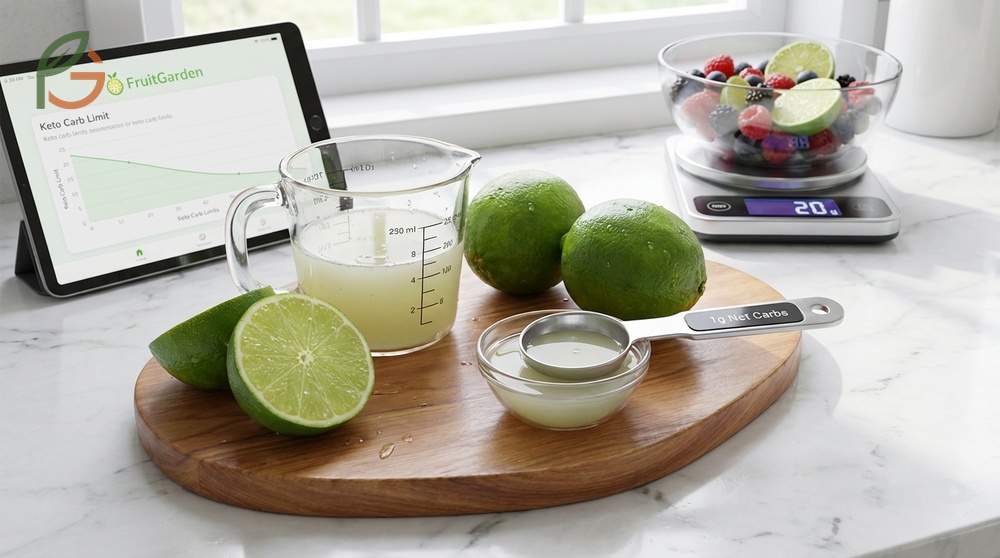
Carbs in lime juice vary by serving size—1 tablespoon contains about 1g of net carbs, while 1 cup packs 16g[1]. Research shows that small amounts fit keto macros, but you’ll need to measure carefully to stay within your 20-50g daily carb limit[2]. FruitGarden synthesizes current nutritional data to help you make informed decisions about citrus fruits and low-carb eating.
Quick Answer
- Fresh lime juice contains 8.4g total carbs per 100ml with 0.4g fiber[3]
- Net carbs are approximately 8g per 100ml or 1g per tablespoon[1]
- One whole lime (44g juice) provides 3.5g net carbs and 11 calories[4]
- Keto-friendly in moderation: 1-2 tablespoons daily won’t break ketosis for most people following 20-30g net carb limits
Carbs in Lime Juice
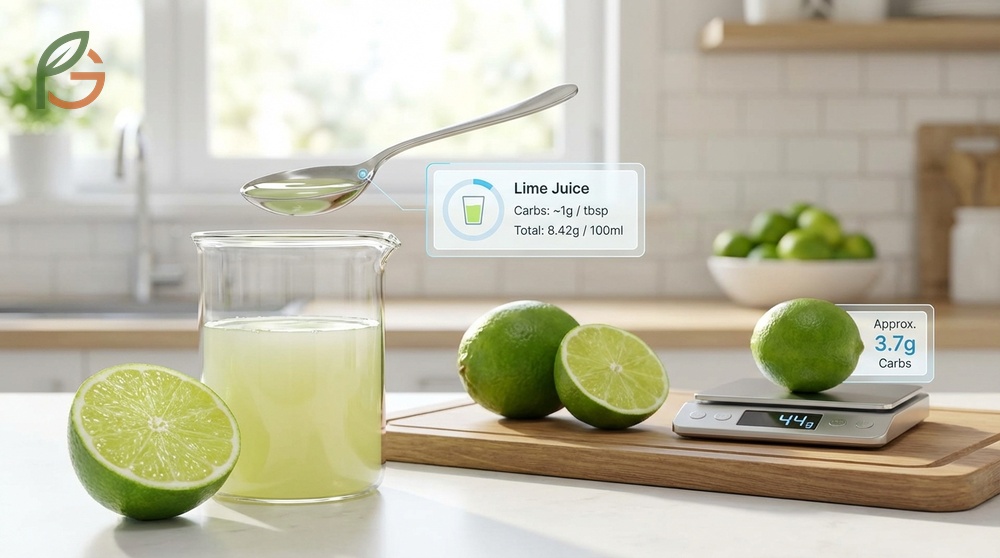
Studies demonstrate that raw lime juice contains 8.42g of total carbohydrates per 100ml (approximately 3.4 fluid ounces)[3]. This translates to roughly 1g of carbs per tablespoon, making it manageable for low-carb eating when you’re mindful of portions.
Current data indicates that a single lime yields about 44g of juice, containing 3.7g of carbohydrates and 11 calories. Most people find this amount doesn’t significantly impact their daily carb budget.
For larger quantities, one cup (240ml) of unsweetened lime juice delivers 16.5g of total carbs[5]. This matters because a full cup consumes most of your daily carb allowance if you’re targeting 20g net carbs.
Net Carbs Calculation
Net carbs are calculated by subtracting fiber from total carbohydrates, giving you the carb count that affects blood sugar. Lime juice contains 0.4g of fiber per 100ml[3].
The calculation looks like this: 8.42g total carbs minus 0.4g fiber equals approximately 8g net carbs per 100ml. For practical use, 1 tablespoon (15ml) provides about 0.9g net carbs, while one whole lime’s juice contains roughly 3.5g net carbs.
Important note: Net carb calculations matter more than total carbs for keto dieters. The fiber in lime juice is minimal, so don’t expect significant carb reduction from fiber subtraction.
Fresh vs Bottled Lime Juice
Fresh-squeezed and bottled lime juice contain similar carbohydrate levels, but bottled versions sometimes list lower values due to rounding down[6]. If a bottle claims 0 carbs, it’s likely rounding below 0.5g per serving—hidden carbs add up when you use multiple servings.
Evidence suggests fresh lime juice preserves more vitamin C and natural compounds compared to processed versions. The carb content remains stable, but freshness impacts overall nutritional quality and flavor intensity.
Lime Juice Nutrition
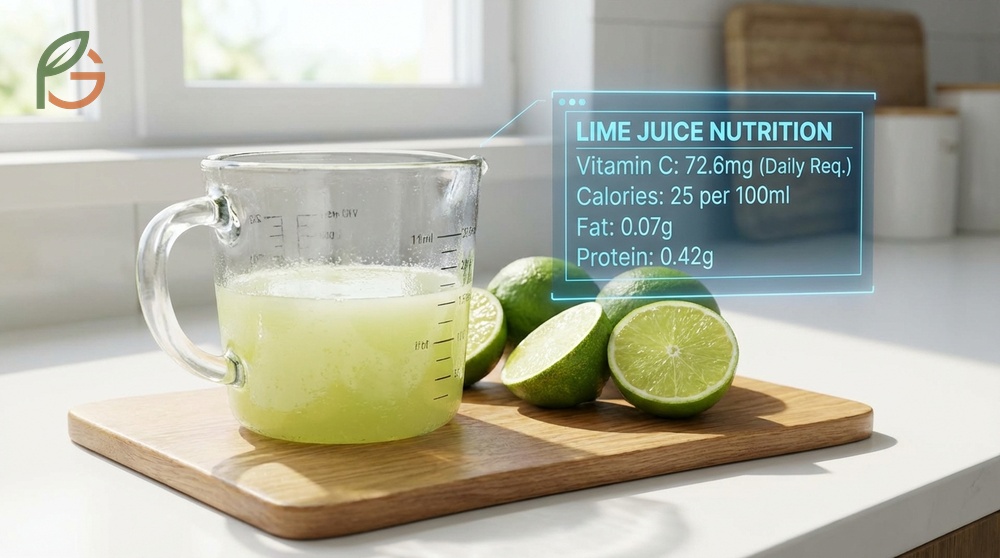
Beyond carbohydrates, lime juice provides notable amounts of vitamin C and various minerals. Research shows that 1 cup of raw lime juice delivers 72.6mg of vitamin C, covering nearly your entire daily requirement.
Current nutritional analysis reveals that 100ml of lime juice contains 25 calories with minimal fat (0.07g) and protein (0.42g)[3]. This makes it a low-calorie flavoring option that doesn’t contribute significant macronutrients beyond carbs.
Macronutrient Breakdown
The macronutrient profile of lime juice shows approximately 90% of calories come from carbohydrates, with negligible contributions from fat and protein[1]. For keto dieters tracking macros strictly, this carb-dominant composition means you’ll need to account for every tablespoon.
Unlike whole limes that contain 1.9g of fiber per fruit[8], juice extraction removes most fiber. What remains is primarily water, natural sugars (0.74g per lime), and dissolved nutrients.
This table compares calories, total carbohydrates, net carbs, and fiber content across five common serving sizes of lime juice from one tablespoon to one full cup
| Serving Size | Calories | Total Carbs | Fiber | Net Carbs |
|---|---|---|---|---|
| 1 tablespoon (15ml) | 3[1] | 1g | 0.1g | 0.9g |
| 1 whole lime juice (44g) | 11[4] | 3.7g | 0.2g | 3.5g |
| 1/4 cup (60ml) | 15 | 5g | 0.2g | 4.8g |
| 100ml (3.4 fl oz) | 25[3] | 8.42g | 0.4g | 8g |
| 1 cup (240ml) | 61 | 16.5g[5] | 1g | 15.5g |
Vitamin and Mineral Content
Lime juice provides concentrated vitamin C, with one cup containing 72.6mg[7]—that’s about 80% of your daily needs. This vitamin supports immune function and collagen production, making lime juice nutritionally valuable beyond just flavor.
Additional minerals include small amounts of potassium (11mg per tablespoon), calcium, iron, and magnesium[1]. These contribute minimally to daily requirements but add to lime juice’s overall nutritional profile.
Lime Juice Keto
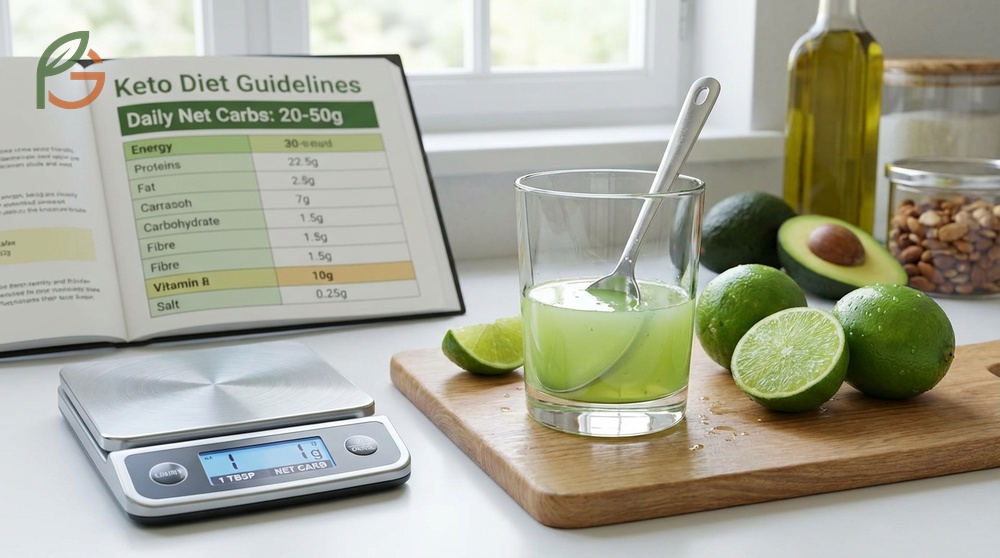
Lime juice can fit into ketogenic diets when used strategically and measured carefully. Studies demonstrate that most keto dieters aim for 20-50g of net carbs daily, with stricter practitioners targeting 20-30g[2]. At 1g net carbs per tablespoon, lime juice represents roughly 3-5% of a strict daily budget.
Current guidance emphasizes that fruit juices generally aren’t keto-friendly due to concentrated sugars, but lime juice’s lower sugar content (0.2g per tablespoon) makes it an exception. Unlike apple juice with 28g net carbs per 8oz serving[2], lime juice won’t spike blood sugar when used in typical cooking amounts.
Research shows that timing and portion control determine keto compatibility. Adding 1-2 tablespoons to water, salad dressings, or marinades throughout the day keeps you within limits. However, drinking lime juice by the glass quickly exhausts your carb allowance.
Keto Serving Sizes
For keto dieters, these serving guidelines help maintain ketosis while enjoying lime flavor. One tablespoon (0.9g net carbs) works for beverages without concern. Two tablespoons (1.8g net carbs) suit salad dressings and marinades nicely.
If you’re making lime water, use half a lime’s juice (about 1.7g net carbs) rather than a full lime. This provides strong citrus flavor without consuming 25-30% of a 20g daily carb target.
- Morning lemon-lime water: 1 tablespoon (0.9g net carbs) adds vitamin C without breaking your fast
- Salad dressing base: 2 tablespoons (1.8g net carbs) combined with olive oil creates tangy vinaigrette
- Fish or chicken marinade: 2-3 tablespoons (1.8-2.7g net carbs) divided among 4 servings equals minimal impact
- Guacamole seasoning: 1-2 tablespoons (0.9-1.8g net carbs) for an entire batch serves multiple people
- Sugar-free mojito mocktail: 1 tablespoon (0.9g net carbs) with sparkling water and fresh mint
Keto tip: Track lime juice separately in your food log. It’s easy to lose count when adding “just a squeeze” multiple times daily—those squeezes add up to several grams of carbs.
Comparison with Other Citrus
Among citrus juices, lime sits in the moderate carb range. Lemon juice contains nearly identical carbs (about 1g per tablespoon), making the two interchangeable for keto purposes. Both work better than orange juice, which packs 26g of carbs per cup—far too high for ketogenic eating.
Grapefruit juice falls between lime and orange at approximately 22g carbs per cup. Evidence indicates that even “low-sugar” citrus juices like lime concentrate natural sugars compared to whole fruits, so juice extraction always increases carb density per volume[2].
Using Lime Juice on Low-Carb Diets
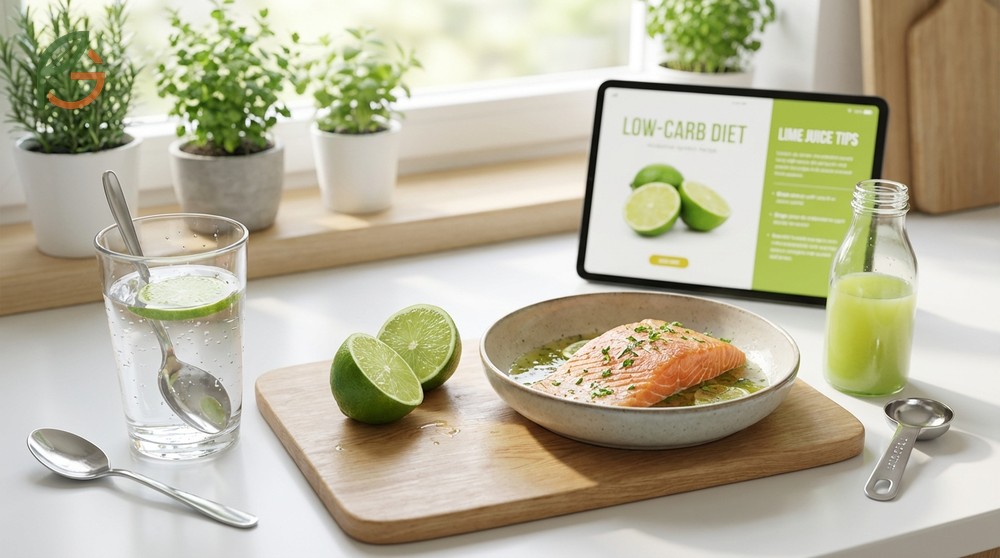
Research shows that successful low-carb dieters incorporate lime juice as a flavor enhancer rather than a beverage base. Start your day with lime water using 1 tablespoon in 16oz of water—this provides vitamin C and helps meet hydration goals without carb overload.
For cooking applications, lime juice brightens fatty fish like salmon without adding significant carbs. Two tablespoons in a marinade for four servings contributes just 0.45g net carbs per portion. This approach maximizes flavor while minimizing carb impact.
Current data indicates that pairing lime juice with high-fat foods slows any potential blood sugar response. Mix 2 tablespoons with 3 tablespoons of olive oil for salad dressings, or combine with mashed avocado for guacamole where fats dominate the macronutrient profile.
- Measure with actual spoons, not estimation—”eyeballing” portions leads to carb creep
- Choose fresh-squeezed over bottled when possible for maximum vitamin C retention
- Combine lime juice with zero-carb ingredients like herbs, garlic, and ginger to create complex flavors
- Freeze lime juice in ice cube trays (1 tablespoon per cube) for portion-controlled convenience
- Avoid commercial lime juice products with added sugars or preservatives that increase carb content
- Use lime zest alongside juice—the zest adds intense flavor with virtually zero carbs
- Reserve larger quantities (1/4 cup or more) for recipes serving 4+ people to divide the carb load
Agricultural data shows that limes grown in different regions have minimal nutritional variation, so Persian limes from Mexico and Key limes from Florida provide similar carb content[8]. Focus on freshness and organic options when available rather than worrying about origin.
What often gets overlooked is that lime juice’s acidity can enhance satiety when added to meals. Studies suggest that acidic foods may slow gastric emptying, potentially helping with appetite control on calorie-restricted keto diets. This makes lime juice a strategic addition beyond just carb counting.
Storage tip: Fresh lime juice keeps 2-3 days refrigerated in an airtight container. For longer storage, freeze in portions to prevent waste and maintain consistent carb tracking.
Conclusion
The evidence is clear: carbs in lime juice range from 1g per tablespoon to 16g per cup, making portion control essential for keto dieters. When you measure carefully and use 1-2 tablespoons daily, lime juice adds valuable vitamin C and bright flavor without compromising ketosis.
Current guidance emphasizes that lime juice works best as a cooking ingredient rather than a beverage base on low-carb diets. FruitGarden’s analysis of USDA nutritional data confirms that strategic use of this citrus juice enhances both flavor and nutrition within strict carb limits.
Medical Disclaimer
Important Medical Disclaimer: This content is for informational and educational purposes only. It is not intended as a substitute for professional medical advice, diagnosis, or treatment. Always consult a qualified healthcare professional or registered dietitian before making any changes to your diet, especially if you have diabetes, metabolic conditions, or are following a ketogenic diet for medical reasons. Individual carbohydrate tolerance varies, and what works for one person may not be appropriate for another.
Frequently Asked Questions
How Many Carbs in Lime Juice per Tablespoon?
One tablespoon of lime juice contains approximately 1g of total carbohydrates and 0.9g of net carbs after subtracting fiber. This serving size provides 3 calories and fits easily into most keto meal plans without significantly impacting daily carb limits.
Is Lime Juice Keto-Friendly?
Yes, lime juice is keto-friendly in moderation. Studies show that 1-2 tablespoons (0.9-1.8g net carbs) work well within the standard keto limit of 20-50g daily carbs. However, larger quantities like a full cup (15.5g net carbs) consume too much of your carb budget to be practical for strict ketogenic diets.
What’s the Difference Between Fresh and Bottled Lime Juice Carbs?
Fresh and bottled lime juice contain nearly identical carbohydrate levels, both around 1g per tablespoon. The main difference is that some bottled brands round down to show 0g carbs when the actual amount is below 0.5g per serving—these “hidden carbs” add up if you use multiple servings throughout the day.
How Many Net Carbs Are in One Whole Lime’s Juice?
One medium lime yields about 44g of juice containing approximately 3.7g total carbs and 0.2g fiber, resulting in 3.5g net carbs. This amount represents 17.5% of a strict 20g daily keto carb limit, making it a moderate addition that requires tracking but doesn’t necessarily break ketosis.
Does Lime Juice Have Sugar?
Yes, lime juice contains natural sugars averaging 0.74g per lime or about 0.2g per tablespoon. These naturally occurring sugars are part of the total carbohydrate count and affect blood glucose similarly to other simple carbs, which is why portion control matters even though lime juice seems “healthy.”
Can You Drink Lime Water on Keto?
Absolutely—lime water works well on keto when you use 1 tablespoon of juice per 16oz of water. This adds just 0.9g net carbs while providing vitamin C and enhancing hydration. Avoid adding sweeteners unless they’re zero-carb options like stevia or erythritol to keep the drink truly keto-friendly.
What’s the Best Way to Use Lime Juice on Low-Carb Diets?
Research shows the most effective approach is using lime juice as a flavor enhancer in cooking rather than drinking it straight. Add 1-2 tablespoons to marinades, salad dressings, or seafood dishes where it’s distributed across multiple servings. This maximizes flavor impact while minimizing per-serving carb contribution, and the fat from cooking oils helps slow any blood sugar response.





