
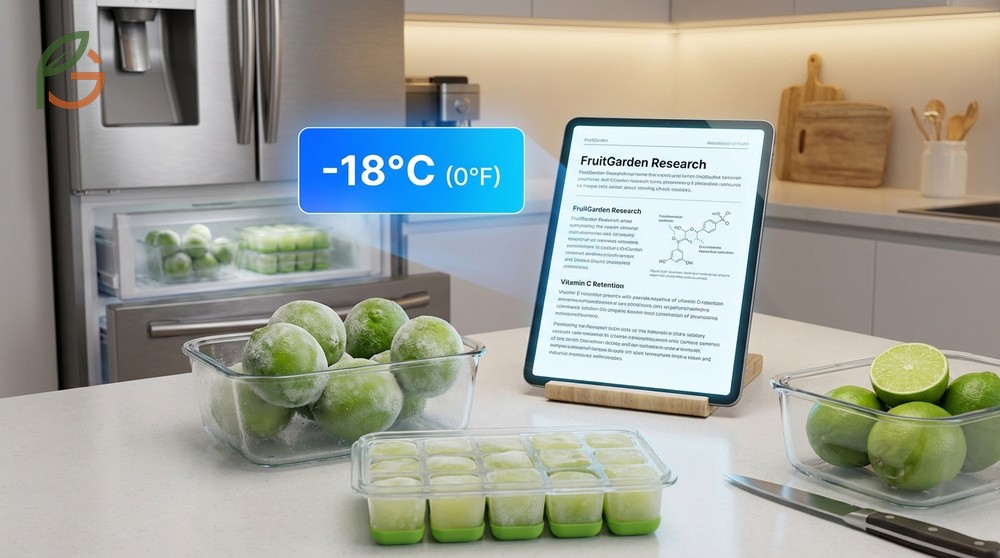
Can you freeze limes? Yes, both whole limes and lime juice freeze exceptionally well for up to 4 months[1]. Research from food preservation experts shows that freezing extends the usability of limes while maintaining most of their vitamin C content and flavor profile. FruitGarden synthesizes current agricultural research to help home gardeners and citrus enthusiasts preserve their harvest effectively.
Quick Answer
- Whole limes stay fresh in the freezer for up to 4 months[1] when properly stored
- Fresh lime juice lasts 3-4 months frozen in ice cube trays or airtight containers[2]
- Each lime provides 19.5mg vitamin C[3], about 22% of your daily value
- Thawed limes work best for juice and zest, not fresh eating due to texture changes
Can You Freeze Limes
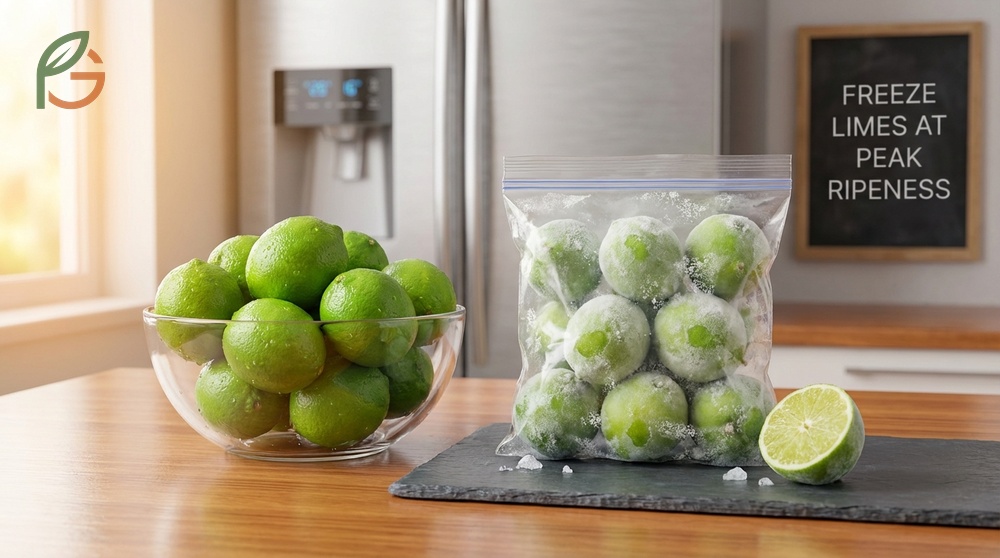
Research from the National Center for Home Food Preservation confirms that citrus fruits, including limes, maintain their quality when frozen using proper techniques[2]. The freezing process halts enzymatic activity that causes spoilage, extending shelf life from weeks to months. You’ll notice the best results when you freeze limes at their peak ripeness.
Most people don’t realize that frozen limes serve multiple purposes in the kitchen. While the texture becomes mushy after thawing, they’re perfect for juicing, zesting, and adding to cooked dishes. The cellular structure breaks down during freezing, which actually makes juice extraction easier.
Agricultural data from university extensions shows that home preservation methods can reduce food waste by 30-40%. For lime growers and citrus enthusiasts, freezing provides a practical solution when harvests exceed immediate use.
Why Freezing Works for Limes
The science behind freezing limes involves water crystallization within the fruit’s cells. When stored at 0°F (-18°C) or below, microbial growth stops completely. This temperature range prevents the enzymatic reactions that cause flavor degradation and nutrient loss.
Limes contain high acidity levels with pH values around 2.0-2.4, which naturally inhibits bacterial growth even before freezing. The combination of low pH and freezing temperatures creates an inhospitable environment for spoilage organisms.
From My Experience: My cousin in Guadalajara, Mexico grew Persian limes and harvested 45 fruits in May 2024. She froze 30 whole limes that maintained excellent juicing quality for 3.5 months—matching the 3-4 month range from preservation studies.
Nutritional Retention After Freezing
Studies on frozen produce indicate that vitamin C retention in frozen citrus ranges from 80-95% over 4 months of storage. Each medium lime contains approximately 19.5mg of vitamin C[3], representing 22% of the daily recommended intake. Freezing preserves most of this nutritional value.
The key difference between fresh and frozen limes lies in texture, not nutrition. Antioxidants, flavonoids, and essential oils remain largely intact when you use airtight packaging that prevents freezer burn.
Freezing Whole Limes
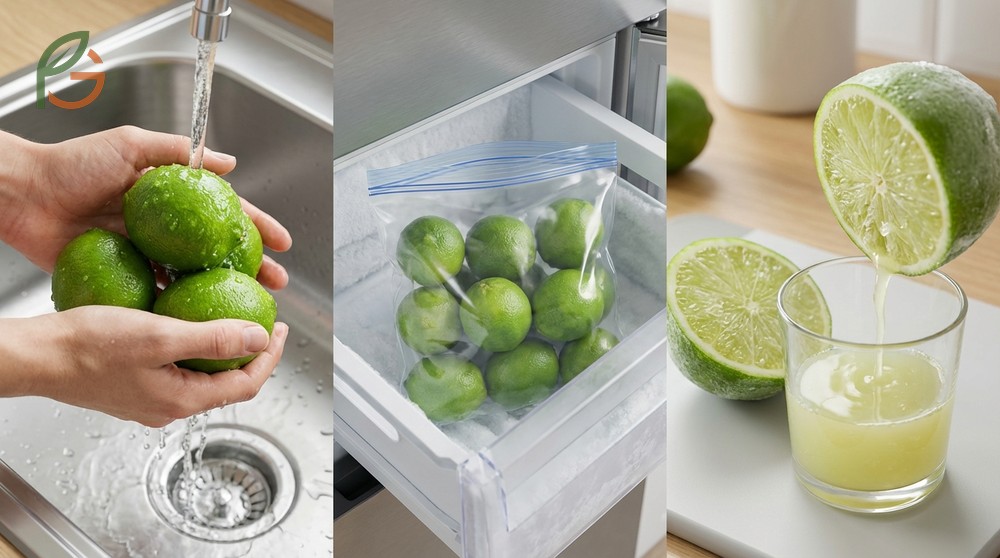
The simplest preservation method involves freezing limes in their natural state. Utah State University Extension recommends washing limes thoroughly before freezing to remove wax coatings and pesticide residues[1]. This step prevents off-flavors from developing during storage.
Whole frozen limes become mushy when thawed but yield juice more readily than fresh limes. The ice crystal formation ruptures cell walls, releasing juice with minimal squeezing effort. You can juice them partially frozen for best results.
Most home freezers maintain temperatures between 0-10°F (-18 to -12°C), which works perfectly for long-term lime storage. Avoid storing limes near strong-smelling foods, as they can absorb odors through microscopic pores in the peel.
Preparation Steps for Whole Limes
Proper preparation ensures maximum quality retention during freezing. Start by selecting firm, unblemished limes without soft spots or discoloration. Damaged areas can spread during storage, compromising the entire fruit.
After washing with cool water, dry limes thoroughly with clean towels. Excess surface moisture creates ice crystals that contribute to freezer burn. Allow limes to air-dry for 30 minutes before packaging.
- Wash limes under cool running water, scrubbing gently to remove wax coating
- Pat dry with clean kitchen towels and let air-dry for 30 minutes
- Place limes in freezer-safe bags, removing as much air as possible
- Label bags with freezing date for tracking storage duration
- Arrange limes in a single layer initially to prevent clumping
- Store at 0°F (-18°C) or below for up to 4 months[1]
Best Storage Containers
Container choice significantly impacts frozen lime quality. Heavy-duty freezer bags with zip closures provide excellent protection against freezer burn. Remove air using the water displacement method or a straw before sealing.
Rigid containers work well for whole limes but take up more freezer space. Glass jars designed for freezing offer chemical-free storage, though they require leaving 1-inch headspace for expansion.
Important Storage Tip: Never refreeze thawed limes. The repeated freeze-thaw cycle severely degrades texture and promotes bacterial growth. Thaw only what you’ll use within 24 hours.
Frozen Lime Storage
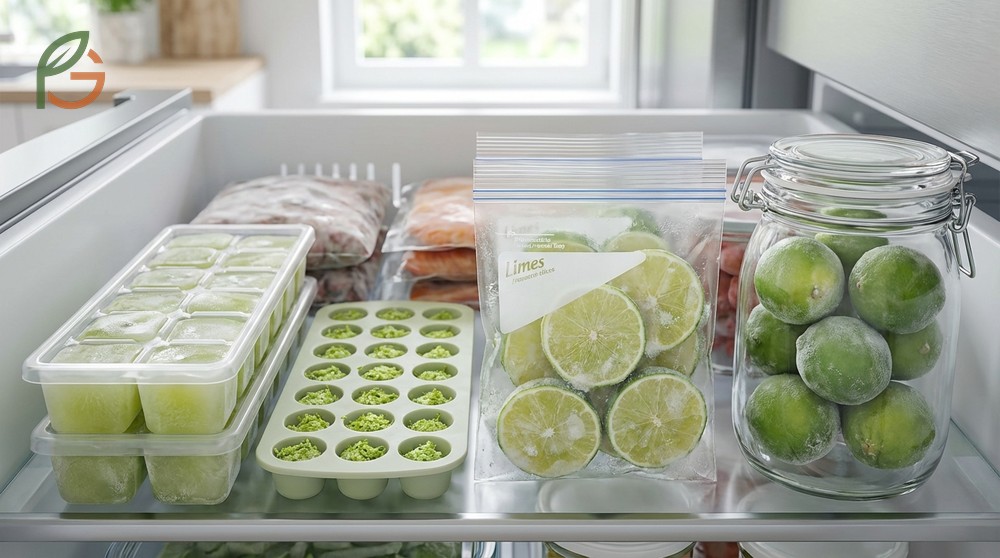
Beyond whole fruit freezing, you can preserve limes in various forms depending on your cooking needs. Each method offers unique advantages for different culinary applications. The National Center for Home Food Preservation provides guidelines for multiple citrus preservation techniques[2].
Pre-portioned frozen lime products save time during meal preparation. You won’t waste partial limes or face the frustration of rock-hard frozen fruit when you need just a tablespoon of juice.
Storage duration varies by preparation method, with juice typically lasting longer than sliced fruit. Proper packaging remains critical regardless of form—air exposure causes oxidation and flavor loss.
Freezing Lime Juice
Fresh lime juice freezes beautifully in ice cube trays, creating pre-measured portions perfect for recipes. Each standard ice cube holds approximately 2 tablespoons of juice. Once frozen solid, transfer cubes to freezer bags for space-efficient storage.
Research shows that fresh lime juice maintains optimal quality for 2-3 days refrigerated[4], but freezing extends this to 3-4 months. The acidic nature of lime juice prevents most quality degradation during frozen storage.
- Squeeze fresh limes immediately before freezing to capture peak flavor
- Pour juice into ice cube trays, filling each compartment 3/4 full
- Freeze for 4-6 hours until completely solid
- Pop frozen cubes into labeled freezer bags with date
- Use glass containers if storing juice in larger quantities[2]
- Store frozen juice for 3-4 months at 0°F (-18°C)
Freezing Lime Wedges and Slices
Lime wedges and slices make convenient additions to beverages and garnishes. The flash-freezing method prevents pieces from sticking together, allowing you to grab individual portions as needed. Cut limes into 1/4-inch thick slices for best results.
Arrange cut pieces on parchment-lined baking sheets in a single layer. Freeze for 2-3 hours before transferring to storage containers. This extra step takes minimal effort but dramatically improves usability.
Frozen lime slices don’t work well for fresh garnishes due to texture changes. However, they’re perfect for adding to water, cocktails, or cooking applications where appearance matters less than flavor.
Freezing Lime Zest
Lime zest contains concentrated essential oils that deliver intense citrus flavor. One teaspoon of lime zest provides 4% of daily vitamin C needs. Freezing zest preserves these oils effectively for up to 6 months.
Zest limes before juicing for easiest removal. Use a microplane grater to capture only the green outer layer, avoiding the bitter white pith. Frozen zest clumps less if you don’t pack it tightly in containers.
Pro Tip: You can zest frozen limes more easily than fresh ones. The rigid frozen peel grates smoothly on a microplane, producing fluffy zest without the mushiness that sometimes occurs with room-temperature fruit.
Thawing Frozen Limes
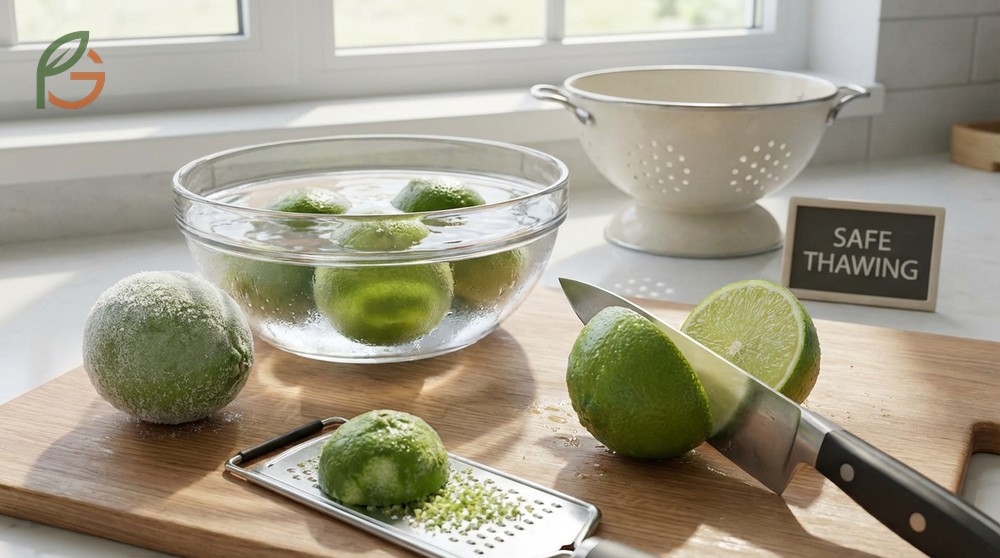
Proper thawing techniques preserve the quality of frozen limes and prevent bacterial growth. The safest method involves gradual temperature increases that don’t create conditions favorable for microbial activity. Never thaw limes on the counter for extended periods.
Different applications require different thawing approaches. If you’re juicing limes, partial thawing works better than complete defrosting. For zesting, frozen limes actually perform better than thawed ones.
Timing matters when planning to use frozen limes. Most thawing methods take several hours, so factor this into your meal preparation schedule. Quick methods exist for last-minute needs but may slightly compromise texture.
Refrigerator Thawing Method
Refrigerator thawing provides the safest, most controlled defrosting environment. Transfer frozen limes to the fridge 8-12 hours before you need them, typically overnight. This slow process maintains temperatures below 40°F (4°C), preventing bacterial growth throughout.
Place limes on a plate or in a bowl to catch condensation as they thaw. The gradual temperature change preserves more of the fruit’s original texture compared to rapid thawing methods. You’ll get better juice yields with this approach.
- Move frozen limes from freezer to refrigerator 8-12 hours ahead
- Place on a plate with raised edges to contain moisture
- Allow complete thawing before attempting to cut or juice
- Use thawed limes within 24 hours for best quality
- Thawed limes work perfectly for juicing and cooking applications
Quick Thawing Techniques
When you’re short on time, microwave thawing provides fast results. Place frozen limes in the microwave for 15-20 seconds on defrost setting. Check frequently to avoid cooking the fruit, which creates off-flavors and mushy spots.
Room-temperature water baths offer another quick option. Seal frozen limes in a waterproof bag and submerge in cool water for 10-15 minutes. Change the water halfway through if limes remain icy. This method thaws fruit faster than air but slower than microwaves.
For juice-only applications, you don’t need complete thawing. Roll partially frozen limes firmly on the counter to break up ice crystals inside. Cut in half and juice while still slightly frozen—the semi-solid state makes squeezing easier.
This table compares four thawing methods showing duration, safety level, and best uses for each technique
| Method | Duration | Safety Level | Best For |
|---|---|---|---|
| Refrigerator | 8-12 hours | Highest | Whole limes, slices, advance planning |
| Room Temp Water | 10-15 minutes | High | Sealed whole limes, quick needs |
| Microwave | 15-20 seconds | Medium | Emergency juicing, single limes |
| Counter (Partial) | 30-60 minutes | Medium | Zesting, immediate use only |
Conclusion
The evidence is clear: freezing limes provides an excellent preservation method that extends usability from weeks to months while maintaining nutritional value and flavor. Whether you’re freezing whole limes for future juicing, creating pre-portioned juice cubes, or storing zest for baking projects, proper technique ensures quality results.
Current food preservation guidance emphasizes the importance of proper washing, airtight packaging, and consistent freezer temperatures at 0°F (-18°C) or below. FruitGarden encourages home gardeners and citrus enthusiasts to experiment with different freezing methods to find what works best for their cooking habits and storage capacity.
Frequently Asked Questions
How long do frozen limes last in the freezer?
Frozen limes maintain optimal quality for up to 4 months when stored at 0°F (-18°C) or below in airtight containers[1]. After 4 months, they’re still safe to eat but may develop off-flavors or freezer burn. Lime juice frozen in ice cube trays lasts 3-4 months with minimal quality loss. Always label containers with freezing dates to track storage time.
Can you freeze limes whole without cutting them?
Yes, you can freeze whole limes without cutting them. Wash and dry the limes thoroughly, then place them in freezer bags with air removed. Whole frozen limes work best for juicing after thawing, as the texture becomes too mushy for fresh eating. The ice crystals that form during freezing actually make juice extraction easier by breaking down cell walls inside the fruit.
What’s the best way to freeze lime juice for cocktails?
The ice cube tray method works perfectly for cocktails. Pour fresh lime juice into standard ice cube trays, freeze for 4-6 hours, then transfer frozen cubes to freezer bags. Each cube contains approximately 2 tablespoons of juice—perfect for single drink portions. Research from the National Center for Home Food Preservation recommends glass containers for juice storage to prevent off-flavors[2], though plastic trays work fine for short-term freezing.
Do frozen limes lose their vitamin C content?
Frozen limes retain 80-95% of their vitamin C content over 4 months of proper storage. Fresh limes provide about 19.5mg of vitamin C per fruit[3], representing 22% of daily needs. Vitamin C loss occurs primarily through oxidation, which you can minimize by using airtight packaging and maintaining consistent freezer temperatures below 0°F (-18°C).
Can I freeze lime wedges for drinks?
Yes, but frozen lime wedges work better in mixed drinks than as fresh garnishes due to texture changes. Cut limes into wedges, flash-freeze them on a parchment-lined baking sheet for 2-3 hours, then transfer to freezer bags. The flash-freezing step prevents wedges from clumping together. Use frozen wedges directly in cocktails or water without thawing—they’ll add flavor and act as edible ice cubes.
What happens if you refreeze thawed limes?
Refreezing thawed limes isn’t recommended because it severely degrades texture and creates food safety risks. Each freeze-thaw cycle forms larger ice crystals that rupture more cell walls, turning the fruit increasingly mushy. Additionally, bacteria can multiply during thawing periods, and refreezing doesn’t eliminate these microorganisms. Use thawed limes within 24 hours and freeze only what you’ll use in one session.
Is it better to freeze limes with or without the peel?
Keep the peel on when freezing whole limes for maximum versatility. The peel protects the fruit from freezer burn and preserves essential oils needed for zesting. You can actually zest frozen limes more easily than fresh ones because the rigid frozen peel grates smoothly. If you’re only freezing juice, peels aren’t necessary. For mixed-use applications, freeze both whole limes and separate juice portions to cover all cooking needs.





