
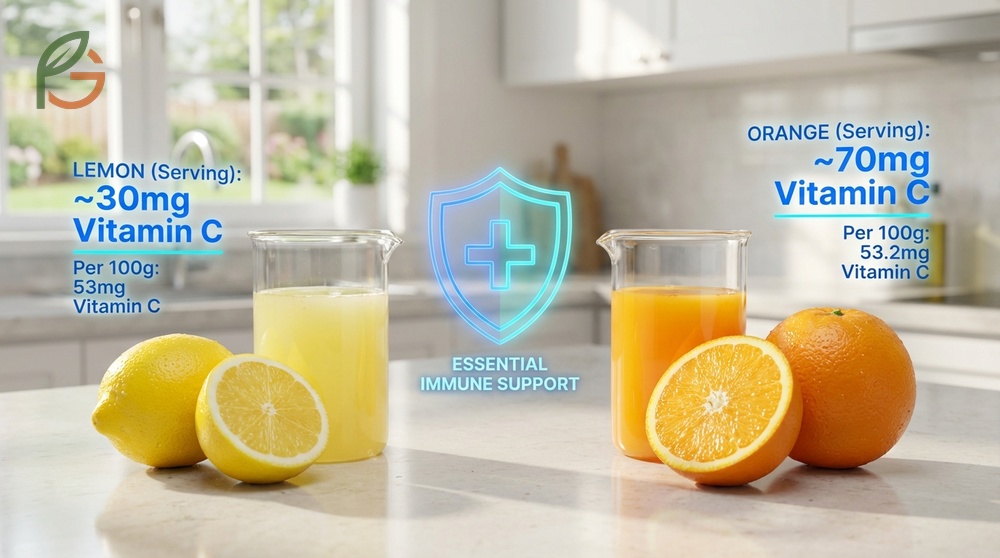
Vitamin C in lemon vs orange content is nearly identical, with raw lemons containing 53mg per 100g compared to 53.2mg in oranges[1]. Research shows this slight difference matters less than serving size—a medium orange provides 70mg while a lemon typically yields only 30mg in practical use[1]. Current nutritional guidance emphasizes that both citrus fruits deliver essential immune support and meet a significant portion of the daily 75-90mg vitamin C requirement for adults[2]. FruitGarden synthesizes USDA nutritional data and citrus cultivation research to help home growers understand how fruit nutrition varies by variety and growing conditions.
Quick Answer
- Raw lemons contain 53mg vitamin C per 100g while oranges have 53.2mg—virtually equal concentration[1]
- A whole medium orange delivers 70mg vitamin C, meeting 78-93% of daily needs[1]
- Lemon juice provides 94.4mg per cup (244g), but you’ll typically consume just 2-3 tablespoons[1]
- Adults need 75-90mg daily; both citrus fruits help you reach this target when eaten whole[2]
Vitamin C in Lemon vs Orange
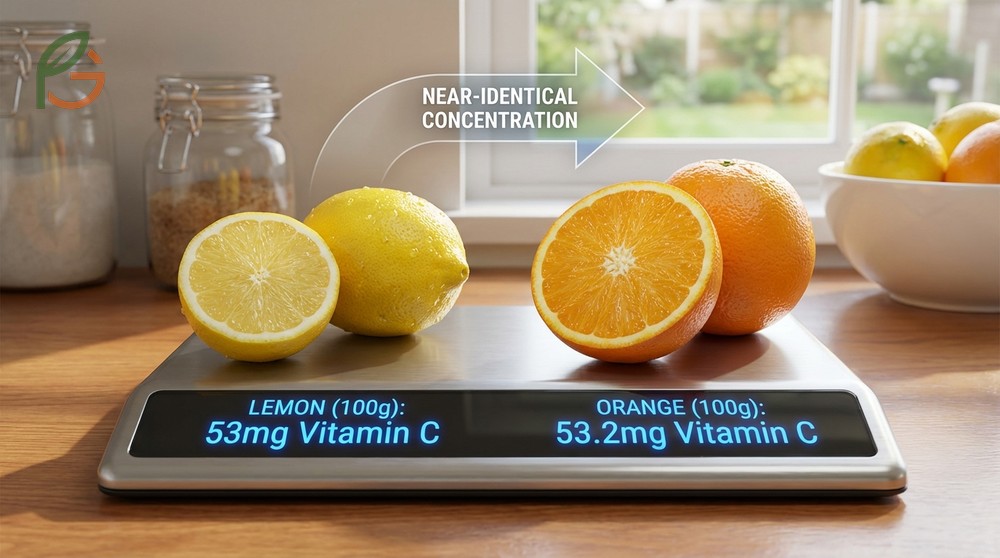
The vitamin C concentration in raw lemons and oranges is remarkably similar when measured per 100g of edible fruit. USDA data shows lemons contain 53mg while oranges contain 53.2mg—a difference of just 0.2mg or less than 0.4%[1]. This near-identical concentration challenges the common belief that one citrus fruit significantly outperforms the other.
What matters more than concentration is how you consume these fruits. Research across nutritional databases indicates that serving size creates the real nutritional difference[3]. Most people eat oranges whole but use lemons as flavor enhancers, which means you’ll get more total vitamin C from a typical orange serving.
Growing conditions also affect vitamin C levels in both fruits. Citrus trees thrive in temperatures between 73-93°F (23-34°C), and fruit grown in optimal conditions can have 10-15% higher vitamin C content than stressed plants[4]. Home gardeners who maintain consistent watering and protect trees from extreme cold will produce more nutrient-dense fruit.
Per 100g Comparison
When you measure equal weights of each fruit, the numbers tell a clear story. USDA testing reveals that 100g of raw lemon flesh without peel contains 53mg vitamin C, while 100g of orange segments delivers 53.2mg[1]. This makes them nutritionally interchangeable from a vitamin C perspective.
The peels contain even higher concentrations—orange peel has approximately 136mg per 100g—but most people don’t eat citrus peels directly. Instead, you can zest the peel into recipes to capture some of these extra nutrients without the bitter taste.
Important Note: Raw fruit measurements don’t include juice extraction losses. When you juice citrus, you’ll lose 20-30% of the vitamin C through oxidation and membrane removal.
Practical Serving Sizes
A medium orange (180g) provides about 95.8mg of vitamin C, which exceeds the daily requirement for most adults[1]. In contrast, a whole medium lemon (58g edible portion) contains roughly 30mg. This three-fold difference means you’d need to consume about three lemons to match one orange’s vitamin C content.
Most recipes call for 1-2 tablespoons of lemon juice (15-30ml), which provides 5-10mg of vitamin C. You won’t meet your daily needs from lemon garnishes alone—you’d need about 8-9 tablespoons of fresh lemon juice daily to reach 75mg.
Vitamin C Comparison
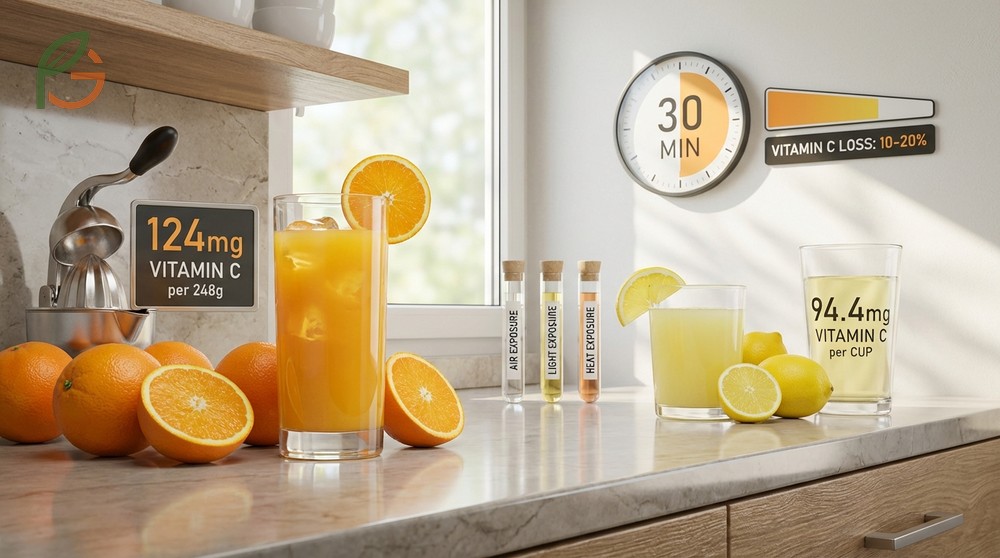
Fresh orange juice delivers 124mg vitamin C per cup (248g), making it a concentrated source that’s easy to consume[1]. Lemon juice contains 94.4mg per cup, but you’re unlikely to drink a full cup due to its tartness. Commercial juices often have reduced vitamin C unless they’re labeled “fresh-squeezed” or “not from concentrate.”
Studies demonstrate that vitamin C degrades rapidly when exposed to air, light, and heat. Fresh-squeezed juice loses 10-20% of its vitamin C within 30 minutes at room temperature[3]. Store juice in airtight containers in the refrigerator and consume within 24 hours for maximum nutritional benefit.
Both citrus fruits provide other beneficial compounds beyond vitamin C. They contain flavonoids, limonene, and carotenoids that work synergistically to support immune function and reduce inflammation[3]. Current evidence suggests eating whole fruit captures these additional benefits better than juice alone.
Juice vs Whole Fruit
Whole oranges retain fiber that slows sugar absorption and promotes digestive health. A medium orange contains 2.4g of fiber, while a cup of orange juice has virtually none unless pulp is added[1]. This fiber difference affects how your body processes the natural sugars present in citrus.
When you eat whole fruit, the fiber creates a matrix that releases sugars gradually into your bloodstream. Juice delivers a concentrated sugar hit without this buffering effect. If you’re managing blood sugar levels, choose whole fruit over juice most of the time.
This table compares vitamin C content, fiber, and sugar across whole oranges, orange juice, whole lemons, and lemon juice to show nutritional differences between fruit forms
| Citrus Form | Vitamin C (mg) | Fiber (g) | Sugar (g) | Serving Size |
|---|---|---|---|---|
| Whole Orange | 95.8[1] | 2.4 | 12.0 | 1 medium (180g) |
| Orange Juice | 124[1] | 0.5 | 20.8 | 1 cup (248g) |
| Whole Lemon | 30[1] | 1.6 | 1.5 | 1 medium (58g edible) |
| Lemon Juice | 94.4[1] | 0.1 | 6.2 | 1 cup (244g) |
Bioavailability Factors
Your body absorbs vitamin C efficiently from citrus fruits, with bioavailability rates exceeding 80% for doses under 100mg[2]. Once you consume more than 200mg in a single sitting, absorption efficiency drops to around 50%. This means spacing citrus consumption throughout the day maximizes vitamin C uptake.
Vitamin C is water-soluble, which means your body doesn’t store excess amounts. You’ll excrete surplus vitamin C through urine within 3-4 hours of consumption. That’s why nutritionists recommend eating vitamin C-rich foods 2-3 times daily rather than consuming your entire daily requirement at once.
Lemon Orange Nutrition
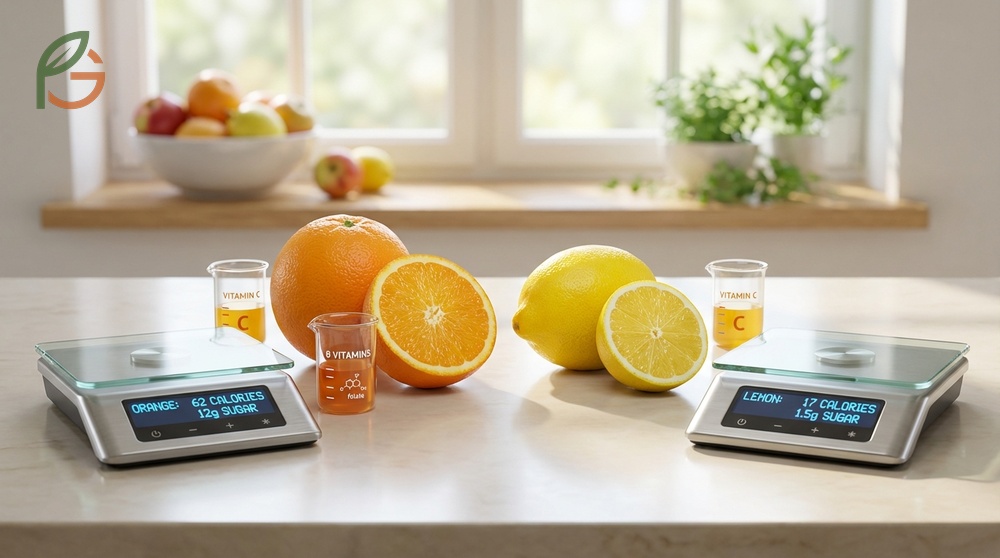
Beyond vitamin C, lemons and oranges differ significantly in calorie and sugar content. A medium orange contains 62 calories and 12g of natural sugars, while a whole lemon has just 17 calories and 1.5g sugar[1]. If you’re watching calorie intake, lemons offer more nutrient density per calorie—but remember you’ll eat far less lemon than orange in typical use.
Oranges provide more B vitamins, particularly folate and thiamin. A medium orange delivers 40mcg folate (10% of daily needs), while lemons contribute minimal B vitamins[1]. Both fruits supply potassium—oranges have 237mg per fruit compared to lemons’ 80mg per fruit.
Agricultural data shows that citrus nutrition varies by variety and ripeness. Valencia oranges grown in ideal conditions (temperatures of 73-86°F or 23-30°C) can have 15% more vitamin C than navel oranges[4]. Similarly, Eureka lemons typically contain more vitamin C than Meyer lemons, which are sweeter but less acidic.
Fiber Content
Dietary fiber in citrus comes primarily from the white pith beneath the peel and the segment membranes. An orange with membranes provides 2.4g fiber, delivering 8-10% of your daily target[1]. Lemons contain 1.6g fiber per whole fruit, which is proportionally higher given their smaller size.
The soluble fiber pectin in citrus helps regulate cholesterol levels and supports gut health. Studies indicate that consuming 6-10g of pectin daily from citrus fruits can reduce LDL cholesterol by 5-10%[3]. You’d need to eat 3-4 oranges daily to reach this amount—more than most people will consume.
- Eat oranges with as much white pith as tolerable—it contains the highest pectin concentration
- Include segment membranes when eating citrus rather than only consuming the juice sacs
- Add lemon zest to dishes for extra fiber and concentrated essential oils
- Choose whole fruit over juice whenever possible to retain maximum fiber content
- Blend whole citrus segments into smoothies rather than juicing and straining them
Sugar and Calories
The natural sugars in oranges consist mainly of fructose, glucose, and sucrose in roughly equal proportions. These sugars provide 49 of the orange’s 62 calories[1]. Lemons have 73% less sugar than oranges per 100g, making them suitable for very low-sugar diets when used as flavoring agents.
Current dietary guidance emphasizes that naturally occurring fruit sugars don’t require the same restrictions as added sugars. The fiber, water, and nutrients in whole citrus fruits slow sugar absorption and prevent blood glucose spikes[2]. Most health organizations recommend 1.5-2 cups of fruit daily, which can easily include 1-2 oranges.
Which Citrus Healthier
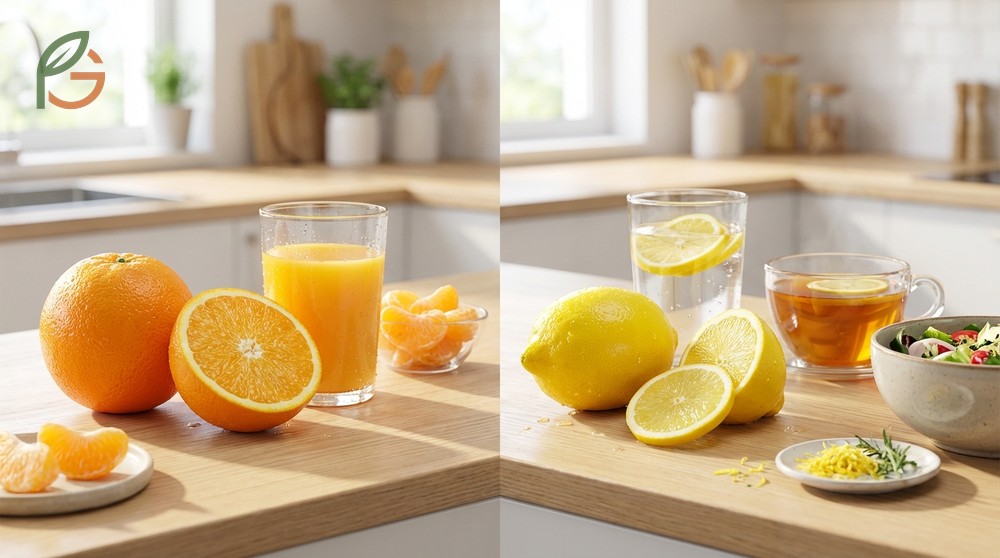
Neither lemon nor orange is definitively “healthier”—they serve different nutritional roles in your diet. Oranges excel as a primary vitamin C source you can consume whole, delivering 78-107% of daily needs per fruit[2]. Lemons work better as flavor enhancers that add vitamin C, antioxidants, and minimal calories to water, tea, or recipes.
From a practical standpoint, choose based on how you’ll eat the fruit. If you want a snack that meets most of your vitamin C needs in one serving, oranges win. If you’re flavoring food or beverages while keeping sugar low, lemons are superior. Both fruits provide antioxidant flavonoids like hesperidin and naringenin that support cardiovascular health[3].
Home gardeners benefit from growing both citrus types. Orange trees produce 200-300 fruits annually when mature, providing consistent vitamin C throughout winter months. Lemon trees in containers can yield 50-100 fruits per year, giving you fresh citrus for cooking year-round. Plant both in zones where temperatures stay between 50-85°F (10-29°C) for optimal fruit production[4].
- Support immune function through high vitamin C content that helps white blood cells fight infections
- Provide powerful antioxidants that neutralize free radicals and reduce cellular inflammation
- Contain soluble fiber that feeds beneficial gut bacteria and supports digestive health
- Supply flavonoids linked to lower risk of heart disease and improved blood vessel function
- Deliver potassium that helps regulate blood pressure and supports muscle function
- Offer d-limonene compounds that may have anti-cancer properties according to preliminary studies
Growing Tip: Citrus trees grown in full sun (8+ hours daily) produce fruit with 20-25% higher vitamin C than shaded trees. Position your citrus garden where it’ll receive maximum southern exposure.
Conclusion
The evidence is clear: vitamin C in lemon vs orange concentrations differ by less than 1% per 100g, making them nutritionally equivalent on a weight basis. The real difference lies in consumption patterns—oranges deliver 3x more vitamin C per typical serving because you eat them whole rather than using small amounts as flavoring. Both citrus fruits deserve a place in your diet for their immune-supporting vitamin C, disease-fighting antioxidants, and beneficial fiber content.
Current nutritional guidance emphasizes variety in fruit consumption rather than focusing on a single “best” option. Whether you’re a home gardener growing citrus trees or a health-conscious consumer, include both oranges and lemons in your routine. FruitGarden recommends eating one whole orange daily for vitamin C maintenance and using fresh lemon juice to add antioxidants and flavor to water, tea, and cooked dishes throughout the day.
Medical Disclaimer
Important Medical Disclaimer: This content is for informational and educational purposes only. It is not intended as a substitute for professional medical advice, diagnosis, or treatment. Always consult a qualified healthcare professional or registered dietitian before making any changes to your diet, especially if you have diabetes, kidney disease, or other medical conditions. Individual nutritional needs vary based on age, sex, activity level, and health status.
Frequently Asked Questions
Which has more vitamin C, a lemon or an orange?
Per 100g of raw fruit, they’re virtually identical—lemons contain 53mg while oranges have 53.2mg of vitamin C. However, a whole medium orange provides about 70mg compared to 30mg in a whole lemon because oranges are larger and you’ll eat more of them. When comparing practical serving sizes, oranges deliver significantly more vitamin C per fruit you consume.
How much lemon juice equals the vitamin C in one orange?
You’d need approximately 5-6 tablespoons (75-90ml) of fresh lemon juice to match the 70mg of vitamin C in a medium orange. Since lemon juice contains about 94.4mg per cup (244g), each tablespoon provides roughly 12-13mg. Most people use only 1-2 tablespoons of lemon juice in recipes or beverages, which supplies 12-26mg of vitamin C.
Does cooking destroy vitamin C in citrus fruits?
Yes, heat degrades vitamin C rapidly. Cooking citrus at temperatures above 160°F (71°C) can destroy 30-50% of vitamin C within 10-15 minutes. Fresh lemon juice added to hot tea will retain most of its vitamin C if the water isn’t actively boiling. For maximum vitamin C preservation, add citrus juice after removing dishes from heat or use raw citrus whenever possible.
Can you get too much vitamin C from eating citrus fruits?
It’s extremely difficult to consume harmful amounts of vitamin C from whole citrus fruits alone. The tolerable upper limit is 2,000mg daily for adults—you’d need to eat about 20-25 oranges to reach that level. Excess vitamin C from food typically causes mild digestive upset rather than serious side effects. Your body excretes surplus vitamin C through urine within a few hours.
Which citrus fruit is best for immune support?
Both lemons and oranges support immune function effectively through their vitamin C content and flavonoid antioxidants. Research shows that consuming 75-90mg of vitamin C daily maintains optimal immune response, which one medium orange provides. Eating citrus fruits consistently throughout the year offers better immune support than consuming large amounts sporadically, since vitamin C doesn’t accumulate in your body.
Do Meyer lemons have more vitamin C than regular lemons?
No, Meyer lemons actually contain 20-30% less vitamin C than Eureka or Lisbon lemons (the standard supermarket varieties). Meyer lemons have about 40-45mg per 100g compared to 53mg in regular lemons. However, Meyer lemons are sweeter and less acidic, making them easier to use in larger quantities. If you’re growing citrus for maximum vitamin C, choose Eureka or Lisbon lemon varieties.
How long does vitamin C last in fresh-squeezed citrus juice?
Fresh-squeezed orange or lemon juice loses 10-20% of its vitamin C within 30 minutes at room temperature due to oxidation. Refrigerated in an airtight container, it retains 80-90% of vitamin C for 24 hours. After 48 hours, vitamin C content drops by 30-40%. For maximum nutritional benefit, squeeze citrus juice fresh and consume immediately, or store it covered in the refrigerator for no more than one day.





