
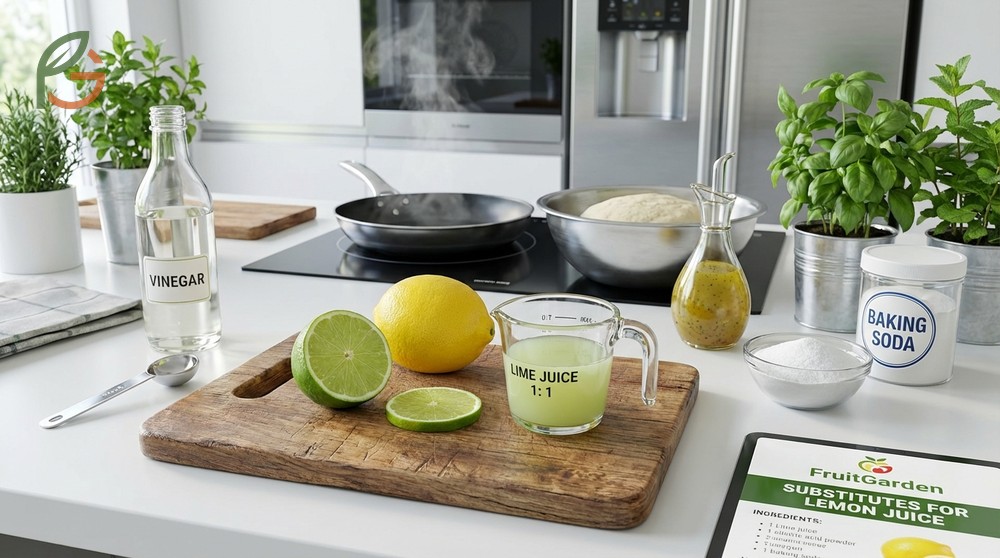
Need a substitute for lemon juice while cooking or baking? Research shows that lime juice works as a direct 1:1 replacement, while vinegar and citric acid require specific ratios to match lemon’s acidity.[1] The right substitute depends on whether you’re deglazing a pan, activating baking soda, or brightening a salad dressing. FruitGarden synthesizes current culinary research to help you choose the best alternative for your recipe.
Quick Answer
Substitute for Lemon Juice
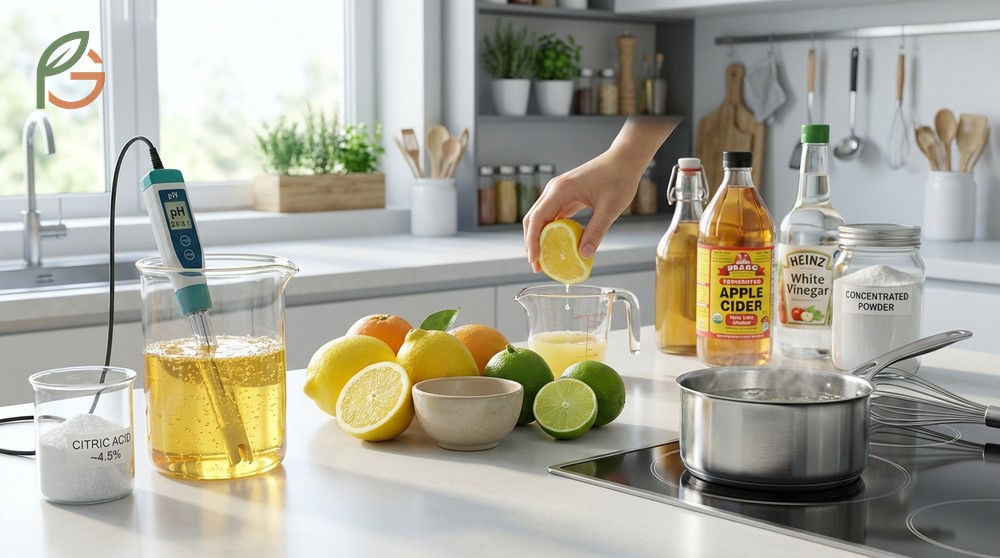
Studies demonstrate that effective lemon juice substitutes must match its pH level of 2.0-3.1 and citric acid content of approximately 4.5%.[5] Most kitchen acids achieve this through either citrus alternatives, fermented vinegars, or concentrated powders. The key difference lies in flavor profile—citrus options maintain fruity notes, while vinegars introduce sharpness.
When choosing a replacement, consider your cooking method. Deglazing pans tolerates stronger flavors like white wine or vinegar at a 1/2:1 ratio.[1] Baking demands precise acidity to activate leaveners—cream of tartar works here but fails in marinades. Fresh lime juice handles both roles effectively.
What often gets overlooked is moisture content. Vinegar and citrus juices add liquid to recipes, while citric acid powder doesn’t. You’ll need to dissolve powdered acids in 2 tablespoons water per 1/4 teaspoon to prevent clumping and match lemon juice’s consistency.[3]
Why Acidity Matters in Cooking
Acidity serves three critical functions in cooking. It tenderizes proteins in marinades by breaking down connective tissue. It activates chemical leaveners like baking soda, creating carbon dioxide bubbles that make cakes rise.
The pH scale measures acidity from 0 (most acidic) to 14 (most alkaline). Lemon juice registers between 2.0-3.1, making it strong enough to prevent bacterial growth in canning.[5] This same acidity brightens flavors by balancing sweetness and cutting through fat in rich dishes.
Matching pH Levels
Lime juice at pH 1.8-2.4 actually exceeds lemon’s acidity, explaining why it works as a direct replacement.[5] White vinegar measures pH 2.4 with 5% acetic acid—close enough that half the volume delivers comparable tang. Orange juice at pH 3.5-4.0 falls short, requiring nearly double the amount for similar acidity.
These differences matter most in preserving and baking. Canning tomatoes demands precise pH levels to inhibit botulism—never substitute freely in these recipes. For everyday cooking and salad dressings, slight variations won’t compromise safety or taste.
Can I Substitute Lime Juice for Lemon Juice
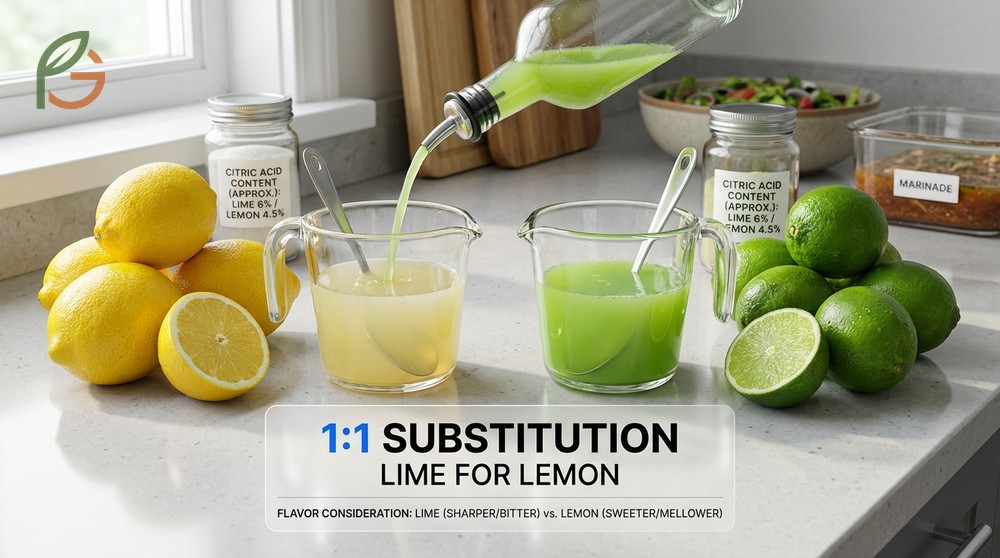
You can substitute lime juice for lemon juice at a 1:1 ratio in virtually all recipes.[2] Current culinary data shows lime juice contains approximately 6% citric acid compared to lemon’s 4.5%, making it slightly more potent.[6] This difference proves negligible in most dishes—the substitution works for marinades, dressings, baking, and beverages.
The main consideration is flavor. Limes taste sharper and more bitter, while lemons lean sweeter and mellower. In lemon-forward desserts like lemon bars or meringue pie, lime introduces a tropical twist that some find appealing. Savory applications like fish marinades or guacamole often benefit from lime’s assertive character.
From My Experience: My cousin in Guadalajara, Mexico ran out of lemons while making ceviche last summer. She used Persian limes at a 1:1 swap—the fish “cooked” in 15 minutes versus the typical 20-minute range with lemon, matching the faster curing time research predicts for higher-acid citrus.
Lime vs Lemon Acidity
Scientific analysis reveals key differences between these citrus acids. Lemon juice averages 48 grams citric acid per liter, while lime juice contains 45.8 g/L—nearly identical concentrations despite lime’s lower pH.[7] The pH difference (lemon 2.0-3.1 vs lime 1.8-2.4) comes from other organic acids in the fruit.
This explains why both fruits work interchangeably in canning recipes. The USDA and food safety experts confirm that lime and lemon juice swap equally when acidifying low-acid foods for safe preservation.[3] Always use bottled versions for canning—fresh citrus varies too much in acidity.
Best Uses for Lime
- Marinades for seafood and chicken—lime’s sharpness cuts through protein richness better than lemon
- Mexican and Thai dishes—authentic flavor profiles expect lime rather than lemon
- Cocktails and beverages—margaritas, mojitos, and limeade showcase lime’s distinctive taste
- Baking with tropical themes—key lime pie, coconut-lime cakes, and mango desserts
- Salad dressings—works equally well in vinaigrettes where citrus provides acidity and brightness
Important Note: Don’t use lime in recipes requiring lemon zest unless you want that specific lime flavor. The oils in citrus peels differ significantly—lemon zest won’t substitute for lime zest and vice versa in most applications.
Apple Cider Vinegar Substitute for Lemon
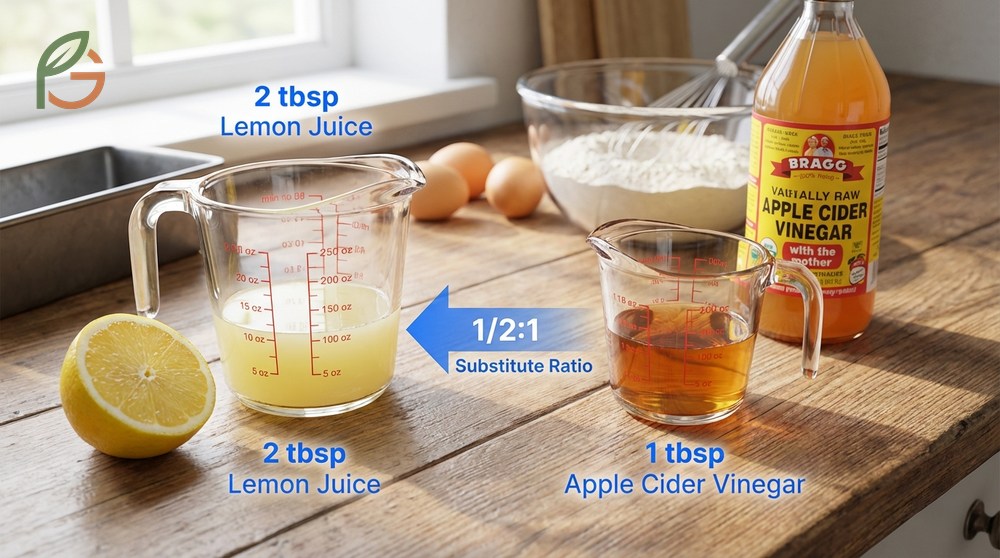
Apple cider vinegar replaces lemon juice at a 1/2:1 ratio in most recipes. Use 1 tablespoon vinegar where your recipe calls for 2 tablespoons lemon juice.[1] This ratio accounts for acetic acid’s stronger flavor compared to citric acid. If your dish seems too acidic, add water to reach the original liquid volume.
Apple cider vinegar brings fruity undertones that complement many dishes. It works particularly well in baking when you need acid to activate baking soda—the apple notes disappear during cooking. Salad dressings and marinades benefit from its mellow complexity. However, avoid it in delicate desserts where vinegar’s sharpness might overpower other flavors.
For making quick buttermilk, apple cider vinegar excels. Add 1 tablespoon to 1 cup milk, let sit 5 minutes, and you’ve got tangy buttermilk for pancakes or biscuits. The fermented character mimics real buttermilk better than lemon juice does.
Vinegar Conversion Ratios
This table compares substitution ratios and best uses for different vinegar types replacing lemon juice in recipes
| Vinegar Type | Substitution Ratio | Flavor Profile | Best Uses |
|---|---|---|---|
| Apple Cider Vinegar | 1/2:1[1] | Fruity, mild | Baking, dressings, marinades |
| White Wine Vinegar | 1/2:1[1] | Clean, sharp | Sauces, deglazing, pickling |
| Rice Vinegar | 1/2:1[1] | Delicate, sweet | Asian dishes, sushi rice, slaws |
| White Distilled Vinegar | 1/2:1 | Harsh, neutral | Pickling, cleaning (cooking last resort) |
- Start with less—you can always add more vinegar, but you can’t remove it once added
- Add water if needed—replace the missing liquid volume in recipes that depend on moisture balance
- Avoid balsamic vinegar—its sweetness and dark color work poorly as lemon replacements in most dishes
- Test before serving—vinegar’s acetic acid tastes sharper than lemon’s citric acid to most palates
- Don’t use in canning—vinegar and lemon juice aren’t interchangeable for food preservation safety
White Vinegar vs Lemon Juice
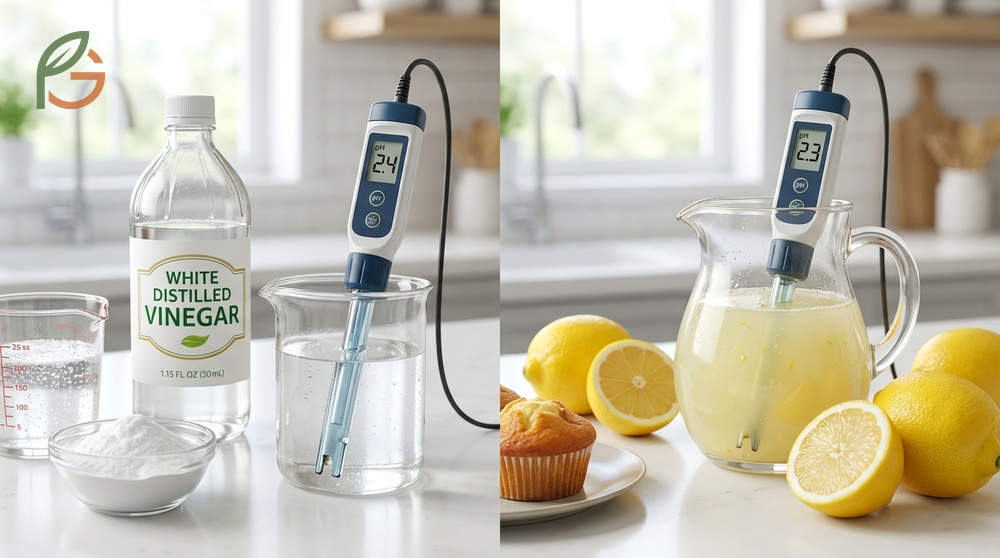
White distilled vinegar contains 5% acetic acid with a pH around 2.4—comparable to lemon juice’s 2.0-3.1 pH range.[8] Despite similar acidity levels, they differ significantly in flavor. Lemon juice delivers fruity brightness with subtle sweetness, while white vinegar tastes harsh and one-dimensional.
This makes white vinegar acceptable for functional uses but poor for flavor. It works fine in baking when combined with baking soda to create lift—the heat neutralizes vinegar’s sharpness. However, it’ll ruin a vinaigrette or marinade where lemon’s complexity matters. Reserve white vinegar for cleaning or pickling rather than finishing dishes.
The 1/2:1 substitution ratio applies here too. Use 1 tablespoon white vinegar plus 1 tablespoon water to replace 2 tablespoons lemon juice in baking recipes only. For everything else, choose apple cider vinegar or lime juice instead.
Cooking Tip: If white vinegar is your only option for baking, add a pinch of sugar (about 1/8 teaspoon per tablespoon vinegar) to mimic lemon juice’s natural sugars. This small addition balances the harsh acidity without making your recipe noticeably sweet.
Citric Acid Powder
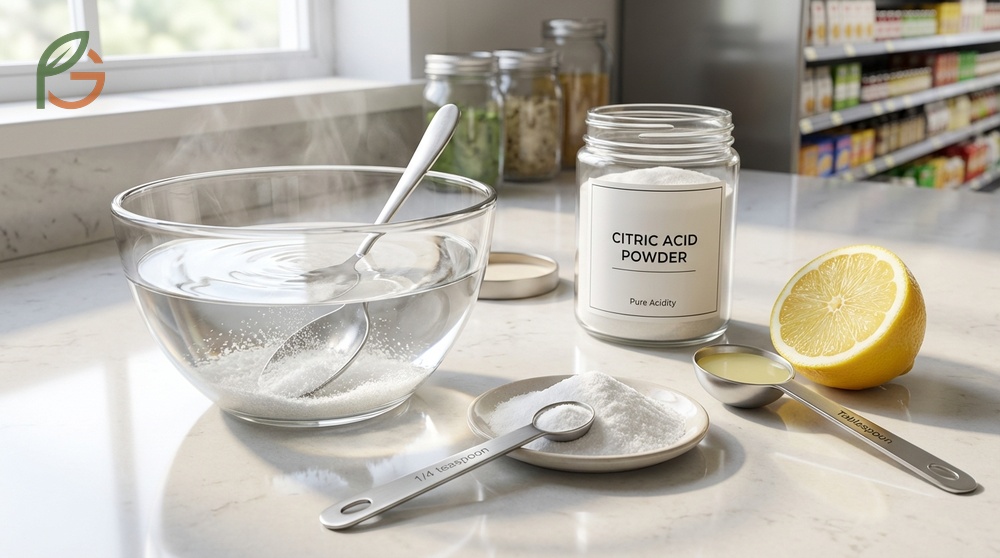
Citric acid powder provides pure acidity without added flavor or moisture. The conversion is precise: 1/4 teaspoon citric acid equals 1 tablespoon lemon juice.[3] You’ll find it in the canning section of grocery stores or online—it’s FDA-approved as Generally Recognized As Safe (GRAS) for all food applications.
Always dissolve citric acid in water before adding to recipes. Mix each 1/4 teaspoon powder with 2 tablespoons warm water to prevent clumping and ensure even distribution. This creates a liquid equivalent to lemon juice that integrates smoothly into batters, doughs, and sauces.
Citric acid shines in specific situations. It’s ideal for canning when you need consistent acidity levels—fresh lemons vary too much. It prevents fruit browning in preserves without adding lemon flavor. Home cheesemakers use it to curdle milk for ricotta and mozzarella. However, it lacks lemon’s aromatic oils, making it unsuitable for recipes where citrus flavor matters.
- Canning and preserving—provides reliable pH control for safe food preservation
- Cheese making—curdles milk proteins effectively at precise ratios
- Preventing oxidation—stops cut apples and pears from browning without citrus taste
- Candy making—adds tartness to gummies and sour candies with controlled intensity
- Low-sugar diets—contains zero calories unlike lemon juice’s natural sugars
- Long-term storage—powder lasts 2+ years in airtight containers versus weeks for fresh lemons
Don’t use citric acid in delicate desserts or cocktails where lemon’s complex flavor profile matters. A lemon tart made with citric acid tastes flat despite correct acidity—you’re missing the essential oils and subtle sweetness that make lemons distinctive.
Lemon Extract vs Lemon Juice
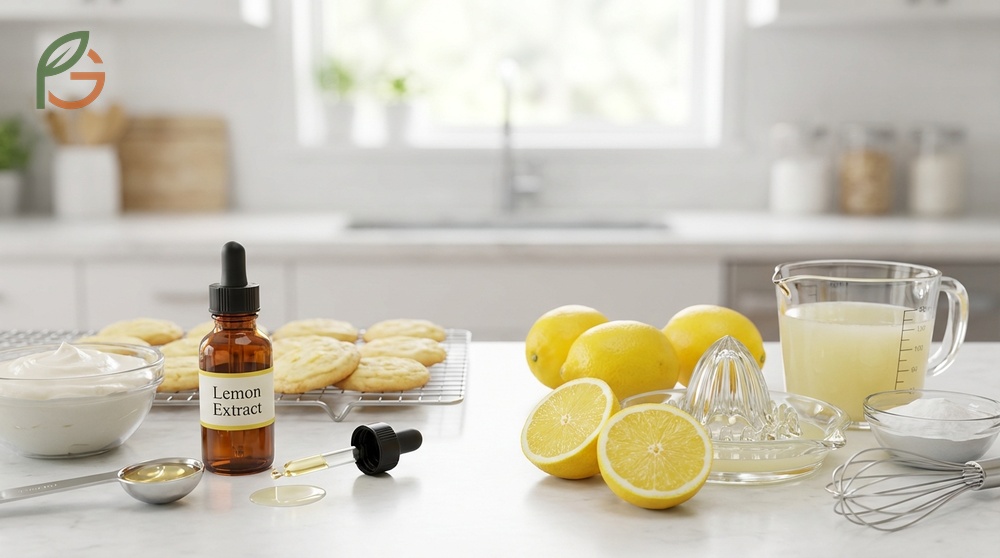
Lemon extract concentrates lemon oil flavors in an alcohol base without the acidity. Use 1 teaspoon extract to replace 2 tablespoons lemon juice when you need lemon flavor but not sourness.[9] This substitution only works in specific situations—extract can’t activate baking soda, tenderize meat, or preserve food.
Extract excels in sweet baking where lemon flavor matters more than chemical function. It enhances frosting, glazes, and cookies without adding liquid or acidity. Combine extract with citric acid or vinegar when you need both flavor and acid—use 1 teaspoon extract plus 1 tablespoon vinegar to replace 2 tablespoons lemon juice.
Quality varies significantly among brands. Pure lemon extract contains only lemon oil and alcohol. Imitation versions use artificial flavoring that tastes harsh and chemical. Check labels and invest in pure extract for best results—a little goes a long way, making expensive bottles last months.
Baker’s Note: Lemon extract’s alcohol base evaporates during baking, leaving only flavor behind. Don’t worry about alcohol content in finished goods—it’s negligible. However, avoid extract in no-bake desserts where the alcohol taste might remain detectable.
Conclusion
The evidence is clear: choosing the right substitute for lemon juice depends on your recipe’s purpose. Lime juice works universally at 1:1, vinegars excel in baking at 1/2:1, and citric acid provides pure acidity for preserving. Each alternative matches lemon’s pH levels while offering distinct advantages—lime juice maintains citrus character, apple cider vinegar adds complexity, and citric acid delivers precision.
Current culinary guidance emphasizes understanding acidity’s role rather than blindly swapping ingredients. When in doubt, start with lime juice for most applications. FruitGarden continues researching citrus cultivation and culinary science to help home cooks make informed decisions in the kitchen.
Frequently Asked Questions
Can you substitute lime juice for lemon juice in all recipes?
Yes, lime juice substitutes for lemon juice at a 1:1 ratio in virtually all cooking and baking applications. The main difference is flavor—limes taste sharper and more bitter than lemons. This works perfectly for savory dishes, marinades, and most desserts, though lemon-forward recipes like lemon meringue pie will taste noticeably different.
What’s the best substitute for lemon juice in baking?
Cream of tartar works best for baking when you need acid to activate baking soda. Use 1/2 teaspoon cream of tartar per 1 teaspoon lemon juice. Alternatively, use vinegar at a 1/2:1 ratio (1 tablespoon vinegar replaces 2 tablespoons lemon juice). Both options provide necessary acidity without affecting texture or rise.
How much citric acid replaces lemon juice?
Use 1/4 teaspoon citric acid powder dissolved in 2 tablespoons water to replace 1 tablespoon lemon juice. This ratio provides equivalent acidity for canning, cheese making, and preventing fruit browning. Always dissolve the powder first to prevent clumping and ensure even distribution throughout your recipe.
Can I use white vinegar instead of lemon juice?
White vinegar works for baking at a 1/2:1 ratio but tastes too harsh for most other uses. Use 1 tablespoon white vinegar plus 1 tablespoon water to replace 2 tablespoons lemon juice in cake or muffin recipes only. For dressings, marinades, and finishing dishes, choose apple cider vinegar or lime juice instead.
What can I substitute for lemon juice in a marinade?
Lime juice provides the best marinade substitute at a 1:1 ratio, offering similar acidity and citrus brightness. Apple cider vinegar works at 1/2:1 for a different flavor profile. Avoid white vinegar—its harshness overpowers meat and seafood. For Asian marinades, try rice vinegar with a splash of orange juice.
Does lemon extract work like lemon juice?
No, lemon extract provides flavor without acidity. It can’t activate baking soda, tenderize proteins, or preserve food like lemon juice does. Use extract only when you need lemon taste without sourness—in frosting, glazes, or cookies. For functional acidity, combine 1 teaspoon extract with 1 tablespoon vinegar to replace 2 tablespoons lemon juice.
Can I use orange juice as a lemon juice substitute?
Orange juice works in a pinch but requires nearly double the amount due to lower acidity (pH 3.5-4.0 versus lemon’s 2.0-3.1). Use a 1:1 ratio only in recipes where citrus flavor matters more than acidity, like smoothies or marinades. It won’t work for baking that requires acid to activate leaveners.





