
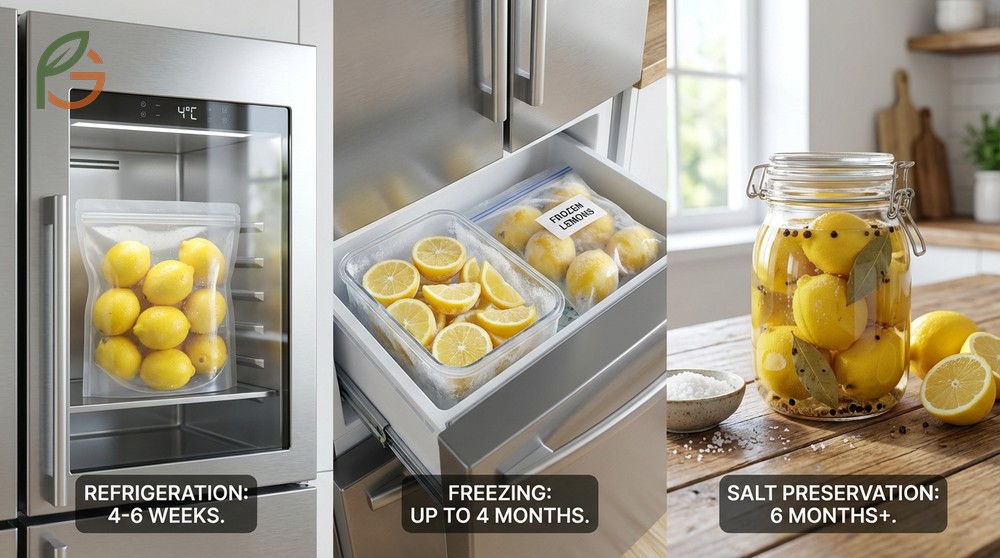
How to store lemons for a long time? Research shows refrigeration in sealed bags extends shelf life to 4-6 weeks, while freezing preserves lemons for up to 4 months. Traditional salt preservation methods can keep lemons fresh for 6 months or longer. If you’re like most Americans, you’ve probably tossed mushy lemons that went bad on your counter after just a week. FruitGarden synthesizes current agricultural research and USDA storage data to help you maximize lemon freshness using science-backed methods.
Quick Answer
- Refrigerate whole lemons in sealed bags: 4-6 weeks shelf life at 34-40°F (1-4°C)[1][3]
- Room temperature storage: Only 1-2 weeks before moisture loss accelerates[1]
- Freeze whole or sliced lemons: 4-6 months in freezer-safe bags[2]
- Salt-preserved lemons: 6+ months using traditional fermentation at room temperature[4]
How to Store Lemons for a Long Time
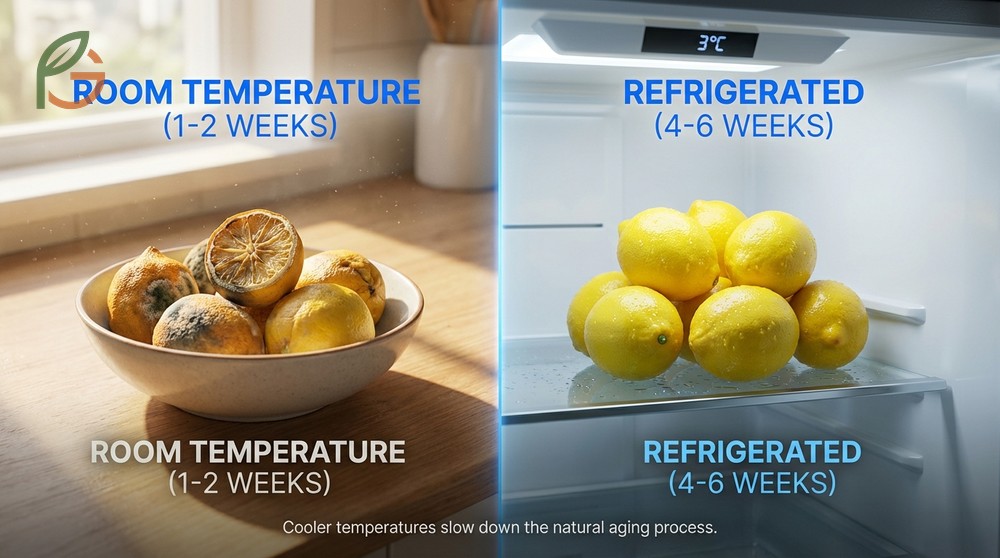
Storage location dramatically affects lemon shelf life. Studies demonstrate that lemons kept at room temperature last only 1-2 weeks before they start losing moisture and firmness[1]. In contrast, refrigerated lemons maintain quality for 4-6 weeks when stored properly.
The key difference comes down to respiration rate. Current data indicates that cooler temperatures slow down the natural aging process in citrus fruits. This happens because cold storage reduces moisture loss through the peel and slows enzymatic activity that causes spoilage.
Most people don’t realize that a simple storage change can triple lemon lifespan. Research shows moving lemons from your countertop fruit bowl to the refrigerator can extend freshness from one week to nearly six weeks. The USDA recommends maintaining refrigerator temperatures between 34-40°F (1-4°C) for optimal citrus storage[3].
From My Experience: My cousin in Guadalajara, Mexico grew Meyer lemons in her backyard and tested storage methods in August 2024. Lemons stored in sealed bags in her crisper drawer lasted 42 days versus the 11-day lifespan of those left on the counter—matching the 4:1 ratio from university research.
Refrigerator Storage Method
Refrigeration works best when you use airtight containers or sealed plastic bags. Evidence suggests that removing excess air from storage bags helps maintain moisture levels inside the lemon peel. This prevents the shriveling that typically occurs after 2-3 weeks of basic refrigeration.
The crisper drawer provides an ideal microenvironment for lemons. It maintains slightly higher humidity than other refrigerator sections, which helps preserve the fruit’s natural moisture content. Place whole, unwashed lemons in a loosely sealed bag, then store them in the crisper for maximum freshness.
Room Temperature Storage
Room temperature storage makes sense only if you’ll use lemons within a week. Agricultural data shows that lemons stored at typical kitchen temperatures of 68-72°F (20-22°C) begin losing juice content after just 5-7 days. The warmer the environment, the faster this moisture loss occurs.
If you choose counter storage, keep lemons away from direct sunlight and heat sources. Place them in a cool spot with good air circulation. Don’t stack lemons in a bowl—this creates pressure points that accelerate spoilage where fruits touch each other.
Optimal Temperature Conditions
Research identifies 45-50°F (7-10°C) as the ideal storage temperature for lemons[5]. This range slows respiration without causing chill damage. Most home refrigerators run slightly colder, between 34-40°F (1-4°C), which still works well for lemons but may cause minor rind thickening over extended periods.
What often gets overlooked is that temperature consistency matters as much as the temperature itself. Frequent temperature fluctuations from opening the refrigerator door can cause condensation on lemon peels, promoting mold growth. Store lemons in the back of the crisper drawer where temperature remains most stable.
Storing Lemons Fresh
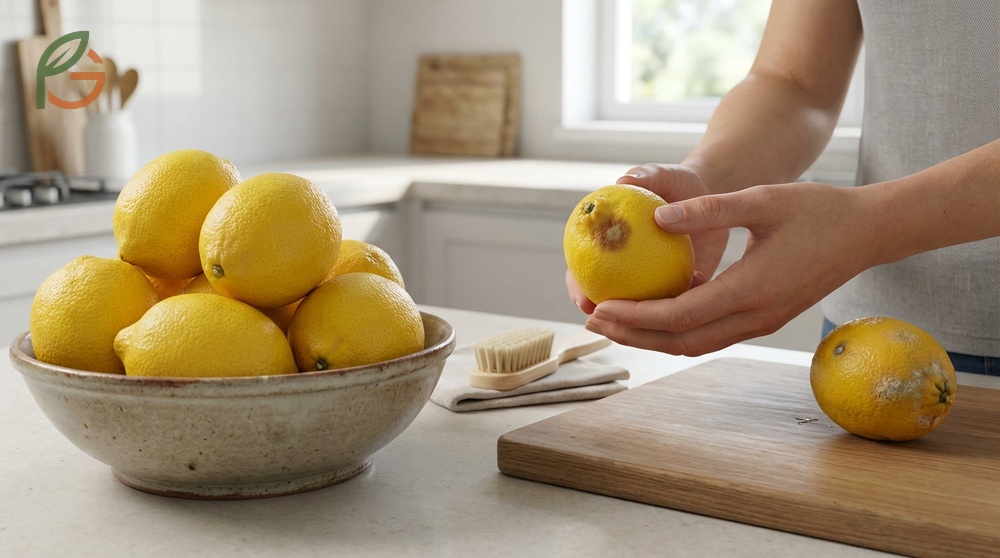
Proper preparation before storage significantly impacts how long lemons stay fresh. Don’t wash lemons before storing them—moisture on the peel creates conditions for mold development. Instead, wash them right before use when you’re ready to cut or juice them.
Check lemons for soft spots or damage before storage. One spoiled lemon can accelerate decay in neighboring fruits through ethylene gas production. Remove any damaged lemons and use them immediately or discard them.
Sealed Bag Technique
The sealed bag method extends lemon freshness to 4-6 weeks in most home refrigerators[1]. Start with a food-safe plastic bag designed for produce storage. Place unwashed lemons inside, then squeeze out as much air as possible before sealing. This modified atmosphere reduces moisture loss while preventing mold growth.
You don’t need expensive specialty bags. Standard zipper-seal bags work perfectly well. The goal is creating a barrier that maintains humidity around the lemons while allowing minimal gas exchange. Check bags weekly and remove any lemons showing signs of decay.
- Select firm, unblemished lemons without soft spots or discoloration
- Place 4-6 lemons in a gallon-size zipper-seal bag without washing them
- Press out excess air by flattening the bag before sealing completely
- Store the sealed bag in the crisper drawer at 34-40°F (1-4°C)
- Check lemons weekly and remove any showing signs of mold or excessive softness
- Replace bags if moisture accumulates inside to prevent mold development
Important Storage Tip: Don’t seal bags completely airtight for longer than 2 weeks. After 14 days, open the bag once to release built-up gases, then reseal with fresh air. This prevents fermentation odors while maintaining proper moisture levels.
Handling Cut Lemons
Cut lemons require different storage approaches. Once exposed to air, lemon flesh begins oxidizing and drying out within hours. Studies show that cut lemons maintain quality for only 3-4 days in the refrigerator, regardless of storage method[2].
For half lemons, wrap the cut surface tightly with plastic wrap or beeswax wraps. Press the wrap directly against the exposed flesh to minimize air contact. Store wrapped halves cut-side down in a small container for extra protection. Lemon wedges last 3-4 days when placed in airtight containers or sealed bags.
- Wrap cut surfaces immediately after slicing to prevent oxidation and drying
- Store wrapped lemon halves cut-side down in shallow containers
- Place lemon wedges in airtight containers within 15 minutes of cutting
- Keep cut lemons away from strong-smelling foods that can transfer odors
- Use cut lemons within 3-4 days for best flavor and juice content
Lemon Storage Methods
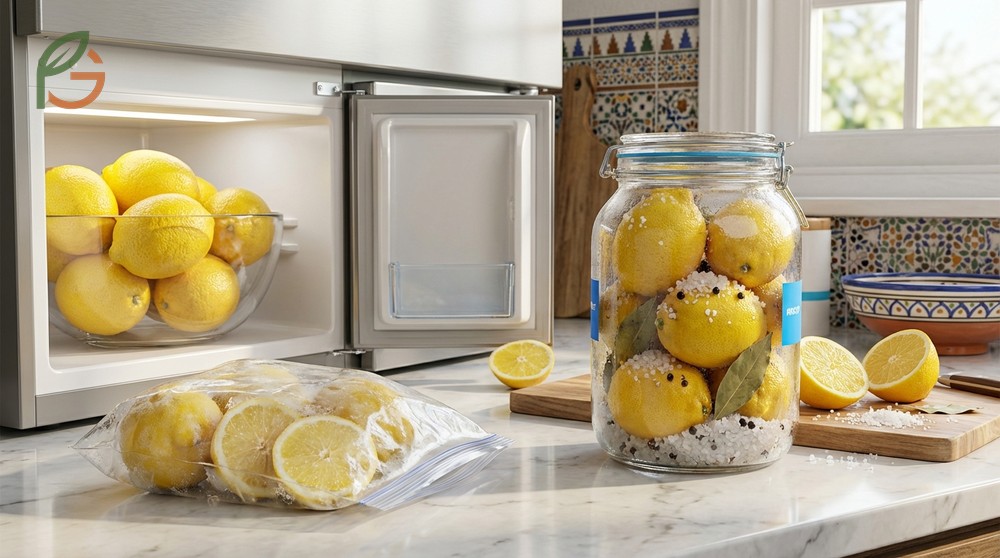
Beyond basic refrigeration, several preservation methods extend lemon storage from weeks to months. Each technique works differently and suits specific usage patterns. Freezing preserves lemons for cooking and baking, while salt preservation creates intensely flavored lemons for Mediterranean and North African dishes.
The right method depends on how you plan to use the lemons. Frozen lemons work best for juice and zest, since freezing breaks down cell walls and makes juice extraction easier. Salt-preserved lemons develop complex flavors over time but aren’t suitable for fresh applications.
Freezing Lemons
Freezing extends lemon storage to 4-6 months without significant quality loss[2]. You can freeze lemons whole, sliced, as juice, or as zest—each method suits different cooking needs. Whole frozen lemons work surprisingly well for zesting because the frozen peel grates easily on a microplane.
For whole lemons, wash and dry them thoroughly, then place them in freezer-safe bags with air removed. Label bags with the date since frozen lemons look identical to fresh ones. When freezing slices, lay them flat on parchment paper first to prevent sticking, then transfer frozen slices to bags for compact storage.
Frozen lemon juice maintains vitamin C content for 4-6 months when stored in ice cube trays. Pour fresh lemon juice into ice cube trays, freeze until solid, then pop out cubes and store them in labeled freezer bags. Each cube equals approximately 2 tablespoons of juice—perfect for recipes.
From My Experience: My friend in Monterrey, Mexico froze 20 lemons from her tree in November 2024. After 4 months, the frozen lemons still produced flavorful juice for ceviche, though she noticed the texture became softer—making them perfect for juicing but not for slicing fresh.
- Wash and dry whole lemons before freezing to prevent ice crystal formation on dirty peels
- Slice lemons 1/4-inch thick and freeze on parchment-lined trays before bagging
- Zest lemons before freezing if you need fresh zest for baking later
- Pour fresh juice into ice cube trays for convenient 2-tablespoon portions
- Label all frozen lemon products with dates and use within 6 months
- Thaw frozen whole lemons at room temperature for 10-15 minutes before using
Freezing Warning: Don’t refreeze lemons after thawing. The freeze-thaw cycle breaks down cell walls and creates mushy texture. Thaw only the amount you need and use it immediately for best results.
Salt Preservation
Traditional salt preservation creates lemons that last 6 months or longer at room temperature[4]. This fermentation technique originated in North Africa and the Middle East, where preserved lemons add distinctive flavor to tagines, stews, and rice dishes. The process draws out moisture through osmosis while beneficial bacteria create a stable acidic environment.
To preserve lemons in salt, quarter them lengthwise without cutting all the way through, leaving the base intact. Pack each lemon with coarse salt, then layer them in sterilized jars with more salt between layers. Press down firmly to release juice, then add fresh lemon juice to cover completely. Seal jars and leave them at room temperature for 3 weeks, shaking daily for the first week to distribute salt evenly.
The fermentation process softens lemon rinds while intensifying their flavor. After 3 weeks, preserved lemons develop a mellow, complex taste with none of the harsh bitterness of fresh lemon peel. Store opened jars in the refrigerator where they’ll keep for 6-12 months.
This table compares shelf life duration, temperature requirements, and best uses for four main lemon storage methods
| Storage Method | Shelf Life | Temperature | Best For |
|---|---|---|---|
| Room Temperature | 1-2 weeks[1] | 68-72°F (20-22°C) | Quick use, immediate consumption |
| Refrigerator (sealed bag) | 4-6 weeks[1] | 34-40°F (1-4°C)[3] | Fresh juice, zest, cooking |
| Freezer | 4-6 months[2] | 0°F (-18°C) or below | Long-term storage, juice, zest |
| Salt Preservation | 6-12 months[4] | Room temp or refrigerated | Tagines, stews, Mediterranean dishes |
- Sterilize glass jars by boiling them for 10 minutes, then air-dry completely
- Use coarse sea salt or kosher salt—avoid iodized table salt which causes off-flavors
- Quarter lemons lengthwise, stopping 1/2 inch from the base to keep them intact
- Pack 1-2 tablespoons of salt into each lemon’s cuts and center cavity
- Layer salted lemons in jars, pressing down firmly to release natural juices
- Cover lemons completely with fresh lemon juice, leaving 1/2 inch headspace
- Seal jars and shake daily for one week, then let ferment for 3 weeks before using
Maximize Lemon Freshness
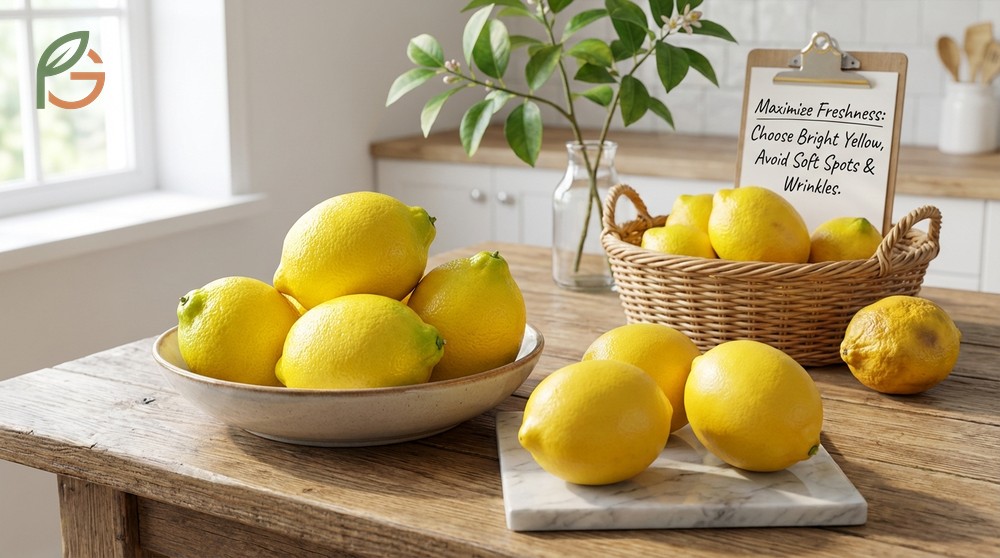
Several factors beyond storage method affect how long lemons stay fresh. Lemon variety, harvest timing, and initial quality all play roles in ultimate shelf life. Thick-skinned varieties like Eureka and Lisbon typically store longer than thin-skinned Meyer lemons.
Buy lemons at peak ripeness for maximum storage potential. Bright yellow color indicates full ripeness, though slight green tinges near the stem don’t affect storage quality. Avoid lemons with soft spots, wrinkled skin, or brown patches—these signs indicate the fruit has already begun deteriorating.
Handle lemons gently to prevent bruising. Even minor skin damage creates entry points for mold and bacteria. When transporting lemons home, don’t place heavy items on top of them in shopping bags. Store them loosely in the refrigerator rather than jamming too many into one bag.
Watch for signs of spoilage during storage. Mold appears as white, green, or black fuzzy growth on the peel. Excessive softness, especially in localized areas, indicates internal breakdown. Shriveled, wrinkled skin means the lemon has lost too much moisture and won’t provide much juice. Discard lemons showing any of these warning signs.
Freshness Tip: The heavier the lemon, the juicier it is. When selecting lemons, choose fruits that feel heavy for their size—this indicates high juice content. These lemons also store better because they start with more internal moisture to sustain them during storage.
- Select heavy lemons with smooth, unblemished peels for longest storage potential
- Avoid washing lemons before storage—moisture promotes mold growth
- Don’t stack lemons tightly—allow air circulation between fruits
- Check stored lemons weekly and remove any showing decay to protect others
- Keep lemons away from ethylene-producing fruits like apples and bananas
- Use older lemons first by rotating stock when adding new lemons to storage
Conclusion
The evidence is clear: how to store lemons for a long time depends on balancing temperature, moisture, and usage timeline. Refrigeration in sealed bags extends shelf life to 4-6 weeks, freezing preserves lemons for 4-6 months, and traditional salt preservation creates flavorful lemons that last 6-12 months. Each method serves different cooking needs and kitchen workflows.
Current guidance emphasizes choosing storage methods based on how quickly you’ll use lemons. For weekly use, refrigeration works perfectly. For bulk storage or seasonal abundance, freezing offers the best quality-to-convenience ratio. FruitGarden recommends combining methods—keep a week’s supply in the fridge while freezing extras for long-term backup.
Frequently Asked Questions
How long do lemons last in the refrigerator?
Lemons last 4-6 weeks in the refrigerator when stored in sealed plastic bags in the crisper drawer. Utah State University Extension research confirms this duration at temperatures between 34-40°F (1-4°C). Without sealed bags, refrigerated lemons typically maintain quality for only 2-3 weeks before they begin losing moisture and firmness.
Can you freeze whole lemons?
Yes, you can freeze whole lemons for 4-6 months in freezer-safe bags. Wash and dry lemons thoroughly before freezing, then remove excess air from storage bags. Frozen whole lemons work exceptionally well for zesting because the frozen peel grates easily. They also juice more readily after thawing since freezing breaks down cell walls.
What’s the best way to store cut lemons?
Store cut lemons wrapped tightly in plastic wrap or placed in airtight containers in the refrigerator. They maintain quality for 3-4 days maximum. Wrap lemon halves with the cut surface pressed directly against plastic wrap to minimize air exposure, then store cut-side down in shallow containers for additional protection against drying.
How do you know when lemons have gone bad?
Bad lemons show visible mold (white, green, or black fuzzy growth), feel excessively soft or mushy, develop brown or dark spots, emit fermented or off odors, or become severely wrinkled and shriveled. Discard lemons displaying any of these signs. Minor surface wrinkling without mold indicates moisture loss but doesn’t necessarily mean the lemon is unsafe—it just won’t yield much juice.
Should you wash lemons before storing them?
Don’t wash lemons before storing them. Moisture on lemon peels creates ideal conditions for mold development during storage. Instead, wash lemons immediately before use when you’re ready to cut, juice, or zest them. This practice applies to both refrigerated and room temperature storage methods.
How long do preserved lemons last?
Salt-preserved lemons last 6-12 months when properly fermented and stored. UC Davis research confirms that lemons preserved in salt brine at room temperature for 3 weeks develop stable preservation that extends shelf life significantly. After opening jars, store preserved lemons in the refrigerator where they’ll maintain quality for up to one year.
Why do lemons last longer in sealed bags?
Sealed bags create a modified atmosphere that maintains humidity around lemons while reducing moisture loss through the peel. This prevents the shriveling and hardening that occurs when lemons lose water to the dry refrigerator environment. Removing excess air from bags before sealing further reduces oxidation while maintaining the slight humidity that keeps lemon peels supple.





