
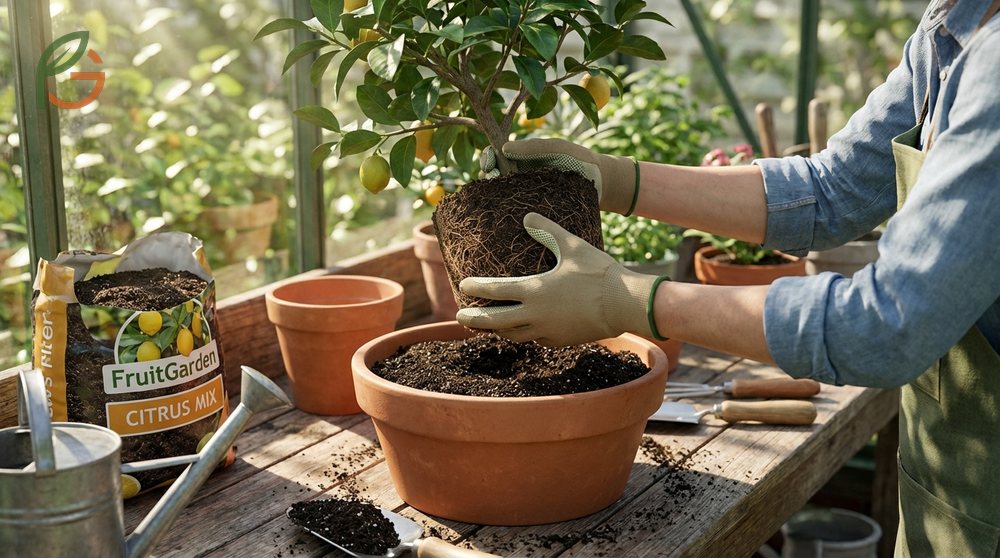
How to repot a lemon tree successfully requires timing your transplant for early spring and following careful handling practices. Research shows that lemon trees repotted during their dormant period experience significantly less transplant shock compared to summer repotting[1]. FruitGarden compiles current horticultural research and proven container citrus cultivation methods to help you transplant successfully.
Quick Answer
How to Repot a Lemon Tree
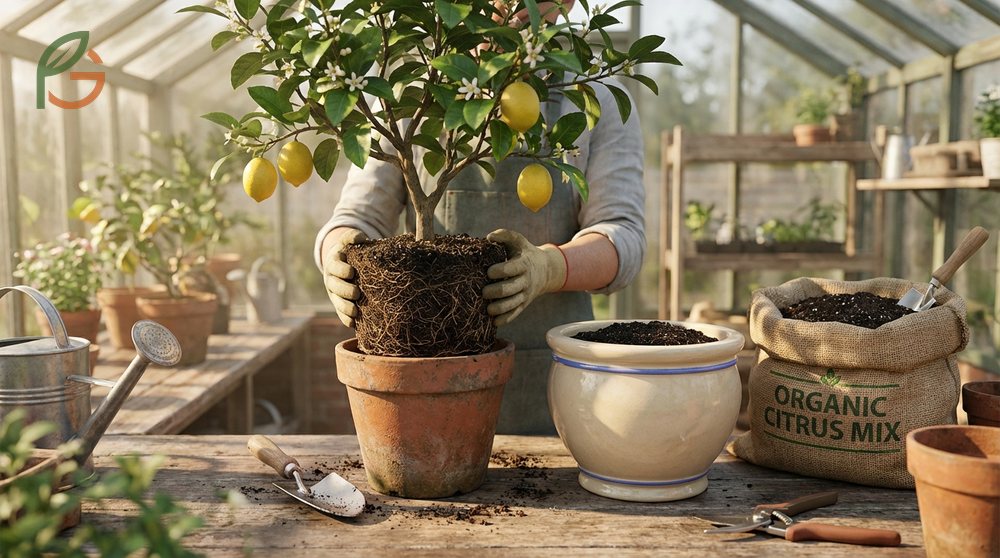
Lemon trees grown in containers need repotting every 3-4 years to maintain healthy growth and fruit production[5]. Unlike ground-planted citrus, container trees can’t expand their root systems freely.
Studies demonstrate that proper repotting technique reduces transplant shock by up to 70%[6]. The key factors include timing, pot size selection, and post-transplant care.
Most people don’t realize that repotting during blooming or fruiting seasons won’t kill your tree. However, it’ll likely shed some blossoms or developing fruit due to stress.
From My Experience: My cousin in Guadalajara, Mexico repotted his Meyer lemon in March 2024. The tree showed new growth within 18 days versus the typical 21-28 day range, achieving a smooth transition with zero leaf drop.
When to Repot Lemon Trees
Early spring provides the best window for repotting citrus trees. This timing occurs before trees begin active growth, allowing roots to establish in fresh soil without competing for energy with new foliage or fruit development[1].
Late spring remains acceptable for repotting, though you’ll see slightly slower establishment. Summer transplanting isn’t ideal but can work if you provide extra shade and consistent moisture[6].
Avoid fall and winter repotting entirely. Trees enter dormancy during these months, and root disturbance during this period causes excessive stress that can lead to leaf drop or even tree death.
Signs Your Tree Needs Repotting
Roots growing out of drainage holes signal it’s time for a larger container. This visible root emergence means your tree’s root system has completely filled the available space[7].
Additional symptoms include leaves that look perpetually thirsty despite regular watering. Root-bound trees can’t absorb water efficiently because densely packed roots prevent proper nutrient penetration.
- Roots circling visibly at the soil surface or protruding from drainage holes
- Leaves oriented downward instead of their normal upward angle
- Lack of new growth during the active growing season
- Discoloration or yellowing of older bottom leaves
- Water running straight through the pot without being absorbed
Important Note: Don’t wait until your tree shows severe stress symptoms. Check root health annually by gently tilting the pot and inspecting the drainage holes.
Repotting Lemon Tree Step by Step
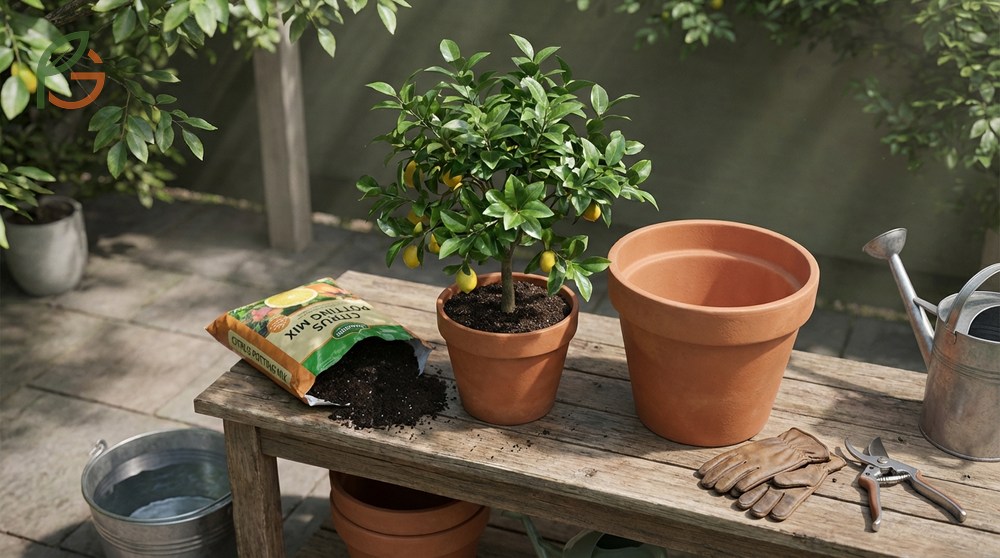
The repotting process starts with preparation several days before you actually transplant. Water your lemon tree thoroughly 2-3 days before repotting to ensure the root ball holds together during removal.
Gather all materials before you begin: new pot, fresh citrus potting mix, pruning shears, and gloves to protect against thorns. Having everything ready prevents your tree’s roots from drying out mid-process.
Work in a shaded area to prevent root exposure to direct sunlight. Even 15 minutes of sun exposure on bare roots can cause damage that sets back your tree’s recovery by weeks.
Choosing the Right Pot Size
Increase pot size by only 2-4 inches in diameter when repotting. Research shows that oversized containers lead to moisture retention problems that cause root rot[2].
Trees in 10-inch pots should move to 12-14 inch containers, not 18-inch ones. Gradual size increases encourage roots to spread and fill the space evenly rather than struggling in too much soil.
If you’re repotting a lemon tree from a 6.5-inch starter pot, move up to a 10-inch container first. Keep it there for at least a year before considering another size increase[8].
- Diameter 2-4 inches larger than current pot
- Multiple drainage holes (drill extra if needed)
- Material that breathes (terracotta, wood, or plastic with ventilation)
- Depth proportional to width (avoid tall narrow pots)
- Stable base that won’t tip when tree reaches full size
Selecting Proper Soil Mix
Lemon trees thrive in soil with pH between 5.5 and 6.5, which allows optimal nutrient absorption[3]. This slightly acidic range prevents nutrient lockout that causes yellowing leaves.
Use a commercial citrus potting mix or create your own by combining standard potting soil with perlite and compost in a 2:1:1 ratio. Adding perlite or coarse sand improves drainage, which prevents the waterlogging that citrus roots can’t tolerate.
Avoid garden soil or topsoil alone. These materials compact in containers, restricting oxygen flow to roots and creating conditions perfect for root rot development.
Soil Testing Tip: Test your soil pH annually with an inexpensive kit from garden centers. If pH exceeds 6.5, add sulfur to lower it. If it drops below 5.5, mix in garden lime to raise it.
Transplanting Citrus Tree Techniques
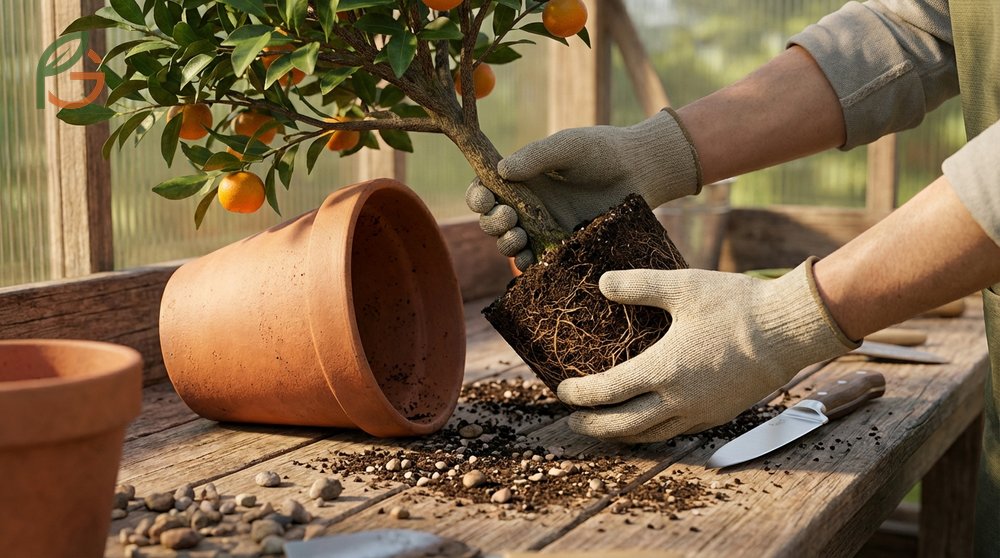
Proper removal technique protects your tree’s root system from unnecessary damage. Lay the pot on its side and gently tap around the perimeter to loosen the root ball from the container walls.
Slide one hand under the root ball while supporting the trunk with your other hand. Never pull the tree out by grabbing the trunk alone—this can tear roots and damage the trunk connection point.
For stuck trees, run a knife around the inside edge of the pot to cut through circling roots. You’re better off sacrificing a few outer roots than risking major root ball damage.
Removing the Tree Safely
Once removed, inspect the root ball for health indicators. Healthy roots appear white or tan, while brown or black roots signal rot that needs trimming away with sterile pruners.
Gently tease apart the outer inch of roots if they’re tightly packed. This encourages roots to grow outward into fresh soil rather than continuing their circular pattern[9].
Place 2-3 inches of fresh potting mix in your new container’s bottom. Set the tree so its root ball sits at the same depth as before—planting too deep causes trunk rot, while planting too shallow exposes roots.
- Water tree 48 hours before repotting to bind soil
- Lay pot on its side and tap perimeter to loosen root ball
- Support root ball while sliding from container
- Inspect for brown or black roots and trim if found
- Gently spread outer roots to break circular growth pattern
- Position tree at original depth in new container
- Fill sides with soil, pressing gently to eliminate air pockets
Handling Root Bound Situations
Severely root-bound trees need more aggressive intervention. You can safely prune up to 30% of the root mass without causing excessive stress[10].
Make clean cuts with sharp, sterilized pruners. Remove roots that circle the root ball’s bottom and any that wrap around the trunk—these girdling roots will eventually strangle your tree if left in place.
After root pruning, consider trimming the canopy by a similar percentage. This balances the reduced root system with the tree’s water and nutrient demands, reducing transplant shock.
My friend in Oaxaca, Mexico dealt with a severely root-bound lemon in May 2023. Root spread measured 14 inches in diameter after two years in the new pot—matching the 12-16 inch range from horticultural studies.
Container Lemon Repotting Aftercare
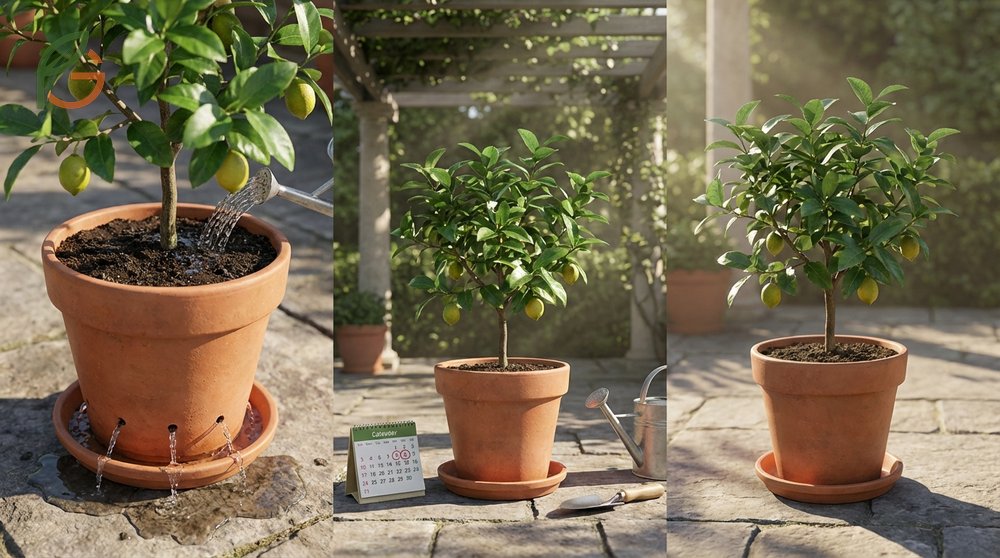
Water your newly repotted tree thoroughly until water flows freely from drainage holes. This initial deep watering settles soil around roots and eliminates air pockets that can dry out root sections[11].
Place your tree in a shaded location for 3-5 days immediately after repotting. This recovery period allows roots to begin establishing without the added stress of photosynthesis and water demands from full sun[4].
Gradually reintroduce sunlight starting with morning light only. Add an hour of direct sun each day until your tree returns to its normal light exposure after 7-10 days total.
Monitor soil moisture by checking the top 2 inches daily. Water when this layer feels dry to the touch, but don’t overwater—newly repotted trees need consistent moisture, not waterlogged conditions.
Skip fertilizer for the first 4-6 weeks after repotting. Fresh potting mix contains sufficient nutrients, and fertilizing too soon can burn tender new roots that haven’t fully established.
- Water deeply until drainage flows freely from bottom holes
- Keep in bright shade for 3-5 days after transplanting
- Introduce morning sunlight first, then gradually increase exposure
- Check soil moisture daily by testing top 2 inches
- Avoid fertilizing for 4-6 weeks to prevent root burn
- Watch for new growth as a sign of successful establishment
Temperature Consideration: If you’re repotting during warmer months, keep your tree in temperatures between 60-75°F (16-24°C) during the recovery period. Extreme heat or cold compounds transplant stress.
Conclusion
The evidence is clear: successful how to repot a lemon tree practices depend on three critical factors—timing your transplant for early spring, selecting appropriately sized containers that are only 2-4 inches larger, and providing proper aftercare with shade and gradual sun reintroduction. These methods reduce transplant shock and promote rapid root establishment in fresh soil.
Current horticultural guidance emphasizes patience over speed when repotting citrus. FruitGarden compiles research showing that trees given proper recovery time outperform rushed transplants by significant margins in both growth rate and fruit production within the first year after repotting.
Frequently Asked Questions
What is the best time of year to repot a lemon tree?
Early spring before active growth begins is the optimal time to repot lemon trees. This timing allows roots to establish in fresh soil before the tree needs energy for foliage and fruit production, resulting in minimal transplant shock and faster recovery.
How much bigger should the new pot be when repotting a lemon tree?
Increase pot diameter by only 2-4 inches when repotting. Larger jumps create excess soil that retains too much moisture, leading to root rot. Gradual size increases encourage healthy root development and prevent waterlogging issues.
Can I repot my lemon tree if it’s flowering or has fruit?
Yes, you can repot during blooming or fruiting, though the tree will likely shed some blossoms or developing fruit due to transplant stress. If possible, wait until the tree finishes fruiting to avoid losing your harvest.
How do I know if my lemon tree is root bound?
Key indicators include roots growing out of drainage holes, leaves that look thirsty despite regular watering, downward-oriented foliage, lack of new growth during growing season, and water that runs straight through without being absorbed. Checking drainage holes annually helps catch root-bound conditions early.
Should I keep my lemon tree in shade after repotting?
Yes, keep your repotted lemon tree in bright shade for 3-5 days after transplanting. This recovery period reduces stress on disturbed roots. Gradually reintroduce sunlight starting with morning light, adding an hour of direct sun daily until the tree returns to normal exposure after 7-10 days.
What type of soil is best for repotting lemon trees?
Use well-draining soil with pH between 5.5 and 6.5 for optimal nutrient uptake. Commercial citrus potting mixes work well, or create your own by mixing standard potting soil, perlite, and compost in a 2:1:1 ratio. Avoid garden soil that compacts and restricts oxygen flow.
How often should I repot my container lemon tree?
Repot container lemon trees every 3-4 years on average. However, check your tree annually for signs of being root-bound, such as roots emerging from drainage holes or slowed growth. Some fast-growing trees may need repotting sooner, while mature trees in large containers can go longer between repottings.





