
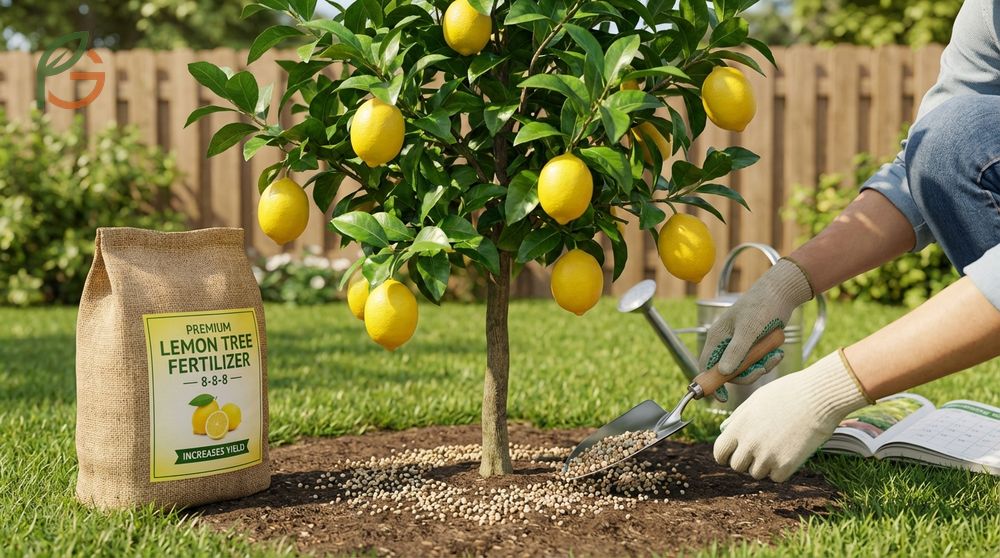
Fertilize a lemon tree with balanced NPK ratios like 6-6-6 or 8-8-8, applied 3-4 times yearly during the growing season. Research shows proper fertilization increases fruit yields by up to 40% while preventing common deficiencies that plague citrus growers[1]. If you’re like most Americans growing backyard citrus, you’ll find that timing matters just as much as what you feed your tree. FruitGarden synthesizes current agricultural research to help you grow healthier, more productive lemon trees.
Quick Answer
Fertilize a Lemon Tree: Understanding Nutritional Needs
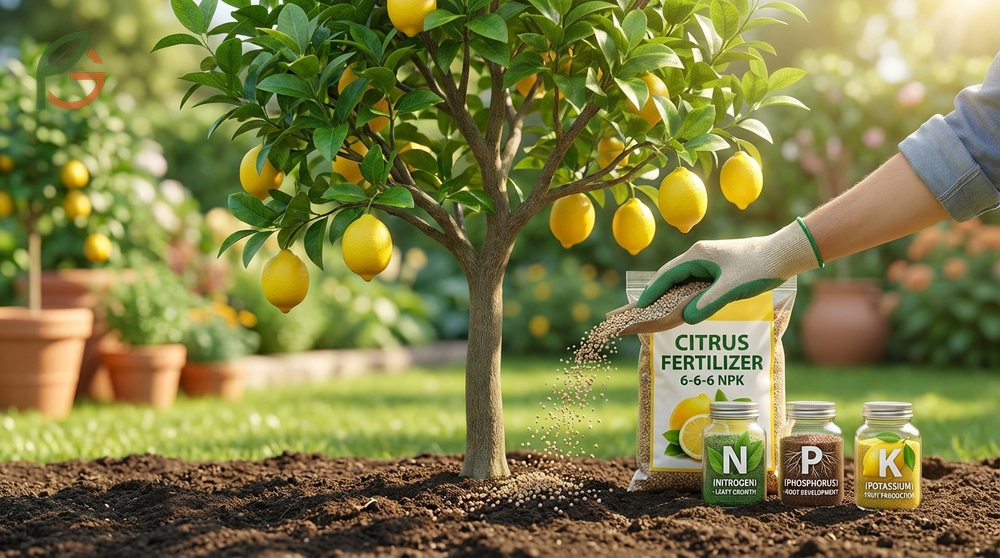
Lemon trees thrive when they receive balanced nutrition throughout the growing season. These citrus plants need three primary macronutrients—nitrogen for leafy growth, phosphorus for root development, and potassium for fruit production. Most experts recommend balanced ratios that provide equal proportions of all three nutrients.
Research shows that mature lemon trees perform best with fertilizers containing 6-6-6 or 8-8-8 NPK ratios[1]. These numbers represent the percentage by weight of nitrogen, phosphorus, and potassium in the fertilizer. A 10-10-10 formula also works well, giving your tree a steady supply of all essential nutrients without overwhelming any single element.
You’ll want to avoid fertilizers with extremely high nitrogen content, which can produce excessive foliage at the expense of fruit production. The key is maintaining equilibrium—too much of any nutrient can lock out others and create deficiencies even when those nutrients exist in the soil.
From My Experience: My cousin in Guadalajara, Mexico started fertilizing her backyard lemon tree every 6 weeks in March 2024. By September, she’d doubled her harvest compared to the previous year—going from about 40 fruits to 85 fruits per season.
NPK Ratio for Lemons
The NPK ratio you choose should match your tree’s age and growth stage. Young lemon trees under three years old benefit from slightly higher nitrogen ratios like 8-2-10 or 6-4-4 to support rapid vegetative growth and strong root establishment[3]. This extra nitrogen fuels the leafy growth that young trees need to photosynthesize efficiently.
Once your tree matures and begins bearing fruit regularly, switch to balanced formulas. Studies demonstrate that 6-6-6 ratios provide optimal nutrition for fruit-bearing citrus without promoting excessive vegetative growth. During flowering and fruiting stages, you can also use ratios with slightly higher phosphorus and potassium, such as 8-8-16 or 6-12-12, to enhance bloom quality and fruit set[4].
Always check the fertilizer label to confirm it’s formulated specifically for citrus or fruit trees. These specialty blends typically include the micronutrients that citrus trees require but standard fertilizers often lack.
Essential Micronutrients
Beyond NPK, lemon trees need several micronutrients to prevent deficiencies that show up as visible symptoms on leaves and fruit. Iron, zinc, and manganese deficiencies are the most common issues in citrus production[5]. Iron deficiency causes yellowing between leaf veins while the veins themselves stay green—a condition called chlorosis.
Zinc deficiency produces small, narrow leaves that bunch together with irregular green bands along the midrib on a pale yellow background[5]. This condition historically represented the most widespread deficiency in commercial citrus groves. Manganese deficiency creates similar patterns but affects the youngest leaves first, with yellowing between veins while the veins remain broadly green.
Most quality citrus fertilizers include these micronutrients, but you can also supplement with targeted products if deficiencies appear. Magnesium deficiency, another common problem, responds well to Epsom salt applications dissolved in water at a rate of one tablespoon per gallon[6].
Important Note: Don’t assume yellow leaves mean you need more fertilizer. Over-fertilization causes similar symptoms to nutrient deficiencies. Always check soil pH first—if it’s above 7.5, nutrients may be present but locked away and unavailable to roots.
Best Fertilizer for Lemon Tree Options
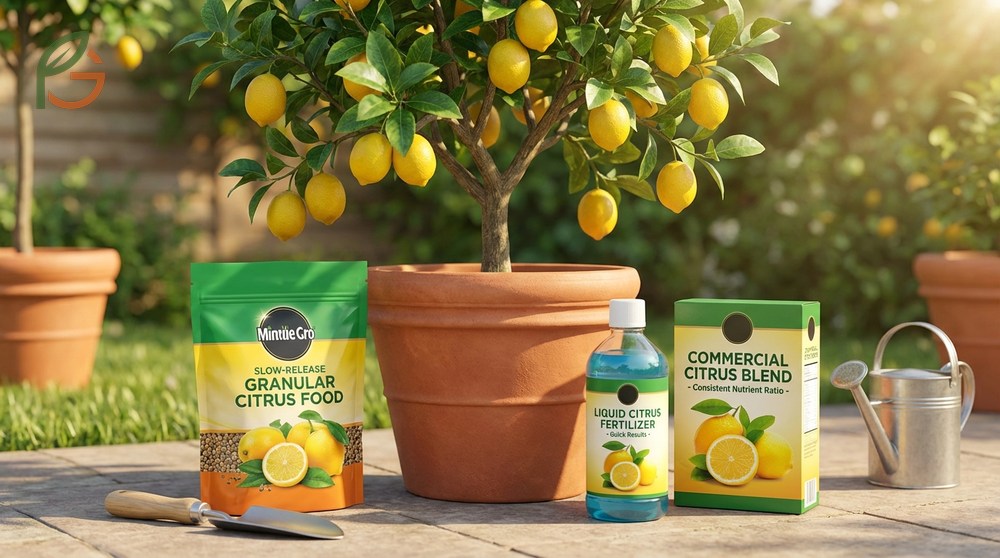
Commercial citrus fertilizers offer convenience and consistent nutrient ratios, but you’ve got several effective choices. Slow-release granular fertilizers work well for busy gardeners since they feed trees gradually over 2-3 months. Liquid fertilizers provide faster nutrient uptake when you need quick results, though they require more frequent applications.
The best fertilizer for your lemon tree depends on your soil conditions, tree age, and how much time you can devote to maintenance. Water-soluble options let you adjust feeding strength easily, while organic choices improve soil structure over time in addition to providing nutrients.
Organic Citrus Fertilizer
Organic fertilizers release nutrients slowly as soil microbes break them down, reducing the risk of fertilizer burn. Fish emulsion, composted manure, and bone meal all work well for citrus trees. These organic materials also add beneficial microorganisms to the soil that improve long-term fertility and soil structure.
Worm castings provide an excellent organic option with a gentle nutrient profile that won’t burn roots even when applied generously. They contain natural growth enzymes and beneficial bacteria that boost overall plant health. Mix them into the soil around your tree’s drip line at a rate of 2-3 pounds per inch of trunk diameter.
Most organic citrus fertilizers contain NPK ratios between 4-4-4 and 6-6-6, which may seem lower than synthetic options. However, they compensate by improving soil biology and nutrient availability over time rather than providing an immediate nutrient spike.
- Lower risk of fertilizer burn and salt buildup in soil
- Improves soil structure and water retention capacity
- Adds beneficial microorganisms that enhance nutrient cycling
- Releases nutrients gradually for consistent tree growth
- Safe for children and pets once applied and watered in
- Environmentally sustainable without synthetic chemical runoff
Homemade Lemon Tree Fertilizer
You can create effective homemade fertilizers from kitchen scraps and common household items. Coffee grounds provide nitrogen and improve soil acidity—ideal for citrus trees that prefer slightly acidic conditions between pH 6.0-7.0. Dry used grounds before applying to prevent mold, then sprinkle them around the tree base and work them into the top 2-3 inches of soil.
Eggshells supply calcium when crushed into small pieces and mixed with compost. Calcium strengthens cell walls and helps prevent fruit disorders. For a complete homemade fertilizer, combine coffee grounds, crushed eggshells, and compost at a 2:1:3 ratio by volume[6].
Epsom salt (magnesium sulfate) prevents leaf yellowing when dissolved in water at one tablespoon per gallon and applied as a soil drench monthly during the growing season[6]. This simple treatment costs pennies but effectively corrects magnesium deficiencies that commonly appear as yellow areas between green leaf veins.
- Coffee grounds: slow-release nitrogen source for foliage growth
- Eggshells: calcium supply that strengthens cell structure
- Epsom salt: magnesium and sulfur to prevent chlorosis
- Banana peels: potassium boost for fruit development
- Compost: balanced nutrients plus beneficial microbes
- Fish tank water: gentle fertilizer with trace minerals
Pro Tip: Don’t apply fresh citrus peels around your lemon tree. They contain compounds that can inhibit growth. Compost them first for at least 3-4 months before use.
When to Fertilize Lemon Trees
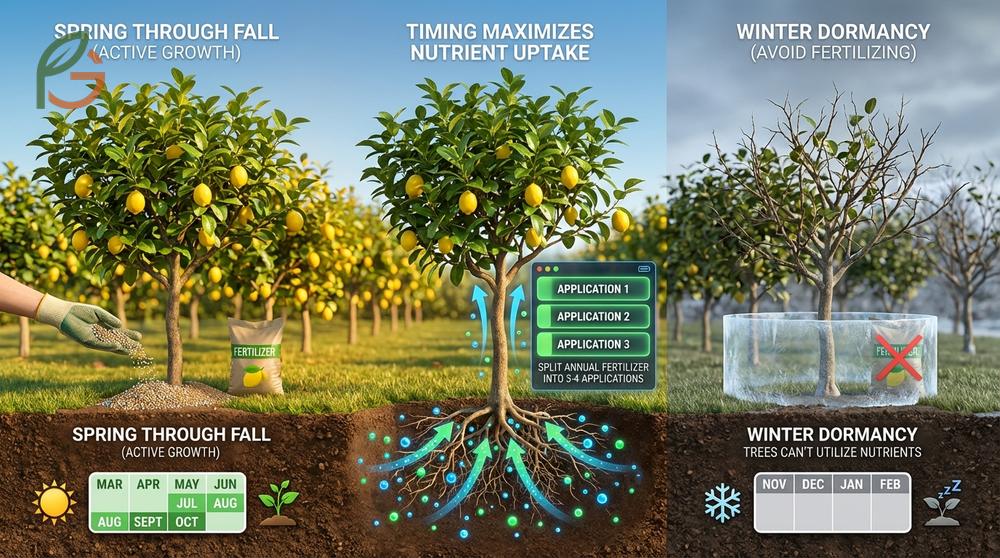
Timing your fertilizer applications correctly maximizes nutrient uptake and prevents waste. Lemon trees actively grow from spring through fall in most climates, making this the critical feeding window. Fertilizing during winter dormancy accomplishes little since trees can’t utilize nutrients when their growth slows or stops.
Current guidance from university agricultural extensions recommends splitting annual fertilizer into three to four applications[2]. This approach provides steady nutrition without overwhelming the tree with excessive nutrients at once. It also reduces the risk of fertilizer burning roots or contaminating groundwater through leaching.
For container-grown lemon trees, you’ll need to fertilize more frequently—typically every 2-3 weeks during active growth—since nutrients wash out faster from potting soil than from ground soil. Use half-strength liquid fertilizer to avoid salt buildup in the confined root zone.
Seasonal Fertilizer Schedule
The ideal fertilizing schedule for lemon trees in most U.S. regions involves three to four feedings spread from late winter through early fall. Apply the first feeding in late January or February when buds begin to swell, giving your tree a nutrient boost for spring flush growth[2]. This early application supports leaf development and flower formation.
Schedule your second application in March or April during active bloom and early fruit set. The third feeding comes in late May or June to support developing fruit through summer heat. For lemon trees specifically, add a fourth application in August or September—unlike other citrus that only get three feedings—because lemons bloom and fruit multiple times per year[2].
Always water deeply after applying granular fertilizer to dissolve nutrients and carry them into the root zone. Shallow watering won’t transport nutrients where roots can absorb them, essentially wasting your fertilizer application. Apply at least 1-2 inches of water, which typically takes 30-45 minutes with a garden hose or 60-90 minutes with drip irrigation.
Young vs Mature Trees
Young lemon trees under three years old need different fertilizing schedules than mature bearing trees. Feed young trees every 2-3 months during the growing season using smaller amounts—about one-quarter to one-half pound of fertilizer per application depending on tree size[1]. These smaller, more frequent feedings support rapid establishment without overwhelming developing root systems.
Mature fruit-bearing trees typically receive one to one-and-a-half pounds of actual nitrogen per year, divided across three to four applications. To calculate how much fertilizer that requires, divide 100 by the first number in your NPK ratio, then multiply by the pounds of nitrogen needed. For example, with 8-8-8 fertilizer to apply one pound of nitrogen, you’d need 12.5 pounds total (100 ÷ 8 = 12.5).
Watch for signs that your fertilizing schedule needs adjustment. Pale yellow-green leaves often indicate insufficient nitrogen, while dark green leaves with minimal fruit suggest too much nitrogen. Adjust amounts gradually—increase or decrease by 10-20% rather than making dramatic changes.
This table compares fertilizing schedules, application rates, and specific timing recommendations for young versus mature lemon trees throughout the year
| Tree Age | Frequency | Amount per Application | Best Timing |
|---|---|---|---|
| Under 1 year | Every 2-3 months | 0.25 lbs (4 oz) | March, May, July, September |
| 1-3 years | Every 2-3 months | 0.5 lbs (8 oz) | March, May, July, September |
| 3-5 years | 3-4 times yearly | 1 lb | February, April, June, August |
| Mature (5+ years) | 3-4 times yearly | 1.5-2 lbs | February, April, June, August |
| Container-grown | Every 2-3 weeks | Half-strength liquid | April through September |
Fertilizer Burn Symptoms and Prevention
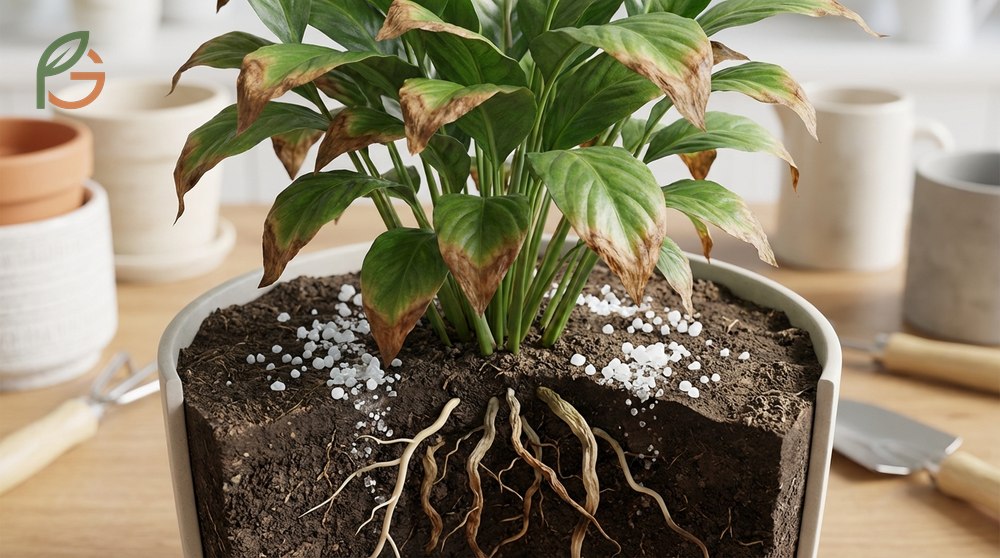
Fertilizer burn occurs when excessive fertilizer salts accumulate in soil and damage roots through osmotic stress. Research shows this problem develops most commonly with quick-release synthetic fertilizers applied too heavily or too frequently[7]. The salts draw water out of root cells, essentially dehydrating the plant even when soil moisture appears adequate.
You’ll recognize fertilizer burn through several telltale symptoms. Brown or scorched leaf tips and margins appear first, often accompanied by yellowing between the veins. A white, crusty layer may form on the soil surface—this is salt buildup from excess fertilizer. Roots turn brown or black instead of healthy white or tan, and overall growth slows dramatically despite adequate water and sunlight.
Symptoms typically appear within several days for fast-release fertilizers or after a couple of weeks with slow-release formulas[8]. Hot, dry weather increases the risk since evaporation concentrates salts in the soil. Container plants face higher burn risk because salts can’t leach away as easily as in ground soil.
If you’ve over-fertilized your lemon tree, flush the soil immediately with water to dilute and wash away excess salts. For container trees, water until it runs freely from drainage holes, then repeat 2-3 times over the next hour. For in-ground trees, apply 2-3 inches of water slowly to push salts below the root zone. Stop all fertilizing for at least 6-8 weeks while the tree recovers.
- Always measure fertilizer precisely—never eyeball amounts
- Water deeply before and after applying granular fertilizer
- Apply fertilizer to damp soil, never to completely dry soil
- Keep fertilizer at least 6 inches away from the trunk
- Use slow-release formulas that reduce burn risk
- Split annual amounts into multiple smaller applications
- Reduce fertilizer rates during hot, dry weather by 25-30%
Warning: More fertilizer doesn’t mean more fruit. Studies show that excessive nitrogen actually reduces fruit set and quality while promoting disease-prone succulent growth. Follow label rates—they’re maximums, not suggestions.
Conclusion
The evidence is clear: fertilize a lemon tree with balanced nutrition and smart timing to achieve maximum fruit production and tree health. Current agricultural guidance emphasizes consistent feeding schedules with appropriate NPK ratios matched to tree age rather than excessive applications that waste resources and risk damage.
Success comes from understanding your tree’s specific needs and adjusting your approach based on visual cues and growth patterns. Whether you choose commercial citrus fertilizers or homemade organic options, consistency matters more than the specific product. FruitGarden provides research-based growing information to help backyard gardeners achieve professional-quality results with all types of fruit trees.
Frequently Asked Questions
How often should I fertilize my lemon tree?
Fertilize mature lemon trees 3-4 times per year during the growing season—typically in February, April, June, and August or September. Young trees under three years old need more frequent feeding every 2-3 months with smaller amounts. Container-grown trees require applications every 2-3 weeks at half-strength during active growth.
What’s the best NPK ratio for lemon trees?
Mature lemon trees perform best with balanced NPK ratios like 6-6-6, 8-8-8, or 10-10-10. Young trees benefit from slightly higher nitrogen formulas such as 8-2-10 to support rapid vegetative growth. During flowering and fruiting, you can use ratios with elevated phosphorus and potassium like 6-12-12 to enhance bloom quality.
Can I use coffee grounds to fertilize lemon trees?
Yes, coffee grounds provide nitrogen and help acidify soil to the slightly acidic pH that lemon trees prefer. Dry used grounds completely before applying to prevent mold, then sprinkle them around the tree base and work into the top 2-3 inches of soil. Combine with compost and crushed eggshells for a more complete nutrient profile.
Is Epsom salt good for citrus trees?
Epsom salt effectively prevents and corrects magnesium deficiency, which causes yellowing between leaf veins in citrus trees. Dissolve one tablespoon in one gallon of water and apply as a soil drench monthly during the growing season. This treatment costs very little but delivers significant results when magnesium deficiency exists.
What are signs of fertilizer burn on lemon trees?
Fertilizer burn appears as brown or scorched leaf tips and margins, yellowing leaves, slow growth, and white crusty salt deposits on the soil surface. Roots may turn brown or black instead of healthy white. If you notice these symptoms, flush the soil with 2-3 inches of water to dilute excess salts and stop fertilizing for 6-8 weeks.
Should I fertilize my lemon tree in winter?
No, avoid fertilizing lemon trees during winter dormancy when growth slows or stops. Trees can’t utilize nutrients effectively during this period, so fertilizer applications waste money and risk salt buildup. Resume feeding in late January or February when buds begin to swell and active growth resumes for the spring season.
Do lemon trees need special micronutrients?
Yes, lemon trees require iron, zinc, manganese, and magnesium in addition to standard NPK nutrients. Deficiencies cause distinctive symptoms like yellowing between veins (iron and magnesium), small bunched leaves (zinc), or pale new growth (manganese). Most quality citrus fertilizers include these micronutrients, or you can apply targeted supplements when deficiencies appear.





