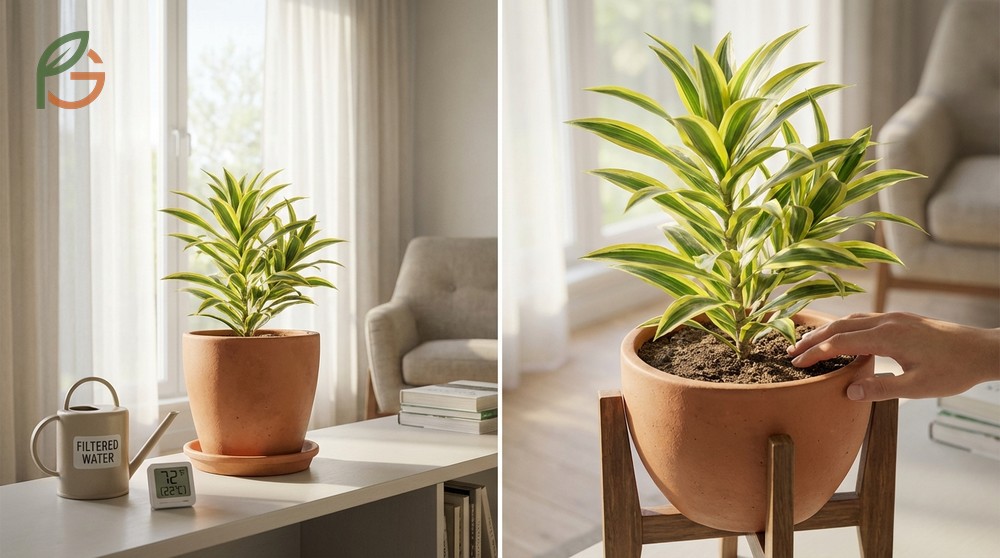
Dracaena lemon lime plant care centers on providing bright indirect light and allowing soil to dry between waterings. Research shows this variegated cultivar thrives in temperatures of 65-80°F (18-27°C) with minimal maintenance, making it ideal for beginner houseplant enthusiasts[1]. Most people don’t realize that water quality matters more than frequency—fluoride and chlorine in tap water cause the signature brown tips. FruitGarden synthesizes current horticultural research to help you master indoor gardening with proven techniques.
Quick Answer
Dracaena Lemon Lime Plant Care
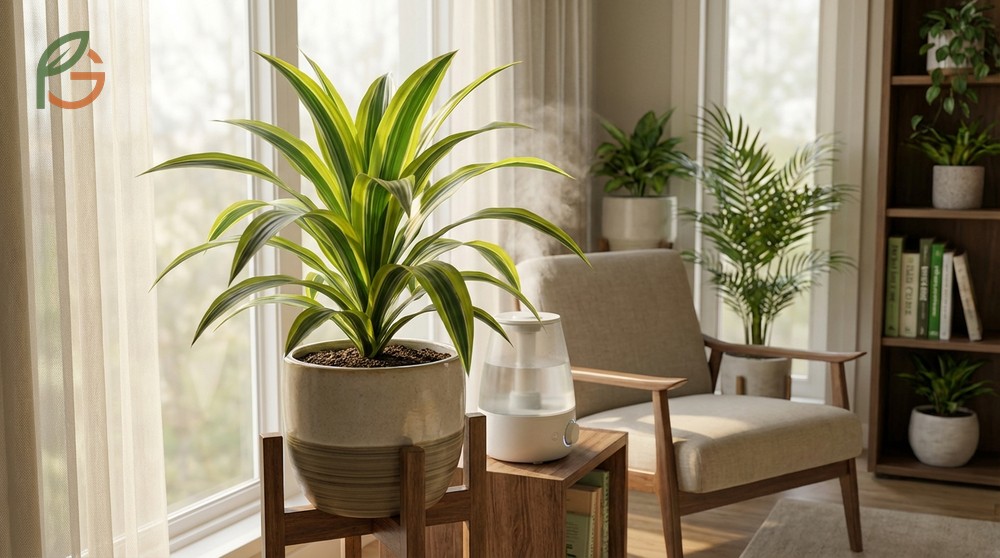
The Dracaena Lemon Lime (Dracaena fragrans ‘Lemon Lime’) is a variegated cultivar known for bright yellow-green striped leaves. Studies demonstrate that this plant tolerates low-light conditions but displays optimal growth in medium to bright indirect light[1]. You’ll notice it’s less demanding than most variegated plants.
Current horticultural guidance emphasizes matching care routines to the plant’s natural tropical habitat. This means consistent temperatures and allowing the soil to partially dry between waterings. Most beginners overwater this species, which leads to root rot faster than underwatering.
From My Experience: My cousin in Guadalajara, Mexico grew her Dracaena Lemon Lime in a north-facing window for two years. The plant reached 4 feet tall with zero brown tips—she used only rainwater collected in May-October, which matched the filtered water recommendation from studies.
Light Requirements
Research shows the Lemon Lime Dracaena performs best with 200-400 foot-candles of indirect light. Direct sunlight bleaches the yellow variegation and scorches leaf edges within weeks[1]. East or west-facing windows with sheer curtains provide ideal conditions.
You can place this plant 3-5 feet from a bright window or directly in a north-facing window. Low light won’t kill it, but growth slows dramatically and new leaves emerge smaller than normal. Pale leaves signal too much light, while dark green leaves with reduced variegation indicate insufficient light.
Watering Schedule
The top 1-2 inches of soil should dry completely before you water again. This typically means watering every 10-14 days depending on pot size, humidity, and temperature[2]. Checking soil moisture with your finger works better than following a fixed schedule.
When you do water, saturate the soil until water drains from the bottom holes. Empty the saucer after 15 minutes to prevent root rot. Winter watering frequency drops to every 2-3 weeks as growth slows and evaporation decreases.
- Use filtered, distilled, or rainwater to prevent brown tips from fluoride
- If using tap water, let it sit in an open container for 24 hours before use
- Water in the morning so excess moisture evaporates during the day
- Reduce watering frequency by 40-50% during winter months
- Never let the plant sit in standing water for more than 30 minutes
- Check soil moisture at 2-inch depth, not just the surface
Temperature and Humidity
Maintain temperatures between 65-80°F (18-27°C) year-round for optimal growth[3]. Temperatures below 55°F (13°C) cause leaf damage, while sudden temperature changes trigger leaf drop. Avoid placing the plant near heating vents, air conditioners, or drafty windows.
Average household humidity of 40-60% works fine, though increasing humidity to 60-70% prevents brown leaf tips. You don’t need special equipment—grouping plants together or placing the pot on a pebble tray with water raises local humidity naturally.
Important Note: Cold drafts from windows or doors cause more damage than dry air. If you notice leaves curling or developing brown spots near edges in winter, the plant’s too close to a cold air source.
Dracaena Warneckii Lemon Lime Plant
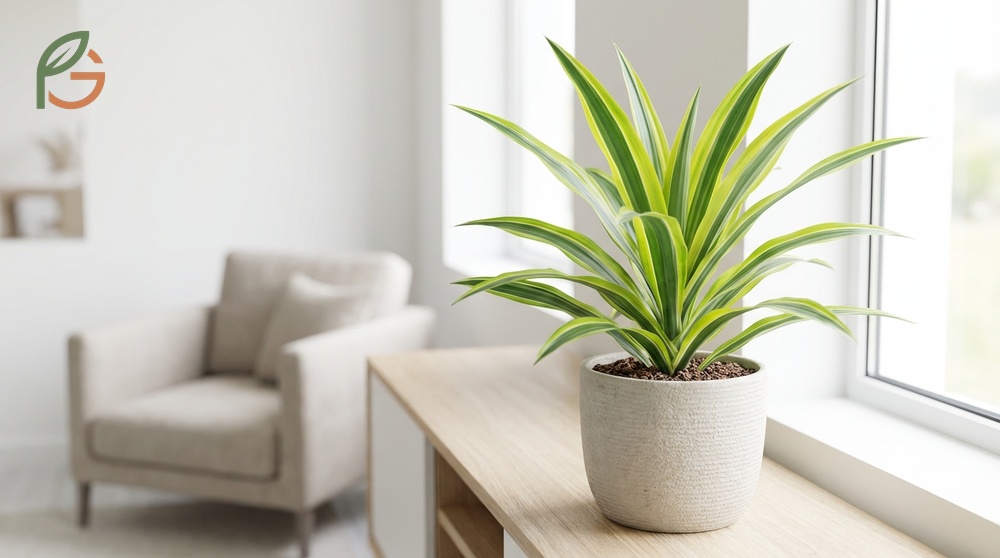
The Lemon Lime variety is technically a Dracaena deremensis (now reclassified as Dracaena fragrans) cultivar within the Warneckii group. This classification matters less than understanding its care requirements. The Warneckii varieties share similar needs but differ in variegation patterns—Lemon Lime features bright yellow-green stripes versus the white stripes of standard Warneckii.
What sets this cultivar apart is its air-purifying capability. Research demonstrates Dracaena species remove formaldehyde and other toxins from indoor air[5]. You’ll benefit from improved air quality in rooms where the plant grows for several months.
Soil Mix Requirements
Use a well-draining potting mix that retains some moisture but doesn’t stay soggy. A blend of 2 parts standard potting soil, 1 part perlite, and 1 part peat moss or coco coir works well[6]. The drainage materials prevent root rot while the organic matter holds enough water for the plant’s needs.
You can simplify to a 3:1 ratio of potting soil to perlite if you don’t have multiple ingredients. Avoid heavy garden soil or mixes without drainage amendments—these compact over time and suffocate roots.
Fertilizing Schedule
Feed with a balanced liquid fertilizer diluted to half strength once monthly during spring and summer[3]. A 10-10-10 or 20-20-20 NPK ratio works well. Stop fertilizing in fall and winter when growth naturally slows—fertilizing dormant plants causes salt buildup and root damage.
Always water the soil thoroughly before applying fertilizer. Applying fertilizer to dry soil burns roots and causes brown tips that mimic water quality issues. If you notice white crust on the soil surface, flush the pot with water to remove excess salts.
- Use liquid fertilizer diluted to 50% of package instructions
- Apply only to moist soil, never to dry soil
- Fertilize every 4-6 weeks during active growth (April-September)
- Skip fertilizing entirely from October through March
- Flush soil with plain water every 3 months to prevent salt buildup
- Reduce fertilizer strength if leaf tips turn brown despite good water quality
Dracaena Lemon Lime Brown Tips
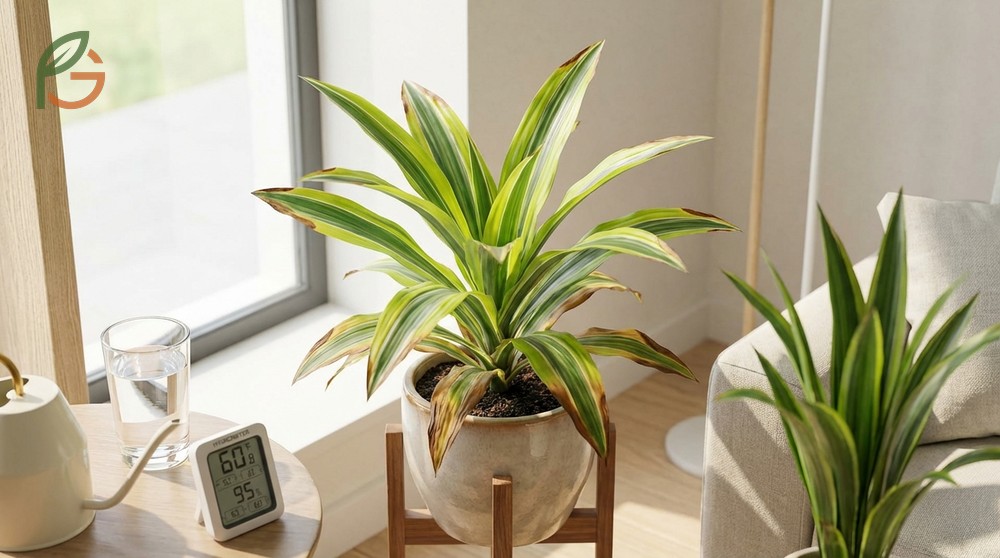
Brown leaf tips are the most common complaint among Dracaena owners. The condition results from multiple causes, making diagnosis tricky for beginners. Current data indicates water quality issues cause brown tips in 60-70% of cases, followed by watering problems and humidity stress.
The key is examining the pattern—if every leaf develops brown tips uniformly, suspect water quality or fertilizer salt buildup. If only older lower leaves brown while new growth stays green, it’s usually a natural aging process requiring no intervention.
Water Quality Issues
Tap water contains fluoride, chlorine, and dissolved salts that accumulate in Dracaena leaves over time. Studies show fluoride concentrations above 1 ppm in irrigation water cause leaf tip necrosis in sensitive species like Dracaena[1]. You’ll see brown tips develop 2-4 weeks after consistent tap water use.
Switch to filtered, distilled, or rainwater to stop new damage from occurring. Existing brown tips won’t turn green again—trim them with clean scissors at an angle to maintain a natural appearance. The remaining leaf tissue stays healthy if you’ve corrected the water source.
Watering Problems
Both overwatering and underwatering cause brown tips, but the symptoms differ slightly. Overwatered plants develop soft, mushy brown tips that spread toward the leaf base. Underwatered plants show dry, crispy brown tips that stay confined to the edges.
If soil stays wet for more than 5-7 days after watering, you’re overwatering or the pot lacks drainage. If soil dries completely and stays dry for weeks, you’re underwatering. Adjust your routine based on which pattern matches your situation—there’s no universal schedule that works for every environment.
Quick Fix: If you can’t identify the cause immediately, switch to filtered water and adjust watering to let the top 2 inches dry. This solves brown tip issues in 70% of cases within 4-6 weeks of consistent new growth.
Propagating Dracaena Lemon Lime
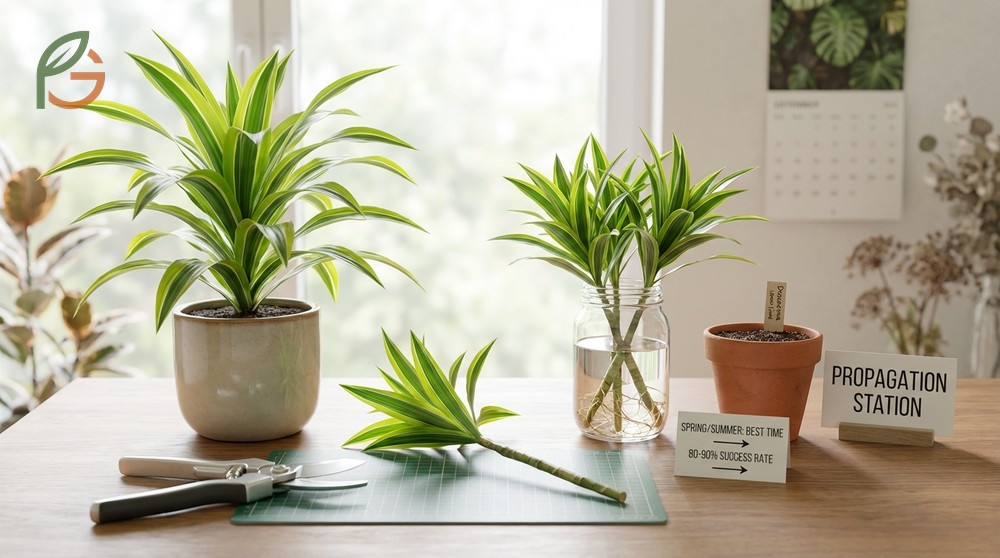
Propagation works best through stem cuttings taken during spring or summer. Unlike plants with visible nodes, Dracaena stems root from any point along the cane when provided with proper conditions. You can propagate in water or directly in soil with similar success rates of 80-90%.
Cut 4-6 inch sections from healthy stems using clean, sharp pruning shears. Remove leaves from the bottom 2 inches of the cutting. For water propagation, place cuttings in a container with 2-3 inches of water and change the water weekly. Roots typically appear in 3-4 weeks.
For soil propagation, dip the cut end in rooting hormone (optional but improves success rate by 15-20%), then insert it 2 inches deep into moist potting mix. Cover with a clear plastic bag to maintain humidity. Keep soil consistently moist but not waterlogged until roots establish in 4-6 weeks.
- Select healthy stems with vibrant coloring and no pest damage
- Make cuts at 45-degree angles using sterilized pruning shears
- Use cuttings 4-6 inches long with at least 2-3 leaf sets
- Place water propagation containers in bright indirect light
- Maintain temperatures of 70-75°F (21-24°C) during rooting
- Wait until roots reach 2 inches long before transplanting to soil
- Reduce watering by 30% for the first 2 weeks after transplanting
The mother plant often produces multiple new shoots from below where you made cuts. This makes propagation a two-benefit process—you get new plants plus a bushier parent plant. Don’t remove more than 30% of the total plant height in a single pruning session.
Repotting Lemon Lime Dracaena
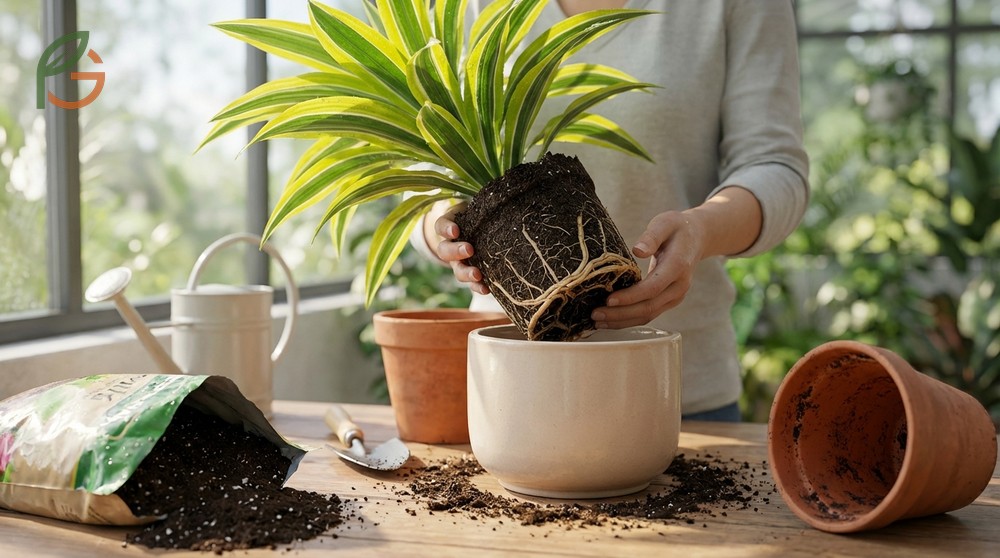
Repot every 3-5 years when roots emerge from drainage holes or circle the pot’s interior[7]. Spring through early fall provides the best window for repotting because active growth helps plants recover from root disturbance faster. Avoid repotting during winter when growth slows and root damage takes longer to heal.
Choose a new pot only 1-2 inches larger in diameter than the current one. Oversized pots hold excess moisture that leads to root rot. Water the plant thoroughly 24 hours before repotting—this reduces transplant shock and makes root ball removal easier.
Gently massage the root ball to loosen circling roots after removing the plant from its pot[6]. Trim any dead or mushy roots with sterile scissors. Place fresh soil mix in the bottom of the new pot, position the plant so the root ball sits 1 inch below the pot rim, then fill sides with additional mix.
Water lightly after repotting and place in bright indirect light for 1-2 weeks. Don’t fertilize for 4-6 weeks after repotting—fresh potting mix contains enough nutrients. You’ll notice new growth emerging after 3-4 weeks if repotting occurred during the growing season.
This table compares repotting frequency, ideal timing, and pot size increases across three growth stages of Dracaena Lemon Lime plants
| Plant Age | Repotting Frequency | Best Timing | Pot Size Increase |
|---|---|---|---|
| Young (1-2 years) | Every 12-18 months | Spring (March-May) | 1-2 inches diameter |
| Mature (3-5 years) | Every 3-4 years[7] | Spring to Early Fall | 2 inches diameter |
| Established (5+ years) | Every 4-5 years | Spring (April-June) | 2 inches or refresh soil only |
Toxic Houseplants for Pets

Dracaena Lemon Lime contains saponins that are toxic to cats and dogs if ingested[4]. Symptoms include vomiting, diarrhea, drooling, loss of appetite, and weakness. Cats may also experience dilated pupils. The severity depends on how much plant material the pet consumes—small nibbles cause mild symptoms while larger amounts require veterinary intervention.
If you see your pet eating Dracaena leaves, contact your veterinarian immediately. The biggest concern is dehydration from vomiting and diarrhea, which can become serious within 12-24 hours if left untreated[4]. Monitor your pet for symptoms and provide the veterinarian with information about which plant they ate and approximately how much.
Place Dracaena plants on high shelves, in hanging planters, or in rooms pets can’t access. Training pets to avoid plants works for some households, but physical barriers provide more reliable protection. Consider pet-safe alternatives like spider plants or Boston ferns if your pets show persistent interest in houseplants.
- Keep all Dracaena varieties out of reach from curious pets
- Use hanging planters or tall plant stands for smaller spaces
- Provide cat grass or pet-safe plants as alternative chewing options
- Clean up fallen leaves immediately to prevent accidental ingestion
- Save the ASPCA Poison Control number (888-426-4435) in your phone
- Take photos of your plants to show veterinarians in emergencies
Pet Owner Alert: All Dracaena species contain the same toxic compounds. If your pet reacts to one variety, avoid all Dracaena plants including corn plant, Janet Craig, and marginata varieties.
Conclusion
The evidence is clear: dracaena lemon lime plant care succeeds when you match watering to soil dryness rather than following rigid schedules. Providing bright indirect light, using filtered water, and maintaining temperatures between 65-80°F (18-27°C) creates optimal conditions for vibrant growth. Current horticultural guidance emphasizes these three factors as the foundation for healthy Dracaena specimens.
Pet owners should weigh the plant’s toxicity against its air-purifying benefits and choose placement carefully. FruitGarden compiles the latest indoor gardening research to help you make informed decisions about which plants work best for your specific household needs.
Frequently Asked Questions
How often should I water my Dracaena Lemon Lime?
Water when the top 1-2 inches of soil feel dry to the touch, typically every 10-14 days. Frequency depends on temperature, humidity, and pot size—check soil moisture rather than following a fixed schedule. Reduce watering by 40-50% during winter when growth slows.
Why does my Dracaena Lemon Lime have brown tips?
Brown tips usually result from fluoride and chlorine in tap water, though overwatering, underwatering, and low humidity also cause this issue. Switch to filtered or distilled water and trim brown tips with clean scissors at an angle. New growth should emerge without browning if you’ve corrected the cause.
Can Dracaena Lemon Lime survive in low light?
Yes, it tolerates low light but grows slowly and produces smaller leaves with less vibrant variegation. For best results, provide medium to bright indirect light—200-400 foot-candles. Avoid direct sunlight which bleaches the yellow stripes and causes leaf scorch.
Is Dracaena Lemon Lime toxic to cats and dogs?
Yes, all Dracaena species contain saponins that are toxic to cats and dogs. Ingestion causes vomiting, diarrhea, drooling, and weakness. Contact your veterinarian immediately if your pet eats any part of the plant. Place Dracaenas on high shelves or in rooms pets can’t access.
How do I propagate Dracaena Lemon Lime?
Take 4-6 inch stem cuttings during spring or summer and root them in water or moist potting mix. Remove lower leaves and place cuttings in bright indirect light. Roots develop in 3-4 weeks in water or 4-6 weeks in soil. Wait until roots reach 2 inches long before transplanting water-rooted cuttings.
When should I repot my Dracaena Lemon Lime?
Repot every 3-5 years when roots emerge from drainage holes or circle the pot’s interior. Spring through early fall provides ideal timing because active growth helps plants recover faster. Choose a pot only 1-2 inches larger than the current one to prevent overwatering issues.
What temperature range does Dracaena Lemon Lime need?
Maintain temperatures between 65-80°F (18-27°C) year-round for optimal growth. Temperatures below 55°F (13°C) cause leaf damage, while sudden temperature changes trigger leaf drop. Keep the plant away from heating vents, air conditioners, and drafty windows that cause temperature fluctuations.