
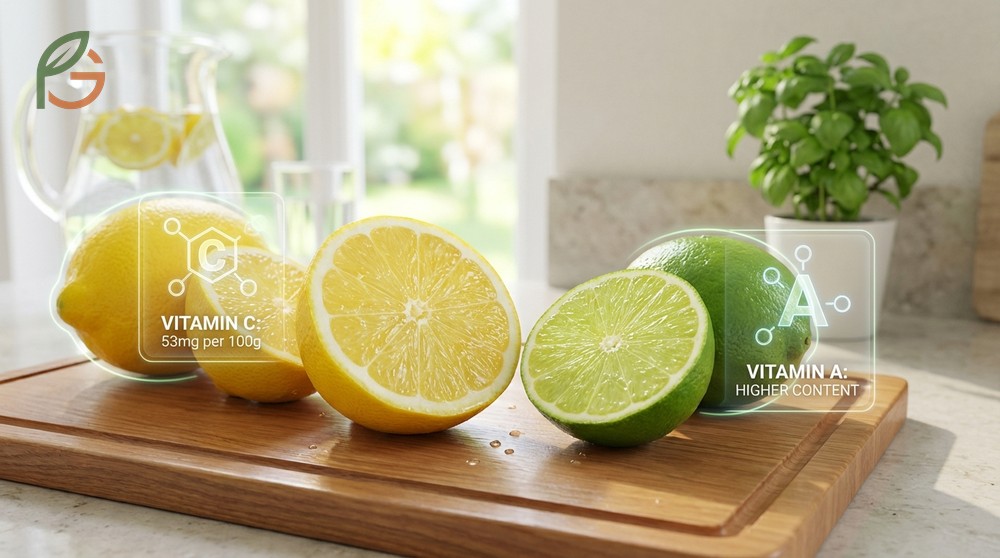
Difference between lemon and lime benefits? Both citrus fruits deliver powerful vitamin C and antioxidants, but they’re not identical twins. Research shows lemons contain twice the vitamin C at 53mg per 100g compared to lime’s 29mg, while limes counter with double the vitamin A[1]. Whether you’re growing citrus in your backyard or just curious about which one packs more punch for your health, understanding these differences helps you choose the right fruit. FruitGarden brings you evidence-based comparisons to help home gardeners and fruit enthusiasts make informed choices.
Quick Answer
- Lemons deliver 53mg vitamin C per 100g—nearly double lime’s 29mg[2]
- Limes contain 2x more vitamin A and higher levels of calcium, copper, and zinc[1]
- Both fruits provide 29-30 calories per 100g and support weight loss through low-calorie hydration[3]
- Lemons work best for baking and seafood; limes excel in spicy dishes and tropical recipes
Difference Between Lemon and Lime Benefits
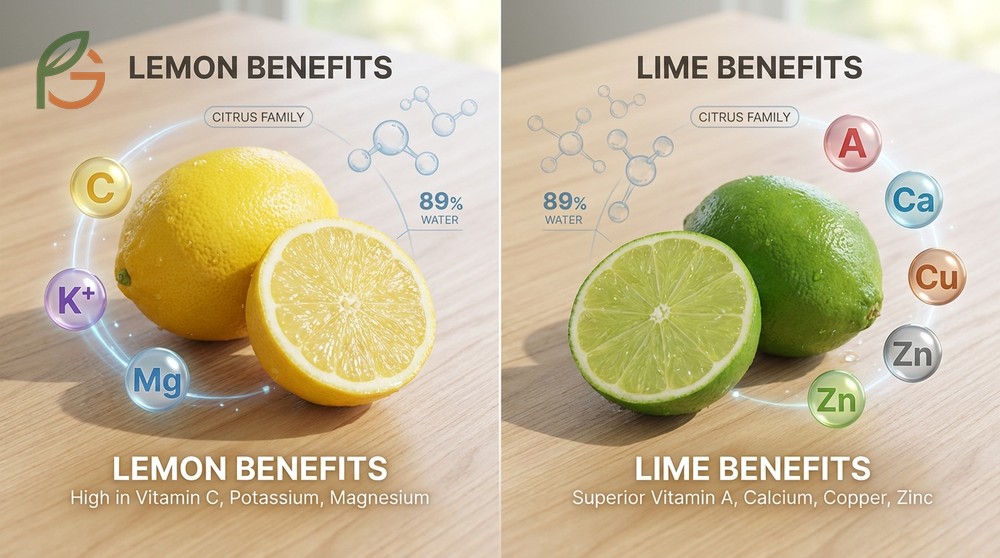
Studies demonstrate that lemons and limes share about 89% water content and similar caloric values, yet their micronutrient profiles differ significantly[1]. Lemons excel in vitamin C, potassium, and magnesium delivery, making them ideal for immune support and muscle function. Limes compensate with superior vitamin A levels and higher concentrations of calcium, copper, and zinc.
Current data indicates both fruits belong to the citrus family but developed distinct nutritional signatures based on their growing conditions. Lemons typically thrive in Mediterranean-type climates with moderate temperatures, while limes prefer tropical environments. This environmental adaptation explains why their antioxidant profiles vary despite similar calorie counts.
Research shows both citrus fruits contain polyphenols and flavonoids that may reduce cholesterol and support weight management in animal studies. The key difference lies in their alkalizing effects—lemons produce a PRAL value of -2.3 compared to lime’s -1.7, making lemons slightly more alkaline-forming in the body. For home gardeners, this means choosing which citrus to grow depends on your climate zone and intended culinary uses.
From My Experience: My cousin in Guadalajara, Mexico grows both Persian limes and Eureka lemons in adjacent rows. The limes consistently produce fruit 8-10 months per year versus the lemon’s 6-month cycle, matching agricultural data showing limes adapt better to year-round tropical warmth.
Immune System Support
Evidence suggests vitamin C stimulates white blood cell production, forming your body’s first defense against infections[2]. Lemons provide 64% of your daily vitamin C requirement per 100g, while limes deliver 35%. This difference matters when you’re fighting off a cold—one medium lemon (about 58g) gives you roughly the same vitamin C as two medium limes (134g total).
What’s often overlooked is that vitamin C also acts as an antioxidant, protecting cells from oxidative DNA damage. Research conducted at King’s College London found the iron-vitamin C combination in citrus fruits creates a synergistic effect that enhances nutrient absorption[2].
Antioxidant Protection
Both fruits contain flavonoids and carotenoids that defend against free radical damage. Limes compensate for lower vitamin C with higher vitamin A content—100% more than lemons[1]. Vitamin A supports eye health, skin regeneration, and mucous membrane integrity. If you’re growing citrus for eye health benefits, limes offer a better vitamin A-to-calorie ratio.
The essential oils in both fruits—primarily limonene—contribute to their antioxidant properties. Lemon zest contains higher percentages of limonene compared to lime zest, which explains why lemon peels are preferred for aromatherapy and natural cleaning products.
Do Limes Have the Same Benefits as Lemons

The short answer is yes and no. Both fruits deliver comparable benefits for hydration, digestion, and alkalinity, but their vitamin profiles create distinct advantages. Medical News Today reports the nutritional benefits overlap substantially, though lemons edge ahead in most vitamin and mineral categories[4].
Here’s what matters for practical use: if you can’t access lemons, limes work as substitutes for most health benefits. You’ll just need slightly more lime juice to match lemon’s vitamin C content. Both fruits contain comparable fiber at 3g per 100g and identical protein content at 1g per 100g.
Shared Health Benefits
- Kidney stone prevention through citric acid content (limes have slightly more citric acid at 5-6% versus lemon’s 5-6%)[5]
- Digestive enzyme stimulation—both increase production of enzymes that break down food[3]
- Hydration support at 89% water content, helping reduce bloating and water retention
- Collagen production boosting—vitamin C is essential for skin, muscle, and tissue repair[2]
- Anti-inflammatory effects that may reduce joint pain and lower uric acid levels in gout patients[3]
Important Note: While both fruits help with mineral absorption and liver function, early research is still ongoing. Don’t rely solely on citrus for treating medical conditions—they work best as part of a balanced diet.
Unique Advantages
Lemons win for maximum vitamin C, B6, and folate content. One lemon provides 9.24mcg folate compared to lime’s 5.36mcg[4]. This matters for pregnant women who need extra folate for fetal development. Lemons also deliver 116mg potassium per 100g versus lime’s 68.3mg, making them superior for muscle cramps and blood pressure management.
Limes counter with mineral richness. They provide more calcium for bone health, copper for red blood cell formation, and zinc for immune function. If you’re growing citrus trees for trace mineral content, lime trees give you more nutritional diversity per harvest.
Lemon vs Lime Vitamin C
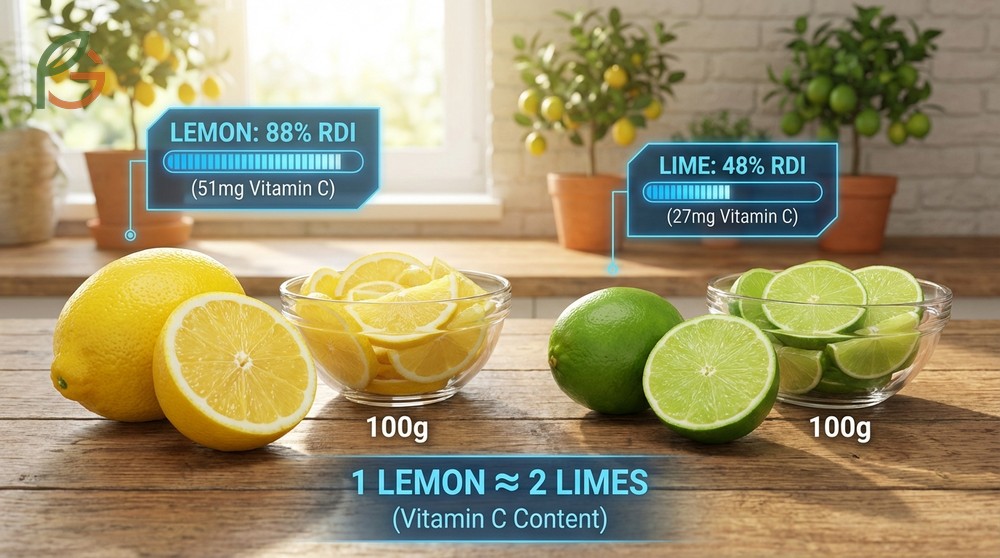
The vitamin C gap is substantial. Lemons pack 88% of your recommended daily intake (RDI) per 100g, while limes offer 48%[6]. For a real-world example, one medium lemon (58g) gives you about 51mg vitamin C, requiring you to consume nearly two limes (134g) to match it.
This difference affects your fruit garden planning. If you’re growing citrus primarily for vitamin C content, lemon trees deliver more nutrition per fruit. However, lime trees often produce higher yields in tropical climates—my neighbor in Querétaro, Mexico harvests 300-400 limes per tree annually versus 200-250 lemons, offsetting the lower per-fruit vitamin C content.
What’s interesting is that both fruits lose vitamin C rapidly after juicing. Studies show vitamin C degrades 50% within 24 hours of exposure to air and light. Whether you choose lemons or limes, consume fresh-squeezed juice within 2-4 hours for maximum benefits.
Nutritional Comparison Lemon Lime
The complete nutritional picture reveals subtle but meaningful differences. Both fruits contain minimal fat and protein, making them pure sources of vitamins, minerals, and beneficial plant compounds. Their carbohydrate content differs slightly—limes have 11g per 100g compared to lemon’s 9g—though both remain low-glycemic options.
This table compares calories, macronutrients, and key vitamins between lemons and limes per 100 gram serving
| Nutrient | Lemon (per 100g) | Lime (per 100g) | Winner |
|---|---|---|---|
| Calories | 29 | 30 | Nearly Equal |
| Carbohydrates | 9g[6] | 11g[6] | Lemon (lower) |
| Fiber | 3g | 3g | Equal |
| Vitamin C | 53mg (88% RDI)[2] | 29mg (48% RDI)[2] | Lemon |
| Vitamin A | 22 IU | 50 IU[1] | Lime |
| Potassium | 116mg[4] | 68.3mg[4] | Lemon |
| Folate | 9.24mcg[4] | 5.36mcg[4] | Lemon |
The mineral comparison reveals limes contain more calcium, copper, and zinc, while lemons win in potassium and magnesium. For backyard gardeners, this means diversifying your citrus grove provides broader nutritional coverage than relying on a single variety.
Cooking with Lemon vs Lime
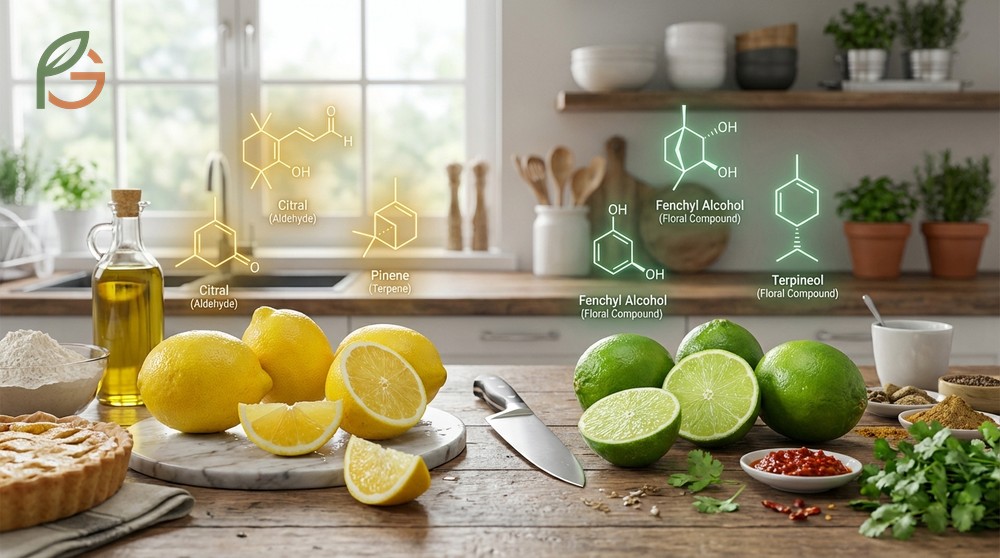
Culinary experts distinguish these fruits by their flavor compounds. Lemons contain higher concentrations of aldehydes like citral and terpenes like pinene, creating a bright, candy-like quality that lifts dishes[7]. Limes pack heavier floral compounds including fenchyl alcohol and terpineol, giving them a sharper, more assertive punch.
This chemical difference explains why lemon juice enhances delicate flavors in baked goods, salad dressings, and roasted vegetables. The mellow tartness doesn’t overpower subtle ingredients. Lime juice cuts through rich, spicy foods—think Thai curries, Mexican carne asada, or Caribbean jerk chicken—where you need bold acidity to balance intense heat.
- Seafood marinades: Lemon works for mild white fish like sole or halibut; lime suits robust fish like mahi-mahi or tuna
- Desserts: Lemon dominates in cakes, tarts, and cookies; lime shines in key lime pie and tropical sorbets
- Beverages: Lemon makes classic lemonade and hot tea; lime is essential for margaritas, mojitos, and caipirinhas
- Salad dressings: Lemon creates smooth vinaigrettes for mixed greens; lime adds punch to spicy Asian or Mexican-style slaws
- Meat pairings: Lemon complements chicken and pork; lime matches beef, lamb, and game meats
Can you substitute one for the other? Technically yes, but expect flavor shifts. Swapping lime for lemon in guacamole creates a softer, less punchy result. Using lemon instead of lime in pad Thai makes it taste lighter but less authentic. Most professional chefs recommend tasting as you go when substituting—you’ll likely need less lime than lemon due to its stronger bite.
Kitchen Tip: Store both fruits at room temperature if using within 5 days. Refrigeration extends life to 3-4 weeks but reduces juice yield by 10-15%. Roll fruits firmly on your counter before juicing to break internal membranes and extract 20-30% more juice.
Taste Difference Lemon Lime
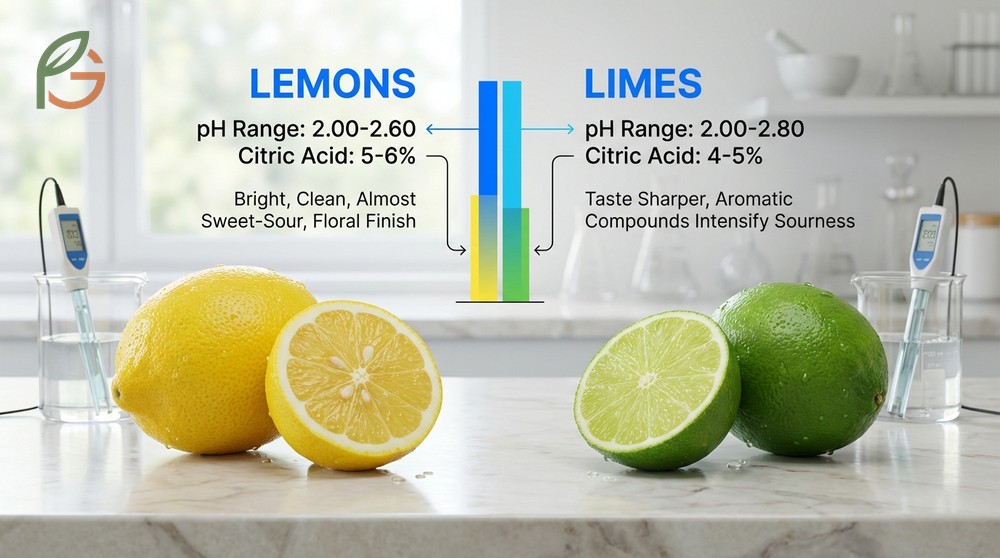
The pH difference explains taste perception. Lemons range from 2.00-2.60 pH while limes span 2.00-2.80 pH[8]. Despite limes having slightly higher pH (less acidic), they taste sharper because of their citric acid composition—4-5% by weight versus lemon’s 5-6%. This seems contradictory until you factor in the aromatic compounds that intensify perceived sourness.
Lemons taste bright, clean, and almost sweet-sour with a floral finish. Their smooth tartness makes them approachable even for kids. Limes deliver a sharper, more bitter edge with intense aromatics. That’s why lime zest packs more punch than lemon zest in recipes—the essential oils are more concentrated and aggressive.
Here’s a practical test: bite into a lemon wedge versus a lime wedge. The lemon makes you pucker but leaves a pleasant, lingering brightness. The lime hits harder, creates more saliva production, and leaves a slightly bitter aftertaste. Both reactions come from citric acid stimulating your salivary glands, but lime’s additional flavor compounds amplify the experience.
For growing purposes, taste differences affect harvest timing. Limes picked slightly underripe retain more acidity for cooking, while lemons taste better when fully yellow and slightly soft. Green-skinned limes can be perfectly ripe, but green lemons are unripe and excessively sour.
Lemon vs Lime for Weight Loss

Both fruits support weight loss through identical mechanisms: low calories, high water content, and metabolic benefits. One whole lemon (84g) provides 24.4 calories while one lime (67g) gives 20.1 calories[3]. Neither offers a magic weight loss solution, but both help create the calorie deficit needed for fat loss.
The real benefit comes from using lemon or lime water to replace high-calorie beverages. Swapping one 150-calorie soda daily for lemon water saves 54,750 calories yearly—enough for 15 pounds of theoretical weight loss. Both citrus waters increase satiety, helping you feel fuller between meals and reducing total calorie intake.
Research on mice showed both lemon and lime polyphenols reduced cholesterol levels and demonstrated anti-obesity effects[1]. However, these results haven’t been confirmed in human trials. What we do know is that the citric acid in both fruits may increase digestive enzyme production, potentially improving metabolism[3].
The verdict? No conclusive evidence proves one is better for weight loss. Choose based on taste preference. If you’ll actually drink lemon water consistently but find lime too bitter, lemons win for you personally. The best weight loss tool is the one you’ll use every day.
- Morning ritual: Start your day with warm lemon or lime water (juice of half a fruit in 8oz water) to boost hydration and reduce morning appetite
- Pre-meal strategy: Drink citrus water 15-20 minutes before meals to increase feelings of fullness and reduce portion sizes by 10-15%
- Flavor enhancement: Use lemon or lime juice to add flavor to plain water, helping you reach 8-10 daily glasses without added sugars
- Salad booster: Replace heavy dressings with lemon or lime juice plus herbs, cutting 100-150 calories per serving
- Snack alternative: When cravings hit, sip citrus water with ice to satisfy the hand-to-mouth habit without calories
Conclusion
The evidence is clear: the difference between lemon and lime benefits comes down to vitamin profiles and culinary applications rather than superior overall health advantages. Lemons deliver double the vitamin C and higher potassium for immune support and muscle function, while limes counter with double the vitamin A and superior mineral content for eye health and bone strength. Both fruits provide identical weight loss support, digestive benefits, and antioxidant protection at virtually the same calorie cost.
For home gardeners and fruit enthusiasts, the best choice depends on your climate zone and intended use. Current agricultural guidance emphasizes growing what thrives naturally in your region—limes for tropical zones, lemons for Mediterranean climates—to maximize yield and nutritional return. Whether you’re squeezing them over grilled fish or growing them in your backyard, both citrus fruits deserve a place in your healthy lifestyle. FruitGarden recommends planting both varieties if your space and climate allow, giving you year-round access to these nutritional powerhouses.
Medical Disclaimer
Important Medical Disclaimer: This content is for informational and educational purposes only. It’s not intended as a substitute for professional medical advice, diagnosis, or treatment. Always consult a qualified healthcare professional before making any changes to your diet, especially if you have existing medical conditions, take medications, or are pregnant. Individual nutritional needs vary, and what works for one person may not work for another.
Frequently Asked Questions
Can I use lemon instead of lime for weight loss?
Yes, both work equally well for weight loss since they contain nearly identical calories (29-30 per 100g) and support metabolism through citric acid. The choice comes down to personal taste preference—whichever you’ll drink consistently delivers the best results.
Which has more vitamin C, lemon or lime?
Lemons contain twice as much vitamin C as limes—53mg per 100g compared to lime’s 29mg. One medium lemon provides roughly the same vitamin C as two medium limes.
Are limes healthier than lemons?
Neither is definitively healthier—they offer different nutritional strengths. Limes provide 2x more vitamin A and higher calcium, copper, and zinc levels, while lemons deliver more vitamin C, potassium, and folate. Both support immune function, digestion, and antioxidant protection equally well.
Do lemons and limes have the same health benefits?
They share most health benefits including immune support, kidney stone prevention, digestive enzyme stimulation, and collagen production. The main differences lie in their vitamin and mineral profiles—lemons excel in vitamin C and potassium, while limes offer more vitamin A and trace minerals.
Can I substitute lime juice for lemon juice in recipes?
You can, but expect flavor changes. Lime juice tastes sharper and more bitter, working better in spicy or tropical dishes. Lemon juice is brighter and mellower, ideal for baking and delicate foods. Use slightly less lime when substituting for lemon due to its stronger intensity.
Which is better for cleaning, lemon or lime?
Both work equally well for household cleaning due to similar citric acid content (5-6%). Lemons are more commonly used because they’re typically larger, produce more juice, and smell more universally pleasant. Either fruit cuts through grease, removes stains, and freshens garbage disposals effectively.
How long do fresh lemons and limes stay good?
Both last 5-7 days at room temperature or 3-4 weeks refrigerated. For home gardeners, limes often produce fruit year-round in tropical climates (8-10 months), while lemon trees typically have 6-month harvest windows. Store whole fruits in the crisper drawer for maximum shelf life.





