
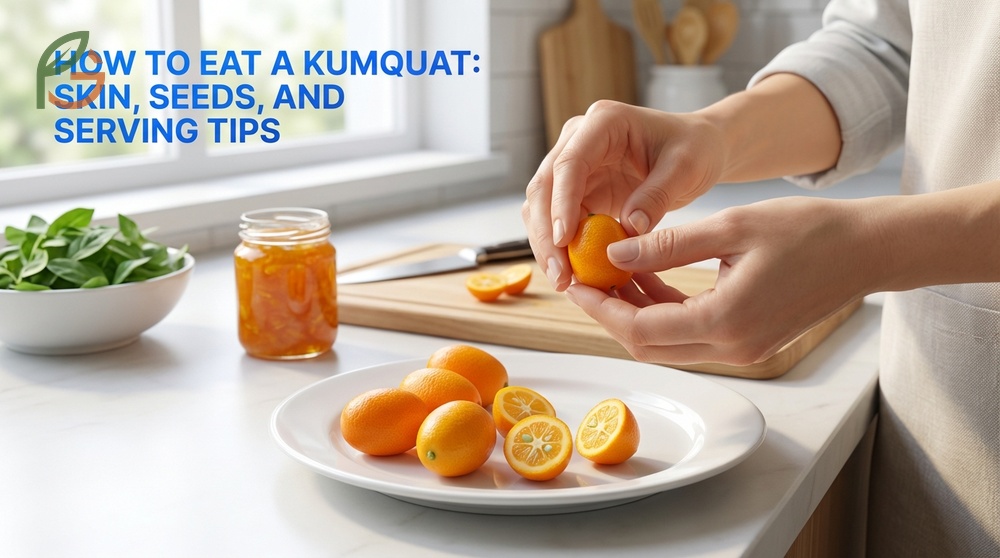
How to eat a kumquat? Unlike most citrus fruits, you eat kumquats whole—skin, seeds, and all. Research shows that kumquats deliver 44mg of vitamin C per 100g, with the peel providing sweet aromatics that balance the tart flesh. Most people don’t realize that rolling the fruit between your fingers before eating releases essential oils and softens the skin, making each bite less bitter. FruitGarden synthesizes current agricultural research and traditional cultivation methods to help home growers understand these unique citrus gems.
Quick Answer
- Eat kumquats whole without peeling—the skin is sweet while the flesh is tart
- Each kumquat contains just 13 calories but delivers 6.5g fiber[3] per 100g
- Roll the fruit between your fingers to release aromatic oils and soften the peel
- Seeds are edible, though you can remove them if preferred
How to Eat a Kumquat
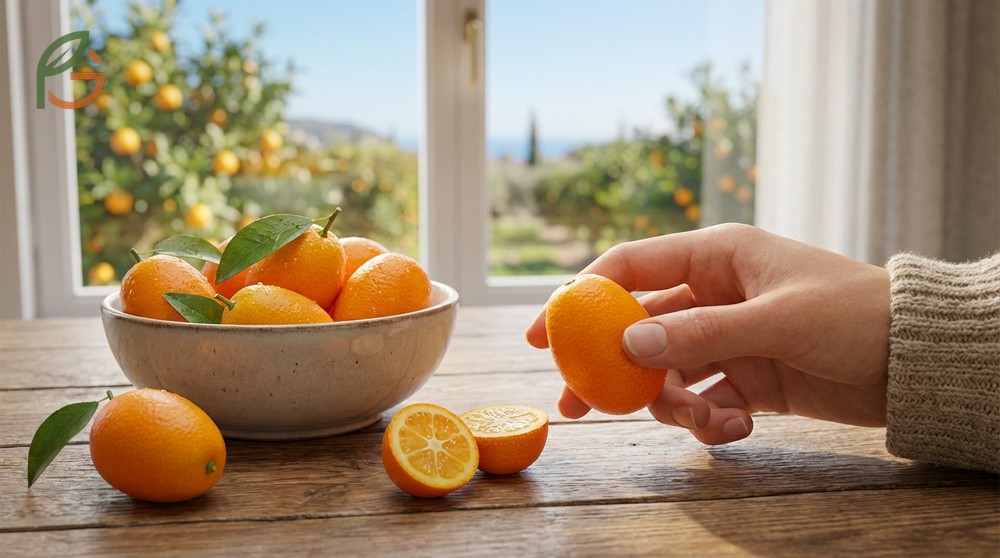
Kumquats stand apart from other citrus fruits because you consume the entire fruit without peeling. The peel contains most of the sweet flavor, while the flesh provides tartness. This contrast creates a unique eating experience that’s both refreshing and complex.
Current data indicates that kumquats thrive in USDA hardiness zones 9 and 10[4], making them accessible to gardeners across the southern United States and coastal California. The fruits reach peak season during winter months when their natural sugars concentrate.
Studies demonstrate that washing kumquats thoroughly before consumption removes any residual pesticides or dirt from the edible skin. Pat them dry with a clean towel to prepare them for the rolling technique that enhances their flavor.
Preparing Kumquats for Eating
Rinse kumquats under cool running water and dry them completely. Check each fruit for soft spots or blemishes, discarding any that show signs of decay.
If you prefer seedless kumquats, slice the fruit in half lengthwise and remove the small white seeds with the tip of a knife. However, the seeds contain no harmful compounds and add a slight crunch when eaten whole.
- Wash kumquats under cool running water
- Pat dry with a clean kitchen towel
- Inspect for soft spots or mold
- Optional: halve and remove seeds with a paring knife
- Store unwashed kumquats in the refrigerator for up to two weeks
The Rolling Technique
Rolling kumquats between your palms or fingers for 10-15 seconds releases essential oils from the peel and softens the skin texture[5]. This action makes the fruit less bitter and creates a more balanced sweet-tart flavor profile.
Apply gentle pressure while rolling to avoid bruising the flesh. The warmth from your hands activates aromatic compounds in the peel, intensifying the citrus fragrance.
Important Note: Don’t squeeze kumquats too hard during rolling. Excessive pressure can rupture internal membranes and release bitter compounds that overpower the natural sweetness.
Eating Kumquat Whole
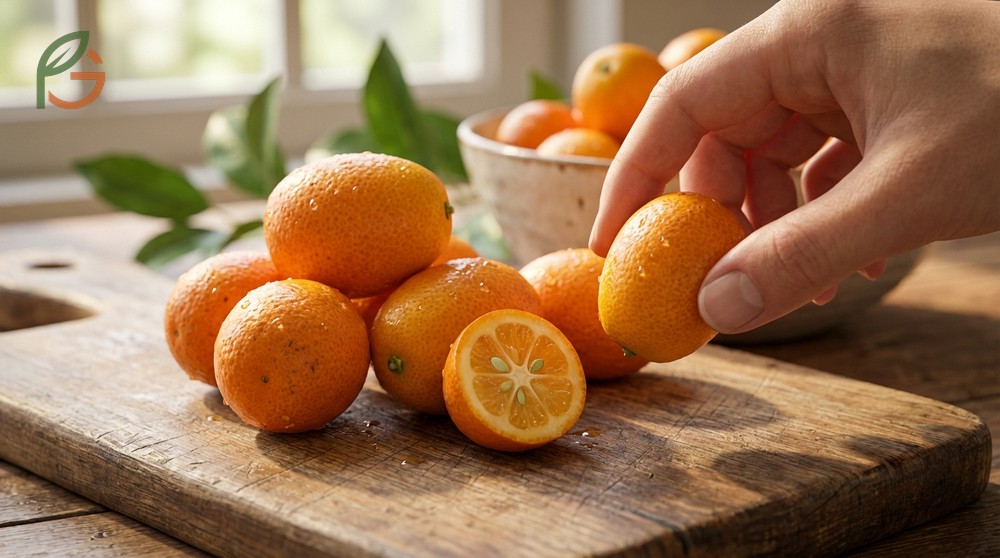
The entire kumquat is edible, from the sweet outer peel to the tart pulp and tiny seeds inside. This sets kumquats apart from oranges, lemons, and grapefruits, where you typically discard the peel.
Evidence suggests that eating kumquats whole provides more fiber and antioxidants than consuming the flesh alone. The peel contains concentrated levels of flavonoids and essential oils that support digestive health.
Pop the whole fruit in your mouth and chew thoroughly to release the contrasting flavors. The initial sweetness from the peel quickly gives way to the sour flesh, creating a burst of flavor that refreshes the palate.
Skin Benefits
Kumquat peels deliver concentrated vitamin C and dietary fiber that support immune function. The skin’s sweet flavor comes from natural sugars that caramelize slightly when the fruit ripens in winter sunlight.
Research shows that citrus peels contain higher antioxidant levels than the flesh. Kumquat skins provide these benefits without the thick, bitter albedo found in larger citrus varieties.
- High in dietary fiber that aids digestion
- Contains essential oils with antimicrobial properties
- Provides natural sweetness without added sugar
- Rich in flavonoids that support cardiovascular health
- Delivers concentrated vitamin C for immune support
Taste Profile
Kumquats offer a unique flavor balance: sweet peel and sour flesh. This combination creates complexity that works well in both sweet and savory dishes.
The tartness comes from citric acid in the juice sacs, while the sweetness develops in the peel as fruits ripen. This natural contrast makes kumquats versatile ingredients for salads, desserts, and meat glazes.
Are Kumquat Seeds Edible
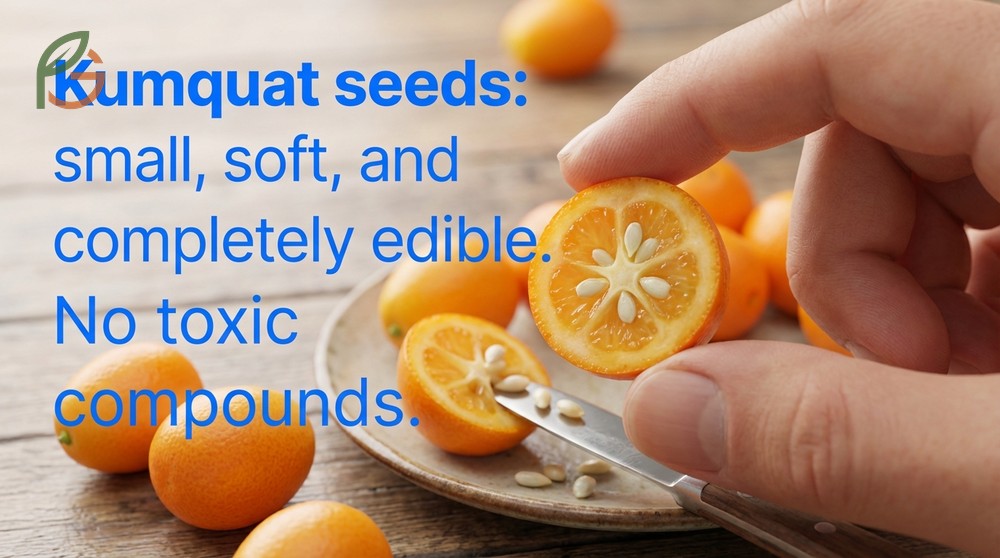
Kumquat seeds are completely edible and contain no toxic compounds[5]. They’re small, soft, and easy to chew or swallow whole without causing digestive issues.
Most kumquats contain 2-5 small white seeds that add a subtle crunch when eaten. If you don’t like the texture, simply cut the fruit in half and flick out the seeds with a knife tip.
Agricultural data shows that seedless kumquat varieties exist but aren’t widely available in commercial markets. Standard varieties with seeds remain the most common option for home gardeners and grocery shoppers.
Tip: If you’re serving kumquats to young children, consider removing the seeds to prevent choking hazards. For adults, the seeds pose no risk and can be consumed without concern.
Do You Peel Kumquats
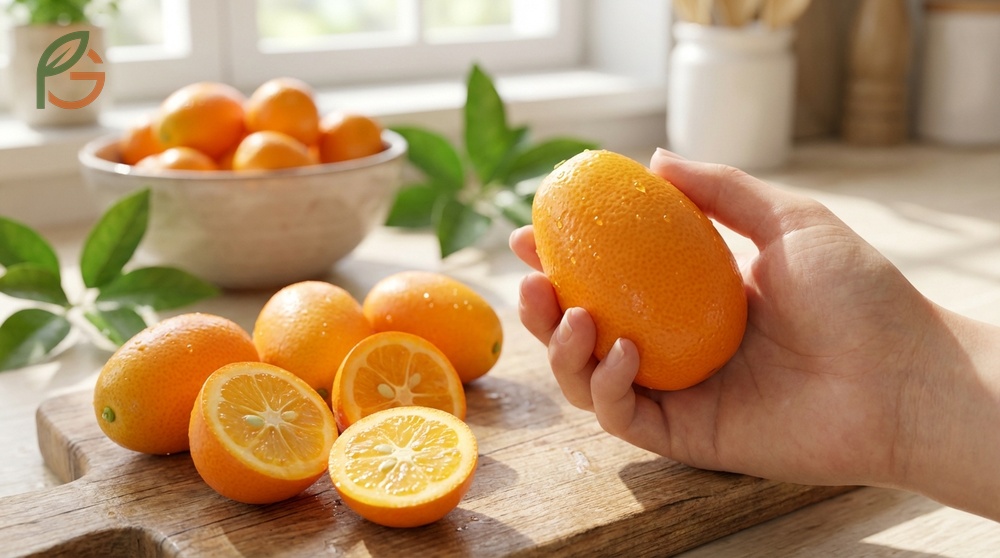
You don’t need to peel kumquats before eating them. The peel is thin, sweet, and contains most of the fruit’s aromatic oils and nutrients. Peeling removes the best part of the eating experience.
Unlike thick-skinned oranges or grapefruits, kumquat peels are tender and easy to chew. The skin’s sweetness balances the tart flesh, creating the signature flavor profile that makes kumquats distinctive.
Current guidance emphasizes eating kumquats whole to maximize nutritional benefits. The fiber in the peel supports digestive health, while the essential oils provide antimicrobial compounds that may support immune function.
Some recipes call for sliced kumquats with peels intact. This works well for marmalades, salads, and candied preparations where the peel adds visual appeal and concentrated flavor.
Kumquat Marmalade Recipe

Kumquat marmalade transforms fresh fruit into a sweet-tart spread that pairs perfectly with toast, yogurt, or cheese boards. The entire fruit—peel, flesh, and seeds—goes into the pot, creating a richly flavored preserve.
For basic kumquat marmalade, you’ll need 4 cups chopped kumquats, 2 cups sugar, and 1 cup water. Bring the mixture to a full rolling boil, stirring to dissolve sugar completely, then cook until it reaches 220°F (105°C)[6].
Studies demonstrate that testing marmalade consistency by dripping a small amount on a frozen plate works reliably. When you run your finger through the blob and the surface wrinkles, your marmalade has reached the gel point.
- Chop 4 cups kumquats, removing seeds if desired
- Combine with 2 cups sugar and 1 cup water in a large pot
- Bring to a full rolling boil over high heat
- Reduce heat and simmer for 20-40 minutes until temperature reaches 220°F (105°C)
- Test consistency on a frozen plate—mixture should wrinkle when touched
- Pour into sterilized jars and seal while hot
The marmalade keeps for up to 6 months in sealed jars stored in a cool, dark place. Refrigerate after opening and use within 3 weeks for best flavor.
Candied Kumquats
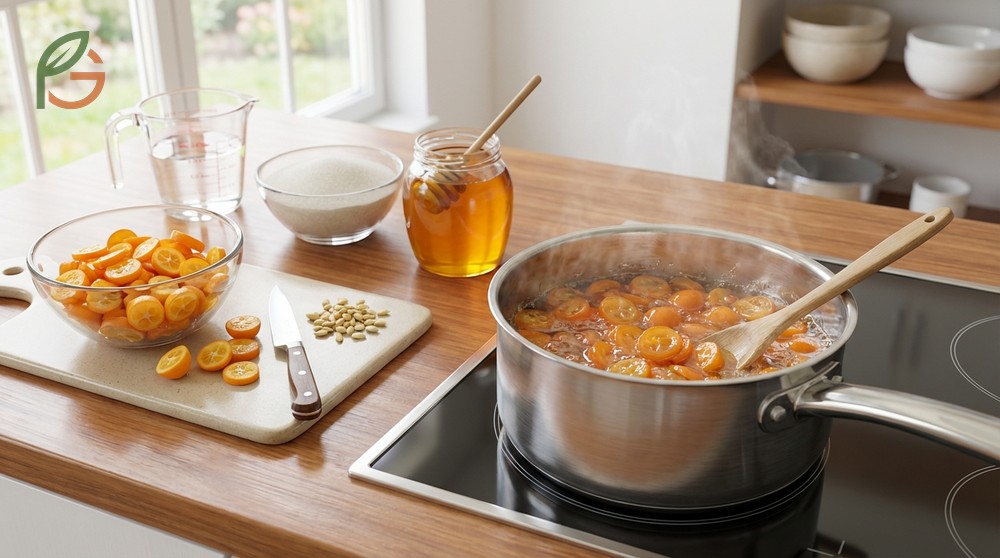
Candied kumquats combine sliced fruit with simple syrup to create a sweet-tart garnish for desserts, salads, and cocktails. The process takes about 30 minutes and produces glossy, tender fruit slices that keep for weeks.
Start by slicing 8 oz kumquats into thin rounds and removing seeds as you go. Combine ½ cup sugar, ½ cup water, and ¼ cup honey in a saucepan, bringing the mixture to a boil[7].
Add sliced kumquats to the boiling syrup and simmer for 2 minutes. Turn off the heat, cover the pan, and let the fruit steep for 15 minutes. This gentle cooking preserves the peel’s texture while infusing the fruit with sweetness.
Strain the kumquats and reserve the syrup for cocktails or drizzling over ice cream. The candied fruit can top yogurt, oatmeal, cakes, or cheese plates.
- Garnish for cheesecakes, tarts, and panna cotta
- Topping for morning oatmeal or Greek yogurt
- Cocktail garnish for gin drinks or champagne
- Addition to winter salads with arugula and goat cheese
- Standalone snack stored in syrup for up to 2 weeks
Kumquat Salad
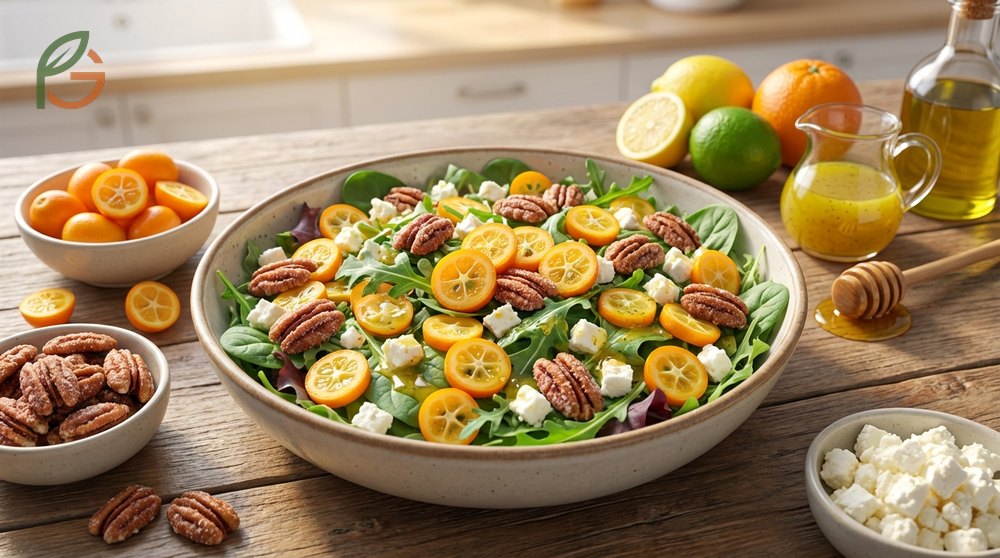
Fresh kumquat salads balance the fruit’s tartness with creamy cheese, crunchy nuts, and tangy citrus dressing. The bright orange slices add visual appeal and a burst of flavor to winter greens.
For a basic kumquat salad, combine 4 cups mixed greens with 10 sliced kumquats (seeds removed), ½ cup candied pecans, and ¼ cup crumbled feta[8]. Toss with a citrus dressing made from fresh lemon, lime, and orange juice whisked with honey and olive oil.
Current culinary trends emphasize using seasonal citrus in winter salads when other fresh fruits aren’t available. Kumquats reach peak flavor from November through March, making them ideal for cold-weather menus.
The salad works as a light lunch or side dish for roasted chicken, grilled fish, or holiday meals. The combination of sweet, tart, salty, and crunchy elements creates a satisfying balance.
Serving Tip: Dress the salad just before serving to keep greens crisp. The citrus dressing can be made 2 days ahead and stored in the refrigerator.
Conclusion
The evidence is clear: how to eat a kumquat is simple—consume them whole, skin and all, after rolling to release aromatic oils. These tiny citrus fruits deliver impressive nutrition with just 13 calories per fruit while providing substantial vitamin C and fiber.
Current agricultural guidance emphasizes growing kumquats in appropriate climate zones and harvesting during winter months for optimal sweetness. Whether you’re eating them fresh, making marmalade, or adding them to salads, kumquats offer versatility that extends beyond typical citrus uses. FruitGarden synthesizes traditional cultivation wisdom with modern growing techniques to help home gardeners succeed with these unique fruits.
Frequently Asked Questions
Can you eat kumquat skin?
Yes, kumquat skin is completely edible and contains the sweetest part of the fruit. The peel provides concentrated vitamin C, fiber, and aromatic essential oils that make kumquats distinctive.
Should I refrigerate kumquats?
Store kumquats in the refrigerator to extend their shelf life to 2 weeks. Keep them unwashed in a plastic bag or container, then rinse just before eating to prevent premature spoilage.
Why do you roll kumquats before eating?
Rolling kumquats between your fingers releases essential oils from the peel and softens the skin texture. This simple technique reduces bitterness and enhances the sweet-tart flavor balance.
What’s the best way to eat kumquats?
The best way to eat kumquats is whole and fresh after washing and rolling them gently. You can also slice them for salads, candy them in syrup, or make marmalade for a sweet-tart preserve.
Are kumquat seeds poisonous?
No, kumquat seeds are not poisonous and can be safely eaten. They’re small and soft enough to chew or swallow whole, though you can remove them if you prefer a seedless eating experience.
How many kumquats can I eat in a day?
Most people can safely eat 8-10 kumquats per day as part of a balanced diet. Each fruit contains only 13 calories, making them a low-calorie snack that provides vitamin C and fiber without excess sugar.
What do kumquats taste like?
Kumquats taste sweet on the outside and tart on the inside, creating a unique sweet-sour flavor combination. The peel provides aromatic sweetness while the flesh delivers citrus acidity similar to limes or sour oranges.





