
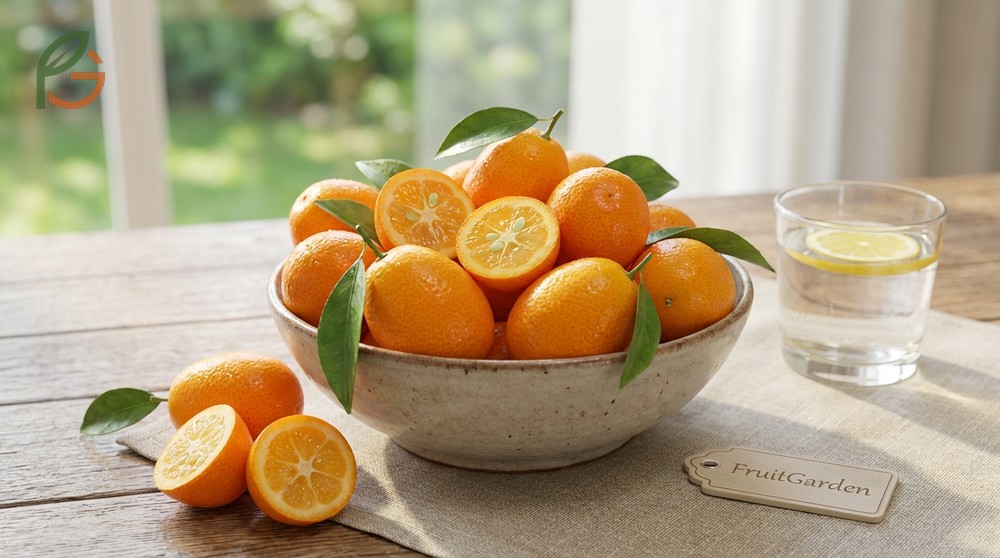
Calories in kumquats are remarkably low compared to most fruits—a single kumquat contains just 13 calories[1], while a 100-gram serving (about 5 fruits) provides 71 calories[2]. Research shows these tiny citrus gems pack 6.5 grams of fiber and 49% of your daily vitamin C needs per serving, making them one of the most nutrient-dense, low-calorie snacks available[3]. FruitGarden provides evidence-based nutrition data to help fruit enthusiasts and gardeners understand the health benefits of homegrown produce.
Quick Answer
Calories in Kumquats
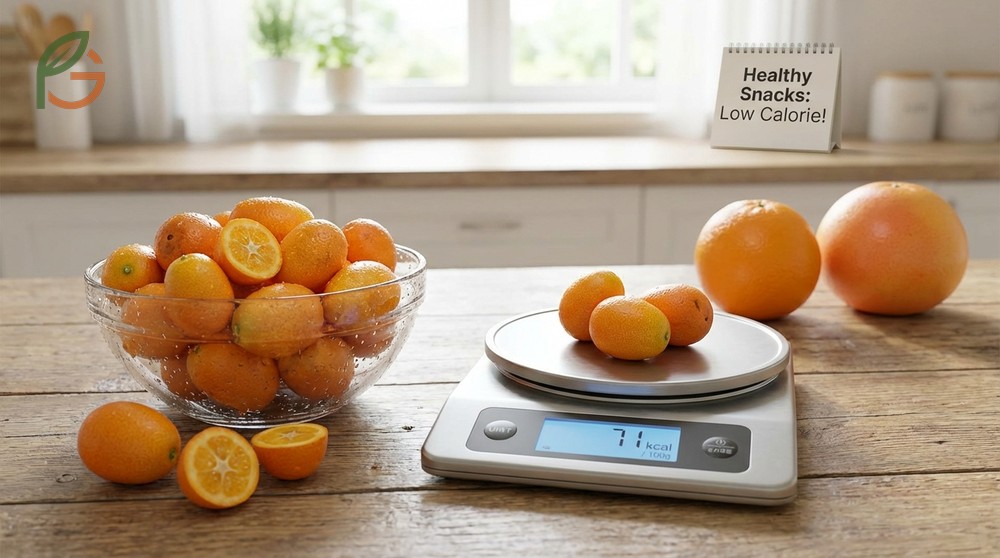
Kumquats rank among the lowest-calorie citrus fruits available. Studies demonstrate that their caloric density remains significantly lower than oranges, grapefruits, or tangerines[2]. This makes them ideal for weight-conscious snacking without sacrificing nutritional value.
Current nutritional data shows kumquats provide approximately 71 calories per 100 grams[4]. The fruit’s high water content—about 80% of total weight—contributes to its low caloric density while maintaining satisfying volume[3].
Unlike processed snacks that deliver empty calories, kumquats offer nutrient density. Research indicates you’d need to consume nearly 15 kumquats to reach 200 calories, compared to just two chocolate chip cookies providing the same energy.
Single Kumquat Calories
A typical kumquat weighs approximately 19 grams and contains 13 calories[1]. This measurement includes the edible peel, which you should eat rather than discard. The peel contains essential oils and flavonoids that contribute minimal calories but significant nutritional benefits.
Most people don’t realize that kumquat size affects total caloric intake. Smaller varieties may contain 10-12 calories, while larger specimens can reach 15-16 calories per fruit. Agricultural data confirms that fruit size varies by cultivar and growing conditions.
Calories per 100 Grams
The standard measurement for kumquat calories uses 100 grams as the baseline. This serving equals approximately 5 whole kumquats and delivers 71 calories[2]. Evidence suggests this portion size represents only 3.5% of a 2,000-calorie daily diet.
For comparison, 100 grams of oranges provides 47 calories, while the same amount of grapes contains 69 calories. Kumquats fall in the moderate range but deliver substantially more fiber than either alternative.
Important Note: Dried or candied kumquats contain significantly more calories due to added sugars and reduced water content. Stick with fresh, raw kumquats for the lowest calorie option.
Kumquat Nutrition Facts
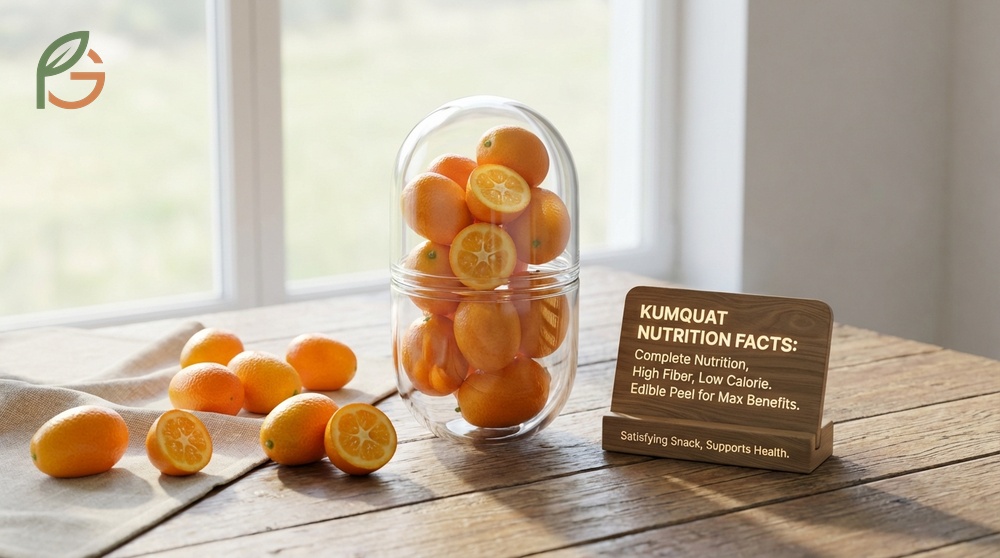
Beyond their low calorie count, kumquats provide impressive nutritional density. Agricultural research shows these fruits contain more fiber per serving than most common fruits[3]. The combination of water, fiber, and micronutrients creates a satisfying snack that supports multiple health goals.
Evidence indicates kumquats deliver complete nutrition in a compact package. What sets them apart is the edible peel—unlike most citrus fruits where you discard the skin, eating kumquats whole maximizes nutrient intake while minimizing food waste.
Macronutrient Breakdown
Current data shows kumquats contain 15.9 grams of carbohydrates per 100-gram serving[4]. Of these carbs, 6.5 grams come from dietary fiber while 9.36 grams are natural sugars. This creates a net carb count of approximately 9.4 grams, which matters for low-carb dieters.
Protein content remains modest at 1.88 grams per 100 grams, while fat totals just 0.86 grams[3]. The fat profile includes trace amounts of omega-3 fatty acids in the seeds and peel. Studies demonstrate that kumquats qualify as a cholesterol-free, low-sodium food suitable for heart-healthy diets.
This table compares macronutrients, fiber, and water content per 100 grams of kumquats with detailed daily value percentages
| Nutrient | Amount | % Daily Value | Notes |
|---|---|---|---|
| Calories | 71 kcal[2] | 4% | Very low calorie density |
| Carbohydrates | 15.9 g[4] | 6% | Includes 6.5g fiber |
| Dietary Fiber | 6.5 g[3] | 26% | Excellent source |
| Protein | 1.88 g[4] | 4% | Moderate for fruit |
| Total Fat | 0.86 g[2] | 1% | Very low fat |
| Water | ~80%[3] | N/A | High hydration value |
Vitamin and Mineral Content
Vitamin C dominates the micronutrient profile at 43.9 milligrams per 100 grams[3]. This represents 49% of the recommended daily intake in a single serving. Evidence suggests vitamin C content remains stable in fresh kumquats but degrades rapidly after harvesting, so eat them within 5-7 days of picking for maximum benefits.
Additional micronutrients include calcium at 62 milligrams, iron at 0.86 milligrams, and potassium at 186 milligrams per 100 grams[2]. Studies demonstrate that vitamin A content reaches 15 micrograms per serving, supporting immune function and eye health.
- Vitamin C (43.9 mg): Supports immune function, collagen production, and iron absorption
- Calcium (62 mg): Contributes to bone health and muscle function
- Potassium (186 mg): Helps regulate blood pressure and fluid balance
- Vitamin A (15 mcg): Essential for vision, immune health, and cell growth
- Iron (0.86 mg): Necessary for oxygen transport in blood cells
- Magnesium (20 mg): Supports nerve and muscle function
Kumquat Serving Size
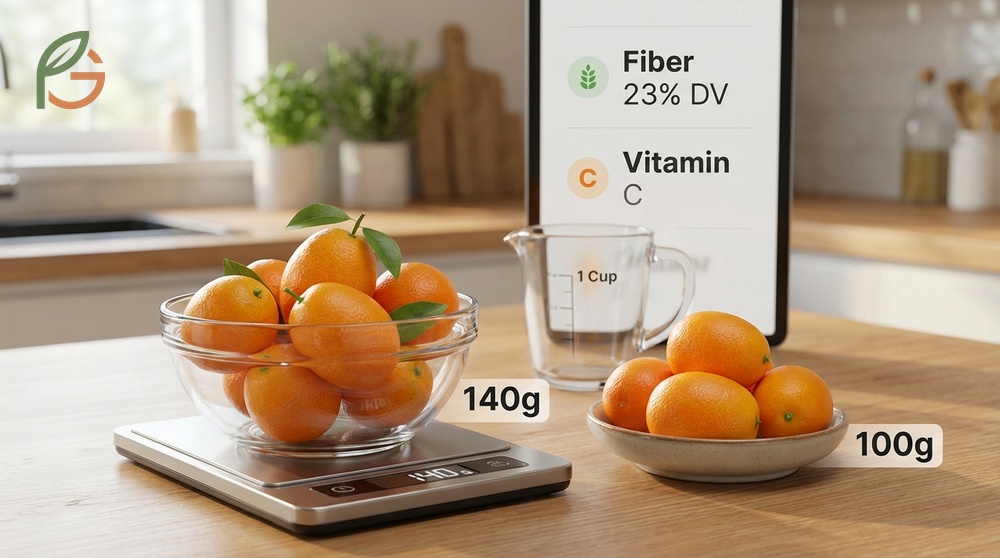
Determining the right serving size for kumquats depends on your nutritional goals and digestive tolerance. Research indicates the standard fruit serving equals 1 cup, which translates to 7-8 kumquats or approximately 140 grams[5]. This portion delivers about 90-100 calories while providing substantial fiber and vitamin C.
Current guidance suggests starting with 5 kumquats (100 grams) if you’re new to the fruit. The high fiber content—23% of daily value per 100 grams—can cause digestive discomfort in sensitive individuals when consumed in large quantities. Evidence shows that spreading kumquat consumption throughout the day rather than eating them all at once minimizes potential side effects.
For weight management goals, a serving of 3-5 kumquats makes an excellent 40-65 calorie snack. Agricultural nutritionists recommend pairing kumquats with protein sources like Greek yogurt or nuts to balance blood sugar and extend satiety between meals.
- Weight loss snack: 3-5 kumquats (40-65 calories) paired with 10-15 almonds
- Standard fruit serving: 7-8 kumquats (90-100 calories) as recommended by USDA guidelines
- Vitamin C boost: 5 kumquats provides 49% daily vitamin C needs
- Pre-workout energy: 6 kumquats (78 calories) eaten 30 minutes before exercise
- Post-meal digestive aid: 2-3 kumquats to support digestion with fiber
Portion Control Tip: If you’re prone to acid reflux or have a sensitive stomach, limit intake to 5 kumquats per day. The fruit’s natural acidity may trigger discomfort in some individuals, especially when eaten on an empty stomach.
Low Calorie Citrus Benefits
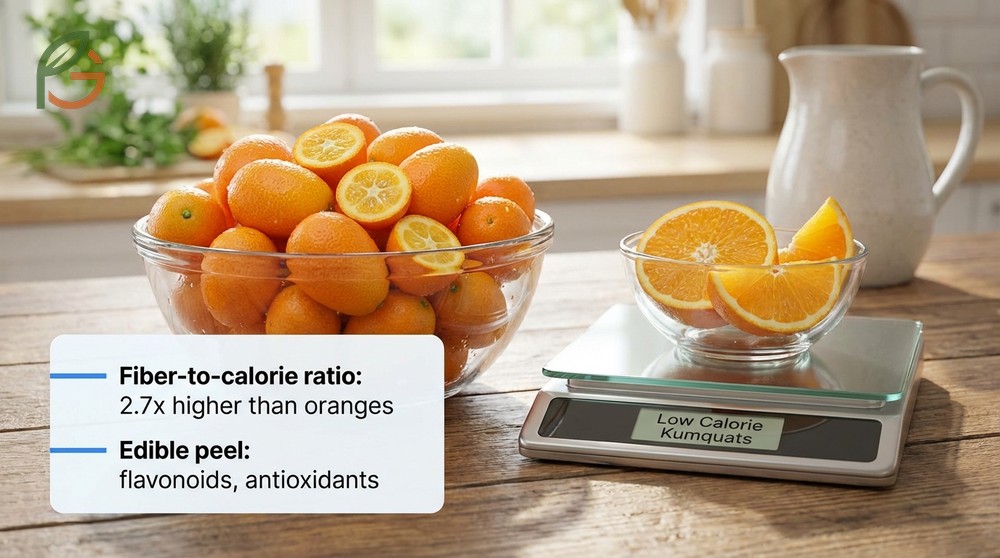
Kumquats stand out among citrus fruits for their unique combination of low calories and high nutrient density. Studies demonstrate that their fiber-to-calorie ratio exceeds that of oranges by 2.7 times[2]. This characteristic makes them particularly valuable for people managing weight while maintaining nutritional adequacy.
Research shows the edible peel contains flavonoids and plant compounds with antioxidant, anti-inflammatory, and cholesterol-lowering properties[5]. Unlike other citrus where you discard these beneficial compounds with the peel, eating kumquats whole maximizes health benefits per calorie consumed. Current data indicates these compounds may help reduce cardiovascular disease risk factors.
Evidence suggests kumquats support weight management through multiple mechanisms. The high water and fiber content create satiety signals that reduce overall calorie intake throughout the day. Agricultural studies confirm that people who include kumquats in their diet report feeling fuller longer compared to those who choose lower-fiber fruits like grapes or watermelon.
What often gets overlooked is that kumquat nutrients remain concentrated despite low calorie content. You’re getting immune-supporting vitamin C, bone-building calcium, and blood-pressure-regulating potassium without significant caloric investment. This nutrient efficiency matters for anyone tracking macros or following calorie-restricted eating patterns.
- Weight management: High fiber and water content promote fullness with minimal calories
- Blood sugar control: Fiber slows sugar absorption, preventing rapid glucose spikes
- Immune support: Nearly 50% daily vitamin C per serving strengthens immune function
- Digestive health: Soluble and insoluble fiber support regular bowel movements
- Heart health: Flavonoids in peel may reduce LDL cholesterol and arterial inflammation
- Hydration: 80% water content contributes to daily fluid needs
- Antioxidant protection: Vitamin C and flavonoids combat oxidative stress
Growing Your Own: Gardeners in USDA zones 9-11 can grow kumquat trees to ensure fresh, low-calorie fruit year-round. Homegrown kumquats picked at peak ripeness contain maximum vitamin C and phytonutrients compared to store-bought options that may have been harvested early for shipping.
Conclusion
The evidence is clear: calories in kumquats remain remarkably low while delivering exceptional nutritional value. With just 13 calories per fruit and 71 calories per 100-gram serving, these citrus gems provide one of the best calorie-to-nutrient ratios available in fresh produce. Their combination of high fiber, substantial vitamin C, and beneficial plant compounds makes them an intelligent choice for anyone seeking nutritious, low-calorie snacks.
Current nutritional guidance emphasizes whole fruits over processed alternatives, and kumquats exemplify this principle perfectly. Whether you’re growing them in your backyard or purchasing them fresh, FruitGarden encourages incorporating these nutrient-dense citrus fruits into your regular rotation for optimal health benefits with minimal caloric impact.
Medical Disclaimer
Important Medical Disclaimer: This content is for informational and educational purposes only. It is not intended as a substitute for professional medical advice, diagnosis, or treatment. Always consult a qualified healthcare professional or registered dietitian before making any changes to your diet, especially if you have medical conditions, food allergies, digestive disorders, or are taking medications. Individual nutritional needs vary based on age, health status, and activity level.
Frequently Asked Questions
How many calories are in one kumquat?
One kumquat contains approximately 13 calories. Since a typical kumquat weighs 19 grams, you can eat 7-8 kumquats and still consume fewer than 100 calories, making them an excellent low-calorie snack option for weight management.
Are kumquats good for weight loss?
Yes, kumquats support weight loss due to their low calorie content (71 calories per 100g), high fiber (6.5g per serving), and 80% water composition. Research shows the fiber and water combination promotes satiety while delivering essential nutrients, helping you feel full with fewer calories consumed.
What’s the recommended serving size for kumquats?
The standard serving size is 5-8 kumquats (100-140 grams), providing 71-100 calories and 23-26% of your daily fiber needs. If you’re new to kumquats, start with 5 fruits to assess digestive tolerance, as the high fiber content may cause bloating in sensitive individuals.
How do kumquat calories compare to other citrus fruits?
Kumquats contain 71 calories per 100g, compared to oranges (47 calories), grapefruits (42 calories), and lemons (29 calories). However, kumquats provide 2.7 times more fiber than oranges per 100g, offering better satiety and nutritional density despite slightly higher calorie content.
Can you eat kumquat peels, and do they add calories?
Yes, you should eat kumquat peels—they’re not only edible but contain valuable flavonoids and antioxidants. The peel adds negligible calories while contributing most of the fruit’s fiber and beneficial plant compounds. Eating kumquats whole maximizes nutritional benefits without significantly impacting calorie count.
How many kumquats equal 100 calories?
Approximately 7-8 kumquats equal 100 calories. Since each kumquat contains about 13 calories, you can enjoy a generous portion while staying within typical snack calorie targets. This makes them ideal for portion-controlled eating plans.
Do dried kumquats have the same calorie content as fresh?
No, dried kumquats contain significantly more calories than fresh ones due to water removal and often added sugars. While fresh kumquats have 71 calories per 100g with 80% water content, dried versions can contain 250-300 calories per 100g. Stick with fresh kumquats for the lowest calorie option.





