
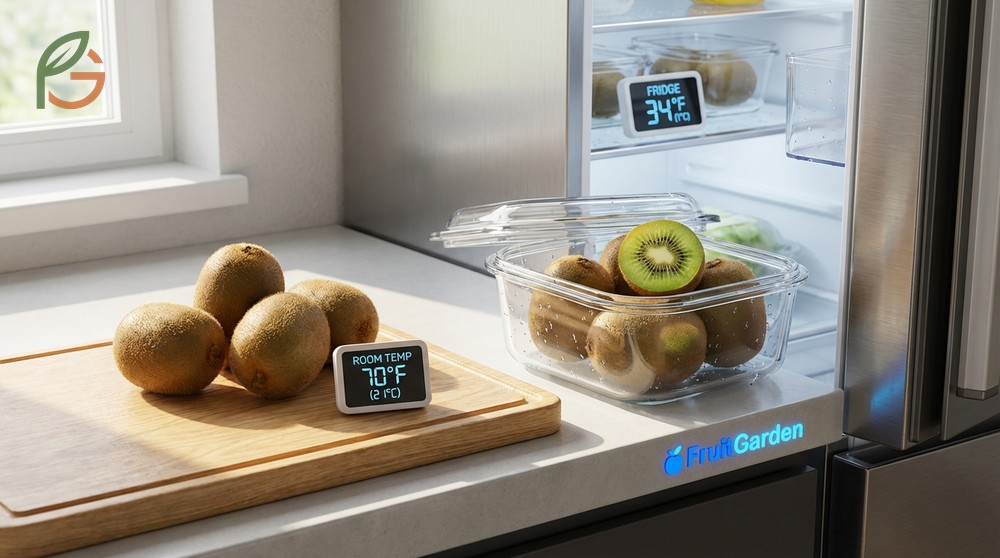
How to store kiwi to last longer? The answer depends on ripeness—unripe kiwis thrive at room temperature for 5-7 days, while ripe ones need refrigeration at 32-36°F (0-2°C) to extend freshness up to 3 weeks. Research shows that temperature control is the single most important factor in preserving kiwi quality and vitamin C content. FruitGarden synthesizes current agricultural data and storage research to help you maximize your kiwi’s shelf life, whether you’re storing a few fruits or planning long-term preservation.
Quick Answer
- Unripe kiwis: Store at room temperature (68-72°F / 20-22°C) for 5-7 days[1] until they yield to gentle pressure
- Ripe whole kiwis: Refrigerate at 32-36°F (0-2°C)[2] for 1-3 weeks[3] (up to 80 days in specialized storage)
- Cut kiwis: Store in airtight containers in the fridge and consume within 1-2 days[4] for best flavor
- Speed ripening: Use the paper bag trick with bananas or apples to ripen kiwis in 24-48 hours[4]
How to Store Kiwi to Last Longer
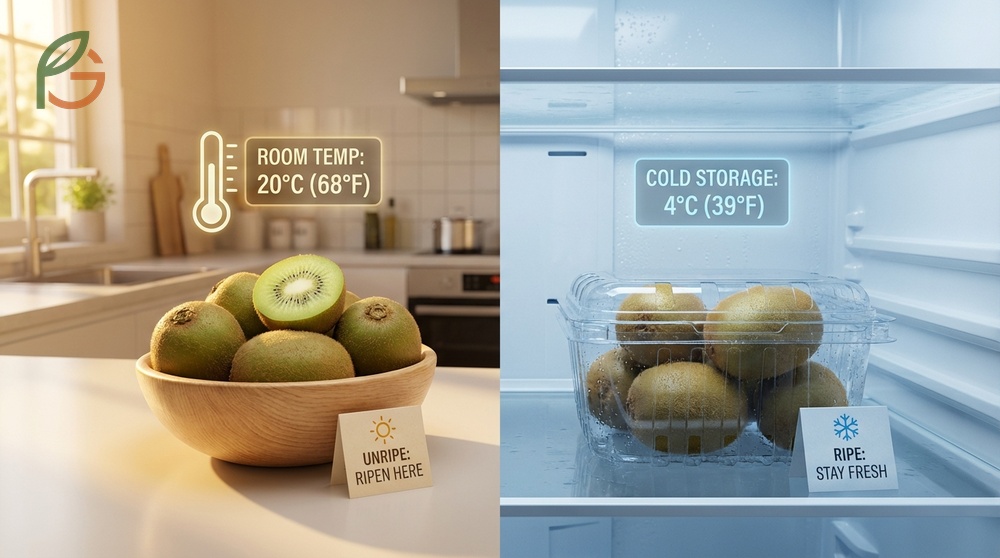
Storage strategy for kiwis isn’t one-size-fits-all—it changes dramatically based on ripeness. Studies demonstrate that kiwis stored at optimal temperatures retain significantly more vitamin C and experience minimal weight loss compared to room-temperature storage.[4] The key difference? Unripe kiwis need warmth to develop sweetness, while ripe ones require cold to pause the aging process.
Current agricultural data shows that proper storage can extend kiwi life from a few days to several months, depending on your method. Most people don’t realize that timing matters more than anything—moving kiwis to the fridge too early stunts ripening, while waiting too long leads to mushy, overripe fruit that’s lost its signature tangy-sweet balance.
The two-stage approach works best: ripen first, then chill. This method preserves texture, maximizes flavor development, and gives you complete control over when you’re ready to eat each kiwi.
Understanding Kiwi Ripeness
You’ll know a kiwi’s ready when it yields to gentle pressure, similar to a ripe avocado. Firm kiwis that don’t give at all need more time, while overly soft ones have passed their peak. The skin texture doesn’t change much, so don’t rely on color—focus on feel instead.
Research shows the ripening window for kiwis at room temperature spans 5-7 days for rock-hard fruit.[1] During this period, starches convert to sugars and the flesh softens from the inside out. If you’re like most Americans, you’ll want to check your kiwis daily after day three to catch them at peak ripeness.
From My Experience: My cousin in Guadalajara, Mexico grew kiwi vines in her backyard and taught me this trick—place a kiwi between your thumb and forefinger and apply light pressure. If it dents slightly without squishing, it’s perfect. She’d harvest firm fruits in batches and let them ripen in waves, ensuring fresh kiwis for weeks.
Counter Storage for Unripe Kiwis
Unripe kiwis belong on the counter in a cool, well-ventilated spot away from direct sunlight. Exposure to sunlight raises storage temperature and causes uneven ripening, which can damage the skin and shorten overall shelf life.[1] Most kitchens have a perfect spot—think fruit bowls on dining tables or corner countertops that stay around 68-72°F (20-22°C).
Don’t crowd your kiwis together. Spacing them out allows air circulation, which prevents moisture buildup that can trigger premature spoilage. If you’ve bought a large batch, rotate them every couple days so all sides get equal air exposure.
Once kiwis reach that soft, yielding stage at room temperature, you’ve got 5-7 days to eat them before quality drops.[5] That’s your window—after that, they’ll turn mushy and develop off-flavors even if they look fine on the outside.
Refrigerator Storage for Ripe Kiwis
The moment your kiwis ripen, move them straight to the fridge. Refrigeration hits the pause button on ripening by slowing ethylene production and reducing respiration rates. Agricultural data indicates that kiwis stored at 32-36°F (0-2°C) can last 1-3 weeks in home fridges,[3] while specialized cold storage extends this to 80 days.[6]
Store whole, unpeeled kiwis in the crisper drawer or a breathable produce bag. Avoid plastic bags that trap moisture and create condensation—this leads to mold growth. Paper bags work better if you need containment, though loose storage in the crisper provides the best results for most home refrigerators.
Important Note: Never refrigerate unripe kiwis. Temperatures below 50°F (10°C) halt the ripening process completely, leaving you with hard, flavorless fruit that’ll never develop proper sweetness no matter how long you wait.
Storing Kiwi Fresh: Best Practices
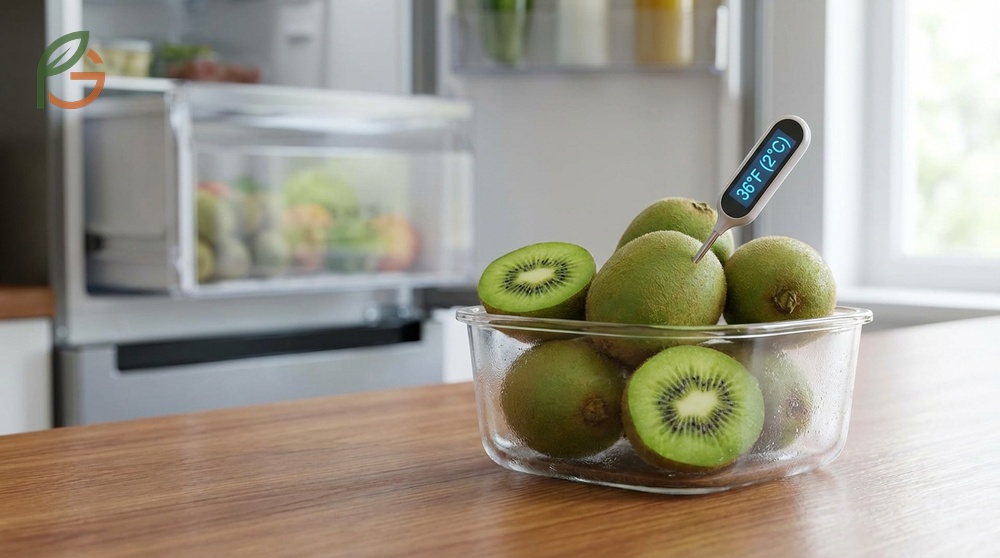
Temperature control isn’t just about preventing rot—it’s about preserving nutritional value. Studies demonstrate that kiwis stored around 36°F (2°C) retain vitamin C better than those kept at higher temperatures, thanks to reduced oxidation and slower metabolic processes.[4] This matters because kiwis pack more vitamin C per ounce than oranges, and proper storage keeps that nutritional punch intact.
Cut or peeled kiwis require extra attention. Once you’ve sliced into a kiwi, the clock starts ticking fast—you’ve got 1-2 days max in the fridge before texture and flavor degrade.[4] The exposed flesh oxidizes quickly, turning brown and losing that signature tangy bite.
For cut kiwis, airtight containers are non-negotiable. Glass or BPA-free plastic containers with tight-sealing lids prevent moisture loss and protect against fridge odors. Current guidance emphasizes minimizing air exposure—if your container’s too large, press plastic wrap directly onto the kiwi’s surface before sealing the lid.
Optimal Temperature and Humidity
Professional cold storage facilities maintain kiwis at 0-2°C (32-36°F) with 90-95% humidity.[2] While you can’t replicate these exact conditions at home, understanding the targets helps you optimize your fridge settings. Most home refrigerators run at 37-40°F (3-4°C)—slightly warmer than ideal but still effective for extending kiwi life by 1-2 weeks.
Humidity matters too. Kiwis lose moisture rapidly in dry environments, causing the skin to wrinkle and the flesh to shrivel. The crisper drawer typically maintains higher humidity than main fridge shelves, making it the best spot for kiwi storage. If your crisper has humidity controls, set them to high.
- Maintain fridge temperature at 32-38°F (0-3°C) for optimal preservation
- Use crisper drawer to maintain 85-95% humidity levels naturally
- Check kiwis weekly for signs of overripening or decay
- Avoid temperature fluctuations by keeping kiwis away from fridge doors
- Don’t store kiwis in the coldest spots where they might freeze (below 30°F / -1°C)[7]
Ethylene Gas Management
Ethylene gas is both friend and foe in kiwi storage. This natural plant hormone triggers ripening, which you want when kiwis are hard but need to avoid once they’re perfectly ripe. Certain fruits pump out ethylene like crazy—bananas, apples, and pears top the list—and keeping them near your kiwis can cut storage time in half.
When ripening unripe kiwis, ethylene becomes your ally. The paper bag trick works by trapping ethylene gas released by the kiwis themselves (or by companion fruits) in an enclosed space, accelerating ripening to just 24-48 hours.[4] Place 2-3 unripe kiwis in a brown paper bag with one banana or apple, fold the top loosely, and leave at room temperature—you’ll have ripe kiwis by tomorrow or the next day.
Once kiwis ripen, flip your strategy. Keep them away from all ethylene producers to prevent overripening. In the fridge, this means storing kiwis in a separate drawer from apples, pears, avocados, and tomatoes—all heavy ethylene emitters that’ll push your kiwis past their prime.[1]
Kiwi Storage Tips That Actually Work
Beyond the basics, several practical strategies can help you get the most from your kiwis. These aren’t theoretical recommendations—they’re field-tested methods that home cooks and commercial growers rely on daily. What often gets overlooked is that small adjustments make massive differences in how long kiwis maintain peak quality.
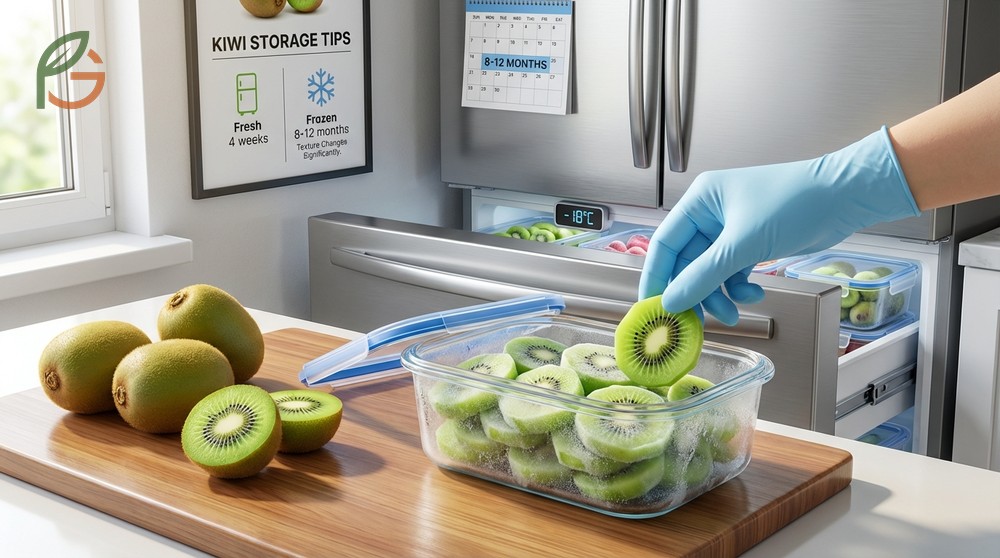
Freezing kiwis extends storage dramatically—up to 8-12 months in standard freezers.[6] The catch? Texture changes significantly. Frozen and thawed kiwis turn soft and mushy, making them unsuitable for fresh eating but perfect for smoothies, baked goods, or fruit sauces. Slice kiwis before freezing, arrange them on a parchment-lined tray to freeze individually, then transfer to freezer bags—this prevents clumping and lets you grab exactly what you need.
Bruised or damaged kiwis won’t last, regardless of storage method. Always inspect kiwis before buying and handle them gently. Even minor skin breaks create entry points for bacteria and mold, cutting storage time by 50% or more.[6]
- Don’t wash kiwis until right before eating—moisture on the skin encourages mold growth during storage
- Check stored kiwis every 3-4 days and remove any that show soft spots or mold to prevent spread
- Keep kiwis in their original packaging if it’s ventilated mesh or cardboard, which allows proper airflow
- Use the squeeze test instead of waiting for color changes—kiwi skin stays brown-green regardless of ripeness
- Label frozen kiwis with the date so you can use oldest batches first and maintain quality rotation
- Store different kiwi varieties separately if possible—gold kiwis ripen faster than green varieties and may need different timing
From My Experience: A friend who runs a fruit stand in Oaxaca, Mexico showed me this trick—she places a clean, dry paper towel in the bottom of her kiwi storage containers. The towel absorbs excess moisture and extends fridge life by 2-3 days. She replaces the towel every few days and says it’s cut her spoilage losses by 30%.
Pro Tip: If you’ve bought very firm kiwis and need them sooner, place them in a warm spot (75-80°F / 24-27°C) like the top of your fridge or near a sunny window. Warmth accelerates ripening, but watch closely—kiwis can go from firm to overripe in 24 hours at these temperatures.
This table compares storage duration, optimal conditions, and best use cases for kiwis stored at room temperature, refrigerated, and frozen
| Storage Method | Duration | Temperature | Best For |
|---|---|---|---|
| Counter (Unripe) | 5-7 days[1] | 68-72°F (20-22°C) | Ripening firm kiwis to eating softness |
| Counter (Ripe) | 5-7 days[5] | 68-72°F (20-22°C) | Immediate consumption within the week |
| Refrigerator (Whole) | 1-3 weeks[3] | 32-36°F (0-2°C) | Extending ripe kiwi freshness significantly |
| Refrigerator (Cut) | 1-2 days[4] | 32-36°F (0-2°C) | Short-term storage of prepped fruit |
| Freezer | 8-12 months[6] | 0°F (-18°C) or below | Long-term storage for smoothies and cooking |
How to Extend Kiwi Freshness Beyond the Basics
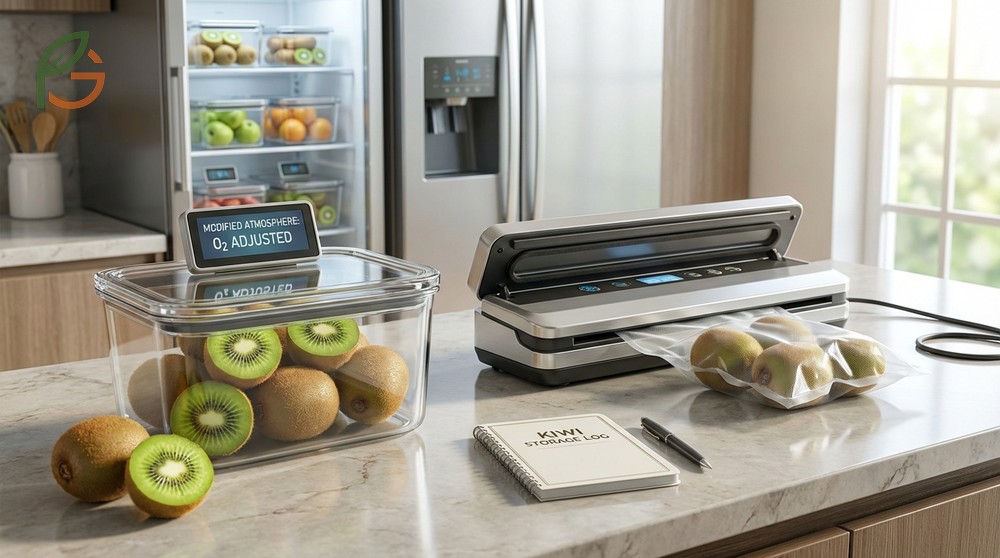
For serious kiwi enthusiasts or anyone who buys in bulk, advanced storage techniques can push freshness even further. Commercial operations use specialized equipment, but you can adapt several of their methods with standard kitchen tools. The goal isn’t just preventing spoilage—it’s maintaining that perfect balance of sweetness, tartness, and firm-tender texture that makes kiwis so appealing.
Modified atmosphere storage works by adjusting oxygen and carbon dioxide levels around stored fruit. While commercial facilities use specialized chambers, you can approximate this at home using resealable bags with small ventilation holes. The reduced oxygen slows respiration without creating the moisture trap that solid plastic bags cause. This method can add 3-5 days to refrigerated storage time.
Buying kiwis at different ripeness stages gives you a continuous supply of perfect fruit. Purchase half your batch firm and half just starting to soften, then ripen them in waves. This staggers your eating window and prevents the all-too-common scenario where all your kiwis ripen simultaneously and you can’t eat them fast enough.
- Partition large batches into smaller groups and refrigerate some while ripening others on the counter
- Use vacuum-sealed bags for freezer storage to prevent freezer burn and extend quality to 12+ months
- Wrap individual kiwis in newspaper before counter storage to maintain consistent humidity around each fruit
- Monitor fridge temperature with a thermometer—even 2-3°F variation affects storage duration significantly
- Consider a dedicated fruit fridge or wine cooler set to 33-35°F (1-2°C) for optimal kiwi preservation
Storage Alert: Kiwis stored in regular fridge compartments at 37-40°F (3-4°C) last about half as long as those stored at optimal 32-35°F (0-2°C). If your fridge runs warm, expect 7-10 days instead of 2-3 weeks, and adjust your buying quantities accordingly.
Texture changes signal the end of viable storage. When kiwis develop wrinkled skin, sunken soft spots, or an off-putting fermented smell, they’ve passed the point of no return. Don’t try to salvage overripe kiwis for fresh eating—the flavor’s gone bitter and the texture’s unpleasantly mushy. You might salvage them for cooked applications like jams or compotes where texture matters less, but fresh consumption is out.
Conclusion
The evidence is clear: how to store kiwi to last longer comes down to matching storage method to ripeness stage. Unripe kiwis need 5-7 days at room temperature to develop sweetness, while ripe ones require immediate refrigeration at 32-36°F (0-2°C) to maintain quality for 1-3 weeks. This two-stage approach—ripen first, then chill—preserves both flavor and nutritional value better than any single method.
Current agricultural guidance emphasizes temperature control as the dominant factor in kiwi storage success. Whether you’re storing three kiwis or thirty, applying these research-backed methods from FruitGarden will help you minimize waste, maximize enjoyment, and always have perfectly ripe kiwis ready when you want them.
Frequently Asked Questions
How long do kiwis last in the fridge?
Ripe whole kiwis last 1-3 weeks in the fridge when stored at 32-36°F (0-2°C).[3] Very firm unripe kiwis can last up to one month refrigerated, but they won’t ripen properly at cold temperatures. Cut kiwis only last 1-2 days in the fridge, even in airtight containers.
Should you refrigerate kiwis or leave them on the counter?
It depends on ripeness. Store unripe kiwis on the counter at room temperature until they yield to gentle pressure, which takes 5-7 days.[1] Once ripe, immediately refrigerate them to extend freshness by 1-3 weeks. Refrigerating unripe kiwis halts ripening and leaves you with hard, flavorless fruit.
How do you make kiwis ripen faster?
Place unripe kiwis in a paper bag with a banana or apple to ripen them in 24-48 hours.[4] These fruits release ethylene gas that triggers ripening in the enclosed space. Fold the bag loosely to allow airflow and check daily—kiwis can go from firm to overripe quickly with this method.
Can you freeze kiwis for long-term storage?
Yes, you can freeze kiwis for 8-12 months.[6] Slice them first, freeze on a parchment-lined tray until solid, then transfer to freezer bags. The texture changes significantly when thawed—they become soft and mushy—but the taste remains intact, making frozen kiwis perfect for smoothies and baked goods.
What’s the best temperature to store kiwis?
The optimal temperature for ripe kiwis is 32-36°F (0-2°C) with 90-95% humidity.[2] This range maximizes vitamin C retention and minimizes weight loss. Most home fridges run slightly warmer at 37-40°F (3-4°C), which still works but cuts storage duration roughly in half compared to optimal conditions.
How do you keep cut kiwis fresh?
Store cut kiwis in airtight containers in the refrigerator and eat them within 1-2 days.[4] Press plastic wrap directly onto the cut surface before sealing to minimize air exposure and prevent browning. Don’t leave cut kiwi at room temperature for more than 2-4 hours—the exposed flesh spoils quickly and develops off-flavors.
Why should you keep kiwis away from bananas and apples?
Bananas and apples produce large amounts of ethylene gas, which accelerates ripening in nearby fruits. While this is useful for speeding up ripening in unripe kiwis, it causes ripe kiwis to overripen quickly and spoil faster.[1] Store ripe kiwis in a separate fridge drawer from all ethylene-producing fruits to maximize shelf life.





