
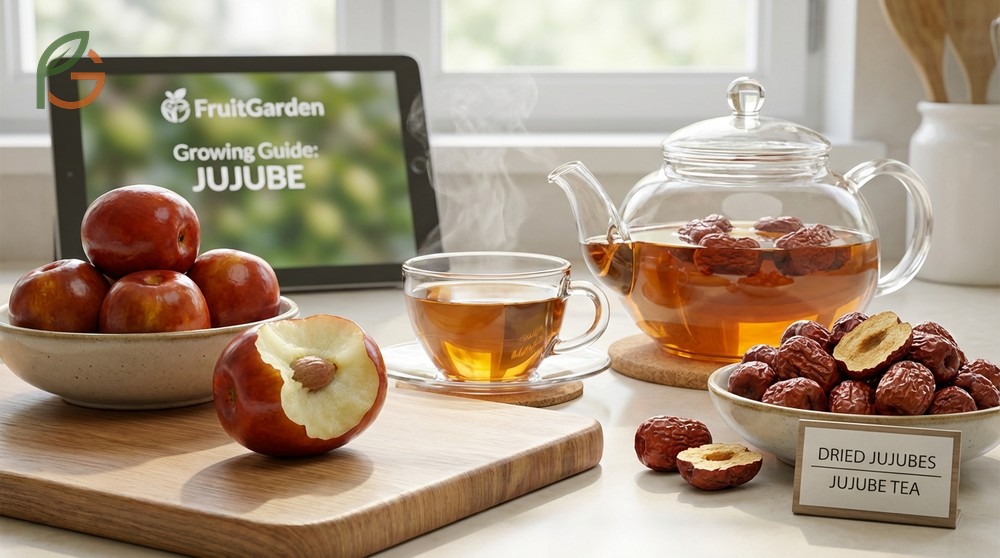
How to eat jujube fruit? You can eat fresh jujubes raw like apples—just bite around the center pit—or enjoy dried ones as sweet snacks and in tea.[1] Research shows jujubes pack 69mg of vitamin C per 100 grams, meeting 77% of your daily needs in just a few fruits.[2] FruitGarden brings you comprehensive growing guides and preparation tips for this antioxidant-rich fruit that’s perfect for home gardens across America.
Quick Answer
- Fresh jujubes contain 79 calories and 20g carbs per 100g, with crisp apple-like texture[2]
- The skin is completely edible and contains beneficial nutrients—no peeling required[1]
- Dried jujubes have concentrated sweetness with 281 calories per 100g and work great for snacking[3]
- Rehydrate dried jujubes in hot water for 1 hour before using in recipes or making tea[4]
How to Eat Jujube Fruit
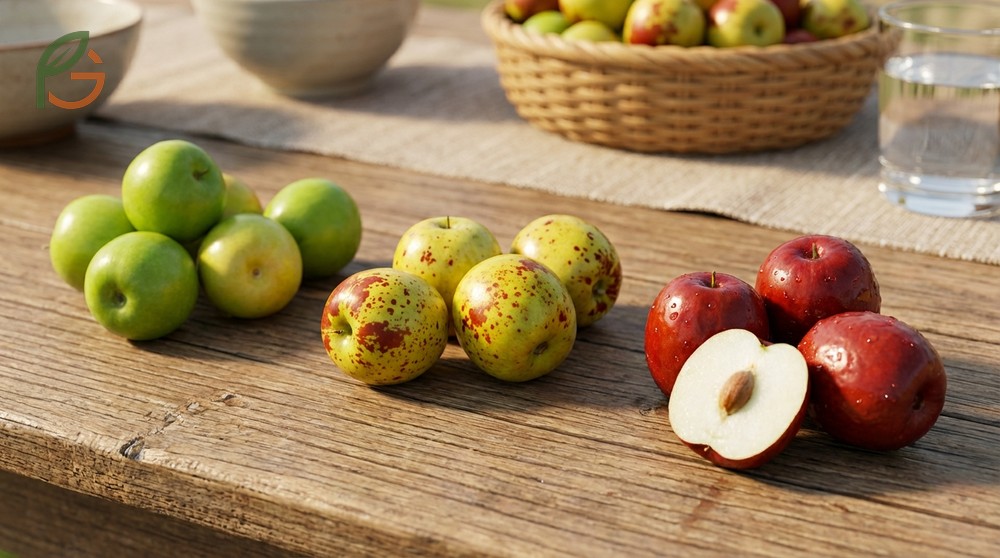
Fresh jujubes taste like a cross between apples and dates, with crisp, juicy flesh that’s perfect for snacking. You’ll find them small and round, turning from green to yellow-green with red-brown spots as they ripen.[1] The redder they get, the sweeter they become—fully red fruits deliver the best flavor.
Most people don’t realize that jujube’s texture changes dramatically during ripening. At the yellow-green stage, they’re firm and slightly tart. As they turn completely red, they soften and develop concentrated sweetness that rivals candy.
From My Experience: My cousin in Guadalajara, Mexico planted a Li jujube tree in March 2023. Her first harvest in September produced fruits that were 90% red within 4 weeks—faster than the typical 5-6 week ripening period—thanks to consistent 85-90°F (29-32°C) temperatures during summer.
Selecting Ripe Jujubes
Look for fruits that are at least 50-80% red for the best eating experience. Ripe jujubes should feel firm but yield slightly when you gently press them. If you’re buying from a market, avoid fruits with bruises or cracks in the skin.
Color tells you everything about sweetness levels. Green jujubes work for cooking and salads where you want tartness. Yellow-green with red patches offers balanced sweet-tart flavor for fresh eating.
- Color changes from green to yellow-green, then develops red-brown patches
- Skin appears smooth and slightly shiny without wrinkles
- Fruit feels firm but gives a bit when squeezed gently
- Size reaches full diameter for the variety, typically 1-2 inches
- Sweet aroma becomes noticeable when you hold the fruit close
Eating Fresh Jujubes
Pop fresh jujubes in your mouth whole and bite around the center pit—there’s no need to cut them unless you prefer slices. The pit’s hard and inedible, so chew carefully and discard it. Some people compare the eating technique to cherries or olives.
You can slice jujubes thin for salads, dice them for oatmeal toppings, or add them to yogurt bowls. They also work beautifully in baked dishes like stuffing or paired with pork chops.[1] The firm texture holds up well during cooking, unlike softer fruits that turn mushy.
Storage Tip: Store fresh jujubes in your refrigerator’s crisper drawer in an airtight container. They’ll stay crisp for up to 2 weeks. Don’t wash them until you’re ready to eat—moisture speeds up spoilage.
Can You Eat Jujube Skin
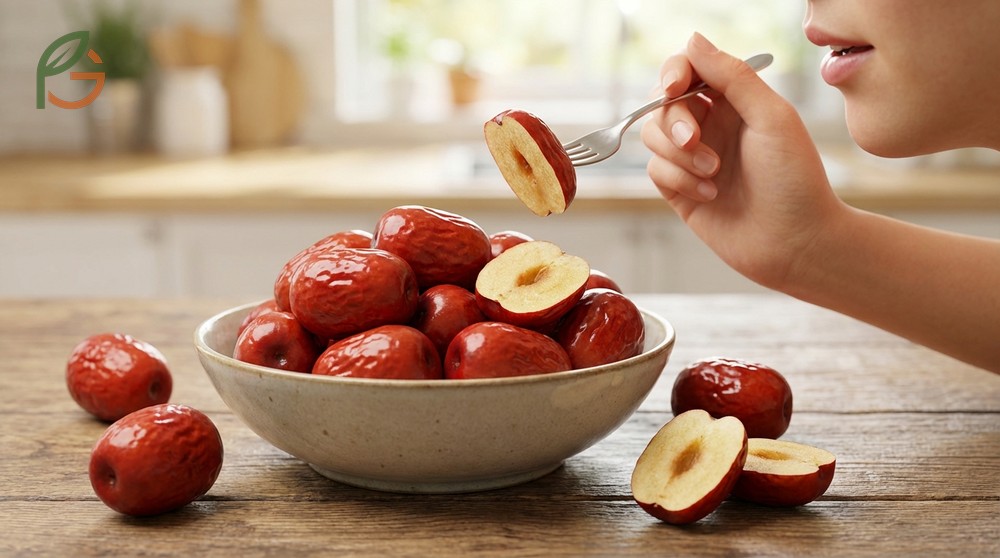
Yes, jujube skin is completely edible and contains beneficial nutrients you don’t want to miss. The thin skin provides fiber and antioxidants that support digestive health and fight free radicals.[1] Unlike some fruits where peeling improves texture, jujube skin adds a pleasant snap that complements the juicy flesh.
Research demonstrates that jujube’s skin contains concentrated flavonoids and polysaccharides—compounds that contribute to the fruit’s impressive antioxidant profile.[3] Removing the skin means losing these health-promoting compounds. The skin stays tender even on fully ripe fruits, so there’s no texture reason to peel.
Just wash jujubes under running water and rub gently with your hands to remove any dust or residue. Pat them dry with a clean towel, and they’re ready to eat. If you’re particularly concerned about pesticides, choose organic jujubes or grow your own—home gardeners often report cleaner fruits with minimal pest pressure.
- Contains dietary fiber that promotes fullness and healthy digestion
- Provides flavonoids that act as powerful antioxidants
- Adds pleasant texture contrast to the soft interior flesh
- Requires no preparation time—just wash and eat
- Reduces food waste compared to peeling practices
Dried vs Fresh Jujube
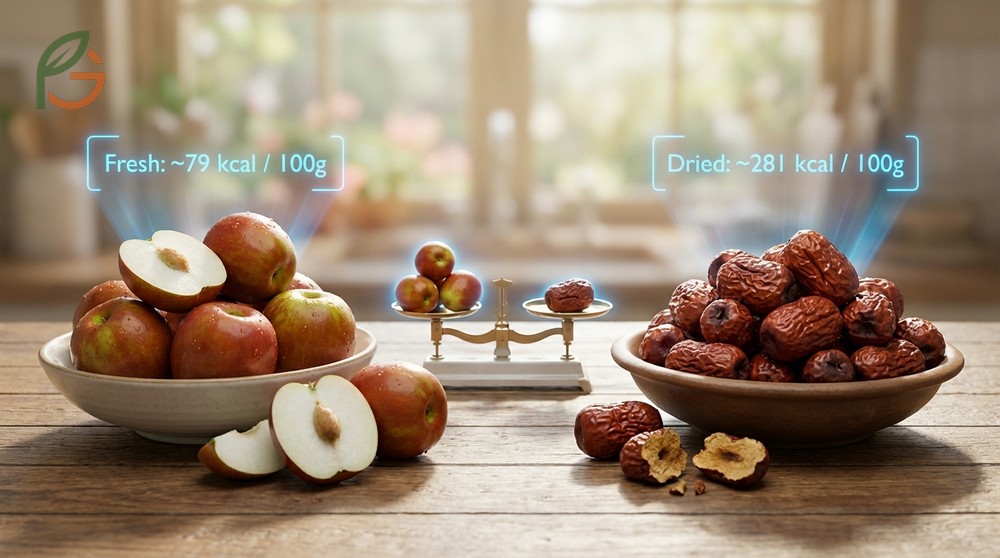
Fresh and dried jujubes offer distinct eating experiences and nutritional profiles. Fresh jujubes contain about 79 calories per 100 grams with crisp texture similar to apples, while dried versions pack 281 calories in the same amount due to concentrated sugars.[3] This calorie difference matters if you’re watching portion sizes—three fresh jujubes equal about one dried jujube calorically.
Current data indicates that drying transforms jujube’s carbohydrate content from 23-32% in fresh fruit to 63-76% in dried form. Protein also increases from 1.2% to 2.9-6.3% after moisture removal.[3] Dried jujubes develop a chewy, date-like consistency that makes them perfect for snacking or adding to trail mixes.
Fresh jujubes win for vitamin C content since heat degrades this nutrient during drying. You’ll get the full 69mg per 100g from fresh fruits, enough to meet 77% of daily needs.[2] Dried jujubes compensate with longer shelf life—they last 6-12 months stored in airtight containers versus 2 weeks for fresh.
This table compares nutritional values, texture, taste, best uses, and storage duration between fresh and dried jujube fruit per 100 grams
| Characteristic | Fresh Jujube | Dried Jujube |
|---|---|---|
| Calories (per 100g) | 79 kcal[2] | 281 kcal[3] |
| Carbohydrates | 20.23g (23-32%)[3] | 72.5g (63-76%)[3] |
| Vitamin C | 69mg (77% DV)[2] | Significantly reduced due to heat |
| Texture | Crisp, apple-like | Chewy, date-like |
| Shelf Life | 2 weeks refrigerated | 6-12 months sealed |
| Best Uses | Raw snacking, salads, fresh recipes | Tea, baking, trail mixes, rehydrating |
- Choose fresh for maximum vitamin C intake and crisp texture in salads
- Pick dried for convenient snacking and long-term pantry storage
- Use fresh when you want lower calorie density for weight management
- Select dried for concentrated sweetness in baking and tea preparations
- Opt for fresh during harvest season (late summer to fall) for best prices
- Buy dried year-round when fresh varieties aren’t available locally
Portion Control Note: Dried jujubes are easy to overeat because of their concentrated sweetness and smaller size. Stick to a handful (about 30g or 6-8 pieces) to keep calories in check while still enjoying the benefits.
Jujube Recipes
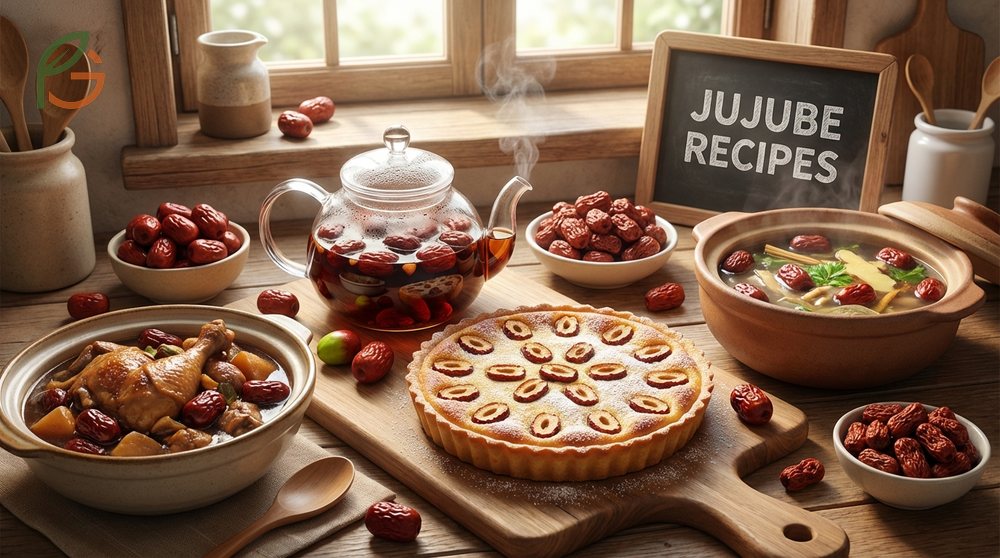
Jujubes work in everything from soothing teas to baked desserts and savory dishes. Their natural sweetness means you can reduce added sugars in recipes. The fruit holds its shape during cooking, making it reliable for applications where you need structure rather than mush.
Traditional Asian cuisines have used jujubes for centuries in soups, stews, and medicinal preparations. Western cooks are discovering that jujubes substitute beautifully for apples or dates in familiar recipes. You can slice them into morning oatmeal, bake them with pork chops, or add them to Thanksgiving stuffing for unexpected depth.[1]
Jujube Tea Recipe
Jujube tea delivers a naturally sweet, amber-colored drink that’s perfect hot or iced. Start with 100g of dried jujubes (roughly chopped) per liter of water—this ratio creates balanced flavor without overwhelming sweetness.[5] You’ll simmer the mixture rather than boil aggressively to extract flavor gently.
My neighbor in Querétaro, Mexico makes jujube-ginger tea every winter morning. She uses 8 dried jujubes with 2 slices of fresh ginger in 4 cups of water, simmering for exactly 15 minutes—her batch stays fragrant for 3 days refrigerated versus the typical 2-day window.
Add ginger slices, cinnamon sticks, or goji berries for complexity. The basic method involves bringing water to a boil, adding jujubes, then reducing heat to simmer covered for 30 minutes.[5] Strain the tea through a fine-mesh sieve, pressing the fruit pulp to extract every drop of flavor.
- Wash 60g dried jujubes and halve them, removing pits if desired
- Combine jujubes with 4 cups water, 1 tablespoon sliced ginger, and optional goji berries
- Bring mixture to boil over medium-high heat, then reduce to medium-low simmer
- Cover pot and simmer for 30 minutes until tea turns pale amber color
- Strain through fine-mesh sieve, pressing fruit pulp to extract maximum liquid
- Add brown sugar or honey to taste if you want extra sweetness
- Serve hot immediately or refrigerate up to 3 days for iced tea
Snacking on Dried Jujubes
Dried jujubes satisfy sweet cravings without added sugars or processing. They’re naturally chewy and sweet, tasting like a blend of dates and dried apples. You can eat them straight from the package or pair them with nuts for balanced snacking that combines natural sugars with protein and healthy fats.
The concentrated nutrition makes dried jujubes filling despite their small size. A typical serving of 6-8 pieces (about 30g) provides sustained energy without the blood sugar spike you’d get from candy. They’re perfect for hiking, travel, or afternoon desk snacks when you need something portable.
Some people toast dried jujubes briefly at 300°F (149°C) for 5-7 minutes to enhance their flavor and reduce stickiness. This optional step creates a slightly crisp exterior while keeping the interior chewy. You can also chop them into granola, energy balls, or homemade trail mix for variety.
How to Rehydrate Dried Jujubes
Rehydrating brings dried jujubes back to plump, tender consistency that’s ideal for recipes requiring fresh-like texture. Pour boiling water over dried jujubes in a bowl, making sure they’re fully submerged.[4] Place a plate on top to keep them under the water surface—floating jujubes won’t rehydrate evenly.
Wait 1 hour for full rehydration, though 30 minutes works if you’re in a hurry and don’t mind firmer texture. The jujubes will absorb water and soften considerably, nearly matching fresh fruit’s texture. Drain them before using, but save that flavorful soaking liquid—it makes excellent jujube tea on its own or adds depth to soups.
For recipes like cakes or purées, you can skip the waiting period by simmering dried jujubes directly in water for 15-30 minutes. This method works faster and creates very soft fruit that’s easy to blend or mash. Remove the pits after rehydrating since they slip out more easily from softened fruit.
Conclusion
The evidence is clear: how to eat jujube fruit comes down to choosing fresh for crisp snacking and maximum vitamin C, or dried for concentrated sweetness in teas and recipes. You can’t go wrong eating them raw with the edible skin, slicing them into dishes, or rehydrating dried ones for cooking versatility. Current guidance from nutrition research emphasizes jujube’s impressive antioxidant profile and practical uses in everyday cooking.
Whether you’re growing jujubes in your backyard or buying them at specialty markets, FruitGarden provides the cultivation expertise and preparation knowledge you need. Start with the simple methods here, then experiment with recipes that suit your taste—jujube’s natural versatility makes it hard to mess up.
Frequently Asked Questions
What does jujube fruit taste like?
Jujube fruit tastes like a cross between apples and dates, with crisp texture when fresh and sweet, mild flavor. As they ripen from green to red, they become sweeter and less tart. Fresh jujubes have apple-like crunch, while dried ones develop chewy, date-like consistency with concentrated sweetness.
Do you need to peel jujube fruit before eating?
No, you don’t need to peel jujube fruit—the thin skin is completely edible and nutritious. Just wash the fruits under running water to remove any dust, then eat them whole like apples. The skin contains beneficial fiber and antioxidants that you’d lose by peeling.
How many jujube fruits should you eat per day?
Eating 3-5 fresh jujubes daily provides excellent nutrition without excess calories, delivering about 80-135 calories total. This amount gives you substantial vitamin C (meeting or exceeding daily needs) plus fiber and antioxidants. For dried jujubes, stick to 6-8 pieces (about 30g) since they’re more calorie-dense at 85-95 calories per serving.
Can you eat jujube seeds or pits?
No, don’t eat jujube seeds or pits—they’re hard, inedible, and present a choking hazard. The center pit is similar to cherry or olive pits. Bite around it when eating fresh jujubes, or remove pits before cooking. You can spit them out just like you would with cherry pits.
What’s the best time of year to eat fresh jujubes?
Fresh jujubes are best from late summer through fall (August to October in most regions), when they ripen on trees. This is when you’ll find them at farmers’ markets and specialty stores with peak sweetness and crispness. Outside harvest season, dried jujubes remain available year-round and offer similar nutritional benefits.
How do you store jujube fruit to keep them fresh?
Store fresh jujubes in an airtight container in your refrigerator’s crisper drawer for up to 2 weeks. Don’t wash them until you’re ready to eat since moisture speeds spoilage. For dried jujubes, keep them in sealed containers or ziplock bags in a cool, dry pantry where they’ll last 6-12 months.
Can you cook jujube fruit or must they be eaten raw?
You can absolutely cook jujube fruit—they’re incredibly versatile in both raw and cooked applications. Fresh jujubes work well sliced in salads or baked with meats, while dried ones are perfect for teas, soups, stews, and baked goods. Cooking softens the texture and intensifies sweetness, making them ideal for recipes that call for dates or dried apples.





