
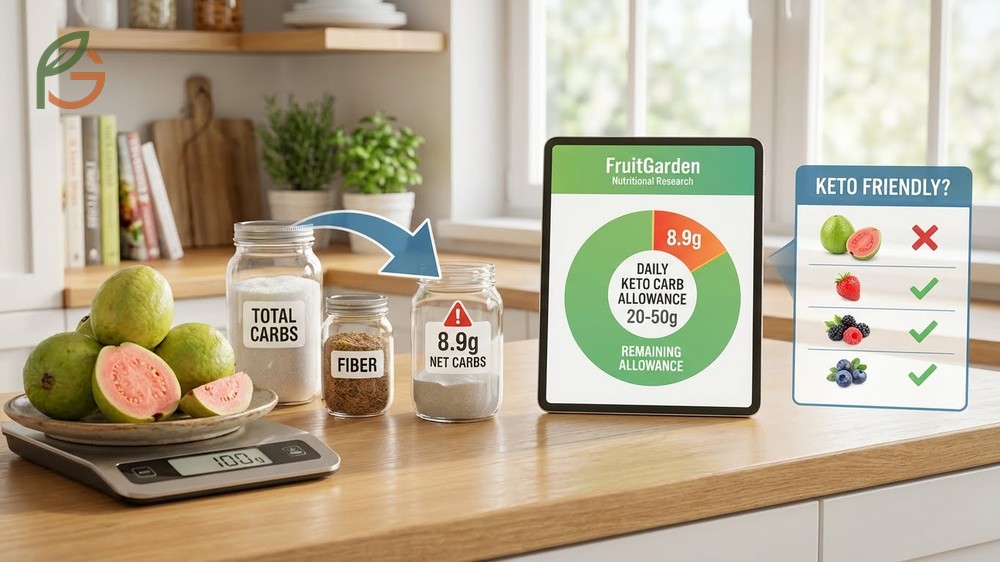
Is guava keto friendly? Not particularly—guava contains 8.9g net carbs per 100g serving, which can quickly consume nearly half your daily keto carb allowance[1]. Research shows that staying in ketosis typically requires limiting net carbs to 20-50g daily[2]. FruitGarden synthesizes current nutritional research to help you make informed decisions about tropical fruits and keto compatibility.
Quick Answer
- Guava isn’t ideal for keto with 8.9g net carbs per 100g serving[1]
- One medium guava (55g) delivers approximately 4.9g net carbs—24% of a strict 20g daily limit
- Standard keto diets allow 20-50g net carbs daily to maintain ketosis[3]
- Guava’s 5.4g fiber per 100g partially offsets total carbs but doesn’t make it keto-friendly[1]
Is Guava Keto Friendly
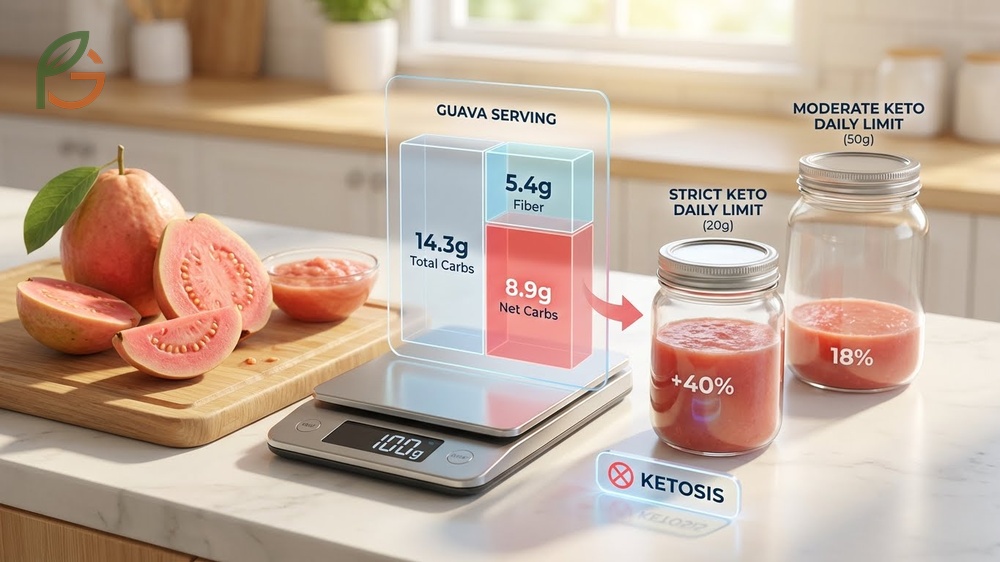
Guava doesn’t fit well into most ketogenic diets due to its relatively high net carbohydrate content. A 100g serving contains 14.3g total carbohydrates and 5.4g dietary fiber, resulting in 8.9g net carbs[1]. For context, this single serving represents 44% of a strict 20g daily net carb limit or 18% of a more moderate 50g limit.
The ketogenic diet typically reduces total carbohydrate intake to less than 50g daily—and can be as low as 20g per day—to achieve and maintain ketosis[2]. Most people find that consuming guava makes it challenging to stay within these narrow limits. Unlike truly keto-friendly fruits like avocados (1.8g net carbs per 100g) or raspberries (5.4g net carbs per 100g), guava’s carb density requires careful portion control that many find impractical.
Evidence suggests that guava should be consumed minimally on keto because it’s high in net carbs[4]. While guava offers exceptional nutritional benefits—including more than 200% of daily vitamin C requirements and significant fiber content—these advantages don’t outweigh the carb concerns for strict keto followers. The fruit’s natural sugar content (8.9g per 100g) contributes directly to blood glucose levels, potentially disrupting ketosis.
Understanding Ketosis and Carb Limits
Ketosis occurs when your body shifts from burning glucose to burning fat for energy, producing ketone bodies as an alternative fuel source. This metabolic state typically begins after 3-4 days of carbohydrate restriction, when stored glucose becomes fully depleted[2]. Maintaining ketosis requires consistent carbohydrate restriction, as even moderate carb intake can interrupt this fat-burning state.
To stay in ketosis, most people require up to 50g of carbs per day, though stricter approaches recommend 20-30g for optimal results[3]. Individual carbohydrate tolerance varies based on factors like activity level, metabolic rate, and how long you’ve followed the diet. Athletes and highly active individuals may tolerate closer to 50g daily, while sedentary people or those with insulin resistance often need to stay below 30g.
How Guava Impacts Ketosis
Consuming guava can significantly impact your ability to maintain ketosis throughout the day. A single medium-sized guava (approximately 55g) contains roughly 4.9g net carbs—nearly 25% of a 20g daily allowance. This leaves minimal room for other carbohydrate sources like leafy greens, nuts, or low-carb vegetables that provide essential nutrients and dietary variety.
The fruit’s sugar composition includes natural fructose and glucose that rapidly convert to blood sugar. Unlike fiber-rich vegetables where the carbs are mostly non-digestible, guava’s 8.9g net carbs per 100g are fully absorbable and contribute directly to your carb count. Most keto practitioners find that incorporating guava requires eliminating other preferred foods, which isn’t sustainable long-term.
Important Note: If you’re following a cyclical or targeted ketogenic diet that allows higher carb intake around workouts or on specific days, small guava portions (25-30g) might fit your macros. Always calculate net carbs based on your actual serving size and track total daily intake to maintain ketosis.
Guava Carb Content
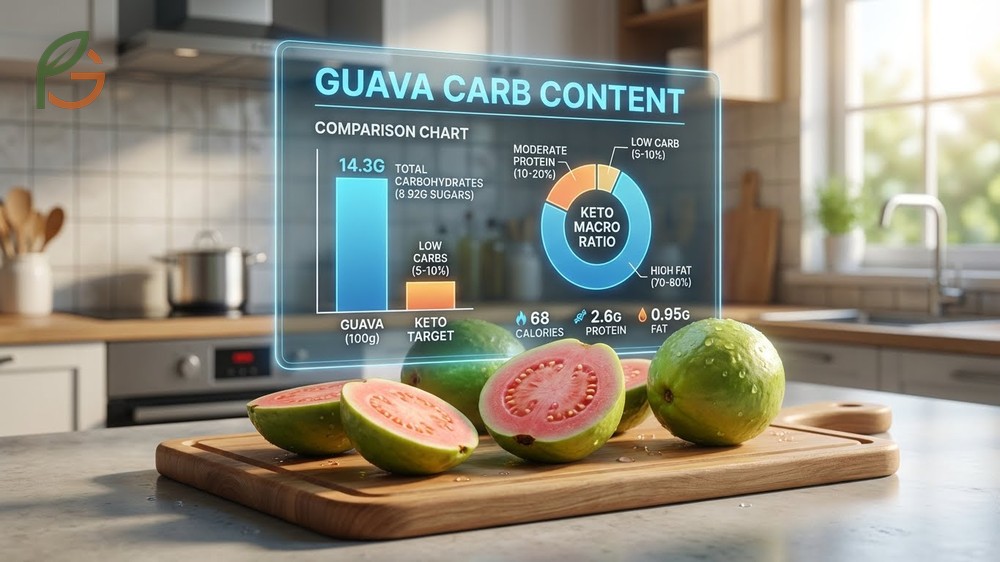
Guava’s complete nutritional profile reveals why it’s challenging for keto dieters. A standard 100g serving provides 68 calories, 2.6g protein, 0.95g fat, and 14.3g total carbohydrates[1]. The macronutrient ratio heavily favors carbohydrates, which is opposite to keto’s requirement for high fat (70-80%), moderate protein (10-20%), and very low carbs (5-10%).
Current data indicates that guava contains 8.92g sugars per 100g, representing the majority of its carbohydrate content. The remaining carbohydrates come from 5.4g dietary fiber and trace amounts of resistant starch. While fiber is beneficial for digestive health and doesn’t count toward net carbs, the sugar content directly impacts blood glucose and insulin response—two factors critical for maintaining ketosis.
Total Carbs vs Net Carbs
Understanding the difference between total and net carbs is essential for accurate keto tracking. Total carbs include all carbohydrate types: sugars, starches, and fiber. Net carbs represent only the carbohydrates your body can digest and convert to glucose, calculated by subtracting fiber (and half of any sugar alcohols in processed foods) from total carbs[3].
For guava, the calculation is straightforward: 14.3g total carbs minus 5.4g fiber equals 8.9g net carbs per 100g. This net carb value is what counts against your daily keto limit. The fiber content, while substantial at 22% of daily recommended intake, doesn’t reduce the impact of guava’s absorbable carbohydrates enough to make it keto-friendly.
Nutritional Breakdown per Serving
Different guava serving sizes impact your daily carb budget differently. A small guava (about 35g) contains approximately 3.1g net carbs, while a large fruit (100g+) can deliver 9-10g or more. Most commercially available guavas fall in the medium range of 50-60g, providing 4.5-5.3g net carbs per fruit.
Beyond carbohydrates, guava offers impressive micronutrients: 228mg vitamin C (254% daily value), 417mg potassium (12% DV), and 22mg magnesium (5% DV) per 100g[1]. These nutrients support immune function, heart health, and muscle function. However, keto followers can obtain similar benefits from lower-carb sources like leafy greens, avocados, and nuts without compromising ketosis.
- 68 calories with minimal fat content (0.95g)
- 8.9g net carbs from 14.3g total carbohydrates
- 5.4g dietary fiber (22% daily value)
- 228mg vitamin C—over 4 times more than oranges
- 417mg potassium supporting electrolyte balance
- 2.6g protein contributing to daily requirements
Net Carbs Guava
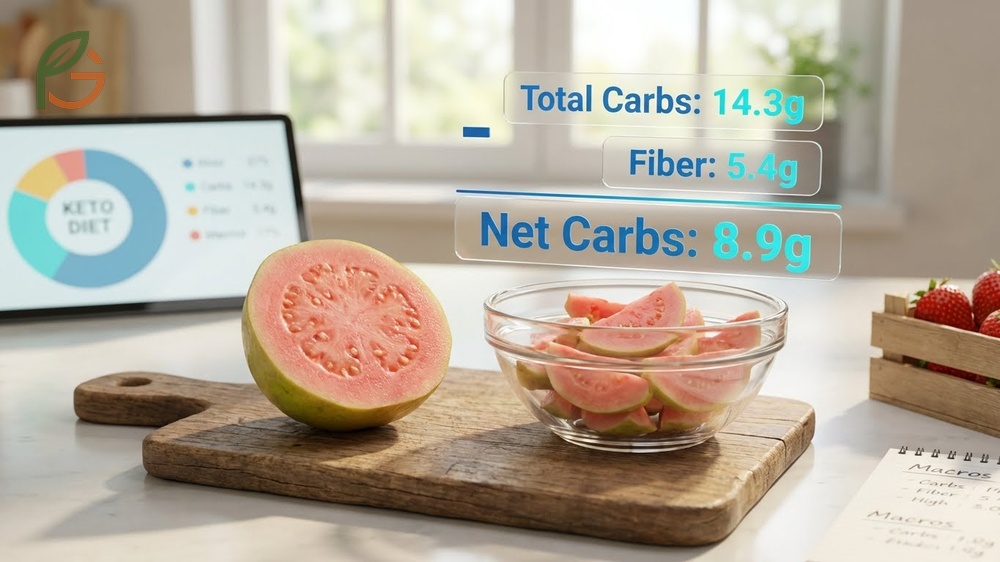
Calculating net carbs accurately determines whether guava fits your keto macros. The standard formula subtracts indigestible fiber from total carbohydrates, yielding the carbs your body absorbs and metabolizes. For raw guava, this means 14.3g total carbs minus 5.4g fiber equals 8.9g net carbs per 100g portion[1].
This net carb density places guava in the moderate-to-high category compared to other fruits. Truly keto-friendly options like strawberries (5.7g net carbs per 100g), blackberries (4.3g), and raspberries (5.4g) offer lower carb counts with similar fiber benefits. Avocados remain the gold standard at just 1.8g net carbs per 100g while providing healthy fats that align with keto’s macronutrient requirements.
Studies demonstrate that even small increases in daily carb intake can impact ketosis duration and depth. Consuming 100g of guava could extend the time needed to re-enter ketosis by 6-12 hours if you’re near your carb threshold. For strict keto followers targeting 20g net carbs daily, a single 100g guava consumes 44% of the budget, leaving only 11g for all other meals and snacks—an impractical constraint for most people.
This table compares net carbs, fiber content, and keto suitability ratings across six common fruits including guava, showing why berries and avocados are more keto-friendly choices
| Fruit | Net Carbs (g) | Fiber (g) | Total Carbs (g) | Keto Rating |
|---|---|---|---|---|
| Avocado | 1.8[5] | 6.7 | 8.5 | Excellent |
| Raspberries | 5.4[5] | 6.5 | 11.9 | Good |
| Blackberries | 4.3[5] | 5.3 | 9.6 | Good |
| Strawberries | 5.7[5] | 2.0 | 7.7 | Good |
| Guava | 8.9[1] | 5.4 | 14.3 | Limited |
| Banana | 20.2[6] | 2.6 | 22.8 | Avoid |
Tracking Tip: Use a food scale for accurate measurements. Guava sizes vary significantly—a “medium” fruit can range from 45-75g. Weighing your portion ensures precise net carb tracking, which is critical when you’re working within narrow keto limits.
Guava Serving Keto
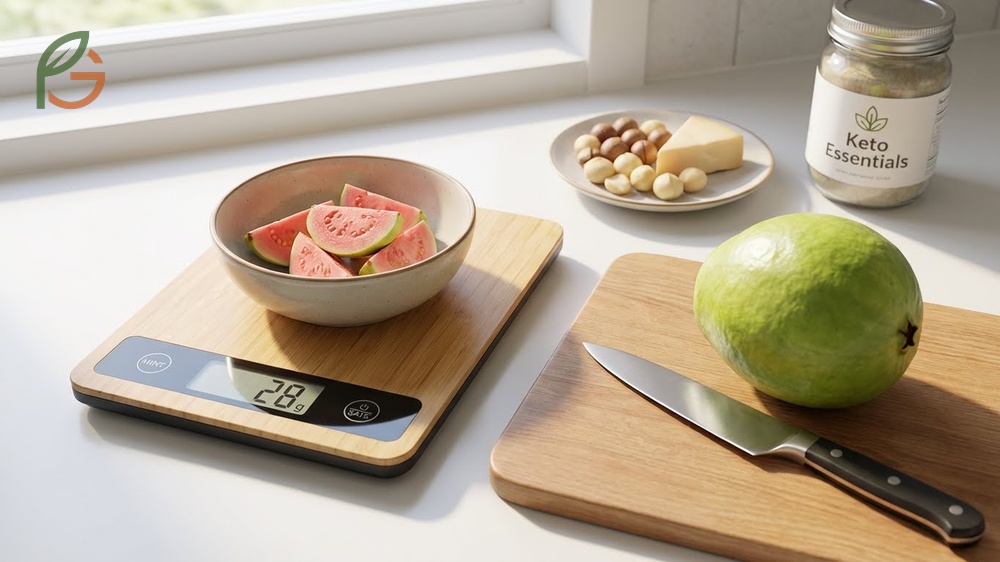
If you’re determined to include guava while maintaining ketosis, portion control becomes absolutely essential. Current guidance shows that small servings of 25-30g (approximately one-quarter to one-third of a medium fruit) provide 2.2-2.7g net carbs—a more manageable amount for strict keto dieters[4]. This portion size allows you to enjoy guava’s unique flavor while preserving most of your carb budget for nutrient-dense vegetables and other essentials.
Pairing guava with high-fat foods helps slow sugar absorption and minimizes blood glucose spikes. Try combining 25g guava (2.2g net carbs) with 30g macadamia nuts (1.5g net carbs, 22g fat) or mixing small guava pieces into full-fat Greek yogurt. The added fat extends satiety and helps maintain stable ketone levels despite the fruit’s natural sugars.
Most nutritionists recommend consuming any keto-marginal fruits earlier in the day when your body can more effectively process carbohydrates through daily activities. Eating guava at breakfast rather than dinner gives you 12-16 hours to burn through those carbs before your next fasting period. However, if you’re following a targeted keto approach with pre-workout carb timing, small guava portions (20-25g) can provide quick energy without significantly disrupting ketosis.
- Limit serving size to 25-30g (one-quarter medium fruit) providing 2.2-2.7g net carbs
- Pair with 20-30g high-fat nuts or full-fat dairy to slow sugar absorption
- Consume in the morning or pre-workout when carb tolerance is highest
- Account for guava carbs by reducing other carb sources throughout the day
- Choose slightly unripe guava which contains marginally less sugar than fully ripe fruit
- Track ketone levels for 3-5 days after introducing guava to monitor individual impact
- Consider guava as an occasional treat (1-2 times weekly) rather than daily staple
Agricultural data shows that guava ripeness significantly affects sugar content. Slightly firm, not-yet-ripe guavas contain 5-10% less sugar than fully ripe specimens, translating to roughly 0.5-0.9g fewer net carbs per 100g. While this difference seems small, it matters when you’re working within strict limits. Store guavas in the refrigerator to slow ripening and maintain lower sugar levels longer.
Keto Tropical Fruits
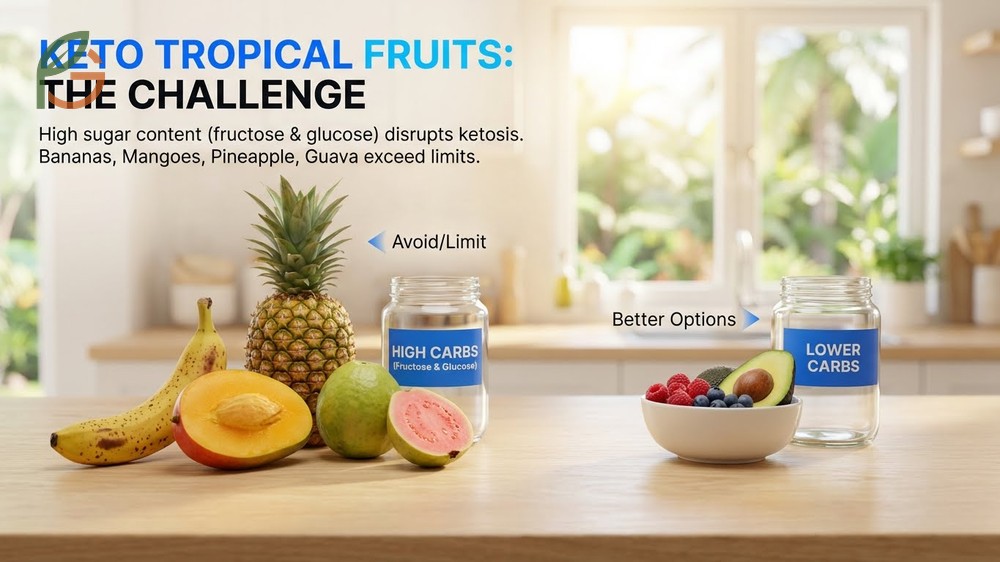
Most tropical fruits pose challenges for keto dieters due to naturally high sugar content. Bananas (20.2g net carbs per 100g), mangoes (13.7g), and pineapple (11.7g) quickly exceed daily carb limits with just small servings[6]. Guava fits within this high-carb tropical category, though it’s slightly lower than bananas and mangoes. The sweet, aromatic flavors that make tropical fruits appealing come from fructose and glucose—the same sugars that disrupt ketosis.
However, a few tropical options work better for keto followers. Star fruit stands out with just 3.5g net carbs per medium fruit (approximately 100g), offering a sweet-tart flavor without excessive carbs[5]. Coconut, either fresh or dried unsweetened, provides high MCT oil content and minimal net carbs (6g per 100g fresh coconut meat), making it exceptionally keto-compatible. These alternatives let you enjoy tropical flavors while staying within carb limits.
Research shows that combining tropical fruits with fat sources doesn’t eliminate their carb content but does moderate the glycemic response. If you’re craving tropical flavors, consider making a small smoothie with 20g guava, 30g coconut cream (1g net carbs), 100g ice, and 15ml MCT oil. This provides tropical taste with approximately 3.5g net carbs while the fats support ketosis. The key is keeping fruit portions minimal—treat them as flavor accents rather than primary ingredients.
| Tropical Fruit | Net Carbs per 100g | Keto Status |
|---|---|---|
| Fresh Coconut | 6.0g[5] | Keto-friendly |
| Star Fruit | 3.5g[5] | Keto-friendly |
| Guava | 8.9g[1] | Limited use |
| Pineapple | 11.7g[6] | Avoid on keto |
| Mango | 13.7g[6] | Avoid on keto |
| Banana | 20.2g[6] | Avoid on keto |
- Avocado—technically a fruit with only 1.8g net carbs and 15g healthy fats per 100g
- Raspberries—5.4g net carbs with exceptional fiber and antioxidant content
- Blackberries—4.3g net carbs providing vitamin C without excessive sugar
- Strawberries—5.7g net carbs, versatile for smoothies or desserts
- Star fruit—3.5g net carbs with unique tropical flavor profile
- Coconut (fresh)—6.0g net carbs plus beneficial MCT oils
- Lemons and limes—2.5-3.0g net carbs per whole fruit for flavor enhancement
Conclusion
The evidence is clear: guava isn’t particularly keto friendly due to its 8.9g net carbs per 100g, which consumes a substantial portion of the typical 20-50g daily keto carbohydrate allowance. While guava offers impressive nutritional benefits—including exceptional vitamin C content and significant dietary fiber—these advantages don’t overcome the fundamental incompatibility with strict ketogenic macros. Most keto followers find better success with genuinely low-carb fruits like avocados, berries, and star fruit that provide nutrients without threatening ketosis.
If you’re committed to including guava in your keto lifestyle, limit portions to 25-30g, pair with high-fat foods, and track your individual ketone response carefully. Current guidance emphasizes that sustainable keto success comes from choosing foods that align naturally with the diet’s requirements rather than forcing high-carb options to fit. FruitGarden continues to compile nutritional research helping you identify truly keto-compatible fruits for your garden and kitchen.
Medical Disclaimer
Important Medical Disclaimer: This content is for informational and educational purposes only. It’s not intended as a substitute for professional medical advice, diagnosis, or treatment. Always consult a qualified healthcare professional before making any changes to your diet, medication, or health routine, especially if you have diabetes, metabolic disorders, or other medical conditions. The ketogenic diet may not be appropriate for everyone, particularly pregnant or breastfeeding women, children, or individuals with certain health conditions.
Frequently Asked Questions
How many net carbs are in a medium guava?
A medium guava weighing approximately 55g contains about 4.9g net carbs, calculated from 7.9g total carbohydrates minus 3.0g fiber. This represents roughly 24% of a strict 20g daily keto carb limit or 10% of a more moderate 50g allowance, making portion control essential if you choose to include guava in your ketogenic meal plan.
Can I eat guava and stay in ketosis?
You can potentially stay in ketosis while eating small amounts of guava (25-30g portions providing 2.2-2.7g net carbs), but it requires careful tracking and reducing carbs from other sources throughout the day. Most keto practitioners find that guava’s relatively high net carb density (8.9g per 100g) makes it impractical for regular consumption compared to lower-carb alternatives like berries or star fruit.
What’s the difference between total carbs and net carbs in guava?
Guava contains 14.3g total carbohydrates per 100g, which includes 5.4g indigestible fiber. Net carbs (8.9g per 100g) represent only the carbohydrates your body can absorb and convert to glucose, calculated by subtracting fiber from total carbs. For keto tracking purposes, you count only net carbs since fiber doesn’t impact blood sugar or ketosis.
Which tropical fruits are better for keto than guava?
Star fruit (3.5g net carbs per 100g) and fresh coconut (6.0g net carbs per 100g) are significantly more keto-friendly than guava. Star fruit offers a sweet-tart tropical flavor with less than half the net carbs of guava, while coconut provides beneficial MCT oils that actually support ketosis. Both options let you enjoy tropical flavors without compromising your carb budget as severely as guava does.
Does guava’s high fiber content make it keto-friendly?
While guava’s 5.4g fiber per 100g is beneficial for digestive health and reduces the net carb count from 14.3g to 8.9g, this still doesn’t make guava keto-friendly. The remaining 8.9g net carbs per 100g serving is too high compared to truly keto-compatible fruits like raspberries (5.4g), blackberries (4.3g), or avocados (1.8g). Fiber helps but doesn’t offset the fundamental carb content enough for strict keto diets.
How does guava compare to berries on keto?
Berries are substantially better choices for keto than guava. Blackberries (4.3g net carbs per 100g), raspberries (5.4g), and strawberries (5.7g) all contain fewer net carbs than guava’s 8.9g while providing similar fiber and antioxidant benefits. Berries also tend to be less sweet, containing less natural sugar that could impact ketosis, making them easier to incorporate into strict keto meal plans without exceeding daily carb limits.
When is the best time to eat guava on keto?
If you choose to include small guava portions on keto, consume them earlier in the day—preferably at breakfast or pre-workout—when your body can more effectively process carbohydrates through daily activities. This timing gives you 12-16 hours to burn through those carbs before your next fasting period. Avoid eating guava in the evening when reduced activity levels may cause carbs to interfere with overnight ketosis maintenance.





