
How many calories in a grapefruit? A medium-sized grapefruit contains approximately 80-97 calories, with half a grapefruit providing just 40 calories[1]. Research shows this low-calorie citrus fruit delivers 51% of your daily vitamin C needs per half serving[2]. FruitGarden provides evidence-based nutrition data to help you make informed dietary choices.
Quick Answer
- Half a medium grapefruit (120g) contains 40 calories[1] with 9g carbohydrates and 1.4g fiber[2]
- A whole medium grapefruit has 80-97 calories and 25g total carbs with 4g fiber[3]
- You get 46mg vitamin C (51% daily value) per half grapefruit[2]
- Red and pink varieties provide identical calories but differ in antioxidant content
- Grapefruit juice contains 94 calories per cup with 22g sugar[4]
How Many Calories in a Grapefruit

Studies demonstrate that calorie content varies by grapefruit size and preparation method. Half a medium grapefruit delivers 40 calories[1], making it one of the lowest-calorie fruits available. A whole medium fruit contains 80-97 calories depending on variety and ripeness[3].
The fruit’s water content exceeds 90%, which explains its remarkably low caloric density. Current USDA data confirms grapefruit contains zero fat and minimal protein, with carbohydrates accounting for nearly all calories. This nutritional profile makes grapefruit ideal for calorie-restricted diets.
Calories by Size
Research shows grapefruit size significantly impacts total calorie intake. Small grapefruits (approximately 200g) contain 60-70 calories, while large varieties (300g+) can exceed 120 calories. Medium fruits remain the standard serving size at 230g total weight[3].
Most Americans consume half a grapefruit per serving, which fits perfectly into weight management plans. The 40-calorie half serving provides satiety without adding significant calories to daily intake.
This table compares calorie content, carbohydrates, and fiber across four grapefruit sizes from small to extra-large
| Size | Weight | Calories | Total Carbs | Fiber |
|---|---|---|---|---|
| Small | 200g | 65 cal | 16g | 2.5g |
| Medium | 230g | 80-97 cal[3] | 25g[3] | 4g[3] |
| Large | 280g | 110 cal | 28g | 4.5g |
| Extra-Large | 330g | 135 cal | 34g | 5g |
Nutritional Value Breakdown
Current nutrition data reveals grapefruit excels in micronutrient density despite low calories. Half a medium grapefruit delivers 51% of daily vitamin C requirements (46mg)[2] plus 1.4g dietary fiber[2]. This combination supports immune function and digestive health.
The fruit contains negligible fat (0.1g per half) and modest protein (1.2g per half)[2]. Carbohydrates dominate at 9g per half serving, with natural sugars comprising approximately 8g. The remaining fiber content helps moderate blood sugar response compared to refined carbohydrates.
Important Note: Grapefruit interacts with numerous medications including statins, blood pressure drugs, and antidepressants. Always consult your healthcare provider before adding grapefruit to your diet if you take prescription medications.
Calories in a Red Grapefruit
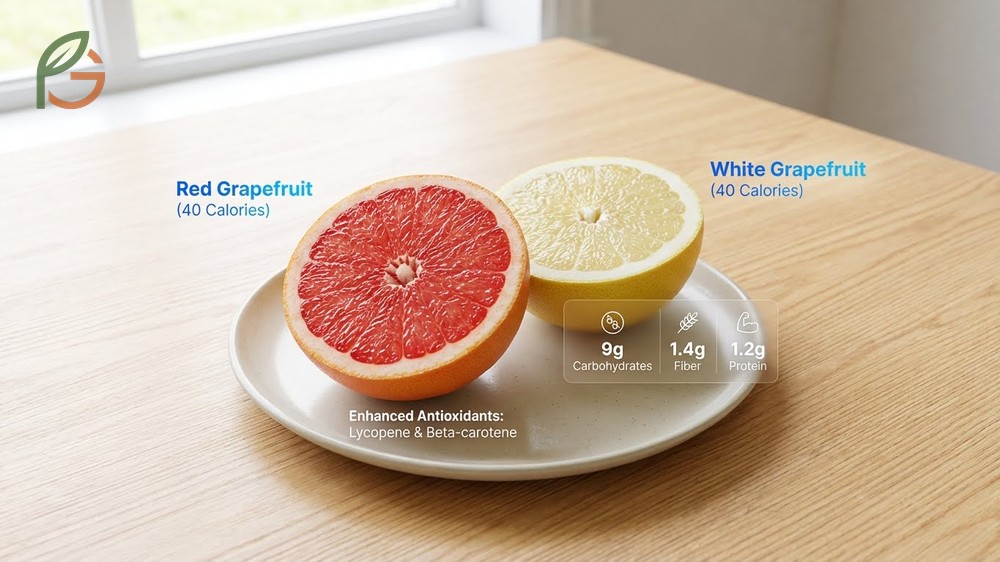
Red grapefruit contains identical calorie counts to white varieties at 40 calories per half serving[2]. The pigmentation difference stems from lycopene and beta-carotene content, not caloric density. Evidence indicates red varieties provide enhanced antioxidant benefits without adding extra calories.
Research confirms both red and pink grapefruits share the same macronutrient profile: 9g carbohydrates, 1.4g fiber, and 1.2g protein per half fruit[2]. The nutritional equivalence means color choice can be based purely on taste preference. Most people find red grapefruits slightly sweeter than white varieties.
Large red grapefruits weighing 280-300g contain 110-120 calories total. This size works well for sharing or consuming over two servings. The vitamin A content in red varieties (approximately 28% daily value per half) exceeds white grapefruit by a significant margin due to higher carotenoid levels.
Pink Grapefruit Nutrition Facts
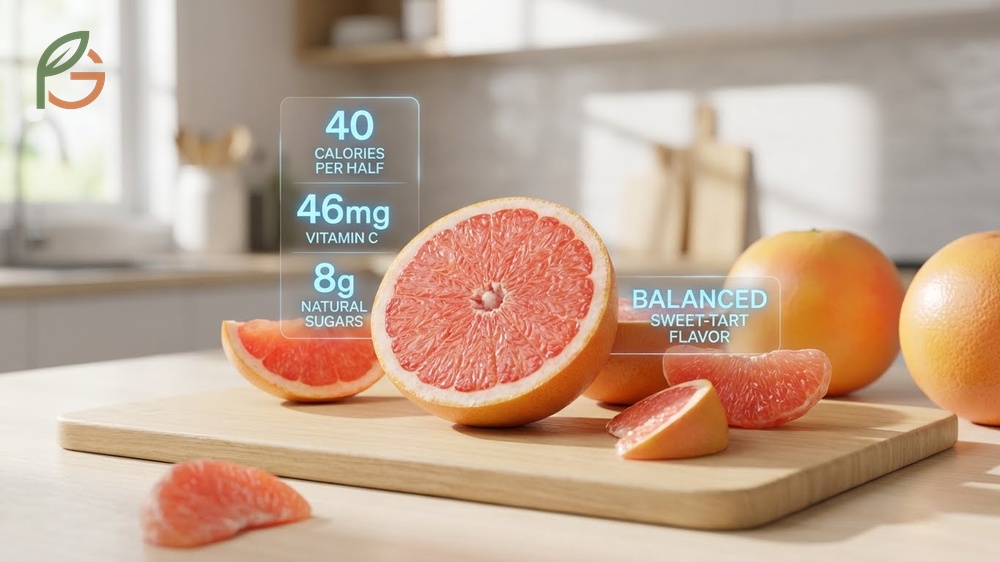
Pink grapefruit matches red varieties in nutritional composition, delivering 40 calories per half fruit with 46mg vitamin C[2]. Agricultural data shows pink grapefruits fall between white and deep red varieties in lycopene concentration. The moderate pigmentation indicates intermediate antioxidant levels while maintaining low calorie density.
Studies demonstrate pink grapefruit contains 8g natural sugars per half serving, contributing to its balanced sweet-tart flavor profile. The fiber content (1.4g per half) helps slow sugar absorption during digestion. This creates a lower glycemic response compared to fruit juices or dried fruits.
- Vitamin C: 46mg (51% daily value)[2]
- Vitamin A: 16mcg (2% daily value) from beta-carotene
- Potassium: 166mg supporting heart function and blood pressure regulation
- Folate: 16mcg contributing to cellular health
- Calcium: 27mg for bone health
- Magnesium: 11mg for muscle and nerve function
The vitamin and mineral profile makes pink grapefruit particularly valuable for immune support and cardiovascular health. Current dietary guidance emphasizes whole fruits over supplements when possible for optimal nutrient absorption and synergistic effects.
Grapefruit Macros
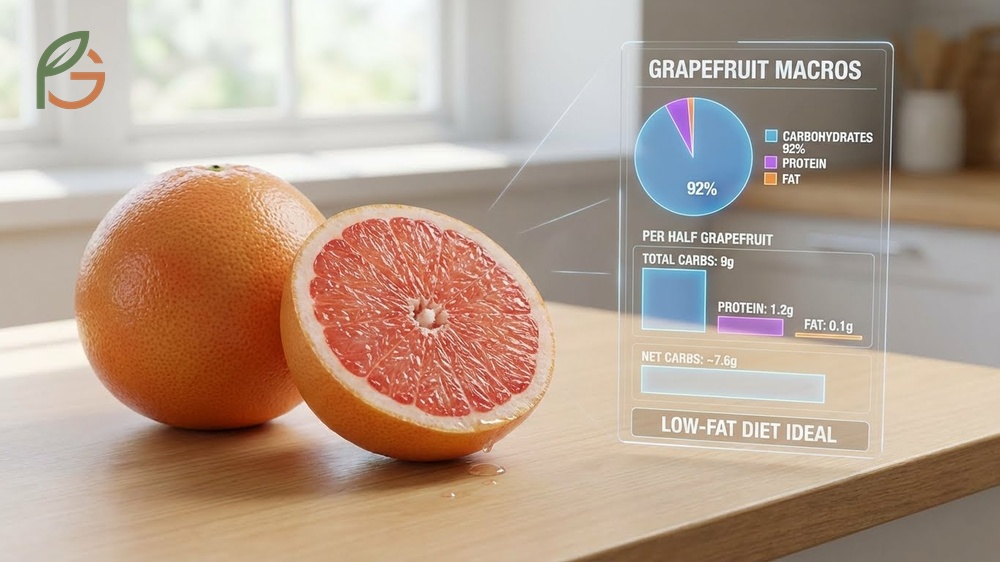
The macronutrient breakdown of grapefruit favors carbohydrates at approximately 92% of total calories. Half a medium grapefruit contains 9g total carbohydrates, 1.2g protein, and 0.1g fat[2]. This macro distribution makes grapefruit incompatible with high-fat diets but ideal for low-fat eating patterns.
Net carbohydrates (total carbs minus fiber) equal approximately 7.6g per half grapefruit. A whole medium fruit delivers 21g net carbs[3], which represents a significant portion of daily carb allowances for low-carb dieters. The minimal protein and fat content means grapefruit shouldn’t be your primary macronutrient source.
- Total calories: 80-97 depending on variety and ripeness[3]
- Carbohydrates: 25g total (21g net carbs after subtracting fiber)[3]
- Fiber: 4g (14% daily value for adults)[3]
- Protein: 2g (minimal contribution to protein needs)[3]
- Fat: 0g (essentially fat-free)[3]
- Sugar: 16-17g naturally occurring fructose and glucose
For macro tracking purposes, grapefruit functions primarily as a carbohydrate source with exceptional micronutrient density. Pairing grapefruit with protein sources (Greek yogurt, cottage cheese, nuts) creates better macronutrient balance for meals and snacks.
Macro Tip: If you’re tracking macros for fitness goals, count grapefruit toward your daily carbohydrate target but recognize it won’t contribute meaningfully to protein or fat requirements. Consider it a micronutrient-dense carb source rather than a complete food.
Calories in Grapefruit Juice
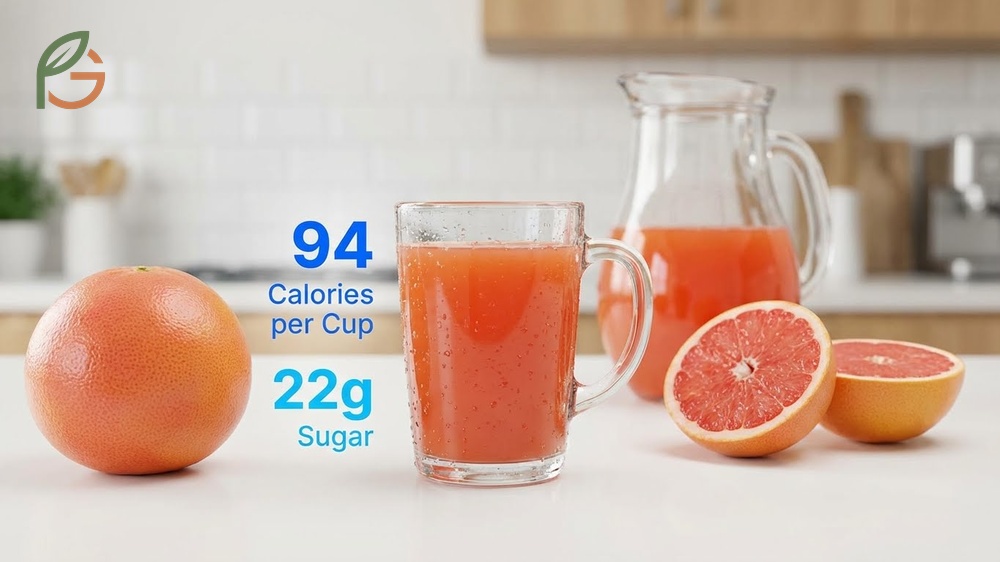
Grapefruit juice contains significantly more calories than whole fruit at 94 calories per cup (247g) of unsweetened, canned juice[4]. The calorie increase stems from juice concentration and fiber removal during processing. One cup of juice requires approximately 2-3 whole grapefruits to produce.
Research indicates grapefruit juice delivers 22g carbohydrates per cup, with 22g coming from sugar and only 0.2g from fiber[4]. This creates a faster blood sugar response compared to eating whole fruit. The vitamin C content remains high at 72mg per cup (80% daily value), but the tradeoff involves higher sugar intake and reduced satiety.
Freshly squeezed juice contains approximately 12 calories per ounce, translating to 96 calories for an 8-ounce glass. Sweetened commercial varieties can exceed 120-140 calories per cup depending on added sugars. Current dietary guidelines recommend choosing whole fruits over juices whenever possible to maximize fiber intake and minimize rapid sugar absorption.
- Whole fruit satiety: Higher due to fiber and chewing time required
- Juice absorption: Faster sugar entry into bloodstream without fiber buffer
- Calorie density: Juice delivers 2-3x more calories per volume than whole fruit
- Fiber content: Whole fruit provides 4g vs juice’s 0.2g per equivalent
- Vitamin C: Both deliver excellent amounts (46-72mg per serving)
- Medication interactions: Both juice and whole fruit affect drug metabolism equally
Studies on weight management show participants who consumed whole grapefruit before meals lost more weight than those drinking juice or taking supplements[5]. The fiber content and eating process contribute to greater satiety and reduced subsequent calorie intake.
Is Grapefruit Keto Friendly
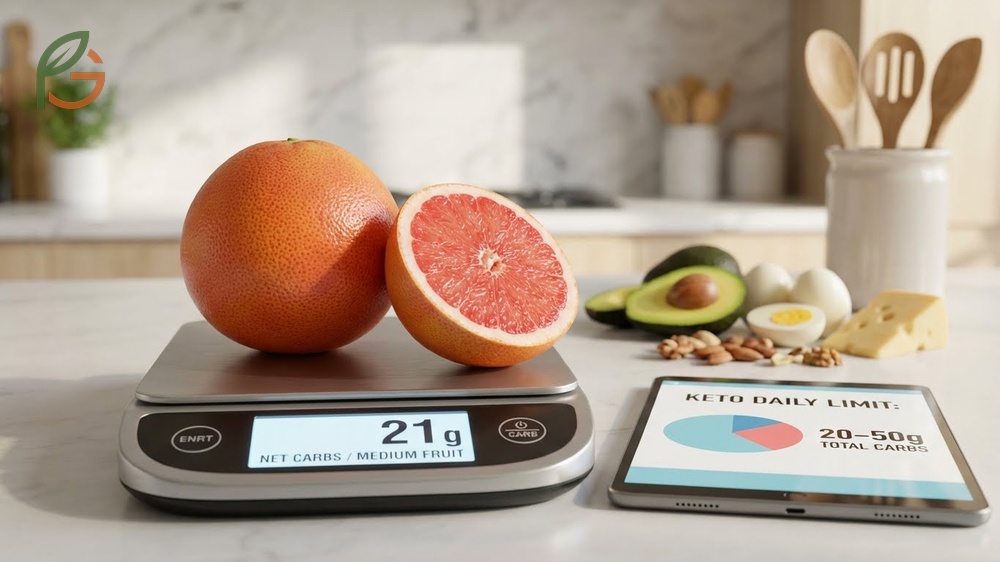
Grapefruit isn’t considered keto-friendly due to its 21g net carbs per medium fruit[3]. Most ketogenic diets restrict total daily carbs to 20-50g, meaning one grapefruit consumes nearly an entire day’s allowance. Evidence shows half a grapefruit (10.5g net carbs) could fit into flexible keto plans if carefully balanced with other low-carb foods.
The minimal fat and protein content further limits grapefruit’s compatibility with ketogenic macros. Keto diets typically require 70-75% calories from fat, 20-25% from protein, and only 5-10% from carbs. Grapefruit’s 92% carbohydrate macro split contradicts these ratios fundamentally.
Some modified low-carb approaches allow small amounts of grapefruit. Consuming 2-3 grapefruit segments (approximately 3-4g net carbs) provides citrus flavor and vitamin C without significantly impacting ketosis. This limited serving size works better as a flavor addition rather than a substantial food portion.
| Fruit | Net Carbs (100g) | Keto Status |
|---|---|---|
| Grapefruit | 9g | Not recommended |
| Avocado | 2g | Excellent |
| Strawberries | 6g | Moderate portions OK |
| Raspberries | 5g | Small portions OK |
| Blackberries | 5g | Small portions OK |
For citrus alternatives on keto, consider lemon or lime juice in small quantities (1-2 tablespoons provide 1-2g net carbs). These options deliver citrus flavor and vitamin C without the carbohydrate load of whole grapefruit. Berry options like strawberries and raspberries offer lower net carbs with similar antioxidant benefits.
Conclusion
The evidence is clear: how many calories in a grapefruit depends on size and preparation, with half a medium fruit delivering just 40 calories alongside exceptional vitamin C content[1]. Current nutrition science supports grapefruit as a valuable addition to calorie-conscious diets when medication interactions don’t pose concerns.
Research demonstrates whole grapefruit surpasses juice for weight management and satiety benefits[5]. FruitGarden recommends choosing fresh grapefruit over processed forms to maximize nutritional benefits while controlling calorie intake. Remember to check with your healthcare provider before adding grapefruit to your routine if you take prescription medications.
Medical Disclaimer
Important Medical Disclaimer: This content is for informational and educational purposes only. It is not intended as a substitute for professional medical advice, diagnosis, or treatment. Always consult a qualified healthcare professional before making any changes to your diet, medication, or health routine, especially if you take prescription medications that may interact with grapefruit. Grapefruit can significantly affect how your body metabolizes certain drugs including statins, calcium channel blockers, immunosuppressants, and psychiatric medications. Never discontinue medications or alter your diet without professional medical guidance.
Frequently Asked Questions
How Many Calories in Half a Grapefruit?
Half a medium grapefruit contains 40 calories with 9g carbohydrates and 1.4g fiber. This serving size provides 51% of your daily vitamin C needs while contributing minimal calories to your diet. The low calorie density makes half a grapefruit an excellent choice for weight management and nutrient-dense snacking.
How Much Vitamin C in a Grapefruit?
A whole medium grapefruit delivers approximately 92mg vitamin C, which covers 100% of the recommended daily intake for most adults. Half a grapefruit provides 46mg (51% daily value), making it one of the richest vitamin C sources available. This antioxidant vitamin supports immune function, collagen production, and iron absorption.
How Much Sugar Is in a Pink Grapefruit?
Pink grapefruit contains approximately 8g natural sugar per half serving and 16-17g per whole medium fruit. These naturally occurring sugars consist primarily of fructose and glucose. The fiber content (1.4g per half) helps moderate blood sugar response compared to refined sugar or fruit juices without fiber.
Does Grapefruit Help With Weight Loss?
Research published by the National Institutes of Health shows eating half a fresh grapefruit before meals was associated with significant weight loss compared to placebo groups. The study found participants lost more weight when consuming whole grapefruit versus juice or supplements. The combination of fiber, water content, and low calorie density contributes to increased satiety and reduced calorie intake at subsequent meals.
How Many Calories Are in a Large Grapefruit?
A large grapefruit weighing 280-300g contains approximately 110-120 calories with 28-30g total carbohydrates. Large red grapefruits at the higher end of this size range may reach 135 calories. The increased size proportionally increases all nutrients including vitamin C, fiber, and natural sugars.
What’s the Difference Between Red and Pink Grapefruit Nutrition?
Red and pink grapefruits contain identical calorie counts (40 per half) and macronutrient profiles. The primary difference lies in antioxidant content, with deeper red varieties containing more lycopene and beta-carotene. Both colors provide 46mg vitamin C per half serving and 1.4g fiber. Color choice can be based purely on taste preference since nutritional differences are minimal.
Can I Eat Grapefruit on a Low-Carb Diet?
Grapefruit contains 21g net carbs per medium fruit, which makes it challenging for strict low-carb or ketogenic diets limiting carbs to 20-50g daily. However, half a grapefruit (10.5g net carbs) or 2-3 segments (3-4g net carbs) can fit into flexible low-carb approaches when carefully tracked. The fruit’s high carbohydrate percentage (92% of calories) and minimal fat content don’t align well with ketogenic macro ratios requiring 70-75% fat.





