
Grapefruit tree care involves deep weekly watering, regular nitrogen fertilization, and proactive pest management to produce healthy fruit. Research shows these subtropical trees thrive in warm climates with temperatures between 70-90°F (21-32°C) and at least 6-8 hours of daily sunlight[1]. FruitGarden synthesizes current horticultural research to help home gardeners maximize citrus yields through evidence-based cultivation methods.
Quick Answer
- Water deeply once weekly, ensuring soil stays moist 8-12 inches below the surface[2]
- Apply balanced citrus fertilizer with NPK ratios of 8-8-8 or 10-10-10 in early spring and mid-summer[2]
- Maintain full sun exposure with 6-8 hours of direct sunlight daily for optimal fruit production[1]
- Monitor for common pests like scale insects, aphids, and citrus mites during growing season
Grapefruit Tree Care
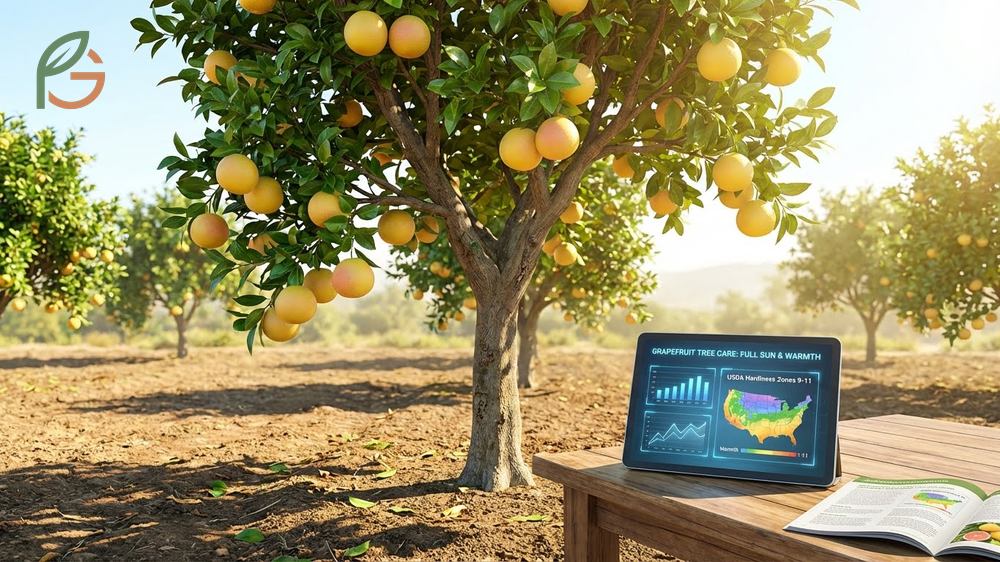
Successful grapefruit cultivation starts with understanding these citrus trees’ specific environmental needs. Studies demonstrate that grapefruit trees perform best in USDA Hardiness Zones 9-11, where they can access consistent warmth and protection from freezing temperatures[1]. These subtropical plants don’t tolerate shade well—they’re shade-intolerant and need full sun exposure to develop quality fruit.
Current horticultural data shows that maintaining tree vigor through proper nutrition and moisture prevents most common problems. When trees experience drought or nutrient stress, they become more susceptible to scale insects and other pest infestations[3]. The foundation of healthy grapefruit tree care lies in creating optimal growing conditions before problems arise.
Home gardeners should focus on three primary care components: consistent watering schedules, balanced fertilization programs, and proactive pest monitoring. Research across citrus-growing regions confirms these practices result in higher yields and better fruit quality compared to reactive management approaches.
Climate and Temperature Needs
Grapefruit trees thrive in temperatures ranging from 70-90°F (21-32°C) and can tolerate brief cold snaps down to 26-28°F (-3 to -2°C)[4]. Young trees are more vulnerable to cold damage than mature specimens. Frost and freezing temperatures can kill tender new growth and damage developing fruit, making site selection critical in borderline climate zones.
For protection during cold weather, plant trees near south-facing walls that radiate stored heat. Cover young trees with frost cloth when temperatures drop below 32°F (0°C), and apply thick mulch layers around the root zone to insulate against temperature fluctuations.
From My Experience: My cousin in Guadalajara, Mexico planted a Rio Red grapefruit tree in February 2023. Despite cooler spring temperatures averaging 65°F (18°C), the tree established well and produced its first fruit within 18 months—matching the typical timeline from regional research.
Soil Requirements
Research indicates grapefruit trees prefer light, well-drained sandy loam soil with slightly acidic pH levels. Proper drainage is crucial since citrus roots are extremely sensitive to waterlogged conditions. When soil stays saturated, root rot fungi can establish quickly and kill even mature trees within weeks.
Adding organic matter during planting improves soil structure and provides slow-release nutrients. Mix compost or aged manure into the planting hole, but keep amendments away from direct root contact to prevent burning tender feeder roots.
Watering and Fertilizing Grapefruit
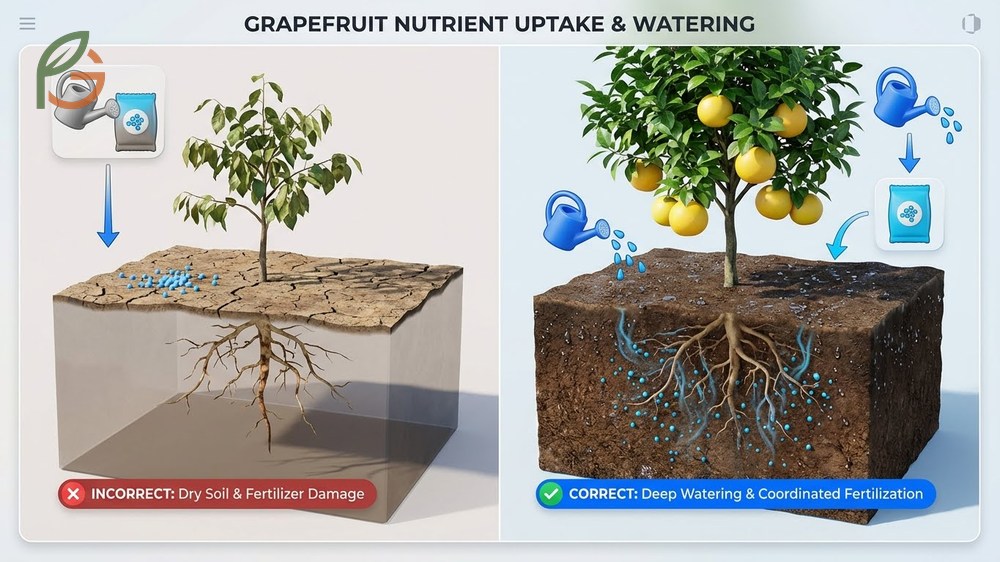
Evidence shows that coordinating watering and fertilization schedules maximizes nutrient uptake and prevents waste. Applying fertilizer to dry soil can damage roots, while fertilizing waterlogged soil leads to nutrient leaching before trees can absorb it[5]. The relationship between water availability and nutrient absorption determines how effectively trees convert fertilizer into growth and fruit production.
Most grapefruit growers see best results with deep, infrequent watering combined with regular feeding during active growth periods. This approach encourages deep root development while maintaining consistent nutrient availability throughout the growing season.
Watering Schedule
Water newly planted grapefruit trees every 3-4 days for the first two weeks to help roots establish in their new location[6]. After establishment, transition to weekly deep watering sessions that penetrate 8-12 inches into the soil. During hot, dry periods, increase watering frequency to twice weekly, monitoring soil moisture with your finger or a moisture meter.
Never wait until trees show drought stress before watering. Wilted leaves indicate severe water shortage that can damage fruit quality and reduce next season’s bloom. Consistent moisture prevents fruit splitting and maintains steady growth rates.
- Water in early morning to reduce evaporation losses
- Apply water at the drip line where feeder roots concentrate
- Use drip irrigation or soaker hoses for efficient deep watering
- Check soil moisture before watering—top 2-3 inches should feel dry
- Reduce watering frequency in fall as trees prepare for dormancy
- Avoid overhead watering that wets foliage and promotes fungal diseases
Important Note: Overwatering causes more problems than underwatering for established grapefruit trees. Yellow leaves, fruit drop, and stunted growth often signal waterlogged roots rather than drought stress.
Fertilizer Application
Most mature citrus trees require regular nitrogen fertilization, as this nutrient typically limits growth more than other elements[7]. University research recommends applying nitrogen in January or February just prior to bloom, with second applications in May and possibly a third in June for high-production trees. Balanced fertilizers with NPK ratios of 8-8-8 or 10-10-10 work well for home landscapes.
Apply fertilizer evenly beneath the tree canopy, concentrating around the drip line where active feeder roots absorb nutrients most efficiently. Avoid placing fertilizer against the trunk, which can damage bark and create entry points for pests and diseases. Young trees need lighter feeding—use ¼ to ½ pounds of nitrogen per year of tree age, increasing to 1-1.5 pounds maximum for mature specimens.
This table compares fertilizer timing, amounts, and specific nutrients for young versus mature grapefruit trees across three seasonal applications
| Application Period | Young Trees (1-3 years) | Mature Trees (4+ years) | Key Nutrients |
|---|---|---|---|
| Early Spring (Jan-Feb) | 0.25-0.5 lbs nitrogen | 1-1.5 lbs nitrogen[7] | Nitrogen, phosphorus |
| Late Spring (May) | 0.25-0.5 lbs nitrogen | 1-1.5 lbs nitrogen | Nitrogen, potassium |
| Early Summer (June-July) | Optional light feeding | 0.5-1 lb nitrogen (if needed) | Nitrogen, micronutrients |
| Fall (Sept-Oct) | AVOID—cold damage risk | AVOID—cold damage risk | None |
- Stop fertilizing in late summer and fall to prevent cold-sensitive new growth
- Water deeply before and after applying granular fertilizers
- Consider soil testing every 2-3 years to monitor nutrient levels
- Apply micronutrients like zinc and iron if leaf yellowing appears between veins
- Use slow-release fertilizers to provide steady nutrition over 3-4 months
Pruning Grapefruit Trees
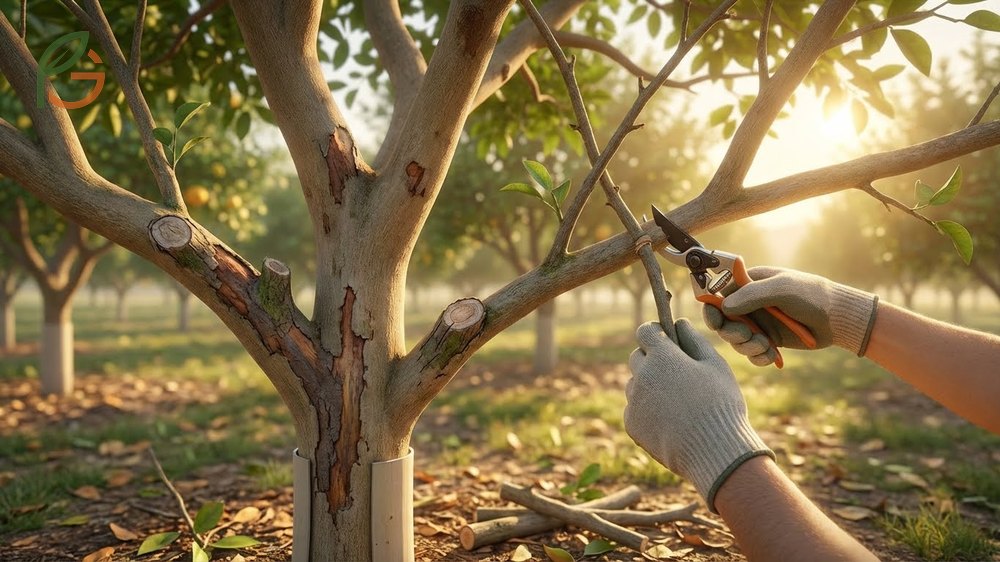
Research shows that grapefruit trees need minimal pruning compared to other fruit trees, but strategic cuts maintain tree health and improve fruit quality. The primary goals are removing dead or damaged wood, opening the canopy for air circulation, and preventing sunscald on exposed bark. Excessive pruning can expose sensitive bark to direct sunlight, causing permanent damage that takes years to heal.
The best time for pruning is late winter or early spring before new growth begins. This timing allows wounds to heal quickly as the growing season starts and minimizes stress on the tree. Never remove more than 25% of the canopy in a single year, as heavy pruning shocks trees and reduces the following season’s fruit production.
A full canopy of leaves protects trunk and scaffold branch bark from direct sun exposure, which can kill tissue in hot climates. If pruning exposes previously shaded bark, whitewash those areas immediately to prevent sunburn damage. Focus on maintaining dappled sunlight throughout the canopy rather than creating open spaces where harsh light reaches interior wood.
Pruning Warning: Citrus bark is thin and easily damaged by intense sunlight. Sunscald can kill young trees and may take years for mature trees to recover from bark damage.
Thin fruit when trees set heavy crops to improve size and quality of remaining grapefruits. Space fruit 2-6 inches apart depending on tree size and variety. This practice reduces branch breakage from excessive weight and concentrates the tree’s energy into fewer, larger fruits with better flavor and juice content.
Pest and Disease Management
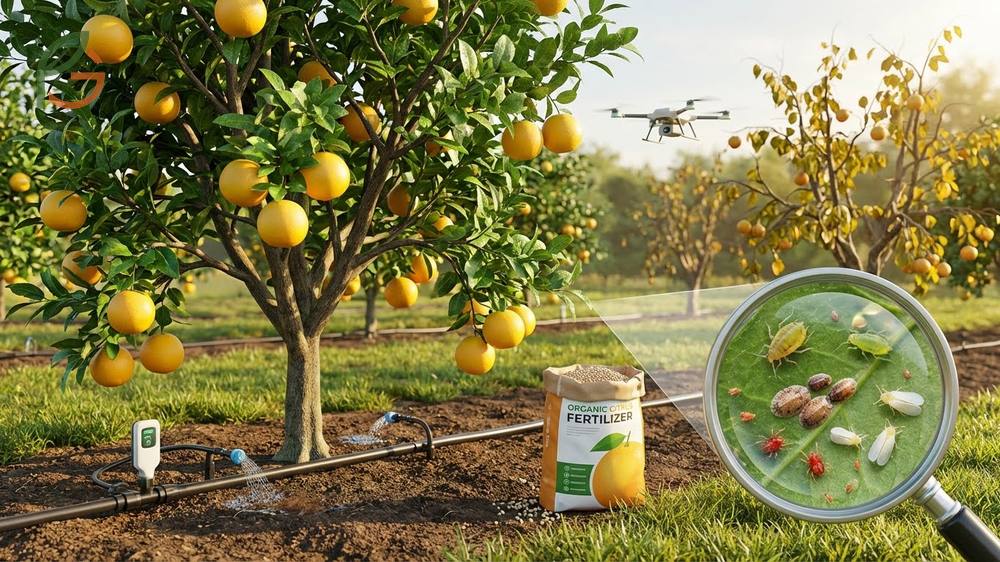
Current data indicates that healthy, well-maintained trees resist pest infestations better than stressed specimens. Most citrus pests target weakened trees suffering from drought, poor nutrition, or improper growing conditions[3]. Preventive care through proper watering and fertilization forms the foundation of effective pest management strategies.
Common grapefruit pests include scale insects, aphids, citrus mites, and whiteflies. Regular monitoring catches infestations early when they’re easier to control. Inspect leaves, branches, and developing fruit every two weeks during the growing season, paying special attention to new growth where pests congregate.
Scale insects rank among the most damaging citrus pests. California red scale appears as reddish-brown spots on fruit, stems, and leaves, with adult females producing 100-150 crawlers that disperse across the tree[3]. Purple scale and Florida red scale cause similar damage, preferring shaded interior branches where dense foliage protects them from natural predators.
- Remove and destroy heavily infested branches to reduce pest populations
- Encourage beneficial insects like ladybugs and lacewings that feed on aphids
- Apply horticultural oil sprays to smother scale insects during dormant season
- Maintain good air circulation through proper spacing and selective pruning
- Avoid overhead watering that promotes fungal diseases on foliage
- Clean up fallen leaves and fruit that harbor disease organisms
- Monitor for Asian citrus psyllid if you’re in affected regions—it spreads deadly citrus greening disease
For fungal diseases like black spot, downy mildew, and citrus scab, prevention works better than treatment. Ensure adequate spacing between trees for air movement, and apply copper-based fungicides monthly during spring and autumn when conditions favor disease development. Remove infected fruit and leaves promptly, destroying them rather than composting to prevent disease spread.
Disease Prevention: Good drainage is essential—Phytophthora root rot thrives in waterlogged soil and can kill mature trees. Plant in raised beds if your soil drains poorly, and never let water pool around the trunk.
Sunlight Requirements for Grapefruit
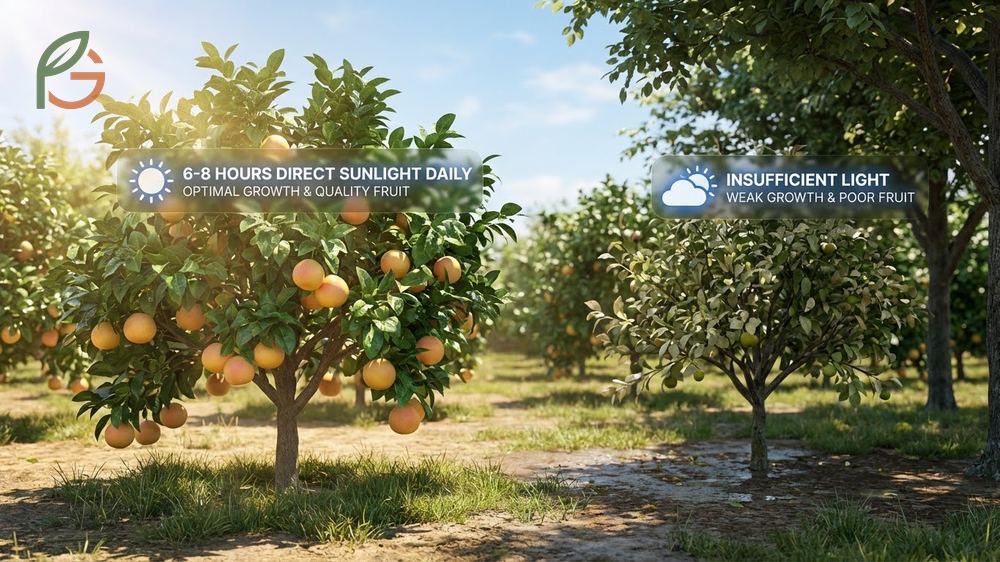
Grapefruit trees are shade-intolerant and require full sun exposure to produce quality fruit. Research confirms that trees need at least 6-8 hours of direct sunlight daily for optimal growth and fruit development[1]. Insufficient light results in weak, spindly growth, reduced flowering, and poor fruit quality with low sugar content and excessive acidity.
Sunlight influences multiple aspects of citrus physiology beyond photosynthesis. Adequate light exposure enhances fruit color development, increases juice sugar content, and improves peel thickness. Trees grown in partial shade often produce misshapen fruit with pale color and inferior flavor compared to specimens receiving full sun.
When selecting planting sites, choose locations away from buildings, large trees, or other structures that cast afternoon shade. South-facing positions receive maximum sun exposure in northern hemisphere locations, while avoiding low spots where cold air settles during winter nights. Trees can adapt to various soil types and moisture levels, but they can’t compensate for inadequate sunlight through other cultural practices.
Conclusion
The evidence is clear: successful grapefruit tree care depends on consistent watering schedules, balanced fertilization programs, and proactive pest monitoring. Trees that receive deep weekly irrigation, nitrogen-rich fertilizer applications timed with growth cycles, and at least 6-8 hours of daily sunlight produce higher yields with better fruit quality. Current horticultural guidance emphasizes preventive maintenance over reactive treatments—healthy trees naturally resist most pest and disease problems that plague stressed specimens.
Home gardeners who master these fundamental practices can expect productive grapefruit harvests for 50+ years from well-maintained trees. FruitGarden provides research-based cultivation strategies that help fruit growers optimize their citrus production through evidence-based horticultural methods.
Frequently Asked Questions
How often should I water my grapefruit tree?
Water established grapefruit trees deeply once per week, ensuring moisture penetrates 8-12 inches into the soil. Newly planted trees need watering every 3-4 days for the first two weeks. Increase frequency to twice weekly during hot, dry weather, but always check soil moisture first—overwatering causes more problems than underwatering.
What’s the best fertilizer for grapefruit trees?
Use balanced citrus fertilizers with NPK ratios of 8-8-8 or 10-10-10 for home landscapes. Apply in early spring before bloom and again in mid-summer during active growth. Mature trees need 1-1.5 pounds of nitrogen annually, while young trees require only ¼ to ½ pounds per year of tree age. Avoid fertilizing in late summer or fall to prevent cold-sensitive new growth.
When should I prune my grapefruit tree?
Prune grapefruit trees in late winter or early spring before new growth starts. Remove dead or damaged branches, thin crowded areas for better air circulation, and maintain a full canopy to protect bark from sunburn. Never remove more than 25% of the canopy in a single year, as heavy pruning reduces the following season’s fruit production.
How much sunlight do grapefruit trees need?
Grapefruit trees require at least 6-8 hours of direct sunlight daily for optimal fruit production. These shade-intolerant plants won’t produce quality fruit in partial shade. Insufficient light causes weak growth, reduced flowering, and poor fruit quality with low sugar content. Choose south-facing planting sites away from structures that cast afternoon shade.
What temperature can grapefruit trees tolerate?
Grapefruit trees thrive in temperatures between 70-90°F (21-32°C) and can survive brief cold snaps down to 26-28°F (-3 to -2°C). Young trees are more vulnerable to cold damage than mature specimens. Protect trees from frost by covering them with frost cloth when temperatures drop below 32°F (0°C), and plant near south-facing walls for added warmth.
How do I control scale insects on my grapefruit tree?
Control scale insects through integrated pest management combining cultural practices and targeted treatments. Maintain tree vigor with proper watering and fertilization—stressed trees are more susceptible to infestations. Remove heavily infested branches, apply horticultural oil sprays during dormant season to smother scales, and encourage beneficial insects that prey on scale crawlers.
Why are my grapefruit tree leaves turning yellow?
Yellow leaves typically indicate overwatering, nitrogen deficiency, or poor drainage causing root problems. Check soil moisture—waterlogged roots can’t absorb nutrients properly. If drainage is adequate, apply nitrogen fertilizer following recommended rates. Yellow leaves with green veins suggest iron or zinc deficiency, which responds to foliar micronutrient sprays.





