
Grapefruit essential oil benefits include powerful skin brightening, natural antibacterial properties for acne treatment, and uplifting aromatherapy effects that reduce stress and boost energy levels[1]. Research shows this citrus oil contains high levels of d-limonene and vitamin C, which provide antioxidant protection and promote collagen synthesis for healthier, more radiant skin[2]. FruitGarden synthesizes current aromatherapy research to help you understand how grapefruit essential oil works for both topical and aromatic applications.
Quick Answer
- Contains d-limonene with antibacterial and anti-inflammatory properties for treating acne and skin infections[2]
- Brightens skin tone and reduces dark spots through high vitamin C content[2]
- Reduces cellulite appearance when applied topically with carrier oils at 1-2% dilution[3]
- Can be used at up to 4% dilution without phototoxicity risk, unlike lemon oil which requires 2% maximum[4]
Grapefruit Essential Oil Benefits
Grapefruit essential oil offers powerful therapeutic benefits for both skin health and emotional well-being. The oil’s main active compound, d-limonene, provides antibacterial, anti-microbial, and anti-fungal properties that protect skin from infections while promoting healing[2]. Studies demonstrate that grapefruit oil’s high vitamin C content helps calm inflammation from conditions like eczema, rosacea, and psoriasis[2].
Research shows that monoterpenes in grapefruit oil penetrate skin quickly due to their smaller molecular structure, delivering healing components directly to affected areas. This rapid absorption activates white blood cells and supports overall immune function at the skin level[5]. The oil also acts as a natural astringent, helping control excess sebum production in oily and acne-prone skin.
Evidence indicates that grapefruit essential oil boosts circulation when applied topically, reducing the appearance of dull, tired skin while promoting a more radiant complexion. The detoxifying properties help purify skin by eliminating toxins and supporting the lymphatic system[5].
Skin Brightening Properties
Grapefruit oil’s high antioxidant content supports natural skin renewal processes, helping fade dark spots and hyperpigmentation over time. The vitamin C in the oil inhibits melanin production while promoting collagen synthesis, leading to brighter, more even-toned skin[2]. This makes it particularly effective for addressing sun damage and age-related discoloration.
When used consistently at proper dilutions, grapefruit essential oil helps reduce the appearance of fine lines and wrinkles. The increased collagen production encourages new tissue growth, resulting in firmer, more youthful-looking skin.
Antibacterial and Wound Healing
Current research confirms grapefruit oil’s effectiveness in wound healing applications, including tattoo aftercare, cuts, and inflammatory skin conditions. The oil’s antiseptic properties keep vulnerable areas clean while high antioxidant levels reduce inflammatory responses[2]. Products containing 2% grapefruit essential oil combined with calendula demonstrate enhanced healing rates and better infection protection.
The antibacterial action helps treat dry, itchy skin associated with weather changes or conditions like eczema. By fighting bacteria and preventing infection, grapefruit oil supports the skin’s natural healing process while maintaining a balanced microbiome.
Grapefruit Oil Skin Benefits
Studies show grapefruit essential oil delivers specific therapeutic benefits for common skin concerns when properly diluted and applied. The oil’s natural astringent properties make it ideal for oily, acne-prone skin formulations, while its purifying effects benefit those seeking clearer, healthier-looking complexions[5]. Evidence suggests that regular use can transform skin texture and appearance within several weeks of consistent application.
For facial skincare, experts recommend 0.5-1% dilution to prevent sensitivity while maximizing benefits. Body products can safely contain 2-3% grapefruit essential oil for enhanced therapeutic effects[5].
Acne Treatment
Grapefruit essential oil provides effective acne treatment through multiple mechanisms. The oil’s antibacterial properties target acne-causing bacteria while reducing inflammation and redness associated with breakouts[1]. Its natural astringent action helps minimize pore appearance and control excess oil production that contributes to acne formation.
When incorporated into cleansing products or spot treatments, grapefruit oil helps prevent new breakouts while healing existing blemishes. The vitamin C content supports skin repair, reducing the likelihood of post-acne scarring and hyperpigmentation.
- Kills acne-causing bacteria without harsh chemicals or antibiotics
- Reduces inflammation and redness around active breakouts
- Controls excess sebum production that clogs pores
- Minimizes pore appearance through natural astringent effects
- Prevents post-acne scarring with vitamin C content
- Balances skin pH for healthier complexion overall
Cellulite Reduction
According to a 2017 review published in Evidence-Based Complementary and Alternative Medicine, grapefruit essential oil demonstrates effectiveness as a cellulite treatment when applied topically[3]. The oil’s lipolytic properties help break down fat deposits beneath the skin while improving circulation to affected areas. Research indicates that consistent application with proper dilution in carrier oils yields visible improvements over 8-12 weeks.
The oil’s draining effect reduces swelling in cellulite-affected tissues by stimulating the lymphatic system. This detoxification process helps eliminate toxins that contribute to cellulite formation and prevents further development[6].
Important Note: For cellulite treatment, grapefruit essential oil must be diluted to 1-2% in carrier oils and applied through massage to affected areas. Results require consistent application 2-3 times weekly for at least 2 months.
Grapefruit Aromatherapy Oil Benefits
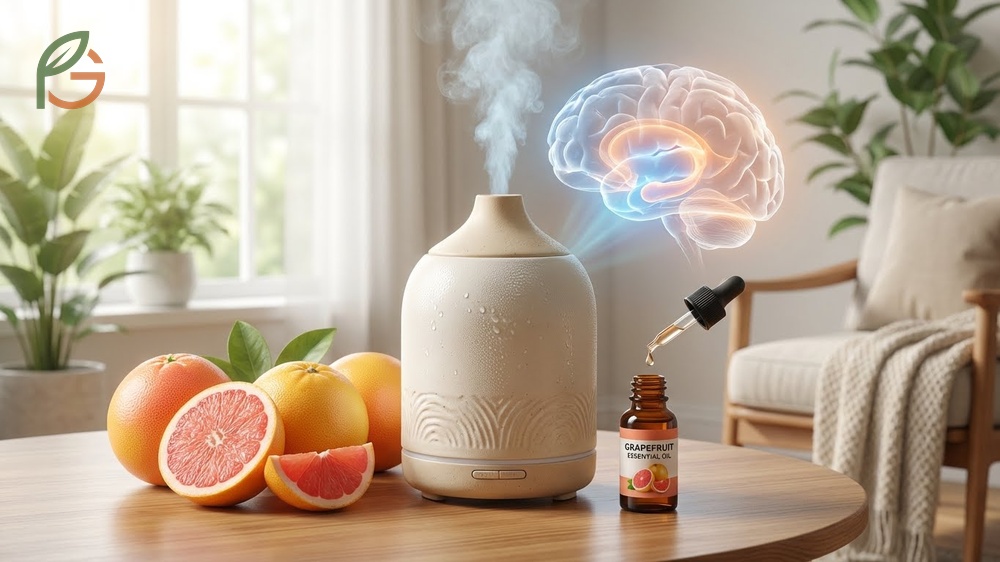
Current aromatherapy research demonstrates that grapefruit essential oil provides powerful emotional and mental health benefits through inhalation. The oil’s fresh, uplifting scent helps manage stressful and anxious feelings while enhancing energy levels and mental clarity[7]. Studies show that citrus aromas like grapefruit activate the limbic system, triggering positive emotional responses and reducing cortisol levels.
Evidence indicates that diffusing grapefruit oil creates an environment that boosts focus and concentration. This makes it particularly valuable for work or study sessions where mental performance matters. The refreshing aroma helps combat mental fatigue while promoting a sense of well-being and positivity.
Grapefruit oil’s mood-enhancing properties work well for reducing symptoms of stress, anxiety, and mild depression. The invigorating scent provides comfort and relief from negative emotional states without sedative effects, making it suitable for daytime use.
Grapefruit Essential Oil Blends
Grapefruit essential oil combines beautifully with other essential oils to create synergistic aromatherapy blends. These combinations enhance specific benefits while creating more complex, appealing aromas for diffusers and personal inhalers.
- Grapefruit and Lemon: Enhances focus and clarity while providing uplifting energy for work sessions
- Grapefruit and Sweet Orange: Creates joyful atmosphere with stress-relieving properties reminiscent of sunny days
- Grapefruit and Peppermint: Delivers refreshing energy boost with improved mental alertness (3 drops grapefruit, 2 drops peppermint)
- Grapefruit and Geranium: Balances emotions while promoting healthy skin in aromatherapy applications
- Grapefruit and Ginger: Combines uplifting effects with soothing relaxation for stress management
- Grapefruit and White Fir: Energizes while grounding, perfect for clearing mental fog and improving concentration
These blends work in diffusers, personal inhalers, or DIY room sprays. For diffusers, use 3-5 drops total of combined oils per 100ml of water. Adjust ratios based on personal preference and desired effects.
How to Use Grapefruit Essential Oil
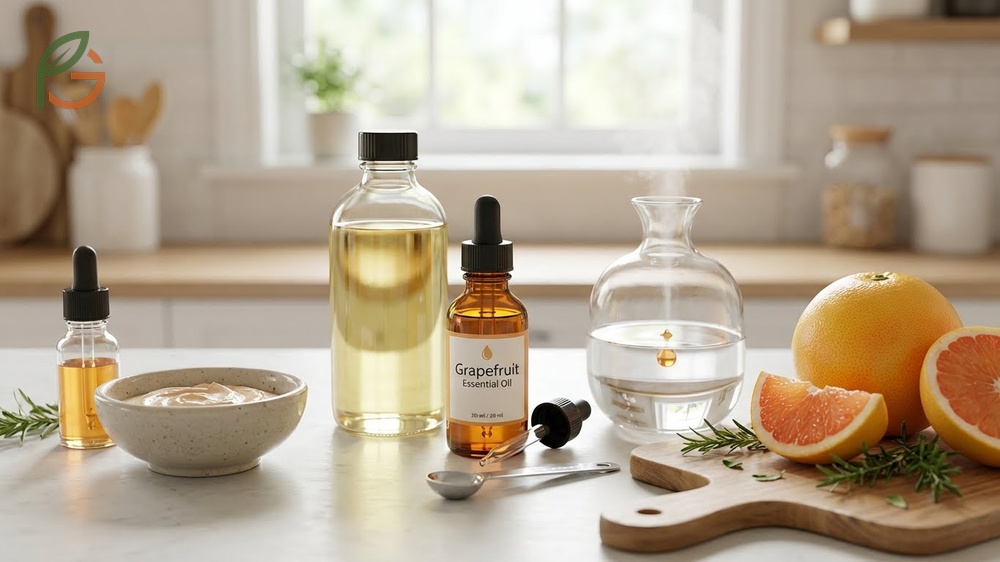
Proper dilution ensures safe, effective use of grapefruit essential oil for topical applications. For facial products like masks or serums, use 1% dilution or less to prevent sensitivity—this equals 1 drop of essential oil per teaspoon (5ml) of carrier oil. Body products including massage oils can safely contain 2% dilution, which equals 2 drops per teaspoon of carrier[8].
For aromatherapy use, add 3-5 drops of grapefruit essential oil to a diffuser with 100ml of water. Run for 30-60 minutes in well-ventilated spaces. You can also create personal inhalers by adding 10-15 drops to inhaler wicks, or make room sprays by combining 20 drops with 4 ounces of water in a spray bottle.
When applying topically, always perform a patch test first. Apply a small amount of diluted oil to the inner forearm and wait 24 hours to check for reactions. Avoid applying grapefruit oil to broken or irritated skin without professional guidance.
Carrier Oils for Grapefruit Oil
Selecting the right carrier oil maximizes grapefruit essential oil’s benefits while ensuring safe application. Different carrier oils offer unique properties that complement grapefruit oil’s therapeutic effects.
This table compares four popular carrier oils for grapefruit essential oil, showing absorption speed, best uses, and recommended dilution percentages
| Carrier Oil | Absorption Rate | Best For | Dilution |
|---|---|---|---|
| Jojoba Oil | Moderate | Facial applications, acne-prone skin | 0.5-1% |
| Sweet Almond Oil | Slow | Body massage, cellulite treatment | 1-2% |
| Fractionated Coconut Oil | Fast | General purpose, hair treatments | 1-2% |
| Grapeseed Oil | Fast | Oily skin, body applications | 1-3% |
Grapefruit Oil for Hair
Grapefruit essential oil benefits hair health by facilitating complete closure of hair cuticle scales, making hair fiber smooth and manageable. The oil’s antiseptic properties provide tonic effects that stimulate the scalp while combating buildup from styling products[6].
Add 2-3 drops of grapefruit essential oil to your regular shampoo or conditioner, or create a pre-wash scalp treatment by mixing 5 drops with 2 tablespoons of jojoba oil. Massage into scalp, leave for 15-20 minutes, then wash as normal. This treatment helps remove excess oil while promoting healthier hair growth and adding natural shine.
Hair Care Tip: Don’t apply grapefruit oil directly to scalp without dilution. Always mix with carrier oils or add to hair products to prevent irritation and ensure even distribution.
Phototoxicity of Grapefruit Oil
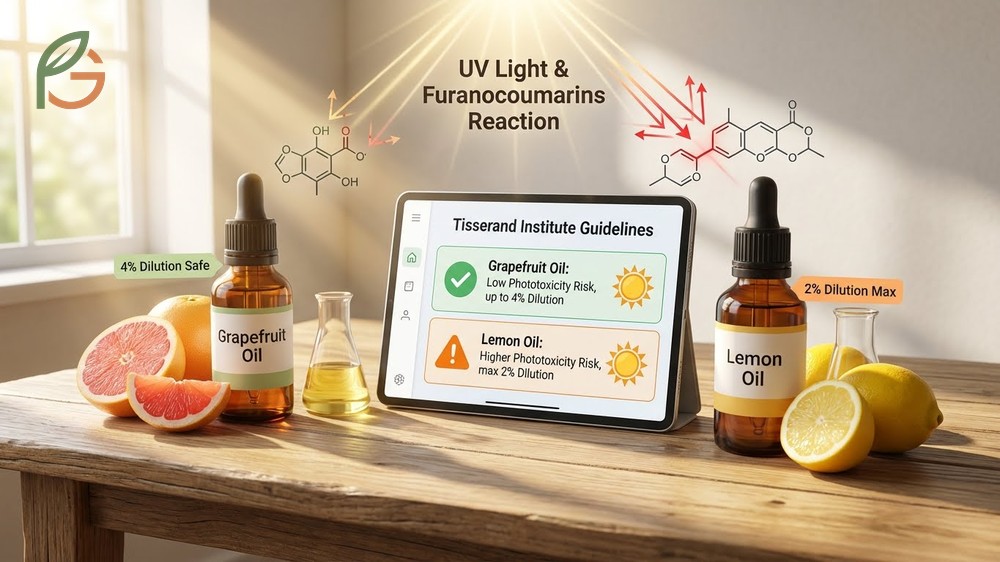
Unlike some citrus oils, grapefruit essential oil has relatively low phototoxicity risk when used at recommended dilutions. The Tisserand Institute guidelines indicate that grapefruit oil can be safely used at up to 4% dilution without significant phototoxic reactions, compared to lemon oil which requires a maximum 2% dilution to avoid sun sensitivity[4].
Phototoxicity occurs when certain compounds called furanocoumarins in essential oils react with UV light, potentially causing skin burns or pigmentation. However, expressed grapefruit oil contains lower levels of these compounds compared to bergamot or lime oils. Research shows that bergapten-free versions of citrus oils eliminate phototoxicity concerns entirely[9].
For maximum safety, avoid sun exposure or UV tanning for 12-24 hours after applying grapefruit oil to skin. If you plan outdoor activities, apply grapefruit oil products in the evening or choose distilled grapefruit oil varieties, which contain minimal phototoxic compounds. The IFRA safety guidelines recommend keeping bergapten concentration below 15 ppm in leave-on skincare products[9].
Not all citrus oils carry equal phototoxicity risks. Phototoxic reactions only occur when oils remain on skin and get exposed to UV rays at concentrations exceeding safety thresholds. Proper dilution and timing eliminate most concerns with grapefruit essential oil use.
Conclusion
The evidence is clear: grapefruit essential oil benefits extend far beyond pleasant fragrance, offering proven therapeutic effects for skin health and emotional well-being. Research demonstrates that when properly diluted and applied, this citrus oil delivers antibacterial protection, brightens skin tone, reduces cellulite, treats acne, and provides uplifting aromatherapy benefits that enhance daily life.
Current guidance emphasizes safe usage practices including proper dilution ratios, awareness of phototoxicity limits, and selection of quality carrier oils. FruitGarden encourages readers to start with lower dilutions and patch testing, gradually increasing concentration as your skin adapts. Whether you’re addressing specific skin concerns or seeking natural mood enhancement, grapefruit essential oil offers a versatile, research-backed solution worth incorporating into your wellness routine.
Medical Disclaimer
Important Medical Disclaimer: This content is for informational and educational purposes only. It is not intended as a substitute for professional medical advice, diagnosis, or treatment. Always consult a qualified healthcare professional or dermatologist before using grapefruit essential oil, especially if you have sensitive skin, allergies, skin conditions, or are pregnant or nursing. Discontinue use if irritation occurs and seek medical attention if adverse reactions develop.
Frequently Asked Questions
What is grapefruit essential oil good for?
Grapefruit essential oil is excellent for treating acne, brightening skin tone, reducing cellulite appearance, and providing uplifting aromatherapy benefits that combat stress and boost energy. The oil’s antibacterial and antioxidant properties make it versatile for both skincare and emotional wellness applications.
Can I apply grapefruit essential oil directly to my skin?
No, never apply grapefruit essential oil undiluted to skin. Always dilute it in carrier oils at 0.5-1% for facial use or 1-2% for body applications. Direct application can cause severe irritation, burning, or allergic reactions due to the oil’s concentrated nature.
Does grapefruit oil cause sun sensitivity?
Grapefruit essential oil has low phototoxicity and can be used at up to 4% dilution without significant sun sensitivity risk. However, it’s safest to avoid direct sun exposure for 12-24 hours after topical application, or use the oil in evening routines to eliminate concerns.
How long does it take to see results from grapefruit oil for cellulite?
Research shows visible cellulite reduction typically occurs after 8-12 weeks of consistent application 2-3 times weekly. Results depend on proper dilution (1-2% in carrier oils), massage technique, and individual factors like skin type and cellulite severity.
What’s the difference between grapefruit essential oil and grapefruit seed extract?
Grapefruit essential oil is extracted from the peel through cold-pressing and used for aromatherapy and topical skincare. Grapefruit seed extract comes from seeds and pulp, typically used as a dietary supplement with different antimicrobial properties for internal use rather than topical application.
Can I use grapefruit essential oil on my hair?
Yes, grapefruit oil benefits hair by smoothing cuticles, adding shine, and treating oily scalp conditions. Add 2-3 drops to regular shampoo or create a scalp treatment with 5 drops in 2 tablespoons of carrier oil. Never apply undiluted to scalp.
Which essential oils blend well with grapefruit for energy?
Grapefruit blends excellently with peppermint, lemon, sweet orange, and basil for energy-boosting aromatherapy. A popular energizing blend uses 3 drops grapefruit, 3 drops basil, and 2 drops peppermint in a diffuser to enhance focus and reduce fatigue.





