
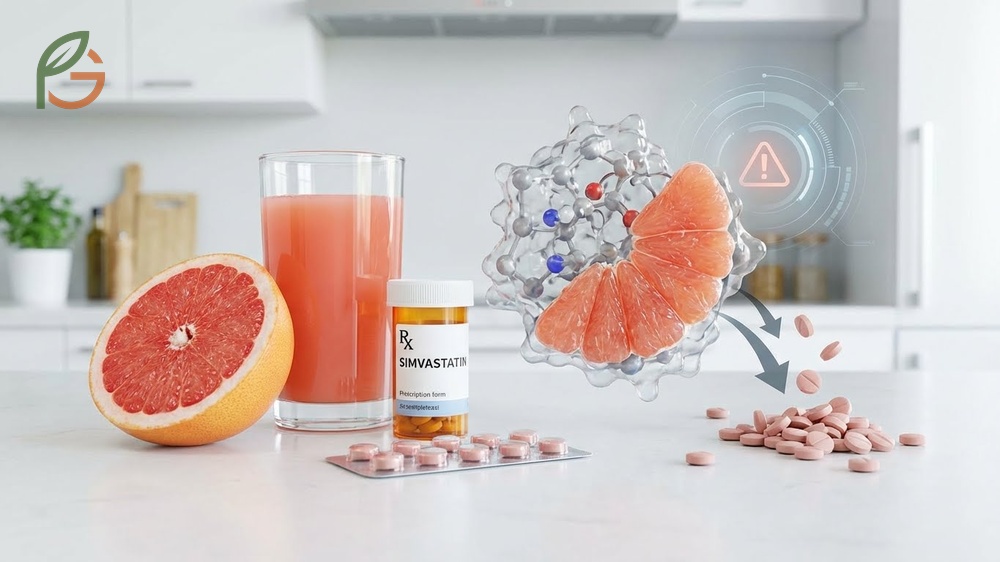
Grapefruit and statins don’t mix well because grapefruit blocks the enzyme that breaks down certain cholesterol medications. Research shows that consuming grapefruit juice with simvastatin or lovastatin increases blood levels by approximately 260% when taken together[1], significantly raising the risk of serious side effects. FruitGarden synthesizes current medical research to help you understand which grapefruits and medications require caution in your garden and diet.
Quick Answer
- Grapefruit increases simvastatin and lovastatin levels by 260% (same-time consumption) or 90% (12-hour separation)[1]
- Atorvastatin levels rise by approximately 80% regardless of timing[1]
- Just one whole grapefruit or 200 mL juice can cause clinically significant interactions[2]
- Safe statin alternatives include rosuvastatin, pravastatin, pitavastatin, and fluvastatin[3]
Grapefruit and Statins
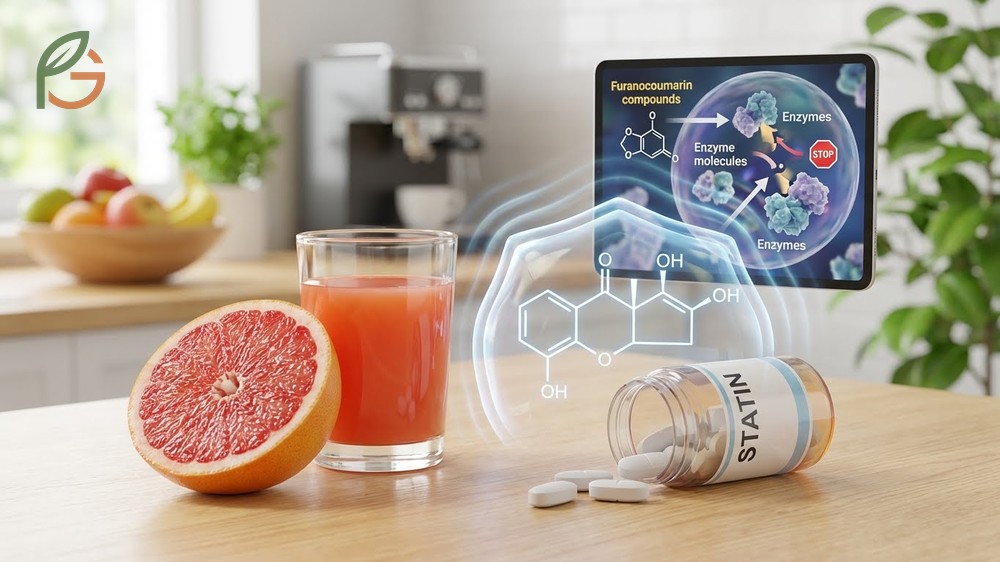
Studies demonstrate that grapefruit interferes with how your body processes certain cholesterol-lowering medications called statins. The compounds in grapefruit—primarily furanocoumarins like bergamottin and 6,7-dihydroxybergamottin—block an enzyme in your small intestine that normally breaks down these drugs[4]. When this enzyme can’t do its job, more medication stays active in your bloodstream.
Current data indicates this interaction affects multiple statin types with varying intensity. Simvastatin and lovastatin show the strongest interaction, while atorvastatin demonstrates moderate effects[1]. What often gets overlooked is that all forms of grapefruit—fresh fruit, juice, and frozen concentrate—contain these compounds.
Evidence suggests the interaction persists even when you separate grapefruit consumption from medication timing. Research shows taking grapefruit juice 12 hours apart from simvastatin or lovastatin still increases blood levels by approximately 90%[1].
How Grapefruit Affects Medication
Research shows grapefruit blocks the CYP3A4 enzyme in your intestinal wall within just 4 hours of consumption. One study documented a 47% reduction in this enzyme’s activity after a single 8-ounce glass of grapefruit juice[5]. The effect isn’t temporary—it lasts until your body manufactures new enzymes.
The furanocoumarins in grapefruit cause what scientists call “mechanism-based inhibition.” These compounds bond permanently to the enzyme’s active site, making it permanently inactive[2]. Your intestinal cells need to produce entirely new enzymes to restore normal drug metabolism.
CYP3A4 Enzyme Inhibition
The CYP3A4 enzyme breaks down approximately 50% of all medications. When grapefruit shuts down this enzyme in your gut, statins that normally get metabolized instead pass into your bloodstream at much higher concentrations. Agricultural data shows grapefruit’s furanocoumarin content remains consistent across varieties—Ruby Red, White, and Pink grapefruits all contain these enzyme-blocking compounds[6].
The interaction varies based on individual enzyme levels. People with naturally higher CYP3A4 activity experience greater decreases when they consume grapefruit[2]. This explains why some people tolerate small amounts of grapefruit while others can’t.
Important Note: The enzyme inhibition lasts 24-72 hours after grapefruit consumption. Switching to morning medication won’t prevent the interaction if you ate grapefruit the previous day.
Grapefruit Statin Interaction
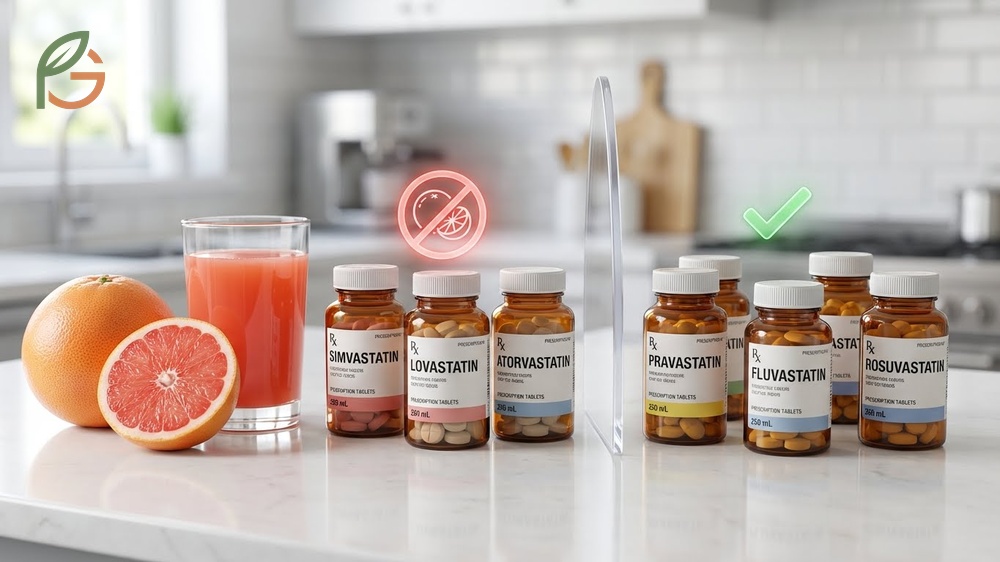
Current guidance emphasizes that not all statins react the same way to grapefruit. Three statins—simvastatin, lovastatin, and atorvastatin—rely heavily on CYP3A4 metabolism and show significant interactions. Other statins use different metabolic pathways and remain safe with grapefruit consumption[3].
The interaction strength depends on the grapefruit amount consumed. One glass of grapefruit juice (approximately 200-250 mL) produces clinically relevant increases in statin blood levels[2]. Larger quantities—equivalent to 6 whole grapefruits daily—can increase simvastatin levels by up to 13.5-fold[7].
Which Statins Interact with Grapefruit
Research identifies three statins that interact with grapefruit: atorvastatin (Lipitor), simvastatin (Zocor), and lovastatin. These medications depend on intestinal CYP3A4 for metabolism. Four other statins—rosuvastatin (Crestor), pravastatin (Pravachol), pitavastatin (Livalo), and fluvastatin (Lescol)—don’t rely on this enzyme and remain safe with grapefruit[3].
Most people don’t realize pitavastatin shows only minimal interaction. Studies demonstrate grapefruit juice increases pitavastatin levels by just 13%—clinically insignificant compared to the 260% increase seen with simvastatin[8].
This table compares seven common statins by their grapefruit interaction severity, blood level increases, and safety status with grapefruit consumption
| Statin Name | Brand Name | Blood Level Increase | Safe with Grapefruit |
|---|---|---|---|
| Simvastatin | Zocor | 260% (same-time)[1] | No |
| Lovastatin | Mevacor | 260% (same-time)[1] | No |
| Atorvastatin | Lipitor | 80% (any timing)[1] | No |
| Rosuvastatin | Crestor | No increase | Yes |
| Pravastatin | Pravachol | No increase | Yes |
| Pitavastatin | Livalo | 13%[8] | Yes |
| Fluvastatin | Lescol | No increase | Yes |
Interaction Severity Levels
The timing between grapefruit and medication matters less than most people think. Even when you take simvastatin or lovastatin 12 hours after drinking grapefruit juice, blood levels still increase by approximately 90%[1]. The enzyme damage persists for days.
Atorvastatin shows consistent interaction regardless of timing because the enzyme inhibition affects multiple absorption phases. Studies demonstrate that morning grapefruit affects evening atorvastatin doses just as much as concurrent consumption[1].
Why Avoid Grapefruit Statins
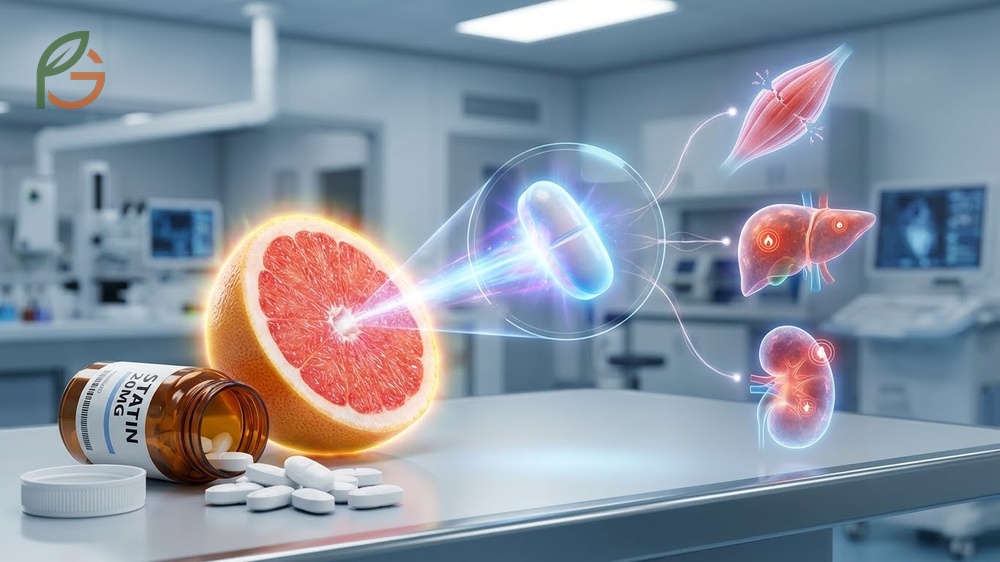
Evidence demonstrates that elevated statin levels increase the risk of muscle damage, liver problems, and kidney complications. The dose makes the poison—while therapeutic statin doses are safe, the 2-13 times higher levels caused by grapefruit push medications into dangerous territory. Research shows the risk of serious muscle damage rises when statin blood concentrations exceed normal therapeutic ranges[9].
Agricultural practices affect grapefruit’s interaction potential. Organic and conventionally grown grapefruits contain similar furanocoumarin levels because these compounds occur naturally in the fruit, not from pesticides or fertilizers. The interaction risk stays constant across all grapefruit varieties you might grow in your garden.
Current medical guidance emphasizes complete avoidance rather than moderation. You can’t safely determine how your individual metabolism responds to grapefruit-statin combinations without blood testing. The conservative approach protects against unpredictable reactions.
- Blood levels increase unpredictably based on individual enzyme activity
- Muscle damage risk rises significantly with elevated statin concentrations
- The interaction lasts 24-72 hours, making timing strategies ineffective
- All grapefruit forms—juice, fresh fruit, dried fruit—contain active compounds
- Safe statin alternatives eliminate the need for dietary restrictions
Warning: Don’t assume other citrus fruits are safe. Seville oranges (used in marmalades) and pomelos contain similar enzyme-blocking compounds. Sweet oranges, lemons, and limes don’t cause this interaction.
Statin Side Effects
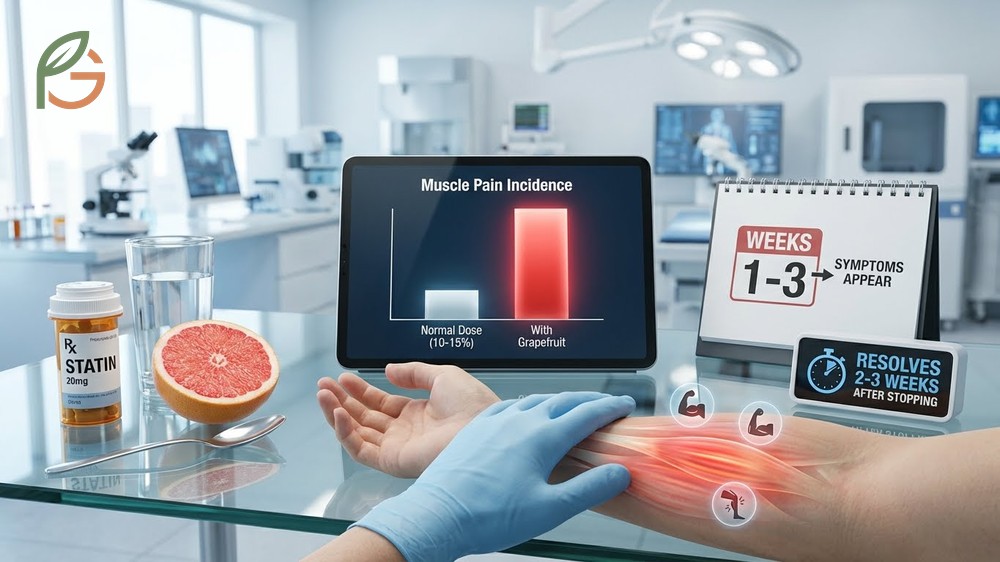
Research shows mild muscle pain affects approximately 10-15% of statin users at normal doses. When grapefruit elevates blood levels, this percentage increases substantially. Common symptoms include muscle soreness, weakness, and cramping that typically appears within weeks of starting the medication or increasing the dose.
Studies demonstrate that most statin side effects resolve within 2-3 weeks of stopping the medication. The elevated drug levels from grapefruit interaction can persist longer because the enzyme damage needs time to repair. Your body must synthesize new CYP3A4 enzymes before normal metabolism resumes.
Beyond muscle problems, elevated statin levels can affect liver function. Healthcare professionals monitor liver enzymes through blood tests to catch problems early. The combination of high-dose statins plus grapefruit creates unnecessary risk when safer alternatives exist.
- Muscle pain and soreness (myalgia)
- Muscle weakness affecting daily activities
- Cramping in legs and arms
- Fatigue and reduced energy levels
- Elevated liver enzymes detected in blood tests
- Dark or cola-colored urine indicating muscle breakdown
- Joint pain and stiffness
Rhabdomyolysis Risk
Rhabdomyolysis represents the most serious statin side effect—a condition where muscle tissue breaks down rapidly and releases proteins into the bloodstream. Current data indicates this occurs rarely, affecting fewer than 1 in 10,000 statin users annually[10]. However, the risk increases substantially when factors like grapefruit consumption or drug interactions elevate statin blood levels.
The condition requires immediate medical attention. Warning signs include severe muscle pain, extreme weakness, and dark urine. Blood tests showing creatine kinase (CK) levels above 10 times the upper normal limit confirm the diagnosis[9].
Evidence suggests CYP3A4 inhibitors—including grapefruit—rank among the top risk factors for statin-induced rhabdomyolysis. The combination creates dangerously high medication levels that overwhelm muscle cells’ ability to function normally.
Drug Interaction Grapefruit
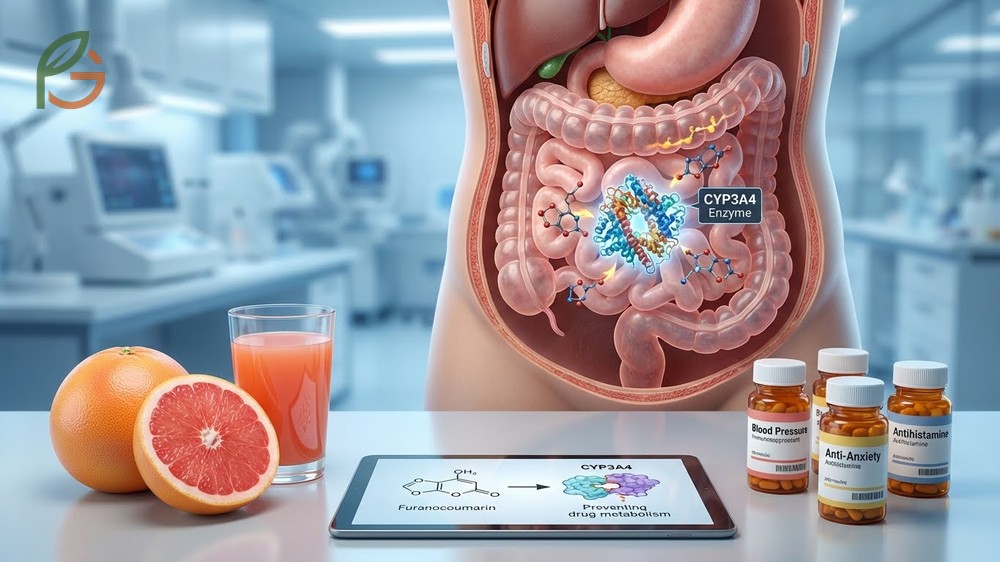
Research identifies over 85 medications that interact with grapefruit, though not all interactions cause serious problems. The pattern remains consistent—grapefruit affects drugs metabolized by intestinal CYP3A4. Categories include certain blood pressure medications, immunosuppressants, anti-anxiety drugs, and antihistamines.
The mechanism stays identical across drug classes. Grapefruit’s furanocoumarins irreversibly inactivate the CYP3A4 enzyme, preventing normal drug breakdown. This matters most for medications with narrow therapeutic windows—drugs where small dose changes cause significant effects.
Agricultural research on citrus fruits shows only specific varieties contain problematic compounds. Regular oranges, tangerines, clementines, lemons, and limes remain safe because they lack furanocoumarins[6]. If you’re growing fruit in your garden, these citrus alternatives provide vitamin C without medication risks.
Tip: Always check medication labels and package inserts for grapefruit warnings. Pharmacists can review your complete medication list to identify potential interactions you might miss.
Safe Alternatives and Solutions
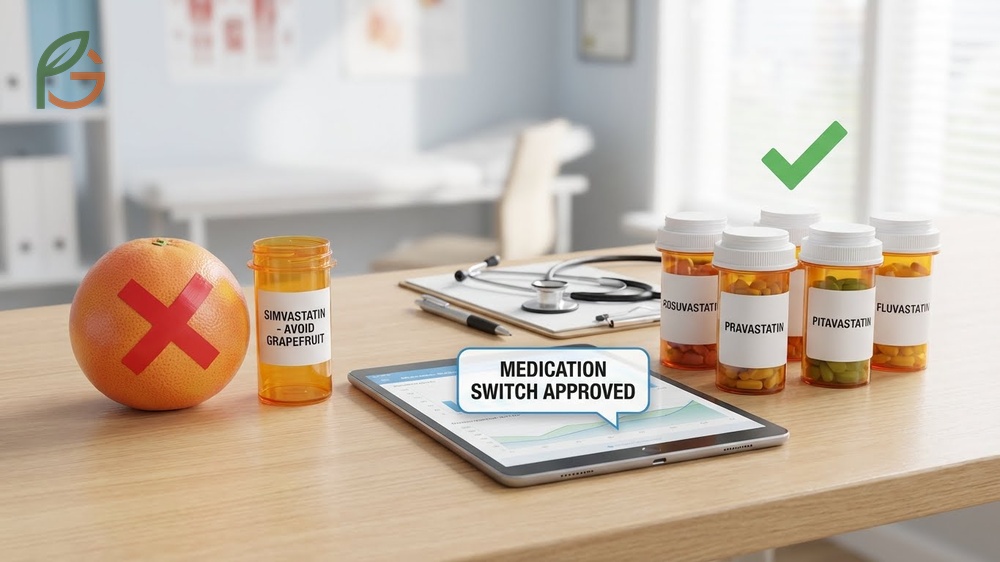
Current medical guidance offers two straightforward solutions: switch to a grapefruit-safe statin or eliminate grapefruit from your diet. Most healthcare providers prefer changing medications because it requires no dietary sacrifice. Rosuvastatin, pravastatin, pitavastatin, and fluvastatin provide equivalent cholesterol-lowering benefits without grapefruit restrictions[3].
The medication switch typically happens at your next routine appointment. Your doctor adjusts the dose to match your previous statin’s effectiveness. Blood tests 6-8 weeks later confirm the new medication controls your cholesterol adequately.
If switching statins isn’t possible, complete grapefruit avoidance becomes necessary. This means eliminating fresh grapefruit, juice, dried fruit, and products containing grapefruit extract. Read ingredient labels on beverages, marinades, and dietary supplements carefully.
For fruit garden enthusiasts, focus on grapefruit-safe citrus varieties. Sweet oranges, Meyer lemons, Persian limes, and mandarins provide similar nutritional benefits without medication concerns. These alternatives offer vitamin C, fiber, and antioxidants that support heart health.
- Ask your doctor about switching to rosuvastatin or pravastatin at your next visit
- Replace grapefruit with oranges or tangerines in your morning routine
- Check all fruit juice blends for hidden grapefruit ingredients
- Avoid Seville orange marmalades which contain similar compounds
- Inform new healthcare providers about your statin medication before they prescribe additional drugs
Conclusion
The evidence is clear: grapefruit and statins create a dangerous interaction that significantly increases medication blood levels and side effect risks. Research demonstrates that even small amounts of grapefruit can elevate simvastatin and lovastatin concentrations by up to 260%, while safe statin alternatives eliminate the need for dietary restrictions entirely.
Current medical guidance emphasizes switching to grapefruit-safe statins like rosuvastatin or pravastatin rather than attempting to manage grapefruit consumption timing. For gardeners and fruit enthusiasts at FruitGarden, focusing on oranges, lemons, and limes provides nutritional benefits without compromising medication safety.
Medical Disclaimer
Important Medical Disclaimer: This content is for informational and educational purposes only. It’s not intended as a substitute for professional medical advice, diagnosis, or treatment. Always consult a qualified healthcare professional before making any changes to your diet, medication, or health routine, especially if you’re taking statins or other prescription medications. Never stop or modify your statin therapy without medical supervision, as this can increase cardiovascular risks.
Frequently Asked Questions
Can I eat grapefruit if I take my statin at a different time of day?
No, timing doesn’t solve the grapefruit-statin interaction. Research shows that even when you take simvastatin or lovastatin 12 hours after consuming grapefruit juice, blood levels still increase by approximately 90%. The enzyme damage lasts 24-72 hours, making separation strategies ineffective. Complete avoidance or switching to a grapefruit-safe statin remains the only reliable solution.
Which statins are safe with grapefruit?
Four statins don’t interact with grapefruit: rosuvastatin (Crestor), pravastatin (Pravachol), pitavastatin (Livalo), and fluvastatin (Lescol). These medications use different metabolic pathways that grapefruit doesn’t affect. Studies confirm you can consume grapefruit freely while taking these statins without risking elevated blood levels or increased side effects.
How much grapefruit causes a statin interaction?
Just one whole grapefruit or 200 mL (about 7 ounces) of grapefruit juice can cause clinically significant interactions. Research demonstrates this amount contains enough furanocoumarins to block intestinal enzymes and elevate statin blood levels. Larger quantities produce even stronger effects—consuming the equivalent of 6 whole grapefruits daily can increase simvastatin levels by 13.5-fold.
Are other citrus fruits safe with statins?
Most citrus fruits are safe with statins. Sweet oranges, tangerines, clementines, lemons, and limes don’t contain the furanocoumarins that cause grapefruit interactions. However, avoid Seville oranges (bitter oranges used in marmalades) and pomelos, as these contain similar enzyme-blocking compounds. Always check fruit juice blends for hidden grapefruit ingredients.
What are the symptoms of a grapefruit-statin interaction?
Symptoms mirror typical statin side effects but appear more severe: muscle pain, weakness, cramping, fatigue, and dark urine. These occur because grapefruit elevates statin blood levels beyond safe ranges. Serious cases can cause rhabdomyolysis—rapid muscle breakdown requiring immediate medical attention. Contact your healthcare provider if you experience severe muscle pain or very dark urine while taking statins.
How long does grapefruit affect statins?
Grapefruit’s enzyme-blocking effects last 24-72 hours because the interaction causes irreversible enzyme damage. Your intestinal cells must produce entirely new CYP3A4 enzymes to restore normal drug metabolism. This explains why you can’t safely consume grapefruit by timing it differently from your medication—the effects persist for multiple days after a single serving.
Should I stop taking my statin if I accidentally ate grapefruit?
Don’t stop your statin without medical guidance. If you accidentally consumed grapefruit, contact your healthcare provider for personalized advice. They may recommend monitoring for symptoms or temporarily adjusting your dose. Never discontinue statin therapy on your own, as this increases cardiovascular risks. Most accidental exposures don’t cause serious problems, but professional guidance ensures safe management.





