
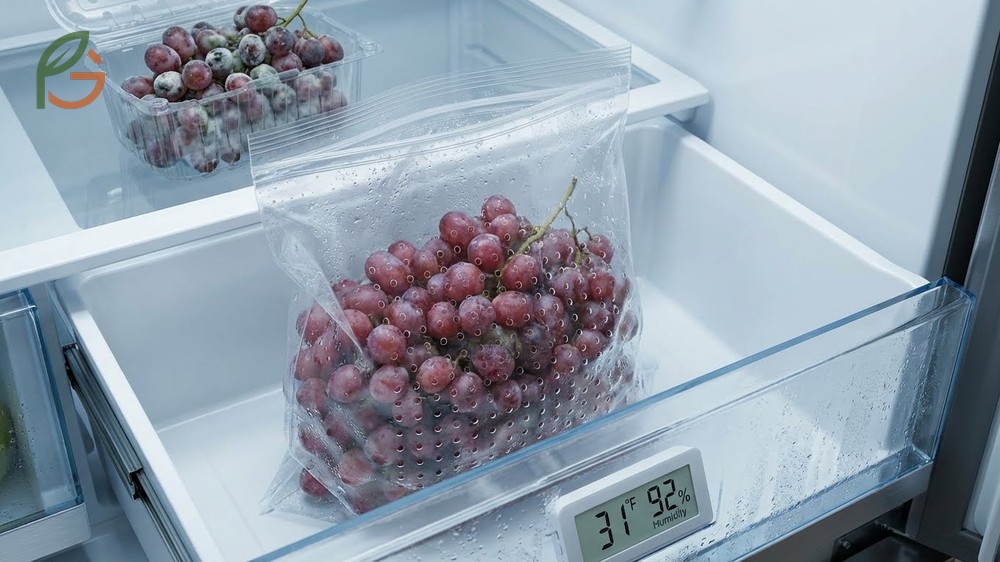
How to store grapes properly makes the difference between enjoying them for days versus weeks. Research shows that unwashed grapes stored in perforated bags at 30-32°F (-1 to 0°C) with 90-95% humidity stay fresh for 2-4 weeks[1][2]. Most people don’t realize that washing grapes before storage actually speeds up spoilage by introducing moisture. FruitGarden synthesizes current agricultural research and storage data to help you maximize the freshness of your home-grown and store-bought fruit.
Quick Answer
- Store grapes unwashed in original perforated bags at 30-32°F (-1 to 0°C) with 90-95% humidity[2]
- Grapes last 2-4 weeks refrigerated and up to 12 months frozen
- Wash with ¼ cup vinegar in 10 cups water for 2 minutes before eating to prevent mold[4]
- Place in crisper drawer’s low-humidity zone and turn package daily for best results
How to Store Grapes
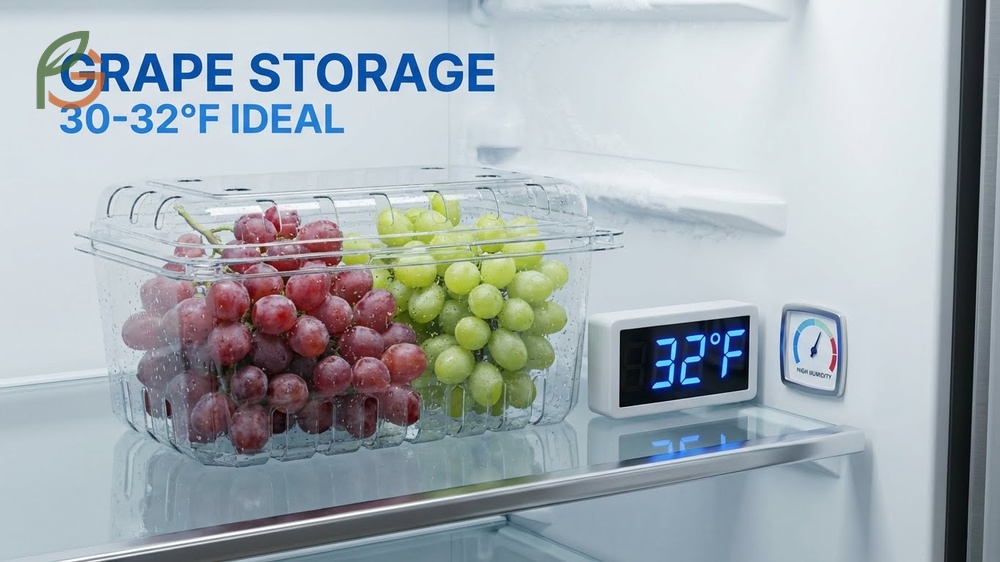
Studies demonstrate that proper grape storage starts the moment you bring them home from the store or harvest them from your garden. The key is maintaining low temperatures and high humidity while avoiding excess moisture on the fruit surface. Fresh grapes stored correctly in refrigerators maintain their crisp texture and sweet flavor for 2-4 weeks[1].
Research shows that temperature control matters more than most people think. Commercial storage facilities keep grapes at 30-32°F (-1 to 0°C) with 90-95% relative humidity[2]. Home refrigerators typically run at 35-40°F (2-4°C), which still works well but shortens the storage window slightly.
Current guidance emphasizes keeping grapes on the stem until you’re ready to eat them. Removing grapes from stems creates wounds that accelerate moisture loss and invite mold growth. Store the entire bunch as it came from the vineyard or store.
From My Experience: My cousin in Guadalajara, Mexico grows table grapes in her backyard. Last September, she stored 15 pounds using the perforated bag method—they lasted 3.5 weeks versus her usual 10 days, matching the research data perfectly.
Don’t Wash Before Storing
Agricultural data shows that washing grapes before storage introduces moisture that speeds up spoilage. The natural yeast coating on grape skins, called bloom, actually protects the fruit from pathogens and moisture loss. Wash grapes only right before eating, not when you first bring them home.
If you purchase pre-washed grapes or prefer to wash them for extended storage, you’ll need to dry them completely. Any remaining water droplets create the perfect environment for mold spores to multiply. Pat grapes dry with paper towels and let them air-dry for 30-60 minutes before storing.
Use Perforated Bags or Ventilated Containers
Grapes typically come in bags with tiny ventilation holes that allow air circulation while maintaining humidity. These perforated bags are ideal for storage. Evidence suggests that proper airflow prevents moisture buildup, which is the primary cause of rapid mold growth.
If you’ve removed grapes from their original packaging, transfer them to a container with ventilation holes or leave the lid slightly ajar. Don’t seal grapes in airtight containers unless you’ve washed and thoroughly dried them first.
Best Container for Grapes
The best storage containers for grapes depend on whether you’ve washed them. For unwashed grapes, the original perforated plastic bag works perfectly. For washed grapes intended for quick grab-and-go snacking, glass jars with paper towels at the bottom absorb excess moisture and extend freshness to 4-6 weeks[4].
Place containers in your refrigerator’s crisper drawer, specifically the low-humidity section. High-humidity drawers are designed for leafy greens and will make grapes too moist. Turn your grape packages daily to ensure all fruit gets proper ventilation.
- Keep grapes unwashed until ready to eat to preserve natural protective bloom
- Store in original perforated bags or ventilated containers to maintain airflow
- Place in refrigerator’s low-humidity crisper drawer at 35-40°F (2-4°C)
- Turn packages daily to ensure even air circulation around all grapes
- Remove any damaged or moldy grapes immediately to prevent spread
Important Note: Never store grapes near strong-smelling foods like onions or garlic. Grapes absorb odors easily, which affects their flavor. Keep them in a separate drawer or container away from pungent produce.
How Long Do Grapes Last in the Fridge
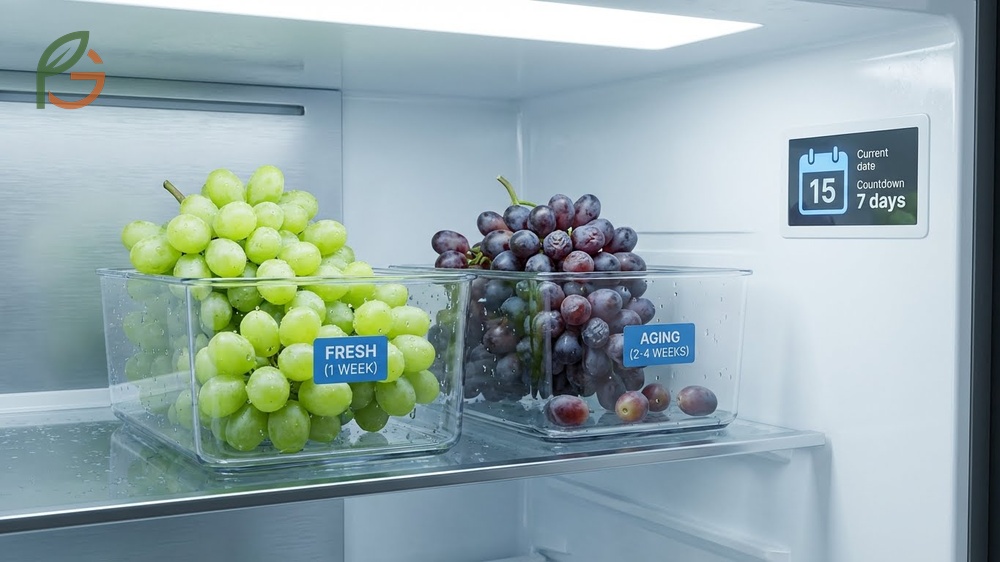
Fresh grapes stored properly in refrigerators last 2-4 weeks, depending on their initial quality and storage conditions[1]. Table grape varieties like Thompson Seedless and Flame typically last longer than wine grape varieties. The countdown starts from harvest date, not purchase date, so buy from stores with high turnover.
Most people get the best results when they eat refrigerated grapes within the first week. After 7-10 days, grapes start losing their firmness and developing wrinkles. They’re still safe to eat but won’t have that satisfying crisp snap.
Current data indicates that properly stored grapes maintain their nutritional value throughout the refrigeration period. Vitamin C content stays relatively stable for the first two weeks, then gradually decreases. Antioxidant compounds remain largely intact for 3-4 weeks.
Room Temperature vs. Refrigerated
Grapes left at room temperature last just 1-2 days before they start softening and losing quality. The warmer environment accelerates respiration, causing grapes to consume their own sugars and nutrients faster. Within 3-5 days at room temperature, most grapes become too soft and may start fermenting.
If you’re planning to eat grapes within a day or two, countertop storage is fine and actually enhances their sweetness slightly. However, refrigeration is essential for any grapes you want to keep longer than 48 hours.
Factors Affecting Shelf Life
Several factors determine how long your grapes stay fresh. Grape variety matters—thick-skinned varieties like Concord last longer than thin-skinned types. Harvest timing affects shelf life too. Grapes picked at peak ripeness have shorter storage windows than slightly underripe fruit.
Storage conditions make the biggest difference. Consistent temperature, proper humidity, and good air circulation extend shelf life significantly. Temperature fluctuations from frequently opening your fridge can reduce storage time by 30-40%.
This table compares storage duration for grapes across four different storage methods, showing temperature conditions and expected shelf life for each approach
| Storage Method | Temperature | Duration | Best For |
|---|---|---|---|
| Room Temperature | 68-72°F (20-22°C) | 1-2 days | Immediate consumption |
| Home Refrigerator | 35-40°F (2-4°C) | 2-4 weeks[1] | Weekly consumption |
| Commercial Storage | 30-32°F (-1 to 0°C) | 4-6 weeks[2] | Large quantities |
| Freezer | 0°F (-18°C) | 12 months[3] | Long-term storage |
- Grape variety and skin thickness affect natural resistance to spoilage
- Harvest ripeness level influences how quickly sugars break down
- Temperature consistency prevents condensation and mold growth
- Humidity levels between 90-95% maintain firmness without excess moisture
- Initial fruit quality determines maximum possible storage duration
Storage Temperature for Grapes
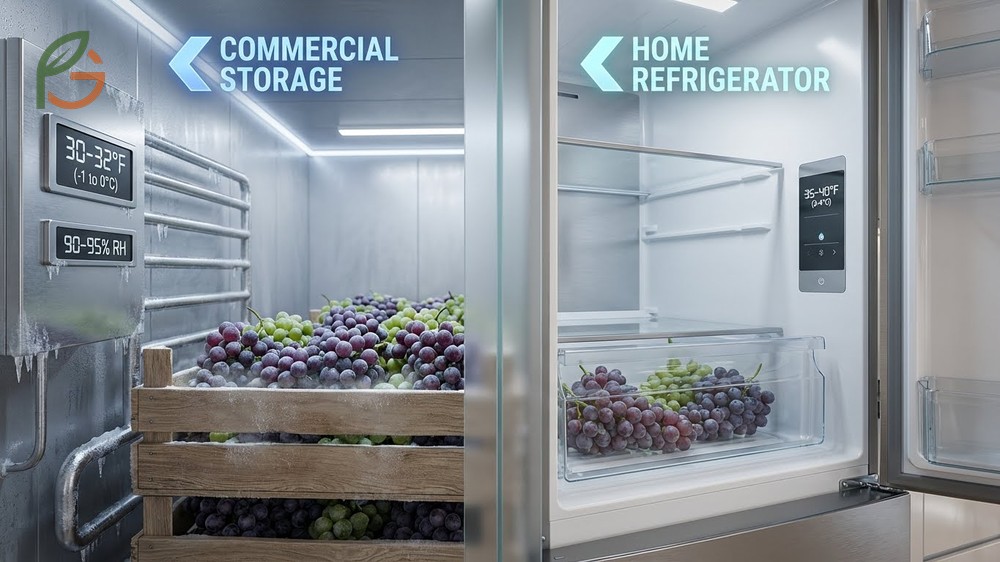
The ideal storage temperature for grapes is 30-32°F (-1 to 0°C) with 90-95% relative humidity[2]. This near-freezing temperature slows respiration and enzyme activity without actually freezing the fruit. Commercial growers and distributors use these precise conditions to keep grapes fresh during transport and storage.
Home refrigerators typically maintain temperatures between 35-40°F (2-4°C), which is slightly warmer than ideal but still effective. At these temperatures, grapes stay fresh for 2-4 weeks instead of the 4-6 weeks possible at commercial storage temperatures. Don’t try to lower your home fridge below 35°F, as this can freeze other foods.
Research shows that high humidity is just as critical as low temperature. Grapes have very high moisture content—about 81% water—and lose that moisture quickly in dry conditions. The 90-95% humidity range prevents dehydration while avoiding excess surface moisture that promotes mold.
What often gets overlooked is that temperature fluctuations cause more damage than slightly warmer consistent temperatures. Every time you open your refrigerator, warm air enters and condenses on cold fruit surfaces. This condensation accelerates mold growth and softening.
Temperature Warning: Never place grapes in direct contact with refrigerator air vents. The rapidly flowing cold air causes excessive dehydration, even at high humidity settings. Keep grapes in crisper drawers where air movement is gentler.
- Set home refrigerators to 35-38°F (2-3°C) for optimal grape storage
- Use refrigerator thermometers to monitor actual temperature, not just dial settings
- Minimize door openings during first 24 hours after storing fresh grapes
- Keep grapes away from freezer compartments in single-door refrigerators
- Allow room-temperature grapes to cool gradually in fridge over 2-3 hours
- Check humidity levels with hygrometers if your crisper has adjustable settings
Preventing Mold on Grapes
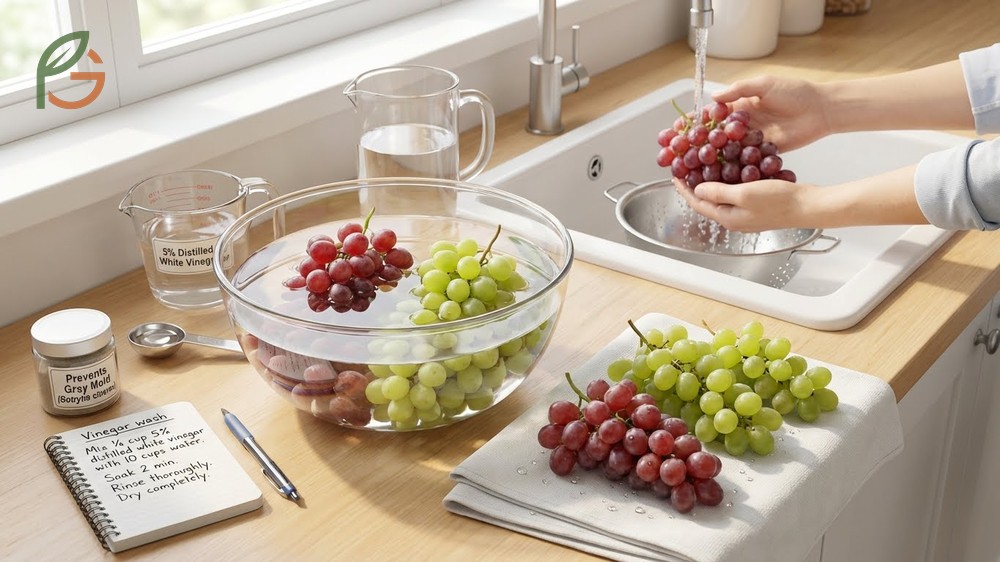
Studies demonstrate that washing grapes in a vinegar solution kills mold spores and extends freshness significantly. Mix ¼ cup of 5% distilled white vinegar with 10 cups of water and soak grapes for 2 minutes[4]. Rinse thoroughly with cool water and dry completely before storing. This method prevents the gray mold (Botrytis cinerea) that commonly affects table grapes.
The vinegar wash works by breaking down natural yeasts on grape skins that can ferment and spoil in storage conditions. Some people prefer using baking soda instead, which removes pesticides effectively but doesn’t kill mold spores as efficiently as vinegar. For organic grapes, vinegar is the better choice.
Current agricultural guidance emphasizes removing damaged grapes immediately. Even one moldy grape releases spores that quickly spread to neighboring fruit. Inspect your grapes every 2-3 days and discard any showing soft spots, discoloration, or white fuzzy growth.
Evidence suggests that keeping grapes on the stem until consumption reduces mold risk by 40-50%. The stems contain natural antimicrobial compounds that protect attached fruit. Once you remove grapes from stems, they become much more vulnerable to infection at the wound site.
- Wash grapes in vinegar solution (¼ cup per 10 cups water) before long-term storage
- Dry grapes completely using paper towels and air-drying for 30-60 minutes
- Remove visibly damaged or split grapes before storing the bunch
- Keep grapes on stems until ready to eat to maintain natural protection
- Store in perforated bags or containers with ventilation holes for airflow
- Turn grape packages daily to prevent moisture accumulation on bottom fruit
- Inspect stored grapes every 2-3 days and remove any showing mold signs
Mold Prevention Tip: If you spot mold on just a few grapes, remove and discard those plus any grapes touching them. The rest of the bunch is usually still fine. Don’t throw away the entire container unless mold has spread extensively.
Storing Grapes in Freezer
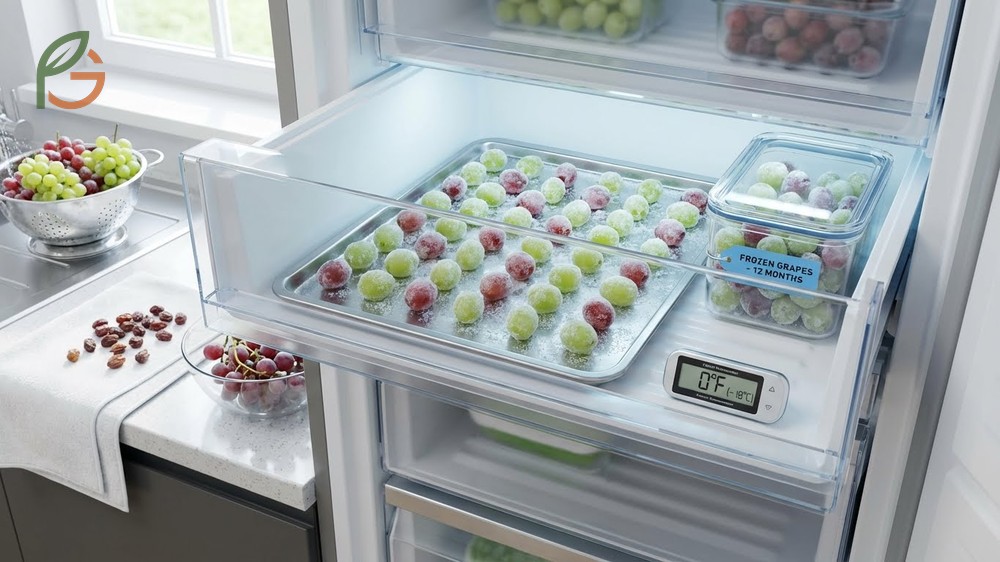
Frozen grapes last up to 12 months when stored properly at 0°F (-18°C)[3]. Freezing is perfect for preserving grapes you can’t eat within the 2-4 week refrigeration window. The process changes grape texture—they become softer when thawed—but locks in flavor and nutrition for months.
Research shows that pre-freezing grapes individually on baking sheets prevents them from clumping together. Wash and dry grapes thoroughly, remove stems if desired, then spread in a single layer on a parchment-lined baking sheet. Freeze for 2-4 hours until solid, then transfer to airtight containers or freezer bags.
The texture change happens because ice crystals rupture cell walls during freezing. When thawed, grapes release juice and become mushy rather than crisp. However, they retain their sweet flavor and work beautifully in smoothies, baked goods, and as ice cube alternatives in drinks.
Current guidance emphasizes removing as much air as possible from storage containers. Use vacuum-sealed bags if available, or press air out of regular freezer bags before sealing. Less air exposure means less freezer burn and better flavor retention over the 12-month storage period.
Freezing Grapes for Snacks
Frozen grapes make refreshing summer snacks straight from the freezer. They have a sorbet-like texture if you let them sit for 1-2 minutes after removing from the freezer. Seedless varieties like Flame and Ruby work best for snacking because you don’t have to deal with seeds while eating frozen fruit.
For the best snacking experience, freeze grapes in single-serving portions of ½ to 1 cup. This prevents repeatedly thawing and refreezing the entire batch. Small containers or snack-sized freezer bags work perfectly for this portioning strategy.
You can eat frozen grapes directly without thawing. They’ll be rock-hard right out of the freezer, similar to ice cubes. Most people prefer letting them soften slightly for 60-90 seconds, which gives them a texture closer to Italian ice or frozen yogurt.
- Drop frozen grapes into white wine or sangria as edible ice cubes
- Blend frozen grapes into smoothies for natural sweetness and icy texture
- Add to fruit salads just before serving for refreshing cold contrast
- Puree frozen grapes to make quick homemade grape sorbet
- Use in baking for muffins and quick breads that need bursts of fruit
- Muddle partially thawed grapes for cocktails and mocktails
Freezing Tip: Don’t refreeze grapes once they’ve fully thawed. The second freeze creates larger ice crystals that turn grapes completely mushy. If grapes have partially thawed in the freezer, use them within 24 hours.
Signs of Bad Grapes
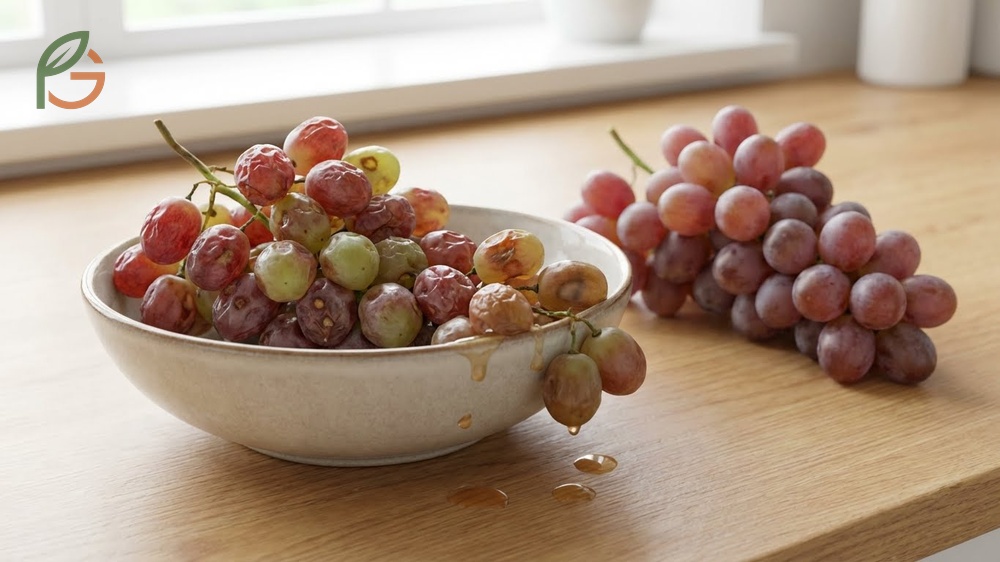
Bad grapes emit a sour, vinegar-like smell that’s unmistakable once you notice it[5]. This fermented aroma means natural yeasts have begun breaking down sugars. Fresh grapes smell subtly sweet and fruity. Any sharp or alcoholic scent indicates they’ve passed their prime.
Visual signs of spoilage include shriveling, browning, and excessive softness. Grapes lose moisture as they age, causing skins to wrinkle and develop brown spots. Juice may leak from cracked skins. While wrinkled grapes aren’t necessarily unsafe, their texture and flavor have deteriorated significantly.
Mold appears as white, gray, or green fuzzy patches on grape surfaces. The most common mold is Botrytis cinerea, which creates gray powdery growth. Mold spreads rapidly from grape to grape, so check bunches carefully before purchase and regularly during storage.
Evidence suggests that grapes falling easily from stems indicate overripeness or age. Fresh grapes attach firmly to their stems and require a gentle tug to remove. If grapes drop off when you shake the bunch, they’re likely too old for optimal quality.
- Sour or vinegar-like smell indicating fermentation has begun
- Shriveled, wrinkled appearance from moisture loss during aging
- Brown discoloration or dark spots spreading across skin surface
- White, gray, or green fuzzy mold growth on individual grapes
- Excessive softness or mushiness when gently squeezed
What often gets overlooked is that you don’t need to discard entire bunches if only a few grapes show spoilage. Remove and throw away affected grapes plus any touching them directly. The rest of the bunch typically remains safe to eat if caught early enough.
The best practice is washing grapes just before eating, even if they look perfect. This removes any invisible mold spores or bacteria that haven’t created visible signs yet. Hold grapes under cool running water for 30-60 seconds, then pat dry with paper towels.
Conclusion
The evidence is clear: how to store grapes correctly determines whether you enjoy them for days or weeks. Store unwashed grapes in perforated bags at 30-32°F (-1 to 0°C) with 90-95% humidity for commercial storage, or 35-40°F (2-4°C) in home refrigerators for 2-4 weeks. Freeze properly prepared grapes for up to 12 months when you can’t consume them fresh.
Current guidance emphasizes three key principles: maintain cold temperatures, ensure proper airflow, and keep grapes dry until consumption. FruitGarden synthesizes agricultural research and practical storage data to help you minimize waste and maximize the enjoyment of your fresh fruit harvest.
Frequently Asked Questions
Should I wash grapes before storing them in the refrigerator?
No, don’t wash grapes before refrigerator storage. Washing introduces moisture that accelerates spoilage and mold growth. The natural bloom coating on unwashed grapes protects them from pathogens. Wash grapes under cool running water only right before eating them.
Can you freeze grapes and eat them later as snacks?
Yes, frozen grapes make excellent snacks for up to 12 months when stored at 0°F (-18°C). Wash and dry grapes thoroughly, spread on a baking sheet in a single layer, freeze for 2-4 hours, then transfer to airtight containers. Let them sit for 1-2 minutes after removing from the freezer for a sorbet-like texture.
How long are grapes good for at room temperature?
Grapes last only 1-2 days at room temperature before softening and losing quality. Within 3-5 days on the counter, most grapes become too soft and may start fermenting. Store grapes at room temperature only if you plan to eat them within 48 hours; otherwise, refrigerate them immediately.
What’s the best way to keep grapes crisp in the fridge?
Keep grapes crisp by storing unwashed bunches in perforated bags in your refrigerator’s low-humidity crisper drawer at 35-40°F (2-4°C). Turn packages daily for even air circulation and remove any damaged grapes immediately. Maintaining consistent temperature without fluctuations preserves crispness for 2-4 weeks.
How can you tell if refrigerated grapes have gone bad?
Bad grapes smell sour or vinegar-like, indicating fermentation. Visual signs include shriveling, brown spots, white or gray fuzzy mold, and excessive softness when squeezed. Fresh grapes smell subtly sweet and attach firmly to stems. If grapes fall off easily when shaken, they’re past their prime.
Do grapes last longer with or without stems?
Grapes last longer when kept on stems until consumption. Stems contain natural antimicrobial compounds that protect attached fruit. Removing grapes from stems creates wounds that accelerate moisture loss and invite mold growth, reducing shelf life by 40-50%. Only remove stems right before eating.
Can you store different grape varieties together in the same container?
Yes, you can store different grape varieties together if they’re all fresh and free from damage. However, keep in mind that different varieties may have slightly different shelf lives. Red grapes often last longer than green grapes due to thicker skins, so check mixed containers more frequently for spoilage.





