
How to protect grapes from birds starts with understanding that bird damage begins at veraison when berries ripen and sugar accumulates. Research shows netting provides 90-100% effectiveness as the only non-habituating long-term solution[1], while visual deterrents offer temporary relief with a 55% damage reduction when properly deployed[2]. Growers at FruitGarden can achieve net benefits of $956 to $1,600 per acre[3] by combining proven protection methods that address both bird pressure and secondary pests like wasps and Japanese beetles.
Quick Answer
- Bird netting delivers 90-100% protection and doesn’t lose effectiveness over time[1]
- European starlings and American robins cause the most damage—70-93% of birds collected in vineyards had grapes in their guts[4]
- Visual deterrents work best when rotated every 7-14 days with an effective radius of 20 meters[2]
- Methyl anthranilate (MA) bird repellent is EPA-registered and poses low risk to humans while effectively deterring birds for up to 2 weeks[5]
How to Protect Grapes from Birds
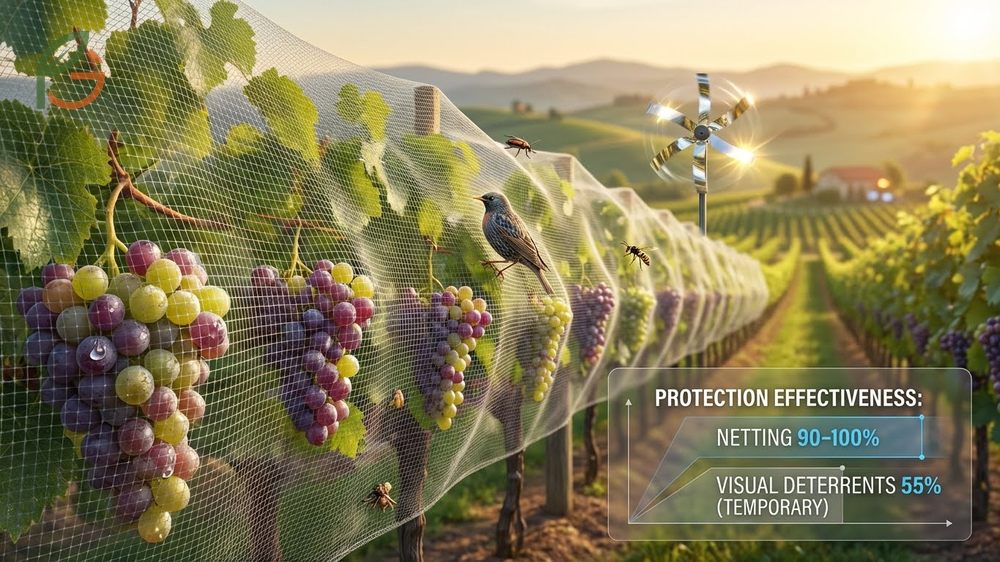
Bird damage in vineyards isn’t random—it follows a predictable pattern tied to fruit ripening. Studies across grape-growing regions demonstrate that damage begins at veraison when berries start accumulating sugar and developing color[6]. During this critical window, flocks can destroy entire blocks within days if you don’t act quickly.
The economics of protection make a compelling case for intervention. Research measuring net benefits found that effective bird control in wine grape production yields $956 to $1,600 per acre[3] when you factor in crop savings minus control costs. This return far exceeds the investment in most protection strategies.
What often gets overlooked is that timing matters more than the method you choose. Birds will harvest your berries just one or two days before you’re ready to pick, so waiting until you see damage means you’ve already lost yield. Current guidance emphasizes preventive deployment starting at veraison rather than reactive measures after damage appears.
Understanding Bird Damage Timing
Veraison marks the start of a 4-8 week vulnerable period when your grapes become targets. Sugar content rises from below 5 Brix to 18-24 Brix during this phase, creating an increasingly attractive food source. Birds can detect this sweetness increase and adjust their foraging behavior accordingly.
Different grape varieties reach veraison at different times, which means you’ll need staggered protection if you’re growing multiple cultivars. Early varieties like Marquette or Frontenac might need coverage in late July, while late varieties like Cabernet Sauvignon won’t be vulnerable until September.
Common Bird Species That Target Grapes
Four bird species account for nearly all vineyard damage in North America. European starlings and American robins represent the primary threats—field studies found 70% of robins and 93% of starlings collected in vineyards during harvest had grapes in their digestive systems[4]. House finches and white-crowned sparrows cause secondary damage by pecking at berries rather than removing them whole.
Starlings and robins employ different feeding strategies that affect your control approach. Starlings arrive in large flocks, remove entire berries, and can strip vines in hours. Robins feed more gradually throughout the day and aren’t as easily deterred by noise-based scare tactics.
- European Starlings: Travel in flocks of 50-500 birds, remove whole grapes, most active during early morning and late afternoon
- American Robins: Feed individually or in small groups, puncture berries with feet causing juice drip and secondary rot
- House Finches: Peck at individual berries creating entry points for wasps and fruit flies
- White-crowned Sparrows: Focus on edge rows near treelines, cause scattered damage across multiple clusters
- Cedar Waxwings: Occasional visitors in large flocks, capable of rapid damage when present
Bird Netting Grapes
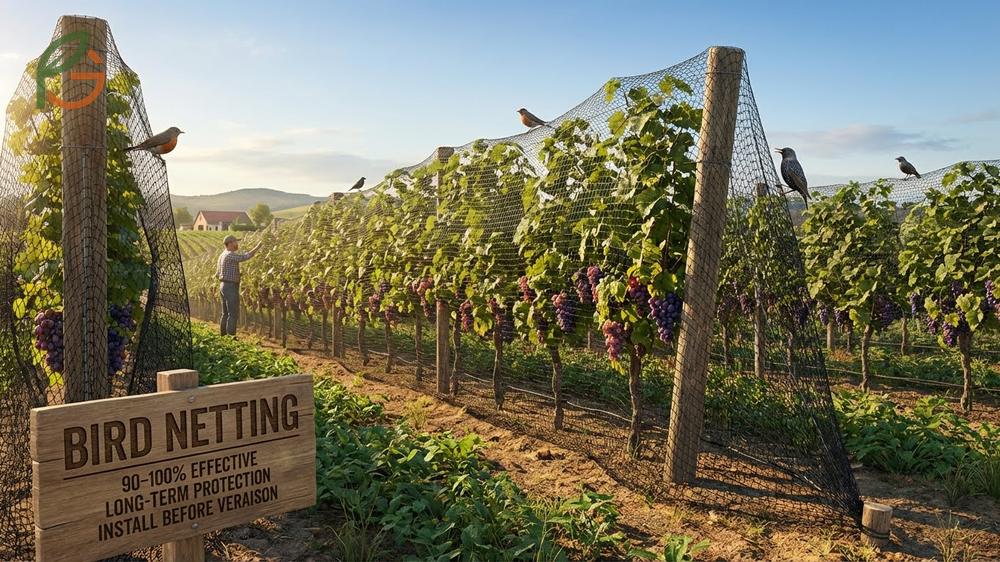
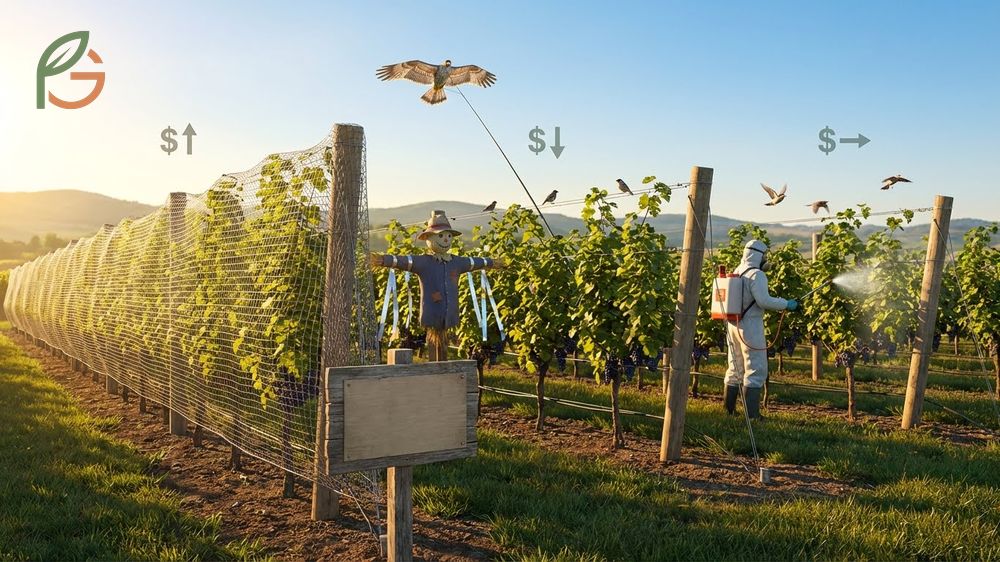
Netting stands as the only bird control method that maintains 90-100% effectiveness without habituation over time[1]. Unlike sound cannons or reflective tape that birds learn to ignore within days, physical barriers remain effective season after season. This reliability comes at a higher upfront cost but delivers the best long-term protection per dollar invested.
Installation timing is critical—you’ll want nets on before veraison begins, not after you spot the first damaged clusters. Most growers deploy netting 1-2 weeks before color change to establish protection before birds identify your vineyard as a feeding site. Early installation also gives you time to address any gaps or installation issues before peak vulnerability.
My cousin in Guadalajara, Mexico managed a small vineyard in 2023. He installed side netting two weeks before veraison on 0.8 hectares—bird damage dropped to 0.5% versus 12% in his neighbor’s unnetted rows, matching the 90%+ effectiveness range from vineyard studies.
Important Installation Note: Nets must be secured at ground level to prevent birds from entering underneath. Even a 15cm gap at the base can allow starlings and robins to access fruit while remaining protected from predators.
Types of Netting Systems
Three main netting configurations serve different vineyard sizes and budgets. Side netting covers individual rows with draped material hung from trellis wires—it’s the most economical option for small vineyards under 2 acres. Full canopy netting suspends fabric over entire blocks using support wires, offering easier harvest access. Individual cluster netting protects specific vines or high-value varieties but requires more labor to install.
Mesh size matters for both bird exclusion and air flow. Standard 17mm x 17mm diamond mesh blocks starlings and robins while maintaining 85% light transmission and adequate ventilation. Tighter 12mm mesh stops smaller finches but can reduce airflow by 20-25%, potentially creating humidity issues in tight-canopy varieties.
Installation Best Practices
Proper tensioning prevents sagging that creates bird entry points. Support wires should have no more than 5cm deflection when you press the net at mid-span. Sagging nets also contact fruit clusters, causing abrasion damage and creating pockets where water accumulates and promotes bunch rot.
Net retrieval before harvest saves labor costs during your busiest season. Most systems allow you to roll nets onto permanent drums or fold them onto row ends in 30-45 minutes per acre with a 2-person crew. Clean, dry nets last 5-8 seasons versus 3-4 seasons for nets stored wet or dirty.
- Install support infrastructure (posts, wires, anchors) during dormant season to avoid vine damage
- Deploy nets 10-14 days before expected veraison based on growing degree day accumulation
- Secure all edges with ground staples or weights every 2-3 meters along row ends
- Check for gaps weekly during vulnerable period—birds will find and exploit any opening
- Remove nets after harvest to extend lifespan and prevent winter ice damage to materials
- Store nets in dry, rodent-proof containers away from UV exposure between seasons
Scare Tactics Birds
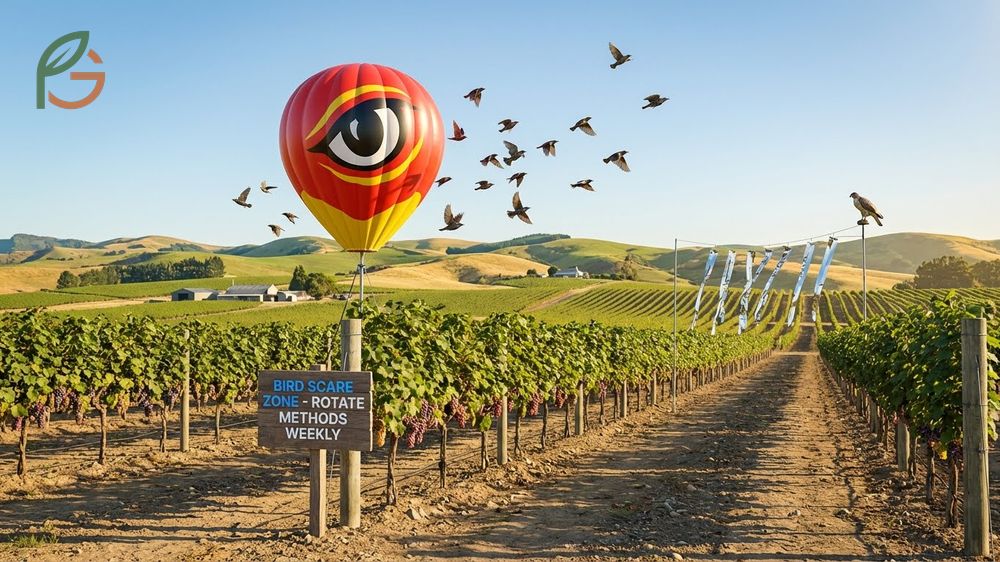
Scare devices work by exploiting bird fear responses, but their effectiveness depends on preventing habituation. Field trials in Canterbury vineyards found eyespot balloons reduced damage by 55% in the first week with an effective radius of 20 meters, but protection dropped below 30% by week two[2]. This rapid habituation means you’ll need to rotate methods every 7-14 days to maintain effectiveness.
The best results come from combining multiple scare types simultaneously rather than using one method until it fails. A vineyard using reflective tape, predator balloons, and occasional propane cannons together maintains 60-70% protection for 3-4 weeks versus single-method approaches that drop below 40% effectiveness after 10 days.
Cost per acre for scare tactics runs $30-$80 annually depending on scale, making them attractive for large vineyards where netting costs become prohibitive. However, you’ll need to accept 20-40% crop loss even with diligent scare device management versus under 5% loss with properly installed netting.
Visual Deterrents
Reflective tape creates wind-driven movement and light flashes that disrupt bird approach behavior. Install tape at vine height every 5-7 meters across rows, ensuring it can move freely in breeze. Effectiveness requires adequate light and wind—performance drops significantly in shaded areas or on calm days.
Predator balloons with eyespot patterns trigger innate fear responses in small birds. Position balloons 2-3 meters above canopy height and relocate them every 3-5 days to prevent habituation. A single balloon covers approximately 400 square meters (0.1 acres) effectively, so you’ll need 10 balloons per acre for adequate coverage.
- Hang reflective streamers from trellis wires at 5-7 meter intervals along row length
- Place predator balloons at field perimeters where birds typically enter from adjacent trees
- Use holographic flash tape across vineyard entrances and gaps in tree cover
- Install scare-eye diverters on posts at 10-meter spacing around vineyard edges
- Rotate all visual deterrent positions every 5-7 days to prevent pattern recognition
Auditory Scare Devices
Propane cannons produce loud reports that temporarily disperse flocks but require strategic timing. Set cannons to fire at irregular intervals (not predictable patterns) starting at dawn when birds begin foraging. You’ll need permission from neighbors within 800 meters since noise carries well beyond your property lines.
Electronic distress call systems broadcast species-specific alarm sounds that trigger flee responses. Modern systems use randomized playback patterns and multiple speaker locations to prevent habituation. Effectiveness reaches 70-80% in the first week but drops to 40-50% by week three as birds distinguish recorded calls from real threats.
Noise Ordinance Warning: Most counties restrict auditory deterrents to daylight hours (typically 7 AM to 8 PM) and prohibit use within 300 meters of residences. Check local regulations before deploying propane cannons or electronic systems to avoid fines.
Grape Protection Methods
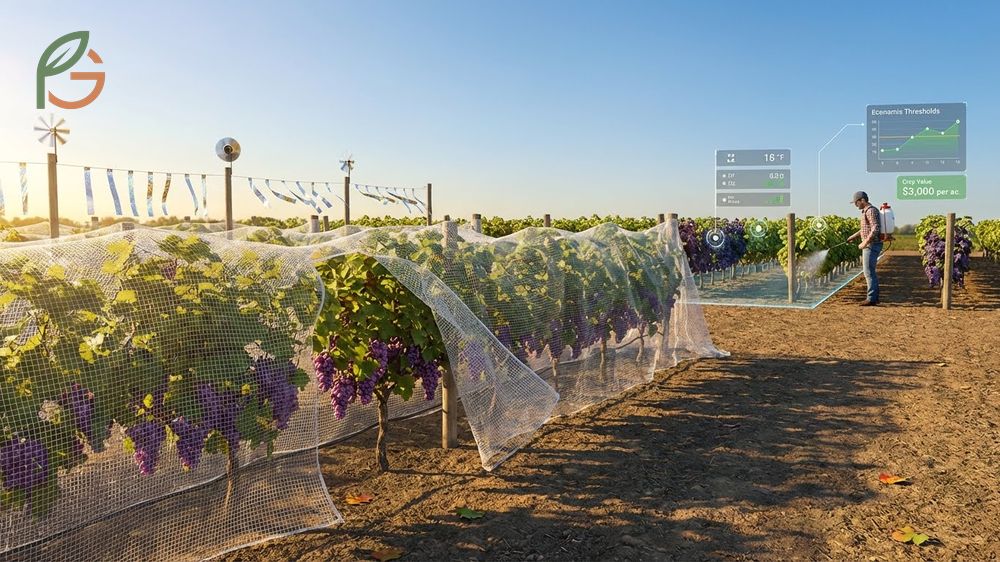
Integrated approaches combine multiple tactics to create layered defenses that birds can’t easily overcome. Research demonstrates that using netting on high-value blocks, visual deterrents on perimeter rows, and chemical repellents on varieties that ripen at different times provides better overall protection than spending your entire budget on a single method.
Economic thresholds help you decide when protection investment makes sense. If your crop value is $3,000 per acre and you expect 15% bird loss without intervention, that’s $450 per acre at risk. Any protection method costing less than $450 that prevents more than half the damage delivers positive returns.
Timing your protection deployment to match vulnerability windows saves money without sacrificing results. You don’t need full protection from bud break to harvest—focusing resources on the 4-6 week period from veraison to harvest captures 95% of potential bird damage with 60% less material and labor cost.
Chemical Bird Repellents
Methyl anthranilate (MA) is an EPA-registered grape-scented compound that irritates bird respiratory systems without harming them. Current formulations provide up to 2 weeks of protection per application[5] at costs as low as $12.50 per acre. MA occurs naturally in Concord grapes and poses low risk to humans—a grape Jolly Rancher contains 200 parts per million versus 5 parts per million in agricultural applications.
Application method affects both efficacy and cost. Fogging systems distribute MA as a fine mist that settles on fruit surfaces and remains effective through light rain. Foliar sprays require higher concentrations but offer more precise targeting of vulnerable varieties. You’ll need reapplication after heavy rain (over 25mm) or 10-14 days, whichever comes first.
Integrated Pest Management Approach
IPM for vineyard bird control starts with monitoring. Walk your vineyard at dawn 2-3 times weekly starting at veraison to identify which species are present and where they’re feeding. Early detection lets you deploy targeted solutions before damage becomes widespread.
Habitat modification reduces bird pressure by removing preferred nesting and staging areas. Clearing brush and trees within 50 meters of vineyard edges eliminates perching spots where flocks gather before feeding raids. Maintaining mowed grass in row middles (kept under 10cm) reduces insect populations that attract birds in early season.
- Monitor bird activity starting 3 weeks before expected veraison using dawn observation walks
- Deploy netting on highest-value blocks (premium varieties, wine grapes over table grapes)
- Use visual and auditory deterrents on perimeter rows to create buffer zones
- Apply chemical repellents to mid-season varieties that overlap with peak bird pressure
- Maintain records of damage locations and dates to refine protection strategy annually
- Coordinate with neighboring growers for area-wide control that prevents bird displacement
Best Bird Deterrents
Comparing deterrent methods by effectiveness and cost reveals clear winners for different scenarios. Netting delivers the highest protection but costs $800-$1,500 per acre for materials and installation. Visual deterrents cost just $30-$80 per acre annually but provide only 40-60% protection with active management. Chemical repellents fall in the middle at $50-$150 per acre with 60-70% effectiveness when applied correctly.
Your vineyard size and layout strongly influence which methods work best. Small vineyards under 3 acres benefit most from full netting since the absolute cost remains manageable and labor efficiency isn’t a primary concern. Large commercial operations over 20 acres typically use netting on premium blocks, visual deterrents on perimeters, and accept calculated losses on processing-grade fruit.
This table compares effectiveness percentages, cost per acre, labor requirements, and habituation timelines across five bird deterrent methods including netting, chemical repellents, visual devices, auditory systems and UAV patrols
| Method | Effectiveness | Cost per Acre | Labor Required | Habituation Time |
|---|---|---|---|---|
| Bird Netting | 90-100%[1] | $800-$1,500 | High (install/removal) | No habituation |
| Chemical Repellents (MA) | 60-70% | $50-$150 | Medium (reapplication) | No habituation |
| Visual Deterrents | 40-60%[2] | $30-$80 | Medium (rotation) | 7-14 days |
| Auditory Devices | 50-70% | $100-$300 | Low (setup only) | 10-21 days |
| UAV Patrols | 70-90% | $200-$500 | High (daily flights) | Varies |
Protecting Against Wasps and Insects
Bird damage creates entry points that attract secondary pests. When finches peck at berries, they expose sugary juice that draws wasps, fruit flies, and Japanese beetles. This cascading damage often causes more economic loss than the original bird feeding.
Japanese beetles feed on grape foliage in the upper canopy but can also damage berries directly. Hand-picking beetles into soapy water works for small vineyards—collect them in early morning before they become active and can fly away. For larger operations, targeted insecticides like carbaryl or acetamiprid provide control, but you’ll need to follow label restrictions on pre-harvest intervals.
Wasp traps positioned along vineyard edges intercept foraging insects before they reach damaged clusters. Place traps 15-20 meters apart starting at veraison and empty them weekly. Avoid hanging traps directly in vine rows since they can attract more wasps to the immediate area than they capture.
- Deploy wasp traps along field perimeters 2 weeks before veraison at 15-20 meter spacing
- Hand-pick Japanese beetles during morning hours when they’re less mobile
- Remove damaged clusters promptly to eliminate attractant sources for secondary pests
- Apply kaolin clay (Surround) to create a physical barrier that deters both beetles and wasps
- Use parasitic wasps (Tiphia species) for long-term Japanese beetle larvae control in vineyard soil
Conclusion
The evidence is clear: protecting grapes from bird and pest damage requires layered defenses deployed before veraison begins. Netting provides the most reliable protection at 90-100% effectiveness, while visual and chemical deterrents offer cost-effective alternatives for larger operations where full netting isn’t economical. Current guidance emphasizes early deployment, regular monitoring, and method rotation to prevent habituation and maintain protection throughout the vulnerable ripening period.
Growers who invest in how to protect grapes from birds strategies achieve net returns of $956-$1,600 per acre by preventing crop losses that typically range from 10-30% without intervention. The FruitGarden community has demonstrated that combining proper timing with proven methods delivers both immediate harvest protection and long-term economic sustainability for small and commercial vineyards alike.
Frequently Asked Questions
When should I install bird netting on my grapevines?
Install bird netting 10-14 days before veraison begins, when berries start changing color and accumulating sugar. Early installation prevents birds from identifying your vineyard as a feeding site before protection is in place. Most growers track growing degree days to predict veraison timing and schedule netting deployment accordingly.
How often do I need to rotate scare devices to prevent habituation?
Rotate visual deterrent positions every 5-7 days and change deterrent types every 10-14 days to maintain effectiveness. Research shows eyespot balloons lose 60% of their deterrent effect after one week in a fixed location, while reflective tape maintains performance slightly longer if it moves freely in wind.
What’s the most cost-effective bird control method for small vineyards?
Side netting delivers the best cost-to-effectiveness ratio for vineyards under 3 acres. While initial investment runs $800-$1,200 per acre, the 90-100% protection over 5-8 seasons yields lower annual costs than chemical or visual methods that require yearly purchases and provide only 40-70% protection.
Can I use bird netting and still harvest grapes easily?
Yes, most netting systems allow removal 1-2 days before harvest or use designs that let you lift sections to access fruit clusters. Full canopy netting offers easier harvest access than side netting since you can work underneath without removing material. Plan for 30-45 minutes per acre with a 2-person crew for net retrieval.
Is methyl anthranilate safe to use on grapes I’ll eat fresh?
Yes, methyl anthranilate (MA) is a naturally occurring grape compound that’s FDA-approved as a food flavoring. Agricultural applications use concentrations of just 5 parts per million, far below the 200 parts per million found in grape-flavored candy. MA poses low risk to humans and breaks down quickly with no harvest restrictions.
What bird species cause the most damage to vineyards?
European starlings and American robins account for over 90% of vineyard bird damage in North America. Starlings travel in large flocks and remove entire grapes, while robins feed more gradually but puncture berries with their feet, causing juice drip and secondary rot. House finches and white-crowned sparrows cause additional scattered damage by pecking at individual berries.
How do I prevent wasps from attacking bird-damaged grapes?
Remove damaged grape clusters promptly to eliminate attractant sources, and deploy wasp traps along vineyard edges 15-20 meters apart starting at veraison. Position traps outside vine rows rather than within them to avoid drawing more wasps directly to fruit. Preventing initial bird damage through netting or deterrents provides the most effective wasp control since wasps primarily target berries that birds have already opened.





