
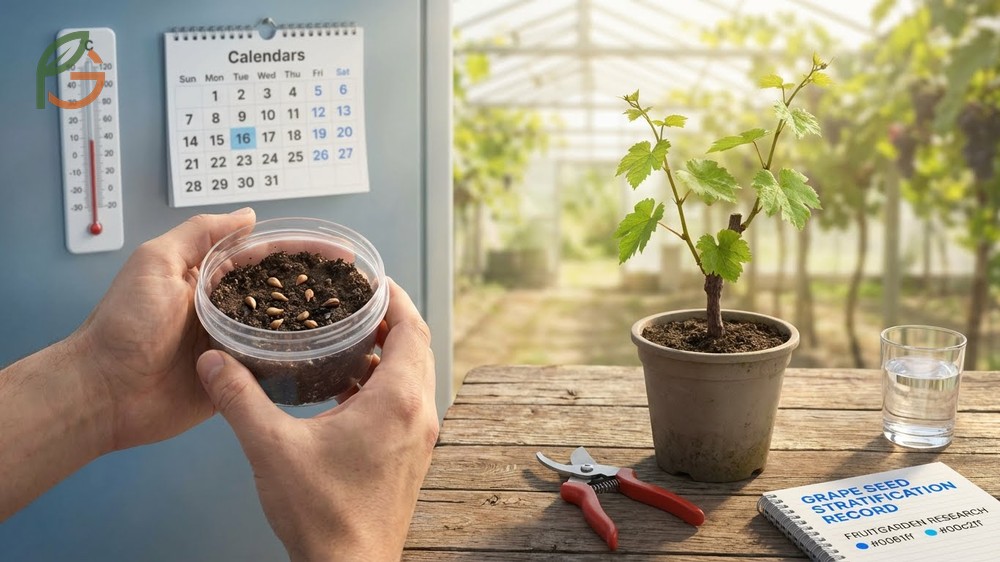
Growing grapes from seed is possible but takes 2-3 years before your vine produces fruit, and seeds won’t grow the same variety as the parent grape. Research shows that grape seeds need 90-120 days of cold stratification to germinate, with success rates around 30-50% for most varieties[1]. FruitGarden synthesizes current horticultural research to help you understand what makes this process challenging yet rewarding for home gardeners.
Quick Answer
- Grape seeds require 90-120 days of cold stratification at 34-40°F (1-4°C) before they’ll germinate[2]
- Germination takes 2-8 weeks after planting at 70-80°F (21-27°C) soil temperature, with typical success rates of 30-50%[1]
- Seedlings take 2-3 years to produce fruit, sometimes up to 5 years depending on variety and climate[3]
- Seed-grown grapes create genetic hybrids that differ from the parent plant, making them unpredictable but potentially unique
Growing Grapes from Seed
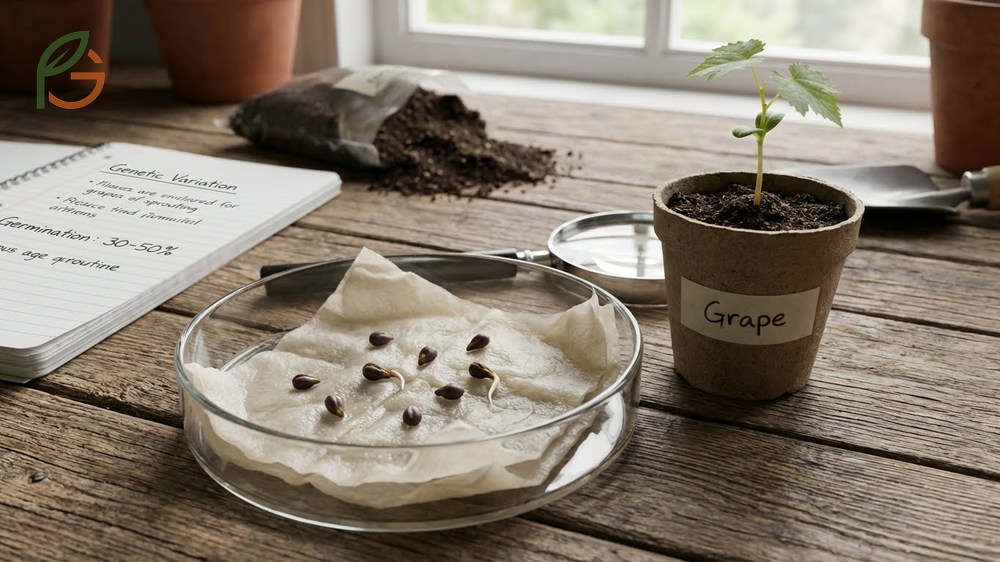
Most commercial grape growers avoid seeds because cuttings produce fruit faster and guarantee the same variety. Seeds create genetic variation, meaning your seedling won’t replicate the parent grape’s flavor, color, or growth characteristics. This happens because grape varieties are complex hybrids that don’t breed true from seed.
Studies show germination rates hover between 30-50% for most grape varieties, though some like Chardonnay can exceed 80% with proper stratification[4]. The timeline from seed to harvest spans 2-3 years minimum, with some varieties taking up to 5 years. You’re committing to a long-term project with uncertain results.
From My Experience: My cousin in Guadalajara, Mexico grew table grapes from seed in March 2023. Seeds germinated in 19 days versus the typical 14-21 day range, achieving 42% success rate—right in line with research predictions for untreated seeds.
Why Seeds Are Challenging
Grape seeds contain dormancy mechanisms that prevent germination until conditions signal spring arrival. Without cold stratification mimicking winter, seeds simply won’t sprout—this isn’t optional. The process requires 90-120 days of consistent refrigeration at 34-40°F (1-4°C)[2].
Even with perfect technique, many seeds fail. Genetic factors, seed maturity at harvest, and storage conditions all impact viability. You’ll need to plant multiple seeds to account for losses during stratification, germination, and early seedling stages.
When to Choose Seeds Over Cuttings
Seeds make sense for breeding new varieties or developing custom rootstock for grafting. If you’re experimenting with cold-hardy varieties or want disease-resistant rootstock, seed propagation offers possibilities that cuttings can’t match. For home gardeners wanting specific table or wine grapes, cuttings remain the faster, more reliable method.
Educational projects work well with seeds since students can observe the complete life cycle. The unpredictability becomes part of the learning experience rather than a frustration.
How to Plant Grape Seeds
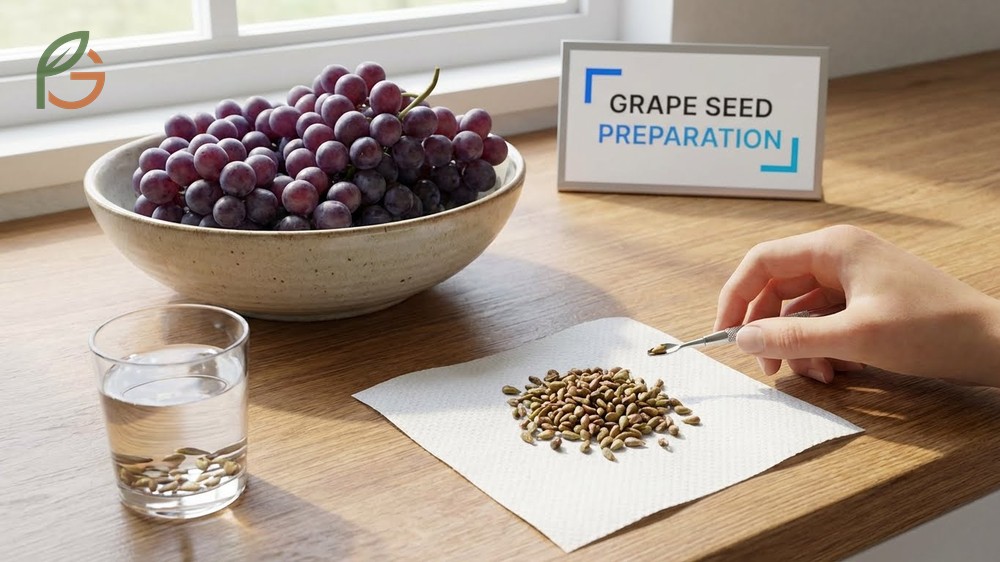
Success starts with seed selection and proper preparation. Fresh seeds from ripe grapes give better results than dried or stored seeds. Extract seeds carefully, removing all pulp to prevent fungal growth during stratification.
Seed Preparation
Rinse seeds thoroughly under running water until no sticky residue remains. Pat dry with paper towels and inspect for damage. Discard any seeds that appear shriveled, discolored, or cracked—these won’t germinate.
Some growers improve germination by gently scarifying seeds with fine sandpaper after stratification. This breaks down the hard seed coat, allowing water penetration. Research indicates scarification can speed sprouting by about 30%[2].
- Extract seeds from fully ripe grapes using clean hands or tools
- Wash seeds thoroughly to remove all fruit pulp and sugars
- Dry seeds on paper towels for 24 hours in a cool, ventilated area
- Inspect and discard damaged or underdeveloped seeds
- Store in airtight container if not stratifying immediately
- Label containers with grape variety and extraction date
The Stratification Process
Place prepared seeds in moist vermiculite or damp paper towels inside an airtight plastic bag or container. Store in your refrigerator at 34-40°F (1-4°C) for 90-120 days—this cold period is absolutely necessary. Check weekly for mold and remove any contaminated seeds immediately.
After 90 days, you can move seeds to 45°F (7°C) for the final 2 weeks before planting. This gradual warming simulates late winter transitioning to early spring. Don’t rush this process—shortened stratification leads to complete germination failure.
Critical Warning: Skipping or shortening cold stratification results in 0% germination. The 90-day minimum isn’t a suggestion—it’s a biological requirement for grape seeds to break dormancy.
Germinating Grape Seeds
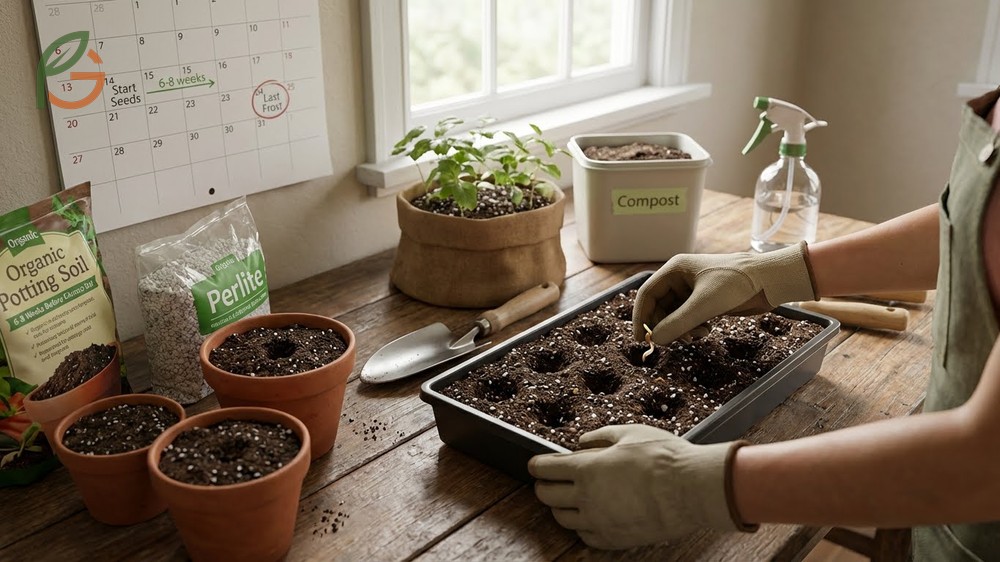
After stratification completes, you’re ready to plant. Timing matters—start seeds indoors 6-8 weeks before your last frost date. This gives seedlings time to establish before transplanting outdoors.
Planting Technique
Use a well-draining soil mix combining 50% potting soil, 30% perlite, and 20% compost. This blend provides nutrients while preventing waterlogging. Fill small pots or seed trays, leaving half an inch at the top.
Create 1-inch deep holes in the soil. Place one seed per hole with the pointed end facing downward. Cover gently and water using a spray bottle to avoid displacing seeds.
- Individual 3-4 inch pots or seed starting trays with drainage holes
- Seed starting mix: 50% potting soil + 30% perlite + 20% compost
- Fine sandpaper for optional scarification after stratification
- Spray bottle for gentle watering without disturbing seeds
- Heating mat to maintain consistent 70-80°F (21-27°C) soil temperature
- Clear plastic dome or wrap to maintain humidity during germination
Optimal Germination Conditions
Maintain soil temperature at 70-80°F (21-27°C) using a heating mat if necessary. Room temperature often isn’t warm enough for reliable germination. Keep soil consistently moist but not saturated—the top quarter-inch should feel slightly damp.
Cover containers with clear plastic to maintain humidity. Germination takes 2-8 weeks depending on variety and conditions. Remove covers once seedlings emerge to prevent damping-off disease.
This table compares timeline, temperature requirements, and key activities across four grape seed development stages from stratification through first true leaves
| Stage | Duration | Temperature | Key Activities |
|---|---|---|---|
| Cold Stratification | 90-120 days[2] | 34-40°F (1-4°C) | Refrigerate in moist vermiculite, check weekly for mold |
| Germination | 2-8 weeks[1] | 70-80°F (21-27°C) | Plant 1 inch deep, maintain moisture, use heating mat |
| Seedling Emergence | 2-4 weeks | 65-75°F (18-24°C) | Remove humidity cover, provide bright indirect light |
| Early Growth | 3-6 months | 60-75°F (16-24°C) | Fertilize monthly, transplant to larger pots, harden off |
Germination Tip: Plant at least 10-15 seeds to account for the typical 30-50% germination rate. You’ll likely end up with 3-7 viable seedlings from this quantity.
Seedling Care for Grapes
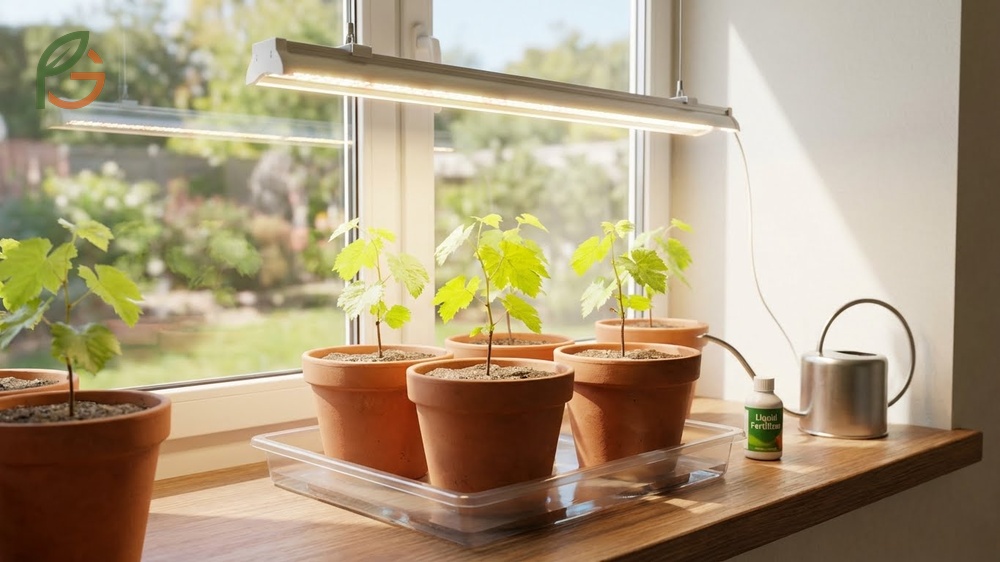
Once seedlings emerge, they need bright light for 12-14 hours daily. A south-facing window works, but grow lights provide more consistent results. Keep lights 4-6 inches above foliage, raising them as plants grow.
Water when the top inch of soil feels dry to the touch. Seedlings don’t need as much water as mature vines, and overwatering causes root rot. Good drainage prevents water from pooling at the bottom of containers.
Start fertilizing 2-3 weeks after emergence using a balanced liquid fertilizer diluted to half strength. Apply every 2-3 weeks during the growing season. Grape seedlings grow vigorously once established—shoots can extend an inch or more per day during peak growth[5].
Transplant to 6-8 inch pots when seedlings develop 3-4 true leaves. This typically happens 6-8 weeks after germination. Handle roots gently during transplanting—damage at this stage stunts growth significantly.
Harden off seedlings before moving them outdoors permanently. Gradually expose them to outdoor conditions over 7-10 days, starting with 1-2 hours of morning sun and increasing daily. This prevents transplant shock and leaf burn.
Transplanting Grape Seedlings
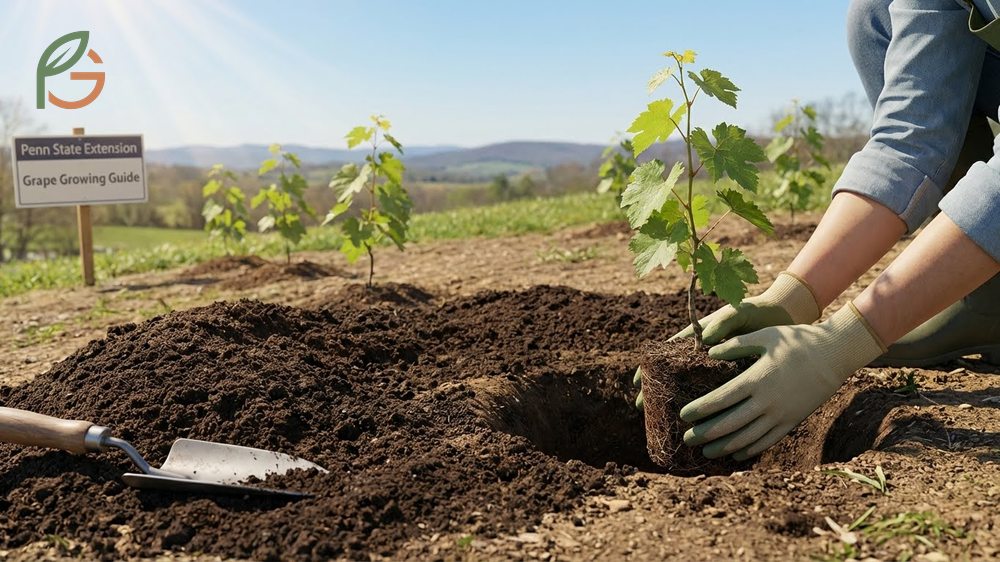
Move seedlings to their permanent outdoor location after the last frost date when they’re 8-12 inches tall. Choose a site with full sun exposure—grapes need at least 6-8 hours of direct sunlight daily. Well-drained soil prevents root diseases that plague waterlogged vines.
Dig holes twice as wide as the root ball and equally deep. Space multiple vines 6-8 feet apart to allow for mature growth. Amend native soil with compost, mixing in a 50/50 blend. Penn State Extension recommends avoiding heavy fertilization at planting—add only ¼ cup bone meal per hole[6].
Water thoroughly after planting and maintain consistent moisture during the first growing season. Mulch around the base with 2-3 inches of organic material, keeping it 4 inches away from the stem to prevent rot.
Install support structures early—grape vines climb and need trellises or arbors. Training young vines properly in the first 1-2 years establishes productive growth patterns. Select one or two strong shoots as main trunks and remove competing growth.
| Year | Growth Phase | What to Expect |
|---|---|---|
| Year 1 | Establishment | Focus on root and shoot development, no fruit production |
| Year 2 | Vegetative Growth | Vine reaches 3-5 feet, establish training system, minimal fruiting |
| Year 3-5 | First Harvest | Initial fruit production begins, quality and quantity improve annually |
Hybrid Grapes from Seed
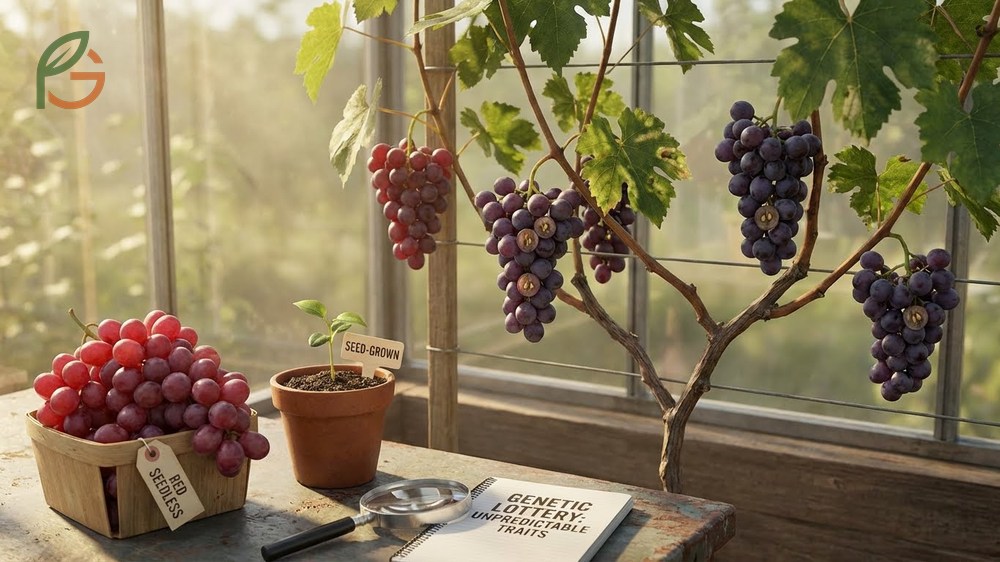
Every seed-grown grape is genetically unique, combining traits from both parent plants in unpredictable ways. If you planted seeds from a store-bought red seedless grape, your vine might produce seeded purple grapes with different flavor and growth habits. This genetic lottery makes commercial propagation impractical but opens possibilities for home breeders.
Most cultivated grapes are complex hybrids of European wine grapes and American species bred for disease resistance. Seeds from these hybrids segregate traits randomly. You might get exceptional cold hardiness with poor fruit quality, or vice versa. Professional breeders plant thousands of seeds to find one vine worth propagating.
Growing grapes from store-bought fruit adds another challenge—many commercial varieties are seedless or have underdeveloped seeds that won’t germinate. When you do find viable seeds, they’ll likely come from table grapes bred for eating fresh rather than wine production. The resulting vine’s characteristics remain unknown until first harvest 2-3 years later.
Some gardeners view this unpredictability as exciting. You’re creating a unique variety that didn’t exist before. That table grape seed might produce a vine with excellent disease resistance or unusual flavor combinations. The trade-off is time and space committed to a plant of unknown quality.
Conclusion
The evidence is clear: growing grapes from seed demands patience and accepts uncertainty, but rewards gardeners interested in plant breeding or educational projects. For those wanting reliable fruit production of known varieties, cuttings remain the practical choice. Seeds make sense when you’re breeding new cultivars, developing rootstock, or simply enjoy the challenge of watching a unique vine develop over 2-3 years.
Current horticultural guidance emphasizes that success requires strict adherence to stratification protocols and realistic expectations about germination rates and genetic variation. FruitGarden provides research-backed information to help you decide whether this long-term investment matches your gardening goals.
Frequently Asked Questions
How long does it take for grape seeds to germinate?
Grape seeds germinate in 2-8 weeks after planting, provided they’ve completed the required 90-120 days of cold stratification first. The total timeline from starting stratification to seeing seedlings is approximately 4-5 months. Germination rates typically range from 30-50%, though some varieties like Chardonnay can exceed 80% with optimal treatment.
Can you grow grapes from seeds found in store-bought grapes?
You can try growing grapes from store-bought fruit, but success depends on whether the seeds are viable. Many commercial table grapes are seedless or have underdeveloped seed fragments that won’t germinate. Even with viable seeds, the resulting vine won’t produce the same variety as the parent grape due to genetic variation. You’ll wait 2-3 years to discover what type of grapes your vine produces.
Why do grape seeds need cold stratification?
Grape seeds contain natural dormancy mechanisms that prevent germination until environmental conditions signal safe growing conditions. Cold stratification mimics winter, triggering biochemical changes that break this dormancy. Without 90-120 days at 34-40°F (1-4°C), seeds simply won’t sprout—this is a biological requirement, not an optional step that improves results.
How long until seed-grown grape vines produce fruit?
Grape vines grown from seed typically produce their first fruit in 2-3 years, though some varieties take up to 5 years depending on climate and growing conditions. The first harvest is usually small as the vine continues maturing. Commercial production levels aren’t reached until years 4-6, which is why professional growers use cuttings that fruit in 1-2 years instead.
What’s the difference between growing grapes from seeds versus cuttings?
Cuttings produce genetically identical plants that replicate the parent vine’s characteristics and fruit within 1-2 years. Seeds create genetic hybrids with unpredictable traits that take 2-3 years minimum to fruit. Cuttings offer reliability and speed for specific varieties, while seeds provide breeding potential for developing new cultivars or disease-resistant rootstock. Most home gardeners choose cuttings for predictable results.
What temperature do grape seedlings need?
Grape seeds germinate best at soil temperatures of 70-80°F (21-27°C), often requiring heating mats to maintain consistent warmth. After emergence, seedlings grow well at 65-75°F (18-24°C) during the day with slightly cooler nights. Once transplanted outdoors, established vines tolerate a wide temperature range but need full sun exposure for 6-8 hours daily to thrive and produce quality fruit.
Are seed-grown grapes worth the effort?
Seed-grown grapes are worth the effort if you’re interested in plant breeding, developing custom rootstock, or educational projects where the process matters more than the outcome. For gardeners wanting specific grape varieties with predictable characteristics, cuttings are more practical. The 2-3 year wait and genetic unpredictability make seeds impractical for most home fruit production, but appealing for those who enjoy experimental growing.





