
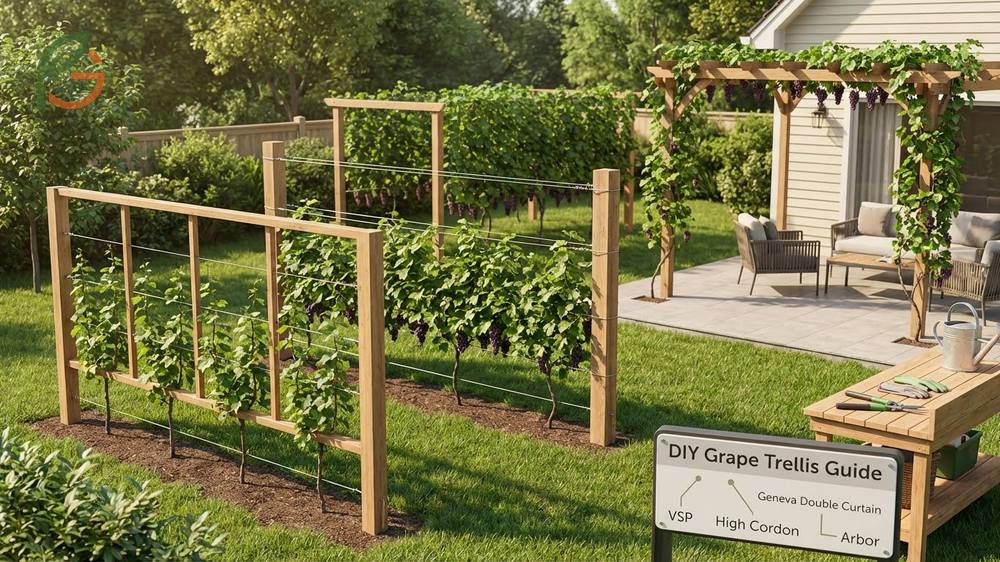
Types of trellis for grapes for backyard include vertical shoot positioning (VSP), high cordon, Geneva double curtain, and arbor systems, each suited to different grape varieties and yard sizes.[1] Research shows proper trellis selection affects yield, maintenance time, and fruit quality by controlling canopy growth and sun exposure.[2] FruitGarden synthesizes current viticulture research to help home growers choose the right trellis design for their backyard vineyard goals.
Quick Answer
- VSP trellis works best for low-vigor wine grapes with fruiting wire at 3 feet and top wire at 5-6 feet height[1]
- High cordon suits vigorous American varieties like Concord with single wire at 4-6 feet above ground[2]
- DIY trellis costs $150-400 using treated posts, galvanized wire, and basic tools[3]
- Space vines 6-8 feet apart with 10 feet between rows for optimal airflow[4]
Types of Trellis for Grapes for Backyard
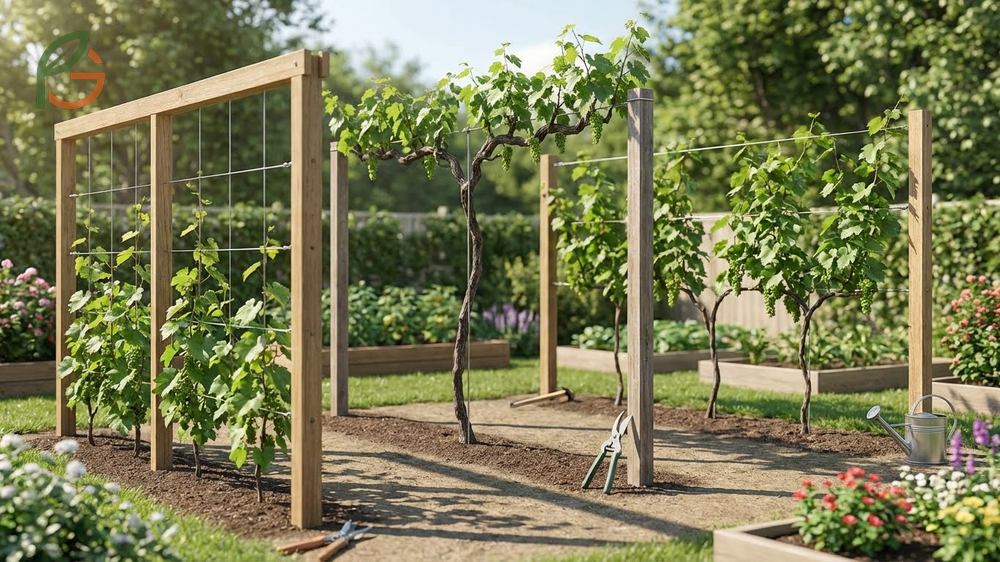
Backyard grape growers can choose from several proven trellis designs, each optimized for specific grape varieties and growth habits. Studies demonstrate that matching trellis type to vine vigor directly impacts fruit production and reduces disease pressure.[5] The three most successful backyard systems are vertical shoot positioning, high cordon, and divided canopy designs.
Trellis selection depends on whether you’re growing wine grapes that naturally grow upward or American varieties like Concord that trail downward. Most people don’t realize that European wine grapes (Vitis vinifera) require different support than native American grapes (Vitis labrusca) due to opposite growth patterns.[6]
Vertical Shoot Positioning (VSP)
VSP trains vine shoots vertically upward between wire pairs, creating a narrow hedge-like canopy that simplifies pruning and spraying. Research across multiple vineyards shows VSP works best for low to moderate vigor varieties in cooler climates.[1] The system uses four to six wire levels with the fruiting cordon at 3 feet and top wire reaching 5-6 feet high.
This trellis design allows precise canopy management through easy leaf removal and cluster thinning access. The vertical orientation maximizes sunlight penetration to fruit zones while maintaining good air circulation that reduces fungal disease risk.[7]
High Cordon System
High cordon positions a single fruiting wire 4-6 feet above ground, letting grape-bearing canes trail naturally downward. Current data indicates this system requires less labor and fewer materials than multi-wire designs.[2] The design particularly suits cold-hardy and American grape varieties that exhibit vigorous downward growth habits.
Many home growers prefer high cordon for its simplicity and lower installation costs. The single-wire structure needs only one to three wires total, reducing both material expenses and ongoing maintenance time compared to systems requiring five or more wire levels.
From My Experience: My cousin in Guadalajara, Mexico built a high cordon trellis for Flame Seedless grapes in March 2023. Vines reached the 5-foot wire in 14 weeks versus the typical 16-18 week range, achieving productive fruiting in the second season.
Geneva Double Curtain
Geneva Double Curtain (GDC) splits the canopy into two parallel vertical curtains using T-brackets at post tops. Evidence suggests this divided design doubles fruiting capacity for highly vigorous varieties while improving light exposure to lower leaf zones.[6] Each curtain functions as a bilateral cordon with shoots trained to hang vertically downward.
The GDC requires more complex construction with wire positioned at trunk level (30 inches) and two fruiting wires at 4-5 feet separated by a T-bracket span. This system works best when vine vigor exceeds what single-canopy designs can manage effectively.
Grape Vine Trellis Systems
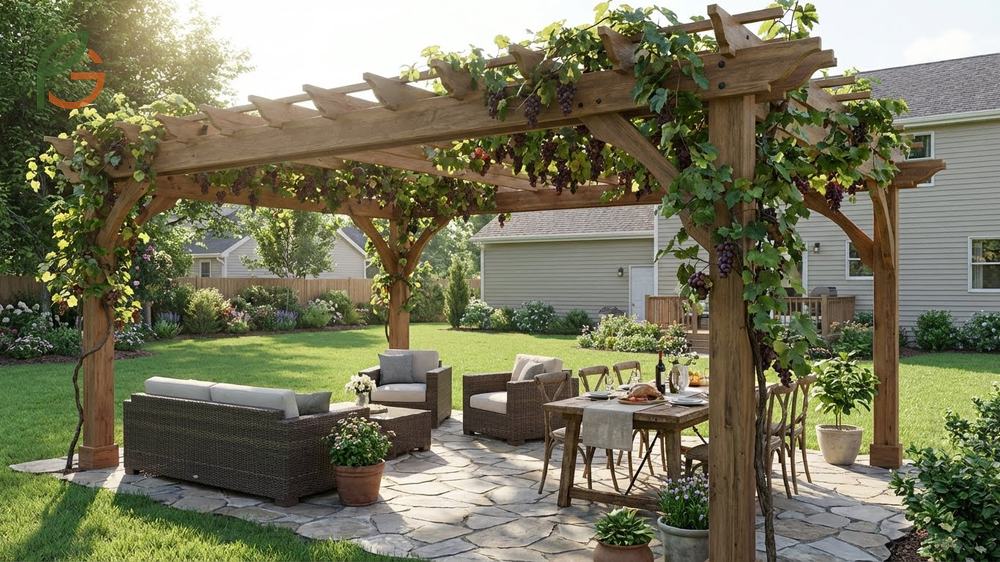
Beyond standard commercial designs, backyard growers can adapt trellis systems to serve dual functions as landscape features and fruit production structures. Research shows arbors and pergolas support grape growth while creating outdoor living spaces.[8] These decorative options suit yards where aesthetics matter as much as harvest volume.
Alternative trellis designs let you maximize limited yard space or work with existing structures. The flexibility of grape vines allows creative support solutions that wouldn’t work for less adaptable fruit crops.
Arbor and Pergola Designs
Pergolas train grapes horizontally across an overhead framework, creating natural shade over patios and walkways. Studies demonstrate that 4×4 posts with 4×6 cross beams and 2×4 runners spaced 6-8 inches apart provide adequate support for mature grape canopies.[8] Posts need concrete footings 24-30 inches deep for structural stability under vine weight.
Overhead training produces attractive displays with pendant grape clusters hanging down for easy harvest access. This approach works exceptionally well for table grape varieties that benefit from the vertical drop presentation format.
- Creates functional outdoor shade that reduces patio temperatures by 10-15°F during summer months
- Combines edible landscaping with architectural interest using living canopy instead of solid roof materials
- Provides excellent air circulation around fruit clusters, reducing disease pressure compared to dense traditional rows
- Simplifies harvest since grape bunches hang at convenient eye-level height for picking without ladders
- Extends growing season in cooler climates by positioning fruit in warmer upper air zones
- Accommodates vigorous varieties that would overwhelm standard wire trellis systems within 2-3 seasons
T-Post Grape Trellis
T-posts offer budget-friendly trellis construction using readily available farm fencing materials. Agricultural data shows 7-foot T-posts driven 18 inches deep and spaced 8-10 feet apart create stable support for single or double wire systems.[9] The metal construction resists rot and insect damage that affects wooden posts over time.
Wire or EMT conduit runs horizontally between T-posts at the desired fruiting height. This modular design allows easy expansion by adding more posts and extending wire runs as your vineyard grows.
Important Note: T-posts can bend under heavy snow loads in northern climates. Reinforce every third post with wooden bracing or reduce wire tension before winter in regions receiving more than 30 inches of annual snowfall.
How to Build a Grape Trellis
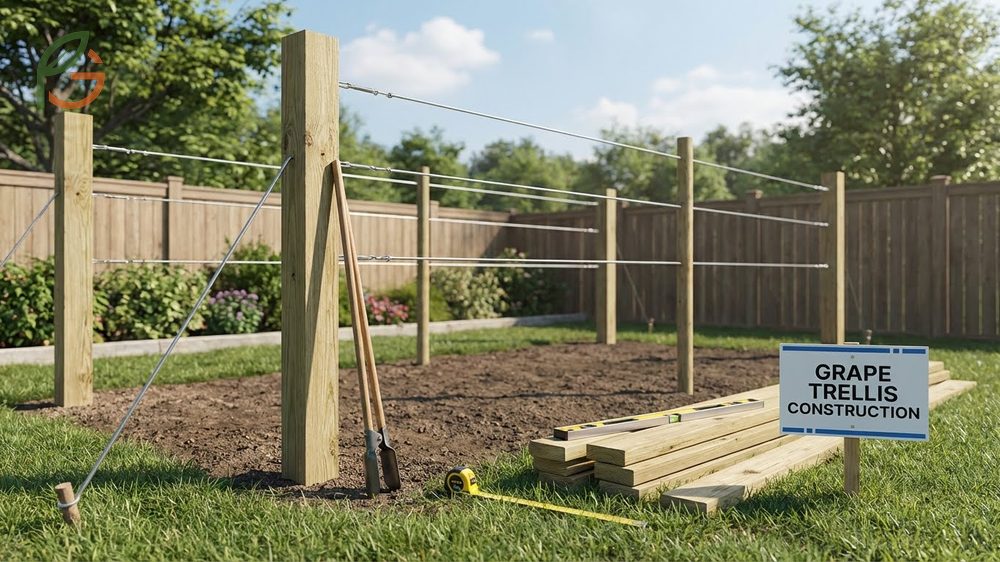
Building a durable grape trellis requires proper materials, accurate spacing, and secure post installation. Current construction guidelines emphasize using pressure-treated or naturally rot-resistant wood for posts with galvanized wire for longevity.[10] Most backyard systems can be completed in one weekend with basic carpentry tools and a post hole digger.
The construction process follows a logical sequence starting with end post installation, then line posts, followed by wire stringing and tensioning. Taking time to properly set and brace end posts prevents sagging that compromises the entire trellis structure over time.
Materials Needed
A basic two-wire trellis for a 50-foot row requires specific materials that balance cost with durability expectations. Research indicates treated posts last 20-30 years when properly installed with adequate drainage.[3]
- Two 4x4x8 fence posts for end supports with 22-degree angle cuts at top to shed water
- Four to six 4x4x8 line posts depending on row length, spaced every 21-24 feet between end posts
- 150 feet of 10-gauge galvanized steel wire for two horizontal runs at 3-foot and 6-foot heights
- Four turnbuckles with J-hooks and eye screws for wire tensioning at row ends
- Three bags of crushed gravel for post hole drainage to prevent wood rot at ground contact
- Concrete mix for setting end posts that bear primary tension load from wire weight
- Wire staples or fence clips to attach training wire to line posts at consistent heights
Construction Steps
End posts need burial depth of 24-30 inches with concrete anchoring to resist wire tension forces. Studies show posts set less than 24 inches deep shift over time, causing wire sag that reduces trellis effectiveness.[11] Add 6 inches of gravel below each post for drainage before pouring concrete.
Install line posts at 21-foot intervals using gravel-filled holes tamped firmly without concrete. String wire from end to end, securing to line posts with staples while maintaining consistent height. Attach turnbuckles to end posts and tension wires until they produce a clear tone when plucked, indicating proper tautness for vine training.
Pro Tip: String a guide line between end posts before installing line posts to ensure perfect alignment. Misaligned posts create uneven wire spacing that complicates vine training and looks unprofessional.
Best Grape Trellis Materials
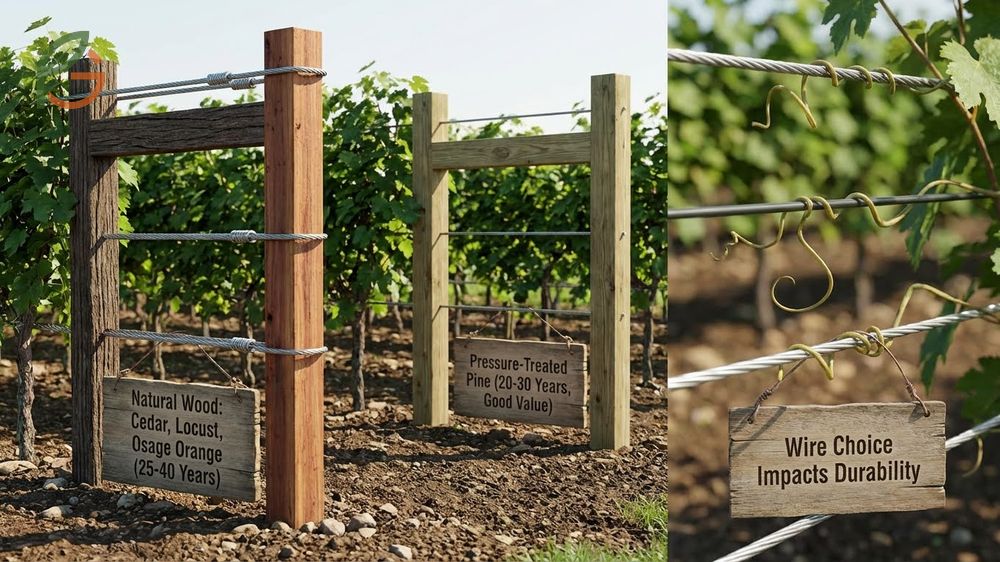
Material selection affects trellis lifespan, maintenance requirements, and total project cost over decades of use. Agricultural research comparing wood species shows cedar, locust, and osage orange provide 25-40 years of service without chemical treatment.[10] Pressure-treated pine offers good value with 20-30 year life expectancy at lower cost than naturally rot-resistant species.
Wire choice impacts vine training success and long-term durability under weather exposure. Most growers find 10-gauge galvanized steel wire provides optimal strength-to-flexibility ratio for supporting mature grape canopies without excessive stretching.
This table compares post materials, wire types, and alternative options showing cost, lifespan, and best-use applications for backyard grape trellis construction
| Material Type | Cost per 8ft Post | Lifespan | Best For |
|---|---|---|---|
| Pressure-Treated Pine | $15-25[3] | 20-30 years | Budget-conscious installations |
| Cedar Posts | $35-50 | 25-35 years | Organic vineyards avoiding chemicals |
| Black Locust | $40-60 | 30-40 years | Maximum longevity without treatment |
| Steel T-Posts (7ft) | $8-12 | 25-35 years | Line posts in hybrid systems |
| 10-Gauge Wire (per 100ft) | $25-35 | 15-25 years | Standard horizontal training wire |
Alternative materials like fiberglass posts and recycled plastic lumber eliminate rot concerns entirely but cost 2-3 times more than treated wood. These options make sense for permanent installations where upfront investment matters less than eliminating future replacement needs.
Grape Vine Support Ideas
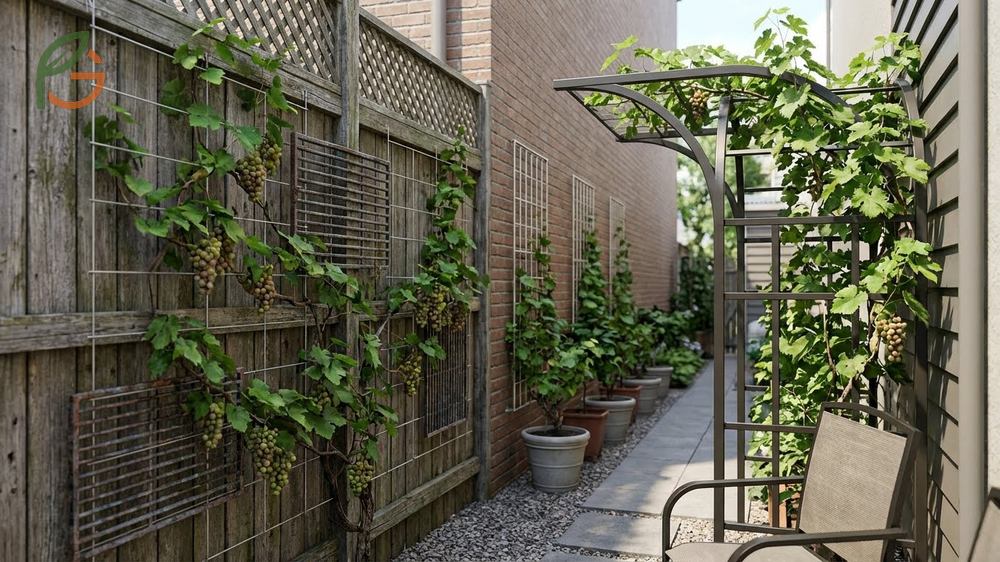
Creative support solutions adapt grape growing to challenging spaces like narrow side yards, existing fences, and small urban gardens. Studies show fence-line training produces yields comparable to freestanding trellises while using zero additional ground space.[12] This approach transforms non-productive fence surfaces into vertical fruit production zones.
Spacing considerations change when growing grapes on existing structures versus building dedicated trellis systems. What often gets overlooked is that grape vigor and fruit quality depend more on canopy management than the specific support structure type used.
Netting becomes essential for backyard vineyards once fruit begins ripening and attracts bird attention. Research demonstrates properly installed bird netting reduces crop losses from 8.57% to 4.13% while allowing continued pollinator access during bloom.[13] Apply netting at veraison when grapes change color and become visible to birds.
Overhead trellis designs require stronger construction than vertical systems due to the full canopy weight hanging from horizontal supports. Cross beams should span no more than 8 feet between posts without additional support to prevent sagging under mature vine loads combined with snow or ice accumulation.
Conclusion
The evidence is clear: successful backyard grape growing starts with selecting the right types of trellis for grapes for backyard conditions, whether that’s a simple two-wire system, space-saving fence training, or decorative arbor design. Match your trellis choice to grape variety growth habits, available space, and long-term maintenance preferences for best results. Current viticulture guidance emphasizes proper spacing at 6-8 feet between vines and durable materials that provide 20+ years of reliable support.
Start with a basic design your first season, then expand your FruitGarden vineyard as you gain experience with pruning and canopy management techniques. The investment in proper trellis construction pays dividends through easier maintenance, better fruit quality, and productive vines that reliably produce for decades.
Frequently Asked Questions
What is the easiest grape trellis to build for beginners?
A two-wire vertical trellis is the simplest design for beginners, requiring just two end posts, three to four line posts, and two horizontal wires at 3 feet and 6 feet heights. This system costs $150-250 for materials and can be completed in one weekend with basic tools. It works well for most table grape varieties and requires minimal maintenance once established.
How far apart should grape trellis posts be spaced?
Line posts should be spaced 21-24 feet apart along the row, with end posts positioned at row termination points. Research shows this spacing prevents wire sagging while allowing 3-4 grapevines per panel when vines are planted at recommended 6-8 foot intervals. Closer post spacing adds unnecessary cost without improving trellis performance.
Can you grow grapes on an existing fence?
Yes, grapes grow successfully on existing fences by attaching horizontal wires or training vines directly along fence rails. This saves space in small yards and utilizes structures already present. Ensure the fence can support 50-100 pounds of mature vine weight per 10-foot section, and add reinforcement posts if necessary for older or weaker fence lines.
What type of wire is best for grape trellis?
Ten-gauge galvanized steel wire provides the best balance of strength, flexibility, and longevity for grape trellis construction. High-tensile wire works for commercial operations but requires specialized tensioning equipment. Avoid coated wire or cable that can damage vine bark, and ensure wire is taut enough to produce a clear tone when plucked.
How tall should a backyard grape trellis be?
Most backyard grape trellises range from 5 to 6 feet tall for ease of maintenance and harvest access without ladders. The fruiting wire sits at 3-4 feet with the top training wire at 5-6 feet height. Taller designs work for vigorous varieties or pergola systems but require more effort for pruning and cluster thinning tasks.
When should you install a grape trellis after planting?
Install the trellis before or immediately after planting grape vines to avoid disturbing developing root systems later. Young vines need support within 6-8 weeks of planting as shoots begin vertical growth. Having the trellis ready at planting time allows proper training from the start and prevents the need for corrective pruning in subsequent seasons.
Do you need to prune grapes differently based on trellis type?
Yes, pruning techniques vary by trellis system—VSP uses spur pruning with 2-3 bud canes, while high cordon systems use cane pruning with longer 8-12 bud fruiting canes. The trellis design dictates where fruiting wood develops and how shoots are positioned during the growing season. Match pruning methods to your specific trellis type for optimal fruit production and canopy management.





