

Are grapes safe during pregnancy? Yes, grapes are generally safe to eat during pregnancy when consumed in moderation[1]. Research shows these fruits provide essential nutrients like vitamin C, vitamin K, and fiber that support healthy fetal development[2]. FruitGarden synthesizes current nutritional research to help expectant mothers make informed decisions about fruit consumption during pregnancy.
Quick Answer
- Grapes contain vitamin C (14% DV)[3], 1g fiber[3], and antioxidants per serving
- One serving equals 22 seedless grapes[4] or 1 cup for proper portion control
- Grapes are 80-90% water[5], helping maintain amniotic fluid levels
- Always wash thoroughly with water or vinegar solution to remove pesticides before eating
Are Grapes Safe During Pregnancy
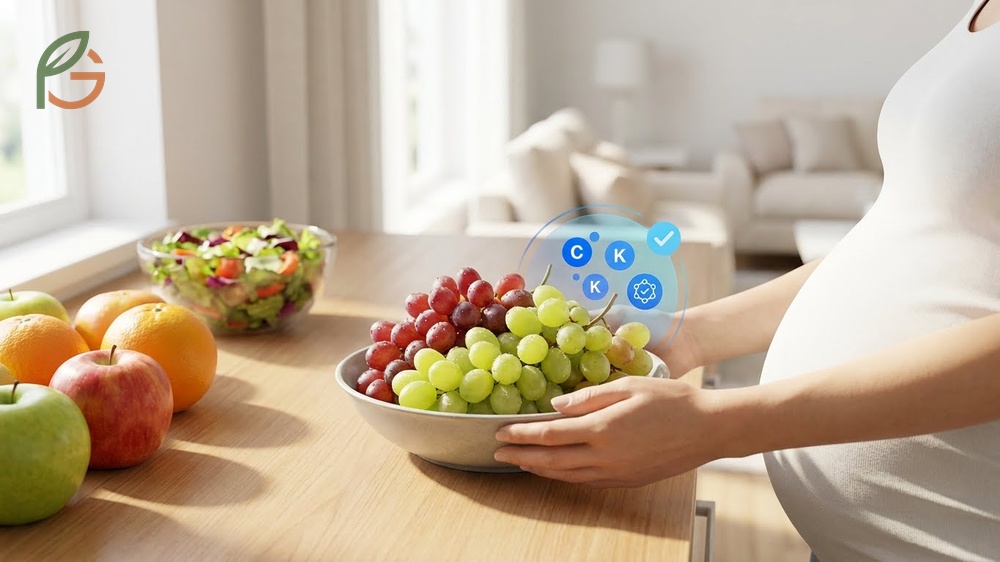
Current medical guidance confirms grapes are safe for pregnant women when eaten as part of a balanced diet[1]. Major medical organizations don’t recommend avoiding grapes during pregnancy. The concerns you might see online typically relate to natural sugar content and pesticide residues rather than inherent dangers in the fruit itself.
Studies demonstrate that grapes contain beneficial nutrients including vitamin C, vitamin K, potassium, and antioxidants that support maternal and fetal health[2]. These compounds help boost immunity, promote healing, and may reduce risks of pregnancy complications like preeclampsia and fetal growth restriction. The key is eating grapes in appropriate portions rather than avoiding them completely.
Research shows that whole fruits like grapes provide fiber that helps regulate blood sugar absorption, making them preferable to fruit juices during pregnancy. The fiber content slows down sugar release into your bloodstream, preventing sharp spikes in glucose levels.
Resveratrol in Grapes vs Supplements
Purple and red grapes contain resveratrol, a powerful antioxidant with potential health benefits[2]. However, the amount of resveratrol naturally present in grapes is too small to pose any danger to you or your developing baby. This is vastly different from concentrated resveratrol supplements.
Primate studies reveal that high-dose resveratrol supplements during pregnancy may cause pancreatic problems in the fetus[6]. Doctors at Oregon Health & Science University recommend pregnant women avoid resveratrol supplements entirely. The concentrated amounts in supplement form create risks that don’t exist with normal grape consumption.
Important Distinction: Eating grapes is safe during pregnancy, but you should avoid resveratrol dietary supplements. The natural amounts in whole grapes won’t harm your baby, while supplement doses may cause developmental concerns.
Nutritional Profile of Grapes
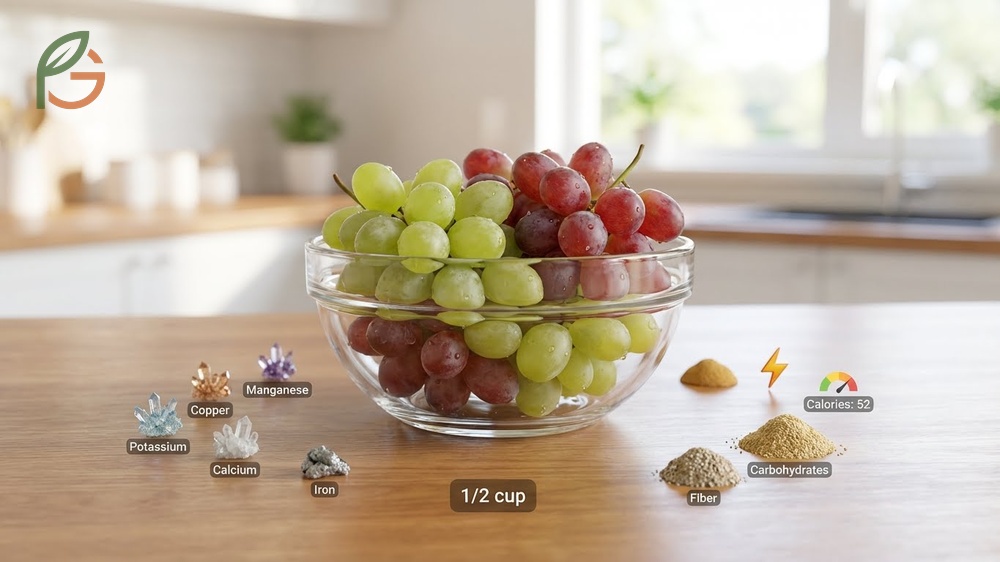
One cup of grapes delivers 52 calories, 14g carbohydrates, and 1g dietary fiber[3]. This serving provides 14% of the daily value for vitamin C[3], which supports tissue growth and helps your body absorb iron more efficiently. Grapes also contain vitamin K for blood clotting and bone health.
The natural sugars in grapes total about 12g per cup[3], primarily in the form of glucose and fructose. These simple carbohydrates provide quick energy for pregnant women experiencing fatigue, especially during the first trimester.
- Vitamin C: Supports immune function and collagen production for baby’s tissue development
- Vitamin K: Essential for blood clotting and bone development in the growing fetus
- Potassium: Helps maintain healthy blood pressure and fluid balance during pregnancy
- Antioxidants: Protect cells from oxidative damage and support placental health
- Folate: Contributes to neural tube development when combined with other folate-rich foods
- Iron: Present in small amounts, works with vitamin C to prevent pregnancy anemia
Are Grapes Good for Pregnancy

Evidence indicates grapes offer multiple health benefits when included in a pregnancy diet. The combination of vitamins, minerals, fiber, and water content addresses several common pregnancy concerns. Most pregnant women find grapes helpful for managing digestive issues and staying hydrated throughout the day.
Research demonstrates that the antioxidants in grapes may reduce risks of certain pregnancy complications[2]. These compounds support immune function and cellular health for both mother and baby. The fiber content also helps address constipation, which affects many pregnant women due to hormonal changes.
Benefits for Digestive Health
Grapes contain dietary fiber that helps reduce chances of gestational diabetes and preeclampsia in expectant mothers[5]. The fiber keeps your digestive system moving regularly, preventing the uncomfortable constipation that’s common during pregnancy. This natural relief is preferable to relying on medications or supplements.
Eating grapes with their skins intact provides the maximum fiber benefit. The skins contain most of the fiber and many beneficial plant compounds that support gut health.
Hydration and Amniotic Fluid
Grapes are composed of 80-90% water, making them excellent for maintaining proper hydration during pregnancy[5]. This high water content helps maintain amniotic fluid levels, which is critical for your baby’s healthy growth and development. Adequate hydration also supports your increased blood volume during pregnancy.
The natural electrolytes in grapes complement water intake by helping your body retain proper fluid balance. This matters because pregnant women need about 10 cups of fluids daily, and water-rich fruits contribute to meeting this requirement.
Iron Absorption and Anemia Prevention
Pregnant women often develop iron deficiency anemia due to increased blood volume demands[5]. The vitamin C in grapes significantly enhances iron absorption from other foods you eat during the same meal. Pairing grapes with iron-rich foods like lean meats, beans, or fortified cereals maximizes the iron your body can use.
This vitamin C boost helps your body produce more hemoglobin, which carries oxygen to both you and your developing baby. Better iron absorption means reduced fatigue and improved energy levels throughout pregnancy.
- Reduces morning sickness: The natural sugars and refreshing taste help combat first-trimester nausea
- Boosts energy levels: Quick-digesting carbohydrates provide immediate fuel without blood sugar crashes
- Supports heart health: Antioxidants help maintain cardiovascular function during pregnancy’s demands
- Enhances skin health: Vitamin C and antioxidants promote healthy skin as your body changes
- Provides natural sweetness: Satisfies sweet cravings with nutrients instead of empty calories
Timing Tip: Many pregnant women find grapes most helpful in the morning to combat nausea or in the afternoon for an energy boost. The natural sugars provide quick fuel without the crash that comes from processed sweets.
Gestational Diabetes and Grapes
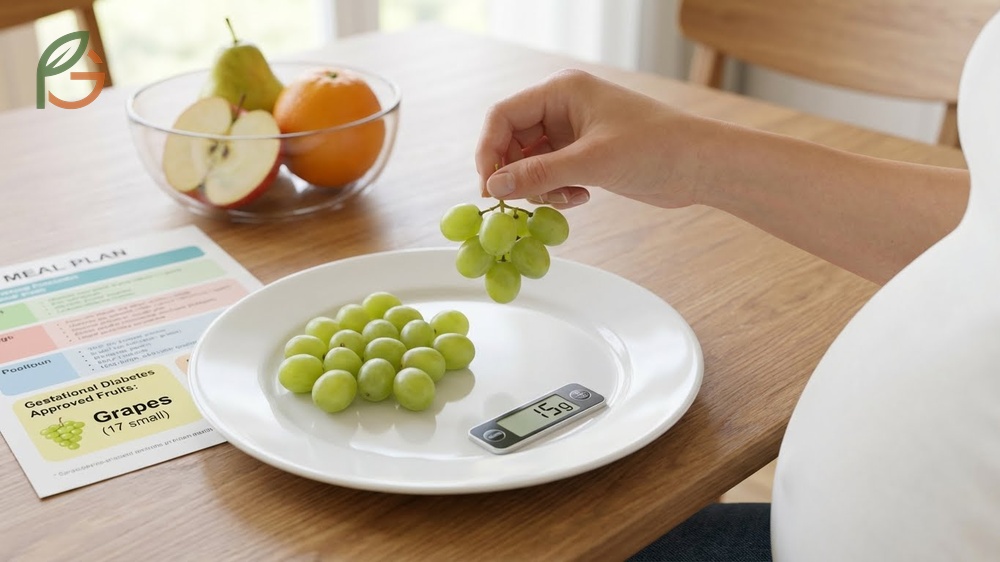
Women with gestational diabetes can include grapes in their meal plans when they follow proper portion guidelines. Grapes have a low glycemic index rating, which means they cause a slower rise in blood sugar compared to high-GI fruits[7]. The NHS lists grapes among acceptable fruits for managing gestational diabetes alongside apples, pears, and oranges.
Current guidance suggests a serving of 17 small grapes contains approximately 15 grams of carbohydrates[8], which fits within standard carbohydrate counting for gestational diabetes meal planning. This portion size allows you to enjoy grapes while maintaining stable blood glucose levels. The fiber in whole grapes helps slow sugar absorption, preventing sharp spikes.
Pairing grapes with protein sources like cheese, nuts, or Greek yogurt further stabilizes blood sugar response. This combination slows digestion and provides sustained energy without the glucose fluctuations that can complicate gestational diabetes management.
This table compares grape serving sizes for general pregnancy versus gestational diabetes, showing portion size and carbohydrate content for blood sugar management
| Condition | Serving Size | Carbohydrates | Best Practice |
|---|---|---|---|
| General Pregnancy | 22 seedless grapes[4] | ~14g | Eat with meals or as snack |
| Gestational Diabetes | 17 small grapes[8] | 15g | Pair with protein source |
| Dried Grapes (Raisins) | 2 tablespoons | 15g | Use sparingly due to concentrated sugars |
- Monitor blood sugar levels 1-2 hours after eating grapes to understand your personal response
- Choose fresh grapes over grape juice, which lacks fiber and causes faster blood sugar spikes
- Avoid eating grapes on an empty stomach if you have gestational diabetes
- Spread fruit intake throughout the day rather than consuming multiple servings at once
- Track your total carbohydrate intake to stay within your healthcare provider’s recommendations
Medical Guidance: If you’ve been diagnosed with gestational diabetes, work with your healthcare provider or dietitian to determine appropriate grape portions for your specific blood sugar targets and meal plan.
Washing Grapes Pregnancy
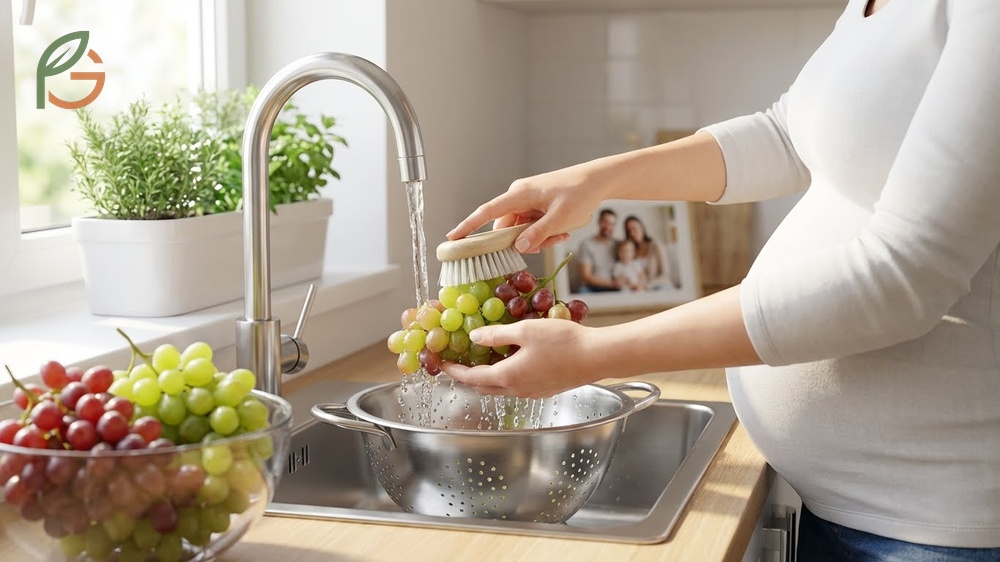
Thoroughly washing grapes before eating is essential during pregnancy to reduce pesticide residues and eliminate harmful bacteria. Studies indicate that simple rinsing doesn’t completely remove all pesticide residues, but proper washing techniques significantly reduce exposure. Pregnant women have heightened vulnerability to foodborne illnesses, making this step particularly important.
The most effective washing method combines running water with gentle scrubbing or a vinegar solution. Place grapes in a colander and rinse under cool running water for 30-60 seconds while gently rubbing them. This mechanical action removes more contaminants than soaking alone.
For enhanced cleaning, create a solution of 1 part white vinegar to 3 parts water in a large bowl. Soak grapes for 5-10 minutes, then rinse thoroughly under running water to remove the vinegar taste. This approach breaks down pesticide residues more effectively than water alone while killing surface bacteria.
- Remove grapes from stems only after washing to prevent absorption of wash water through stem holes
- Discard any visibly moldy, shriveled, or damaged grapes before washing the rest
- Use a dedicated produce brush for organic grapes if they have dirt or debris
- Pat grapes dry with clean paper towels or a produce-specific cloth after washing
- Store washed grapes in the refrigerator and consume within 3-5 days for best quality
- Wash grapes immediately before eating rather than in advance to prevent premature spoiling
Food Safety Note: Even organic grapes require washing. While they contain fewer synthetic pesticides, they can still harbor natural contaminants, bacteria from handling, or environmental residues that washing removes.
Safe Fruit Serving Size Pregnancy

Pregnant women should aim for 1.5 to 2 cups of fruit daily, according to USDA dietary guidelines[4]. This amount provides essential nutrients without excessive sugar or calorie intake. At least half of your fruit consumption should come from whole fruits rather than juices to maximize fiber intake.
One cup of grapes equals 22 seedless grapes or about 1 cup when measured whole or cut up[4]. This standard serving helps you track your daily fruit intake accurately. Most pregnant women can safely eat 1-2 servings of grapes per day as part of a varied fruit rotation.
Variety matters during pregnancy because different fruits offer different nutrient profiles. Rotate grapes with berries, citrus fruits, apples, and stone fruits throughout the week. This approach ensures you’re getting a wide spectrum of vitamins, minerals, and beneficial plant compounds rather than relying on just one or two fruits.
The American Heart Association recommends similar fruit intake goals, suggesting 2 cups per day for most adults[9]. During pregnancy, these portions support both maternal health and fetal development. Fresh, frozen, or properly canned fruits all count toward your daily targets.
- Eat whole fruits with skins when possible to maximize fiber and nutrient intake
- Limit fruit juice to half a cup daily since it lacks fiber and concentrates sugars
- Choose fresh or frozen fruits without added sugars or syrups
- Time fruit consumption with meals or snacks that include protein for better blood sugar control
- Listen to your body’s hunger and fullness cues rather than forcing specific amounts
Balanced Approach: While grapes are nutritious, don’t make them your only fruit source. Different fruits provide unique benefits—berries offer more antioxidants, citrus provides extra vitamin C, and bananas deliver more potassium.
Conclusion
The evidence is clear: grapes are safe during pregnancy when eaten in appropriate portions as part of a balanced diet. These fruits deliver vitamin C, fiber, antioxidants, and hydration that support both maternal health and fetal development. Women with gestational diabetes can include grapes by following proper portion guidelines and pairing them with protein sources.
Current guidance emphasizes washing grapes thoroughly before consumption and choosing whole fruits over juices. FruitGarden encourages expectant mothers to include a variety of fruits in their pregnancy nutrition plan, with grapes serving as one healthy option among many colorful choices.
Medical Disclaimer
Important Medical Disclaimer: This content is for informational and educational purposes only. It is not intended as a substitute for professional medical advice, diagnosis, or treatment. Always consult a qualified healthcare professional before making any changes to your diet during pregnancy, especially if you have gestational diabetes, food allergies, or other medical conditions. Every pregnancy is unique, and your healthcare provider can offer personalized guidance based on your specific health needs.
Frequently Asked Questions
Can I Eat Grapes Every Day During Pregnancy?
Yes, you can eat grapes daily during pregnancy as long as you stick to recommended portion sizes of 1-2 servings per day. Balance them with other fruits to ensure you’re getting a diverse range of nutrients. If you have gestational diabetes, consult your healthcare provider about appropriate daily amounts.
Are Red or Green Grapes Better for Pregnancy?
Both red and green grapes offer similar nutritional benefits during pregnancy. Red and purple grapes contain slightly more antioxidants, including resveratrol, but both colors provide vitamin C, fiber, and hydration. Choose whichever variety you prefer or alternate between them for variety.
When Is the Best Time to Eat Grapes During Pregnancy?
The best time to eat grapes is with or after meals, especially if you have gestational diabetes. Morning consumption can help combat first-trimester nausea, while afternoon snacking provides an energy boost. Avoid eating large amounts on an empty stomach to prevent blood sugar fluctuations.
Do Grapes Cause Gestational Diabetes?
No, grapes don’t cause gestational diabetes. This condition develops due to hormonal changes during pregnancy that affect insulin function. However, if you have gestational diabetes, you should monitor portion sizes since grapes contain natural sugars that impact blood glucose levels.
Should I Avoid Grapes in the Third Trimester?
There’s no medical reason to avoid grapes in the third trimester. The same safety guidelines apply throughout pregnancy—wash thoroughly, eat in moderation, and maintain a varied diet. Some women reduce portion sizes in late pregnancy if they experience heartburn from acidic foods.
Can Grape Juice Replace Fresh Grapes During Pregnancy?
Fresh grapes are preferable to grape juice during pregnancy because whole fruit contains fiber that slows sugar absorption. If you drink grape juice, limit it to half a cup daily and choose 100% juice without added sugars. The fiber in whole grapes provides digestive benefits that juice lacks.
What Should I Do if I Eat Unwashed Grapes While Pregnant?
If you accidentally eat unwashed grapes, don’t panic. Monitor yourself for any digestive discomfort or unusual symptoms over the next 24-48 hours. Most healthy pregnant women won’t experience problems from occasional consumption of unwashed grapes. Contact your healthcare provider if you develop nausea, vomiting, diarrhea, or fever.





