
Are cherries keto friendly? No, they’re not ideal for strict keto diets. One cup of cherries contains about 16 grams of net carbs[1], which represents 32-80% of your daily carb allowance on a ketogenic diet. Research shows that maintaining ketosis requires limiting carbs to 20-50 grams per day[2], making cherries a challenging fit. FruitGarden synthesizes current nutritional research to help you make informed decisions about stone fruits and keto-friendly alternatives.
Quick Answer
- One cup of pitted cherries has 16g net carbs[1] (total carbs minus fiber)
- This uses 32-80% of your daily keto limit (20-50g carbs)[2]
- A half-cup serving with 8g net carbs is more manageable but still significant
- Better alternatives: raspberries (5.4g net carbs per 100g)[3] and blackberries (4.3g per 100g)[3]
Are Cherries Keto Friendly
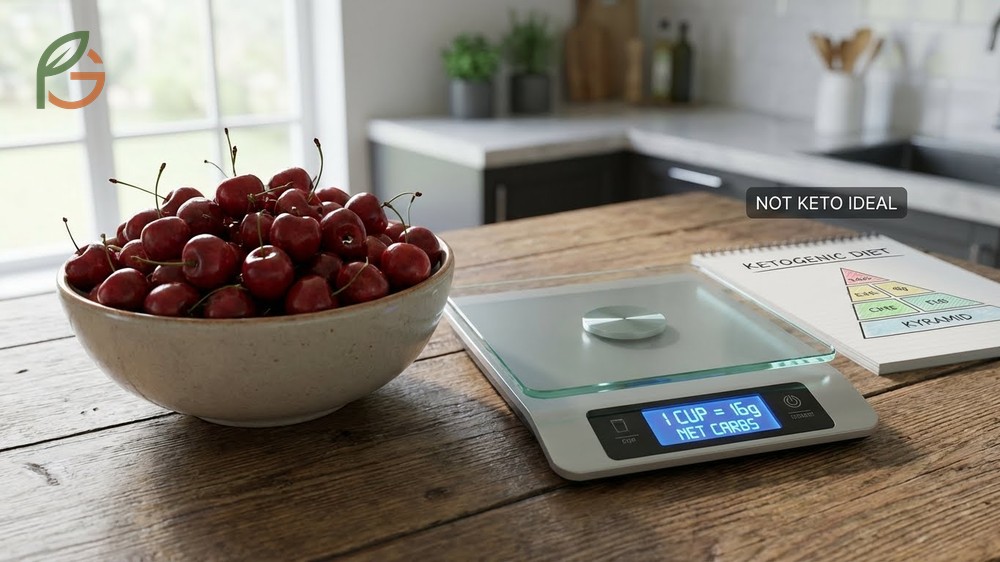
Cherries aren’t considered keto-friendly because of their high carbohydrate density. Studies show that one cup of pitted red cherries contains approximately 19 grams of total carbs, including about 13 grams of natural sugars. When you subtract the 3 grams of fiber, you’re left with 16 grams of net carbs—the number that matters most for ketosis.
For context, if you’re following a strict 20-gram daily carb limit, a single cup of cherries would consume 80% of your allowance before you’ve eaten anything else. Even on a more moderate 50-gram limit[4], cherries still take up nearly a third of your daily budget. Most people find this leaves too little room for vegetables, proteins, and healthy fats that form the foundation of a well-balanced keto diet.
The carb concentration in cherries comes primarily from fructose and glucose. Unlike berries that pack more fiber relative to their sugar content, cherries deliver a quick influx of simple carbohydrates. This can potentially disrupt ketosis if you’re not carefully tracking your intake throughout the day.
Understanding Keto Carb Limits
The ketogenic diet works by forcing your body into a metabolic state called ketosis, where it burns fat for fuel instead of glucose. Current guidance shows this typically requires eating between 20-50 grams of carbohydrates per day[2]. The lower end of this range (around 20 grams) is considered strict keto and produces faster, more reliable ketosis.
Evidence suggests it takes two to four days of staying below 50 grams daily to enter ketosis[4], though individual results vary. If you’re highly active or already metabolically flexible, you might tolerate slightly more carbs. Conversely, sedentary individuals or those with insulin resistance often need to stay closer to 20-30 grams to maintain fat-burning mode.
Cherry Glycemic Impact
Despite their sugar content, cherries have a relatively low glycemic index of about 22[5], meaning they release glucose into your bloodstream gradually rather than causing sharp spikes. This low GI score is due to their fiber content and the presence of anthocyanins—plant compounds that may help regulate blood sugar. However, a low glycemic index doesn’t make cherries keto-friendly; it simply means they won’t cause dramatic blood sugar swings.
The glycemic load, which accounts for both the GI and serving size, is also relatively low at 2 per 100 grams[5]. While this makes cherries better than high-GI fruits like watermelon, it doesn’t change the fact that 16 grams of net carbs can knock most people out of ketosis. The slow sugar release might prevent energy crashes, but it won’t prevent your body from switching back to glucose metabolism.
Important Note: Even with a low glycemic index, cherries can disrupt ketosis. Your body doesn’t distinguish between “fast” and “slow” carbs when determining whether to burn fat or glucose—it responds to total carb intake.
Cherry Carb Content
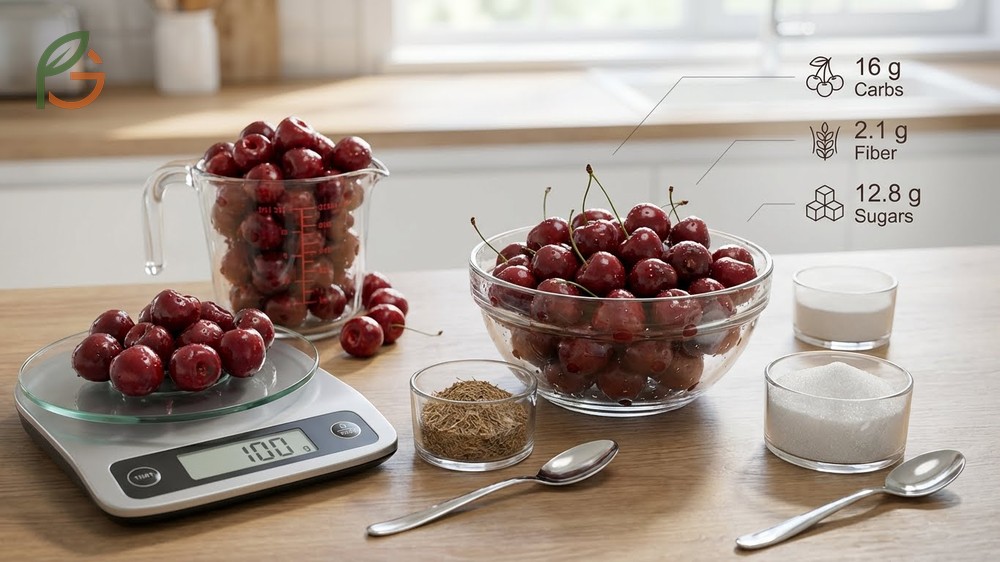
Understanding the exact nutritional breakdown of cherries helps you make informed decisions about portion sizes. According to USDA data, 100 grams of sweet cherries (roughly 14 cherries) contains 16 grams of total carbohydrates[6], including 2.1 grams of fiber and 12.8 grams of natural sugars. This translates to approximately 63 calories per 100-gram serving.
When scaled up to a full cup (about 154 grams without pits), you’re looking at roughly 97 calories, 25 grams of total carbs, and 3.2 grams of fiber. The fiber is beneficial for digestion and gut health, but it only reduces the net carb count to 16 grams—still too high for most keto practitioners. The sugar content in a full cup reaches approximately 18 grams, which is more than what’s found in a medium-sized candy bar.
Sweet vs Tart Cherries
Sweet cherries (Prunus avium) and tart or sour cherries (Prunus cerasus) have similar carbohydrate profiles, though tart cherries contain slightly less sugar per serving. Research shows tart cherries deliver a more acidic flavor with marginally lower carbs, but the difference isn’t significant enough to make them keto-friendly. Both varieties clock in at 15-17 grams of net carbs per cup.
Fresh cherries trump processed varieties like maraschino cherries, which are soaked in sugar syrup. Just five maraschino cherries contain about 10 grams of added sugar on top of the fruit’s natural sugars. If you’re considering cherries on keto, always choose fresh or frozen unsweetened versions to avoid unnecessary carb spikes.
Portion Size Matters
Cutting your cherry serving in half dramatically changes the nutritional math. A half-cup serving (about 10-11 cherries) contains roughly 8 grams of net carbs—still substantial, but more manageable if you budget your remaining carbs carefully. This smaller portion could work for someone on a 50-gram daily limit who’s already active and metabolically flexible.
Quarter-cup servings (5-6 cherries) drop you to about 4 grams of net carbs, which becomes comparable to low-carb berries. However, most people find such tiny portions unsatisfying, leading to the temptation to eat more. If you’re going to allocate carbs to fruit, you’ll get more volume and nutrients from berries designed for keto diets.
- 5-6 cherries (quarter cup): 4g net carbs – theoretically manageable on strict keto
- 10-11 cherries (half cup): 8g net carbs – possible on moderate keto (40-50g daily limit)
- 21 cherries (one cup): 16g net carbs – difficult to fit into any keto plan
- 30+ cherries (1.5 cups): 24g net carbs – exceeds strict keto daily limit entirely
- Maraschino cherries (5 pieces): 10g+ sugar – avoid completely on keto
Net Carbs Cherries
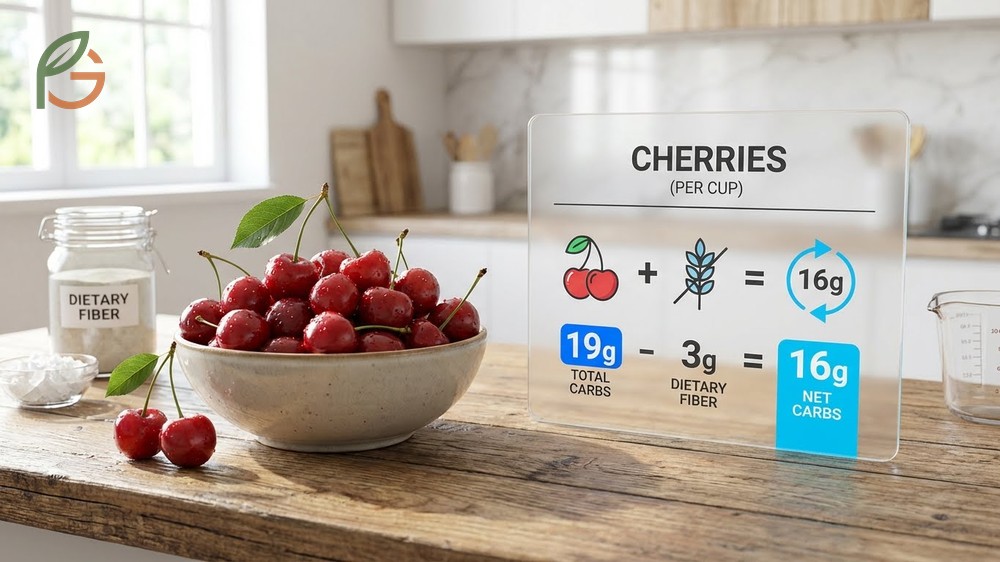
Net carbs are calculated by subtracting fiber and sugar alcohols from total carbohydrates, giving you the number that actually impacts blood sugar and ketosis. For cherries, this means taking the 19 grams of total carbs per cup and subtracting 3 grams of dietary fiber[1], leaving 16 grams of net carbs. This calculation matters because fiber doesn’t raise blood glucose or interfere with ketone production.
The problem with cherries isn’t just the net carb count—it’s the carb density relative to volume. You’d need to eat nearly four cups of raw spinach to match the net carbs in a single cup of cherries. When you’re working with such a tight carb budget, prioritizing nutrient-dense vegetables over fruit usually makes more sense for meeting your vitamin and mineral needs.
Some keto dieters track total carbs instead of net carbs, especially those following therapeutic ketogenic protocols for epilepsy or certain metabolic conditions. If you’re counting total carbs, cherries become even less viable at 19 grams per cup. This stricter approach leaves almost no room for stone fruits, regardless of portion control strategies.
Tracking Tip: Most standard keto diets focus on net carbs for greater flexibility with vegetables. However, if you’re not losing weight or entering ketosis after two weeks, try switching to total carbs for a more stringent approach.
Keto Fruit Options
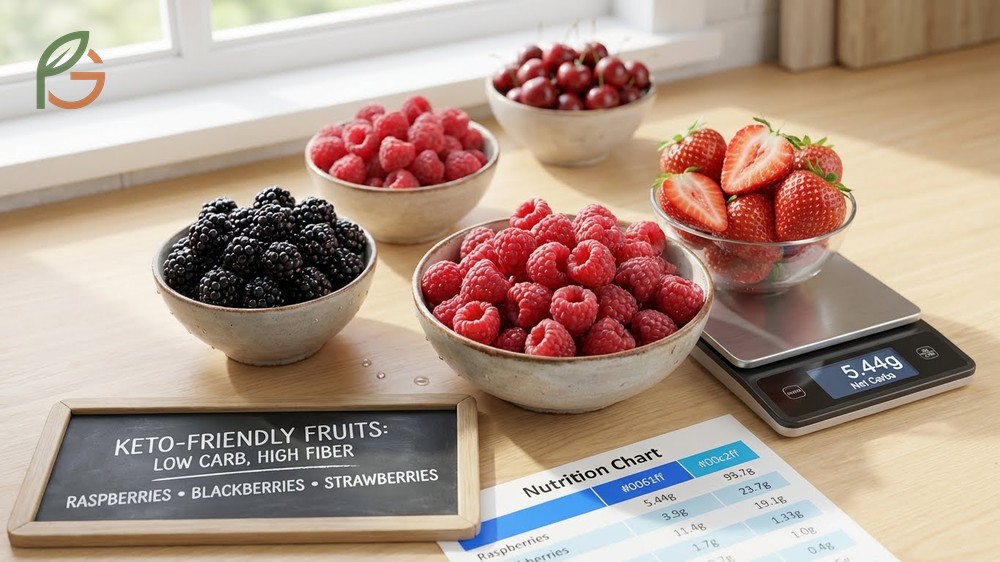
Current nutritional data shows berries dominate the list of truly keto-friendly fruits. Raspberries lead the pack with just 5.44 grams of net carbs per 100-gram serving[3], followed closely by blackberries at 4.31 grams per 100 grams. These berries pack significantly more fiber relative to their sugar content compared to cherries, making them the smarter choice for maintaining ketosis.
Strawberries come in at 8.22 grams of net carbs per cup[7], which is exactly half of what you’d get from the same amount of cherries. This means you can eat twice the volume for the same carb impact. Avocados and coconuts are technically fruits too, offering less than 2 grams of net carbs per serving along with healthy fats that support ketosis.
Best Berry Alternatives
Raspberries deliver the best carb-to-volume ratio among traditional sweet fruits. A half-cup serving contains only about 3-4 grams of net carbs while providing vitamin C, potassium, and powerful antioxidants. Their tart-sweet flavor satisfies fruit cravings without compromising ketosis, and their high fiber content supports digestive health.
Blackberries offer similar benefits with even fewer net carbs—roughly 3 grams per half-cup serving. They’re loaded with anthocyanins (the same compounds found in cherries) but deliver them in a much more keto-compatible package. Their texture and slight tartness work well in low-carb yogurt, smoothies, or eaten fresh as a snack.
Strawberries provide more volume per carb than cherries while offering a sweeter flavor profile. Five large strawberries contain about 4-5 grams of net carbs, compared to just 5-6 cherries for the same carb count. This makes strawberries a better choice when you want a more substantial fruit portion without derailing your macros.
- Raspberries: 5.4g net carbs per 100g – best overall choice for keto
- Blackberries: 4.3g net carbs per 100g – lowest carb berry option
- Strawberries: 8.2g net carbs per cup – half the carbs of cherries for same volume
- Blueberries: 9-11g net carbs per half cup – moderate option, watch portions
- Avocado: 2g net carbs per half fruit – technically a fruit, ideal for keto
- Coconut (fresh): 6g net carbs per cup – high in beneficial fats
Portion Control Strategies
If you absolutely must have cherries on keto, strict portion control becomes non-negotiable. Pre-measure 5-6 cherries (about 4 grams net carbs) and eat them slowly, savoring each bite. This requires eating them as your only carb-containing food for several hours and pairing them with high-fat foods like nuts or cheese to slow digestion and minimize blood sugar impact.
Timing matters too—consuming small amounts of cherries right after intense exercise gives your body the best chance of using those carbs for glycogen replenishment rather than disrupting ketosis. Athletes following targeted ketogenic diets (TKD) sometimes strategically time small fruit portions around workouts. However, this advanced approach isn’t suitable for keto beginners still trying to establish consistent ketosis.
This table compares net carbs, fiber content, and serving sizes across five popular berry options to help identify the most keto-friendly fruit choices
| Fruit Type | Serving Size | Net Carbs | Fiber | Keto Rating |
|---|---|---|---|---|
| Blackberries | 1/2 cup (70g) | 3g[3] | 3.8g | Excellent |
| Raspberries | 1/2 cup (60g) | 3.3g[3] | 4g | Excellent |
| Strawberries | 1/2 cup (75g) | 4.1g[7] | 1.5g | Very Good |
| Blueberries | 1/4 cup (37g) | 4.1g | 1g | Good (small portions) |
| Cherries | 1/2 cup (77g) | 8g[1] | 1.6g | Poor (limited use) |
Low Carb Alternatives
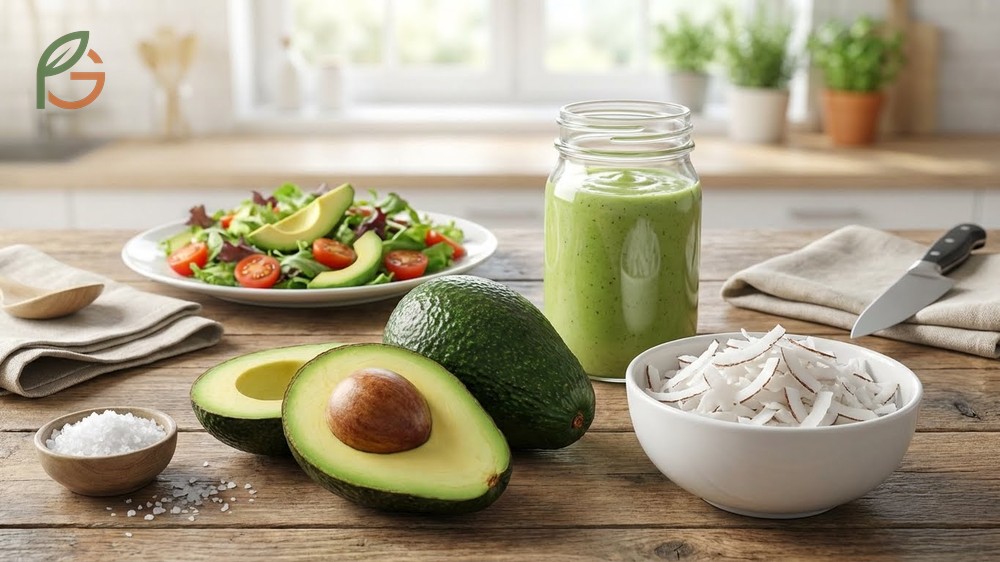
Beyond berries, several other fruits fit more comfortably into a ketogenic lifestyle. Avocados top the list with only 2 grams of net carbs per half fruit (100 grams) while providing 15 grams of heart-healthy monounsaturated fats. Their creamy texture and mild flavor make them incredibly versatile—you can add them to smoothies, salads, or eat them plain with a sprinkle of salt.
Coconut meat offers another low-carb option at roughly 6 grams of net carbs per cup of raw, shredded coconut. It’s rich in medium-chain triglycerides (MCTs), which your liver can quickly convert to ketones for energy. Fresh coconut chunks make a satisfying snack, and unsweetened coconut flakes work well as a crunchy topping for keto yogurt or chia pudding.
Tomatoes and olives, often forgotten as fruits, deliver substantial flavor with minimal carbs. A cup of cherry tomatoes contains about 4 grams of net carbs, while 10 large olives have less than 1 gram. These savory fruits add variety to your keto meals without the sugar load you’d get from sweet options like cherries.
Rhubarb stands out as one of the lowest-carb plant foods you can eat, with just 2.7 grams of net carbs per cup of cooked, unsweetened rhubarb. Its tart flavor pairs well with low-carb sweeteners like erythritol or stevia, letting you create keto-friendly “fruit” dishes that mimic traditional desserts without the carb penalty.
- Frozen berries with heavy cream – creates an ice cream-like texture with 5-6g net carbs
- Avocado chocolate mousse – blend avocado with cocoa powder and sweetener for 4g net carbs
- Coconut chips (unsweetened) – crunchy snack with healthy fats, 6g net carbs per ounce
- Cucumber slices with lime – refreshing and hydrating with under 2g net carbs per cup
- Lemon or lime zest – adds intense flavor to dishes with negligible carbs
- Sugar-free cherry extract – delivers cherry flavor to drinks and desserts without any carbs
- Chia seed pudding with berries – high-fiber option with customizable carb content
Smart Swap: When a recipe calls for cherries, substitute an equal volume of raspberries or blackberries. You’ll cut net carbs by 50-60% while maintaining similar antioxidant benefits and visual appeal.
Conclusion
The evidence is clear: cherries aren’t keto friendly for most people following a standard ketogenic diet. With 16 grams of net carbs per cup, they consume an outsized portion of your daily carb budget while providing less volume and nutrition than keto-optimized alternatives like raspberries, blackberries, and avocados. If you’re serious about maintaining ketosis, prioritize these lower-carb options that won’t compromise your metabolic state.
Current nutritional guidance emphasizes that successful keto requires strategic food choices that maximize nutrients while minimizing carbs. While cherries offer beneficial compounds like anthocyanins and vitamin C, you can obtain these same benefits from berries that fit more comfortably into your macros. FruitGarden recommends saving cherries for occasional post-workout treats in very small portions (5-6 cherries maximum) if you absolutely can’t give them up—or better yet, discover how satisfying properly portioned raspberries and strawberries can be.
Medical Disclaimer
Important Medical Disclaimer: This content is for informational and educational purposes only. It’s not intended as a substitute for professional medical advice, diagnosis, or treatment. Always consult a qualified healthcare professional or registered dietitian before making any changes to your diet, especially if you have diabetes, metabolic disorders, or other medical conditions. The ketogenic diet isn’t appropriate for everyone, and individual carbohydrate tolerances vary significantly based on activity level, metabolic health, and other factors.
Frequently Asked Questions
Can I eat cherries on a keto diet?
You can technically eat cherries on keto, but you’ll need to severely restrict portions to 5-6 cherries (about 4 grams net carbs) and carefully budget your remaining daily carbs. Most keto practitioners find this portion too small to be satisfying and choose lower-carb berries like raspberries or blackberries instead, which provide more volume for the same carb count.
How many cherries can I eat on keto?
On a strict 20-gram daily carb limit, you could eat 5-6 cherries (approximately 4 grams net carbs) as long as you account for them in your daily total. On a more moderate 50-gram limit, you might manage 10-11 cherries (8 grams net carbs), but this still represents 16% of your daily allowance. Beyond these amounts, you’ll likely disrupt ketosis.
What fruits can I eat instead of cherries on keto?
Raspberries, blackberries, and strawberries make excellent cherry substitutes on keto, offering 50-75% fewer net carbs per serving. Avocados provide only 2 grams of net carbs per half fruit along with healthy fats. Coconut, rhubarb, and small portions of cantaloupe or honeydew melon also work well. Focus on berries for the best balance of sweetness, nutrients, and low carb content.
Do tart cherries have fewer carbs than sweet cherries?
Tart cherries contain marginally fewer carbs than sweet cherries, but the difference is negligible—usually less than 1-2 grams per cup. Both varieties deliver approximately 15-17 grams of net carbs per cup, making them equally problematic for keto diets. The slight variation doesn’t make tart cherries a keto-friendly option.
Will eating cherries kick me out of ketosis?
Eating a full cup of cherries (16 grams net carbs) will likely kick most people out of ketosis, especially if you’re following a strict 20-30 gram daily limit. Even a half-cup serving (8 grams) could disrupt ketosis if you’ve already consumed carbs from other sources that day. Very small portions (5-6 cherries) consumed post-workout might not affect ketosis in metabolically flexible individuals, but this varies by person.
Are frozen cherries better for keto than fresh?
Frozen unsweetened cherries have the same net carb content as fresh cherries—approximately 16 grams per cup. Freezing doesn’t reduce carbohydrates, so they’re equally challenging to fit into a keto diet. However, frozen cherries are better than canned or maraschino varieties, which contain added sugars. Always check labels to ensure no sugar or syrup has been added during processing.
What’s the best time to eat cherries on keto?
If you choose to eat small portions of cherries on keto, the best timing is immediately after intense exercise when your muscles are primed to absorb glucose for glycogen replenishment rather than storage. This targeted ketogenic diet (TKD) approach works best for athletes and highly active individuals who can utilize the carbs for performance recovery. For sedentary keto dieters, there’s no ideal time—cherries remain too high in carbs regardless of timing.





