
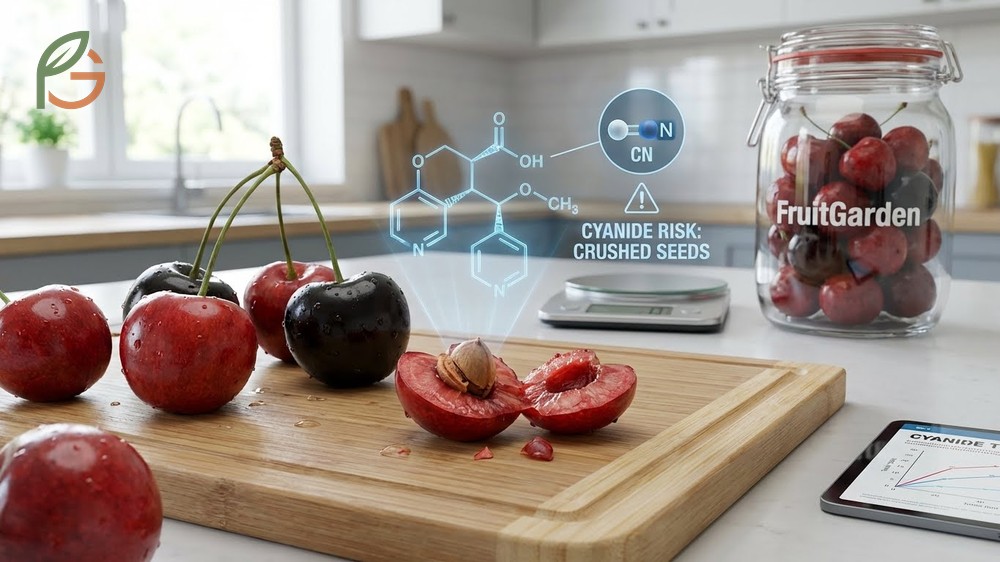
Are cherry seeds poisonous? Yes, cherry pits contain amygdalin, a compound that converts to cyanide when crushed or chewed[1]. Research shows that eating 3-4 crushed Morello cherry pits or 7-9 red or black cherry pits can lead to dangerous cyanide toxicity in adults[2]. FruitGarden provides evidence-based guidance on fruit safety to help gardeners and families understand real versus perceived risks.
Quick Answer
- Cherry pits are safe when swallowed whole, but dangerous when crushed or chewed due to amygdalin conversion to cyanide[3]
- Morello cherries contain 65 mg amygdalin per gram, while red cherries have 3.9 mg/g and black cherries 2.7 mg/g[2]
- Toxic dose ranges from 0.5-3.5 mg cyanide per kg body weight[4]
- Children face higher risk due to lower body weight and increased likelihood of chewing pits
Are Cherry Seeds Poisonous

Cherry seeds contain a naturally occurring cyanogenic glycoside called amygdalin[1]. When the pit’s hard shell is broken through chewing, crushing, or grinding, enzymes convert amygdalin into hydrogen cyanide—a potent cellular toxin. Swallowing whole pits intact poses minimal risk since they pass through the digestive system without releasing toxic compounds[3].
The toxic dose of hydrogen cyanide is defined as exceeding 20 mg per 100 g of fresh plant weight[1]. Stone fruit seeds can produce cyanide in the range of 0.01-1.1 mg cyanide equivalents per gram[4]. This concentration varies significantly between cherry varieties, with Morello cherries containing the highest amygdalin levels.
Studies demonstrate that small amounts of cyanide can be detoxified by the human body’s natural enzymatic systems. However, high exposures over short durations overwhelm these protective mechanisms and result in severe adverse health effects. The distinction between accidental swallowing and intentional chewing determines toxicity risk.
Amygdalin in Cherry Pits
Different cherry varieties contain vastly different amygdalin concentrations. Morello cherries harbor an astonishing 65 mg of amygdalin per gram of pit material, while red cherry pits contain 3.9 mg per gram and black cherry pits have 2.7 mg per gram[2]. This 24-fold difference between Morello and black cherries explains why toxicity thresholds vary dramatically between sweet and sour cherry varieties.
When cherry pits are chewed or bruised, plant enzymes come into contact with the amygdalin stored inside the seed. This enzymatic hydrolysis occurs in the gastrointestinal tract and converts amygdalin to glucose, benzaldehyde, and hydrogen cyanide. The delay in onset of toxicity can extend to 2 hours or more after ingestion, making immediate symptoms unreliable indicators of exposure.
Important Note: Amygdalin is also marketed as “Laetrile” or “vitamin B17” for alternative cancer treatment, but clinical data doesn’t support these claims[1]. Numerous cases of cyanide poisoning have resulted from Laetrile treatment, with no verified cancer cures.
Grinding Cherry Pits Danger
Grinding or pulverizing cherry pits creates the highest risk scenario by maximizing surface area contact between amygdalin and hydrolytic enzymes. Ground pits release toxic compounds immediately upon contact with moisture in the mouth and digestive system. This differs from whole pits, which remain intact and pass through undigested.
Research shows that ground pits produce significantly more hydrogen cyanide than simply chewing, since crushing breaks down cellular structures that normally separate enzymes from amygdalin. The powder form also increases absorption rates in the small intestine. Anyone accidentally grinding cherry pits in smoothies or recipes should discard the mixture immediately.
How Many Cherry Pits Are Toxic to Humans
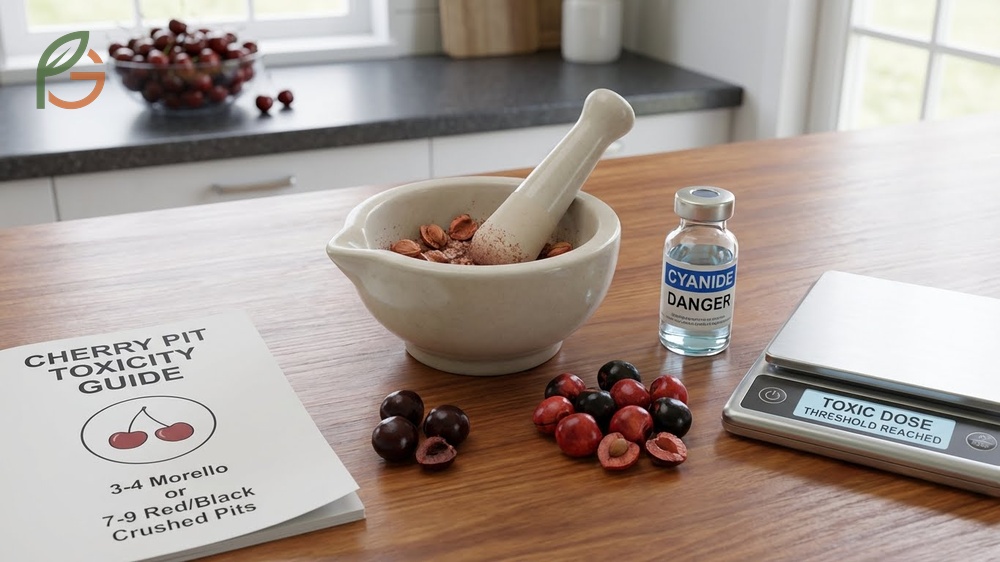
Acute cyanide toxicity occurs at doses between 0.5-3.5 mg per kg of body weight[4]. For a 150-pound (68 kg) adult, this equals 30-240 mg of cyanide total. Eating just 3-4 crushed Morello cherry pits or 7-9 crushed red or black cherry pits may reach this toxic threshold[2].
The exact number varies based on individual factors including body weight, metabolic rate, and liver detoxification capacity. Even smaller quantities can cause symptoms in sensitive individuals or those with compromised liver function. Most accidental exposures involve children who chew 1-2 pits out of curiosity, which rarely produces severe toxicity in healthy adults.
This table compares amygdalin concentration and toxic pit quantities across three cherry varieties for a 150-pound adult
| Cherry Type | Amygdalin (mg/g) | Toxic Quantity (Crushed Pits) | Risk Level |
|---|---|---|---|
| Morello (Sour) | 65[2] | 3-4 pits | Very High |
| Red Cherry | 3.9[2] | 7-9 pits | Moderate |
| Black Cherry | 2.7[2] | 7-9 pits | Moderate |
Cherry Pit Safety for Toddlers
Toddlers and young children face dramatically higher risk than adults due to their lower body weight and developing metabolic systems. A toddler weighing 30 pounds (13.6 kg) reaches toxic cyanide levels at just 6.8-48 mg total exposure—requiring as few as 1-2 crushed cherry pits depending on variety. Children are also more likely to chew pits out of curiosity rather than swallowing them whole.
Current guidance from poison control centers emphasizes that even one small cherry pit can pose choking hazards independent of cyanide toxicity. Parents should pit all cherries before serving to children under 5 years old. Supervision during cherry consumption remains essential, as toddlers may put whole fruits in their mouths without proper chewing technique.
- Always pit cherries completely before serving to children under 5 years old
- Supervise children during cherry consumption to prevent whole-fruit choking
- Teach older children to spit out pits rather than swallow or chew them
- Keep cherry pits in a separate bowl during snacking to monitor accidental ingestion
- Contact poison control immediately if a child chews multiple pits (even 2-3)
Symptoms of Cyanide Poisoning from Fruit Seeds
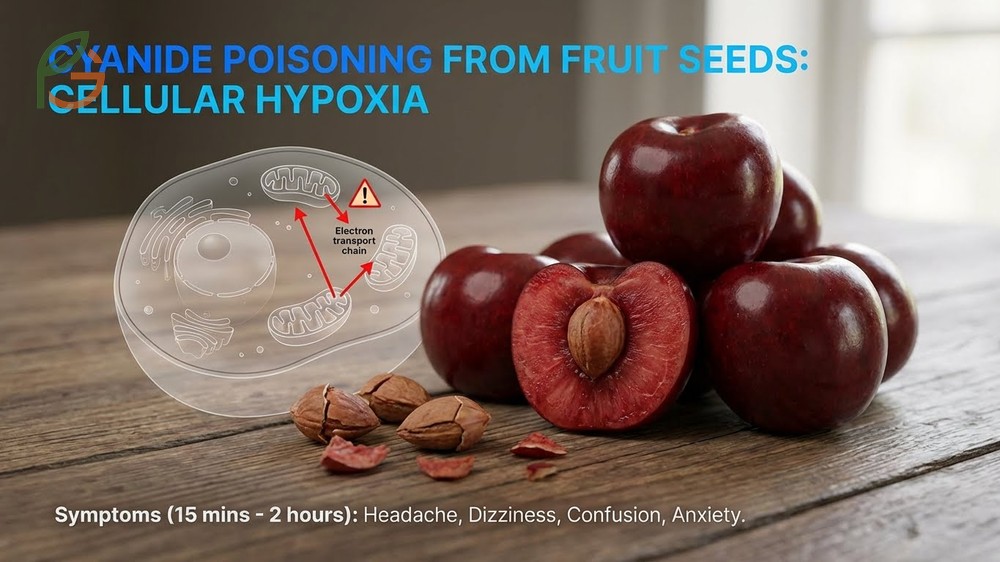
Cyanide causes cellular hypoxia by inhibiting cytochrome oxidase in the final step of the mitochondrial electron transport chain[5]. This mechanism prevents cells from using oxygen, even when blood oxygen levels remain normal. Early symptoms appear within 15 minutes to 2 hours after chewing cherry pits, though onset timing varies with individual metabolism and pit quantity.
Initial symptoms include headache, dizziness, confusion, and anxiety. As toxicity progresses, patients experience difficulty breathing, rapid heart rate (tachycardia), and Kussmaul’s respiration (deep, labored breathing). Gastrointestinal effects like nausea, vomiting, and abdominal pain commonly occur alongside neurological symptoms.
- Early stage (15-60 minutes): Headache, dizziness, confusion, weakness, anxiety
- Moderate stage (1-2 hours): Difficulty breathing, rapid heart rate, nausea, vomiting, abdominal pain
- Severe stage (2+ hours): Seizures, loss of consciousness, respiratory arrest, falling blood pressure
- Critical complications: Cardiac arrest, permanent neurological damage, death in extreme cases
- Delayed symptoms: Some patients experience restlessness, insomnia, lethargy for 12-24 hours
Emergency Warning: Seek immediate medical attention if anyone exhibits difficulty breathing, confusion, or rapid heart rate after chewing cherry pits. Cyanide poisoning requires urgent treatment with specific antidotes including sodium nitrite and sodium thiosulfate[6].
What Happens if Child Swallows Cherry Pit
When a child swallows a whole cherry pit without chewing, the pit typically passes through the digestive system intact within 24-72 hours. The hard outer shell protects the amygdalin-containing seed from digestive enzymes, preventing cyanide release. This scenario presents minimal toxicity risk but requires monitoring for choking or intestinal obstruction.
If the child chewed the pit before swallowing, rinse their mouth immediately and offer water to dilute any released cyanide. Contact poison control (1-800-222-1222 in the US) to report the number of pits involved, child’s weight, and timing of ingestion. Most single-pit exposures in children result in observation rather than active treatment, though multiple chewed pits warrant emergency evaluation.
Accidental Ingestion of Cherry Pit
For accidental ingestion of whole cherry pits in adults, no immediate action is typically necessary beyond drinking water and monitoring for gastrointestinal discomfort. The pit will pass naturally in 1-3 days without releasing cyanide. Most adults don’t experience symptoms from swallowing 1-2 whole pits during normal eating.
If you’ve accidentally chewed and swallowed cherry pits, rinse your mouth thoroughly and drink plenty of fluids. Monitor for symptoms including headache, nausea, or dizziness over the next 2-4 hours. Seek medical evaluation if you’ve chewed more than 5 red cherry pits or 2 Morello cherry pits, or if any symptoms develop.
Wild Cherry Tree Poisonous

Wild cherry trees (Prunus avium and Prunus serotina) pose significant toxicity risks to livestock and pets, particularly from wilted or storm-damaged leaves. The leaves, bark, and twigs contain cyanogenic glycosides that release hydrogen cyanide when plant tissues are damaged or fermented during wilting[7]. Fresh green leaves contain lower cyanide levels, but wilted leaves from pruning or storm damage become extremely dangerous.
Research demonstrates that as little as 1.2 to 4.8 pounds of wilted black cherry leaves could constitute a lethal dose for a 1,200-pound dairy cow[8]. Ruminant animals like cattle, sheep, and goats are particularly vulnerable due to their rumen environment facilitating rapid cyanide release. Once leaves fall and dry completely (turning brown), cyanide levels drop to safer ranges.
- Wilted leaves (highest risk): Release maximum cyanide during fermentation process after storm damage or pruning
- Fresh green leaves (moderate risk): Contain cyanogenic glycosides but at lower accessible concentrations
- Bark and twigs (moderate risk): Toxic when chewed or damaged, especially in young shoots
- Dried brown leaves (low risk): Cyanide levels decrease significantly after complete drying
- Cherry fruit flesh (safe): Non-toxic portion that’s edible for humans and wildlife
- Cherry seeds/pits (high risk): Contain concentrated amygdalin when crushed
Cherry Leaves Toxicity to Pets
Dogs and cats rarely consume cherry leaves voluntarily due to their bitter taste, but curiosity or boredom can lead to toxic exposure. Symptoms in pets mirror those in humans: excessive salivation, difficulty breathing, bright red gums (from oxygen-rich blood that can’t be used), dilated pupils, and muscle tremors. Even small amounts of wilted cherry leaves can poison pets weighing under 20 pounds.
Pet owners with wild cherry trees in yards should remove fallen branches immediately after storms and fence off areas where pruning debris accumulates. Veterinary treatment for cherry leaf poisoning includes oxygen therapy, activated charcoal administration, and supportive care. The prognosis improves dramatically when treatment begins within 30-60 minutes of exposure.
Fruit Seeds Containing Cyanide
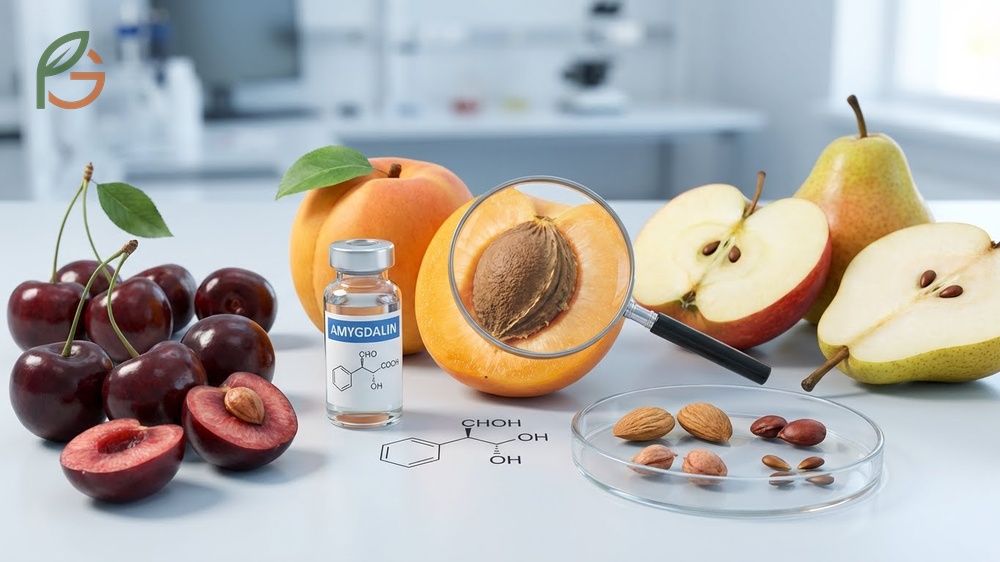
Cherry seeds belong to a larger family of cyanogenic plants that store amygdalin in their seeds as a natural defense mechanism against predators. All stone fruits (Prunus genus) contain varying concentrations of cyanogenic glycosides, with apricot kernels holding the highest levels among commonly consumed fruits. Apple and pear seeds also contain amygdalin, though at concentrations roughly 10-20 times lower than cherry pits.
Current data indicates that apricot kernels contain 14.37 mg amygdalin per gram, peach pits have 6.81 mg/g, and cherry pits range from 2.7-65 mg/g depending on variety[9]. The European Food Safety Authority warns that eating more than three small raw apricot kernels in a single serving can exceed safe cyanide levels[10].
| Fruit | Seed/Pit Location | Relative Toxicity |
|---|---|---|
| Apricots | Large central pit | Very High |
| Cherries | Small central pit | High (variety-dependent) |
| Peaches | Large central pit | Moderate-High |
| Plums | Central pit | Moderate |
| Apples | 5-8 small seeds in core | Low |
| Pears | Multiple small seeds | Low |
The processed fruit products like jams, jellies, and juices contain negligible amygdalin since seeds are removed during production. Commercial food safety protocols mandate complete seed removal for stone fruit products. Wild or foraged fruits may pose higher risks if processing methods don’t adequately separate seeds from pulp.
Conclusion
The evidence is clear: cherry seeds are poisonous when crushed, chewed, or ground, but whole pits swallowed accidentally pass through safely without releasing cyanide. Understanding the critical distinction between intentional chewing and accidental swallowing helps families enjoy cherries without unnecessary fear while maintaining appropriate caution around young children and pets.
Current guidance emphasizes preventive measures—always pit cherries before serving to children under 5, supervise cherry consumption, and remove wilted cherry tree leaves from areas accessible to livestock or pets. FruitGarden continues synthesizing agricultural research and toxicology data to provide evidence-based fruit safety information for home gardeners and families across the United States.
Medical Disclaimer
Important Medical Disclaimer: This content is for informational and educational purposes only. It is not intended as a substitute for professional medical advice, diagnosis, or treatment. Always consult a qualified healthcare professional or poison control center (1-800-222-1222 in the US) before making decisions about suspected poisoning cases, especially involving children or pets. If you suspect cyanide poisoning, seek emergency medical attention immediately rather than relying on online information.
Frequently Asked Questions
Can you swallow cherry seeds safely?
Yes, swallowing whole cherry seeds is generally safe since the hard outer shell prevents digestive enzymes from accessing the amygdalin inside. The pits pass through your digestive system intact within 24-72 hours without releasing cyanide. However, never intentionally chew or crush cherry pits, as this breaks the protective shell and triggers toxic cyanide release.
Is it OK to swallow a Bing cherry seed?
Swallowing a whole Bing cherry seed poses minimal risk for healthy adults, as the intact pit won’t release cyanide during normal digestion. Bing cherries (a sweet cherry variety) contain lower amygdalin concentrations than sour Morello cherries. Simply drink water and allow the pit to pass naturally—no medical intervention is typically needed for single whole-pit ingestion.
Are cherry seeds toxic to dogs?
Yes, cherry seeds are toxic to dogs when chewed or crushed. Dogs have lower body weight than humans, making them more susceptible to cyanide poisoning from even 1-2 crushed pits. Symptoms in dogs include excessive drooling, difficulty breathing, bright red gums, and dilated pupils. Contact your veterinarian immediately if your dog chews cherry pits, and prevent access by pitting cherries before offering the fruit as treats.
Do cherry seeds have cyanide in all varieties?
Yes, all cherry varieties contain some amygdalin that converts to cyanide when pits are crushed, but concentrations vary dramatically. Morello (sour) cherries contain up to 65 mg amygdalin per gram, while sweet cherry varieties like Bing have significantly lower levels around 2.7-3.9 mg per gram. This explains why fewer Morello pits are needed to reach toxic thresholds compared to sweet cherries.
What should I do if my child chews a cherry pit?
If your child chewed one cherry pit, rinse their mouth with water and monitor for symptoms like headache, nausea, or dizziness over the next 2 hours. For a single pit, observation is usually sufficient. However, if your child chewed multiple pits (2 or more), contact poison control immediately at 1-800-222-1222 and report their weight, number of pits, and time of ingestion for professional guidance.
Are wild cherry trees poisonous to livestock?
Yes, wild cherry tree leaves are extremely poisonous to livestock, especially when wilted after storm damage or pruning. As little as 1.2-4.8 pounds of wilted black cherry leaves can kill a 1,200-pound cow. Ruminant animals like cattle, sheep, and goats face the highest risk due to rapid cyanide release in their rumen. Remove damaged cherry tree branches from pastures immediately and keep livestock away until all leaves dry completely brown.
What other fruit seeds contain cyanide besides cherries?
Apricot kernels contain the highest cyanide levels among common fruits at 14.37 mg amygdalin per gram, followed by peach pits at 6.81 mg/g. Apple and pear seeds also contain amygdalin but at much lower concentrations (10-20 times less than cherry pits). Other cyanogenic fruits include plums, bitter almonds, and some wild varieties of papaya and elderberry. All stone fruits in the Prunus genus naturally produce these compounds as seed defense mechanisms.





