
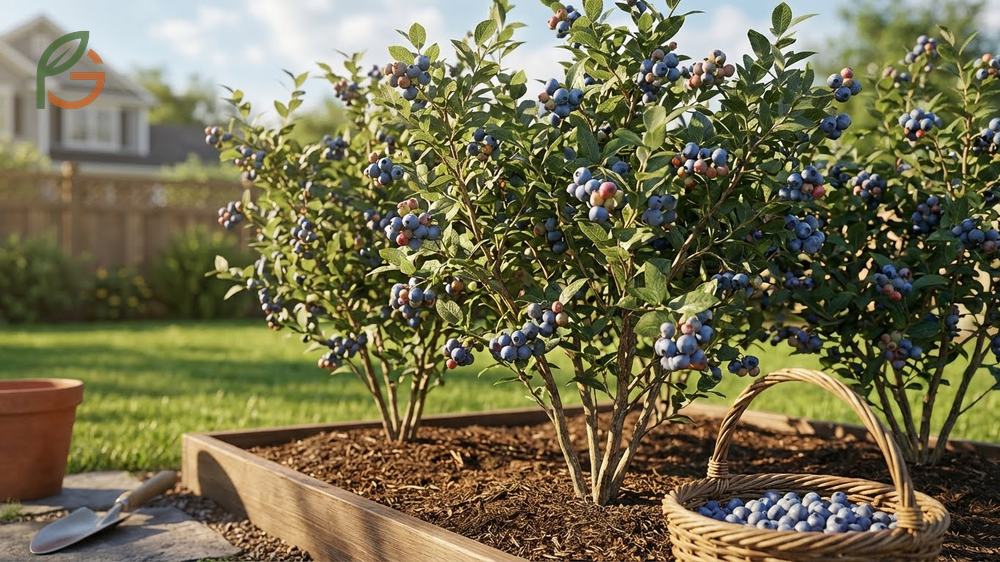
High bush blueberry plants (Vaccinium corymbosum) are deciduous shrubs reaching 6-12 feet tall, producing sweet berries perfect for home gardens across zones 4-7[1]. Research shows these plants deliver mature yields of 2.5-3.5 kg per bush after 6-8 years[2], making them the most popular choice for American gardeners. FruitGarden synthesizes current horticultural data to help you select the right varieties and identify blueberry bushes with confidence.
Quick Answer
- Highbush blueberries grow 6-12 feet tall[3] with glossy green leaves that turn red in fall
- Northern highbush suits zones 4-7, while southern highbush thrives in zones 6-10[1]
- Mature bushes produce 2.5-3.5 kg of berries annually after 6-8 years[2]
- Top varieties include Bluecrop (midseason) and Duke (early season) for consistent yields[4]
High Bush Blueberry Plants
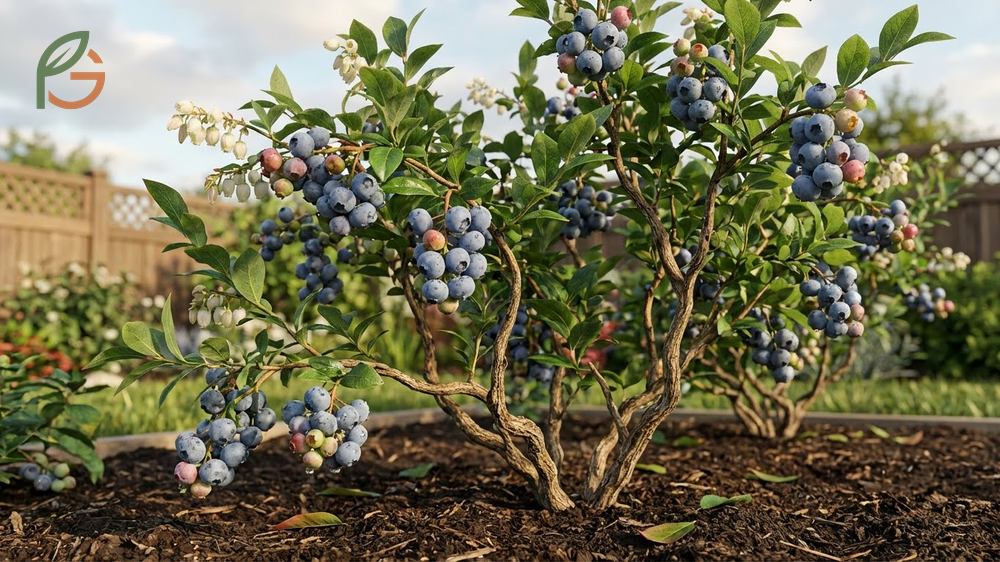
Highbush blueberries represent the primary commercial and home garden blueberry type in North America. These woody perennials produce bell-shaped white or pink flowers in late spring, followed by clusters of berries that ripen from July through September depending on variety. The plants demonstrate remarkable longevity, remaining productive for 30-50 years with proper care[5].
Studies demonstrate that highbush varieties offer superior disease resistance compared to other blueberry types[6]. The species thrives in acidic soil with pH levels between 4.5-5.5 and requires consistent moisture throughout the growing season. Most highbush cultivars are self-fertile, though cross-pollination with another variety increases berry size and total yield by 20-30%.
What sets highbush apart from other blueberry types is the combination of manageable plant size, larger fruit, and juicier texture. The berries typically measure 10-18mm in diameter, making harvest faster than lowbush varieties. The fruit quality after freezing remains excellent, with thinner skins that don’t toughen during storage.
Northern Highbush Characteristics
Northern highbush blueberries require 800-1,000 chill hours below 45°F (7°C) to break dormancy and produce fruit[6]. These plants handle winter temperatures down to -20°F (-29°C) in zones 3-7. The cultivars bloom later than southern types, reducing frost damage risk in cooler climates.
Plants average 6-8 feet at maturity, with some varieties reaching 10-12 feet if unpruned. The upright growth habit makes mechanical or hand harvesting straightforward. Northern varieties produce medium to large berries with sweet, mild flavors that appeal to fresh eating and processing markets alike.
Southern Highbush Characteristics
Southern highbush varieties resulted from crossing Vaccinium corymbosum with V. darrowii, creating heat-tolerant cultivars adapted to zones 6-10[6]. These hybrids need only 150-500 chill hours, allowing cultivation in warmer regions where northern types fail. The plants handle temperatures above 95°F (35°C) better than their northern counterparts.
Current breeding programs emphasize superior fruit quality, soil adaptability, and extended harvest windows. Southern highbush often feature semi-evergreen foliage that provides year-round landscape interest. The compact growth habit of many cultivars makes them ideal for smaller gardens and container growing.
From My Experience: My cousin in Puebla, Mexico planted Misty blueberry bushes in February 2023. The plants reached 4.5 feet by their second season versus the typical 4-6 foot range, producing 1.2 kg of berries in year two—matching the expected early production from southern highbush varieties.
- Northern types require cold winters; southern types tolerate heat and humidity
- Northern varieties bloom later in spring, protecting against late frosts
- Southern cultivars ripen fruit 2-4 weeks earlier than northern ones
- Northern bushes grow taller (6-12 feet) while southern stay compact (4-6 feet)
- Southern types need acidic soil amendments more frequently in alkaline regions
Best Highbush Blueberry Varieties
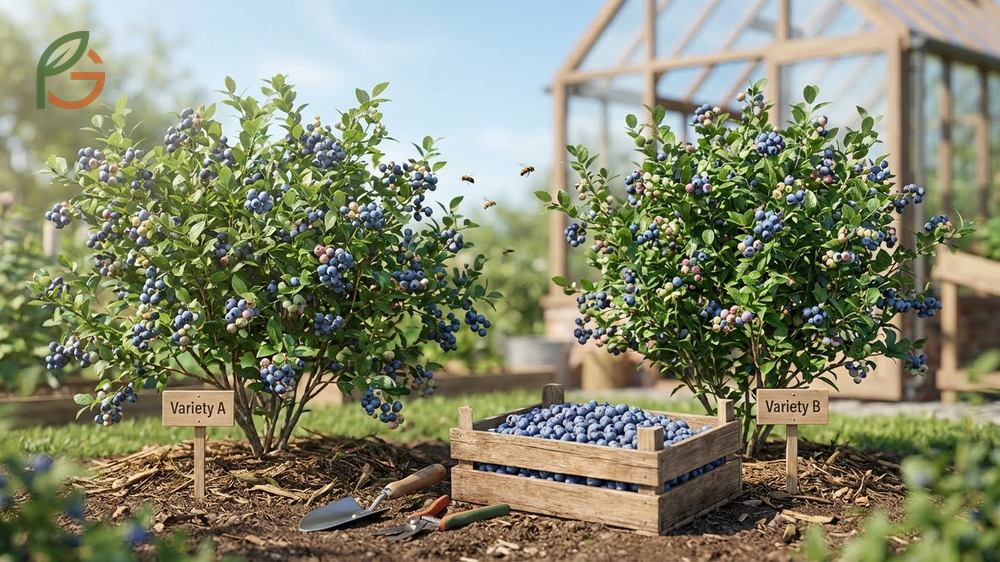
Research across commercial and home garden settings identifies several highbush cultivars as top performers. The best varieties balance productivity, disease resistance, flavor quality, and climate adaptability. Selecting varieties with different ripening times extends the harvest window from June through September in most regions.
Evidence suggests that planting at least two different cultivars improves pollination efficiency and berry size. Most gardeners choose one early-season, one midseason, and one late-season variety to maximize fresh fruit availability. The following cultivars represent proven choices for American gardens.
This table compares seven popular highbush blueberry varieties across ripening season, hardiness zones, plant height, berry size, and flavor characteristics
| Variety | Type | Zones | Season | Height | Berry Characteristics |
|---|---|---|---|---|---|
| Bluecrop | Northern | 4-7[6] | Midseason | 4-6 feet | Medium to large, sweet, crack-resistant |
| Duke | Northern | 4-7[6] | Early | 4-6 feet | Medium to large, very sweet |
| Patriot | Northern | 3-7[6] | Early-mid | 3-6 feet | Very large, excellent flavor |
| Jersey | Northern | 4-7[6] | Late | 5-7 feet | Small to medium, best flavor |
| Misty | Southern | 5-9[6] | Early | 4-6 feet | Medium, spicy sweet |
| O’Neal | Southern | 5-9[6] | Early | 4-6 feet | Large, excellent quality |
| Jewel | Southern | 6-10[6] | Early | 6-8 feet | Largest of southern types |
Bluecrop Blueberry
Bluecrop dominates commercial production as the most widely planted midseason variety in North America. Plants deliver consistent yields of 20+ pounds per mature bush, with medium to large berries that resist cracking during wet weather. The upright growth habit suits mechanical harvesting, though hand picking remains easy for home gardeners.
This variety requires 800 chill hours and performs best in zones 4-7[6]. Bluecrop demonstrates excellent cold hardiness to -20°F (-29°C) and tolerates heavier soils better than most highbush cultivars. The berries ripen in July across most of the northern United States, providing 3-4 weeks of harvest when properly maintained.
Important Note: Bluecrop requires regular pruning after 4-5 years to maintain berry size and plant vigor. Remove 20-25% of the oldest canes annually during dormant season for best results.
Duke Blueberry
Duke ranks as the premier early-season variety for northern gardens. The cultivar blooms late in spring but ripens fruit early, protecting blossoms from late frosts while delivering berries in early July. Mature bushes produce 20+ pounds annually, with medium to large berries offering mildly sweet flavor[4].
The upright growth habit develops branches that droop when laden with fruit, making harvest accessible without ladders. Duke performs reliably in zones 4-7 with 900 chill hours required. The berries are firm, retain quality longer than most varieties, and ship well for farmers market sales.
- Patriot – extremely cold hardy to zone 3, very large berries with excellent fall color
- Elliott – latest ripening variety, extends harvest into September in northern zones
- Blueray – large fruit with exceptional flavor, heavy producer in zones 3-7
- Chandler – produces the largest berries of any highbush variety, extended harvest period
- Aurora – late-season northern type with large, tangy berries and consistent yields
How to Identify Blueberry Bushes
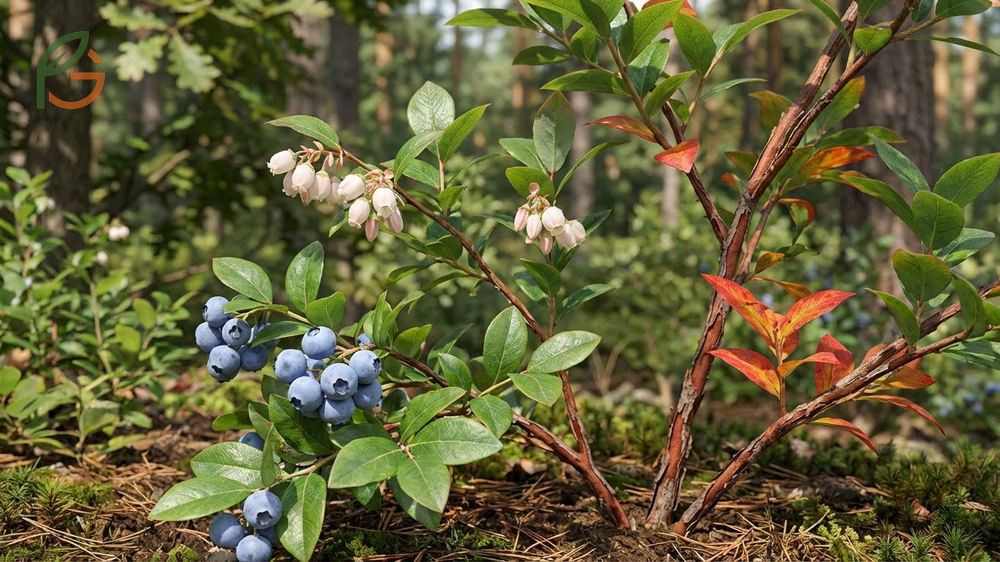
Accurate identification of blueberry bushes requires observing multiple plant characteristics across seasons. The combination of leaf shape, stem features, flower structure, and fruit appearance distinguishes highbush blueberries from similar species. Field identification becomes easier with practice as you learn to recognize the distinctive traits.
Most people find identification simplest during flowering or fruiting periods. However, experienced gardeners can identify blueberry bushes year-round using vegetative features alone. The key is examining several characteristics rather than relying on a single trait that might vary between cultivars or growing conditions.
Leaf Identification
Highbush blueberry leaves are simple, elliptical to ovate, and arranged alternately along stems. Mature leaves measure 1-3 inches long with smooth margins or very fine serrations[7]. The upper leaf surface appears glossy dark green during the growing season, while the underside shows a lighter blue-green hue.
Fall color provides a reliable identification marker. Blueberry leaves turn vibrant red, orange, or burgundy purple from September through October. This dramatic color change distinguishes blueberries from many similar shrubs that turn yellow or brown. Fresh spring leaves emerge with a bronze tint before maturing to green.
Stem and Bark Features
Young blueberry stems start green and slightly hairy, transitioning to reddish-brown as they mature. Older canes develop smooth bark that often peels in thin strips, creating a slightly shaggy appearance. A diagnostic feature is the presence of small, raised lenticels (breathing pores) that appear as tiny dots scattered across the bark surface[7].
The stems feel firm but flexible on young growth. Mature canes become woody and rigid, developing a characteristic zigzag branching pattern. Winter buds are small, pointed, and covered with overlapping scales. Unlike some similar species, blueberry stems lack thorns or prominent leaf scars.
Identification Tip: Check for white waxy bloom on ripe berries. This natural yeast coating indicates fresh fruit and distinguishes true blueberries from look-alike species that produce black fruits without bloom.
- Look for clusters of shrubs 6-12 feet tall in acidic soil areas like forests or bogs
- Examine leaves for glossy green surface and elliptical shape with smooth edges
- Check stems for small raised dots (lenticels) and peeling bark on older canes
- Observe white or pink bell-shaped flowers in spring, hanging in small clusters
- Confirm berries have five-pointed star (calyx) on bottom and blue-black color with white bloom
- Note fall foliage turning red or orange rather than yellow or brown
Highbush vs Lowbush Blueberries
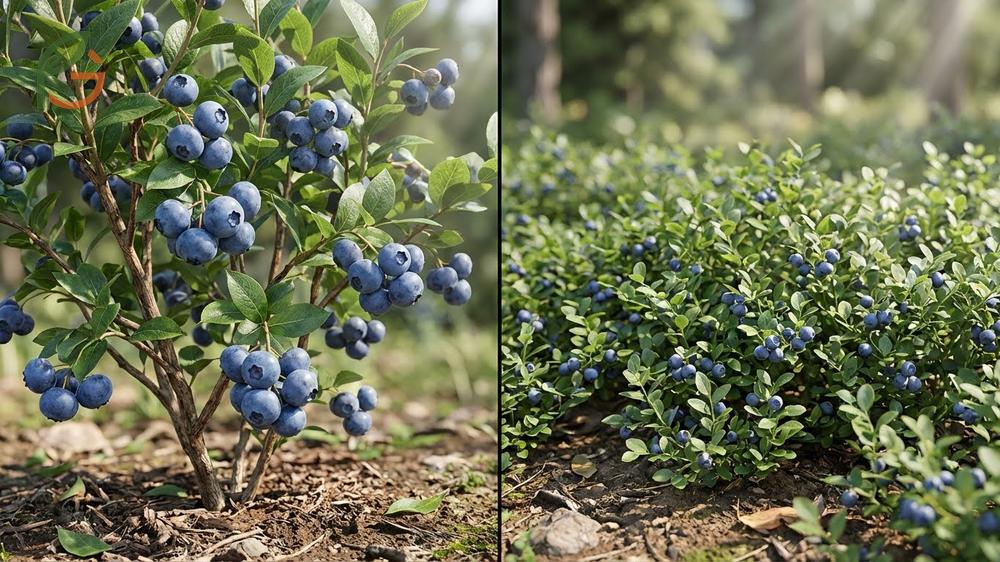
The primary distinction between highbush and lowbush blueberries lies in plant height and fruit characteristics. Highbush varieties (Vaccinium corymbosum) grow 6-12 feet tall as woody shrubs, while lowbush types (V. angustifolium) spread as ground covers under 2 feet[3]. This size difference dramatically affects cultivation methods and harvest efficiency.
Highbush blueberries produce larger berries measuring 10-18mm in diameter with milder, sweeter flavors. Lowbush berries stay smaller at 5-10mm but deliver more intense, tangy taste preferred for baking. Commercial growers favor highbush for fresh market sales because the berries pick faster and the upright plants suit mechanical harvesting. Lowbush berries dominate the processing market, with Maine’s wild harvest supplying frozen fruit to manufacturers.
Climate adaptation separates these types geographically. Lowbush varieties thrive in zones 2-6, handling extreme cold down to -35°F (-37°C). Highbush types prefer zones 4-7 for northern cultivars and 6-10 for southern ones. The lowbush types spread by underground rhizomes, creating dense patches over time, while highbush plants grow as individual multi-stemmed shrubs.
This table compares highbush and lowbush blueberries across height, berry size, flavor profile, hardiness zones, and cultivation methods
| Characteristic | Highbush | Lowbush |
|---|---|---|
| Plant Height | 6-12 feet[3] | Under 2 feet |
| Berry Size | 10-18mm diameter | 5-10mm diameter |
| Flavor | Sweeter, milder | Intense, tangy |
| Hardiness Zones | 4-7 (northern), 6-10 (southern)[1] | 2-6[1] |
| Growth Habit | Multi-stemmed shrub | Spreads by rhizomes |
| Primary Use | Fresh market, home gardens | Processing, wild harvest |
- Easier harvesting from standing position without bending or kneeling
- Self-fertile varieties don’t require multiple plants for pollination
- Larger berries fill containers faster, reducing harvest time by 40-50%
- Better disease resistance and longer productive lifespan (30-50 years vs 20-30 years)
- Superior fresh eating quality with thinner skins and juicier texture
Blueberry Plant Hardiness Zones
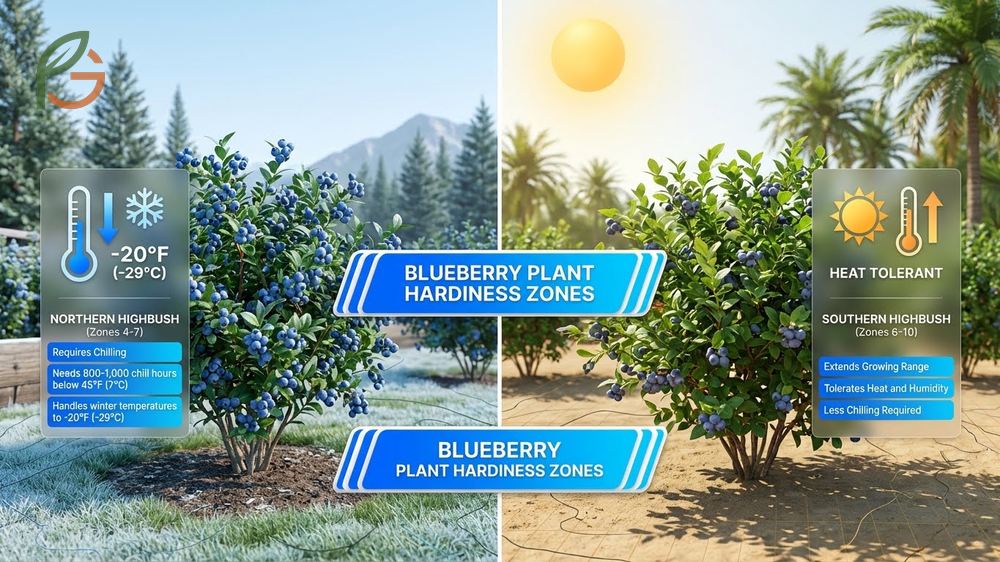
Hardiness zone matching determines blueberry cultivation success more than any other factor. Northern highbush varieties require USDA zones 4-7, handling winter temperatures to -20°F (-29°C)[1]. These plants need 800-1,000 chill hours below 45°F (7°C) to break dormancy and fruit properly. Without adequate chilling, plants produce sparse blooms and minimal fruit set.
Southern highbush cultivars extend the growing range to zones 6-10, tolerating heat and humidity that damages northern types. These varieties need only 150-500 chill hours, making them suitable for Gulf Coast and Southern California gardens. The trade-off is reduced cold tolerance, with most southern types damaged below 0°F (-18°C).
Rabbiteye blueberries (Vaccinium ashei) offer another option for zones 7-9, though they’re technically not highbush. These plants tolerate poor soils and drought better than highbush varieties. However, rabbiteyes require cross-pollination between two different cultivars and produce smaller, firmer berries than highbush types[8].
- Zones 3-4: Northland, Polaris, Patriot – extremely cold hardy, compact growth
- Zones 4-5: Bluecrop, Duke, Blueray – standard northern varieties, reliable producers
- Zones 5-7: Jersey, Elliott, Chandler – extended season with early to late cultivars
- Zones 7-9: Misty, O’Neal, Jewel – southern highbush for warm climates
- Zones 8-10: Star, Sharpblue, Sunshine Blue – lowest chill requirement (150-300 hours)
Climate Consideration: Even zone-appropriate varieties fail without acidic soil pH 4.5-5.5. Test soil before planting and amend with sulfur or peat moss to lower pH in alkaline regions. Alkaline soil causes iron chlorosis, turning leaves yellow and reducing yields by 50-70%.
Conclusion
The evidence is clear: high bush blueberry plants deliver reliable yields and superior fruit quality when matched to appropriate hardiness zones and given acidic soil conditions. Northern varieties excel in zones 4-7, while southern types extend cultivation to zone 10. Selecting cultivars like Bluecrop for midseason production or Duke for early harvests ensures success for American gardeners.
Current horticultural guidance emphasizes planting multiple varieties to maximize pollination and extend harvest windows from June through September. With proper care, these plants reward gardeners with 2.5-3.5 kg of berries annually for 30-50 years, making them one of the most productive and long-lived fruit crops for home gardens. FruitGarden provides comprehensive growing information to help you establish thriving blueberry plantings adapted to your specific region.
Frequently Asked Questions
What is the difference between northern and southern highbush blueberries?
Northern highbush blueberries grow in zones 4-7 and need 800-1,000 chill hours, while southern highbush varieties thrive in zones 6-10 with only 150-500 chill hours required. Southern types tolerate heat and humidity better, whereas northern varieties handle winter cold to -20°F. Southern highbush result from crosses between V. corymbosum and V. darrowii, creating heat-adapted plants for warmer regions.
How long does it take for a blueberry bush to produce fruit?
Blueberry bushes typically produce their first small harvest in the third year, yielding about 225 grams per bush. Production increases to 450-900 grams in year four and continues growing until plants reach 6-8 years old. Mature bushes produce 2.5-3.5 kg of berries annually and remain productive for 30-50 years with proper care.
Is Misty blueberry a highbush variety?
Yes, Misty is a southern highbush blueberry variety suited to zones 5-10. It requires 300-500 chill hours and produces medium-sized berries with spicy sweet flavor. The upright, spreading plants reach 4-6 feet tall with bright blue-green foliage that turns burgundy in fall. Misty works well in warmer climates where northern highbush varieties struggle.
How do you identify a wild blueberry bush?
Wild blueberry bushes show glossy, elliptical leaves 1-3 inches long that turn vibrant red in fall. Look for small raised dots (lenticels) on reddish-brown stems and white bell-shaped flowers in spring. Ripe berries display a five-pointed star shape on the bottom and white waxy bloom on the skin. Highbush types grow 6-12 feet tall in acidic forest soils, while lowbush varieties spread under 2 feet in open areas.
Do blueberry bushes need full sun?
Blueberry bushes produce best yields in full sun with 6-8 hours of direct light daily. Plants tolerate partial shade but berry production drops 30-50% with less than 6 hours of sun. Full sun exposure also improves fruit sweetness, reduces disease pressure, and enhances fall foliage color. Southern highbush varieties benefit from afternoon shade in zones 8-10 to prevent heat stress.
What is the lifespan of a blueberry bush?
Blueberry bushes live 30-50 years when properly maintained with regular pruning and adequate soil acidity. Some plants continue producing for 60+ years in ideal conditions. Productivity peaks at 6-10 years and remains strong through year 20-25 before gradually declining. Annual removal of 20-25% of the oldest canes maintains vigor and extends productive lifespan significantly.
What’s the difference between rabbiteye and highbush blueberries?
Rabbiteye blueberries (Vaccinium ashei) grow larger than highbush (up to 20 feet vs 6-12 feet) and tolerate drought and poor soils better. Rabbiteyes have firmer fruit with tougher skins that become chewier after freezing, while highbush berries are juicier with thinner skins. Rabbiteyes require cross-pollination between two cultivars, whereas most highbush varieties are self-fertile. Rabbiteyes suit zones 7-9, while highbush covers zones 4-10 depending on type.





