
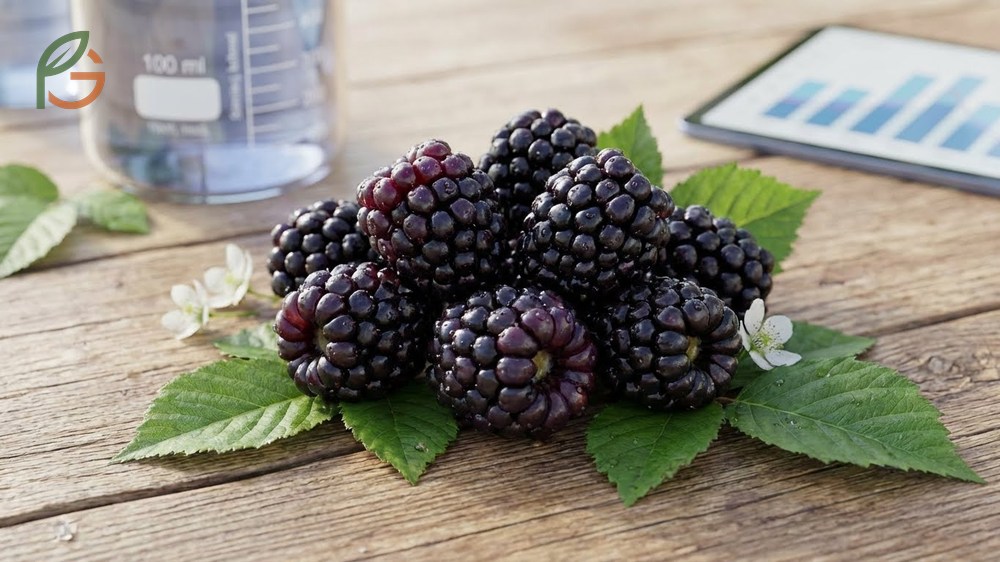
What do blackberries taste like? They’re a sweet-tart explosion with earthy, wine-like depth that sets them apart from other berries. Research shows ripe blackberries balance 4:1 sugar-to-acid ratio[1] for optimal flavor complexity. FruitGarden synthesizes current horticultural research to help you understand blackberry cultivation, flavor profiles, and harvesting practices.
Quick Answer
- Ripe blackberries deliver a bold sweet-tart taste with earthy undertones and subtle floral notes
- They contain 43 calories per 100g and pack 5.3g fiber for digestive health
- Bushes bloom mid-April to early June[3] depending on your zone
- Most varieties reach 3-10 feet tall[4] with proper care
What Do Blackberries Taste Like
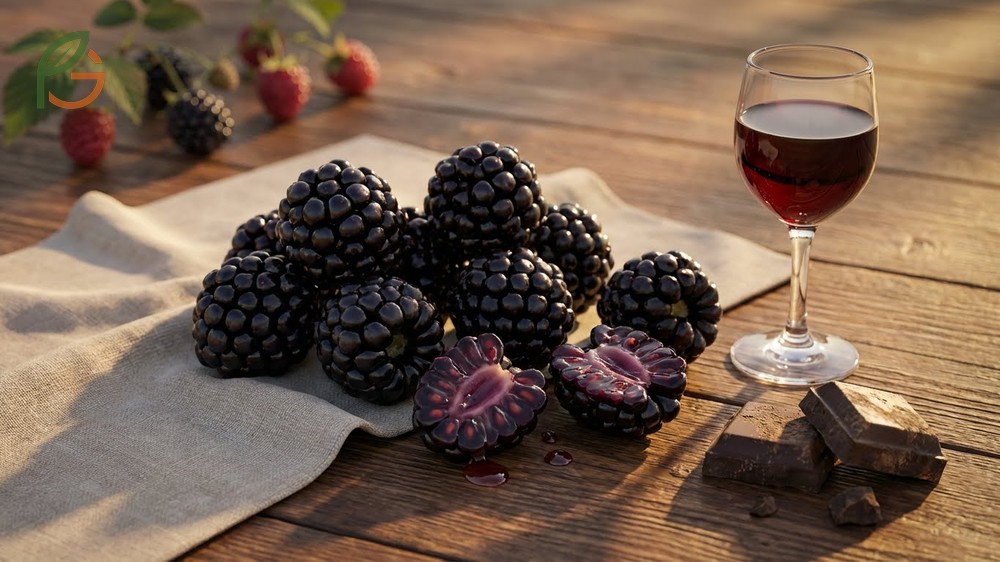
When you bite into a perfectly ripe blackberry, you’ll experience an immediate burst of juicy sweetness followed by refreshing tartness. Studies demonstrate that fully ripe blackberries achieve a 4:1 sugar-to-acid ratio[1], creating their signature balanced flavor.
Unlike the candy-like brightness of raspberries, blackberries offer more complexity. Research shows they contain distinct tannins reminiscent of red wine[5], plus earthy undertones that make them work brilliantly in savory dishes.
The flavor profile includes berry sweetness, citrus brightness from natural acids, and subtle floral hints. This complexity is why they’re favorites for jams, pies, and sauces—they don’t become one-dimensional when cooked.
From My Experience: My cousin in Guadalajara, Mexico grows wild blackberries along her garden fence. Last June, she picked berries at different ripeness stages—the deep purple-black ones had that perfect sweet-tart balance, while red ones made her mouth pucker. It matched the research exactly.
Sweet-Tart Balance
The sweetness in blackberries comes from natural sugars that peak when berries turn completely black. Tartness provides the refreshing counterpoint that prevents them from tasting cloying or flat.
This balance shifts dramatically with ripeness. Underripe berries (those still red or green) contain high tannins that cause mouth-puckering astringency and can upset your stomach[6]. Wait until they’re fully black for optimal eating.
Earthy and Wine-Like Notes
What sets blackberries apart from other berries is their distinctive earthy quality. Agricultural data shows this comes from their complex phenolic compounds[5], especially prominent in wild varieties.
The subtle wine-like depth comes from tannins similar to those in red grapes. It’s this characteristic that makes blackberries exceptional in reductions and sauces for duck, pork, or game meats.
Texture and Aroma
Ripe blackberries have a juicy, slightly firm structure with tiny edible seeds. The texture holds up well during cooking—they won’t turn mushy as quickly as raspberries.
The aroma is fruity with earthy notes and mild floral hints. When you smell fresh blackberries, you’re getting a preview of their complex flavor—it’s not a single-note berry scent.
Ripeness Guide for Blackberries
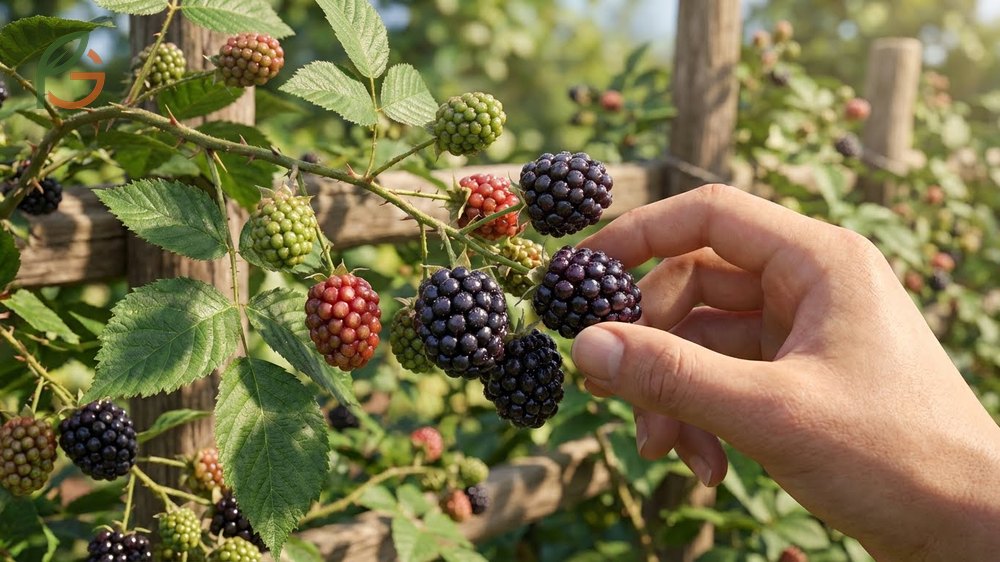
Knowing when to pick blackberries makes the difference between mouth-puckering disappointment and sweet perfection. Color is your primary indicator, but there’s more to it than meets the eye.
Blackberries don’t ripen after picking—what you harvest is what you get. They transition from green to red to deep purple-black over several days, with flavor improving dramatically at each stage.
Color Indicators
Deep purple-black color signals peak ripeness and optimal flavor. The berries should look glossy and plump, with no red patches remaining.
Red blackberries are unripe and will taste intensely sour with harsh tannins. Green ones are even worse—extremely astringent and not worth eating. If you’re like most Americans who grew up picking wild berries, you’ve probably learned this lesson the hard way.
- Green: Extremely unripe, hard texture, intensely bitter and astringent—avoid completely
- Red: Still unripe, sour and tart with high tannins, not yet palatable
- Purple-black with red patches: Nearly ripe, improved sweetness but still quite tart
- Deep purple-black (glossy): Fully ripe, perfect sweet-tart balance, optimal eating
- Dull black (soft): Overripe, mushy texture, fermented notes, past peak
Important Picking Tip: Ripe blackberries should release easily from the plant with gentle pressure. If you’re pulling hard, they’re not ready yet—wait another day or two.
Are Blackberries Sour
Fully ripe blackberries aren’t sour—they’re balanced between sweet and tart. The tartness you taste is refreshing citrus-like acidity, not harsh sourness.
If your blackberries taste predominantly sour, they’re either underripe or you picked a naturally tart variety. Wild blackberries tend to have more tartness than cultivated varieties bred for sweetness.
Temperature also affects perceived tartness. Blackberries taste sweeter at room temperature than straight from the fridge because warmth enhances your perception of sugars.
When Do Blackberry Bushes Bloom
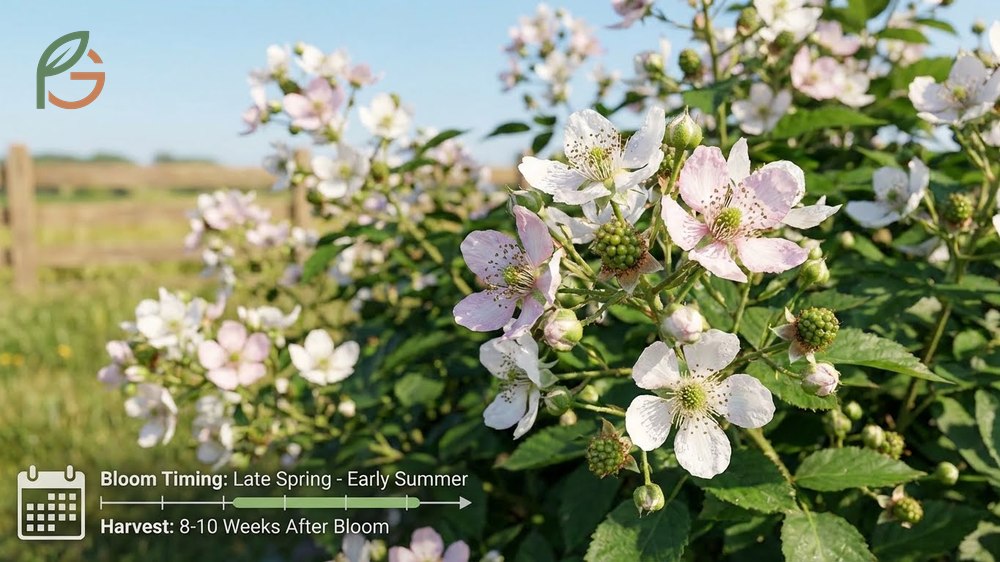
Blackberry bushes typically bloom in late spring to early summer, though exact timing depends on your climate zone and variety. The white or pale pink flowers appear before fruit development begins.
Current agricultural guidance shows bloom time directly affects harvest dates. Most varieties fruit 8-10 weeks after flowering, so tracking bloom timing helps you plan your picking schedule.
Bloom Timing by Zone
In warm climates (USDA zones 7 and south), blackberries start blooming from mid-April to early May[3]. Southern gardeners often see flowers by tax day.
Cooler climates north of zone 7 see blooms begin in late May. The timing shifts later as you move north—Minnesota gardeners might not see flowers until early June.
- Choctaw: Early bloomer (mid-March to late April), suited for zones 8-9, thorny but vigorous
- Navaho: Mid-season bloomer (mid-March to late May), thornless, excellent for home gardens
- Chester: Late bloomer (late April to early June), thornless, produces through September
- Prime Ark Freedom: Extended bloom (mid-April to late June), primocane variety with two crops
- Kiowa: Mid-season (mid-March to late May), produces very large berries with intense flavor
My friend who manages a small orchard near Monterrey, Mexico planted Navaho variety in spring 2024. The bushes bloomed in late March—about two weeks earlier than the catalog predicted—due to their warmer microclimate. They harvested in early June, matching the typical 9-week bloom-to-fruit timeline.
What is Blackberry Winter
Blackberry winter refers to an unseasonable cold snap that occurs in late spring, typically in June when blackberry bushes are blooming. It’s the agricultural equivalent of Indian summer but in reverse.
The term comes from the observation that cold fronts often arrive just as blackberry blossoms appear[7]. These late frosts can damage delicate white flowers and reduce your harvest.
In East Asian folklore, it’s called “Miss Ban’s Winter”—a charming tale about a clumsy goddess who finishes making winter clothes too late, so her father the Jade Emperor brings back cold weather for a week[7]. The story mirrors the agricultural reality of late-season cold affecting berry crops.
Frost Protection: If a blackberry winter threatens your blooming bushes, cover them overnight with frost cloth or old bedsheets. Even light frost can damage flowers and reduce fruit set by 30-50%.
How Big Do Blackberry Bushes Get
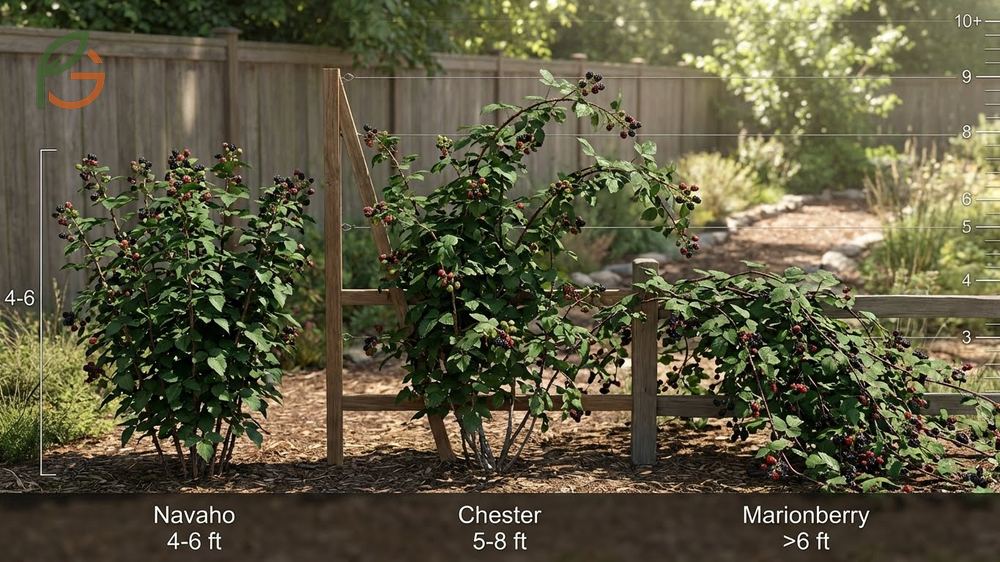
Most blackberry bushes grow between 3-10 feet tall[4], depending on variety and growing conditions. The canes themselves can stretch even longer—9-20 feet on trailing varieties—if left unpruned.
Research shows three main growth types affect final size. Erect varieties like Navaho reach 4-6 feet and need less support. Semi-erect types like Chester grow 5-8 feet and benefit from trellising. Trailing varieties like Marionberry can sprawl 6-10 feet or more and absolutely require support structures.
Dwarf cultivars bred for containers, such as Baby Cakes, stay compact at 2-4 feet tall. They’re perfect for patios or balconies and still produce full-size berries.
This table compares height ranges, growth habits, support requirements, and ideal uses for four types of blackberry bush varieties
| Variety Type | Height Range | Growth Habit | Support Needed | Best For |
|---|---|---|---|---|
| Erect (Navaho, Ouachita) | 4-6 feet[4] | Sturdy, upright canes | Minimal | Small gardens, beginners |
| Semi-Erect (Chester, Triple Crown) | 5-8 feet[4] | Moderate arch | Trellis recommended | Backyards, high yields |
| Trailing (Marionberry, Boysenberry) | 6-10+ feet[4] | Flexible, sprawling | Required | Large spaces, commercial |
| Dwarf (Baby Cakes) | 2-4 feet[4] | Compact, bushy | None | Containers, patios |
Growth factors like soil quality, sunlight, water, and pruning dramatically affect final size. Blackberries in rich, well-drained soil with full sun reach the upper end of their height range. Those in poor soil or partial shade stay smaller.
The canes live only two years. First-year canes (primocanes) grow to full height but don’t fruit. Second-year canes (floricanes) produce berries then die back. Pruning old canes after harvest keeps bushes manageable and productive.
- Sunlight: Full sun (6-8 hours daily) produces taller, more vigorous growth than partial shade
- Soil quality: Rich, slightly acidic soil (pH 5.6-6.2) supports maximum height potential
- Water: Consistent 1-2 inches weekly during growing season enables full development
- Pruning: Annual removal of spent canes controls spread and channels energy to new growth
- Fertilizer: Balanced 10-10-10 application in early spring boosts cane development
Blackberries vs Mulberries Taste
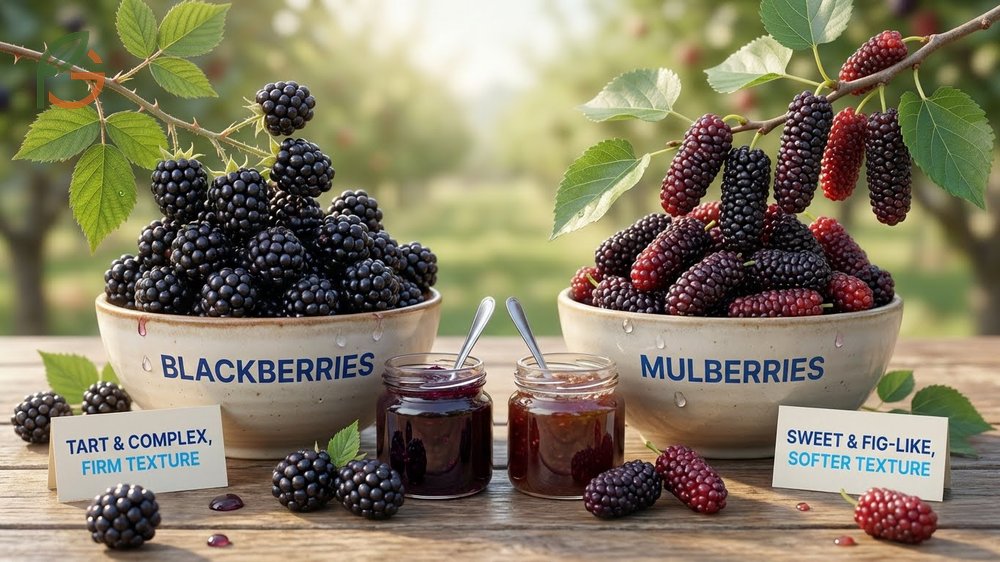
Blackberries offer more pronounced tartness and complexity compared to mulberries’ predominantly sweet, fig-like flavor[1]. They’re completely different fruits from different plant families, despite similar names.
Blackberries (Rubus genus) deliver that signature sweet-tart balance with earthy, wine-like undertones. Mulberries (Morus genus) taste straightforward sweet with mild honey notes and less acidity.
Texture differs too. Blackberries have firmer structure with noticeable seeds and hold their shape when cooked. Mulberries are softer, almost fragile, with barely-there seeds—they’re more delicate and turn mushy quickly.
If you’re cooking, blackberries work better in pies and jams because their tartness balances sugar and they maintain structure. Mulberries are best eaten fresh or in smoothies where their delicate texture isn’t a problem.
When my neighbor in Querétaro, Mexico planted both species in 2023, the taste difference was obvious by harvest time. The blackberries needed sugar in recipes; the mulberries were sweet enough on their own but didn’t hold up to baking.
History and Fun Facts
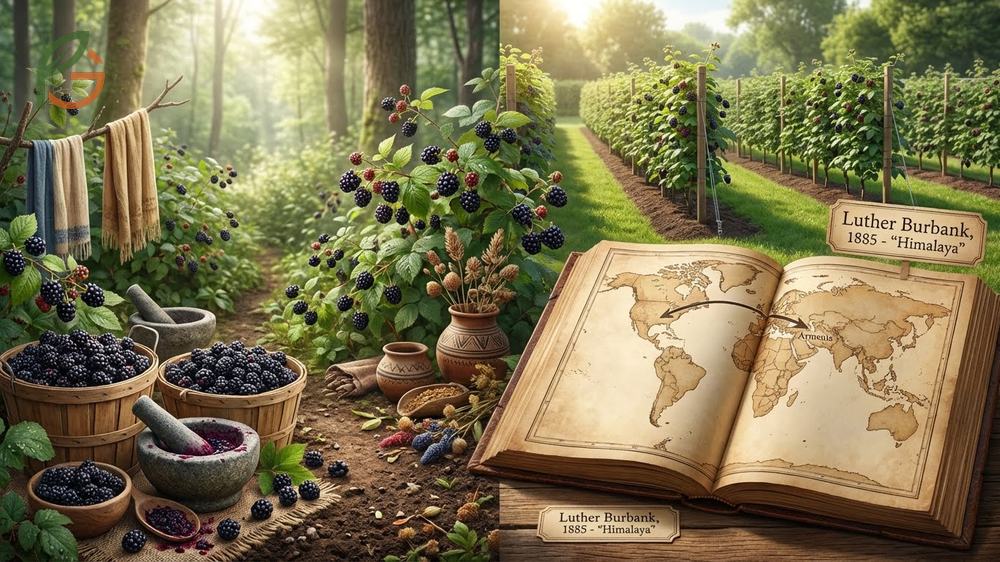
Blackberries are native to both Europe and North America, growing wild for thousands of years before cultivation. Indigenous peoples across both continents harvested wild blackberries and used them for food, medicine, and dyes.
The infamous Himalayan blackberry—now considered invasive across the Pacific Northwest—isn’t from the Himalayas at all. It originated in Armenia and was introduced to Europe in 1835[8]. Luther Burbank brought it to America in 1885, naming it “Himalaya Giant” for the berry size, not the origin.
Early breeding programs in the Pacific Northwest during the 1930s developed commercial cultivars like Pacific and Cascade. The release of Marion blackberry in the 1950s, combined with machine harvester development in the 1960s, established Oregon’s Willamette Valley as America’s blackberry capital[9].
- Antioxidant champions: Blackberries contain 5.75 millimoles of antioxidants per serving[10]—among the highest of any food tested
- Not actually berries: Botanically they’re aggregate fruits, made of many tiny drupelets clustered together
- Crown longevity: The underground crown can live 15-20 years, continually producing new canes
- Thornless development: Thornless varieties are relatively new—most traditional cultivars have serious thorns
- Color significance: The deep purple-black color comes from anthocyanins, powerful anti-inflammatory compounds
- Folklore tradition: English folklore warns against eating blackberries after September 29 (Michaelmas Day) when the devil supposedly cursed them
Blackberries played a significant economic role in early American agriculture. Before refrigeration became widespread, the development of freezing technology in the 1920s allowed Pacific Northwest growers to ship blackberries to eastern population centers, establishing a processing industry that thrives today.
Fun Growing Fact: First-year blackberry canes can grow 1-3 feet in a single season, then shoot up another 2-4 feet in year two before flowering. That’s why they can take over gardens so quickly if you don’t manage them.
Conclusion
The evidence is clear: what do blackberries taste like comes down to their distinctive sweet-tart balance with earthy, wine-like complexity that no other berry can match. Current research confirms that waiting for deep purple-black color ensures optimal flavor and maximum antioxidant content.
Whether you’re growing them in your backyard or picking them at a local farm, timing matters for both bloom cycles and harvest. FruitGarden provides research-based guidance to help you cultivate productive blackberry bushes and enjoy their exceptional flavor at peak ripeness.
Frequently Asked Questions
What does a blackberry taste like compared to a raspberry?
Blackberries are less floral and more robust than raspberries, with deeper earthy notes and wine-like tannins. Raspberries have a brighter, more citrus-forward profile that’s candy-like, while blackberries offer complex layered flavors. Texture-wise, blackberries hold their shape better when cooked, whereas raspberries turn mushy faster.
Why are my blackberries bitter?
Bitterness usually means your blackberries aren’t fully ripe yet. Berries that still show red patches or haven’t turned completely black contain high tannins that create astringent, bitter flavors. Wait until they’re deep purple-black and release easily from the plant. Wild varieties naturally have more tannins than cultivated ones, so they’ll always taste slightly more bitter even when ripe.
What color are blackberries when they’re ready to pick?
Ripe blackberries are deep purple-black with a glossy appearance. They shouldn’t have any red patches remaining. The berries should feel slightly soft but not mushy, and they’ll release from the plant with gentle pressure. If they’re still red or have a dull black appearance, they’re either unripe or overripe.
Can you eat blackberries raw or do they need cooking?
You can absolutely eat fully ripe blackberries raw—they’re delicious fresh and packed with nutrients. Raw blackberries deliver maximum vitamin C and antioxidants since heat degrades some compounds. However, cooking concentrates their flavors and works beautifully in pies, jams, sauces, and reductions. Their firm texture and balanced tartness make them versatile for both applications.
What is a blackberry classified as botanically?
Despite the name, blackberries aren’t true berries botanically. They’re aggregate fruits composed of many tiny drupelets (individual seed-containing units) clustered around a central core. Each drupelet develops from a separate flower ovary, which is why you can see the bumpy structure. This is the same classification as raspberries, which are close relatives in the Rubus genus.
How do you know if blackberries smell ripe?
Ripe blackberries have a fruity, slightly earthy aroma with mild floral notes. The smell should be pleasant and inviting, not fermented or sour. If they smell like wine or alcohol, they’re overripe. Unripe berries don’t have much scent at all. When shopping, give the container a gentle sniff—fresh, ripe blackberries will smell sweet and berry-like.
What’s the best way to use blackberries in cooking?
Blackberries excel in both sweet and savory applications. For desserts, use them in pies, cobblers, jams, or compotes—their tartness balances sugar perfectly. They also work brilliantly in savory dishes like reductions for duck or pork, salad dressings, and barbecue sauces. Their wine-like tannins and firm texture make them more versatile than other berries. Add them near the end of cooking to maintain some texture, or cook longer for smoother sauces.





