
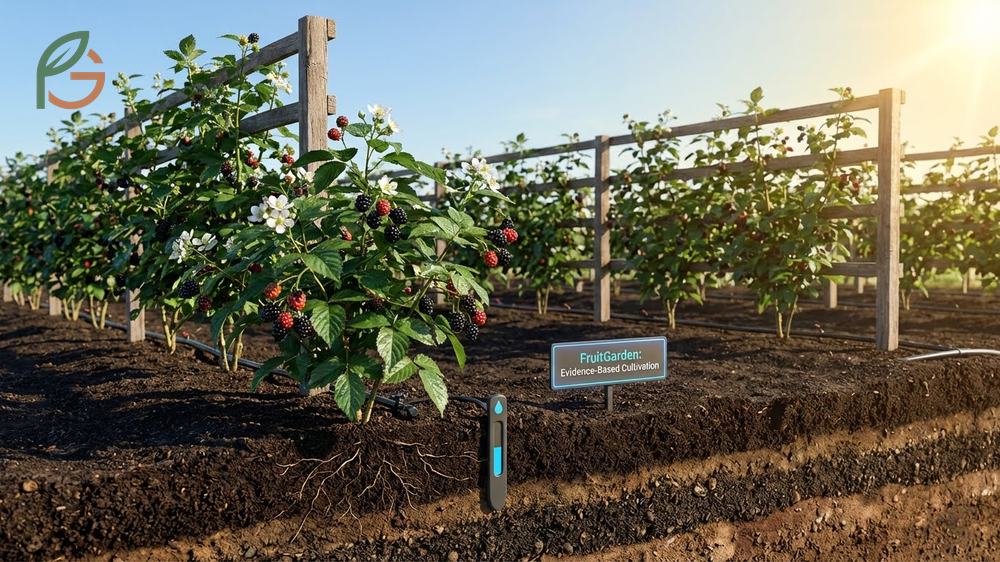
How to grow blackberries successfully requires full sun exposure for at least 8 hours daily, well-drained soil with pH 5.5-6.5, and proper spacing of 2-4 feet between plants[1]. Research shows that blackberries thrive in loam or sandy loam soils high in organic matter, with consistent moisture of 1-2 inches weekly[1]. FruitGarden synthesizes current agricultural research to help you achieve productive blackberry harvests through evidence-based cultivation methods.
Quick Answer
How to Grow Blackberries
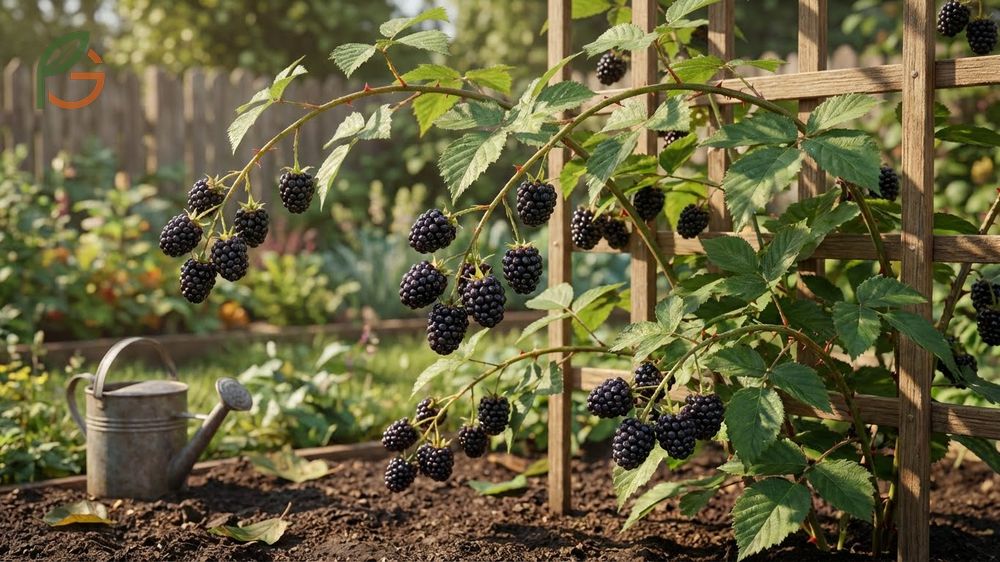
Blackberries grow best in USDA hardiness zones 5-9, tolerating temperatures from 65°F to 85°F (18°C to 29°C) during fruit development[3]. Most varieties need 800-1,000 chilling hours below 45°F (7°C) during winter dormancy to produce flowers and fruit properly[3]. Cold-hardy varieties like Chester Thornless work well in cooler zones 5-7, while heat-tolerant Arapaho and Apache varieties thrive in warmer zones 6-9.
Current data indicates that blackberry canes grow 1-3 feet per year once established, with plants living 15-20 years under proper care[4]. These plants follow a two-year growth cycle where first-year primocanes remain vegetative, then harden into second-year floricanes that produce fruiting laterals and berries. Understanding this cycle helps you plan pruning and support strategies effectively.
From My Experience: My cousin in Guadalajara, Mexico planted thornless blackberries in March 2023. The primocanes reached 4 feet by October—slightly faster than the typical 1-3 foot annual growth—and produced their first berry harvest in July 2024.
Sunlight Requirements for Blackberries
Studies demonstrate that blackberries need a minimum of 8 hours of direct sunlight daily for healthy flowering and fruit production[1]. Shadier locations produce nice foliage but significantly reduce berry yield and quality. In regions with extreme heat above 90°F (32°C), afternoon shade can protect plants from heat stress that reduces fruit size[3].
Choose sunny, sheltered sites away from strong winds for best results. Position plants against north-facing walls or fences where they’ll receive maximum sun exposure without wind damage. This placement also simplifies trellis installation for supporting heavy fruit-laden canes.
Blackberry Plant Spacing
Proper spacing prevents disease by improving air circulation and makes harvesting easier. Space moderately vigorous varieties 2.5-3.5 meters (8-11 feet) between plants, while particularly vigorous blackberry varieties need up to 4 meters (13 feet)[5]. Compact varieties for home gardens can be planted 2-4 feet apart in rows spaced 6 feet apart[1].
Trailing blackberry varieties require different spacing considerations. Plant these about 10 feet apart in rows, allowing each plant to spread approximately 5 feet in either direction[6]. Check your specific variety’s potential spread before planting to avoid overcrowding.
How to Plant Blackberry Bushes
When to Plant Blackberries
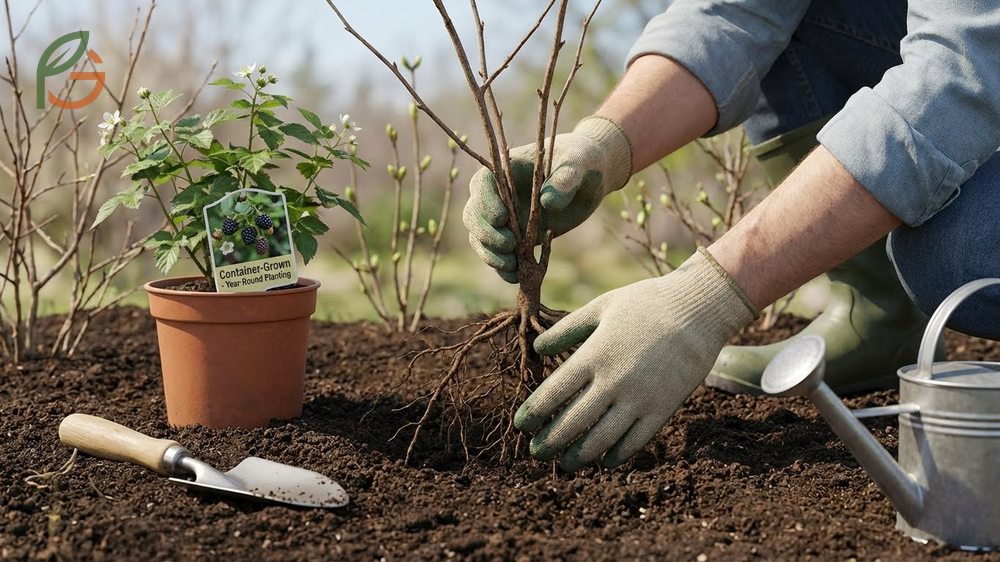
Research shows the optimal planting window runs from mid-autumn to early spring for bare-root plants[5]. Late February or early March provides ideal conditions in most US regions, allowing roots to establish before active growth begins[7]. Container-grown plants offer more flexibility and can be planted year-round, though you should avoid hot, dry weather periods.
Winter and spring planting in cold-hardy zones gives plants time to develop strong root systems before summer heat. Bare-root plants become available from autumn to spring and must be planted immediately upon arrival to prevent root drying.
Planting Steps
Dig holes slightly larger than the container or root system, working soil at the bottom to ensure it’s loose and aerated. Position plants at the same depth they were growing in their container, with bare-root plants having uppermost roots about 2 inches below the soil surface[5]. If planting against walls, position holes at least 12 inches from the base where growing conditions are better.
Amend poor, chalky, sandy, or heavy clay soils by mixing a bucketful of organic matter like garden compost or well-rotted manure into excavated soil before backfilling. This minimizes soil disturbance while helping plants establish quickly. Water thoroughly after planting and apply 2-3 inches of mulch around the base, keeping it away from the crown.
Important Note: Don’t add fertilizer at planting time. Wait until plants show active growth in spring, then apply balanced fertilizer according to soil test recommendations to avoid root burn.
Best Soil for Blackberries
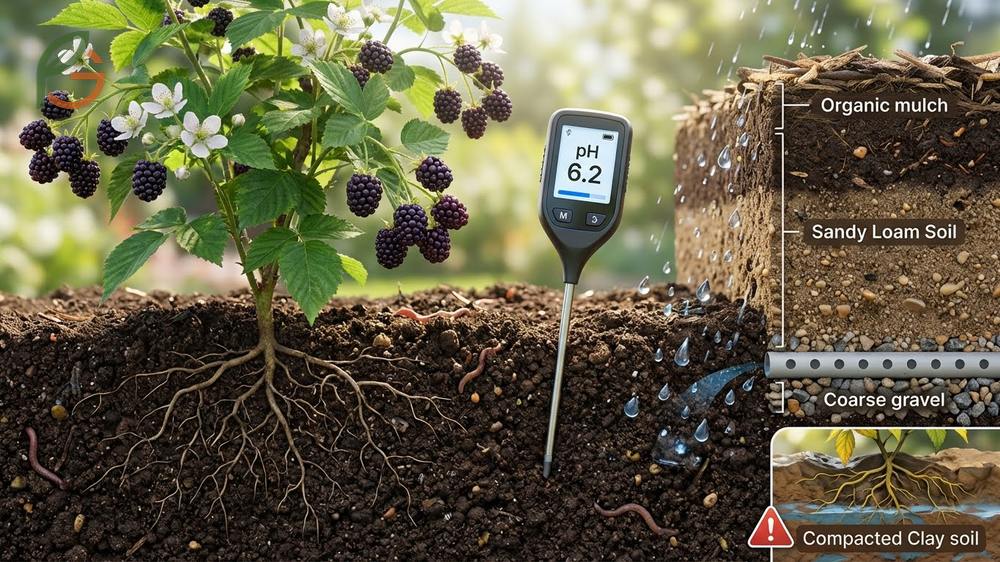
Blackberries tolerate most soil types but achieve optimal production in loam or sandy loam soils high in organic matter with pH 5.5-6.5[1]. Agricultural data shows that soil pH between 6.0-6.5 provides ideal nutrient availability[6]. A soil test before planting reveals pH levels and nutrient deficiencies that need correction.
Good drainage is critical because waterlogged conditions lead to root death, plant stress, and increased susceptibility to diseases. If your soil holds water for extended periods, build raised beds or high rows 6-8 inches tall to improve drainage. Till soil to 12-18 inches deep before planting since blackberries develop deep root systems that benefit from loose, well-aerated growing medium[1].
Incorporate 2-4 inches of organic matter like compost or aged manure into the top 8-12 inches of soil before planting. This improves soil structure, increases water retention in sandy soils, and enhances drainage in clay soils. Organic matter also feeds beneficial soil microorganisms that support root health and nutrient uptake.
- Test soil pH and adjust to 5.5-6.5 range using lime to raise pH or sulfur to lower it
- Ensure drainage by checking if water puddles disappear within 6 hours after rain
- Remove all weeds, especially perennials with deep root systems that compete for nutrients
- Till to 12-18 inch depth to break up compaction and improve root penetration
- Mix in 2-4 inches of compost or well-rotted manure throughout planting area
- Level soil surface and create slight slope for water runoff if needed
Watering Blackberries
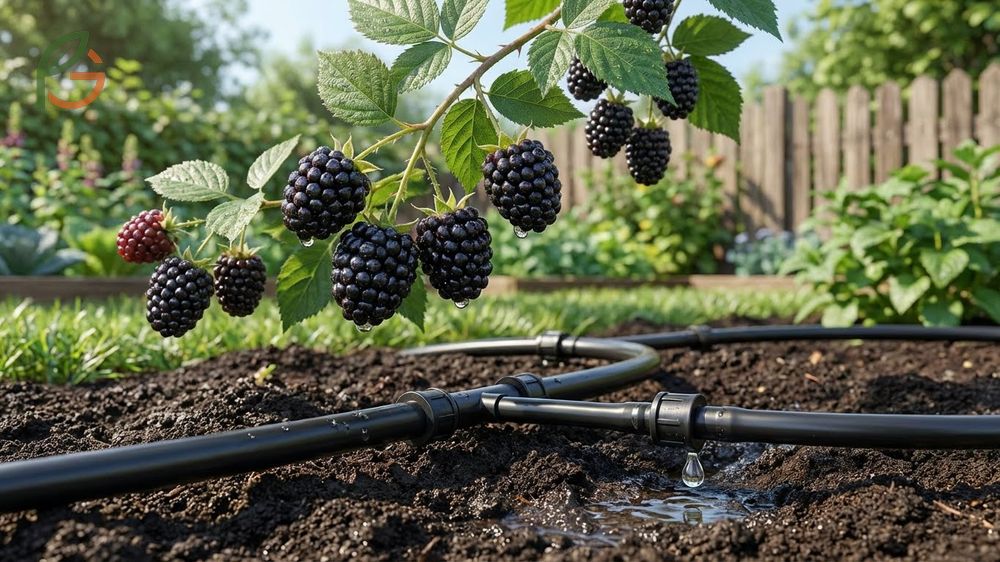
Current guidance emphasizes that blackberries need 1-2 inches of water per week for optimal production and fruit quality[1]. Installing drip irrigation or planting near water sources is essential for consistent moisture. Evidence suggests watering deeply but infrequently encourages strong root growth while preventing waterlogged soil that causes root rot.
During the growing season and fruiting period, plants need regular moisture to develop plump, juicy berries. Water 2-3 times weekly for landscape plants and daily for container-grown blackberries. Apply water at the base rather than overhead to reduce leaf wetness that promotes fungal diseases.
Mulch plays a vital role in water management by retaining soil moisture, reducing evaporation, and regulating soil temperature. Apply 2-3 inches of organic mulch like wood chips, straw, or pine needles around plants, keeping it 2-3 inches away from canes. This reduces watering frequency by 30-40% while suppressing weeds that compete for moisture.
Watering Tip: Water early morning between 6-9 AM when temperatures are cool and evaporation is minimal. This timing allows foliage to dry before evening, reducing disease risk from prolonged leaf wetness.
Best Fertilizer for Blackberries
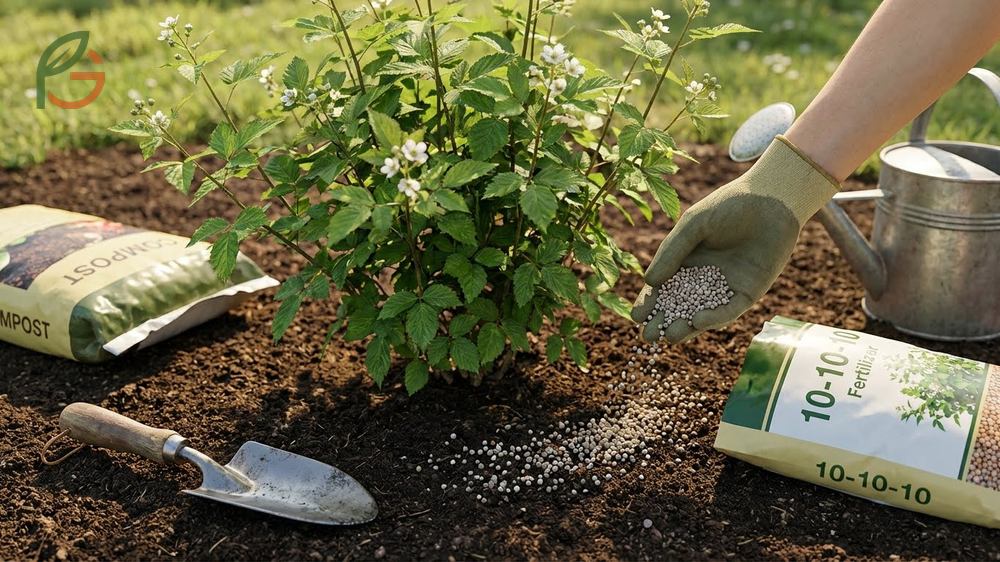
Research shows that balanced 10-10-10 fertilizer applied in early spring as new growth begins provides essential nitrogen, phosphorus, and potassium for healthy development[8]. Apply a second application in late spring or early summer to support robust cane and fruit development. Follow package instructions carefully because excessive nitrogen produces excessive vegetative growth at the expense of fruit production.
Organic fertilization options include compost, well-rotted manure, bone meal for phosphorus, and kelp meal for potassium. These natural amendments improve soil health over time while providing slow-release nutrients. Side-dress plants with compost in late spring by spreading a 1-inch layer around the base and working it lightly into the soil surface.
Soil tests every 2-3 years reveal specific nutrient deficiencies requiring targeted amendments. If plants yellow in summer despite adequate watering, apply balanced liquid fertilizer diluted according to label directions. Avoid fertilizing after mid-summer because late-season nitrogen encourages soft growth that’s susceptible to winter damage.
- Early spring: Apply 10-10-10 fertilizer at 1-2 pounds per 100 square feet when growth starts
- Late spring: Side-dress with compost or apply second balanced fertilizer application
- Mid-summer: Stop all fertilization to allow canes to harden before winter
- Fall: Spread 2-3 inches of compost around plants without working it into soil
- Monitor leaf color: Dark green leaves indicate sufficient nutrients, while yellowing suggests nitrogen deficiency
Blackberry Pests and Diseases
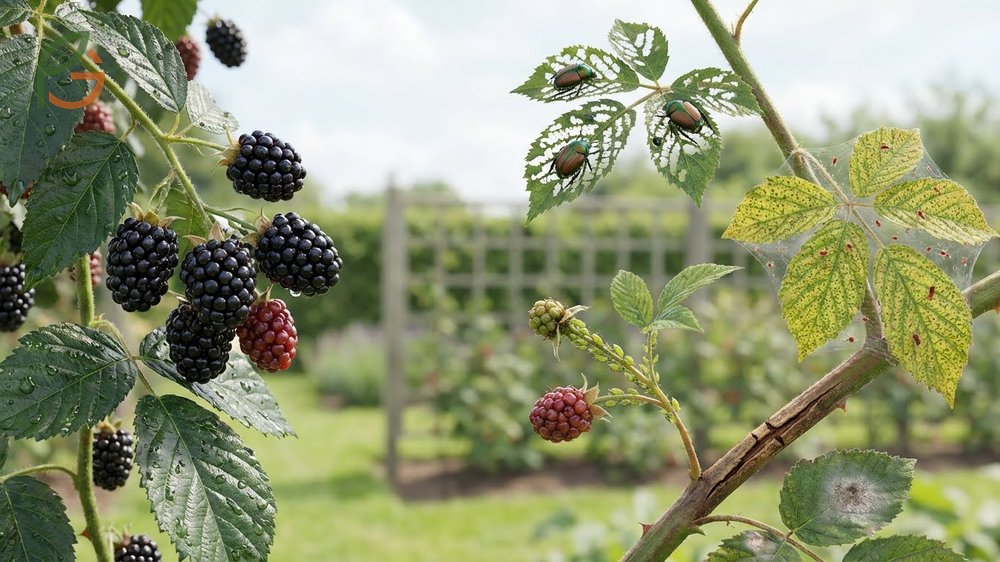
Studies demonstrate that proper spacing, pruning, and sanitation prevent most blackberry pest and disease problems. Common insect pests include Japanese beetles that skeletonize leaves, spider mites causing yellowing in hot dry conditions, aphids spreading viral diseases, cane borers weakening stems, and fruitworms damaging developing berries[8]. Early identification and intervention minimize damage and protect yields.
Fungal diseases pose significant threats to blackberry production. Anthracnose causes sunken lesions on canes and gray leaf spots, while botrytis (gray mold) thrives in wet conditions causing soft grayish-brown fruit rot[8]. Cane blight enters through pruning wounds leading to wilting and dieback, and orange rust is a systemic fungal disease turning leaves orange and reducing production.
Disease prevention starts with site selection and cultural practices. Plant in full sun with good air circulation, avoid overhead watering that keeps foliage wet, and space plants properly to reduce humidity around canes. Remove and destroy infected canes promptly, sterilize pruning tools between cuts with 10% bleach solution, and apply mulch to prevent soil-borne pathogens from splashing onto leaves.
- Remove all fallen fruit and plant debris that harbor pests and disease spores
- Prune out old floricanes immediately after harvest to improve air circulation
- Apply copper-based fungicides or sulfur sprays in early spring as preventive measure
- Hand-pick Japanese beetles in early morning when they’re sluggish and drop into soapy water
- Monitor weekly for pest eggs, larvae, and early disease symptoms to catch problems early
- Choose disease-resistant varieties like Triple Crown, Apache, or Chester Thornless when possible
When to Harvest Blackberries
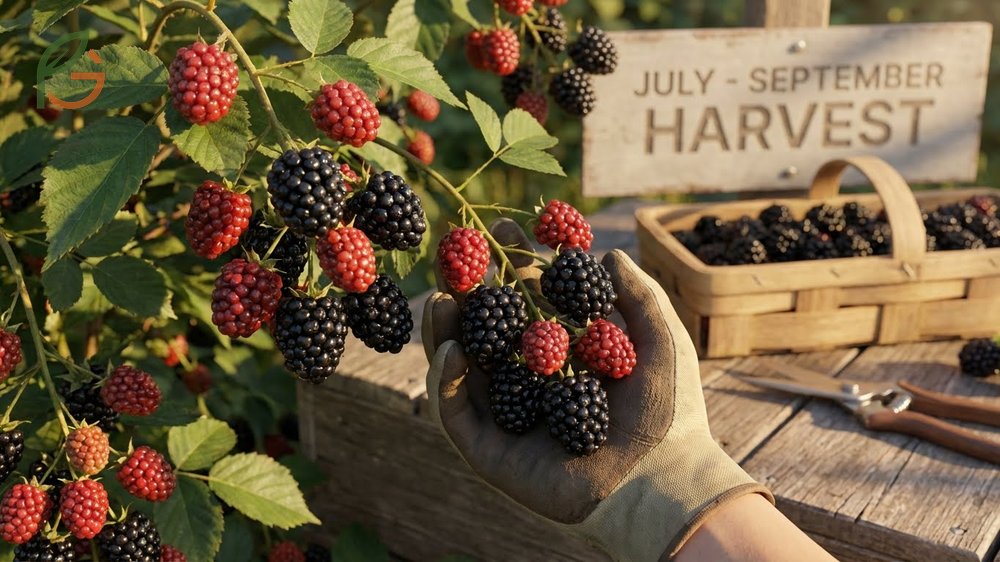
Blackberries typically ripen from July through September, though exact timing varies by USDA hardiness zone and cultivar characteristics[9]. Agricultural data shows that fruit develops from full bloom to ripe berries in 35-60 days depending on variety and regional conditions. Watch for early bloomers starting in late June in warmer zones.
Ripe blackberries turn from red to deep black with a plump, glossy appearance. Evidence suggests waiting 2-3 additional days after berries turn completely black produces the sweetest possible fruit[9]. Berries that are light purple, red, or firm need more time to ripen. Pick in early morning when temperatures are cool and berries are plump with moisture for best quality and longest storage life.
Harvest at least once weekly during fruiting season since not all berries ripen simultaneously. Gently pull ripe berries from plants—they should release easily without resistance. Use flat, shallow baskets to prevent bruising bottom layers, as bruised fruit rots quickly. Fresh blackberries last approximately 5 days refrigerated, so pick only what you’ll use or preserve within that timeframe.
- Check plants every 3-4 days during peak season for newly ripened berries
- Harvest before 10 AM when berries are cool and firm from overnight temperatures
- Leave slightly under-ripe berries for next harvest since they won’t ripen off the plant
- Handle berries gently and place directly in final containers to minimize bruising
- Refrigerate immediately after picking to extend freshness from 3 to 5 days
Conclusion
The evidence is clear: successful how to grow blackberries cultivation depends on providing 8+ hours of daily sunlight, well-drained soil with pH 5.5-6.5, consistent 1-2 inches weekly watering, and proper 2-4 foot spacing between plants. These plants reward minimal effort with abundant harvests in 1-2 years, producing berries for 15-20 years under proper care.
Current agricultural guidance emphasizes preventive disease management through good air circulation, sanitation practices, and resistant variety selection. By following these research-based growing principles, you’ll enjoy productive blackberry plants that supply fresh berries throughout summer for years to come.
Frequently Asked Questions
How long does it take blackberry plants to produce fruit?
Blackberry plants typically produce their first harvest 1-2 years after planting. First-year primocanes remain vegetative and develop into second-year floricanes that flower and fruit. Some vigorous plants may produce limited berries in the first year, but expect peak production starting in year two.
Can you grow blackberries from seed?
Yes, but growing from seed takes longer and produces variable results compared to plants from cuttings or nursery stock. Seeds require cold stratification for 90-120 days before germination. Most gardeners prefer propagating from tip cuttings, root cuttings, or purchasing certified disease-free plants that maintain desirable parent plant characteristics.
Where should I plant blackberry bushes in my yard?
Plant blackberries in locations receiving 8+ hours of direct sunlight daily with protection from strong winds. Avoid low-lying areas where cold air settles or water pools. Position against fences or walls where you can easily install support structures, keeping plants at least 12 inches from building foundations for better drainage and air circulation.
How do you propagate blackberries at home?
Propagate blackberries by tip layering where canes naturally root when tips touch soil, taking 4-7 inch root cuttings pencil-thick during dormancy, or rooting 6-8 inch tip cuttings in moist peat moss in June-July. Hardwood cuttings taken in February show 75% success rates. Most methods root within 4-8 weeks under consistent moisture.
What support structures do blackberry plants need?
Erect and semi-erect varieties need trellis systems with 2-3 horizontal wires at 3, 4, and 5 feet high to support heavy fruit-laden canes. Trailing varieties require higher supports up to 6 feet. Simple T-post systems work well for home gardens, while larger plantings use more elaborate wire trellis systems with posts every 15-20 feet.
How fast do blackberry bushes grow each year?
Established blackberry plants grow 1-3 feet per year once their root systems are developed. First-year primocanes grow most vigorously, potentially reaching 4-6 feet by fall depending on variety and growing conditions. Growth rates depend on soil fertility, consistent moisture, sunlight exposure, and variety vigor level.
Do blackberries need full sun or can they tolerate shade?
Blackberries require full sun with minimum 8 hours of direct sunlight for optimal flowering and fruiting. Shadier locations produce attractive foliage but significantly reduced berry yields and smaller fruit size. In extremely hot climates above 90°F, afternoon shade helps prevent heat stress while maintaining adequate light for good production.





