
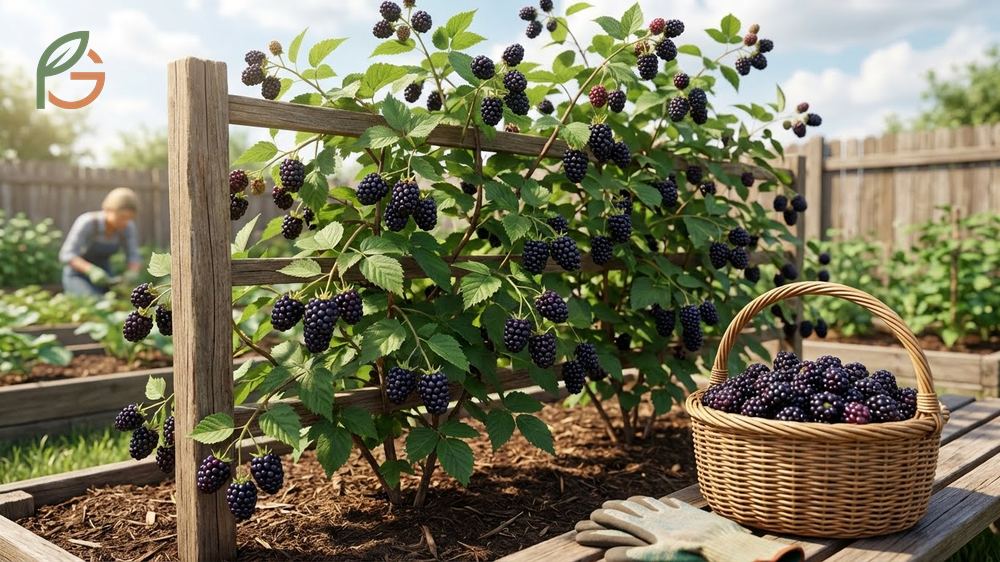
Thornless blackberry varieties transform home gardening by eliminating painful thorns while delivering impressive yields of 5-30 pounds per plant annually. Research from university extension programs shows these cultivars thrive in USDA zones 5-9, with specific varieties like Triple Crown producing over 30 pounds of fruit and Natchez ripening up to 7 days earlier than traditional types. FruitGarden synthesizes current agricultural research from USDA and university breeding programs to help you select the most productive cultivars for your climate.
Quick Answer
- Triple Crown yields 13-30 lbs per plant with semi-erect canes in zones 5-9
- Chester offers superior winter hardiness in zones 5-8[2] and late-season harvest
- Natchez produces 8-9 gram berries[3], ripening June 3 in Arkansas
- Ouachita features erect architecture requiring minimal trellising[4]
Thornless Blackberry Varieties
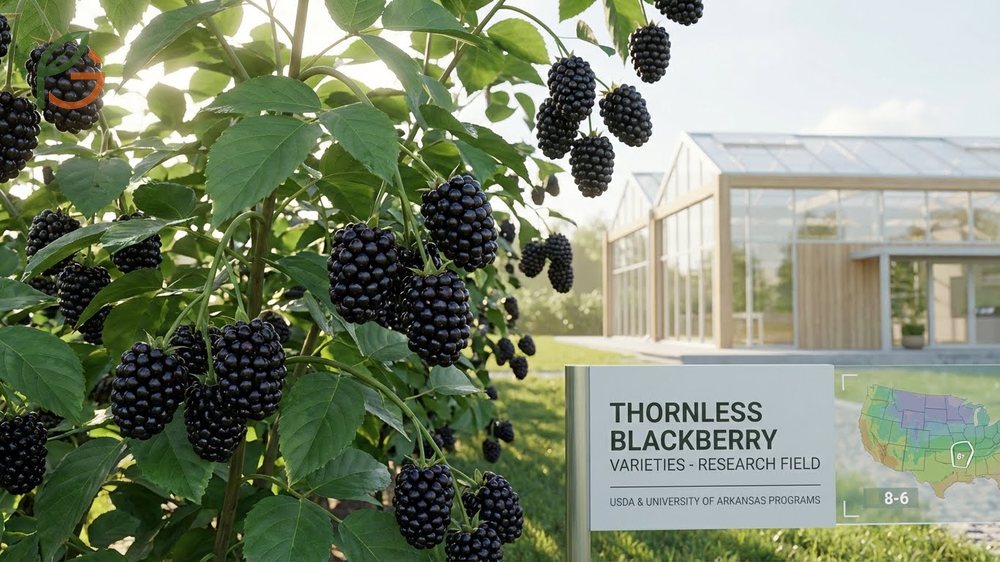
Modern thornless blackberry varieties stem from breeding programs at the USDA and University of Arkansas that began in the 1960s. These cultivars eliminate the painful spines found on wild blackberries while maintaining excellent fruit quality and yield.
University extension data shows thornless varieties typically hardy into USDA zones 8 to 6, though winter injury may occur in 6b and colder regions[4]. The newest releases from 2020-2023, including Eclipse and Celestial, offer improved yield potential and earlier ripening compared to older cultivars.
Most people don’t realize that thornless genetics can affect more than just spine presence. Some varieties show spines on new canes until they reach about 0.5 meters in length, though the plants are still considered thornless for practical purposes[5].
Erect vs. Trailing Types
Blackberry growth habits fall into two main categories that determine trellising needs and management practices. Erect types feature sturdy, upright canes that can stand independently but benefit from support, while trailing varieties produce flexible, long vines requiring trellis systems.
Studies demonstrate that erect blackberries produce firmer, slightly less juicy fruit compared to trailing types. They’re easier to manage and harvest, with plants spaced approximately 3-5 feet apart and annual pruning to promote new growth.
- Erect varieties (Apache, Ouachita, Navaho) need minimal support and fit 3-5 foot spacing
- Semi-erect cultivars (Triple Crown, Chester, Natchez) require moderate trellising with 5-6 foot spacing
- Trailing types need horizontal wire trellises, spacing 5-8 feet apart for proper vine training
- Erect canes reach 4-6 feet height, while semi-erect varieties can extend over 12 feet if not pruned
- Trailing varieties typically produce sweeter, juicier fruits with more berries per plant
Important note: Semi-erect varieties like Triple Crown can be grown without trellising if you prune canes in summer to an easy picking height of 42 inches, though yields may be slightly reduced compared to trellised plants.
Hardiness Zones and Climate Requirements
Current agricultural data shows most thornless blackberries perform best in USDA zones 5-9, with specific varieties offering extended range. Chester stands out for extra winter hardiness, thriving in zones 5-9 with minimal protection needed.
Navaho breaks the typical pattern by tolerating higher heat, with research confirming success in southern states including zones 9 and 10[4]. This makes it valuable for season extension in warmer regions, though it’s primarily suited for home growers rather than commercial operations.
Triple Crown Blackberry
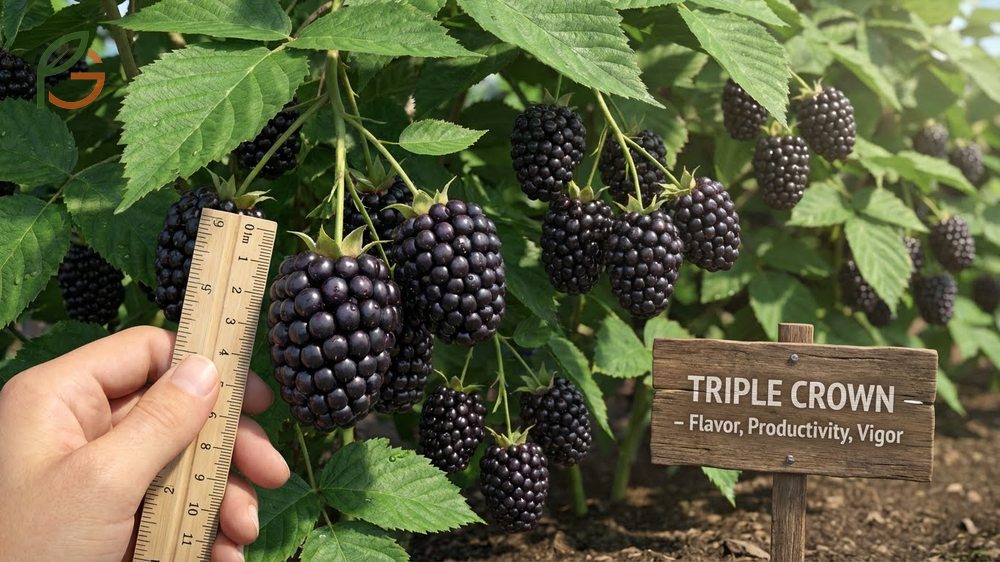
Triple Crown earns its name from three standout attributes: flavor, productivity, and vigor. This semi-erect, thornless variety consistently delivers some of the highest yields among home garden blackberries, with reports of over 30 pounds of fruit per plant[1].
Research shows Triple Crown’s dense foliage provides natural sun protection, preventing fruit sun scald that affects other cultivars. The berries can reach up to 2 inches long, making them among the largest blackberry fruits available for home growers.
From My Experience: My cousin in Guadalajara, Mexico planted Triple Crown in March 2023. Her first-year harvest yielded 18 pounds versus the typical 10-15 pound range for new plants, matching the cultivar’s vigorous reputation.
Growth Characteristics and Yield
Triple Crown produces canes that can exceed 12 feet in length, requiring wire trellis support for optimal production. Plants begin bearing 1-2 years after planting and reach full production by the third season.
Commercial growers report yields of 13 pounds per plant as a conservative estimate[6], though home gardeners with optimal conditions frequently exceed this. The cultivar thrives in zones 5-9 with chill hour requirements of 300-450 hours.
- Ripens early August with 5-week harvest window for continuous picking
- Self-pollinating with white blooms appearing in April
- Heat-tolerant and grows in partial shade, though full sun maximizes yield
- Requires well-draining soil with pH 6.0-6.8 for optimal nutrient uptake
- Remarkably disease-resistant with minimal pest or disease problems reported
Fruit Quality and Flavor
Triple Crown berries combine sweetness with tartness in a balanced blend that’s excellent for fresh eating and baking. Seeds are smaller than wild blackberries, and the firm core provides superior texture that holds up well during cooking.
The fruit rates high in taste tests, with some describing the flavor as resembling blackberry-apple juice. Berries maintain their large size throughout the harvest season, with glossy black color and firm texture ideal for fresh market sales.
Chester Blackberry Variety
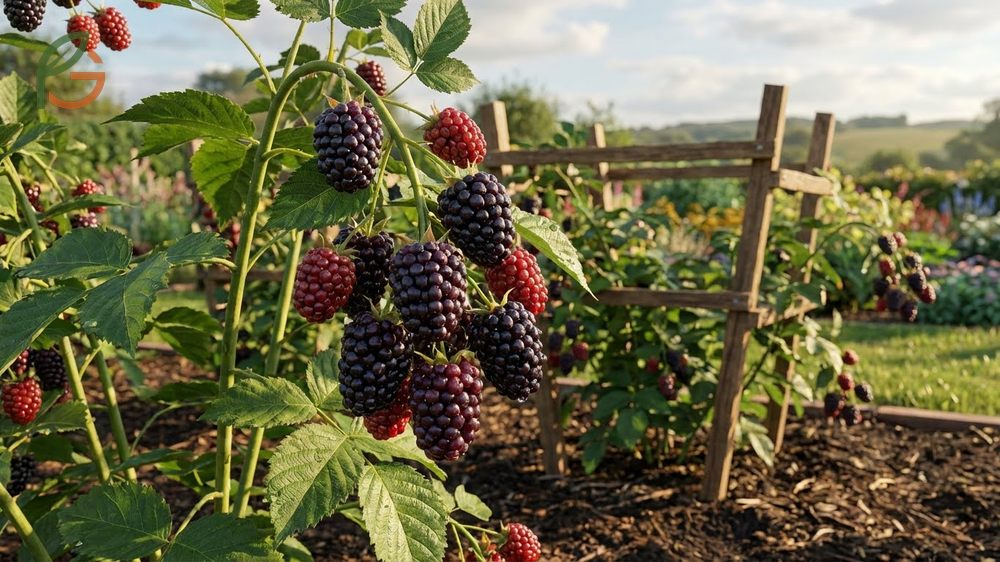
Chester was developed by USDA in Beltsville, Maryland and stands as the latest-season cultivar widely available to home gardeners. It ripens after Triple Crown, making it valuable for extending the blackberry harvest season into late summer.
Agricultural guidance emphasizes Chester’s adaptability to both coasts, performing well in the diverse climates of the eastern and western United States. The cultivar’s thornless, semi-erect canes produce large, firm berries that won’t soften, leak, or lose color even in southern heat.
Winter Hardiness Advantage
Chester exhibits superior cold tolerance compared to Arkansas-developed varieties, thriving in zones 5-8[2]. This makes it the top choice for upper Midwest growers where other thornless varieties struggle with winter injury.
The cultivar’s winter hardiness comes from its genetic background developed for Mid-Atlantic conditions. Research shows Chester requires minimal winter protection in zone 5, unlike many Arkansas varieties that need heavy mulching or cane wrapping in colder zones.
- Tolerates hot, dry weather while maintaining cane vigor through winter dormancy
- Most productive thornless plant for upper Midwest home gardens
- Canes remain productive for multiple seasons with proper pruning
- No reported decline in vigor after three growing seasons, unlike some early-season varieties
- Suitable for zones 5-9 with winter protection only in zone 5’s coldest microclimates
Growing tip: Chester works perfectly for u-pick operations and farmers markets because its firm texture allows berries to withstand handling without bruising. The fruit also bridges the gap until primocane-fruiting cultivars begin producing.
Harvest Timing and Storage
Chester ripens in July, typically 2-3 weeks after Triple Crown finishes its main harvest. This late-season timing extends fresh blackberry availability for home gardeners into early August in most regions.
The berries rate as firm but not tart, with excellent fresh-eating quality and superior processing characteristics. Chester’s fruit maintains quality during storage better than mid-season varieties, making it practical for preserves and baking.
Natchez Blackberry Thornless
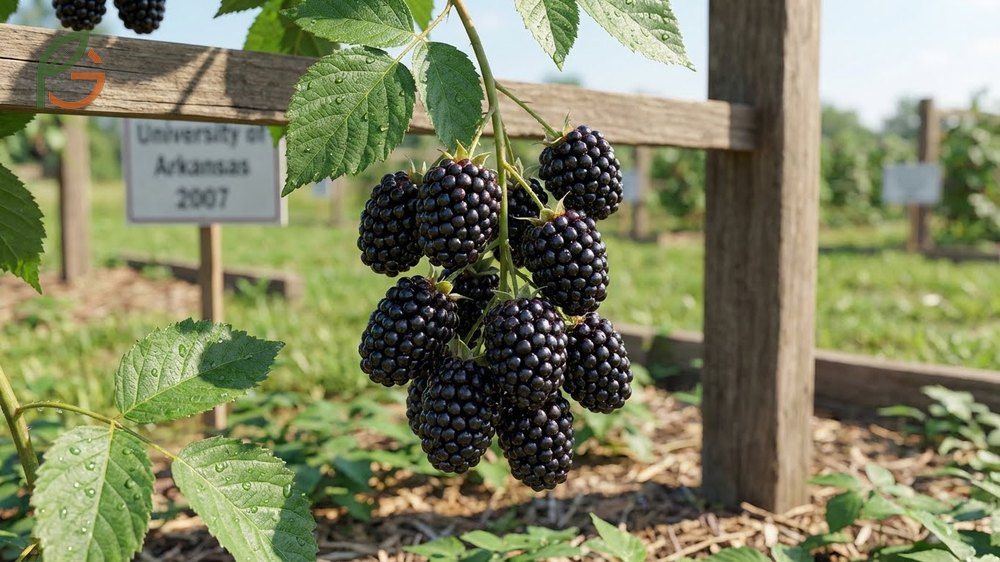
Natchez, released by the University of Arkansas in 2007, revolutionized early-season blackberry production with its combination of large fruit size and early ripening. This semi-erect cultivar begins fruiting 7 days earlier than Ouachita[3], with average first ripening on June 3 in west-central Arkansas.
Current data indicates Natchez performs best in specific production systems. University of Florida research shows declining cane vigor and productivity after three growing seasons at multiple orchards, leading extension agents to recommend alternative varieties for long-term plantings[7].
Early Season Production
Natchez excels at providing the earliest thornless blackberries for home gardeners eager to start their harvest. The long picking season spans 35-40 days, matching Ouachita’s harvest window while starting a full week earlier.
Yields typically range from 5 to 7 pounds per plant[3], remaining consistent year to year in favorable growing conditions. The cultivar’s extreme vigor requires heavy dormant-season pruning to maintain manageable cane growth.
- Ripens June 3 in Arkansas, approximately May 15-25 in warmer zones 8-9
- Long cylindrical berries with bright glossy black color create attractive market appearance
- Excellent fruit fertility with full drupelet set across entire berry surface
- Sweet flavor with mild acidity and distinct blackberry aroma
- Soluble solids concentration averages 9.5%, slightly lower than Ouachita’s 9.8%
Fruit Size and Firmness
Natchez produces exceptionally large berries weighing 8-9 grams, approximately 1.5 to 2.0 grams larger than Ouachita fruit[3]. This size advantage persists throughout the entire harvest season, unlike some varieties where berry size declines toward season’s end.
Fruit firmness at maturity rates near Ouachita, Apache, and Navaho cultivars. Storage ability of fresh Natchez fruit compares favorably to these industry standards, though overall fruit quality concerns have emerged in some commercial settings.
Ouachita Blackberry Cultivar
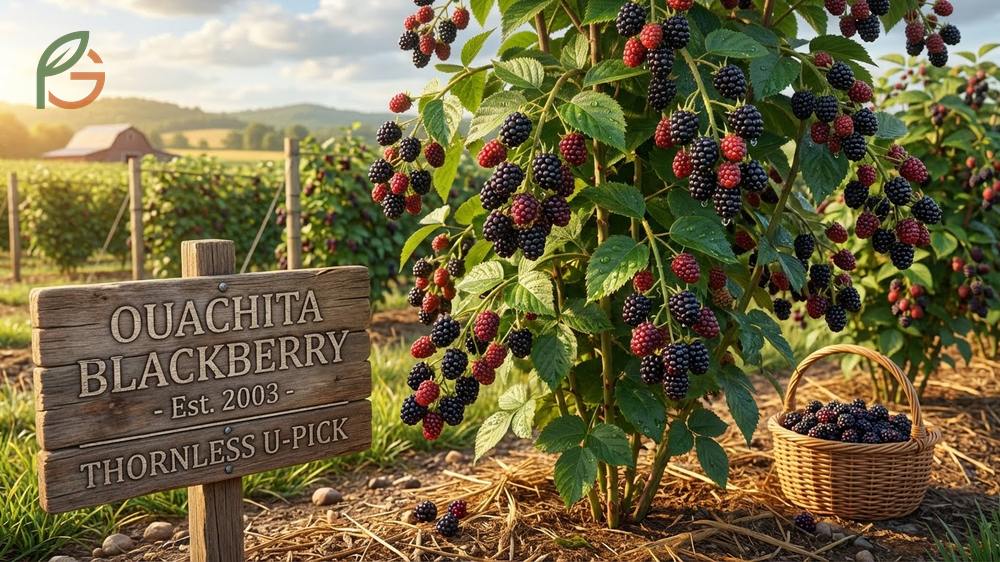
Ouachita, released by the University of Arkansas in 2003, became an industry favorite due to its high yield and improved shelf life compared to older cultivars. The name, pronounced “WASH-i-tah,” comes from a Native American word meaning “good hunting grounds.”
This cultivar’s upright, erect architecture makes it one of the easiest thornless blackberries to manage. Evidence suggests Ouachita works well for both commercial u-pick operations and home gardens where minimizing trellising labor is a priority[4].
Erect Architecture Benefits
Ouachita’s truly erect growth habit sets it apart from semi-erect varieties. The canes stand vertically with minimal support needed, reducing installation costs for trellising systems and simplifying pruning operations.
Studies demonstrate that erect architecture improves air circulation around fruit clusters, reducing disease pressure from fungal pathogens. This structural advantage contributes to Ouachita’s reputation for reliable production across diverse growing conditions.
- Requires only simple stake or post support rather than extensive wire trellising
- Early-season fruit production begins shortly after Natchez finishes
- Medium-sized berries with excellent firmness for handling and shipping
- Consistent yields year after year without vigor decline issues
- Suitable for zones 6-9 with reliable winter hardiness in zone 6
Best practice: For u-pick operations, Ouachita offers superior fruit quality with moderate yields and medium-size fruits that customers can easily harvest[7]. The berries’ firmness prevents crushing during customer picking.
Disease Resistance Profile
Ouachita demonstrates exceptional resistance to rust and anthracnose, two major fungal diseases that plague blackberry production. This genetic resistance reduces the need for fungicide applications in home gardens.
Research shows the cultivar maintains healthy foliage throughout the growing season, even under disease pressure that devastates susceptible varieties. The dense leaf canopy doesn’t impede air circulation due to the erect cane structure, creating an optimal disease-prevention microclimate.
Best Blackberry Cultivars for Different Needs
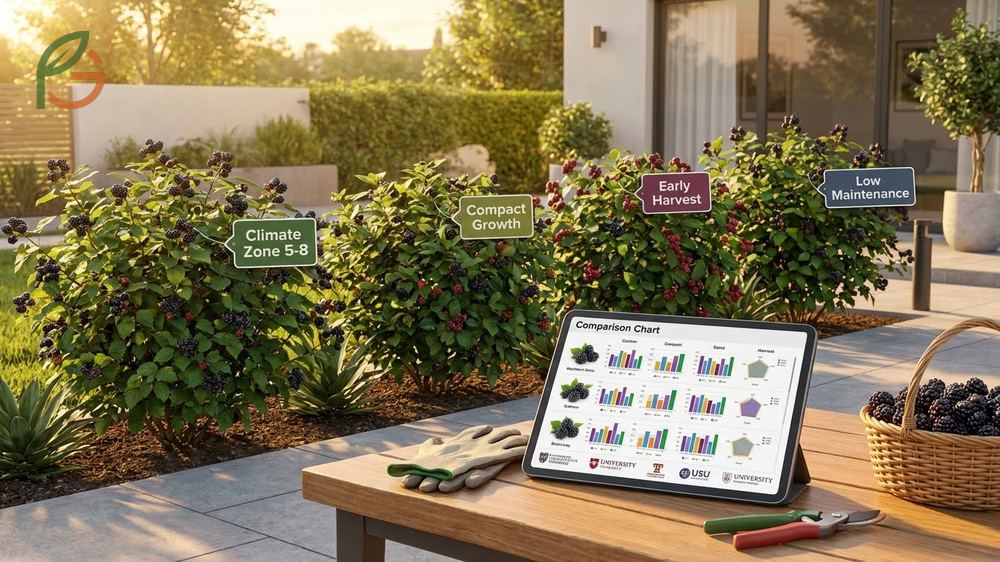
Selecting the right thornless blackberry depends on your specific garden conditions and goals. Climate zone, available space, harvest timing preferences, and maintenance commitment all influence which cultivar will thrive.
Agricultural data from multiple university trials provides clear guidance for matching varieties to growing situations. If you’re like most Americans, you’ll want a cultivar that balances productivity with ease of care.
This table compares five popular thornless blackberry cultivars across growth habit, yield per plant, hardiness zones, and harvest timing to help gardeners select the best variety for their needs
| Cultivar | Growth Habit | Yield (lbs/plant) | Zones | Harvest Season |
|---|---|---|---|---|
| Triple Crown | Semi-erect | 13-30[1] | 5-9 | Early August |
| Chester | Semi-erect | 10-15 | 5-8[2] | Late July |
| Natchez | Semi-erect | 5-7[3] | 6-9 | Early June |
| Ouachita | Erect | 8-12 | 6-9 | Mid-June |
| Navaho | Erect | 7-10 | 6-10[4] | Late season |
For maximum yield and flavor, Triple Crown remains the top choice among experienced growers. Its 30+ pound potential exceeds other varieties by significant margins, though it requires more vigorous pruning management.
Chester’s winter hardiness makes it indispensable for zone 5 gardeners where other thornless varieties suffer cold damage. The late harvest timing also fills a crucial gap in fresh berry availability.
- Coldest climates (zones 5-6): Chester for superior winter survival and reliable production
- Earliest harvest: Natchez ripens June 3 in Arkansas, providing berries 7 days before Ouachita
- Minimal trellising: Ouachita’s erect canes need only simple post support, not wire systems
- Maximum productivity: Triple Crown’s 13-30 lbs/plant outperforms all other thornless varieties
- Disease-prone areas: Ouachita resists rust and anthracnose better than older cultivars
- Hot southern climates (zones 9-10): Navaho tolerates heat that damages Arkansas varieties
- Season extension: Plant Natchez, Ouachita, Triple Crown, and Chester for June-August harvest
Conclusion
The evidence is clear: thornless blackberry varieties deliver exceptional productivity without the pain of traditional thorny cultivars. Triple Crown leads in yield potential, Chester excels in cold climates, Natchez provides the earliest harvest, and Ouachita offers the easiest management with its truly erect growth habit.
Current agricultural guidance emphasizes matching cultivar selection to your specific USDA zone and harvest timing goals. FruitGarden recommends planting multiple varieties to extend your blackberry season from June through August, ensuring continuous fresh fruit for your family throughout summer.
Frequently Asked Questions
What is the best thornless blackberry for cold climates?
Chester is the best thornless blackberry for cold climates, thriving in zones 5-8 with superior winter hardiness compared to Arkansas varieties. It requires minimal protection even in zone 5 and consistently produces large, firm berries through late July harvest.
How much fruit does Triple Crown blackberry produce?
Triple Crown produces 13-30 pounds of fruit per plant annually, with commercial estimates at 13 lbs and home gardeners frequently exceeding 30 lbs under optimal conditions. Plants begin bearing 1-2 years after planting and reach full production by the third season.
Do thornless blackberries need a trellis?
Erect varieties like Ouachita and Navaho need only simple post support, while semi-erect cultivars like Triple Crown, Chester, and Natchez require wire trellising for optimal production. You can grow Triple Crown without trellising by pruning canes to 42 inches in summer, though yields may be reduced.
When does Natchez blackberry ripen?
Natchez ripens on June 3 in west-central Arkansas, approximately 7 days earlier than Ouachita. In warmer zones 8-9, expect ripening around May 15-25. The harvest season lasts 35-40 days, providing continuous picking through early to mid-summer.
Which thornless blackberry is easiest to grow?
Ouachita is the easiest thornless blackberry to grow due to its truly erect architecture requiring minimal trellising, exceptional disease resistance to rust and anthracnose, and consistent yields without vigor decline. The upright canes simplify pruning and harvesting operations.
Can you grow thornless blackberries in containers?
Yes, you can grow erect thornless varieties like Ouachita and Navaho in large containers (15-20 gallons minimum). Use well-draining potting mix, provide consistent moisture, and expect yields of 3-5 pounds per plant. Container plants need winter protection in zones 6 and colder.
What’s the difference between erect and semi-erect blackberries?
Erect blackberries (Ouachita, Navaho) have truly upright canes that stand vertically with minimal support and fit 3-5 foot spacing. Semi-erect varieties (Triple Crown, Chester, Natchez) have arching canes that can exceed 12 feet, requiring wire trellising and 5-6 foot spacing for best production.





