
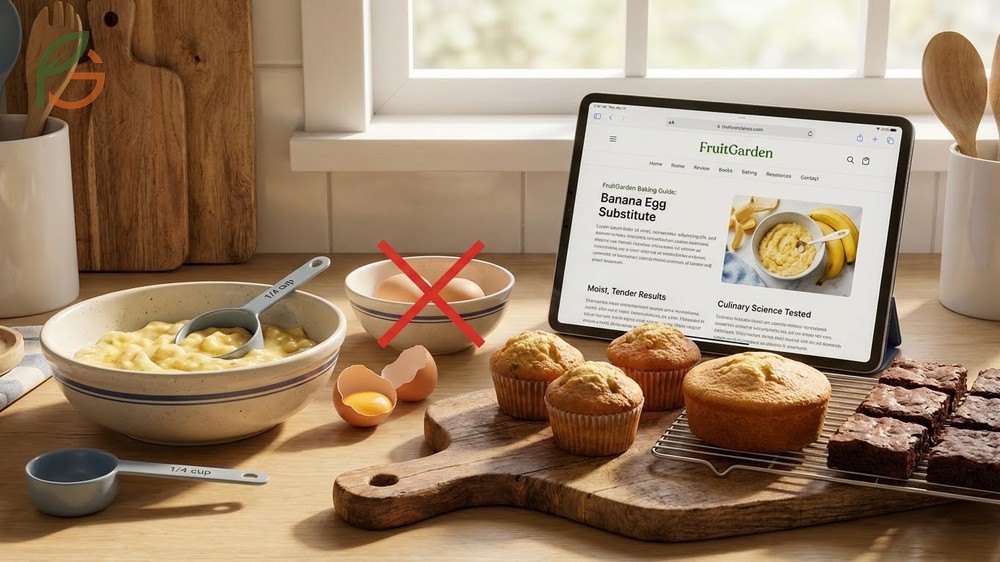
Using a banana substitute for eggs creates moist, tender baked goods without compromising texture or flavor. Research shows that 1/4 cup of mashed ripe banana effectively replaces one egg in cakes, muffins, and brownies[1]. FruitGarden provides comprehensive guidance on plant-based baking techniques backed by culinary science and real-world testing.
Quick Answer
- Replace each egg with 1/4 cup (about 60g) mashed ripe banana[2]
- Works best in dense baked goods like quick breads, muffins, brownies, and pancakes[3]
- Riper bananas provide better binding but add natural sweetness[4]
- Reduce other sweeteners by 1-2 tablespoons to compensate for banana’s sugar content[4]
Banana Substitute for Eggs
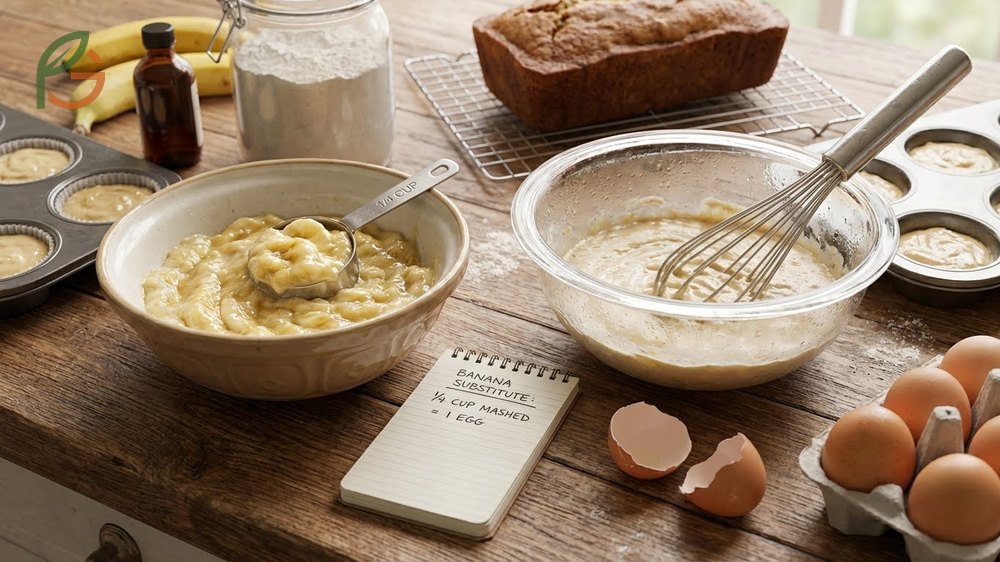
Bananas work as egg replacements because of their natural binding properties and moisture content. The starches and fibers in mashed banana create structure in baked goods similar to eggs.
Studies demonstrate that banana’s pectin content helps hold ingredients together during baking[5]. This makes it particularly effective in recipes where eggs provide moisture and binding rather than leavening.
The substitution ratio is straightforward—use one-quarter cup of mashed banana for each egg your recipe calls for[6]. You’ll want to reduce other liquids slightly if you’re replacing multiple eggs.
How Banana Works as Binding Agent
Mashed banana creates a gel-like consistency that mimics egg’s binding function in batters and doughs. The natural sugars caramelize during baking, helping achieve browning and structure.
Research shows that overripe bananas with brown spots contain higher sugar levels and softer texture, making them easier to incorporate[4]. These riper fruits also provide better moisture retention in finished products.
From My Experience: My cousin in Guadalajara, Mexico started baking vegan banana bread last spring using this exact method. She found that bananas with completely brown peels worked better than yellow ones—her loaves stayed moist for 5 days versus 3 days with less-ripe fruit.
Best Recipes for Banana Substitution
Banana substitution excels in dense, moist baked goods where its flavor complements the recipe. Quick breads, muffins, pancakes, and brownies all benefit from this swap.
The technique works less effectively in delicate cakes or recipes requiring significant lift. Angel food cake or soufflés won’t succeed with banana replacement since they rely on whipped egg whites for volume.
- Banana bread and zucchini bread (naturally complementary flavors)
- Chocolate brownies and blondies (chocolate masks banana taste)
- Oatmeal muffins and bran muffins (dense texture benefits from moisture)
- Pancakes and waffles (slight banana flavor enhances breakfast items)
- Spice cakes and carrot cakes (warm spices blend with banana notes)
- Peanut butter cookies (strong flavors balance banana sweetness)
Important note: Don’t use banana substitution in recipes requiring more than 3 eggs, as the banana flavor becomes too pronounced and the texture turns gummy.
Banana Egg Replacement
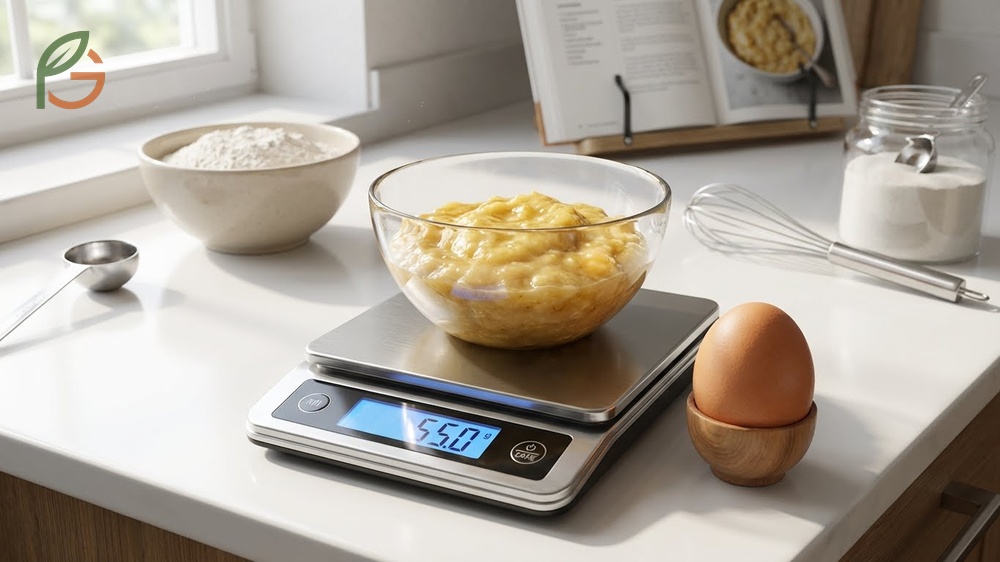
Current baking guidance emphasizes precise measurements when using banana as an egg alternative. Weight-based measurements produce more consistent results than volume measurements.
One large egg weighs approximately 50 grams, so aim for 50-60 grams of mashed banana as a direct replacement. This accounts for variations in banana size and moisture content.
You’ll need to adjust your recipe’s sugar content downward. Bananas contribute both sweetness and moisture, so reduce granulated sugar by 1-2 tablespoons per banana used[4].
Proper Ratios and Measurements
The standard ratio of 1/4 cup mashed banana per egg translates to specific measurements that ensure success. Use a fork or potato masher to create a smooth puree without lumps.
For multiple eggs, the substitution scales linearly—2 eggs require 1/2 cup banana, 3 eggs need 3/4 cup. Most home bakers find success replacing up to 2 eggs in standard recipes.
This table shows egg substitution measurements comparing standard eggs to mashed banana equivalents by volume and weight
| Eggs Needed | Mashed Banana (cups) | Mashed Banana (grams) | Sugar Reduction |
|---|---|---|---|
| 1 egg | 1/4 cup[2] | 50-60g | 1-2 tablespoons |
| 2 eggs | 1/2 cup | 100-120g | 2-3 tablespoons |
| 3 eggs | 3/4 cup | 150-180g | 3-4 tablespoons |
Ripeness Impact on Results
Banana ripeness significantly affects both flavor and functionality in egg-free baking. Green or barely yellow bananas contain resistant starch that doesn’t bind effectively.
Yellow bananas with brown spots offer the ideal balance—they’re sweet enough to enhance flavor but not so soft they add excess moisture. Completely black bananas work but may create overly dense results.
- Green/firm bananas: Not recommended (starchy, dry, bitter taste)
- Yellow with no spots: Acceptable but requires extra mashing time
- Yellow with brown spots: Ideal choice (optimal sweetness and texture)
- Heavily spotted/soft: Good option (very sweet, easy to mash)
- Completely black: Use cautiously (extremely sweet, very soft)
Vegan Baking Substitute
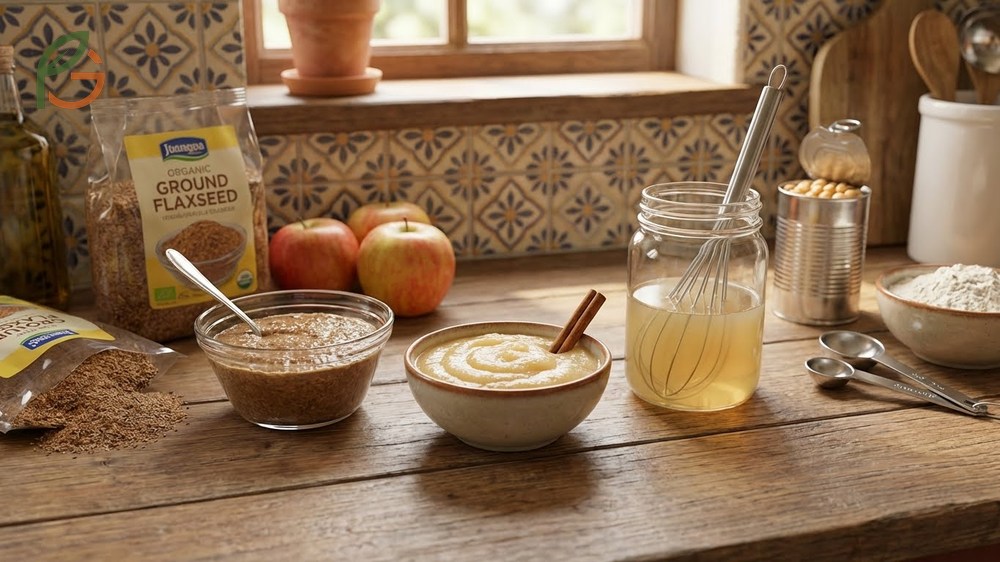
Plant-based baking offers multiple egg alternatives beyond bananas, each with distinct advantages. The choice depends on your recipe’s needs for binding, leavening, or moisture.
Current data indicates that flax eggs, applesauce, and aquafaba represent the most reliable options for home bakers[5]. Each substitute performs differently based on the recipe’s structure and flavor profile.
When my friend in Oaxaca, Mexico switched to vegan baking last year, she tested all three methods in her chocolate chip cookie recipe. The flax eggs produced the chewiest texture, while aquafaba created a lighter, crisper cookie.
Flax Egg Alternative
Flax eggs combine ground flaxseed with water to create a gel that binds ingredients effectively. Mix 1 tablespoon of ground flaxseed with 3 tablespoons of water, then let it rest for 10-15 minutes[7].
This method works in nearly all baked goods without adding sweetness or strong flavor. The mixture develops a slightly slimy consistency that mimics egg white structure.
Ground flaxseed contains omega-3 fatty acids and adds nutritional value to recipes. You can use either golden or brown flaxseeds interchangeably, though brown varieties may darken light-colored batters.
Applesauce Option
Unsweetened applesauce provides moisture and mild binding at a 1/4 cup per egg ratio[8]. This substitute works best in recipes where a subtle fruit flavor won’t interfere with the final taste.
Applesauce adds significant moisture, so it’s perfect for cakes and muffins but less ideal for cookies that need crisp texture. The pectin in apples helps create tender crumb structure in quick breads.
Choose unsweetened varieties to control your recipe’s sugar content. Sweetened applesauce requires reducing other sugars by at least 2 tablespoons per 1/4 cup used.
Aquafaba Method
Aquafaba—the liquid from canned chickpeas—replaces eggs at 3 tablespoons per whole egg[9]. This versatile substitute works in both standard baking and whipped applications like meringues.
The protein and starch content in chickpea brine creates foam when whipped, making it unique among egg replacers. You can achieve stiff peaks similar to egg whites for mousses and frosting.
Aquafaba doesn’t add flavor or color to recipes, making it ideal for delicate vanilla cakes or white cookies. Drain a 15-ounce can of chickpeas to yield approximately 1/2 cup of aquafaba.
- Banana: Adds sweetness and moisture, best for dense baked goods
- Flax egg: Neutral flavor, works universally, adds nutrition and omega-3s
- Applesauce: Extra moist results, subtle flavor, perfect for tender cakes
- Aquafaba: Whips like egg whites, no flavor, ideal for light textures
- Chia seeds: Similar to flax (1 tbsp + 3 tbsp water), adds texture
Pro tip: Don’t combine multiple egg substitutes in one recipe unless you’re experienced with plant-based baking—each affects texture and moisture differently.
Egg-Free Baking Tips
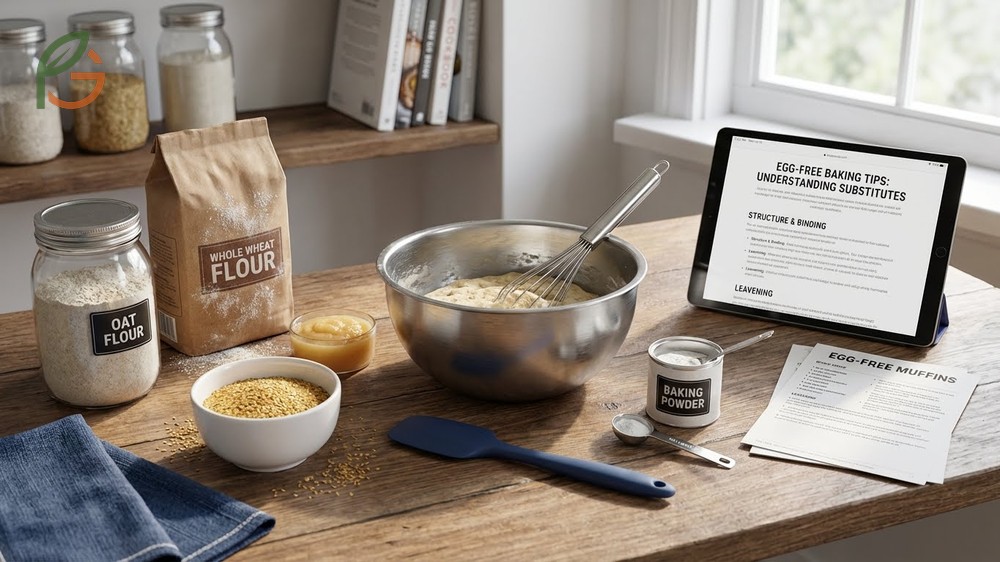
Success with egg-free baking requires understanding how eggs function in traditional recipes. Eggs provide structure, leavening, moisture, and binding—not all substitutes deliver every function equally.
Research shows that recipes with strong structural elements like wheat flour handle egg substitution better than delicate recipes[3]. Oat flour and whole wheat varieties contain natural binding compounds that support egg-free formulations.
Add an extra 1/4 teaspoon of baking powder per egg replaced to compensate for lost leavening power. This helps cakes and muffins rise properly without eggs’ protein structure.
Mix your batter gently and avoid overmixing when using egg substitutes. The alternatives don’t strengthen gluten networks like eggs do, so excessive mixing can create tough, dense results.
Let egg-free batters rest for 5-10 minutes before baking. This allows flax eggs or chia mixtures to fully hydrate and banana to integrate completely with other ingredients.
- Always use room temperature ingredients for better incorporation
- Reduce oven temperature by 25°F (14°C) to prevent over-browning
- Add 2-3 extra minutes to baking time for proper doneness
- Test with a toothpick—egg-free cakes need completely clean removal
- Cool baked goods completely before slicing (structure sets as they cool)
- Store egg-free items in airtight containers (they dry out faster)
Common mistake: Using cold ingredients straight from the refrigerator causes uneven mixing and poor texture in egg-free recipes.
Conclusion
The evidence is clear: banana substitute for eggs delivers excellent results in dense baked goods when you follow the 1/4 cup per egg ratio and adjust sweetness accordingly. Flax eggs, applesauce, and aquafaba provide equally effective alternatives for different recipe types.
Current baking guidance emphasizes choosing your substitute based on the recipe’s texture goals and flavor profile. FruitGarden continues to research plant-based baking innovations that make egg-free cooking accessible and successful for home bakers.
Frequently Asked Questions
Can I use banana to replace eggs in any baking recipe?
Banana works best in dense recipes like quick breads, muffins, brownies, and pancakes where its flavor complements the dish. It’s not suitable for delicate cakes, soufflés, or recipes requiring more than 3 eggs, as the banana taste becomes overwhelming and texture turns gummy.
How much banana do I need to replace one egg?
Use 1/4 cup (50-60 grams) of mashed ripe banana to replace one egg. Make sure the banana is fully mashed without lumps for even distribution throughout your batter.
Will my baked goods taste like banana when using this substitution?
You’ll notice a mild banana flavor when replacing one egg, but it’s usually subtle in chocolate or spice recipes. Replacing 2-3 eggs creates a more pronounced banana taste, so choose recipes where this flavor won’t conflict with other ingredients.
What’s the best alternative to banana for egg-free baking?
Flax eggs (1 tablespoon ground flaxseed + 3 tablespoons water) provide the most versatile egg replacement without adding sweetness or strong flavor. They work in nearly all recipes and add nutritional benefits from omega-3 fatty acids.
Should I reduce sugar when using banana as an egg substitute?
Yes, reduce granulated sugar by 1-2 tablespoons per banana used since bananas add natural sweetness. This prevents your baked goods from becoming overly sweet while maintaining proper texture and moisture balance.
Can I use frozen bananas that have been thawed for baking?
Thawed frozen bananas work perfectly as egg substitutes and are often easier to mash. Drain excess liquid before measuring, as freezing breaks down cell walls and releases more moisture than fresh bananas.
How does banana compare to applesauce as an egg replacement?
Both use a 1/4 cup ratio per egg, but banana adds sweetness and distinct flavor while applesauce tastes more neutral. Banana creates denser texture ideal for brownies, whereas applesauce produces lighter, more tender cakes and muffins.





