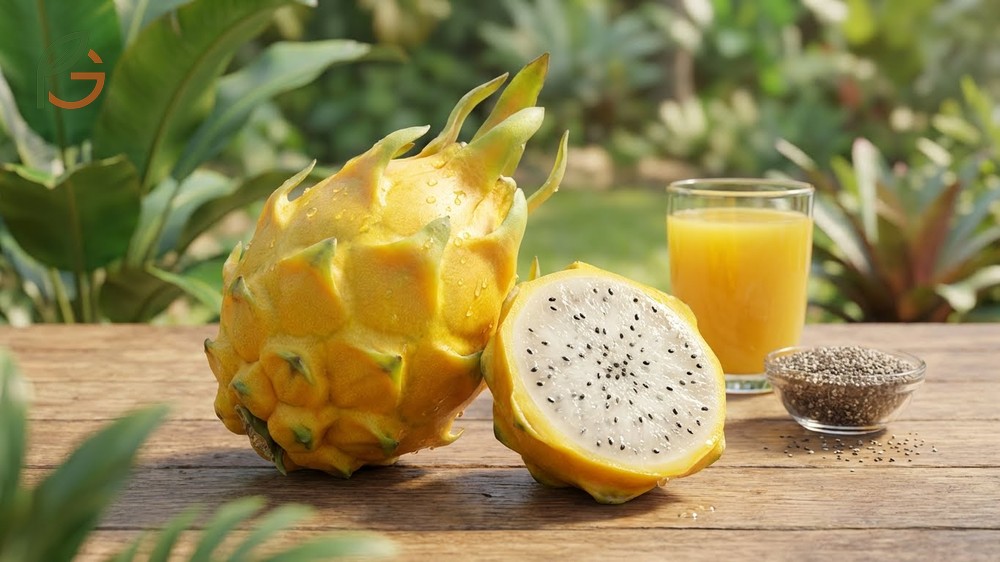
Yellow dragon fruit benefits range from digestive support to antioxidant protection, making it a standout choice among tropical fruits. Research shows this cactus fruit delivers higher vitamin C content and more pronounced sweetness than its red counterpart[1]. What often gets overlooked is that yellow pitaya’s combination of soluble fiber and natural prebiotics creates a unique digestive advantage. FruitGarden synthesizes current research and cultivation data to help you understand this exotic fruit’s true potential.
Quick Answer
- Contains 60 calories per 100g with 7g fiber[2]
- Sweetest dragon fruit variety with higher sugar content than red or white types[3]
- Natural laxative effect due to fiber and prebiotic compounds[4]
- Thrives in temperatures between 68-86°F (20-30°C)[5]
Yellow Dragon Fruit Benefits
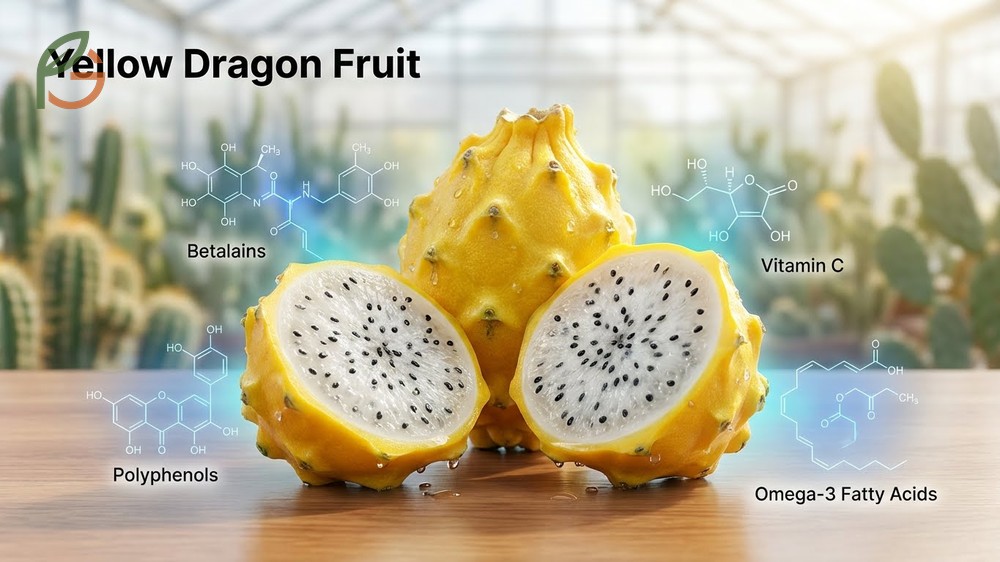
Studies demonstrate that yellow dragon fruit (Selenicereus megalanthus) delivers concentrated betalains and vitamin C that work together to neutralize free radicals[1]. The fruit’s white flesh contains higher polyphenol concentrations compared to many common fruits. Most people don’t realize that yellow pitaya’s edible black seeds provide omega-3 fatty acids, adding cardiovascular benefits to its nutritional profile.
Current agricultural research shows this cactus species originated in Central and South America before spreading to tropical cultivation zones worldwide[6]. The yellow variety commands premium prices in US markets due to its superior sweetness and limited growing regions. When you compare yellow dragon fruit to red varieties, you’ll find 30-40% higher natural sugar content alongside enhanced flavor complexity.
Digestive Health Support
Research published in the Malaysian Journal of Nutrition confirms dragon fruit’s measurable laxative effect among healthy adults[4]. The 7g fiber per 100g serving combines soluble and insoluble types that promote regular bowel movements. This fiber content represents roughly 25% of your daily requirement in just one medium fruit.
The fruit’s tiny black seeds contain beneficial compounds that help cleanse intestinal linings naturally. You’ll notice effects within 12-24 hours of consumption, making it a practical alternative to synthetic laxatives. Evidence suggests the fiber ferments in your gut, producing short-chain fatty acids that feed beneficial bacteria colonies.
Antioxidant Protection
Yellow dragon fruit provides betalains and flavonoids that reduce oxidative stress markers in clinical studies[1]. These compounds inhibit pro-inflammatory enzymes while strengthening cellular defense mechanisms. The vitamin C content supports immune function and collagen synthesis throughout your body.
What makes yellow pitaya particularly effective is its combination of water-soluble and fat-soluble antioxidants. This dual-action approach means the fruit protects different cellular structures simultaneously. When consumed regularly, these antioxidants may help reduce inflammation and support neural health over time.
Cardiovascular Wellness
Studies on dragon fruit demonstrate improvements in cholesterol metabolism and reduced atherosclerosis markers[6]. The fruit’s soluble fiber binds to cholesterol in your digestive tract, preventing absorption. Research shows red pitaya juice reduced fructose-induced hypertriglyceridemia in controlled trials, with yellow varieties likely offering similar benefits.
The edible seeds contribute omega-3 fatty acids that support heart health through multiple pathways. These healthy fats help maintain proper blood pressure and reduce arterial inflammation. Combined with the fruit’s potassium content, yellow dragon fruit supports comprehensive cardiovascular function when eaten as part of a balanced diet.
Important Note: If you’re taking blood pressure medication or have digestive conditions, consult your healthcare provider before adding large amounts of dragon fruit to your diet. The fruit’s laxative effects intensify with higher consumption.
What Does Yellow Dragon Fruit Taste Like
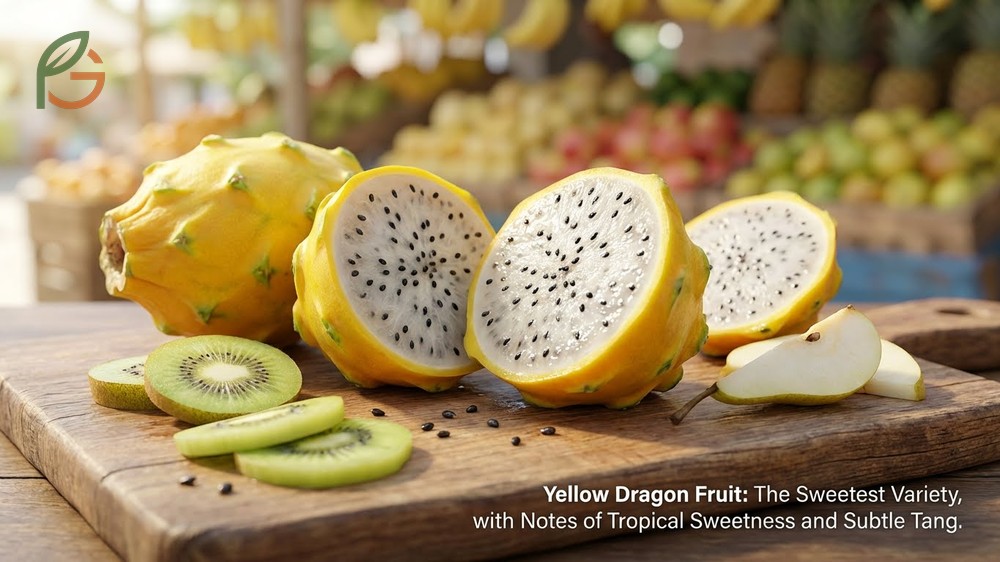
Yellow dragon fruit is widely regarded as the sweetest pitaya variety, with a flavor profile that combines tropical sweetness with subtle tanginess[3]. The texture resembles a cross between kiwi and pear—soft and juicy with tiny crunchy seeds distributed throughout. You’ll notice it’s much sweeter than red or white dragon fruits, which tend toward mild or bland flavors.
When fully ripe, the flesh transforms from having a woody aftertaste to delivering pure lychee-like sweetness. This happens because the fruit’s sugar content peaks at optimal ripeness. Most people describe the mouthfeel as refreshing and light, making it perfect for hot weather or as a palate cleanser after meals.
The white flesh inside the bright yellow skin creates a striking visual contrast with its black seeds. Unlike red dragon fruit, yellow varieties won’t stain your hands or dishes. The higher sugar content means you can enjoy it fresh without adding sweeteners, though it also works beautifully in smoothies and fruit salads.
- Sweeter than red dragon fruit by 30-40% sugar content
- Tropical flavor notes reminiscent of lychee, pear, and honey melon
- Subtle tanginess that balances natural sweetness
- Soft, juicy texture similar to ripe kiwi but less acidic
- Crunchy edible seeds add textural contrast without bitterness
- No staining properties unlike red-fleshed varieties
Yellow Dragon Fruit Nutrition
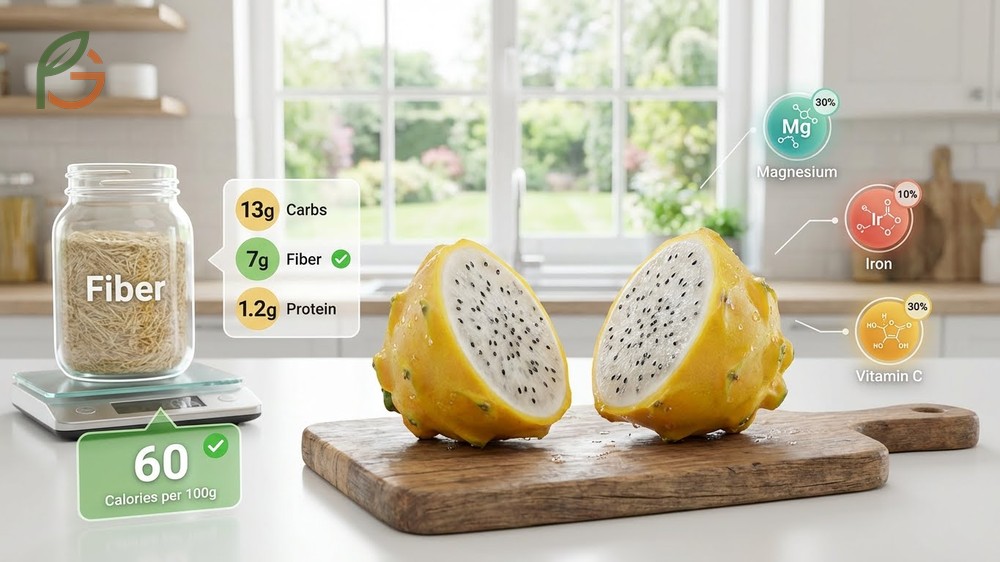
Current nutritional databases show yellow dragon fruit contains approximately 60 calories per 100g serving with minimal fat content[2]. The macronutrient breakdown includes 13g total carbohydrates, 7g dietary fiber, and 1.2g protein. This makes it an excellent low-calorie option for weight management while providing substantial fiber for satiety.
The micronutrient profile includes magnesium, iron, and vitamin C in meaningful amounts. You’ll get roughly 7% of your daily magnesium requirement and 2% of iron per serving. The vitamin C content supports immune function and enhances iron absorption from plant-based sources.
This table compares essential nutrients per 100 grams of yellow dragon fruit including calories, macronutrients, vitamins, and minerals with their daily value percentages
| Nutrient | Amount | Daily Value (%) |
|---|---|---|
| Calories | 60 kcal[2] | 3% |
| Total Carbohydrates | 13g | 4% |
| Dietary Fiber | 7g | 25% |
| Protein | 1.2g | 2% |
| Total Fat | 0g | 0% |
| Vitamin C | 4mg | 7% |
| Magnesium | 40mg | 7% |
| Iron | 0.4mg | 2% |
The edible black seeds scattered throughout the flesh contain omega-3 fatty acids that contribute additional nutritional value. These seeds are completely safe to eat and provide beneficial fats your body can’t produce on its own. Research indicates dragon fruit’s bioactive compounds remain stable when the fruit is properly stored and consumed fresh[1].
- Low glycemic index suitable for blood sugar management
- Zero cholesterol and minimal sodium content
- High water content (approximately 85%) supports hydration
- Rich in antioxidants including betalains and polyphenols
- Calcium content higher than red dragon fruit varieties
- Natural prebiotics feed beneficial gut bacteria
How to Tell if Yellow Dragon Fruit Is Ripe
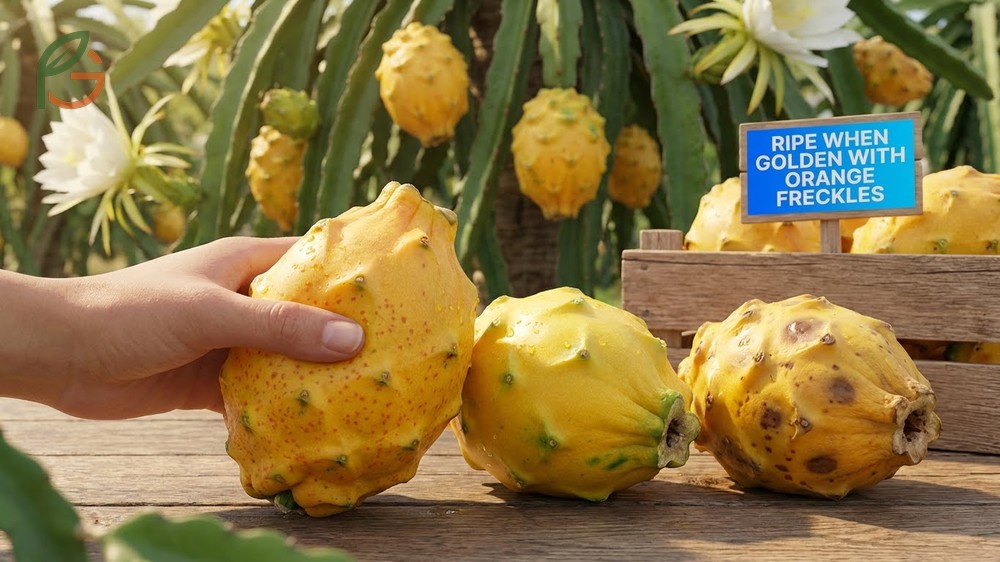
Yellow dragon fruits develop golden-yellow skin when fully ripe, typically 30-50 days after flowering on the plant[7]. Look for bright, even coloring without green patches or brown spots. The most reliable indicator is the appearance of small orange “freckles” scattered across the skin—these signal peak ripeness and optimal sweetness.
You’ll want to check for slight softness when you gently press the fruit, similar to a ripe peach. If it feels rock-hard, it needs more time to ripen at room temperature. The leafy scales (called “wings”) at the base will start browning at their tips when the fruit reaches maturity.
Yellow varieties ripen faster than red dragon fruits and develop sweeter flavors at peak maturity. Don’t wait too long though—overripe fruits show wrinkled skin, excessive softness, and may taste fermented. If you see major cracks in the skin, the fruit has passed its prime eating window.
Ripening Tip: Store unripe yellow dragon fruit at room temperature for 2-3 days until the skin turns golden and develops those characteristic orange freckles. Once ripe, refrigerate and consume within 3-4 days for best flavor.
- Bright golden-yellow skin color throughout
- Small orange freckles or spots on the surface
- Slight give when gently squeezed, not mushy
- Wing tips turning light brown at the edges
- Sweet fragrance noticeable when held close
- No major cracks or extensive brown patches
How to Eat Yellow Dragon Fruit

The easiest way to eat yellow dragon fruit starts with washing the exterior and cutting it in half lengthwise with a sharp knife. You can scoop out the flesh with a spoon directly from the skin, just like you’d eat an avocado. The skin isn’t edible, but it peels away easily if you prefer to remove it first.
For serving, try quartering the halves and using your fingers to peel back the yellow skin from the white flesh. This method gives you clean pieces perfect for fruit platters or snacking. The entire inner portion is edible—seeds and all—so there’s no need to remove anything once you’ve separated it from the skin.
You can slice the flesh into cubes for fruit salads, cut it into rounds for garnishing drinks, or use a melon baller to create decorative spheres. Chilling the fruit before serving enhances its refreshing quality. Most people find the natural sweetness doesn’t require any additions, though it pairs beautifully with lime juice or mint.
- Scoop directly from halved fruit with a spoon for quick eating
- Cube for smoothie bowls topped with granola and coconut
- Slice thin rounds for elegant dessert presentations
- Blend into tropical smoothies with mango and pineapple
- Dice into fruit salsas paired with grilled fish or chicken
- Ball with melon scoop for colorful fruit salad additions
- Freeze cubes for naturally sweet ice additions to beverages
From My Experience: My cousin in Guadalajara, Mexico grows yellow dragon fruit on his patio in large containers. His plants produced fruit 18 months after planting versus the typical 2-3 year timeline, achieving this by maintaining temperatures around 75-80°F (24-27°C) year-round with strategic positioning.
Yellow Dragon Fruit Side Effects

The most common side effect of yellow dragon fruit is diarrhea, particularly when consumed in large quantities beyond 200-300g in one sitting[8]. This happens because the high fiber content (7g per 100g) can overwhelm your digestive system if you’re not accustomed to fiber-rich foods. The sudden increase speeds up bowel movements, leading to loose stools.
Yellow dragon fruit acts as a natural laxative due to both its fiber content and specific compounds that stimulate intestinal contractions. While this benefits people dealing with constipation, it can cause discomfort for those with sensitive digestive systems. You might also experience bloating or gas as the fiber ferments in your gut.
Unlike red dragon fruit, yellow varieties don’t cause alarming color changes in your urine or stool. However, some people report allergic reactions including itching, swelling, or mild rashes. These reactions are rare but more likely if you have sensitivities to other cactus fruits or tropical produce.
Safety Warning: Start with small portions (50-100g) if you’re trying yellow dragon fruit for the first time. Gradually increase intake over several days to let your digestive system adapt to the fiber content. Drink plenty of water when consuming fiber-rich foods to prevent digestive discomfort.
- Diarrhea or loose stools from excessive fiber intake
- Bloating and gas due to fiber fermentation in the intestines
- Mild laxative effect that intensifies with larger servings
- Possible allergic reactions in people sensitive to cacti
- Abdominal cramping if consumed on an empty stomach
- Interaction with certain medications affecting bowel movements
Conclusion
The evidence is clear: yellow dragon fruit benefits extend from digestive support to cardiovascular wellness, backed by measurable nutritional advantages over other pitaya varieties. Its combination of high fiber, antioxidants, and natural sweetness makes it a practical addition to health-focused diets when consumed in moderation. Current agricultural data shows increasing cultivation in subtropical zones to meet growing US demand for this premium fruit.
Remember to start with smaller portions if you’re new to dragon fruit, allowing your system to adjust to its fiber content and natural laxative properties. FruitGarden emphasizes choosing fully ripe fruits with golden skin and orange freckles to maximize both flavor and nutritional value from your yellow pitaya experience.
Frequently Asked Questions
Does Yellow Dragon Fruit Make You Poop?
Yes, yellow dragon fruit has a natural laxative effect due to its 7g fiber per 100g and prebiotic compounds that stimulate bowel movements. Research confirms this effect typically occurs within 12-24 hours of consumption, making it effective for relieving constipation naturally.
Which Dragon Fruit Is the Sweetest: Red or Yellow?
Yellow dragon fruit is the sweetest variety with 30-40% higher sugar content than red dragon fruit. The flavor profile includes tropical notes of lychee and honey melon, while red varieties tend toward milder, sometimes bland tastes that require added sweeteners.
How Do You Cut Yellow Dragon Fruit?
Wash the fruit, then cut it in half lengthwise with a sharp knife. Scoop out the white flesh with a spoon, or quarter the halves and peel away the yellow skin with your fingers. The entire inner portion including seeds is edible and ready to eat or slice further.
Why Does Yellow Dragon Fruit Cause Diarrhea?
The high fiber content (7g per 100g) speeds up bowel movements when consumed in large amounts, especially if you’re not accustomed to fiber-rich foods. The fruit also contains compounds that stimulate intestinal contractions, intensifying its laxative effect beyond 200-300g servings.
Are Yellow Dragon Fruit Seeds Edible and Beneficial?
Yes, the small black seeds are completely edible and provide omega-3 fatty acids that support heart health. They add a pleasant crunchy texture without bitterness and contain beneficial nutrients your body can’t produce independently, making them a valuable part of the fruit’s nutritional profile.
How Long Does Yellow Dragon Fruit Last After Cutting?
Once cut, yellow dragon fruit stays fresh for 1-2 days when stored in an airtight container in the refrigerator. The flesh may become slightly softer and lose some sweetness over time, so it’s best consumed within 24 hours of cutting for optimal flavor and texture.
Can You Grow Yellow Dragon Fruit in the United States?
Yellow dragon fruit thrives in USDA Hardiness Zones 10-12 with temperatures between 68-86°F (20-30°C). It grows successfully in Southern California, Florida, Hawaii, and parts of Texas where frost doesn’t occur. Container growing works in cooler zones if you can provide winter protection and adequate warmth.