
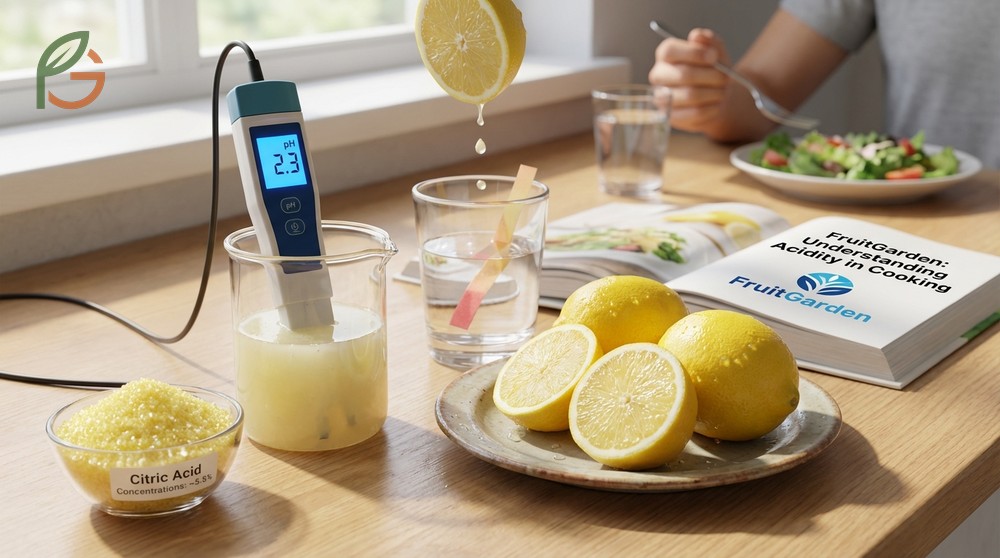
pH of lemon juice ranges from 2.0 to 2.6, making it one of the most acidic natural foods you’ll find in your kitchen[1]. Research shows this high acidity comes from citric acid concentrations between 4.5% and 6.5% by weight[2]. At FruitGarden, we help you understand how this acidity impacts everything from cooking to your body’s pH balance.
Quick Answer
- Lemon juice has a pH of 2.0-2.6[1], making it highly acidic on the pH scale
- Contains 4.5-6.5% citric acid[2] by weight, which gives it that tangy flavor
- It’s 10 times more acidic than oranges and nearly as acidic as stomach acid[3]
- Despite being acidic, lemon water becomes alkaline after your body metabolizes it[4]
pH of Lemon Juice
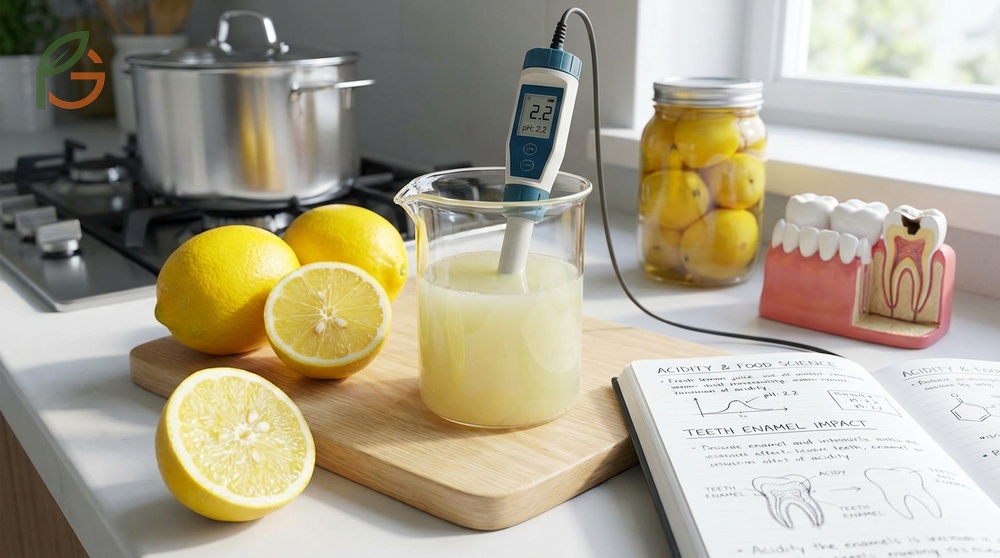
The ph of lemon juice sits at 2.2 according to USDA data, though fresh lemons can range from 2.0 to 2.6 depending on variety and ripeness[1]. This makes lemons more acidic than nearly every food you’ll encounter in daily life. The acidity doesn’t just affect taste—it impacts how lemon juice behaves in recipes, preserves food safety, and even influences your teeth’s enamel.
Fresh lemon juice’s pH fluctuates by season and growing conditions. Studies show that bottled lemon juice maintains a more consistent pH around 2.2, while fresh-squeezed versions can drop as low as 2.0 during peak ripeness[2]. Meyer lemons, which taste sweeter, actually measure slightly higher at pH 2.6—still highly acidic but noticeably less intense than regular Eureka or Lisbon lemons.
What most people don’t realize is that pH operates on a logarithmic scale. A pH of 2 isn’t just slightly more acidic than pH 3—it’s 10 times more acidic[3]. This explains why even a small amount of lemon juice creates such a dramatic change in recipes.
Understanding the pH Scale
The pH scale runs from 0 to 14, with 7 representing neutral[3]. Pure water sits at exactly 7.0. Anything below 7 is acidic, and anything above is alkaline (also called basic).
Lemon juice at pH 2.2 falls into the strongly acidic category. For context, battery acid measures around 1.0, vinegar ranges from 2.4 to 3.4, and coffee sits near 5.0.
Important note: Don’t confuse pH with taste. Some acids taste sour (like lemon juice), while others don’t have much flavor at all. pH measures hydrogen ion concentration, not flavor intensity.
Why Lemon Juice Is So Acidic
Citric acid makes up 4.5% to 6.5% of lemon juice by weight, according to USDA standards[2]. This organic compound has the chemical formula C₆H₈O₇ and dissolves easily in water, releasing hydrogen ions that create acidity.
Lemons evolved high acid content as a preservation mechanism. The low pH creates an environment where most bacteria, molds, and harmful microorganisms can’t survive. That’s why lemon juice works so well as a natural preservative in cooking and food processing.
- Variety: Meyer lemons are less acidic than Eureka and Lisbon varieties
- Ripeness: Acid levels decrease slightly as lemons age on the tree
- Soil composition: Growing conditions can alter citric acid concentration by up to 40%
- Storage: Fresh lemon juice loses acidity when exposed to air and light
- Processing: Bottled lemon juice maintains consistent pH through commercial standards
Is Lemon Juice Acidic or Basic
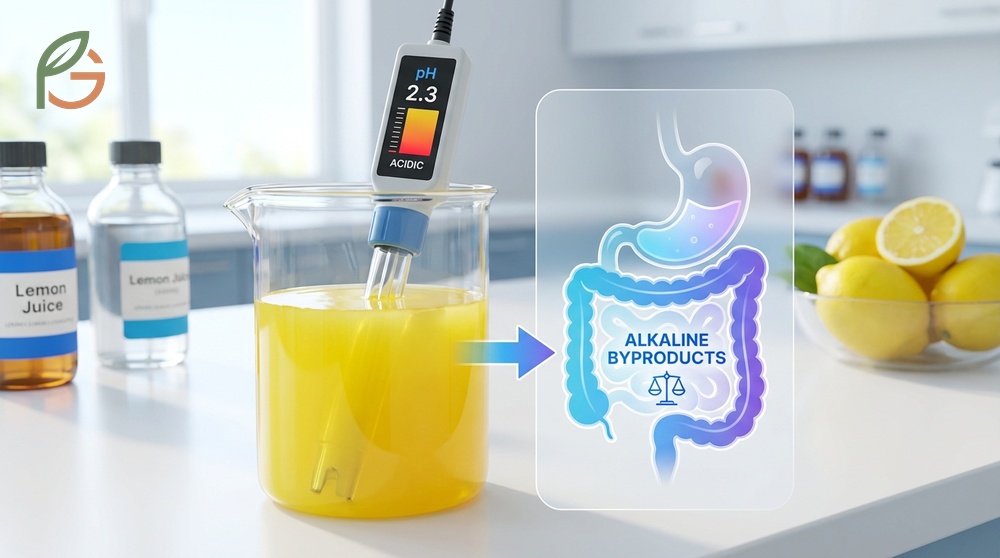
Is lemon juice acidic or basic? It’s definitely acidic—one of the most acidic foods you’ll consume. With a pH between 2.0 and 2.6, lemon juice sits firmly on the acidic end of the scale, far below the neutral point of 7[1].
The confusion about whether lemon juice is an acid or base often comes from the alkaline diet movement. While it’s true that lemon juice produces alkaline byproducts after digestion, the juice itself is absolutely acidic when you drink it. The pH doesn’t change until your body metabolizes it—we’ll cover that in the next section.
Current scientific consensus confirms that citric acid, lemon juice’s primary component, functions as a weak organic acid in aqueous solutions[4]. It donates hydrogen ions (H⁺) when dissolved in water, which is the textbook definition of an acid.
Comparing Lemon to Other Citrus Fruits
Research shows lemons rank second in acidity among common citrus fruits. Limes claim the most acidic spot with pH values between 2.0 and 2.4[5]. Lemons follow at 2.2 to 2.6, then grapefruit at 3.0 to 3.3, and oranges at 3.3 to 4.2.
This acidity hierarchy impacts more than just taste. The lower the pH, the stronger the preservative effect and the more potential for tooth enamel erosion. That’s why dentists recommend rinsing your mouth after drinking lemon water.
This table compares pH ranges and acidity strength across five common citrus fruits from most acidic to least acidic
| Citrus Fruit | pH Range | Acidity Level | Primary Acid |
|---|---|---|---|
| Lime | 2.0-2.4[5] | Extremely High | Citric Acid |
| Lemon | 2.0-2.6[1] | Extremely High | Citric Acid |
| Grapefruit | 3.0-3.3[5] | High | Citric Acid |
| Tangerine | 3.9-4.0[5] | Moderate | Citric Acid |
| Orange | 3.3-4.2[5] | Moderate | Citric Acid |
Lemon Juice vs Stomach Acid
Your stomach produces hydrochloric acid with a pH between 1.5 and 3.5, depending on whether you’ve eaten recently[6]. On an empty stomach, gastric pH typically sits around 1.5 to 2.0—roughly the same acidity as lemon juice.
This similarity means lemon juice won’t significantly increase your stomach’s acidity when you drink it. Your body’s already producing acid at that level. The real question isn’t whether lemon juice is acidic, but how it behaves after your digestive system processes it.
- Battery acid: pH 0.5-1.0 (extremely dangerous)
- Stomach acid: pH 1.5-3.5 (natural digestive fluid)
- Lemon juice: pH 2.0-2.6 (food-safe acidity)
- Vinegar: pH 2.4-3.4 (food-safe acidity)
- Coffee: pH 4.8-5.0 (mild acidity)
- Milk: pH 6.5-6.7 (slightly acidic)
Alkalinity of Lemon Water
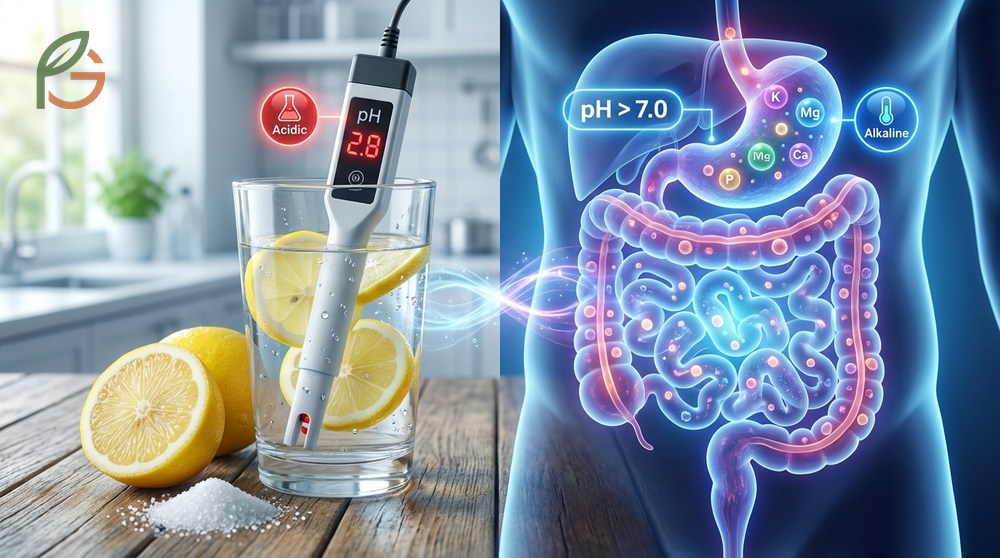
Here’s where things get interesting. Is lemon water alkaline? The answer is both yes and no, depending on when you measure it. In your glass, lemon water has a pH around 2.5 to 3.0—definitely acidic. But after your body metabolizes it, the byproducts become alkaline[4].
This paradox confuses a lot of people. The citric acid in lemon juice breaks down during digestion into alkaline minerals like potassium, magnesium, and calcium. When these minerals enter your bloodstream, they can slightly raise your body’s pH level.
Research shows that while your blood pH stays tightly regulated between 7.35 and 7.45 regardless of what you eat, your urine pH can shift. Diets high in alkaline-forming foods like lemons produce more alkaline urine, while diets heavy in meat and processed foods create acidic urine[4].
The Alkaline Paradox
The alkaline diet movement promotes the idea that acidic foods like lemon juice become alkaline in your body. That’s partially true, but it’s more complex than it sounds. Your body’s pH balance depends on multiple systems working together—kidneys, lungs, and blood buffers all play crucial roles.
Lemon juice itself doesn’t change your blood pH directly. Your body tightly controls blood pH through homeostatic mechanisms. What changes is the “alkaline load” or “acid load” that foods create after metabolism. Foods that leave behind alkaline minerals (like potassium from lemons) reduce the work your kidneys do to maintain pH balance.
Key takeaway: Don’t expect lemon water to dramatically change your body’s pH. Your blood stays at 7.35-7.45 no matter what you eat. The benefits come from reduced kidney strain and improved mineral balance, not from “alkalizing” your bloodstream.
How Your Body Processes Lemon Juice
When you drink lemon water, the citric acid enters your stomach where it mixes with even stronger hydrochloric acid. Your small intestine then absorbs the citric acid, which enters metabolic pathways called the Krebs cycle (also known as the citric acid cycle).
During this process, your body breaks citric acid down into carbon dioxide (which you exhale) and alkaline mineral salts. These alkaline minerals—primarily potassium citrate—remain in your system and contribute to the alkaline effect.
The entire process takes 2 to 4 hours from consumption to full metabolism. That’s why you can’t “feel” the alkaline effect immediately—it’s a gradual biochemical shift, not an instant transformation.
- Stage 1: Lemon juice enters stomach (pH stays acidic around 2.0)
- Stage 2: Small intestine absorbs citric acid molecules
- Stage 3: Liver processes citric acid through Krebs cycle
- Stage 4: Carbon dioxide is exhaled, alkaline minerals remain
- Stage 5: Kidneys excrete excess minerals in alkaline urine
pH Effects in Cooking
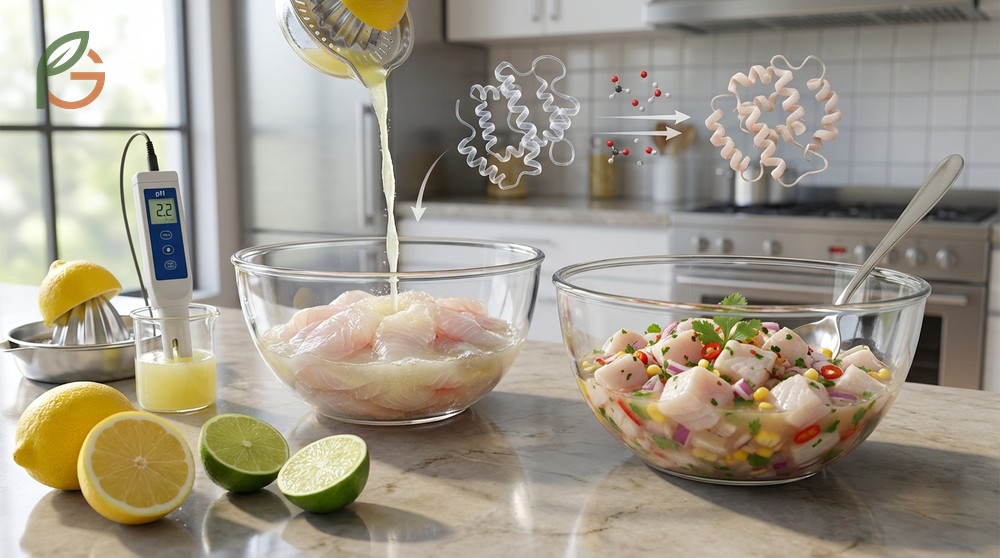
Lemon juice’s acidity makes it a powerful cooking tool. That pH of 2.0-2.6 does more than add flavor—it changes how proteins behave, prevents browning, and helps preserve food safety[2]. Understanding these effects helps you cook smarter.
In ceviche, lemon or lime juice “cooks” raw fish by denaturing proteins. The acid causes protein strands to unfold and recombine, turning the flesh opaque and firm without heat. Research shows this process takes 15 to 30 minutes for thin fish slices. However, acidity doesn’t kill bacteria the way heat does—you still need fresh, high-quality seafood.
Lemon juice prevents enzymatic browning in cut apples, pears, and avocados. The low pH inhibits polyphenol oxidase (PPO), the enzyme responsible for brown discoloration. A quick spray of lemon juice diluted 1:3 with water keeps fruit looking fresh for 4 to 6 hours—perfect for fruit salads and packed lunches.
For home canning, the FDA requires pH below 4.6 to prevent botulism growth[2]. Foods like tomatoes sit right around 4.5 to 4.7, which is why recipes call for added lemon juice. Two tablespoons of bottled lemon juice per pint brings tomatoes safely below the 4.6 threshold.
Safety warning: Never substitute fresh lemon juice for bottled in canning recipes. Fresh juice pH varies from 2.0 to 2.6, making it unreliable for food safety. Bottled lemon juice maintains a consistent pH of 2.2, meeting USDA standards.
- Marinades: Acid tenderizes meat by breaking down collagen (limit to 2 hours to avoid mushy texture)
- Baking: Reacts with baking soda to create carbon dioxide for leavening
- Sauces: Balances richness in cream sauces and cuts through fatty dishes
- Vegetables: Helps green vegetables retain bright color when blanching
- Preservation: Creates hostile environment for harmful bacteria in pickles and preserves
- Dairy: Curdles milk proteins to make ricotta, paneer, and farmers cheese
Conclusion
The evidence is clear: pH of lemon juice sits between 2.0 and 2.6, making it one of the most acidic foods in your kitchen. This acidity powers its cooking versatility, from tenderizing proteins to preventing browning. The paradox that lemon juice turns alkaline after digestion highlights how your body’s metabolism transforms acidic compounds into beneficial alkaline minerals.
Current data from USDA and EPA sources confirms what you can taste—lemons pack serious acid punch. Whether you’re squeezing lemon water for health benefits or using it to brighten a dish, understanding its pH helps you use this citrus powerhouse more effectively. At FruitGarden, we bring you the science behind fruits so you can grow, cook, and eat with confidence.
Frequently Asked Questions
What is the exact pH value of lemon juice?
The pH value of lemon juice ranges from 2.0 to 2.6, with most commercial lemon juice standardized at pH 2.2 according to USDA data. Fresh-squeezed lemon juice can vary depending on the variety, ripeness, and growing conditions. Meyer lemons tend toward the higher end at pH 2.6, while Eureka and Lisbon varieties often measure closer to pH 2.0 to 2.3.
Is lemon juice more acidic than vinegar?
Lemon juice (pH 2.0-2.6) is slightly more acidic than most vinegars, which range from pH 2.4 to 3.4. White distilled vinegar typically measures pH 2.4 to 2.6, making it nearly identical to lemon juice. Apple cider vinegar sits around pH 3.0, less acidic than lemon. The difference comes down to acid type—vinegar contains acetic acid while lemon juice contains citric acid.
Does lemon water really alkalize your body?
Lemon water doesn’t directly change your blood pH, which stays tightly controlled between 7.35 and 7.45. However, after your body metabolizes citric acid, it leaves behind alkaline minerals like potassium and magnesium. This can make your urine more alkaline and reduce the workload on your kidneys to maintain pH balance. The “alkalizing effect” is real but subtle—it’s not a dramatic transformation.
Can lemon juice damage tooth enamel?
Yes, lemon juice’s pH of 2.0-2.6 can erode tooth enamel with frequent exposure. Enamel begins to dissolve at pH 5.5, so lemon juice sits well below that threshold. To minimize damage, drink lemon water through a straw, rinse your mouth with plain water afterward, and wait 30 minutes before brushing (brushing immediately can damage softened enamel). Limiting exposure to once daily reduces risk significantly.
How does lemon juice pH compare to stomach acid?
Lemon juice pH (2.0-2.6) closely matches stomach acid pH when your stomach is empty (1.5-2.0). After eating, stomach pH rises to 3.0-5.0 as food dilutes the gastric acid. This similarity means drinking lemon water won’t significantly increase stomach acidity—your body’s already producing acid at that level. People with acid reflux should still use caution, as any acidic food can trigger symptoms.
Why is bottled lemon juice recommended for canning instead of fresh?
Bottled lemon juice maintains a consistent pH of 2.2, meeting USDA safety standards for home canning. Fresh lemon juice pH varies from 2.0 to 2.6 depending on the fruit, creating uncertainty that can compromise food safety. For canning tomatoes, pickles, and other borderline acidic foods, the FDA requires pH below 4.6 to prevent botulism. Only bottled lemon juice guarantees reliable acidification.
What makes lemon juice so much more acidic than orange juice?
Lemons contain 4.5% to 6.5% citric acid by weight, while oranges contain only 0.6% to 1.0%. This 5-to-10-times higher concentration explains why lemon juice measures pH 2.0-2.6 compared to orange juice at pH 3.3-4.2. The difference evolved as lemons developed higher acid content as a natural preservation mechanism, helping the fruit resist bacteria and fungi in their growing environment.





