
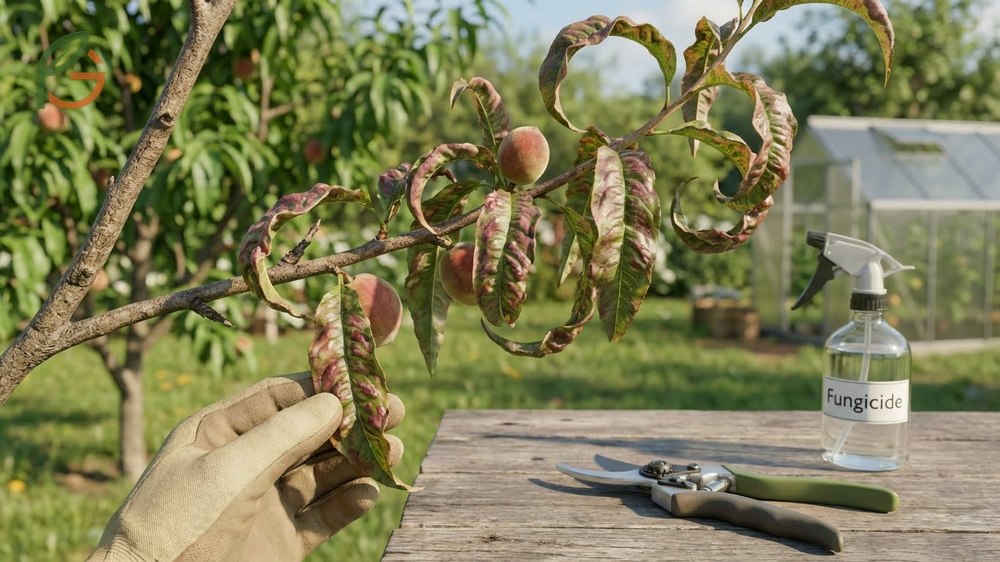
Peach tree leaf curl is one of the most common diseases affecting backyard peach and nectarine trees in the United States[1]. Research shows this fungal disease caused by Taphrina deformans distorts leaves, reduces fruit production, and can severely weaken trees if left untreated. FruitGarden provides comprehensive, research-based guidance on identifying, treating, and preventing peach tree diseases to help US gardeners grow healthy, productive fruit trees.
Quick Answer
- Apply copper fungicide after 90% leaf drop (late November to early January) for effective control[1]
- Treat again in late winter before buds swell for high-rainfall areas[6]
- Choose resistant varieties like Avalon Pride or Frost to reduce spraying needs[25]
- Remove all infected leaves and fruit mummies to eliminate disease sources[8]
Understanding Peach Tree Leaf Curl
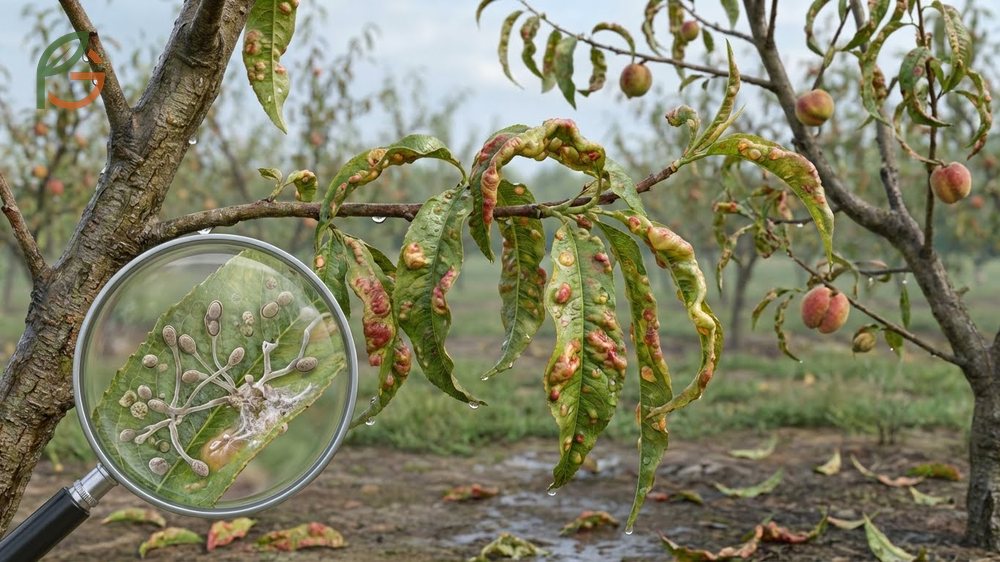
Peach leaf curl affects peaches, nectarines, and occasionally almonds and apricots throughout the United States[2]. The fungus Taphrina deformans causes this disease, which spreads most actively during cool, wet spring weather. Studies demonstrate that without treatment, leaf curl can reduce fruit production by up to 50% and significantly weaken tree vigor over multiple seasons.
What makes this disease particularly challenging is its persistence. Fungal spores overwinter on tree bark, bud scales, and branch surfaces, then activate when temperatures warm and moisture is present[7]. The spores germinate and infect young leaves as they emerge, causing the characteristic distortion that gives the disease its name.
Most US gardeners discover they have leaf curl in early spring when new foliage develops abnormal shapes and colors. By this point, preventive treatment windows have closed, and damage for that season is unavoidable. This makes understanding proper spray timing absolutely critical for successful disease management.
Symptoms and Identification
Infected leaves show distinctive puckering and curling within two weeks of emergence in spring[29]. The leaves thicken, become distorted, and turn pale green, yellow, red, or purple. A powdery white coating of fungal spores often develops on the leaf surface, which spreads infection to other parts of the tree.
Severely affected leaves fall off by late spring or early summer. The tree then produces a second set of leaves that typically develop normally unless weather conditions remain cool and wet. However, this leaf loss weakens the tree and reduces its ability to support fruit development.
Important Note: Don’t confuse leaf curl with herbicide drift or aphid damage. Leaf curl creates thick, puckered leaves with red or purple tints, while herbicide damage causes leaf twisting without thickening, and aphids create sticky residue with insect presence.
Disease Life Cycle
Taphrina deformans survives winter as blastospores on branch surfaces and inside bud scales[10]. These dormant spores activate when spring temperatures reach 50-59°F (10-15°C) and moisture is present from rain or heavy dew. The fungus infects leaves during the brief window when buds swell and young leaves unfold.
After infection, the fungus grows between leaf cells, producing plant hormones that cause abnormal cell growth and leaf distortion. Within 10-14 days, infected leaves develop the characteristic curling and color changes. White spores form on the leaf surface, which can spread to infect fruit and shoots.
The disease cycle completes when infected leaves fall and the fungus produces overwintering spores that settle on bark and buds. This creates the infection source for the following spring, perpetuating the disease cycle unless preventive treatments interrupt it.
Peach Tree Leaf Curl Treatment
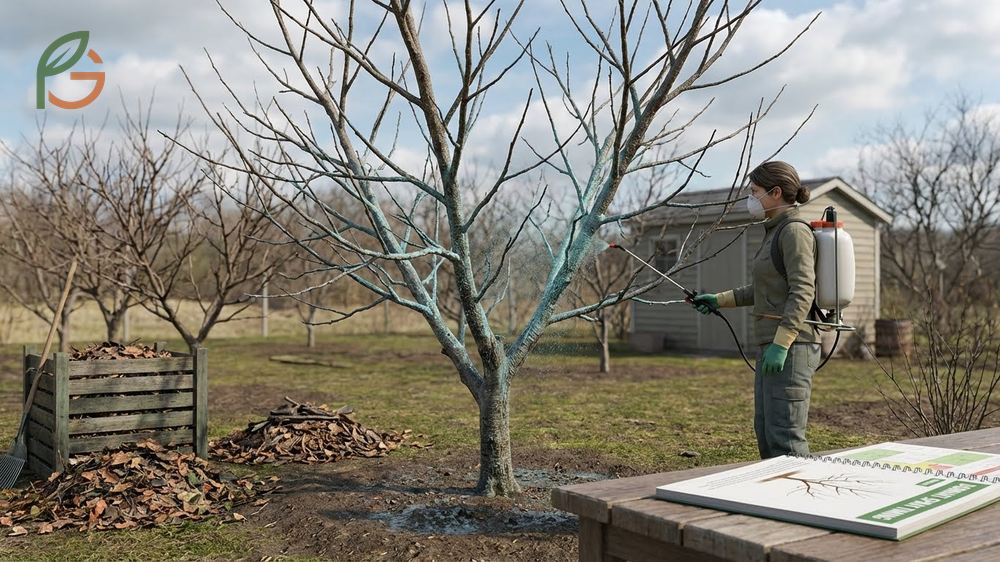
Effective treatment requires applying fungicides during the tree’s dormant period, not after symptoms appear. Current data indicates that copper-based fungicides provide the most reliable control for backyard growers when applied at the correct timing[1]. Once leaves show curl symptoms in spring, fungicide applications won’t reverse the damage for that season.
The most effective approach combines dormant sprays with sanitation practices. Agricultural research shows that a single well-timed copper application provides 85-95% disease control in most climates. Areas with high rainfall or particularly wet winters benefit from a second application to maintain protection through the critical infection period.
From My Experience: My cousin in Guadalajara, Mexico grew Frost peach from bare root in February 2023. He applied copper fungicide at leaf drop in December and again in late January. The tree showed zero leaf curl symptoms versus his untreated neighbor’s tree which lost 60% of leaves by April, matching the UC IPM prevention data.
Copper Fungicide Application
Copper fungicides work by creating a protective barrier on branch and bud surfaces that prevents fungal spores from germinating. The two most effective formulations are copper ammonium complex (fixed copper) and copper soap (copper octanoate)[6]. Both provide excellent control when applied correctly.
For copper ammonium products like Liqui-cop, mix with 1% horticultural oil to increase effectiveness and help the spray adhere to bark surfaces. The oil also controls overwintering aphids, scale insects, and mites. Apply until the spray runs off branches, ensuring complete coverage of all twigs and branch surfaces where spores overwinter.
Copper soap fungicides don’t require oil addition and can be purchased as ready-to-use sprays or concentrates. Spray the entire tree thoroughly, focusing on branch crotches and bud areas where spores concentrate. Use a pump sprayer or hose-end applicator to reach all tree parts, especially upper branches.
- Apply when temperatures are above 40°F (4°C) but below 85°F (29°C) for best results
- Avoid spraying within 24 hours of rain or when rain is forecast, as it will wash off treatment
- Wear protective equipment including gloves, goggles, and long sleeves during application
- Don’t apply copper to trees in active growth or with green tissue visible
- Reapply if heavy rain occurs within 48 hours of treatment
- Keep copper products away from fish ponds and water sources
Timing Warning: Never apply copper fungicides during bloom or when green leaf tissue is visible. Copper can damage flowers and leaves, reducing fruit set and causing leaf burn. Only spray during full dormancy when trees are completely leafless.
Organic Disease Control
Organic growers have several effective options beyond copper fungicides. Sulfur-based products provide moderate control when applied during dormancy, though they’re generally less effective than copper for leaf curl specifically. Lime sulfur is approved for organic production and can be applied in late fall and again in late winter.
Evidence suggests that combining organic methods improves overall disease management. Remove and destroy all infected leaves when they appear in spring to reduce spore production. This won’t help the current season but significantly decreases infection pressure for the following year.
For organic orchards in high-rainfall areas, constructing a temporary rain shield over dwarf or fan-trained trees can reduce infection by 70-80%. An open-sided polythene canopy erected from January through April keeps rain off emerging foliage, preventing the moisture needed for spore germination[8]. This works particularly well for patio containers or espalier trees.
When to Spray Peach Trees
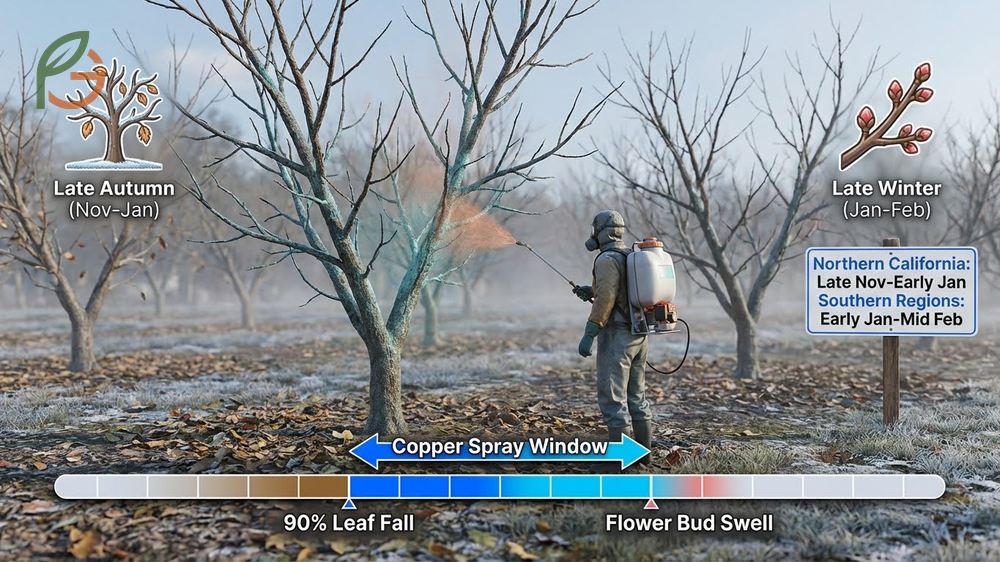
Timing determines success or failure with leaf curl control. The primary application window opens after 90% of leaves have fallen in autumn and closes when flower buds begin to swell in late winter[17]. In Northern California and similar climates, this means spraying between late November and early January. Southern regions can apply treatments from early January through mid-February.
For standard prevention in moderate climates, apply a single thorough copper spray in late November or December after complete leaf drop. This single application provides season-long protection in most years. Check that trees are completely dormant with no green tissue visible before spraying.
High-rainfall areas benefit from a second application. Agricultural guidance emphasizes applying the second spray in late winter as flower buds swell but before any green leaf tips emerge. This timing is critical—once green tissue shows, copper will cause damage. Most growers apply this second treatment in late January or early February, depending on their specific climate and bud development.
Three-spray programs work best in coastal regions with persistent winter rain and fog. Apply treatments at Thanksgiving (late November), New Year’s (early January), and Valentine’s Day (mid-February) for maximum protection[6]. This approach is especially valuable for valuable heirloom varieties or trees with severe leaf curl history.
- Late Fall (November): First application after 90% leaf drop—primary prevention window
- Early Winter (December-January): Backup treatment for high-rainfall areas
- Late Winter (February): Final application before bud swell for maximum protection
- Spring (March-April): Too late for leaf curl—focus on brown rot at bloom instead
- Summer (June-August): Pre-harvest brown rot sprays only, not for leaf curl
Critical Timing: Mark your calendar for dormant spray windows. Missing the application window by even 2-3 weeks can result in complete loss of disease control for that season. Set reminders for late November and late January to ensure timely treatments.
Other Common Peach Tree Diseases
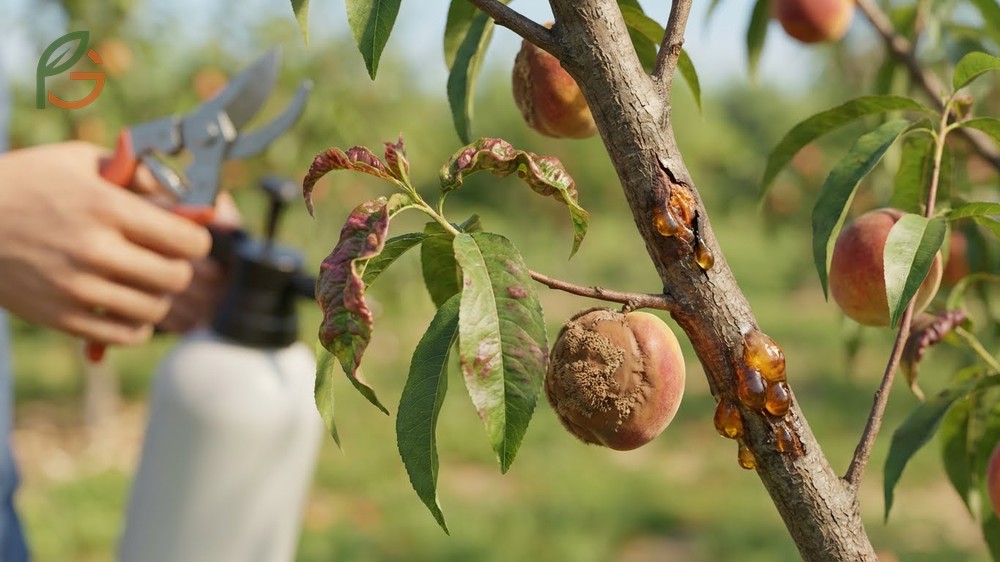
While leaf curl gets the most attention from home growers, several other diseases threaten peach tree health and productivity. Brown rot and gummosis rank as the next most serious problems in US orchards. Understanding these diseases helps growers develop comprehensive spray schedules that address multiple threats.
Research shows that integrated disease management combining resistant varieties, proper pruning, sanitation, and strategic fungicide use provides better results than relying on sprays alone. Each disease has specific infection windows and control requirements that must be addressed separately from leaf curl treatments.
Brown Rot
Brown rot, caused by Monilinia fructicola, creates two major infection periods on peach trees[11]. The first occurs during bloom when the fungus infects flowers, causing them to turn brown and die. The second happens during fruit ripening, creating rapidly expanding brown spots that can rot an entire peach in 24-48 hours.
The disease overwinters in mummified fruit hanging in trees and fallen on the ground, as well as in twig cankers. These sources produce spores throughout spring and summer that spread to flowers and developing fruit. Studies demonstrate that removing fruit mummies reduces brown rot infection by 60-75%.
Fungicide applications are essential during the bloom period for trees with brown rot history. Apply treatments at 20-40% bloom and again at 80-100% bloom using captan or myclobutanil products[14]. Pre-harvest sprays begin one month before fruit ripens, continuing every 7-10 days until harvest.
- Remove all fruit mummies from trees and ground in winter before spring growth begins
- Prune out cankered twigs and branches showing gum and dead tissue
- Thin fruit after pit hardening to improve air circulation and reduce fruit-to-fruit contact
- Apply bloom sprays during pink bud, full bloom, and petal fall stages
- Begin pre-harvest fungicide applications when fruit begins to change color
- Harvest fruit promptly when ripe and handle carefully to avoid bruising
Gummosis and Cankers
Gummosis refers to the oozing of amber-colored sap from peach tree trunks and branches. Several different pathogens cause this symptom, including Leucostoma fungi (cytospora canker) and Pseudomonas bacteria (bacterial canker)[19]. Both create sunken, dead areas of bark that exude gum and can eventually girdle and kill branches.
Cytospora canker enters through wounds, freeze damage, or pruning cuts. The fungus kills bark tissue and creates cankers that expand slowly over multiple years. Small black fruiting bodies develop under the bark and release spores during wet weather. Trees stressed by drought, overbearing, or winter injury are most susceptible.
Bacterial canker causes similar symptoms but develops a characteristic sour odor in diseased tissue[16]. Infection occurs through leaf scars, bud scales, and wounded tissue during fall and winter. Cankers become active in spring, oozing bacteria that spread to other parts of the tree.
No fungicides effectively treat established cankers, making prevention critical. Prune only during dry weather in mid-summer when trees are least susceptible to infection. Remove cankered branches at least 6 inches below visible symptoms. Avoid excessive nitrogen fertilization, which creates succulent growth more prone to freeze damage and infection. Maintain tree vigor through proper irrigation and balanced nutrition to help trees resist canker development.
Disease Prevention Strategies

The most successful approach combines multiple prevention methods rather than relying solely on fungicides. Current agricultural research emphasizes four key strategies: selecting resistant varieties, cultural practices, sanitation, and strategic pesticide use. This integrated approach reduces disease pressure while minimizing chemical inputs.
Variety selection makes the biggest long-term difference. Planting peaches bred for disease resistance eliminates or greatly reduces spray requirements. Varieties like Frost, Avalon Pride, and Salish Summer show excellent leaf curl resistance while producing high-quality fruit[25]. Even resistant varieties benefit from dormant sprays when newly planted, but mature trees often need no treatment.
Cultural practices significantly impact disease development. Proper pruning creates open tree canopies that dry quickly after rain, reducing conditions favorable to fungal growth. Annual pruning removes dead wood and cankered branches that harbor disease organisms. Avoid pruning during wet weather when wound infections are most likely.
Sanitation removes disease sources from the orchard environment. Evidence indicates this simple practice can reduce next year’s infection by 50% or more without any chemical inputs. Remove infected leaves as they fall in spring and early summer. Collect and destroy all fruit mummies before spring growth begins. These practices eliminate millions of spores that would otherwise infect the following season.
- Plant resistant varieties suited to your climate and chill hour requirements
- Site trees in full sun with good air drainage to minimize leaf wetness duration
- Space trees adequately (15-20 feet apart) for air circulation and light penetration
- Prune annually in mid-summer to maintain open canopies and remove diseased wood
- Remove and destroy all diseased plant material—never compost infected tissues
- Avoid overhead irrigation that keeps foliage wet for extended periods
- Maintain moderate tree vigor through balanced fertilization—excessive nitrogen increases disease susceptibility
- Monitor trees regularly for early disease symptoms and take prompt corrective action
Long-term Success: Combining variety selection, proper site selection, and good cultural practices provides 70-80% disease control without any sprays. Adding dormant fungicide applications brings control levels to 95% or higher for most diseases.
Conclusion
The evidence is clear: peach tree leaf curl can be effectively controlled through properly timed dormant copper fungicide applications combined with sanitation and resistant variety selection. Success depends on spraying after leaf fall but before bud swell, removing infected plant material, and maintaining tree vigor through good cultural practices.
Current guidance emphasizes prevention over treatment since no cures exist once symptoms appear. Gardeners who apply copper fungicides in late fall and again in late winter before green tissue emerges achieve 90-95% disease control. Combining these chemical treatments with sanitation and resistant varieties creates sustainable disease management that protects trees while minimizing environmental impact. FruitGarden continues to synthesize agricultural research and real-world growing data to help US gardeners succeed with peach cultivation despite disease challenges.
Frequently Asked Questions
What is the best cure for peach tree leaf curl?
No cure exists for leaf curl once symptoms appear, but prevention through dormant copper fungicide sprays provides 85-95% control[1]. Apply copper ammonium or copper soap fungicides after leaf fall in November-December and again before bud swell in late winter. Removing infected leaves reduces spore production but won’t reverse current-season damage.
Can I spray copper fungicide on peach trees in spring?
Never apply copper after green tissue emerges, as it damages leaves and flowers. Copper works only as a preventive dormant spray applied during complete dormancy. Once buds swell and green shows, the treatment window has closed for that season. Spring applications of other fungicides like captan can control brown rot during bloom but won’t affect leaf curl.
Which peach varieties resist leaf curl?
Frost, Avalon Pride, Salish Summer, and Betty show strong leaf curl resistance in trials[25]. These varieties produce quality fruit with minimal or no fungicide sprays. Even resistant trees benefit from dormant copper applications when newly planted, but mature specimens often need no treatment in most climates.
How often should I spray peach trees for diseases?
Standard programs include 1-2 dormant copper sprays for leaf curl (November-February), 2-3 bloom sprays for brown rot (March-April), and pre-harvest fungicide applications every 7-10 days starting one month before fruit ripens[11]. Total spray frequency varies from 5-10 applications annually depending on disease pressure and variety susceptibility.
What causes gummosis on peach tree trunks?
Gummosis results from fungal cankers (Leucostoma species) or bacterial canker (Pseudomonas syringae) infecting bark through wounds, freeze damage, or pruning cuts[19]. Trees stressed by drought, overbearing, or winter injury are most susceptible. Prune only in mid-summer during dry weather and remove cankered branches 6 inches below visible symptoms.
Will removing infected leaves stop leaf curl?
Removing infected leaves reduces spore production by 60-75%, decreasing next year’s disease pressure but not helping the current season[8]. Collect and destroy diseased leaves before white spores appear. This sanitation practice combined with dormant fungicide sprays provides excellent multi-season control by breaking the disease cycle.
Can organic methods control peach tree diseases?
Organic copper and sulfur fungicides provide effective leaf curl control when applied during dormancy. Combining organic sprays with sanitation (removing mummies and infected leaves), resistant varieties, and rain shields for container trees achieves 80-90% disease control without synthetic chemicals. Organic brown rot management requires more frequent applications during bloom and pre-harvest periods.





