
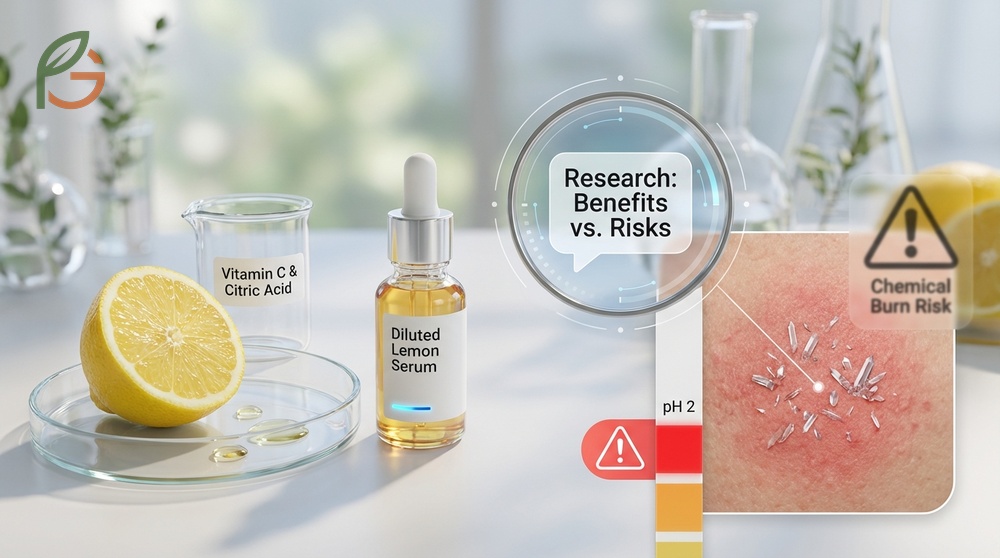
Research shows lemon benefits for skin stem primarily from vitamin C and citric acid content, which support collagen production and gentle exfoliation[1]. However, dermatology experts warn that undiluted lemon juice with pH 2 can severely disrupt skin’s natural pH 4.7-5.5 barrier, causing chemical burns and phytophotodermatitis[2]. FruitGarden synthesizes current dermatological research to help you understand when lemons can enhance your skincare routine and when they pose serious risks.
Quick Answer
- Lemon peel polyphenols provide antioxidant protection for skin cells against oxidative stress[1]
- Vitamin C from citrus can increase skin density by nearly 50% and cell renewal by 30% when consumed in diet[3]
- Undiluted lemon juice has pH around 2, too acidic for skin’s natural pH 4.7-5.5[2]
- Phytophotodermatitis from citrus can cause severe burns, blistering, and lasting hyperpigmentation when exposed to sunlight[4]
Lemon Benefits for Skin
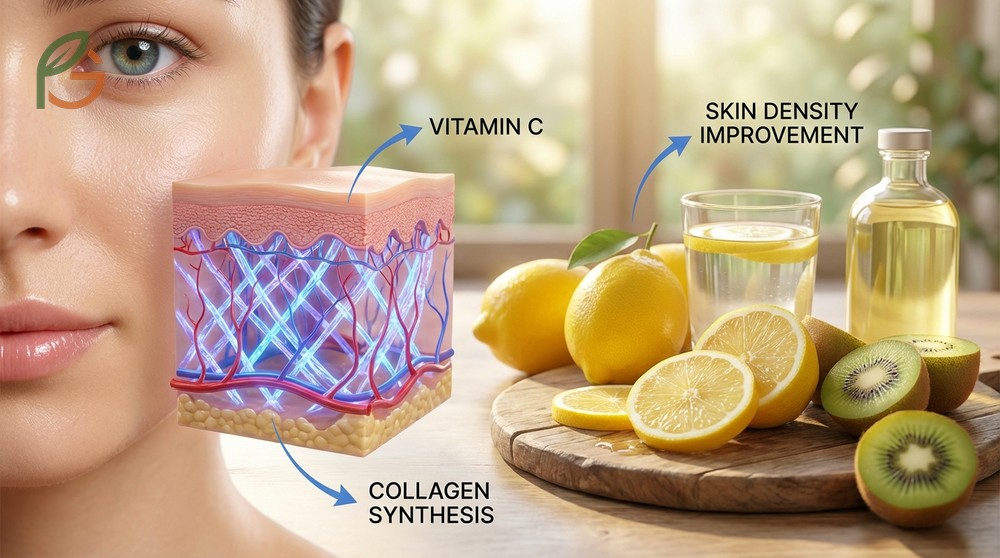
Research demonstrates that lemon’s vitamin C content supports collagen synthesis, which maintains skin structure and elasticity[5]. Studies show vitamin C from dietary sources travels through the bloodstream into all skin layers, increasing skin density by nearly 50% after eight weeks of consistent intake[3]. This cellular-level improvement happens regardless of whether you consume lemons, kiwis, or other vitamin C-rich fruits.
Lemon peel extracts contain polyphenolic compounds that protect skin cells from oxidative stress damage. Laboratory studies found lemon peel polyphenols (LPP) at 100 μg/mL concentration increased expression of protective Bcl-2 proteins while reducing cell damage markers more effectively than standard vitamin C supplements[1]. The terpenoids in lemon peel demonstrate strong free radical scavenging effects, while Z-citral compounds inhibit tyrosinase enzyme activity linked to melanin production[6].
Evidence suggests that citric acid’s alpha hydroxy acid (AHA) properties can help break down dead skin cells that contribute to blackheads and rough texture[7]. Medical-grade citric acid formulations use concentrations between 0.5-10% depending on the product type, with cleansers using 0.5-2% and targeted serums containing 5-10%[8].
Vitamin C and Collagen Production
Current data indicates vitamin C acts as an essential cofactor for enzymes that stabilize collagen molecule structure. When you increase dietary vitamin C intake, blood plasma levels rise first, followed by corresponding increases in skin tissue concentrations[3]. Researchers measured skin cell renewal rates increasing approximately 30% alongside density improvements in participants consuming two vitamin C-rich fruits daily for eight weeks.
Unlike topical vitamin C products that struggle to penetrate the skin’s outer barrier efficiently due to water-solubility, dietary vitamin C delivers through bloodstream circulation to reach all skin layers[9]. This mechanism proves more effective for systemic collagen support than surface application alone.
Antioxidant Properties of Lemon
Lemon peel essential oils promote microvascular circulation and stimulate subcutaneous fat metabolism while modulating cell permeability[6]. These compounds demonstrate antibacterial effects against specific pathogens, though concentrations and delivery methods matter significantly for safety and efficacy.
The antioxidant vitamin C in lemons helps prevent free radical damage that breaks down collagen over time. Early research suggests beverages containing lemon juice may enhance complexion and slow visible aging signs when consumed regularly as part of balanced nutrition[5].
Important Note: Benefits from lemon primarily occur through dietary consumption, not topical application. Eating lemon in foods or drinking lemon water provides vitamin C systemically without the severe pH disruption risks of applying juice directly to skin.
Lemon Juice on Face: Risks and Precautions
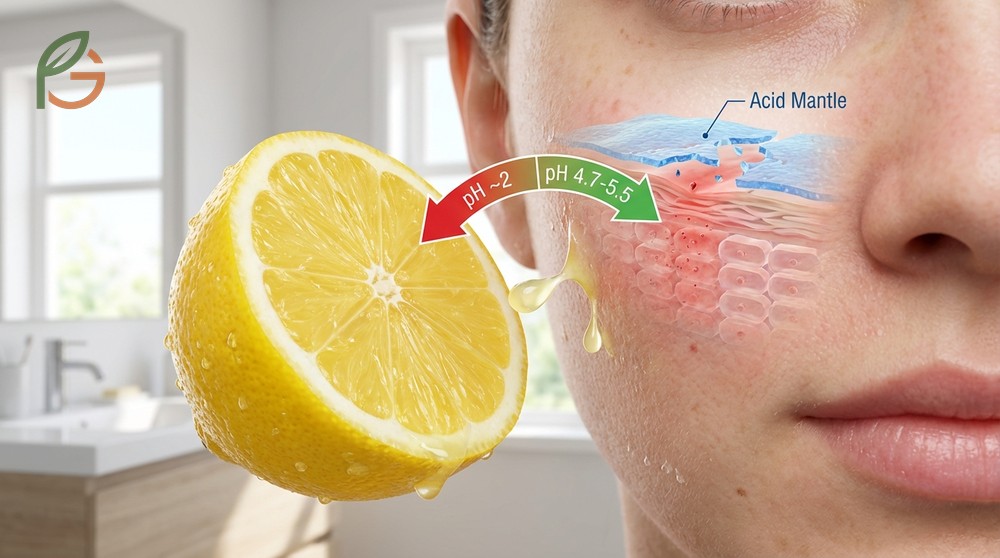
Dermatologists consistently warn against applying undiluted lemon juice directly to facial skin due to its extremely low pH around 2, compared to skin’s natural pH range of 4.7-5.5[2]. This pH differential strips away the skin’s protective acid mantle, causing immediate stinging, burning sensations, and potential chemical burns. Research shows that disrupting this natural barrier increases vulnerability to irritation, infection, and inflammatory responses[10].
Multiple dermatology clinics report treating patients for lemon juice-related skin damage, including redness, excessive flaking, microtears from over-exfoliation, and contact dermatitis. High citric acid levels without proper pH buffering lead to uncontrolled exfoliation that compromises skin integrity[11]. Sensitive skin types experience more severe reactions, though even resilient skin sustains barrier damage from repeated exposure.
Lemon juice contains limonene and citral compounds that trigger allergic contact dermatitis in susceptible individuals[12]. These volatile organic compounds cause inflammation independent of the pH issue, creating a double mechanism for skin irritation.
pH Balance and Skin Barrier Disruption
Studies demonstrate the skin’s acid mantle functions optimally between pH 4.7-5.5, maintaining proper enzyme activity and defense mechanisms. Applying substances with pH 2 alters this balance dramatically, impairing the barrier’s ability to retain moisture and block pathogens[13]. For comparison, professional chemical peels use carefully formulated acid concentrations with pH buffering agents to prevent uncontrolled tissue damage.
Medical-grade skincare products containing citric acid maintain pH levels between 3.5-4.5 specifically to provide exfoliation benefits without destroying the protective barrier. These formulations include neutralizing ingredients and precise concentration controls absent from raw lemon juice[8].
Contact Dermatitis Risk
Contact dermatitis from lemon juice manifests as red, itchy, inflamed patches where the juice contacted skin. This allergic response can persist for days to weeks depending on exposure duration and individual sensitivity. Delhi-based dermatologists report treating numerous cases where DIY lemon treatments created inflammatory reactions requiring medical intervention[10].
Symptoms include intense stinging during application, followed by redness, peeling, and sometimes blistering in severe cases. People with sensitive or reactive skin, eczema, rosacea, or compromised barriers face highest risk and should avoid citrus juice contact entirely.
- Chemical burns from pH 2 acidity damaging skin barrier immediately upon contact
- Chronic dryness, flaking, and tightness from moisture barrier disruption
- Increased sun sensitivity leading to rashes and pigmentation changes
- Contact dermatitis from limonene and citral allergenic compounds
- Over-exfoliation causing microtears and heightened skin sensitivity
Dermatologist Warning: If lemon juice contacts your skin accidentally, wash immediately with lukewarm water and gentle soap. Don’t expose the area to sunlight for at least 24-48 hours to prevent phytophotodermatitis burns.
Phytophotodermatitis from Lemon: Serious Burns
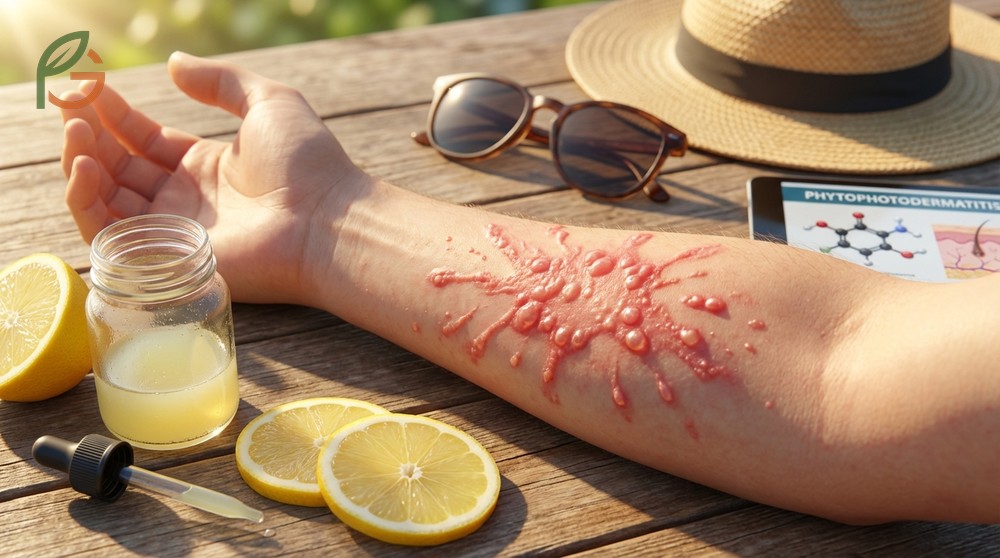
Phytophotodermatitis represents one of the most serious risks from lemon contact with skin, occurring when citrus furanocoumarins react with ultraviolet radiation. These organic compounds in lemon peels and juice become phototoxic upon sun exposure, causing chemical reactions that damage skin cells directly[12]. The resulting burns appear as red, itchy, blistering rashes in irregular patterns matching where juice contacted skin, often called “margarita burns” due to common occurrence during outdoor drinking[4].
Severity depends on juice amount and UV exposure duration. Small amounts with brief sun exposure create mild redness lasting days to weeks, while prolonged exposure with substantial citrus contact produces severe painful blistering burns requiring medical treatment[4]. Open sores can develop in extreme cases, followed by long-lasting hyperpigmentation that persists months after initial injury.
Common citrus fruits causing phytophotodermatitis include lemons, limes, grapefruits, and bitter oranges. Other plants containing furanocoumarins like celery, parsnip, and giant hogweed trigger identical reactions. The condition occurs more frequently in summer months when people combine outdoor activities with citrus consumption or DIY beauty treatments.
This table compares prevention methods for citrus-related burns with their effectiveness levels and implementation timing across four different protective strategies
| Prevention Method | Effectiveness | Implementation | Best For |
|---|---|---|---|
| Immediate hand washing | Very High | Within 2-5 minutes of citrus contact | Kitchen prep, bartending |
| Broad-spectrum SPF 30+ sunscreen | High | Apply before outdoor citrus exposure | Outdoor dining, gardening |
| Protective gloves | Very High | Wear during citrus handling | Gardening, extensive food prep |
| Shade avoidance | Moderate | Stay indoors 24-48 hours after contact | Accidental large-area exposure |
- Irregular red streaks or patches appearing 24-72 hours after citrus and sun exposure
- Intense itching and burning sensations in affected areas
- Fluid-filled blisters developing in reaction zones
- Dark brown hyperpigmentation persisting weeks to months
- Painful open sores indicating severe second-degree burns
Emergency Protocol: Seek immediate medical care if you develop severe blistering, open sores, or signs of infection (increased warmth, pus, spreading redness) after citrus contact and sun exposure. Don’t pop blisters, as this increases infection risk.
DIY Lemon Face Mask: Safety Guidelines
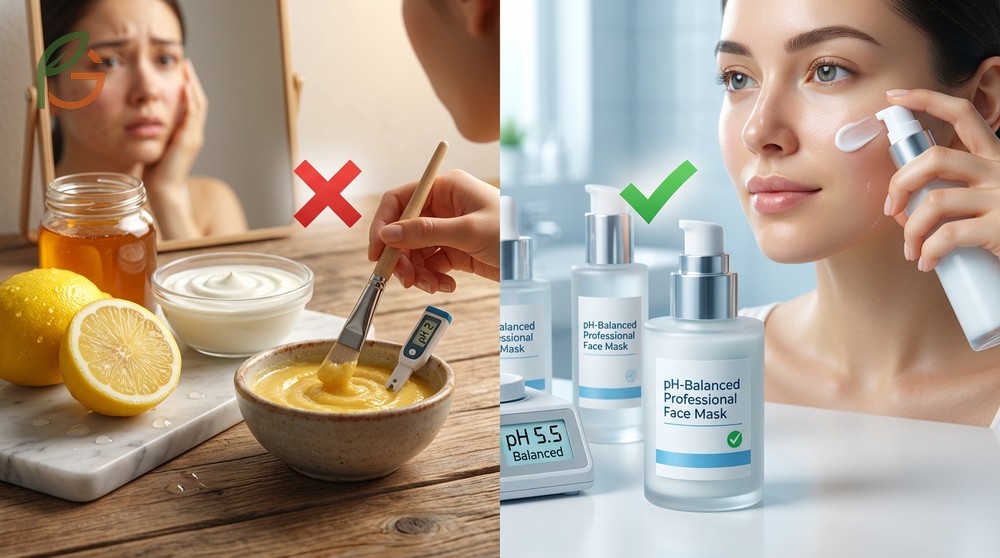
Dermatology experts advise against DIY lemon face masks due to uncontrolled variables that compromise safety. Unlike professional formulations with precise pH balancing and concentration controls, homemade mixtures can’t neutralize lemon’s extreme acidity effectively[11]. Common DIY recipes combining lemon with honey, yogurt, or other ingredients still expose skin to damaging pH 2 acidity that strips protective barriers.
If you choose to use lemon topically despite medical advice, critical safety measures include extreme dilution (1 part lemon to 10 parts water minimum), patch testing on inner forearm 48 hours before facial application, limiting contact time to under 60 seconds maximum, and avoiding all sun exposure for 72 hours afterward. However, these precautions don’t eliminate risks—they only reduce severity of potential damage[2].
People with sensitive skin, active acne, rosacea, eczema, or any inflammatory skin conditions must avoid lemon masks entirely, as compromised barriers amplify damage from acidic exposure. Even individuals with resilient skin risk cumulative barrier disruption from repeated applications that may not manifest immediately but causes long-term sensitivity increases.
Professional estheticians don’t use raw lemon juice in treatments specifically because formulated products deliver citric acid benefits safely. Medical-grade peels containing AHAs maintain pH 3.5-4.5 with buffering agents, providing controlled exfoliation without the chemical burn risk from pH 2 substances[8].
- Sensitive or reactive skin types prone to redness and irritation
- Active inflammatory conditions including acne, rosacea, or eczema
- Compromised skin barriers from retinoids, chemical peels, or recent procedures
- History of contact dermatitis or allergic reactions to citrus
- Plans for sun exposure within 72 hours of application
- Use of other exfoliating acids or active ingredients simultaneously
Critical Safety Alert: Never leave lemon juice on skin overnight. Even brief 30-second contact can cause irritation in sensitive individuals. If you experience any stinging, burning, or redness during application, rinse immediately with cool water and discontinue use permanently.
Vitamin C Serum Benefits: Safer Alternative
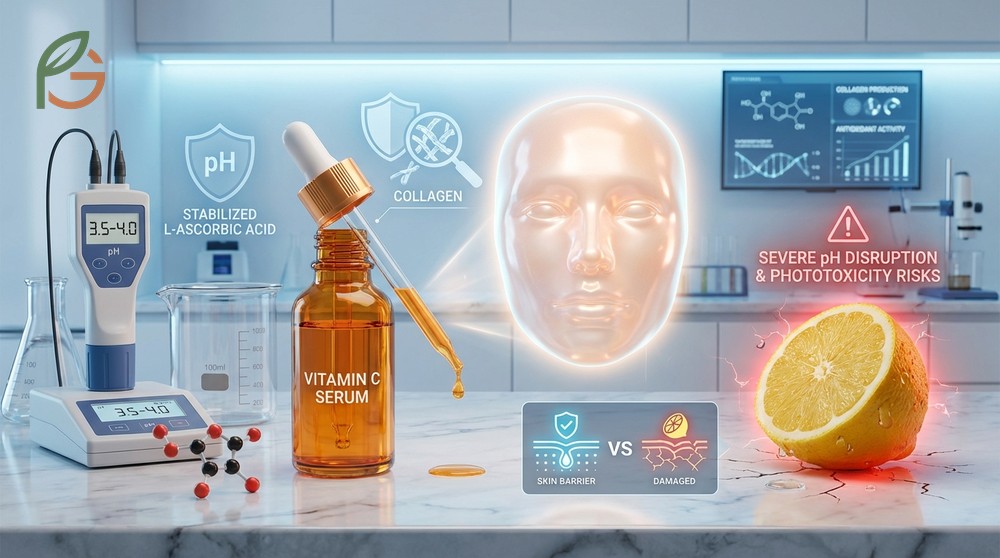
Medical-grade vitamin C serums provide all the collagen-boosting and antioxidant benefits attributed to lemons without the severe pH disruption and phototoxicity risks. These formulations use stabilized L-ascorbic acid or gentler vitamin C derivatives at concentrations between 10-20%, carefully pH-balanced to 3.5-4.0 for optimal skin tolerance and absorption[2]. This controlled pH allows effective penetration while preserving the skin’s protective acid mantle.
Research demonstrates topical vitamin C at proper concentrations stimulates collagen synthesis, neutralizes free radicals, and reduces hyperpigmentation more effectively than raw citrus applications. Formulated serums include complementary ingredients like vitamin E and ferulic acid that enhance stability and efficacy, delivering targeted benefits without the irritation, burns, or photosensitivity caused by lemon juice[5].
Dermatologists recommend applying vitamin C serum to clean, dry skin in the morning, followed by broad-spectrum SPF 30+ sunscreen. Unlike lemon juice which increases sun sensitivity dangerously, properly formulated vitamin C actually provides additional photoprotection when combined with sunscreen. Most skin types tolerate daily vitamin C serum use, though sensitive skin may start with every-other-day application.
For those preferring natural vitamin C sources, consuming citrus fruits, berries, kiwis, and bell peppers provides systemic benefits that reach skin through bloodstream circulation. Studies show dietary vitamin C increases skin density nearly 50% and cell renewal 30% over eight weeks—results impossible to achieve safely through topical lemon application[3].
- pH-balanced formulations (3.5-4.0) compatible with skin’s natural barrier
- Stabilized vitamin C forms that don’t oxidize rapidly like lemon juice
- Precise concentrations (10-20%) for efficacy without over-exfoliation
- Additional photoprotection when combined with sunscreen use
- Clinical testing confirming safety and effectiveness for various skin types
Professional Recommendation: If budget constraints limit access to vitamin C serums, focus on dietary vitamin C intake through citrus fruits, strawberries, and vegetables. Eating two vitamin C-rich servings daily provides measurable skin benefits without any topical application risks.
Conclusion
The evidence is clear: lemon benefits for skin occur primarily through dietary consumption of vitamin C, not topical application of acidic juice. Research confirms eating citrus fruits delivers vitamin C systemically to increase collagen production and skin density without the severe risks of pH disruption, chemical burns, and phytophotodermatitis that accompany direct lemon juice contact with skin[3].
Current dermatological guidance emphasizes that safe skincare requires properly formulated products with controlled pH, precise active ingredient concentrations, and clinical testing—none of which apply to DIY lemon treatments. For those seeking vitamin C’s skin benefits, medical-grade serums and dietary intake provide effective, evidence-based alternatives that enhance skin health without causing harm. FruitGarden encourages readers to make informed decisions based on scientific evidence and professional medical advice rather than unsubstantiated beauty trends.
Medical Disclaimer
Important Medical Disclaimer: This content is for informational and educational purposes only. It is not intended as a substitute for professional medical advice, diagnosis, or treatment. Always consult a qualified dermatologist or healthcare professional before applying any new substances to your skin or making changes to your skincare routine, especially if you have sensitive skin, existing skin conditions, allergies, or take medications that affect skin sensitivity. If you experience severe reactions like blistering, persistent pain, or signs of infection after citrus contact, seek immediate medical attention.
Frequently Asked Questions
Is Lemon Juice Good for Your Skin?
Research shows lemon juice provides vitamin C benefits when consumed in your diet, but applying it directly to skin causes more harm than good. The extremely low pH of 2 disrupts your skin’s natural barrier (pH 4.7-5.5), leading to chemical burns, irritation, and increased sun sensitivity. Dermatologists recommend eating lemons or using properly formulated vitamin C serums instead of topical juice application.
How to Give Yourself Natural Highlights with Lemon Juice Safely?
Lemon juice can lighten hair through UV-activated oxidation, but carries serious scalp burn risks. If attempting this method, dilute lemon juice 1:1 with water, apply only to hair strands avoiding scalp contact, limit sun exposure to 30-60 minutes maximum, and use weekly at most. However, professional colorists recommend salon highlights instead, as DIY lemon treatments cause unpredictable color results, hair damage, and potential phytophotodermatitis on scalp and hands.
What Are the Benefits of Lemon on Skin When Eaten?
Consuming lemons provides vitamin C that travels through your bloodstream to all skin layers, increasing collagen production and skin density by nearly 50% over eight weeks of regular intake. Dietary vitamin C also boosts cell renewal rates by approximately 30% and provides antioxidant protection against free radical damage. These systemic benefits occur safely through nutrition without the irritation and burn risks of topical application.
Can Lemon Juice Remove Dark Spots Naturally?
While citric acid theoretically lightens hyperpigmentation through exfoliation, undiluted lemon juice’s extreme acidity causes skin barrier damage and often worsens dark spots through post-inflammatory hyperpigmentation. Studies show lemon’s phototoxic compounds create long-lasting dark patches when exposed to sunlight. Dermatologists recommend proven treatments like hydroquinone, kojic acid, or professional peels rather than risky DIY lemon applications.
What Is Phytophotodermatitis from Lemon?
Phytophotodermatitis occurs when furanocoumarins in lemon juice react with UV radiation, causing chemical burns manifesting as red, blistering rashes in irregular patterns. Symptoms appear 24-72 hours after combined citrus and sun exposure, ranging from mild redness lasting weeks to severe painful blisters requiring medical treatment. The reaction leaves dark hyperpigmentation persisting months after initial injury. Prevention requires washing hands immediately after lemon contact and avoiding sun exposure for 48 hours.
How Does Vitamin C Serum Compare to Lemon for Skin?
Medical-grade vitamin C serums provide stabilized L-ascorbic acid at pH 3.5-4.0, delivering collagen-boosting benefits without lemon juice’s pH 2 acidity that strips skin barriers. Serums use clinically tested 10-20% concentrations with complementary ingredients enhancing absorption and stability. Unlike lemon juice causing phototoxicity, formulated vitamin C offers additional photoprotection when combined with sunscreen. Dermatology research confirms serums safely improve skin texture, reduce hyperpigmentation, and stimulate collagen more effectively than raw citrus.
Are There Safe Home Remedies for Skin Brightening Besides Lemon?
Safe natural brightening methods include eating vitamin C-rich foods (citrus, berries, bell peppers), applying niacinamide serums, using sunscreen daily to prevent further darkening, and gentle physical exfoliation with clean washcloths. Dermatologists also recommend alpha arbutin, licorice root extract, and azelaic acid as evidence-based alternatives without lemon’s burn risks. Professional treatments like chemical peels and laser therapy provide faster, more dramatic results under medical supervision.





