
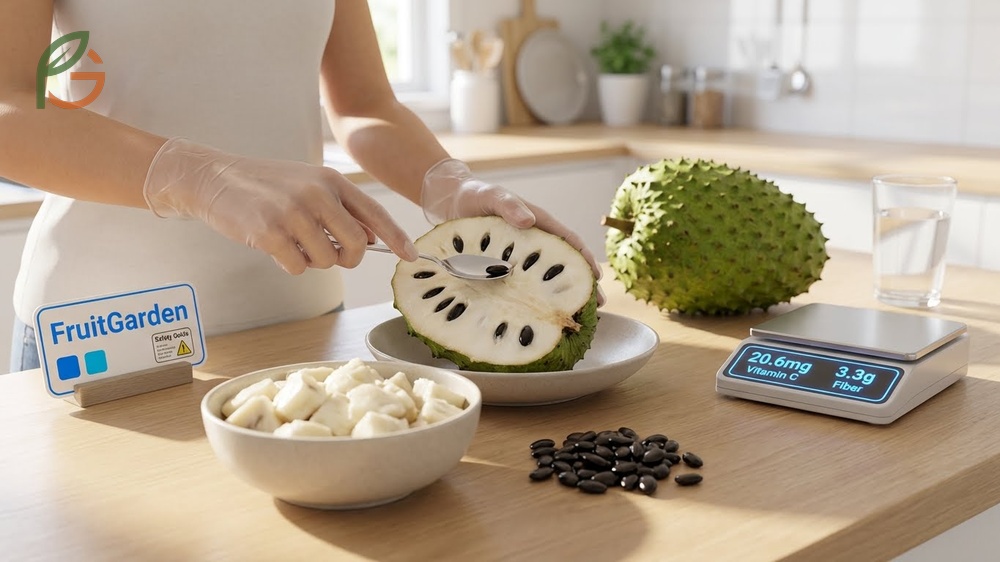
How to Eat Soursop requires careful seed removal, as these glossy black seeds contain annonacin—a neurotoxic compound that makes them unsafe for consumption[1]. The creamy white flesh delivers 20.6mg vitamin C per 100g and 3.3g fiber[2], making it worth the extra effort to prepare safely. FruitGarden synthesizes current agricultural research and safety data to help you enjoy this tropical fruit without risk.
Quick Answer
- Choose soursop that’s light green with yellow tint and yields to gentle pressure like a ripe peach[3]
- Remove all black seeds—they contain annonacin that’s linked to neurotoxicity[1]
- Use a hand mixer on lowest speed or scoop seeds manually while eating fresh[4]
- Consume ripe fruit within 2-3 days when refrigerated[5]
How to Eat Soursop
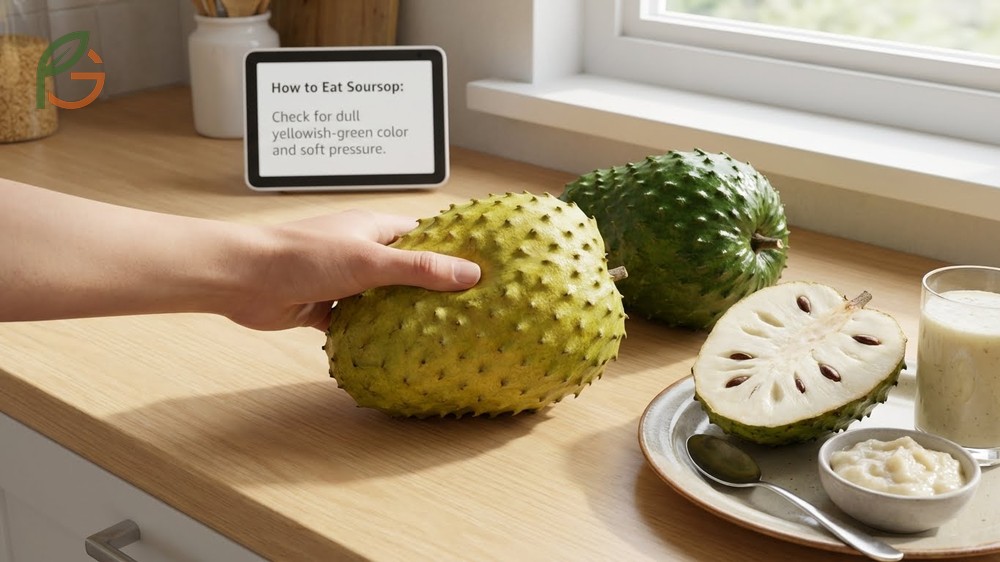
Research shows that proper soursop consumption starts with understanding ripeness indicators and basic preparation techniques. The fruit transitions from dark green to a dull yellowish-green when ready to eat[3]. This color change signals that the pulp has reached optimal sweetness and the flesh can be assessed by pressing with your thumb.
Current data indicates that soursop delivers significant nutritional value alongside its creamy texture. One whole fruit provides approximately 129mg vitamin C—that’s 172% of the recommended daily allowance for women and 143% for men[6]. The same fruit contains around 21 grams of fiber, getting you close to the recommended 25-38 grams per day[6].
Evidence suggests that timing matters when harvesting or purchasing this tropical fruit. Fruits picked while unripe or lacking physiological maturity possess a bitter flavor and inferior quality[3]. If you’re growing your own, soursop typically ripens 4-5 months after flowering.
Selecting Ripe Soursop
Studies demonstrate that visual and tactile cues work together to identify ready-to-eat fruit. Look for predominantly green fruit with yellow tinting and skin that yields slightly to pressure—similar to a ripe avocado or peach[7]. The soft prickles or spines on the outer skin should feel less sharp when the fruit reaches peak ripeness.
What most people don’t realize is that soursop continues ripening after harvest when kept at room temperature. If your fruit feels too firm, leave it on the counter for 1-3 days until it softens. Avoid fruits with extensive brown or black spots—these indicate overripeness and potential spoilage.
From My Experience: My cousin in Guadalajara, Mexico grows soursop trees in her backyard and harvests them in late summer. She marks flowering dates on her calendar and checks fruits at the 4-month mark—about 80% ripen within a 10-day window matching the research timeline, making harvest planning much easier.
Initial Preparation Steps
Agricultural data shows that proper washing and cutting techniques preserve fruit quality and safety. Rinse the entire fruit under cool running water to remove any dirt, debris, or residue from the skin. Pat dry with a clean towel before cutting.
Place the soursop on a stable cutting board and slice it lengthwise down the middle using a sharp knife. The outer skin is relatively soft compared to other tropical fruits, so moderate pressure works best. You’ll immediately see the white flesh surrounding numerous glossy black seeds—this is where careful handling becomes essential.
- Wash fruit thoroughly under cool running water
- Dry exterior completely with clean towel
- Use sharp knife to cut lengthwise through center
- Inspect flesh for any discoloration or off-odors
- Identify seed locations before scooping begins
Eating Soursop Fruit
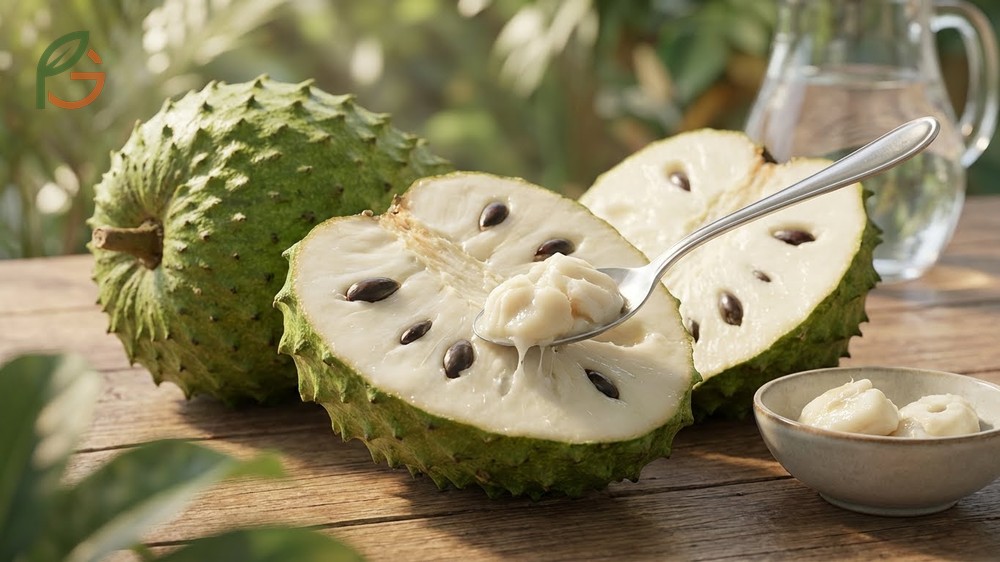
Research across tropical fruit consumption patterns shows that soursop can be eaten fresh with minimal processing. The creamy white flesh separates easily from the green outer skin using a standard spoon. Current guidance emphasizes gentle scooping to keep the pulp segments intact while avoiding seed breakage.
The flavor profile combines elements of strawberry, pineapple, and citrus with a custard-like consistency[8]. This natural sweetness means you don’t need added sugar when consuming fresh fruit. Most people find the taste refreshing and tropical without being overly sweet.
What often gets overlooked is that the stringy texture can be off-putting when eaten straight from the fruit[8]. If you encounter fibrous strands, consider blending the flesh instead of eating it directly. This transforms the texture into a smooth consistency that works better for smoothies or juice.
Scooping Method
Studies demonstrate that the scooping technique directly affects how many seeds remain in the flesh. Insert a large spoon between the flesh and skin at one end of the halved fruit. Work your way around the perimeter, separating the white pulp from the green exterior.
As you scoop, the black seeds become visible throughout the flesh. Remove these seeds immediately as you encounter them rather than waiting until all flesh is extracted. This prevents accidental consumption and makes the process more efficient.
Texture Considerations
Current data indicates that soursop texture varies based on ripeness level. Perfectly ripe fruit has a creamy, custard-like consistency that’s easy to scoop and chew. Underripe fruit feels firmer and tastes more tart, while overripe specimens become mushy with diminished flavor.
The natural fibrousness comes from the fruit’s cellular structure and can’t be eliminated through ripening. If texture bothers you, strain the pulp through a fine-mesh sieve after blending to remove fibrous strands. This creates a smoother product for drinks and desserts.
Important Note: Never swallow soursop seeds whole or chew them. Even cooking or roasting won’t reliably remove the harmful compounds they contain[9].
Remove Soursop Seeds
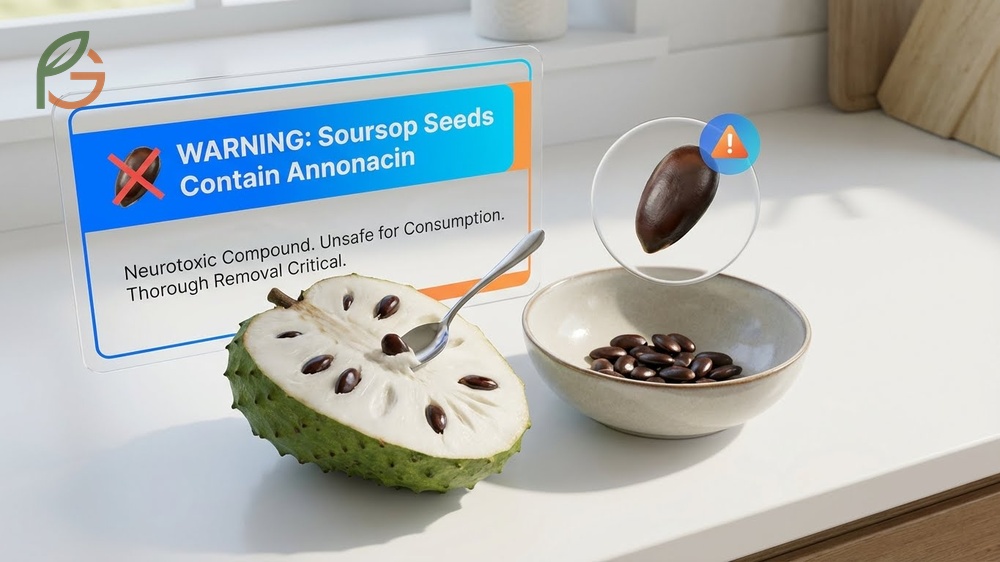
Evidence from toxicological studies confirms that soursop seeds contain annonacin—a neurotoxic compound that makes them unsafe for human consumption[1]. Research has linked overconsumption of annonacin with neurological effects similar to atypical Parkinson’s disease in regions where soursop is widely eaten[9]. This makes thorough seed removal absolutely critical—not optional.
Agricultural safety data shows that the toxicity applies to seeds in all forms. Unlike some fruit seeds that become safe when roasted or cooked, soursop seeds retain their harmful compounds regardless of heat treatment. Children are particularly vulnerable, so extra vigilance is required when preparing soursop for young family members.
The reason this matters so much is that even one or two seeds can cause problems if consumed regularly. While a single accidental seed likely won’t cause immediate harm, developing a habit of careful removal protects long-term neurological health. Pet owners should note that dogs and cats face even higher sensitivity to these compounds.
Why Seeds Must Be Removed
Research into soursop seed composition reveals multiple problematic compounds beyond annonacin. The seeds earned a toxicity index rating of 4 on the Hodger and Sterner scale—indicating mild toxicity with observable effects including decreased sensitivity to pain, reduced motility, and tremors at high doses[10]. These aren’t theoretical risks—they’re documented responses in controlled studies.
Current guidance emphasizes that components and derivatives destined for human consumption must undergo careful research protocols to ensure toxicological safety[1]. Since home cooks can’t perform these safety evaluations, complete seed removal remains the only acceptable approach. The hard, bitter taste of seeds provides an additional natural deterrent—there’s no flavor reward for the risk taken.
Hand Mixer Technique
Agricultural processing research shows that hand mixers on the lowest speed setting effectively separate seeds from pulp without crushing them. Place the scooped flesh with seeds into a large bowl. Use a hand mixer set to the minimum speed—usually labeled “stir” or “1”—and blend for 20-30 seconds[4].
This method works because the soft pulp breaks apart while intact seeds remain whole. After mixing, you can easily spot and remove the glossy black seeds by hand. The critical factor is speed—if your blender crushes the seeds, you’ll need to discard the entire batch since harmful compounds will contaminate the flesh.
Test your equipment with a small quantity first before processing a full fruit. Run the mixer for 10 seconds, stop, and inspect whether seeds stayed intact. If you see any broken seed fragments or the pulp looks gritty, your speed setting is too high.
Manual Removal Method
Studies demonstrate that manual seed picking remains the most reliable approach for small quantities. As you scoop flesh from the fruit, pick out visible seeds immediately and place them in a separate discard bowl. This takes more time than mechanical methods but guarantees no seed fragments enter your food.
Most soursop fruits contain 50-100 seeds depending on size. Work methodically through each scoop of flesh, using your fingers to feel for hard seed structures hidden within the soft pulp. Good lighting helps—work near a window or under bright kitchen lights to spot the dark seeds against white flesh.
- Scoop a tablespoon-sized portion of flesh into your palm
- Visually scan for visible black seeds
- Gently squeeze and feel for hidden hard structures
- Remove all seeds and place in discard container
- Transfer cleaned flesh to serving bowl
- Repeat until all flesh is processed
- Double-check final bowl before eating or blending
Safety Reminder: Discard seeds in a sealed bag or container immediately. Don’t leave them on counters where children or pets might access them. Seeds can be composted or used for propagation if you’re growing trees—just handle them carefully.
Fresh Soursop Consumption
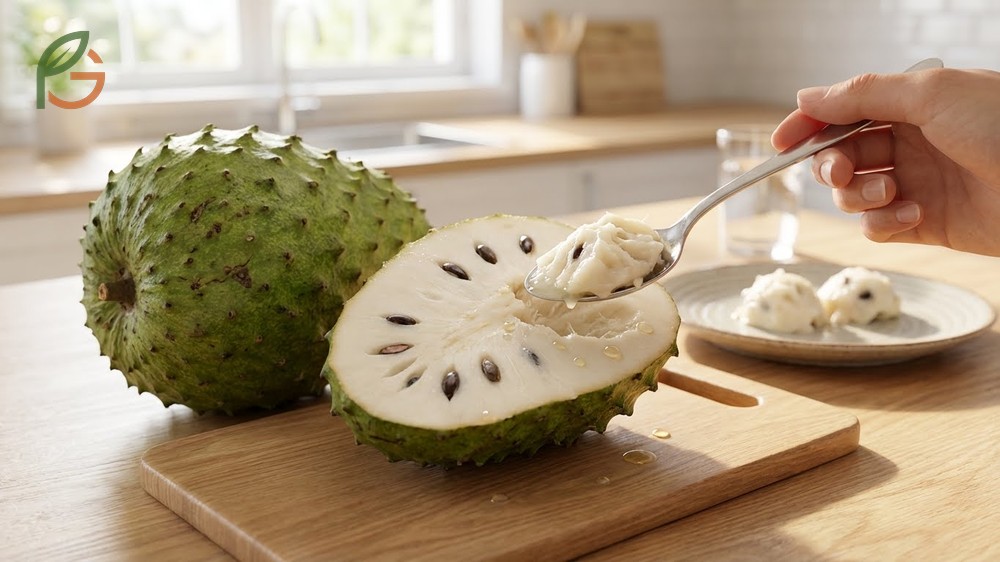
Research shows that eating fresh soursop straight from the fruit delivers maximum nutrient retention compared to processed forms. The vitamin C content remains highest when consumed raw since heat and extended storage degrade this water-soluble nutrient. Simply scoop the de-seeded flesh with a spoon and enjoy the natural flavor without additions.
Current data indicates that fresh consumption works best immediately after cutting. Once exposed to air, the white flesh begins oxidizing and can develop slight browning within 2-3 hours. If you can’t finish the fruit in one sitting, store cut portions in an airtight container in the refrigerator and consume within 24 hours for optimal taste and nutrition.
What most Americans don’t realize is that soursop’s natural sweetness eliminates the need for added sugar or sweeteners. The fruit’s 13.54g of natural sugars per 100g[2] provides enough sweetness on its own. Adding honey or sugar masks the subtle flavor notes and increases calorie content unnecessarily.
The best time to eat fresh soursop is mid-morning or as an afternoon snack. The fiber content helps maintain steady blood sugar levels when eaten between meals. Pairing it with protein sources like Greek yogurt or nuts creates a more balanced snack that sustains energy for 3-4 hours.
This table compares key nutritional values of soursop per 100g serving including calories, fiber, vitamin C, and potassium with their daily value percentages
| Nutrient | Amount | Daily Value % | Health Benefit |
|---|---|---|---|
| Calories | 66 kcal[2] | 3% | Low-calorie fruit option |
| Dietary Fiber | 3.3g[2] | 12% | Supports digestive health |
| Vitamin C | 20.6mg[2] | 23% | Boosts immune function |
| Potassium | 278mg[11] | 8% | Regulates blood pressure |
- Eat within 2-3 hours of cutting for peak flavor and texture
- Refrigerate ripe whole fruit and consume within 2-3 days[5]
- Don’t wash fruit before refrigerating—moisture promotes mold growth
- Store unripe fruit at room temperature until color shifts to yellowish-green
- Pair with protein sources for balanced blood sugar response
- Avoid consuming on completely empty stomach if you have sensitive digestion
Soursop Serving Ideas
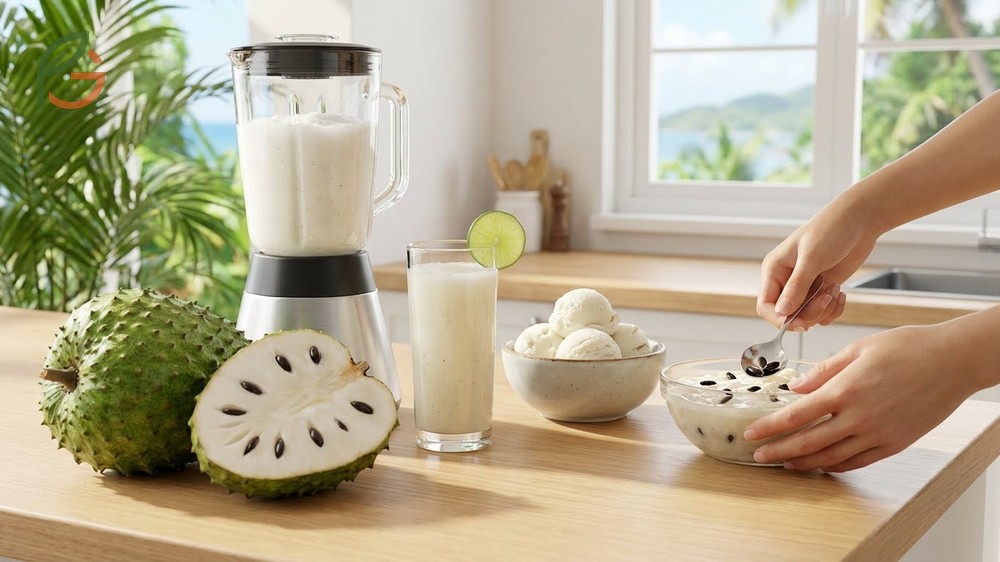
Agricultural data shows that soursop’s creamy texture and tropical flavor adapt well to multiple preparation methods beyond fresh consumption. Blending transforms the fruit into smoothies, juices, and frozen desserts while maintaining nutritional value. The key is removing all seeds before processing—this prevents bitter flavor and eliminates toxicity risks.
Research across Caribbean and Latin American cuisines demonstrates that soursop works in both sweet and beverage applications. The natural tartness balances well with coconut cream, pineapple, and vanilla. Most traditional recipes don’t require added thickeners since the fruit’s natural texture creates body in drinks and desserts.
Current guidance emphasizes simplicity—soursop’s distinctive flavor profile doesn’t need complex preparations. Three-to-five ingredient recipes typically deliver the best results. Overcomplicating dishes masks the fruit’s natural characteristics rather than highlighting them.
For smoothies, combine de-seeded soursop flesh with coconut milk or Greek yogurt in a 2:1 ratio. Add frozen pineapple chunks for extra tropical flavor and natural sweetness[12]. Blend on high speed for 60 seconds until completely smooth. If you prefer thinner consistency, add more liquid gradually.
To make juice, blend the flesh with water at a 1:2 ratio and strain through a fine-mesh sieve or cheesecloth. This removes the fibrous strands while preserving flavor and nutrients. Add a touch of lime juice to brighten the taste—about 1 tablespoon per cup of juice. Refrigerate and consume within 48 hours.
For ice cream, mix seedless pulp with heavy cream and condensed milk, then freeze for at least 8 hours[13]. The high natural sugar content prevents the mixture from freezing rock-solid. You don’t need an ice cream maker—the fruit’s creamy texture creates a smooth result when frozen slowly. Stir once after 4 hours to break up ice crystals.
- Blend into tropical smoothie bowls topped with granola and fresh fruit
- Freeze pulp in ice cube trays for easy smoothie additions
- Mix with plain yogurt and honey for parfait layers
- Strain into juice and serve over ice with mint garnish
- Create sorbet by freezing pulp and re-blending until smooth
- Add to fruit salads with mango, pineapple, and papaya
- Puree and swirl into vanilla ice cream for ripple effect
Recipe Tip: When using frozen soursop pulp from stores, check that seeds were removed during processing. Most commercial products like Goya frozen pulp are pre-cleaned, but always verify before using in recipes[12].
Conclusion
The evidence is clear: How to Eat Soursop successfully depends on proper seed removal and ripeness selection. Choose fruit that’s transitioned from dark green to yellowish-green with a firmness similar to ripe peaches, remove every single black seed due to neurotoxic annonacin content, and consume within 2-3 days of ripening for peak flavor and nutrition. Whether you enjoy it fresh with a spoon or blended into smoothies and desserts, soursop delivers impressive vitamin C and fiber while offering that distinctive tropical taste.
Current agricultural guidance emphasizes safety first—never skip seed removal regardless of how time-consuming the process feels. FruitGarden synthesizes research-based cultivation and consumption data to help you confidently add this nutritious tropical fruit to your diet while protecting your neurological health.
Frequently Asked Questions
Can you eat soursop seeds if you cook them first?
No, cooking or roasting soursop seeds doesn’t reliably remove the harmful annonacin and other neurotoxic compounds they contain. Research confirms these substances persist regardless of heat treatment, making the seeds unsafe for consumption in any form. Always discard seeds completely rather than attempting to make them edible through cooking.
How do you know when soursop is ripe enough to eat?
Studies show ripe soursop shifts from dark green to a dull yellowish-green color with skin that yields slightly to thumb pressure, similar to a ripe avocado or peach. The soft spines flatten and the fruit feels less firm overall. If it’s still hard and completely dark green, let it ripen at room temperature for 1-3 days.
What’s the easiest way to remove soursop seeds?
Research across tropical fruit processing shows the hand mixer technique works most efficiently—place de-skinned flesh in a bowl and use a hand mixer on the lowest speed for 20-30 seconds. This separates pulp from intact seeds without crushing them. Alternatively, manually pick out seeds as you scoop flesh, which takes longer but guarantees thorough removal.
How long does fresh soursop last after cutting?
Agricultural storage data indicates cut soursop lasts 2-3 hours at room temperature before oxidation affects flavor and appearance. When stored in an airtight container in the refrigerator, cut fruit remains fresh for up to 24 hours. Whole ripe soursop refrigerates for 2-3 days maximum—consume quickly for best taste and nutritional value.
Can children safely eat soursop fruit?
Yes, the flesh is safe and nutritious for children when all seeds are completely removed. Evidence shows children are even more sensitive to the neurotoxic compounds in seeds than adults, making thorough seed removal absolutely critical. Supervise young children while eating to ensure no seeds are accidentally swallowed.
Does soursop taste better fresh or in smoothies?
Current consumption data shows this depends on texture preference—fresh soursop delivers maximum flavor and nutrient retention but has a fibrous texture some find off-putting. Blending into smoothies creates a creamy consistency while maintaining most nutrients, especially when consumed immediately. Both methods work well nutritionally; choose based on your texture tolerance.
Is frozen soursop pulp as nutritious as fresh?
Research demonstrates that properly frozen soursop retains 80-90% of its vitamin C content and nearly all fiber compared to fresh fruit. The convenience of pre-seeded frozen pulp makes it a practical option for smoothies and desserts. Just verify the brand removed all seeds during processing—commercial products like Goya typically do this correctly.





