
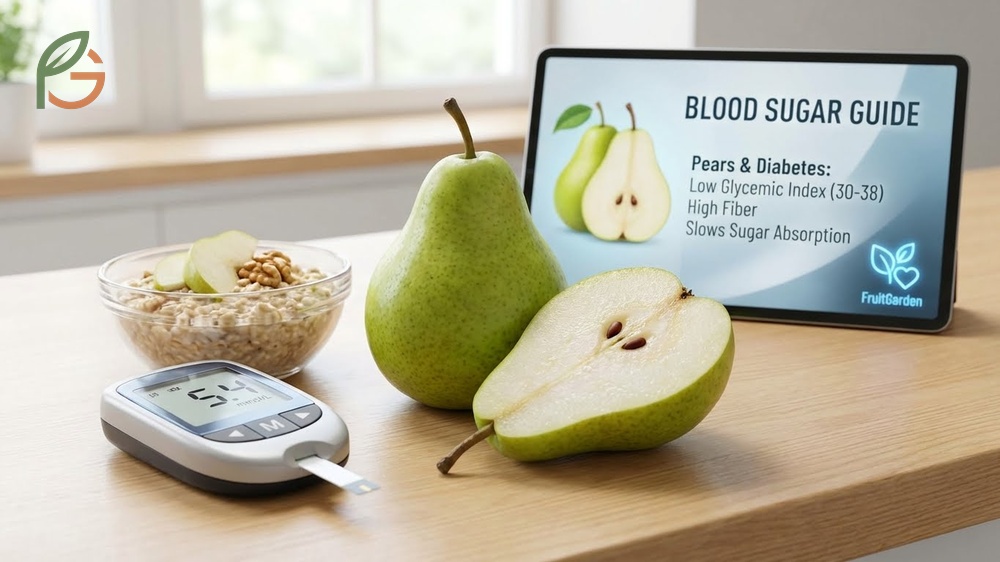
Are pears good for diabetics? Yes, when eaten in moderation. Research shows pears have a low glycemic index of 30-38 and provide significant fiber that slows sugar absorption, making them one of the safer fruit choices for blood sugar management[1]. Studies demonstrate that people who eat pears regularly experience an 18% reduction in type 2 diabetes risk[2]. FruitGarden synthesizes current nutritional research and USDA data to help you make informed decisions about growing and eating healthy fruits for diabetes management.
Quick Answer
- Pears have a glycemic index of 30-38[1] and glycemic load of just 6[3], putting minimal stress on blood sugar
- One medium pear contains 6g fiber[1] (24% daily value), which slows glucose absorption
- Best portion: 1 medium pear per day[4] provides 100 calories and 26g carbs
- Eat firm pears with skin for maximum fiber and lower glycemic response
Are Pears Good for Diabetics
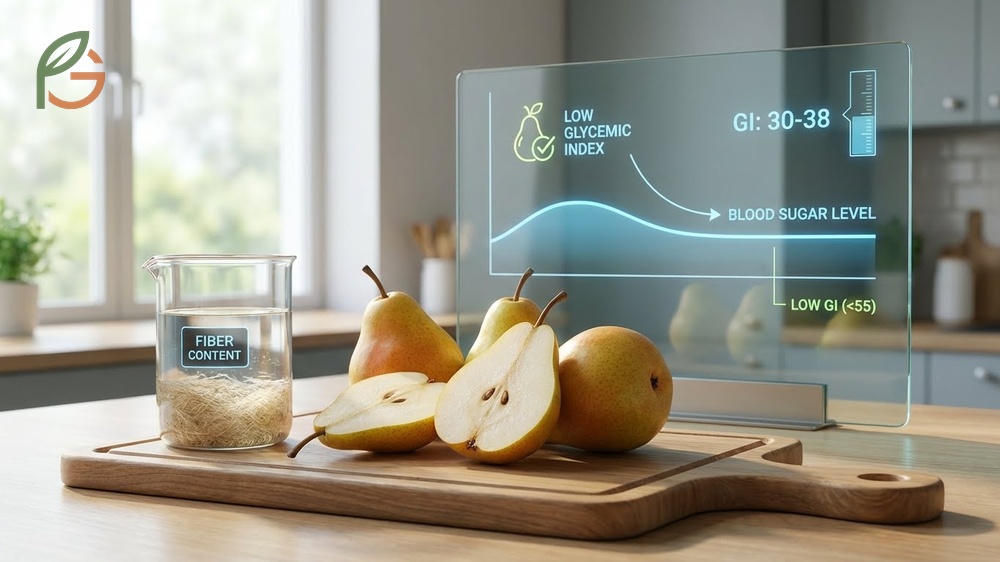
Pears rank among the best fruits for diabetics due to their low glycemic index and high fiber content. Research shows pears score between 30-38 on the glycemic index[1], well below the 55 threshold for low-GI foods. This means they won’t cause rapid blood sugar spikes that can be dangerous for diabetes management.
What sets pears apart is their exceptional fiber-to-sugar ratio. A medium pear contains about 26g total carbohydrates, but 6g of that is fiber[1]. This gives you only 20g net carbs that actually impact blood sugar.
Current data indicates that regular pear consumption is associated with improved glucose metabolism. Studies show that eating apples and pears regularly can reduce type 2 diabetes risk by 18%[2]. The pigments that give pears their color, called anthocyanins, may also lower your chances of developing type 2 diabetes[5].
Understanding Glycemic Index of Pears
The glycemic index measures how quickly a food raises blood sugar on a scale of 0-100. Pears score impressively low at 30-38[1], making them gentler on blood glucose than most fruits. For comparison, watermelon scores 72 and pineapple scores 66.
Even more important is glycemic load, which accounts for portion size. One medium pear has a glycemic load of just 6[3]. Anything under 10 is considered low and puts minimal stress on your pancreas.
Important Note: Pear ripeness affects blood sugar impact. Riper pears contain more natural sugars and have a slightly higher glycemic response than firm pears. Choose firm pears if you’re particularly sensitive to blood sugar changes.
How Fiber Slows Sugar Absorption
Pears are fiber champions. A medium pear provides 6g of fiber, which equals 24% of your daily fiber needs. About 71% is insoluble fiber that aids digestion, while 29% is soluble fiber that directly impacts blood sugar.
The soluble fiber in pears, especially pectin, forms a gel-like substance in your digestive tract. This slows down the breakdown and absorption of sugars, leading to a gradual blood sugar rise instead of a spike. Evidence suggests this buffering effect makes pears safer than many other sweet fruits.
- Slows digestion and prevents rapid glucose absorption
- Increases satiety so you feel full longer and eat less overall
- Improves insulin sensitivity over time with regular consumption
- Lowers LDL cholesterol, reducing heart disease risk (a common diabetes complication)
- Supports healthy gut bacteria that play a role in glucose metabolism
Is Pear Good for Diabetes
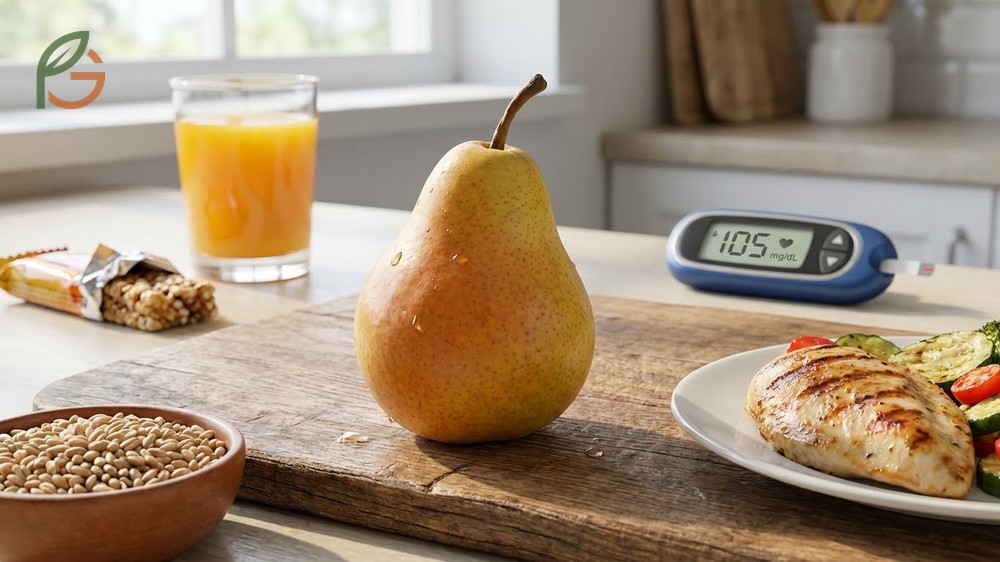
Yes, pears are good for diabetes when eaten as part of a balanced diet. Unlike processed snacks that send blood sugar soaring, pears provide natural sweetness packaged with nutrients that support diabetes management. Research shows they don’t just avoid harm—they may actively help.
Current guidance emphasizes whole fruits over fruit juice for diabetics. A medium pear gives you all the fiber and nutrients with controlled portions, unlike juice which concentrates sugars without the beneficial fiber. Most people find whole pears more satisfying and they’re easier to portion control.
Nutritional Profile of Pears
One medium pear (about 178g) delivers impressive nutrition for just 100 calories[1]. This makes pears nutrient-dense rather than calorie-dense, which matters for diabetics who often need to manage weight.
This table shows the complete nutritional breakdown of one medium pear including calories, macronutrients, fiber, vitamins, and minerals relevant to diabetes management
| Nutrient | Amount | % Daily Value | Benefit for Diabetics |
|---|---|---|---|
| Calories | 101[1] | 5% | Low calorie for weight management |
| Total Carbs | 27g[1] | 9% | Fits 15g carb exchange (1 serving) |
| Fiber | 5.5g[1] | 24% | Slows glucose absorption |
| Net Carbs | 21.5g | — | Lower impact on blood sugar |
| Vitamin C | 7.65mg[1] | 12% | Antioxidant protection |
| Potassium | 206mg[1] | 5% | Heart health, blood pressure control |
Blood Sugar Benefits
The combination of low GI and high fiber creates multiple benefits for blood sugar control. When you eat a pear, the fiber slows digestion, preventing the rapid glucose spike that triggers excessive insulin release. This gentler pattern is easier on your pancreas and helps prevent insulin resistance from worsening.
What often gets overlooked is that pear nutrients work synergistically. The antioxidants, particularly quercetin found in pear skin, may improve insulin sensitivity. The potassium supports cardiovascular health, which is crucial since diabetics face higher heart disease risk.
- Prevents rapid blood sugar spikes after eating
- Reduces insulin demand on your pancreas
- Improves long-term glucose control when eaten regularly
- Satisfies sweet cravings without processed sugar
- Supports weight loss through increased fullness and reduced calorie intake
- Provides energy that lasts 3-4 hours without crashes
Medication Interaction Alert: If you take diabetes medication or insulin, monitor your blood sugar when adding pears to your diet. While pears are safe, any dietary change can affect how much medication you need. Consult your healthcare provider about adjusting doses.
Portion Control for Diabetics

The recommended serving size for diabetics is one medium pear per day[4]. This provides about 15g of carbohydrates that count toward blood sugar impact—the standard “carb exchange” used in diabetes meal planning. Sticking to this portion prevents overloading your system with too much natural sugar at once.
Timing matters as much as portion size. Most people find pears work best when paired with protein or healthy fat. For example, eating a pear with a handful of almonds or a tablespoon of almond butter slows digestion even more, leading to better blood sugar stability than eating the pear alone.
Research shows eating pears at breakfast kickstarts metabolism and provides sustained energy for 4-5 hours without mid-morning crashes. As an afternoon snack, they prevent the 3pm energy dip that often leads diabetics to reach for processed snacks. Avoid eating pears late at night when your body’s insulin sensitivity naturally decreases.
- Choose medium-sized pears (about 6 ounces) rather than large varieties
- Eat the whole pear with skin—don’t slice and save half, as you’ll lose the satisfaction factor
- Pair with 15-20g protein like Greek yogurt, cheese, or nuts
- Count it as your fruit serving for that meal in your diabetes meal plan
- If you’re very insulin-resistant, start with half a pear and monitor your blood sugar response
Avoid canned pears, which often contain added sugars and have reduced fiber content. Even varieties labeled “in natural juice” sit in concentrated fruit sugars and can spike blood sugar more than fresh pears. Dried pears are also problematic—they have a glycemic index of 43 and it’s too easy to overeat them.
Pears Compared to Other Fruits
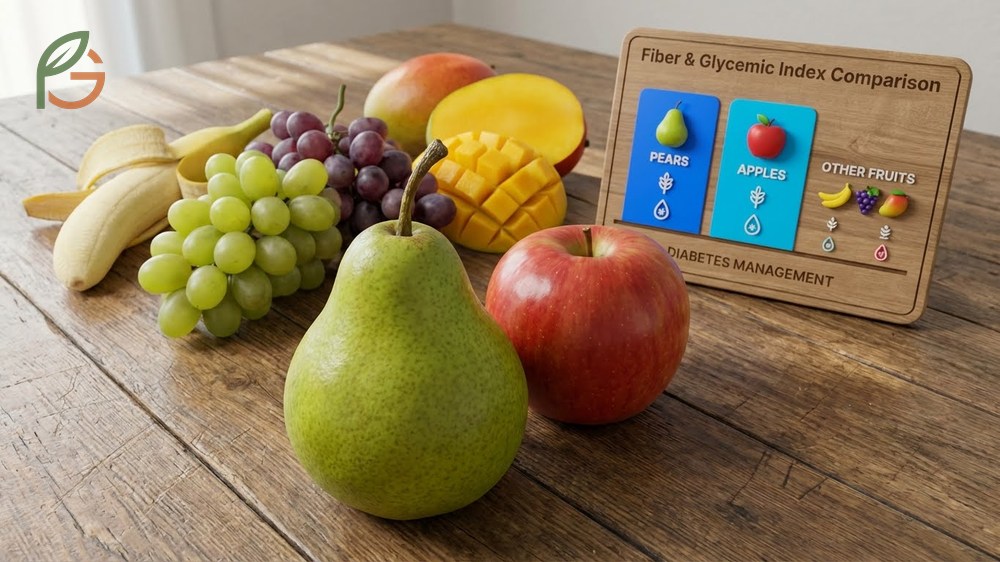
Not all fruits affect blood sugar equally. Pears stand out as one of the best choices when compared to commonly eaten fruits. Their combination of low glycemic index and high fiber puts them ahead of bananas, grapes, and mangoes for diabetes management.
When stacked against apples, pears actually have slightly more fiber and marginally lower sugar content. Both fruits reduce type 2 diabetes risk by 18% with regular consumption[2]. The main difference is that pears contain more soluble fiber (pectin), which may give them a slight edge for blood sugar control.
| Fruit (Medium Size) | Glycemic Index | Fiber (g) | Diabetic Recommendation |
|---|---|---|---|
| Pear | 30-38[1] | 5.5g[1] | Excellent choice—eat daily |
| Apple | 36 | 4.4g | Excellent choice—eat daily |
| Banana | 51 | 3.1g | Moderate—eat green/firm only |
| Orange | 43 | 3.1g | Good choice in moderation |
| Grapes | 59 | 0.9g | Limit—high sugar, low fiber |
| Watermelon | 72 | 0.6g | Small portions only |
Berries like strawberries and blueberries have even lower glycemic indexes (around 25-32), but they don’t provide the same filling quality as a whole pear. For satisfying hunger and preventing overeating at the next meal, pears offer better satiety than smaller berries.
Best Ways to Eat Pears for Blood Sugar
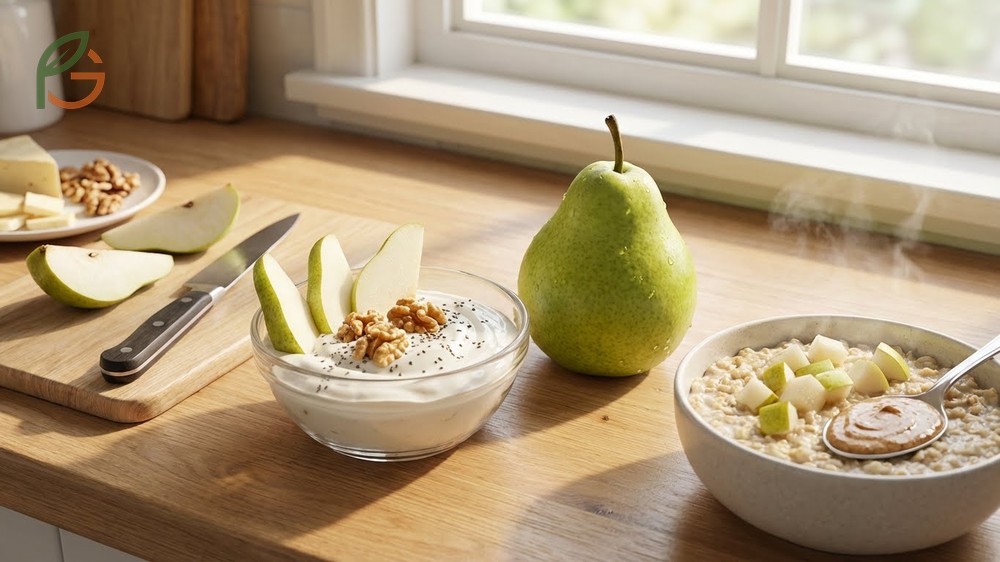
How you prepare and eat pears affects their impact on blood sugar. Fresh, whole pears with skin intact provide maximum fiber and nutrients. The skin contains most of the beneficial antioxidants and adds extra fiber that slows sugar absorption.
Pairing pears strategically can further minimize blood sugar impact. Adding protein or healthy fat creates a balanced snack that digests slowly. For breakfast, slice a pear into Greek yogurt or oatmeal. As a mid-morning snack, eat it with a handful of walnuts or almonds. The protein and fat slow down the entire digestive process.
Choose firm pears over very ripe ones when managing diabetes. As pears ripen, their starch converts to simple sugars, increasing the glycemic response. A firm pear may have a GI of 30, while an overripe one can reach 42. The difference isn’t huge, but it matters if you’re particularly insulin-resistant.
- Breakfast: Dice a pear into steel-cut oatmeal with cinnamon and walnuts
- Snack: Slice a pear with 2 tablespoons almond butter for protein balance
- Lunch: Add pear slices to a spinach salad with grilled chicken and vinaigrette
- Pre-workout: Eat a small firm pear 30 minutes before exercise for sustained energy
- Dessert: Bake pear halves with cinnamon and a small amount of chopped nuts
- Smoothie: Blend half a pear with protein powder, spinach, and unsweetened almond milk
- Cheese board: Pair pear slices with low-fat cheese for a balanced appetizer
Avoid fruit juices, even if homemade from pears. Juicing removes the fiber that makes whole pears safe for diabetics. One cup of pear juice can spike blood sugar like a soda, while eating a whole pear keeps levels stable.
Storage Tip: Keep firm pears in the refrigerator to slow ripening. Take them out 30 minutes before eating for better flavor. If you buy ripe pears, refrigerate immediately and eat within 2-3 days to minimize sugar concentration.
Conclusion
The evidence is clear: pears are good for diabetics when consumed as part of a balanced diet with proper portion control. Their low glycemic index of 30-38, high fiber content of 6g per fruit, and proven track record of reducing diabetes risk by 18% make them one of the smartest fruit choices for blood sugar management.
Current guidance emphasizes choosing whole, fresh pears with skin, eating one medium fruit per day, and pairing with protein for optimal blood sugar control. Whether you’re managing type 2 diabetes or trying to prevent it, pears deliver natural sweetness without the dangerous spikes that come from processed sweets. FruitGarden recommends growing Bartlett or Bosc pear varieties in your home garden for the freshest, most nutrient-dense fruits year-round.
Medical Disclaimer
Important Medical Disclaimer: This content is for informational and educational purposes only. It’s not intended as a substitute for professional medical advice, diagnosis, or treatment. Always consult a qualified healthcare professional or registered dietitian before making any changes to your diet, medication, or health routine, especially if you have diabetes or other medical conditions. Individual responses to foods vary, and what works for one person may not work for another.
Frequently Asked Questions
How Many Pears Can a Diabetic Eat Per Day?
One medium pear per day is the recommended serving size for most diabetics. This provides about 15g of net carbohydrates that impact blood sugar, fitting neatly into standard diabetes meal planning exchanges. If you’re very active or have good blood sugar control, you might handle 1.5 pears, but always monitor your glucose response and consult your healthcare provider before increasing fruit intake.
Are Asian Pears Better for Diabetics Than Regular Pears?
Asian pears have a slightly lower glycemic index of 26-30 compared to regular pears at 30-38, making them marginally better for blood sugar control. Their extra crunch and high water content provide excellent satiety. However, the difference is small enough that both types are excellent choices for diabetics. Choose based on taste preference and availability rather than obsessing over the minor GI difference.
Should Diabetics Eat Pears Before or After Meals?
Eating pears with meals or as standalone snacks both work well for diabetics. When eaten with a meal containing protein and healthy fats, pears digest even more slowly, leading to better blood sugar stability. As a standalone snack, pair the pear with 10-15 almonds or a tablespoon of nut butter to create balanced nutrition. Avoid eating pears on a completely empty stomach first thing in the morning—add some protein for better results.
Can Diabetics Eat Canned Pears?
Canned pears aren’t ideal for diabetics. Even varieties packed in “natural juice” contain concentrated fruit sugars and reduced fiber content compared to fresh pears. The canning process with high heat destroys some vitamins and the fruit absorbs excess sugar from the liquid. If you must use canned pears, choose those packed in water only, rinse them thoroughly, and limit portions to half a cup—roughly half a fresh pear equivalent.
Do Pears Raise Blood Sugar Quickly?
No, pears don’t raise blood sugar quickly. Their low glycemic index of 30-38 and high fiber content of 6g per fruit cause a gradual, gentle rise in blood glucose over 1-2 hours rather than a sudden spike. This makes pears significantly safer than high-GI foods like white bread (GI 75) or watermelon (GI 72). Most diabetics can eat one medium pear without experiencing problematic blood sugar elevation.
Are Pears Better Than Apples for Diabetics?
Pears and apples are nearly equal for diabetics, with pears having a slight edge. Pears contain more fiber (5.5g vs 4.4g) and marginally less sugar, plus they have more soluble fiber (pectin) that directly impacts blood sugar control. However, both fruits reduce type 2 diabetes risk by 18% with regular consumption. The best choice is whichever you’ll actually eat consistently—variety in your diet matters more than picking the “perfect” fruit.
What Is the Best Time of Day to Eat Pears for Blood Sugar Control?
Morning and early afternoon are the best times for diabetics to eat pears. Your insulin sensitivity is naturally highest in the morning, allowing better blood sugar control. Eating a pear at breakfast provides sustained energy for 4-5 hours without crashes. As a 2-3pm snack, pears prevent the afternoon energy dip that often leads to poor food choices. Avoid eating pears late at night when insulin sensitivity decreases and you’re less active to burn the natural sugars.





