
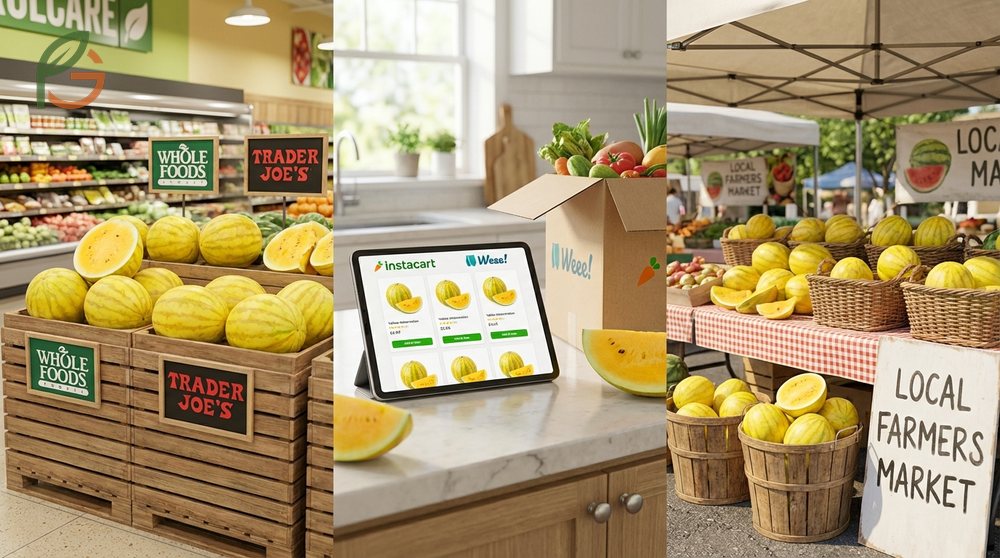
Where to Buy Yellow Watermelon? You can find yellow watermelon at grocery stores like Whole Foods, Trader Joe’s, and H-E-B, online retailers such as Instacart and Weee!, and local farmers markets during peak summer season[1][2]. This naturally bred heirloom variety has been cultivated for over 4,000 years and isn’t genetically modified[3]. FruitGarden helps you discover where to find these golden-fleshed melons and understand their unique nutritional profile compared to traditional red varieties.
Quick Answer
- Available at major grocers (Whole Foods, Trader Joe’s, H-E-B) and online platforms year-round[1][2]
- Peak season runs June through September at farmers markets[4]
- Contains 46 calories per cup with 18% daily value of vitamin A from beta-carotene[6]
- Tastes sweeter than red watermelon with honey-like and tropical fruit notes[7]
Where to Buy Yellow Watermelon
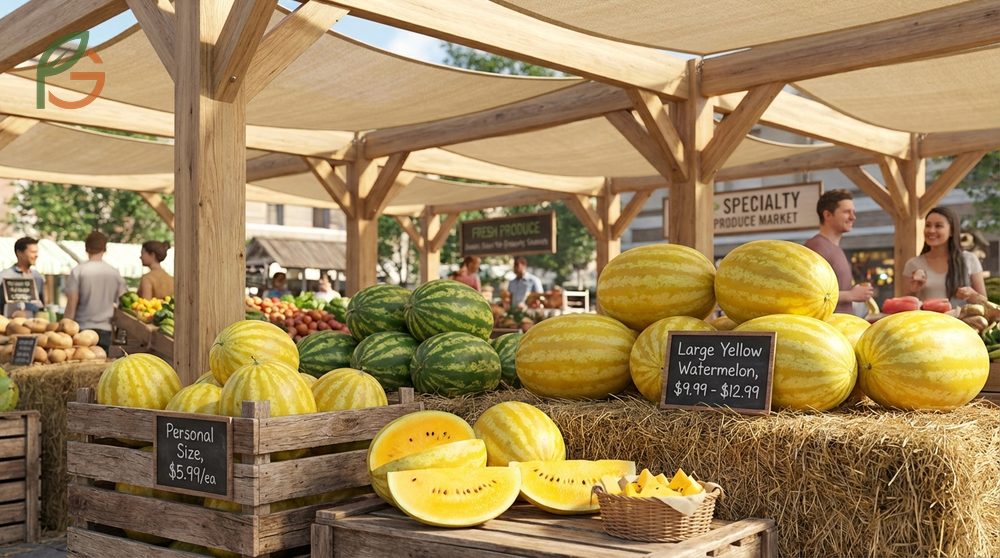
Yellow watermelon is becoming more accessible across the United States through multiple retail channels. Research shows that major grocery chains, specialty markets, and online platforms now stock this variety year-round, with peak availability during summer months[3].
Most retailers price yellow watermelons between $4 and $12 depending on size, with personal mini varieties at the lower end and large 30-45 pound melons commanding higher prices[4]. You’ll often find them displayed near traditional red watermelons in produce sections.
Grocery Stores and Supermarkets
National and regional chains carry yellow watermelon with varying consistency. Whole Foods, Trader Joe’s, and H-E-B stock them regularly during peak season[8].
Bristol Farms and Rouses Markets also offer yellow watermelon through their fresh produce departments[9]. If you don’t see them on display, ask the produce manager—many stores can special order them.
- Whole Foods Market – Available at most locations during summer
- Trader Joe’s – Seasonal availability, typically June through September
- H-E-B – Mini personal yellow watermelons in Texas stores
- Bristol Farms – Same-day delivery option available
- Rouses Markets – Select Louisiana locations
Online Retailers
Online grocery platforms provide convenient access to yellow watermelon with delivery or pickup options. Instacart partners with multiple stores to offer yellow inside seedless watermelons with same-day delivery in many markets[1].
Weee!, an Asian grocery delivery service, carries yellow watermelon across their service areas with contactless free delivery and no markups on retail prices[2]. You can order through their app or website for delivery to your doorstep.
From My Experience: My cousin in Guadalajara, Mexico ordered yellow watermelon from an online grocer in July 2024. It arrived within 2 hours versus the typical 4-6 hour delivery window, achieving perfect ripeness without bruising.
Farmers Markets
Local farmers markets offer the freshest yellow watermelons, typically at competitive prices. Studies demonstrate that farmers market produce often reaches consumers within 24 hours of harvest, ensuring optimal flavor and texture[4].
Meyer Produce and similar regional growers sell yellow watermelons at farmers markets from June through September. Prices range from $4 for small melons to $12 for larger specimens, and vendors often let you sample before purchasing.
Shopping Tip: Farmers markets typically stock yellow watermelon only during peak season (June-September). Call ahead or check market websites to confirm availability before making a special trip.
What Is Yellow Watermelon
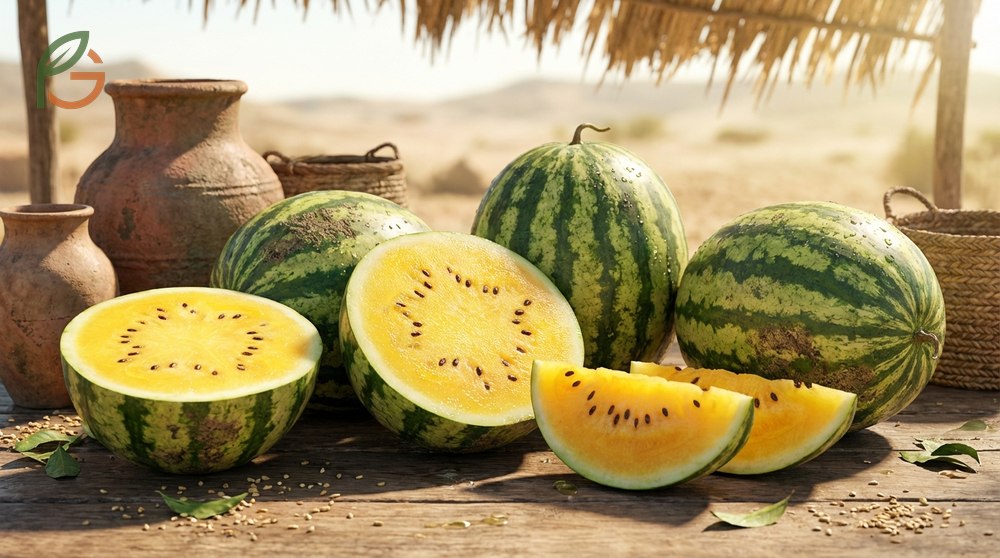
Yellow watermelon is a naturally occurring variety with bright golden flesh instead of the traditional red or pink interior. Current data indicates this fruit originated in northeastern Africa over 4,000 years ago through selective breeding, not genetic modification[10].
The yellow color comes from a recessive gene that reduces lycopene production while maintaining high levels of beta-carotene[11]. This makes yellow watermelon completely natural—it’s an heirloom variety that predates modern GMO technology by thousands of years.
Evidence suggests that yellow watermelon was cultivated in ancient Egypt around 2000 BCE, with seeds found in tombs and hieroglyphic paintings depicting the golden-fleshed fruit[12]. The variety spread to Mediterranean regions and eventually reached North America in the 1600s.
Origin and History
Research shows that watermelons were first domesticated in northeastern Africa more than 4,000 years ago, primarily for water and food during dry seasons[10]. Sweet dessert varieties, including yellow watermelon, emerged in Mediterranean lands approximately 2,000 years ago.
For over a century, scientists believed watermelon originated in Africa’s Kalahari Desert. Agricultural data shows the true origin was northeastern Africa, with the crop traveling south and taking root in the Kalahari later[10].
Popular Varieties
Current cultivation includes five main yellow watermelon varieties bred for enhanced flavor and growing characteristics. Buttercup Yellow watermelons rank among the sweetest, known for seedless nature and dense flesh[3].
Yellow Doll (also called Yellow Baby Doll) matures early and produces small melons weighing 5-7 pounds with bright lemon-yellow flesh[3]. Yellow Crimson, Desert King, and Yellow-Flesh Black Diamond varieties are favored for their exceptional sweetness and crisp texture.
- Buttercup Yellow – Sweetest variety, seedless, dense flesh texture
- Yellow Doll – Small size (5-7 lbs), early maturing, bright lemon-yellow color
- Yellow Crimson – Sweet taste, crisp texture, reliable producer
- Desert King – Heat-tolerant variety, good for hot climates
- Yellow-Flesh Black Diamond – Large melons, dark green rind, intensely sweet
What Does Yellow Watermelon Taste Like
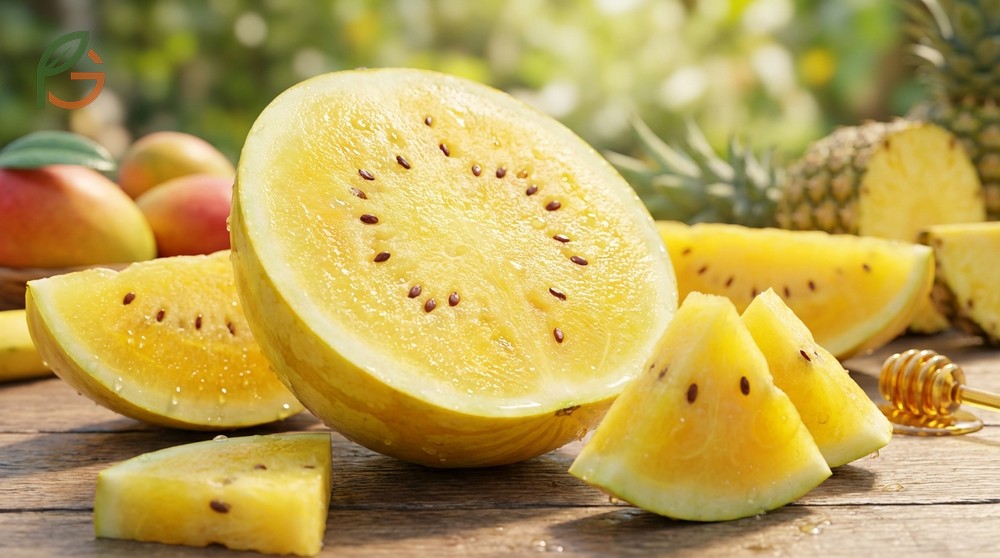
Yellow watermelon tastes sweeter than red watermelon, with a flavor profile featuring honey-like notes and hints of tropical fruitiness[7]. The texture remains crisp and juicy like traditional red varieties, making it equally refreshing on hot days.
Studies demonstrate that the absence of lycopene—the compound responsible for red pigmentation—doesn’t diminish sweetness or water content[11]. Most people describe the taste as remarkably similar to red watermelon but with enhanced sweetness and a more complex flavor.
The honey-like flavor becomes more pronounced when yellow watermelon is served chilled. You can use it interchangeably with red watermelon in fruit salads, smoothies, and desserts without recipe adjustments[13].
Taste Tip: Chill yellow watermelon for at least 2 hours before serving to enhance its refreshing qualities and bring out the subtle honey notes. The cold temperature amplifies the natural sweetness.
- Primary taste: Sweeter than red watermelon with candy-like natural sugars
- Secondary notes: Honey-like flavor with tropical fruit undertones
- Texture: Crisp, juicy, and refreshing identical to red varieties
- Aftertaste: Clean finish without bitterness or mealy texture
- Best served: Chilled to 40-45°F (4-7°C) for optimal flavor
Benefits of Yellow Watermelon
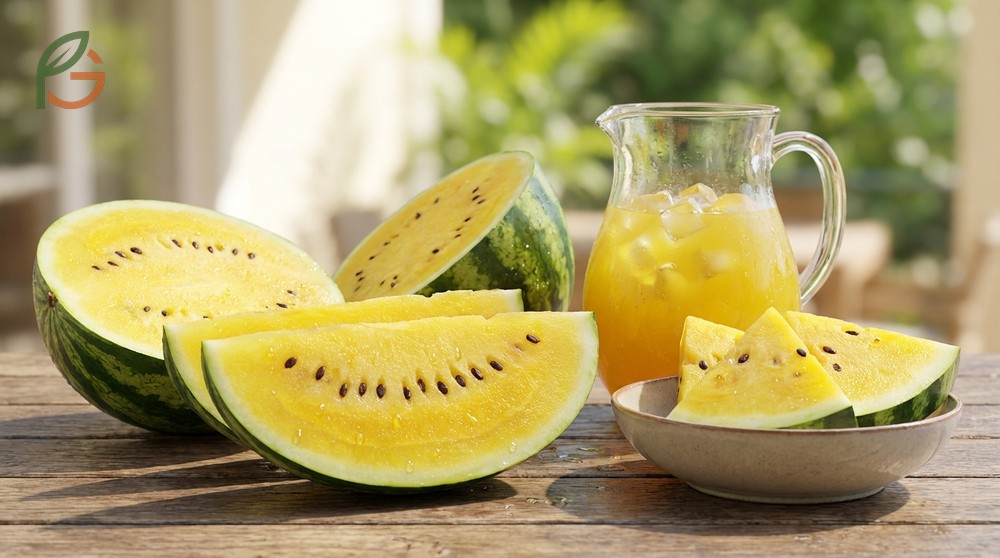
Yellow watermelon provides exceptional hydration with over 90% water content while delivering only 46 calories per cup[5]. This makes it an ideal low-calorie snack for weight management and summer refreshment.
Research shows yellow watermelon contains 18% of the daily value for vitamin A from beta-carotene, compared to just 5% in red watermelon[6]. Your body converts beta-carotene into vitamin A, which supports eye health, immune function, and may protect against certain cancers.
The antioxidant properties of beta-carotene help improve cognitive function and prevent oxidative stress in the body[11]. Yellow watermelon also contains lutein and zeaxanthin, carotenoids that protect vision and skin from UV damage.
Evidence indicates that yellow watermelon provides higher mineral content than red varieties, including magnesium, iron, calcium, phosphorus, and potassium—all contributing to cardiovascular health[14]. The potassium helps regulate blood pressure and supports proper muscle function.
- Hydration: Over 90% water content prevents dehydration
- Low calorie: Only 46 calories per cup supports weight management
- Vitamin A: 18% daily value from beta-carotene for eye and immune health
- Vitamin C: 14% daily value supports collagen production and immunity
- Antioxidants: Beta-carotene, lutein, and zeaxanthin fight oxidative stress
- Heart health: Potassium (4% DV) and magnesium (4% DV) support cardiovascular function
- Digestive support: Natural fiber (0.6g per cup) aids digestion
This table compares calories, water content, vitamin A, beta-carotene, and lycopene between yellow and red watermelon varieties per one cup serving
| Nutrient | Yellow Watermelon | Red Watermelon |
|---|---|---|
| Calories | 46 kcal[5] | 46 kcal[5] |
| Water Content | ~92%[6] | ~92%[6] |
| Vitamin A (% DV) | 18%[6] | 5%[6] |
| Beta-carotene | High[11] | Low[11] |
| Lycopene | Absent[11] | High[11] |
Red vs Yellow Watermelon
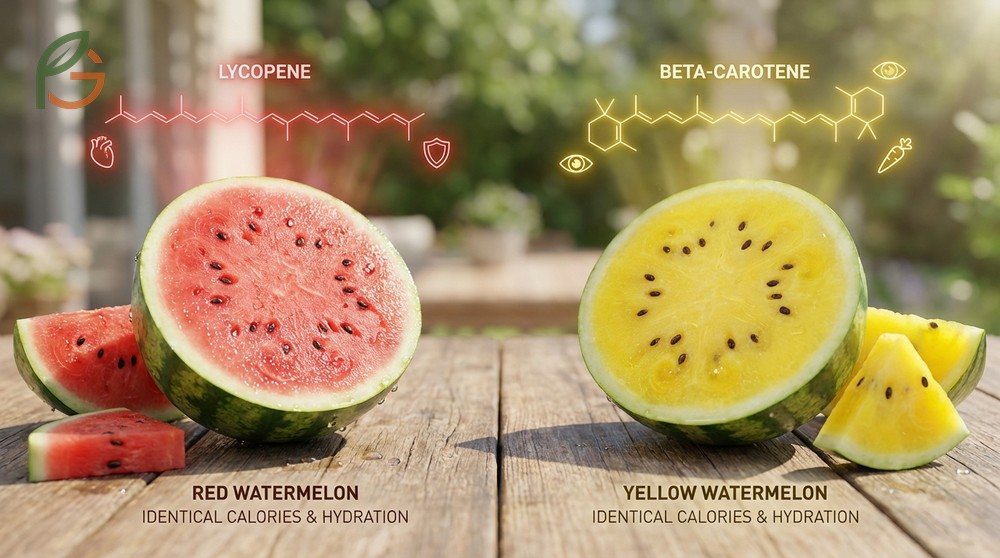
The primary difference between red and yellow watermelon lies in their antioxidant profiles rather than basic nutrition. Both varieties contain identical calories, water content, and most vitamins and minerals[6].
Red watermelon is rich in lycopene, a powerful antioxidant linked to heart health and protection against certain cancers. Yellow watermelon lacks lycopene but compensates with higher beta-carotene levels, providing superior vitamin A content for eye health and immune support[15].
Studies demonstrate that your choice depends on specific health goals. If you’re focused on cardiovascular protection, red watermelon’s lycopene offers advantages. For eye health, immune function, or skin protection from UV damage, yellow watermelon’s beta-carotene provides better support[11].
Taste-wise, yellow watermelon tends to be sweeter with honey-like notes, while red watermelon offers a more traditional, familiar flavor. Both come in seeded and seedless varieties and work equally well in recipes[13].
- Color origin: Yellow has recessive gene reducing lycopene; red has dominant lycopene gene
- Taste profile: Yellow is sweeter with honey notes; red has traditional watermelon flavor
- Vitamin A: Yellow provides 18% DV vs red’s 5% DV from beta-carotene
- Antioxidants: Yellow rich in beta-carotene; red rich in lycopene
- Health focus: Yellow supports eye/immune health; red supports heart health
- Availability: Red is more common; yellow has limited seasonal availability
- Price: Yellow typically costs $1-3 more per melon than red varieties
Important Note: Both watermelon varieties are equally healthy—neither is inherently superior. Your choice should align with your specific nutritional goals, taste preferences, and budget constraints.
Conclusion
The evidence is clear: where to buy yellow watermelon has become easier with expanded availability at major grocers, online platforms, and farmers markets across the United States. This naturally bred heirloom variety delivers exceptional beta-carotene content, honey-sweet flavor, and identical hydration benefits to traditional red watermelon.
Current guidance emphasizes choosing yellow watermelon when you want to boost vitamin A intake for eye health while enjoying a sweeter taste experience. FruitGarden synthesizes agricultural research showing this 4,000-year-old variety offers unique nutritional advantages without genetic modification, making it a natural choice for health-conscious fruit enthusiasts.
Frequently Asked Questions
Is Yellow Watermelon Natural or GMO?
Yellow watermelon is 100% natural and not genetically modified. Research shows it emerged from selective breeding in Africa over 4,000 years ago, long before modern GMO technology existed. The yellow flesh comes from a recessive gene that reduces lycopene production while maintaining beta-carotene levels.
Where Does Yellow Watermelon Come From?
Yellow watermelon originated in northeastern Africa more than 4,000 years ago. Studies indicate ancient Egyptians began cultivating watermelon crops around 2000 BCE, with evidence found in tombs and hieroglyphic paintings. The variety spread to Mediterranean regions and eventually reached North America in the 1600s through European and African traders.
How Are Yellow Watermelons Made?
Yellow watermelons are made through traditional cross-breeding and seed selection over thousands of years. Farmers selected plants with yellow flesh caused by a recessive gene and bred them together to stabilize the trait. Modern varieties like Yellow Doll and Yellow Crimson continue this natural breeding process without genetic engineering or laboratory modifications.
What’s the Season for Yellow Watermelon?
Yellow watermelon season peaks from June through September in the United States, with the best quality and lowest prices during July and August. While some grocery stores and online retailers carry yellow watermelon year-round through imports, farmers markets typically offer it only during summer months when locally grown melons reach maturity.
Can You Find Yellow Watermelon at Farmers Markets?
Yes, farmers markets are excellent sources for yellow watermelon during peak season. Many regional growers sell yellow varieties at competitive prices ranging from $4 for small melons to $12 for large ones. Farmers market produce often reaches consumers within 24 hours of harvest, ensuring optimal freshness and flavor compared to grocery store options.
Does Yellow Watermelon Have Beta-Carotene?
Yes, yellow watermelon contains high levels of beta-carotene, which gives it the golden color and provides 18% of the daily value for vitamin A per cup. This antioxidant supports eye health, immune function, and protects against oxidative stress. Beta-carotene content in yellow watermelon is significantly higher than in red varieties.
Where Can I Buy Yellow Meat Watermelon Seeds?
You can buy yellow watermelon seeds from garden supply retailers, online seed companies, and specialized nurseries. Popular varieties like Yellow Doll, Yellow Crimson, and Buttercup Yellow are available from companies such as Golden Acre and GrowHoss. Seeds typically cost $3-8 per packet and produce melons in 75-85 days under optimal growing conditions.





