
How many calories in watermelon? One cup of diced watermelon contains 46 calories, a medium wedge has 86 calories, and a whole watermelon averages 1,360 calories.[1][2] Research shows that watermelon’s low calorie density—just 30 calories per 100 grams—makes it an excellent choice for weight management and hydration.[3] FruitGarden synthesizes current nutritional research to help you make informed choices about growing and consuming watermelons.
Quick Answer
How Many Calories in Watermelon
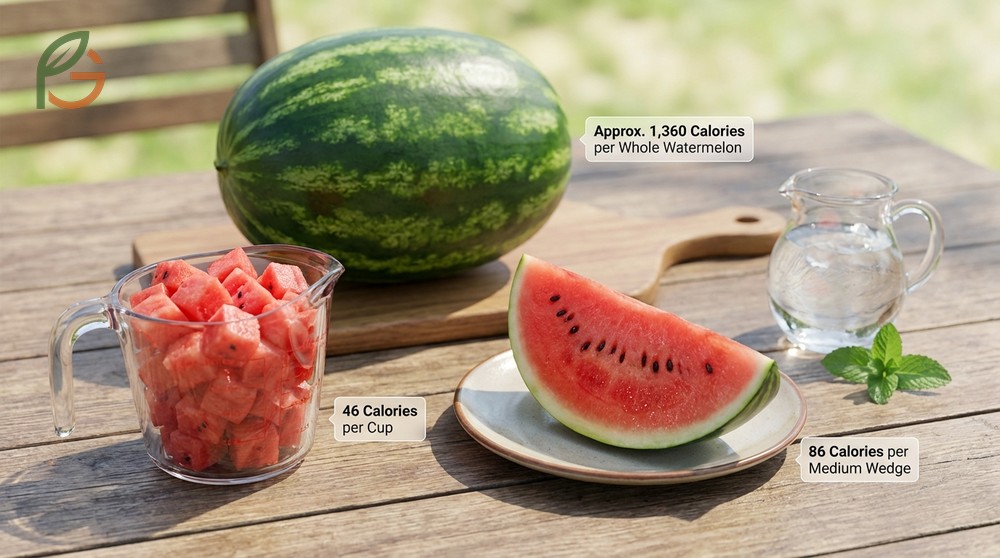
Watermelon calories vary significantly by portion size. Current nutritional data from the USDA confirms that watermelon ranks among the lowest-calorie fruits available during summer months.[1] The fruit’s exceptional water content—approximately 91-92%—dilutes its calorie density to just 30 calories per 100 grams.[4]
Understanding portion-specific calorie counts helps you track intake accurately. Most people underestimate serving sizes when consuming watermelon at picnics or barbecues, leading to unintentional overconsumption. Research shows that visual estimation of watermelon portions can differ by 40-60% from actual measurements.[3]
The calorie content remains consistent across watermelon varieties—whether seedless, yellow-fleshed, or traditional red types. Weight and volume determine calories, not color or seed presence. For home gardeners growing watermelons, harvest timing doesn’t significantly affect calorie density, though it does impact sugar concentration.
Calories in One Cup of Watermelon
One cup of diced watermelon weighing 152 grams delivers exactly 46 calories.[1] This standard measurement represents the most practical serving size for meal planning and calorie tracking. The cup provides 12 grams of carbohydrates, less than 1 gram of protein, and negligible fat content.[3]
Studies demonstrate that one cup satisfies the sweet craving while providing substantial hydration. You’re getting 139 milliliters of water per cup—equivalent to slightly more than half a standard glass.[6] For breakfast or post-workout snacks, this portion delivers vitamins A and C without derailing weight management goals.
Calories in a Watermelon Slice
A standard watermelon wedge or slice (1/16th of a whole melon) weighing 286 grams contains 86 calories.[2] This represents the typical serving you’d find at summer gatherings. The wedge delivers 21.6 grams of total carbohydrates and 1.1 grams of fiber.[3]
For gardeners harvesting homegrown watermelons, slice thickness affects accuracy. A 1-inch-thick round slice weighs approximately 570 grams and contains roughly 170 calories. What most people don’t realize is that rind weight accounts for 30-35% of total melon mass, meaning edible portions yield fewer calories than the whole fruit suggests.
Important Note: Slice sizes vary dramatically between picnic-style wedges and restaurant servings. Always weigh your portion for accurate tracking if you’re monitoring calorie intake closely.
Calories in a Whole Watermelon
An entire watermelon averaging 20-25 pounds contains approximately 1,360 calories total.[2] However, the edible flesh represents only 14-18 pounds of this weight, with the rind accounting for the remainder.[7] This means you’re actually consuming calories from 60-70% of the total weight.
Commercial watermelons range from 10 pounds for personal-sized varieties up to 40 pounds for large picnic melons. Smaller 10-pound watermelons contain roughly 680 calories, while 30-pound giants pack about 2,040 calories. Most grocery store watermelons fall within the 18-22 pound range, making 1,360 calories a reliable average estimate.
Carbs in Watermelon
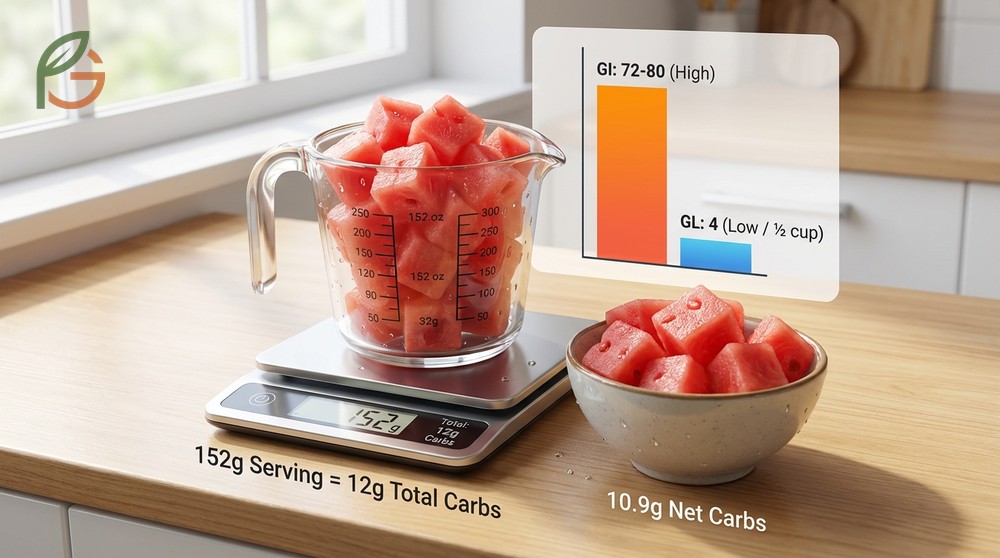
Watermelon contains 12 grams of carbohydrates per 152-gram cup serving.[1] These carbs consist primarily of simple sugars rather than complex starches. The glycemic index of watermelon ranges from 72-80, which qualifies as high, but the glycemic load per serving remains low at just 4 for a half-cup portion.[3]
For individuals following low-carb or ketogenic diets, watermelon poses challenges. One cup delivers 10.9 grams of net carbs (total carbs minus fiber), which can consume 20-40% of a strict keto dieter’s daily carb allowance.[3] The high water content doesn’t offset the carb impact for those monitoring blood sugar or ketosis.
Evidence suggests timing carbohydrate intake from watermelon around physical activity optimizes absorption. Consuming watermelon 30-60 minutes post-workout helps replenish glycogen stores without causing excessive insulin spikes. The natural sugars provide quick energy recovery for gardeners after hours of outdoor labor.
Sugar Content in Watermelon
Each cup of watermelon delivers 9.4 grams of natural sugars, representing about 78% of total carbohydrate content.[3] The sugar composition breaks down as 50% fructose, 25% glucose, and less than 25% sucrose, with trace amounts of other sugars. This fructose-heavy profile means watermelon metabolizes differently than glucose-dominant fruits like grapes.
For weight management, sugar content matters less than portion control. Research shows that whole fruit consumption, even with higher sugar content, doesn’t correlate with weight gain when calories remain balanced. The fiber and water in watermelon slow sugar absorption compared to processed sweeteners or fruit juices.
- 1 cup diced watermelon: 9.4 grams sugar
- 1 medium wedge (286g): 17.7 grams sugar
- 100-gram serving: 6.2 grams sugar
- Whole 20-pound watermelon: approximately 850 grams sugar
- 2-cup serving (Weight Watchers ZeroPoint): 18.8 grams sugar
Fiber in Watermelon
Watermelon provides minimal dietary fiber—only 0.6 grams per cup or 0.4 grams per 100 grams.[1][2] This classifies watermelon as a poor fiber source compared to berries, apples, or pears. The low fiber content contributes to faster digestion and quicker blood sugar elevation.
Despite limited fiber, watermelon contains FODMAPs (fermentable carbohydrates) due to its fructose content. Individuals with fructose malabsorption or IBS may experience digestive discomfort from large servings. Starting with smaller portions—half a cup initially—helps gauge personal tolerance before increasing intake.
Macros of Watermelon
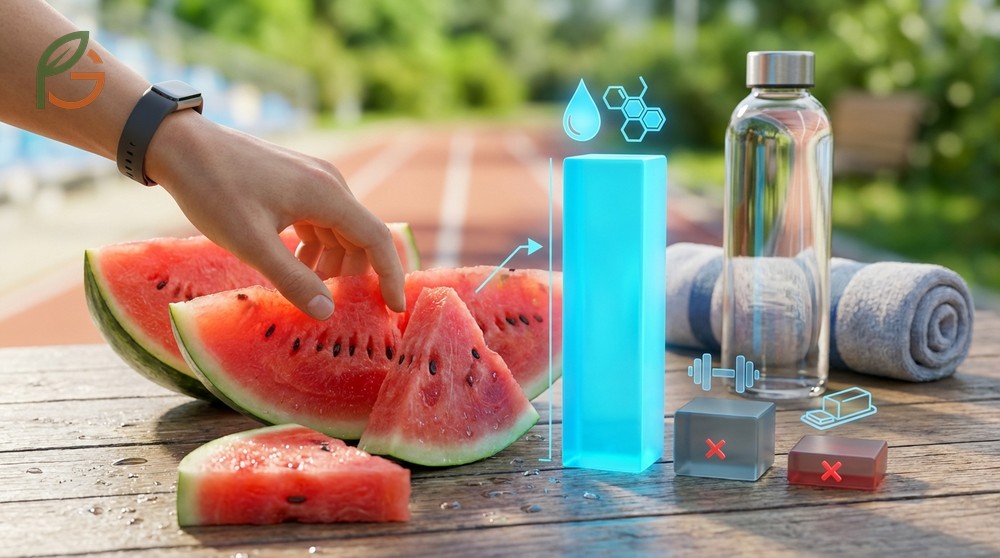
Watermelon’s macronutrient profile consists almost entirely of carbohydrates, with negligible protein and fat. Per 100-gram serving, you get 7.6 grams carbs, 0.6 grams protein, and 0.2 grams fat.[2] This makes watermelon unsuitable as a protein or fat source but excellent as a hydrating carbohydrate option for active individuals.
The protein content in watermelon won’t contribute meaningfully to daily requirements. Athletes or individuals following high-protein diets need to pair watermelon with protein sources like Greek yogurt, cottage cheese, or nuts. For gardeners planning nutritional diversity, consider growing protein-rich crops alongside watermelon vines.
This table compares macronutrient distribution across different watermelon serving sizes from 100 grams to a whole melon
| Serving Size | Calories | Carbs | Protein | Fat |
|---|---|---|---|---|
| 100g | 30[2] | 7.6g | 0.6g | 0.2g |
| 1 cup (152g) | 46[1] | 12g | 0.9g | 0.2g |
| 1 wedge (286g) | 86[2] | 21.6g | 1.7g | 0.4g |
| Whole melon (20 lbs) | 1,360[2] | 354g | 26g | 9g |
Agricultural data shows that watermelon’s macro ratio (95% carbs, 4% protein, 1% fat by calories) remains consistent across growing conditions. Soil fertility, irrigation practices, and ripeness don’t significantly alter the carbohydrate-dominant profile. Home gardeners can expect similar nutritional values whether growing in sandy or clay-rich soils.
- Zero cholesterol and minimal sodium (1mg per cup)
- Contains all 9 essential amino acids but in insufficient quantities for complete protein
- Provides 139ml water per cup, contributing to hydration beyond macronutrients
- Fat content primarily consists of polyunsaturated fatty acids
- Net carbs (total carbs minus fiber) average 10.9g per cup
Water Content Percentage
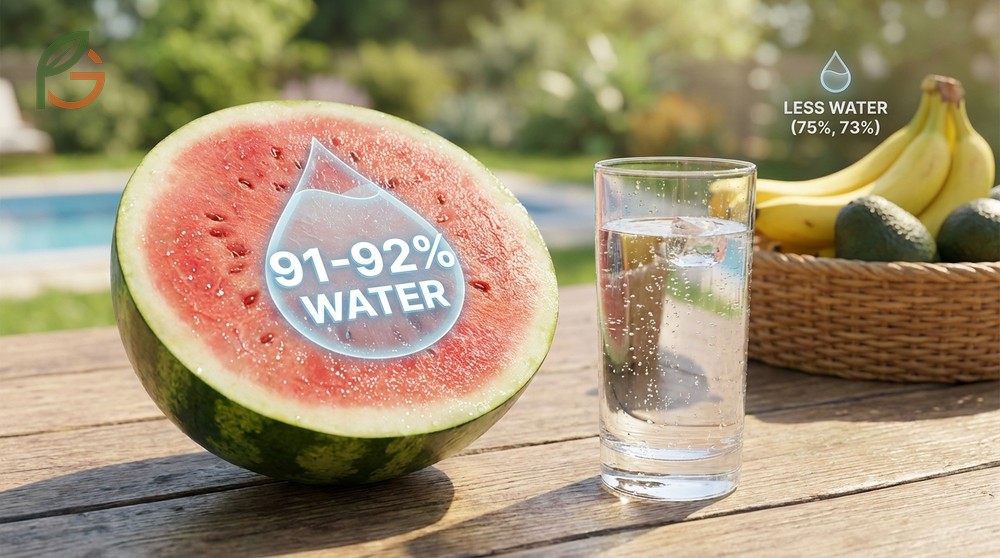
Watermelon consists of 91-92% water by weight, making it one of the most hydrating fruits available.[4][6] This exceptional moisture content explains the fruit’s name and its popularity during hot summer months. Each cup delivers more than half a cup of water, supplementing daily fluid intake naturally.
The high water content directly impacts calorie density. When you compare watermelon to lower-water fruits like bananas (75% water) or avocados (73% water), the calorie difference becomes obvious. Watermelon’s 30 calories per 100 grams contrasts sharply with bananas at 89 calories or avocados at 160 calories per 100 grams.
For gardeners cultivating watermelons, irrigation management affects final water content. Studies indicate that melons receiving consistent watering throughout development maintain higher water percentages than those experiencing drought stress. However, even stressed watermelons rarely drop below 85% water content, preserving the fruit’s hydrating properties.
Hydration Tip: Two cups of watermelon provide approximately 280 milliliters of water—equivalent to a standard glass. This counts toward your daily hydration goals while delivering vitamins and minerals that plain water lacks.
Is Watermelon Low Calorie
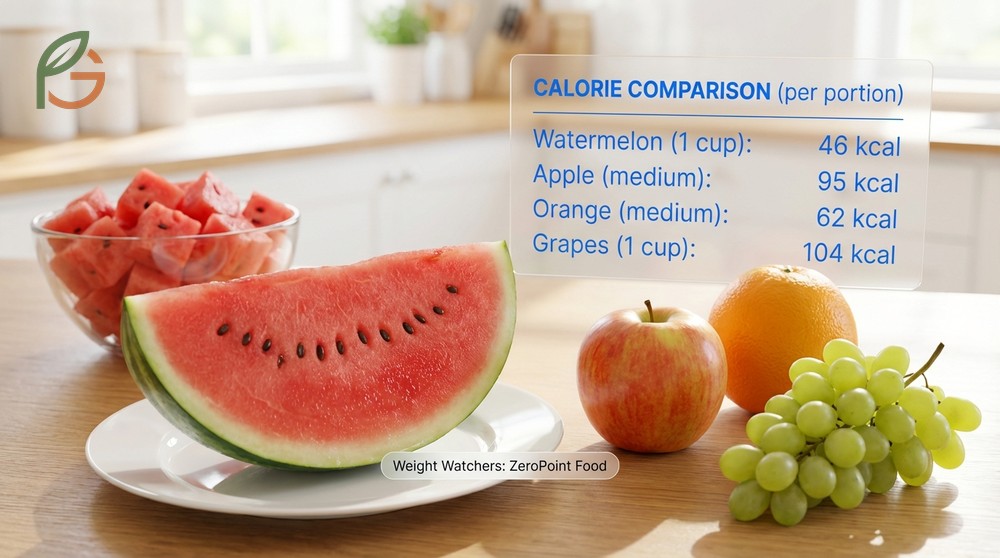
Yes, watermelon qualifies as a low-calorie fruit with exceptional nutrient density. At 46 calories per cup, it contains fewer calories than apples (95 calories per medium apple), oranges (62 calories per medium fruit), and grapes (104 calories per cup).[1] The low calorie density means you can consume large, satisfying portions without exceeding daily calorie targets.
Weight Watchers classifies watermelon as a ZeroPoint food, meaning members don’t track or count watermelon servings against their daily point allowance.[5] This designation reflects the program’s recognition that watermelon’s high water and fiber content promotes satiety without contributing excessive calories. However, the guidance recommends eating until comfortably satisfied rather than consuming unlimited quantities.
Research demonstrates that foods with low calorie density like watermelon help control appetite and support weight loss. The volume-to-calorie ratio allows you to feel full while maintaining a caloric deficit. For gardeners growing their own melons, this means homegrown produce supports health goals without complicated calorie counting during harvest season.
- High water volume creates physical fullness in the stomach
- Natural sweetness satisfies cravings without processed sugar
- Large serving sizes provide psychological satisfaction
- Minimal fat content keeps calories low per gram
- Room-temperature watermelon requires more eating time, slowing consumption
Current nutritional guidance emphasizes whole fruits over juice for calorie control. One cup of watermelon juice concentrates sugars while removing fiber and reducing water content, potentially doubling calories per serving. Stick with fresh, cubed watermelon to maximize volume and minimize calorie intake.
Conclusion
The evidence is clear: watermelon delivers exceptional nutritional value with minimal caloric cost. Whether you’re tracking a cup at 46 calories, enjoying a wedge at 86 calories, or sharing a whole melon’s 1,360 calories, this summer fruit supports hydration, provides essential vitamins, and satisfies sweet cravings naturally. Current agricultural and nutritional data confirms watermelon’s place as a smart choice for weight-conscious individuals and active gardeners alike.
For home growers cultivating watermelons in backyard gardens, understanding these nutritional metrics helps you appreciate the health benefits of your harvest beyond just flavor. FruitGarden encourages gardeners to grow diverse melon varieties, experiment with harvest timing, and share fresh watermelon with family and community to maximize both nutritional and social benefits.
Medical Disclaimer
Important Medical Disclaimer: This content is for informational and educational purposes only. It’s not intended as a substitute for professional medical advice, diagnosis, or treatment. Always consult a qualified healthcare professional or registered dietitian before making significant changes to your diet, especially if you have diabetes, fructose malabsorption, IBS, or other medical conditions. Individual nutritional needs vary based on age, activity level, health status, and medical history.
Frequently Asked Questions
How many calories are in a watermelon bowl?
A typical bowl holding 2 cups of diced watermelon contains 92 calories. Bowl sizes vary, but most serving bowls accommodate 1.5-2.5 cups, translating to 69-115 calories. For accurate tracking, measure your watermelon by cups rather than estimating bowl volumes, since visual estimation can differ by 40-60% from actual amounts.
Does watermelon have calories that affect weight loss?
Yes, watermelon contains calories that count toward daily intake, but its low calorie density (30 calories per 100g) makes it excellent for weight loss. The high water content creates fullness while delivering fewer calories than most fruits. Studies show that low-calorie-dense foods like watermelon help control appetite and support caloric deficits when consumed as part of balanced diets.
How many calories in half a watermelon?
Half of an average 20-pound watermelon contains approximately 680 calories. This assumes the entire melon holds 1,360 calories total. However, since you don’t eat the rind, the edible portion of half a melon (7-9 pounds of flesh) delivers roughly 475-610 calories depending on rind thickness and melon variety.
What are the Weight Watchers points for watermelon?
Watermelon is a ZeroPoint food on Weight Watchers, meaning you don’t track or count it against your daily points budget. This applies across all WW plans including Green, Blue, Purple, and current PersonalPoints programs. However, Weight Watchers guidance recommends eating until satisfied rather than unlimited consumption, as excessive intake of any food can hinder weight loss progress.
How many calories in watermelon slices versus cups?
One medium watermelon slice (286g wedge) contains 86 calories, while one cup (152g diced) has 46 calories. The slice provides nearly double the calories because it weighs almost twice as much. For portion control, cups offer more precise measurements than slices, which vary significantly based on how you cut the melon and whether you include white rind portions.
Are calories in watermelon mostly from sugar?
Yes, approximately 78% of watermelon’s carbohydrates come from natural sugars (9.4g sugar in 12g total carbs per cup). These are simple sugars—primarily fructose (50%), glucose (25%), and sucrose (less than 25%). Despite the sugar content, watermelon’s low calorie density and high water content slow absorption compared to processed sweeteners or fruit juices, resulting in moderate blood sugar impact when consumed in reasonable portions.
How many calories in a watermelon wedge at restaurants?
Restaurant watermelon wedges typically range from 60-120 calories depending on thickness and size. Standard wedges (1/16th of a melon) average 86 calories, but upscale restaurants often serve thicker cuts approaching 150-200 grams (90-120 calories). Fast-casual establishments may serve smaller wedges around 150-180 grams (60-75 calories). Always request size information if tracking calories precisely, as visual estimates prove unreliable.





