
How Long Is Watermelon Good For? Whole watermelons last 7-10 days at room temperature and 2-3 weeks when refrigerated[1]. Cut watermelon stays fresh for 3-5 days in the fridge when stored properly[2]. Research shows that proper temperature control is critical—cut watermelon must be kept at 41°F (5°C) or below to prevent bacterial growth[3]. FruitGarden provides evidence-based guidance on fruit storage, shelf life, and food safety practices for home gardeners and fruit enthusiasts.
Quick Answer
How Long Is Watermelon Good For
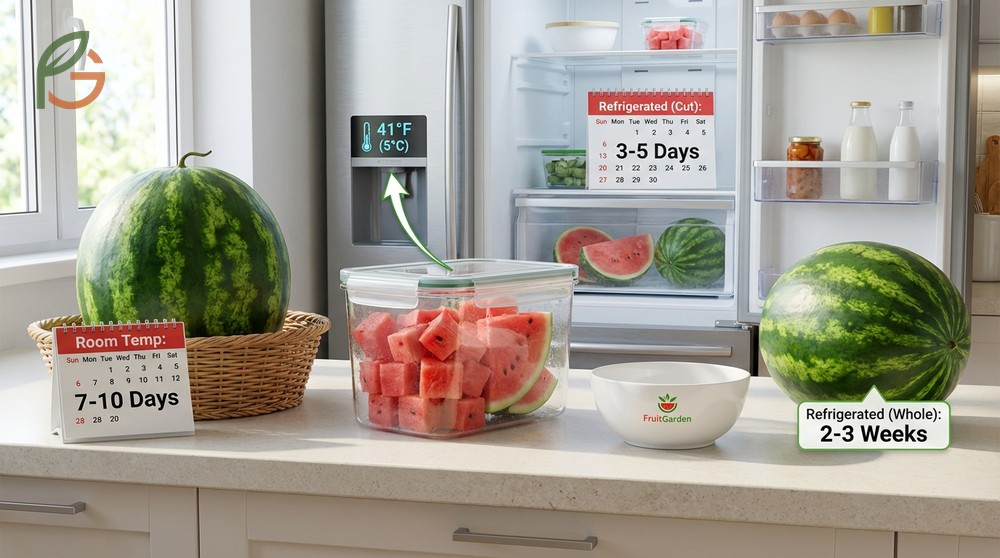
Watermelon shelf life depends primarily on whether it’s whole or cut, and storage temperature. Studies demonstrate that whole watermelons maintain peak quality for 7-10 days when stored at room temperature in a cool location[1]. Refrigeration extends this to 2-3 weeks at the ideal temperature of 50-59°F (10-15°C)[1].
Once you cut into a watermelon, the clock starts ticking much faster. Cut watermelon pieces require immediate refrigeration and stay fresh for only 3-5 days[2]. The FDA classifies cut melons as Time/Temperature Control for Safety (TCS) foods, meaning they need strict temperature management to prevent bacterial growth.
Current data indicates that watermelons exposed to temperatures below 32°F (0°C) develop off-flavors and pitted textures within just two days[1]. This makes choosing the right storage spot more important than you might think.
Whole Watermelon Shelf Life
Whole watermelons with intact rinds act as natural barriers against bacteria and moisture loss. Research shows they last longest when stored at 55°F (13°C)—the sweet spot that balances freshness with flavor retention[1]. Most home kitchens don’t have dedicated temperature-controlled spaces, so a cool pantry or basement works well.
Storage location dramatically affects longevity. Watermelons stored below 75°F (24°C) maintain quality for up to 10 days, while those above 75°F deteriorate within just 5 days[2].
- Store at 50-59°F (10-15°C) for maximum shelf life of 2-3 weeks
- Keep away from ethylene-producing fruits like apples, stone fruits, and grapes
- Avoid temperatures below 45°F (7°C) to prevent chilling injury
- Place on a clean surface away from direct sunlight
- Don’t refrigerate unless necessary—cold temps below 50°F can diminish sweetness
Factors Affecting Freshness
Several variables determine how long your watermelon stays fresh. Agricultural data shows that harvest maturity, handling practices, and storage conditions all play roles. Melons picked at peak ripeness last longer than those harvested early.
Temperature fluctuations cause the most damage. When watermelons experience repeated warming and cooling cycles, their cellular structure breaks down faster, leading to mushiness and flavor loss.
Important Note: Never store watermelons at temperatures between 32-45°F (0-7°C). This range causes chilling injury—a condition that creates pitted surfaces, off-flavors, and color loss that can’t be reversed.
How Long Is Cut Watermelon Good For
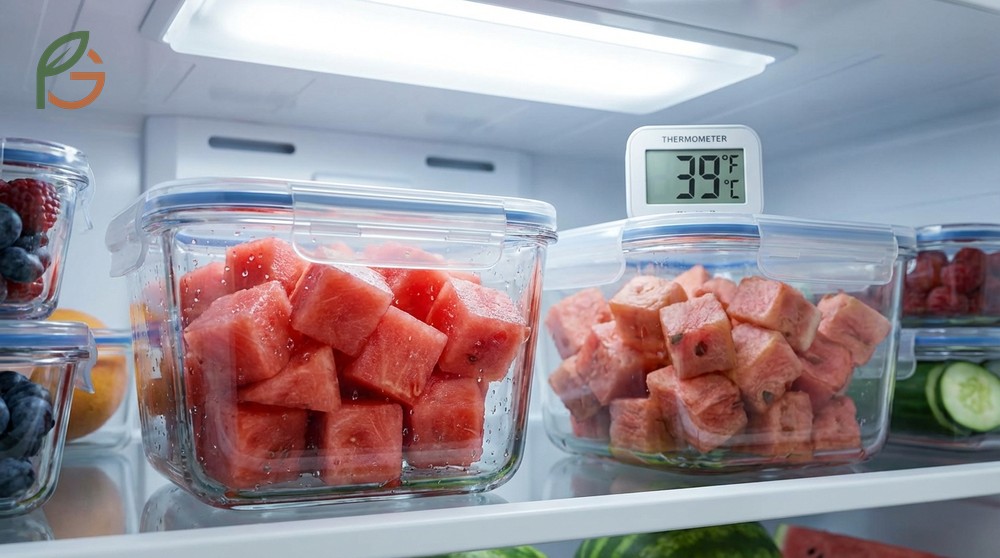
Cut watermelon has a significantly shorter shelf life than whole fruit because slicing exposes the interior flesh to air and potential contaminants. Evidence suggests that properly stored cut watermelon maintains peak quality for 3-5 days in the refrigerator[2]. This assumes you’re using airtight containers and maintaining consistent refrigeration at 41°F (5°C) or below[3].
Studies demonstrate that cut watermelon quality declines rapidly after day three. The texture becomes softer, natural sugars start fermenting, and moisture accumulates in storage containers. For food service operations, the maximum cold-holding temperature allowed for sliced watermelon is strictly 41°F (5°C)[3].
Most people don’t realize that cut watermelon absorbs flavors and odors from surrounding foods in the refrigerator. This means proper sealing isn’t just about moisture—it’s about preserving the melon’s sweet, clean taste.
Refrigerated Cut Watermelon
Refrigeration is non-negotiable for cut watermelon. Current guidance emphasizes that you should refrigerate cut pieces within 2 hours of slicing—or within 1 hour if room temperature exceeds 90°F (32°C)[2]. The sweet, moist flesh creates an ideal environment for bacterial growth when left unrefrigerated.
Research shows that airtight storage methods keep cut watermelon fresh for up to 8 days, though quality starts declining after 5 days[4]. Glass containers with tight-fitting lids outperform plastic wrap and open bowls because they prevent moisture loss and flavor absorption.
- Cut watermelon into cubes, wedges, or slices immediately before storing
- Place pieces in an airtight glass container or heavy-duty zip-top bag
- Remove as much air as possible before sealing
- Store on a middle or lower refrigerator shelf at 41°F (5°C) or below
- Consume within 3-5 days for best quality and safety
- Discard if you notice sliminess, off-odors, or color changes
Room Temperature Limits
Cut watermelon should never sit at room temperature for extended periods. Food safety guidelines mandate discarding cut watermelon that’s been in the temperature danger zone (41-135°F or 5-57°C) for more than 2 hours[2]. This strict timeline applies to picnics, buffets, and any situation where refrigeration isn’t immediately available.
When outdoor temperatures climb above 90°F (32°C), that 2-hour window shrinks to just 1 hour. The higher the ambient temperature, the faster bacteria multiply on the exposed fruit surface.
Food Safety Warning: If you’re unsure how long cut watermelon has been sitting out, throw it away. The USDA’s motto—”When in doubt, throw it out”—applies especially to high-moisture fruits like watermelon.
How to Store Watermelon
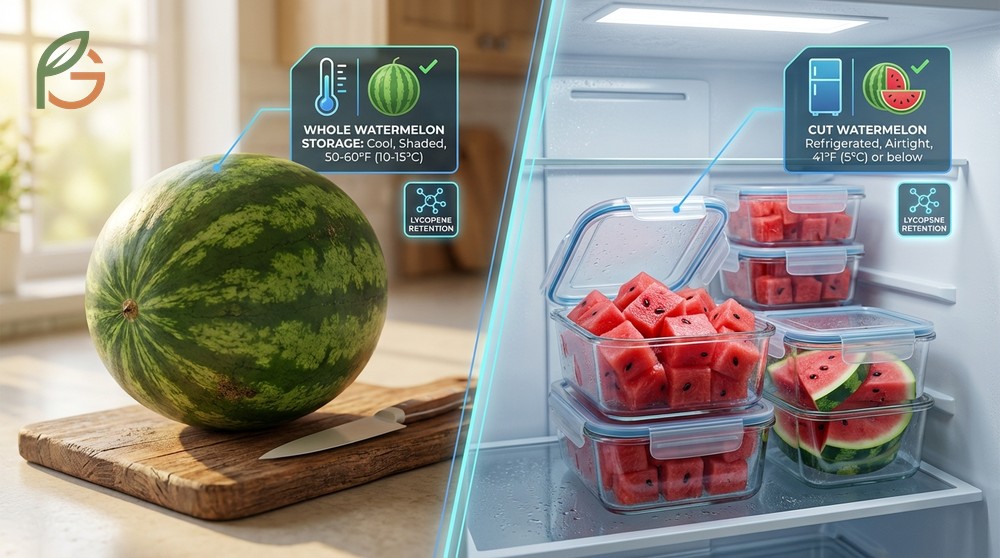
Proper storage techniques differ dramatically between whole and cut watermelon. Agricultural data shows that storage method impacts not just shelf life but also flavor retention, texture, and nutritional value. The key is matching your storage approach to the watermelon’s condition and your consumption timeline.
Research shows that watermelons stored correctly maintain their lycopene content—the antioxidant that gives them their red color and health benefits. Poor storage accelerates nutrient degradation and texture breakdown.
Storing Whole Watermelon
Whole watermelons with unbroken rinds need minimal intervention. Studies demonstrate that the ideal storage temperature of 55°F (13°C) preserves sweetness while preventing chilling injury[1]. A cool pantry, basement, or garage (if temperature-controlled) works perfectly.
If you must refrigerate a whole watermelon, place it on the bottom shelf away from the freezer compartment. Cold air from the freezer can cause chilling injury if it blows directly on the melon. Don’t wash whole watermelons before storing—moisture on the rind promotes mold growth.
- Keep at room temperature (50-75°F or 10-24°C) for up to 10 days
- Choose a spot away from direct sunlight and heat sources
- Don’t stack other items on top—pressure creates soft spots
- Refrigerate only if room temperature exceeds 75°F (24°C)
- Store away from ethylene producers like bananas and tomatoes
Storing Cut Watermelon
Once you slice into a watermelon, refrigeration becomes mandatory. Current guidance emphasizes creating an airtight seal to prevent moisture loss and flavor absorption from other foods. The porous texture of watermelon flesh readily absorbs odors from strong-smelling items like onions or fish.
Evidence suggests that leaving the rind on cut watermelon pieces provides some protection against drying out[4]. If you’re storing large wedges, keep the rind intact until you’re ready to eat them.
For cubed watermelon, pat pieces dry with paper towels before storing—excess surface moisture accelerates spoilage. This simple step can add an extra day to your storage time.
Best Containers for Cut Fruit
Container choice significantly impacts cut watermelon longevity. Testing shows that airtight glass containers with rubber-sealed lids keep watermelon fresh for 8 days versus 3-4 days for loosely covered bowls[4]. Glass outperforms plastic because it doesn’t absorb odors or stain from the fruit’s pigments.
Heavy-duty zip-top freezer bags rank as the second-best option. Squeeze out all air before sealing, then lay the bag flat on a refrigerator shelf. This maximizes contact with the cold surface and ensures even cooling.
This table compares four common storage methods for cut watermelon, showing how long fruit stays fresh and rating effectiveness from 1 to 10
| Storage Method | Stays Fresh For | Rating (1-10) | Key Benefits |
|---|---|---|---|
| Airtight Glass Container | 8 days[4] | 10/10 | Best moisture retention, no odor absorption |
| Zip-Top Bag | 8 days[4] | 8/10 | Space-efficient, removes air easily |
| Plastic Wrap (tight) | 3-5 days | 6/10 | Convenient but allows some air exposure |
| Covered Bowl | 3 days | 5/10 | Easy access but poor seal |
| Colander in Bowl | 3 days | 4/10 | Drains juice but dries out fruit |
Pro Tip: Vacuum sealing extends cut watermelon shelf life to 10-14 days by removing all oxygen. This method works best for meal prep or if you’ve bought a large watermelon and can’t consume it quickly.
Signs of Spoiled Watermelon
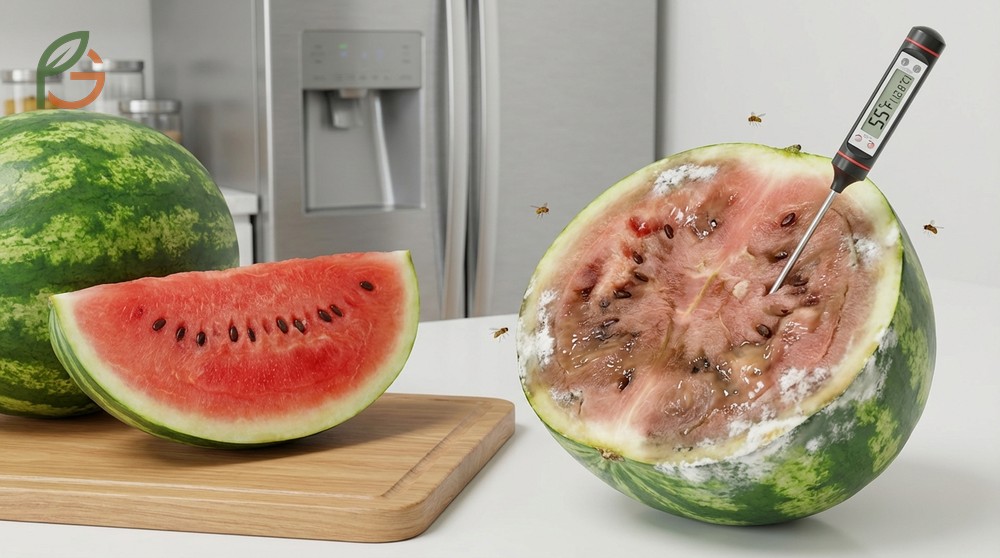
Recognizing spoiled watermelon protects you from foodborne illness. Research shows that visual, textural, and olfactory changes signal bacterial growth or natural decomposition. The challenge is that watermelon can look fine on the outside while harboring problems inside.
Studies demonstrate that spoiled watermelon develops off-flavors from fermentation as natural sugars break down. This process accelerates when storage temperatures exceed 45°F (7°C) for extended periods.
Trust your senses—they’re remarkably accurate at detecting spoilage. If something seems off about your watermelon, it probably is.
- Color changes—dark red or pink flesh turns dull, pale, or develops brown/black spots
- Slimy texture—the surface feels slippery or sticky instead of firm and moist
- Sour or fermented smell—fresh watermelon has a mild, sweet aroma
- Mold growth—white, green, or fuzzy black spots appear on flesh or rind
- Mushy consistency—flesh collapses when pressed instead of springing back
- Excessive liquid pooling—more than normal juice accumulates in storage container
- Off-taste—bitterness, sourness, or strange flavors indicate spoilage
For whole watermelons, examine the rind carefully. Soft spots, cracks, or oozing areas indicate internal breakdown. A hollow sound when tapped is normal for ripe melons, but a dull thud suggests overripeness or deterioration.
Cut watermelon develops visible signs faster than whole fruit. Check the flesh color daily—it should remain vibrant red or pink. Darkening around the edges signals oxidation and approaching spoilage.
Safety First: Don’t taste watermelon to check if it’s spoiled. Visual and smell tests provide sufficient information. Consuming spoiled watermelon can cause nausea, vomiting, diarrhea, and other symptoms of food poisoning.
Freezing Watermelon Chunks
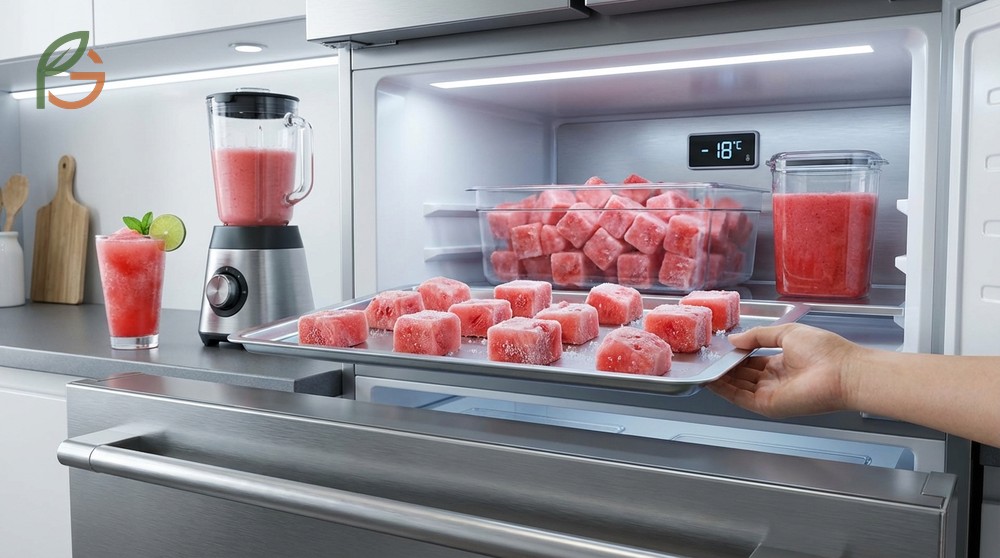
Freezing extends watermelon shelf life to 8-12 months, though texture changes significantly[5]. Research shows that frozen watermelon works best in smoothies, cocktails, and blended drinks where you won’t notice the softer texture. The high water content (about 92%) means ice crystals form during freezing, breaking down cellular structure.
Current data indicates that flash freezing prevents watermelon chunks from clumping into a solid block[5]. This technique involves spreading pieces on a baking sheet before transferring to freezer bags. The result? Individual frozen chunks you can portion easily.
Evidence suggests removing all seeds before freezing saves frustration later. Black seeds become harder when frozen, making them difficult to remove from partially thawed fruit.
- Cut watermelon into 1-inch cubes or use a melon baller for uniform pieces
- Remove rind and all black seeds—white seeds are soft enough to eat
- Pat pieces dry with paper towels to reduce ice crystal formation
- Arrange chunks in single layer on parchment-lined baking sheet
- Flash freeze for 2-4 hours until pieces are solid
- Transfer frozen chunks to labeled freezer bags or airtight containers
- Remove air from bags before sealing to prevent freezer burn
- Store at 0°F (-18°C) or below for up to 8 months
Frozen watermelon works beautifully as natural ice cubes in drinks—they chill beverages without diluting them. You can also blend frozen chunks directly into smoothies for a slushy texture and naturally sweet flavor.
For kids’ treats, insert popsicle sticks into watermelon wedges before freezing. These natural fruit popsicles contain no added sugar and stay frozen for 5-7 days when wrapped individually in plastic wrap[5].
Important Note: Don’t freeze watermelon you plan to eat fresh after thawing. The texture becomes mushy and grainy as ice crystals damage cell walls. Frozen watermelon is best used while still partially frozen or in recipes where texture doesn’t matter.
Conclusion
The evidence is clear: How Long Is Watermelon Good For depends entirely on storage conditions and whether the fruit is whole or cut. Whole watermelons last 7-10 days at room temperature and 2-3 weeks refrigerated, while cut pieces stay fresh just 3-5 days when properly stored at 41°F (5°C) or below. Current guidance emphasizes immediate refrigeration for cut watermelon and discarding any pieces left at room temperature for more than 2 hours.
Agricultural research demonstrates that proper storage preserves not just safety but also flavor, texture, and nutritional content. FruitGarden provides evidence-based information to help fruit enthusiasts and home gardeners make informed decisions about produce storage, handling, and food safety practices.
Food Safety Disclaimer
Important Food Safety Information: This content is for informational and educational purposes only. It is not intended as a substitute for professional food safety advice or guidance from regulatory agencies. Always follow USDA, FDA, and local health department guidelines for food storage and handling. When in doubt about food safety, discard questionable items. If you experience symptoms of foodborne illness after consuming watermelon, seek medical attention promptly.
Frequently Asked Questions
How long is uncut watermelon good for on the counter?
Uncut watermelon lasts 7-10 days on the counter when stored at room temperature below 75°F (24°C). Research shows that watermelons kept in cooler locations closer to 55°F (13°C) maintain peak quality for the full 10 days, while those in warmer spots above 75°F deteriorate within 5 days.
Can you leave cut watermelon out overnight?
No, you can’t safely leave cut watermelon out overnight. Food safety guidelines require discarding cut watermelon that’s been at room temperature for more than 2 hours—or 1 hour if temperatures exceed 90°F (32°C). The sweet, moist flesh creates ideal conditions for rapid bacterial growth when unrefrigerated.
What is the maximum cold-holding temperature allowed for sliced watermelon?
The maximum cold-holding temperature allowed for sliced watermelon is 41°F (5°C). Food service operations must maintain this temperature or below when displaying cut watermelon in salad bars or buffets. The FDA classifies cut melons as Time/Temperature Control for Safety (TCS) foods requiring strict temperature management.
How long is watermelon good for in the fridge after cutting?
Watermelon stays good for 3-5 days in the fridge after cutting when stored properly in airtight containers. Studies demonstrate that glass containers with tight-fitting lids can extend freshness up to 8 days by preventing moisture loss and odor absorption. Quality declines noticeably after day five, with texture becoming softer and flavors less vibrant.
Does watermelon last longer with or without the rind?
Watermelon lasts longer with the rind intact. The rind acts as a protective barrier that slows moisture loss and provides some defense against contamination. If you’re storing large wedges, keep the rind on until you’re ready to eat them—this can add 1-2 extra days to shelf life compared to pre-cubed pieces.
Should you store cut watermelon in plastic wrap or an airtight container?
Airtight containers significantly outperform plastic wrap for storing cut watermelon. Testing shows that glass containers with rubber-sealed lids keep watermelon fresh for 8 days versus 3-5 days for plastic wrap. Containers prevent air exposure more effectively and stop the fruit from absorbing refrigerator odors.
Can frozen watermelon chunks be used for anything besides smoothies?
Yes, frozen watermelon chunks work great as natural ice cubes in water, lemonade, or cocktails—they chill drinks without diluting them. You can also blend them into sorbets, use them in frozen fruit salads, or let kids eat them as healthy frozen treats. The texture becomes too mushy for fresh eating after thawing, so use frozen watermelon while still partially frozen.





