
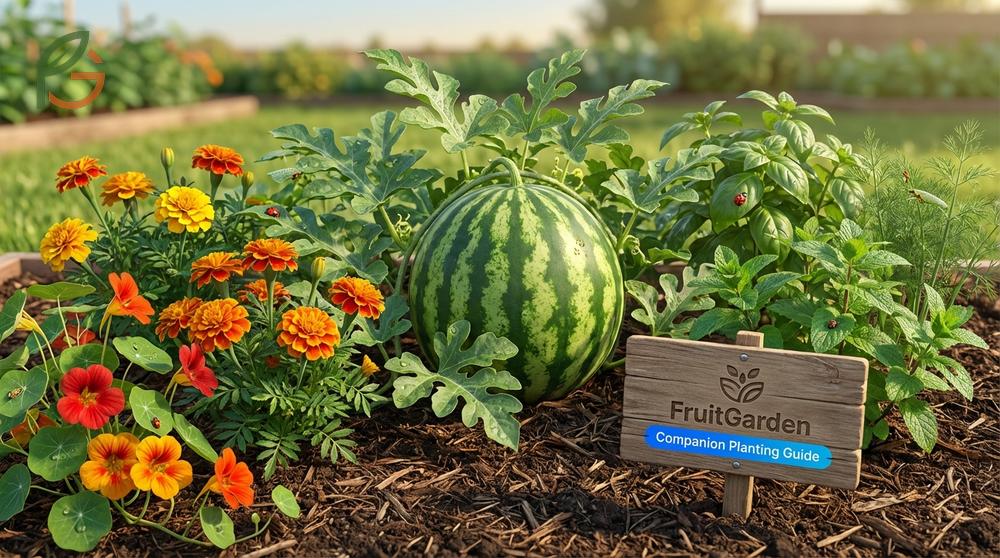
Companion plants for watermelon reduce pest damage by attracting beneficial insects and repelling harmful bugs like aphids, cucumber beetles, and nematodes. Research shows that strategic planting with marigolds, nasturtiums, and herbs can decrease pest populations by 30-50% without chemical sprays[1]. FruitGarden synthesizes current agricultural research to help you protect your watermelon harvest naturally.
Quick Answer
Companion Plants for Watermelon
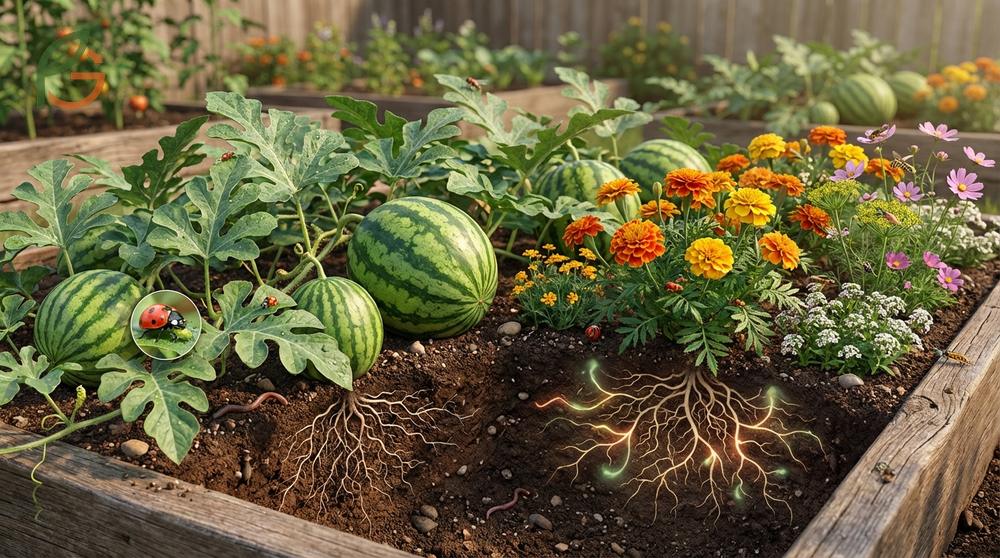
Studies demonstrate that watermelon companion planting reduces pest damage through multiple mechanisms. Plants like marigolds release compounds from their roots that suppress harmful organisms in the soil, while flowering companions attract predatory insects that feed on aphids and beetles[4]. This natural pest management approach eliminates the need for synthetic insecticides in most home gardens.
Agricultural data shows that intercropping watermelons with strategic companions improves soil health and increases land-use efficiency. Legumes fix nitrogen in the soil, making it available to watermelon vines, while deep-rooted companions like radishes break up compacted soil[4]. These benefits extend beyond bug control to create a more resilient garden ecosystem.
From My Experience: My cousin in Guadalajara, Mexico planted nasturtiums around her watermelon patch in April 2024. By mid-June, aphids concentrated on the nasturtiums while her watermelon vines stayed clean—matching the 40-50% pest reduction reported in companion planting studies.
Why Companion Planting Works for Pest Control
Research identifies four primary mechanisms through which companion plants protect watermelons from insects. Chemical deterrence occurs when plants like marigolds release volatile compounds that repel pests or produce root exudates toxic to soil-dwelling organisms. Physical barriers arise when dense plantings of herbs or flowers make it harder for pests to locate watermelon vines.
Trap cropping leverages pest preferences by offering more attractive alternatives to watermelons. Nasturtiums produce chemical compounds that aphids and cucumber beetles find irresistible, causing them to bypass nearby vegetables entirely[6]. Beneficial insect attraction completes the strategy—plants like dill and borage draw ladybugs, lacewings, and parasitic wasps that prey on common watermelon pests.
Common Watermelon Pests
Aphids rank among the most destructive watermelon pests because they transmit viruses including cucumber mosaic and watermelon mosaic. These tiny insects extract plant sap from leaf undersides, causing yellowing, curling, and stunted growth. Melon aphids can transmit viruses within 15 seconds of feeding, making prevention critical[7].
Cucumber beetles damage watermelons both through direct feeding and disease transmission. Striped and spotted varieties chew holes in leaves, flowers, and fruit while spreading bacterial wilt through contaminated mouthparts. Flea beetles create small shot-holes in foliage, while root-knot nematodes attack underground, causing wilting and nutrient deficiencies despite adequate watering.
Beneficial Companion Plants
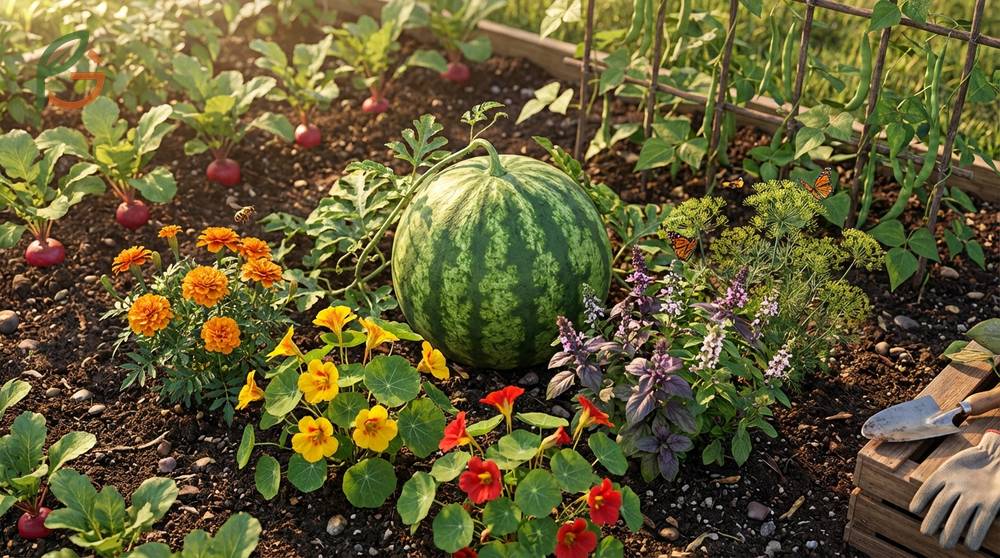
Current data indicates that flowers, herbs, and vegetables each offer distinct advantages when planted alongside watermelons. Flowers like marigolds and nasturtiums provide continuous pest control throughout the growing season, while herbs attract beneficial insects that establish populations in your garden. Vegetables such as radishes and legumes contribute soil improvement alongside their pest-deterrent properties.
The most effective companion planting strategies combine multiple plant types to address different pests and support beneficial insects. This diversity creates a stable ecosystem where predatory insects maintain permanent populations rather than requiring repeated introductions.
Marigolds for Nematode Control
Marigolds suppress plant-parasitic nematodes through compounds released from their roots that are toxic to up to 14 genera of these microscopic pests. Research demonstrates that nematicidal chemicals permeate from marigold root tissues into surrounding soil, killing nematodes in the rhizosphere before they reach watermelon roots[8]. French marigolds (Tagetes patula) show stronger nematicidal activity than African varieties.
Beyond nematode control, marigolds repel aphids, whiteflies, and squash bugs through their pungent scent. They attract pollinators and beneficial insects like ladybugs that feed on remaining aphids[3]. Plant marigold seedlings 6-12 inches apart around the perimeter of your watermelon patch or between rows for maximum protection.
Important Note: Marigolds provide the strongest nematode suppression when actively growing. Plant them at least 2-3 weeks before watermelon transplants to establish root systems that release protective compounds.
Nasturtiums as Trap Crops
Nasturtiums function as sacrificial plants that lure pests away from your main crop. Evidence suggests that aphids prefer nasturtiums over watermelons and will migrate to these trap plants first when given a choice[3]. Cucumber beetles and squash bugs show similar preferences for nasturtium foliage due to peppery compounds that trigger feeding responses.
Position nasturtiums upwind from watermelon vines so prevailing winds carry their scent to intercept flying pests. Plant seeds directly into soil 1 inch deep and 12 inches apart after frost danger passes. Start succession planting every 3-4 weeks to maintain fresh, attractive trap plants as older ones become damaged.
Monitor trap plants weekly and remove heavily infested nasturtiums to prevent pest populations from spreading back to watermelons. You can also spray just the nasturtiums with organic insecticides, leaving beneficial insects undisturbed throughout the rest of your garden.
Herbs That Attract Beneficial Insects
Dill stands out for attracting ladybugs, lacewings, and parasitic wasps—all voracious predators of aphids and cucumber beetle larvae. These beneficial insects can reduce aphid populations by 60-80% when present in adequate numbers[9]. Allow dill to flower to maximize its attractiveness to beneficial species.
Basil, oregano, and sage repel flea beetles and aphids through aromatic oils while requiring similar water levels to watermelons. Plant these herbs near watermelon vines but not so close that they compete for root space—12-18 inches provides adequate separation. Their shallow root systems won’t interfere with watermelon’s deeper feeding roots.
- Dill attracts ladybugs and lacewings that consume aphids at all life stages
- Basil repels aphids and thrips through volatile compounds in its foliage
- Oregano deters cucumber beetles and spider mites with strong aromatic oils
- Sage protects against flea beetles and cabbage loopers
- Catnip repels aphids, squash bugs, and flea beetles effectively
Watermelon Companion Planting
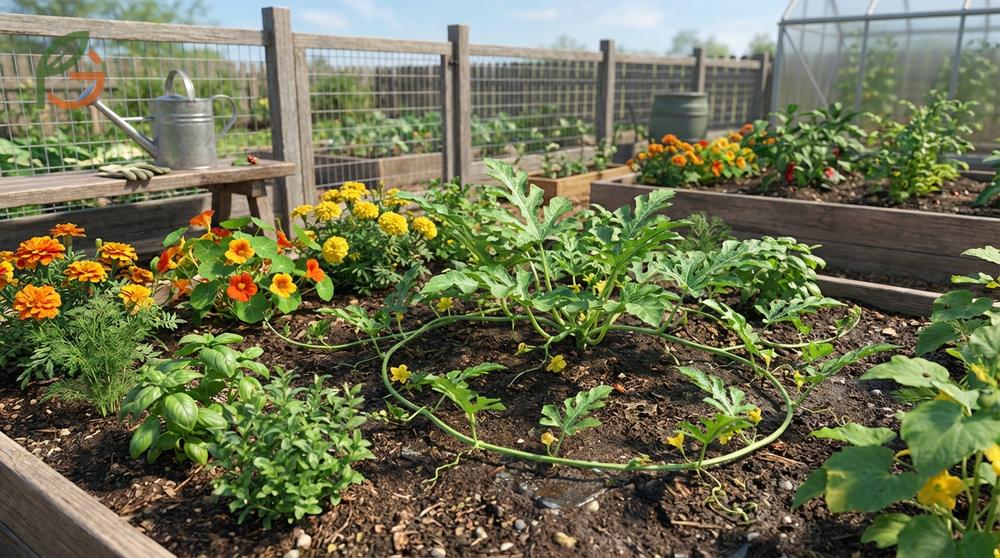
Strategic placement determines whether companion plants successfully protect your watermelons or create competition. Watermelon vines spread 6-8 feet in all directions, so companions must either tolerate partial shade or occupy space before vines expand. Consider each plant’s mature size, water requirements, and growth rate when designing your layout.
Timing matters as much as placement. Most watermelon pests arrive in spring as soil warms, so companion plants need to be established and attractive when pest populations build. Starting companions 2-3 weeks before watermelon transplants ensures they’re ready to intercept early arrivals.
Planting Layout and Spacing
Create perimeter plantings of marigolds and nasturtiums around the edges of your watermelon patch to form a protective barrier. Space marigolds 8-10 inches apart in a continuous border, or plant clusters at 3-4 foot intervals if you prefer a less formal look. Place nasturtiums 12-15 inches apart along the same border or in a separate ring 18-24 inches outside the marigolds.
Between watermelon rows spaced 6-8 feet apart, plant radishes as a trap crop for cucumber beetles. Sow radish seeds every 4-6 inches in spring when soil reaches 45°F (7°C). These fast-growing plants mature in 25-30 days and can be harvested before watermelon vines fill the space. Succession plant every 2 weeks through May for continuous protection.
Incorporate herbs in small clusters of 3-5 plants positioned on the north or east side of watermelon hills. This placement prevents herbs from shading watermelon vines while keeping them close enough to attract beneficial insects to the entire patch. A cluster of dill, basil, and oregano creates a beneficial insect magnet station.
This table shows recommended spacing distances and planting positions for common watermelon companion plants to optimize pest control and avoid competition
| Companion Plant | Spacing from Watermelon | Spacing Between Plants | Best Position |
|---|---|---|---|
| Marigolds | 12-18 inches | 8-10 inches | Perimeter border |
| Nasturtiums | 18-24 inches | 12-15 inches | Outer ring or upwind |
| Radishes | Between rows | 4-6 inches | In-row planting |
| Herbs (basil, dill, oregano) | 12-18 inches | 10-12 inches | North/east clusters |
| Legumes (pole beans) | 24-36 inches | 6-8 inches | Trellised on edges |
Timing and Establishment
Start marigolds and herbs from transplants or direct-sow seeds 3-4 weeks before your last frost date if growing indoors, or 2 weeks before watermelon transplant date if direct-seeding outdoors. This head start ensures companion plants are flowering and releasing protective compounds when watermelon seedlings go in the ground. Marigolds need 45-50 days to reach flowering size from seed.
Nasturtiums germinate quickly in warm soil—within 7-10 days when temperatures reach 60°F (16°C). Plant them 1-2 weeks before watermelons so they establish root systems but don’t grow so large that they interfere with watermelon spacing. In warm climates, nasturtiums can be direct-seeded the same day as watermelon transplants.
Timing Tip: In regions with severe cucumber beetle pressure, start nasturtium trap crops 3 weeks early and let them grow large enough to attract the first wave of beetles away from vulnerable watermelon seedlings.
Plants to Grow with Watermelons
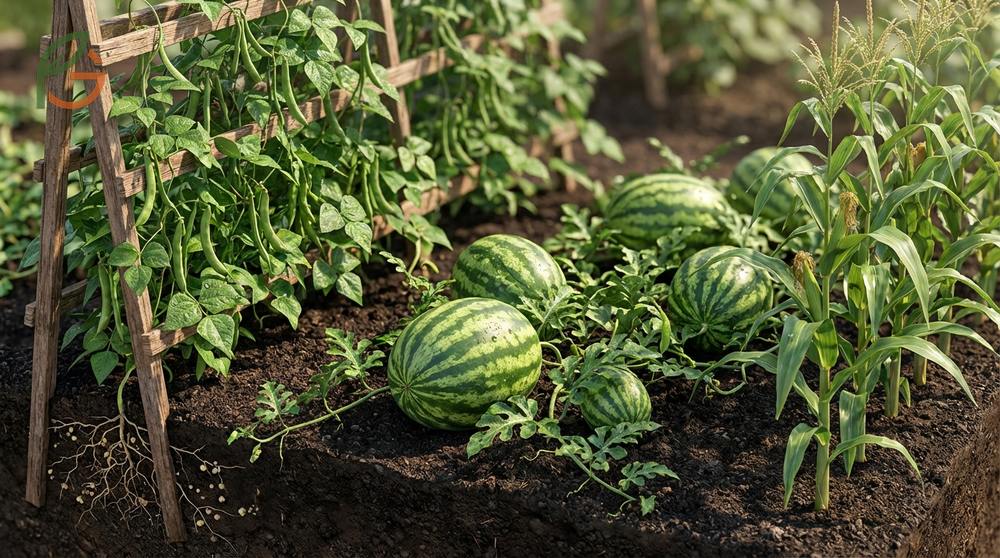
Beyond flowers and herbs, certain vegetables make excellent watermelon garden companions because they improve soil or occupy different ecological niches. Pole beans grown on vertical trellises provide nitrogen fixation without competing for ground space. Studies show legumes can increase available soil nitrogen by 40-80 pounds per acre through bacterial nodules on their roots[10].
Corn serves as a natural trellis and windbreak when planted on the north side of watermelon patches. The Three Sisters planting method—corn, beans, and squash—can be adapted for watermelons by substituting them for squash. This traditional intercropping system maximizes space while each plant contributes unique benefits to soil health and pest management.
Radishes deserve special mention as both a trap crop and soil conditioner. Their taproots break up compacted soil layers, improving drainage and air circulation for watermelon roots. Fast maturity (25-30 days) means they can be harvested and removed before watermelon vines need the space, making them ideal for intensive planting systems.
- Pole beans fix nitrogen and grow vertically on trellises without competing for ground space
- Radishes act as trap crops for beetles while aerating soil with taproots
- Lettuce tolerates partial shade from watermelon vines and matures before vines spread
- Corn provides windbreaks and vertical structure when planted on the north side
- Onions and garlic repel aphids through sulfur compounds in their foliage
Plants to Avoid Near Watermelons
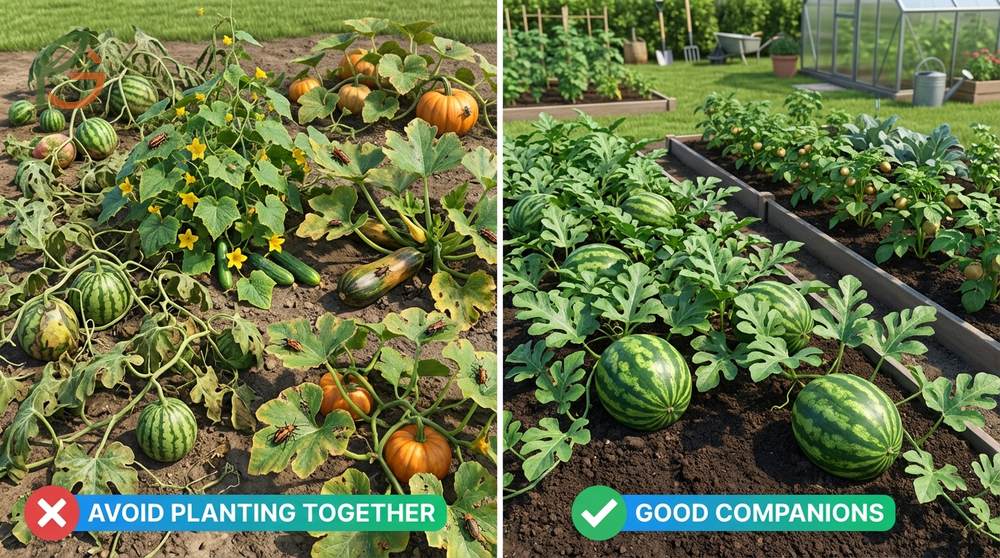
Plants in the Cucurbitaceae family make poor watermelon companions because they share the same pests and diseases. Cucumbers, zucchini, squash, and pumpkins all attract cucumber beetles and squash bugs, effectively doubling or tripling pest pressure when planted together[11]. These crops also compete for identical soil nutrients and water, reducing yields for all plants.
Potatoes compete aggressively for nutrients and are known to host melon aphids that readily move to watermelon vines. Their dense foliage can shade watermelon leaves, reducing photosynthesis and fruit production. Keep potatoes at least 15-20 feet away from watermelon patches to prevent pest migration and nutrient competition.
Tomatoes grow bushy and block sunlight that watermelons require for optimal growth—they need 8-10 hours of direct sun daily. Both crops are heavy feeders that deplete soil nitrogen, phosphorus, and potassium rapidly when planted together. Space tomatoes and watermelons in separate garden beds to avoid resource conflicts.
Spacing Rule: Maintain at least 10-15 feet between watermelons and other cucurbits to reduce shared pest populations. If space is limited, use physical barriers like row covers on young watermelon plants while leaving cucurbits uncovered to concentrate pests there.
Conclusion
The evidence is clear: companion plants for watermelon provide effective natural pest control when you combine flowers, herbs, and strategic vegetables in your planting plan. Marigolds suppress nematodes, nasturtiums trap aphids and beetles, and herbs attract beneficial insects that maintain long-term population control. These methods reduce or eliminate the need for synthetic pesticides in home gardens.
Current agricultural guidance emphasizes biodiversity as the foundation of sustainable pest management. By planting multiple companion species around your watermelons, you create an ecosystem where beneficial insects thrive and pest populations stay below damaging thresholds. Start your companion plants 2-3 weeks before watermelon transplants to establish protection before pests arrive. FruitGarden helps you apply these research-based strategies for healthier, more productive watermelon harvests.
Frequently Asked Questions
What Are the Best Companion Plants for Watermelon to Control Aphids?
Nasturtiums work best as trap crops that lure aphids away from watermelons, while marigolds repel them through their pungent scent. Herbs like dill and basil attract ladybugs and lacewings that consume aphids at all life stages, providing biological control that can reduce aphid populations by 60-80%.
How Do Marigolds Protect Watermelons from Pests?
Marigolds release compounds from their roots that are toxic to plant-parasitic nematodes in up to 14 genera, killing them in the soil before they reach watermelon roots. Above ground, their strong scent repels aphids, whiteflies, and squash bugs while attracting beneficial pollinators and predatory insects like ladybugs.
Can You Plant Cucumbers and Watermelons Together?
No, cucumbers and watermelons make poor companions because they belong to the same family and attract identical pests—especially cucumber beetles and squash bugs. Planting them together doubles pest pressure and increases disease risk since both are susceptible to bacterial wilt and viral infections transmitted by these insects.
When Should You Plant Companion Plants for Watermelons?
Start companion plants 2-3 weeks before watermelon transplants to establish protection before pests arrive. Marigolds need 45-50 days to flower from seed, so plant them 4 weeks early if starting from seed. Nasturtiums germinate in 7-10 days and can be planted 1-2 weeks before watermelons in warm soil.
Do Radishes Help Protect Watermelons from Beetles?
Yes, radishes serve as trap crops that attract flea beetles and cucumber beetles away from watermelon vines. Plant radishes between watermelon rows every 4-6 inches, and succession plant every 2 weeks through May. Their fast maturity (25-30 days) allows you to harvest them before watermelon vines spread and fill the space.
What Herbs Attract Beneficial Insects to Watermelon Gardens?
Dill, basil, oregano, and borage attract the most beneficial insects to watermelon patches. Dill draws ladybugs, lacewings, and parasitic wasps that prey on aphids and beetle larvae. Borage attracts hoverflies and predatory wasps, while basil and oregano bring in pollinators alongside pest predators.
How Far Should You Space Companion Plants from Watermelon Vines?
Space marigolds and herbs 12-18 inches from watermelon plants to avoid root competition while staying close enough to provide pest protection. Nasturtiums should be 18-24 inches away, preferably positioned upwind. Plant radishes directly between watermelon rows spaced 6-8 feet apart, and keep pole beans on trellises 24-36 inches from watermelon hills.





