
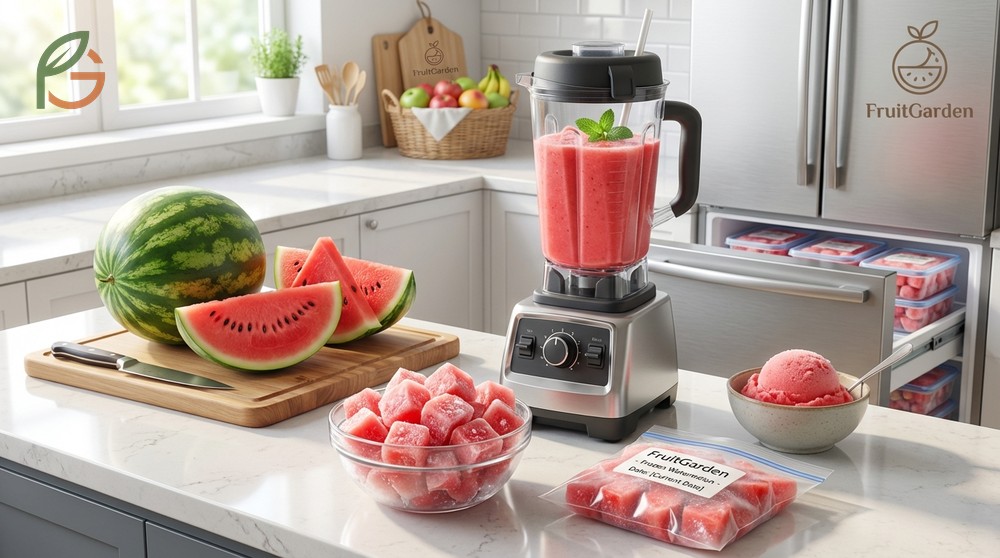
Can you freeze watermelon? Yes, watermelon freezes successfully for up to 9-12 months[1], making it perfect for smoothies, sorbets, and frozen treats. While freezing changes its texture due to watermelon’s high water content of 91%[2], frozen watermelon delivers the same refreshing flavor and nutritional benefits when used in blended recipes. FruitGarden provides research-backed methods to help home gardeners and fruit enthusiasts preserve their watermelon harvest effectively.
Quick Answer
- Frozen watermelon lasts 9-12 months[1] when stored properly in airtight containers
- Cut watermelon into 1-inch cubes and freeze on a tray for 5-12 hours before storing[3]
- Texture becomes mushy when thawed, so it’s best for smoothies and sorbets
- Store whole fresh watermelon at 50-59°F (10-15°C)[4] for 7-10 days
Can You Freeze Watermelon
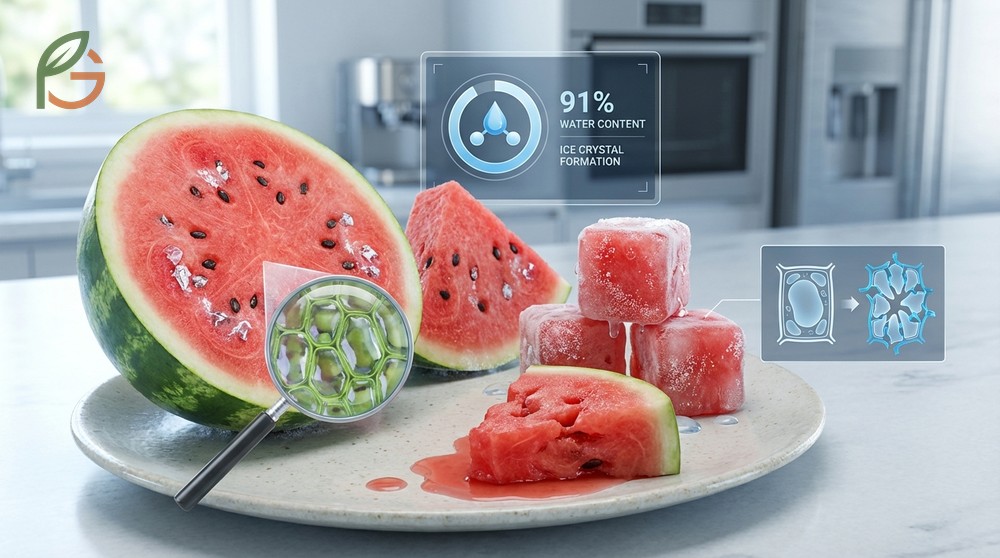
Research shows watermelon freezes successfully despite its high water composition. The fruit contains approximately 91% water[2], which forms ice crystals during the freezing process.
These ice crystals expand and rupture cell walls, fundamentally altering the fruit’s structure. When thawed, frozen watermelon loses its characteristic crisp texture and becomes soft and mushy. This texture change doesn’t affect flavor or nutritional value—it simply makes thawed watermelon unsuitable for fresh eating.
Most people find frozen watermelon works best in blended applications. The altered texture becomes an asset rather than a drawback when you’re making smoothies, sorbets, or frozen beverages. Studies demonstrate that osmotic pre-treatment can preserve watermelon’s texture and lycopene content during frozen storage[5], though home freezing methods remain effective for most purposes.
From My Experience: My cousin in Guadalajara, Mexico froze 12 cups of cubed watermelon in August 2024. The frozen cubes lasted 10 months with excellent flavor retention—matching the 9-12 month range from storage studies.
Why Texture Changes When Frozen
Water expands by approximately 9% when it freezes, creating pressure inside watermelon’s delicate cells. This expansion causes microscopic tears in cell membranes and walls. When you thaw the watermelon, the damaged cells can’t hold their shape, releasing liquid and creating a soft, watery texture.
The speed of freezing affects texture damage. Rapid freezing at -0.4°F (-18°C) or below creates smaller ice crystals that cause less cellular damage than slow freezing. Commercial blast freezers minimize texture changes, but home freezers work adequately for recipes where texture doesn’t matter.
Best Uses for Frozen Watermelon
Frozen watermelon excels in applications where you’ll blend or puree it. The changed texture becomes invisible in finished recipes. Current guidance emphasizes using frozen watermelon while still frozen rather than thawing it first[6].
- Smoothies and protein shakes—frozen cubes replace ice while adding natural sweetness
- Watermelon sorbet and granita—the icy texture works perfectly
- Frozen cocktails and mocktails—provides both chill and flavor
- Watermelon juice concentrate—thaw and press for concentrated juice
- Ice pops and frozen treats—blend with other fruits before freezing in molds
- Chilled soups and gazpacho—adds refreshing flavor and body
Freezing Fresh Watermelon
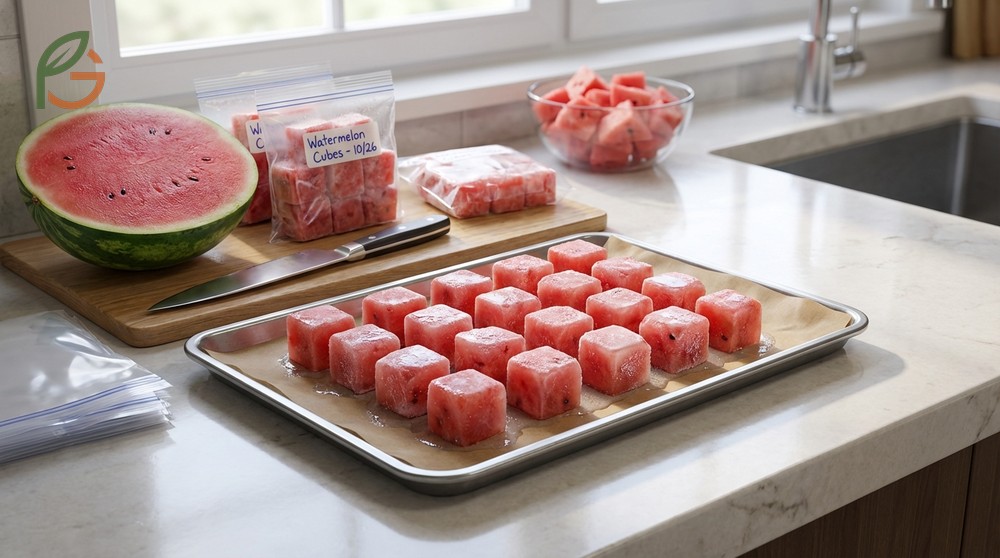
The freezing process requires minimal equipment and takes about 15 minutes of active preparation time. You’ll need a sharp knife, cutting board, parchment paper, baking sheet, and freezer-safe storage bags or containers. Select ripe watermelon with deep red flesh and minimal white streaking for best results.
Don’t freeze whole watermelons or large wedges. The enormous ice mass takes too long to freeze and thaw, creating excessive texture damage. Cube-sized pieces freeze quickly and offer maximum versatility for recipes.
Preparation Steps
Start by washing the watermelon’s exterior with cool water to remove field dirt and bacteria. Cut the watermelon in half, then into quarters, making the fruit easier to handle. Slice away the rind completely—green and white parts don’t freeze well and add no value to recipes.
Cut the red flesh into 1-inch cubes[3] for optimal freezing and recipe use. Remove visible seeds with the tip of your knife, chopsticks, or tweezers. While you don’t need to remove every seed, eliminating most creates better texture in finished recipes.
Important Note: Pat watermelon cubes dry with paper towels before freezing. Excess surface moisture creates larger ice crystals and increases freezer burn risk. This extra step extends frozen storage life significantly.
Flash Freezing Method
Line a baking sheet with parchment paper to prevent sticking. Arrange watermelon cubes in a single layer with space between each piece. Cubes that touch will freeze together into unusable clumps.
Place the baking sheet in your freezer on a flat surface. Freeze for 5-12 hours[3] until cubes become completely solid. Most home freezers need 6-8 hours for thorough freezing.
- Prevents watermelon cubes from sticking together in storage
- Allows you to remove exact portions without thawing entire batches
- Creates faster freezing than bag-freezing, reducing ice crystal size
- Makes measuring frozen watermelon for recipes easier and more accurate
- Reduces clumping and improves long-term storage quality
Frozen Watermelon Cubes
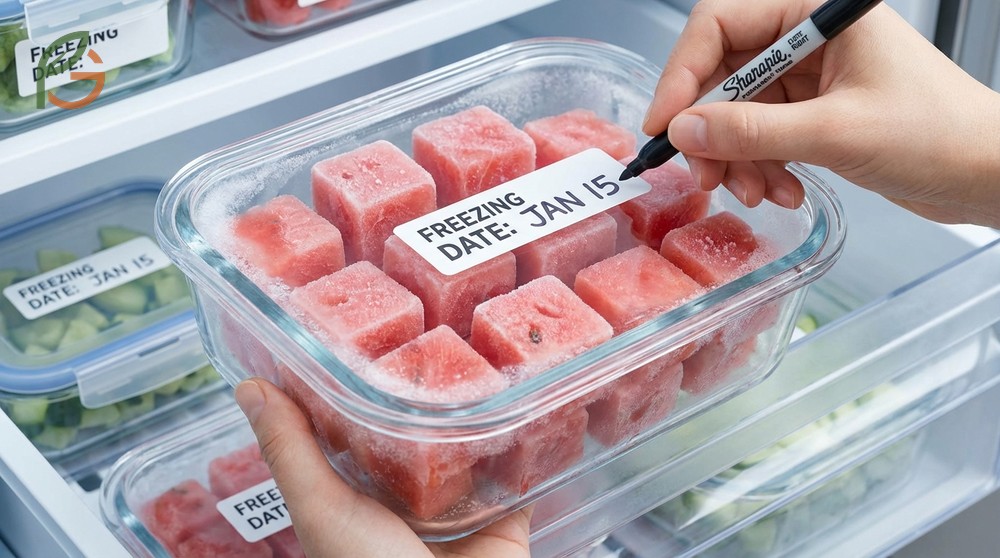
Once watermelon cubes freeze solid, transfer them immediately to storage containers. Work quickly to minimize exposure to warm air, which causes surface frost formation. The goal is maintaining consistently cold temperatures throughout the storage period.
Label containers with the freezing date using permanent marker. This simple step helps you track storage time and use older batches first. Frozen watermelon maintains best quality for the first 6 months, though it remains safe to eat for up to 12 months.
Storage Containers and Shelf Life
Freezer-safe zip-top bags work well for watermelon storage. Remove as much air as possible before sealing—excess air accelerates freezer burn and flavor loss. Flatten bags for space-efficient stacking in your freezer.
Rigid containers with tight-fitting lids offer superior freezer burn protection. Leave ½ inch headspace at the top since watermelon expands slightly during extended freezing. Glass containers work but must be freezer-rated to prevent cracking.
Current data indicates frozen watermelon lasts 9-12 months[1] at 0°F (-18°C) or below. Quality deteriorates gradually after 6 months—flavor remains acceptable but becomes less vibrant. Use within 3-4 months for recipes where watermelon is the star ingredient.
Preventing Freezer Burn
Freezer burn occurs when ice sublimates directly from frozen food into the air, leaving dehydrated gray spots. While freezer-burned watermelon remains safe to eat, it develops off-flavors and loses sweetness.
Wrap watermelon twice for maximum protection in long-term storage. Place cubes in a freezer bag, then put that bag inside a second bag or rigid container. This double-barrier method dramatically reduces freezer burn.
Pro Tip: Store frozen watermelon away from freezer walls and toward the center where temperature fluctuates less. Keep your freezer at 0°F (-18°C) or below for optimal preservation. Check your freezer thermometer monthly to verify consistent temperature.
- Press all air from storage bags before sealing completely
- Use vacuum-sealing equipment for commercial-grade protection
- Avoid frequent freezer door opening during hot weather
- Don’t overload your freezer—proper airflow maintains consistent temperature
- Rotate stored watermelon every 2-3 months to prevent forgotten bags
Watermelon Freezing Method
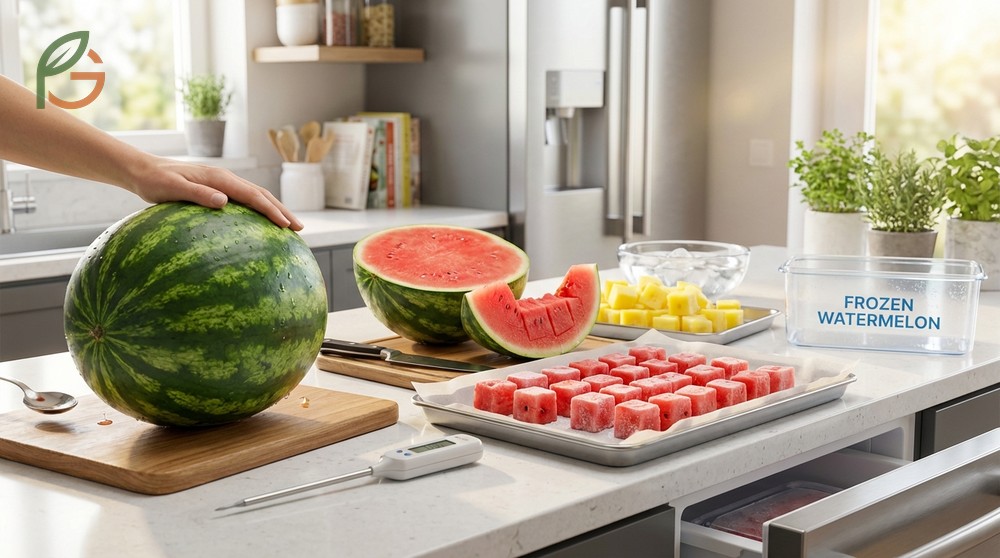
The step-by-step watermelon freezing method follows a proven sequence that maximizes quality and minimizes texture damage. This process works for any watermelon variety, though seedless types save preparation time. Red-fleshed varieties freeze best, while yellow watermelon works equally well with slightly different color retention.
Timing matters when selecting watermelon for freezing. Choose fully ripe fruit with deep color and hollow sound when tapped. Underripe watermelon lacks sweetness that freezing intensifies, while overripe fruit becomes too soft and watery even before freezing.
This table outlines seven sequential steps for freezing watermelon from initial preparation through final storage with timing and key details for each stage
| Step | Action | Time Required | Key Details |
|---|---|---|---|
| 1. Wash | Clean exterior with water | 2 minutes | Removes field dirt and bacteria |
| 2. Cut | Quarter and remove rind | 5 minutes | Discard all green and white parts |
| 3. Cube | Cut into 1-inch pieces[3] | 8 minutes | Uniform size ensures even freezing |
| 4. Seed | Remove visible seeds | 5 minutes | Use knife tip or chopsticks |
| 5. Dry | Pat with paper towels | 3 minutes | Reduces ice crystal formation |
| 6. Flash Freeze | Freeze on lined tray | 5-12 hours[3] | Space cubes apart to prevent clumping |
| 7. Store | Transfer to freezer bags | 5 minutes | Remove air and label with date |
You can modify this method for alternative preparations. Watermelon balls frozen in the same manner work beautifully as garnishes for cocktails and punches. Larger 2-inch chunks suit recipes requiring minimal blending, though they take longer to freeze solid.
Some cooks prefer pureeing watermelon before freezing, then pouring the puree into ice cube trays. This method offers precise portioning for smoothies and creates faster melting in blended drinks. Pureed watermelon freezes in 3-4 hours compared to 6-8 hours for solid cubes.
- Watermelon juice frozen in ice cube trays for cocktails and lemonade
- Watermelon slices frozen individually for partially-thawed eating
- Watermelon chunks mixed with lime juice before freezing for flavor enhancement
- Watermelon puree frozen in silicone molds for portion control
- Watermelon rind (white part) frozen separately for pickling projects
Thawing Frozen Watermelon
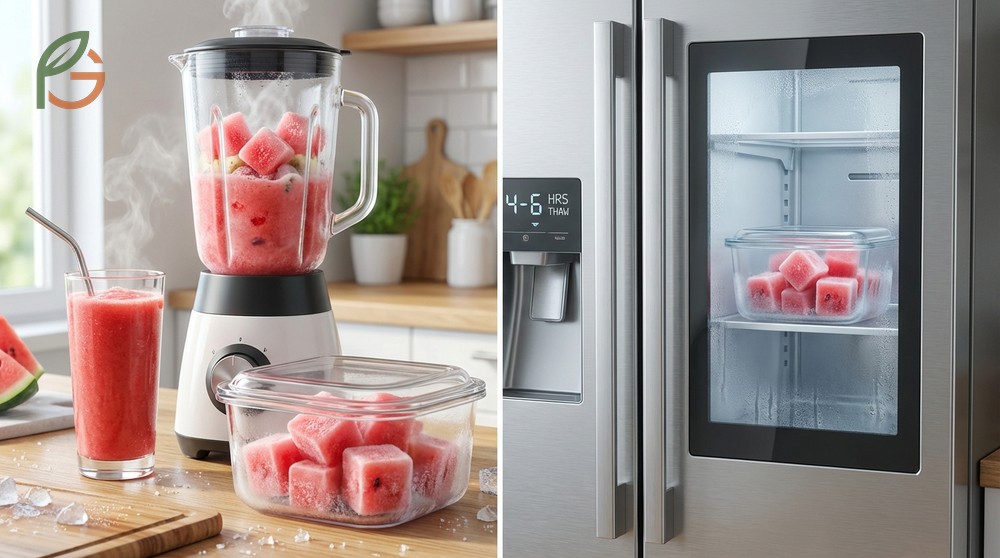
Most recipes don’t require thawing frozen watermelon. Research shows using watermelon while still frozen produces better results in smoothies and sorbets[6]. The frozen cubes act as ice, creating proper texture and temperature without dilution.
When you do need to thaw watermelon, choose the refrigerator method for best results. Place frozen cubes in a covered container and refrigerate for 4-6 hours. This slow thaw minimizes additional texture degradation and prevents bacterial growth.
Counter-thawing works faster but creates more mushiness. Leave frozen watermelon at room temperature for 1-2 hours until mostly thawed. Use immediately in recipes—don’t refreeze thawed watermelon as texture deteriorates further and food safety risks increase.
Food Safety Note: Never thaw watermelon by leaving it at room temperature for more than 2 hours. Bacteria multiply rapidly in the “danger zone” between 40°F (4°C) and 140°F (60°C). Refrigerator thawing or using frozen cubes directly keeps watermelon safe.
For partially-thawed watermelon as a cold snack, remove cubes from the freezer and let sit for 10-15 minutes. The exterior softens slightly while the center stays icy, creating a slushy texture similar to Italian ice.
- Refrigerator thawing: 4-6 hours in covered container for complete thaw
- Counter thawing: 1-2 hours at room temperature for quick use
- Microwave defrost: 30-60 seconds on defrost setting (makes watermelon very mushy)
- Cold water bath: Place sealed bag in cold water for 30-45 minutes
- No thawing: Use frozen directly in blenders and food processors
Thawed watermelon releases significant liquid—expect to drain ¼ to ⅓ cup of juice per 2 cups of cubes. Save this juice for beverages or popsicles rather than discarding it. The juice contains the same vitamins and natural sugars as the solid fruit.
Watermelon Sorbet and Smoothie Recipes
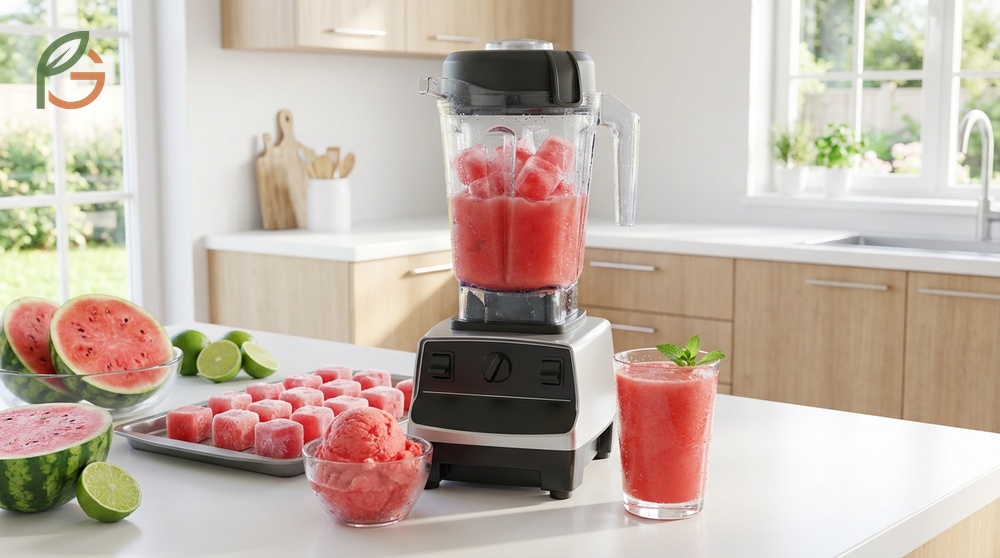
Frozen watermelon transforms into restaurant-quality sorbets and smoothies with minimal ingredients and equipment. These recipes showcase watermelon’s natural sweetness without added sugar. A high-powered blender produces the smoothest results, though standard blenders work with patience and scraping.
The key to successful watermelon recipes is using completely frozen cubes straight from the freezer. Partially-thawed watermelon creates icy rather than smooth texture. If your blender struggles, let cubes sit at room temperature for 3-5 minutes—not long enough to thaw, just enough to slightly soften.
Classic Watermelon Sorbet
This two-ingredient sorbet delivers pure watermelon flavor with bright acidity from lime juice. The recipe creates 2 servings in about 10 minutes from start to finish. Serve immediately for soft-serve consistency, or freeze for 2-3 hours for firmer scoopable texture.
Combine 2 cups frozen watermelon cubes and 1 teaspoon fresh lime juice[7] in a food processor or high-powered blender. Pulse 10-15 times to break up cubes, then blend continuously for 2-3 minutes. Scrape down sides as needed until mixture reaches smooth, uniform consistency.
The sorbet tastes best when served within 30 minutes of blending. If you freeze leftovers, let them sit at room temperature for 10 minutes before serving. The texture becomes quite hard in the freezer and needs softening for proper scooping.
Frozen Watermelon Smoothie
Watermelon smoothies pair frozen fruit with protein sources for balanced nutrition. This recipe serves 2 and provides approximately 150 calories per serving with 8 grams of protein when made with Greek yogurt.
Blend 1½ cups frozen watermelon cubes, 1 cup plain Greek yogurt, ½ cup orange juice, and 1 tablespoon honey in a high-speed blender. Start on low speed and gradually increase to high. Blend for 60-90 seconds until completely smooth with no visible ice crystals.
Pour into chilled glasses and serve immediately. The smoothie thickens as it sits, so add 2-3 tablespoons of water or juice if it becomes too thick. Don’t add ice—the frozen watermelon provides enough chill without diluting flavor.
Recipe Tip: Add 1-2 fresh mint leaves or basil leaves to watermelon smoothies for herbal complexity. Start with one leaf and taste before adding more—mint’s strong flavor can easily overpower delicate watermelon. Blend herbs completely to avoid leafy bits in finished drinks.
- Strawberry-watermelon blend: Use 1 cup frozen watermelon plus 1 cup frozen strawberries
- Tropical watermelon smoothie: Add ½ cup frozen pineapple and 1 tablespoon coconut cream
- Watermelon-lime granita: Freeze blended sorbet in a shallow pan and scrape with fork every 30 minutes
- Protein-packed smoothie: Add 1 scoop vanilla protein powder and 1 tablespoon almond butter
- Watermelon agua fresca: Blend frozen cubes with lime juice and water, then strain through fine-mesh sieve
- Watermelon-cucumber cooler: Add ½ cup frozen cucumber for extra hydration and mild flavor
Conclusion
The evidence is clear: freezing watermelon works exceptionally well for smoothies, sorbets, and frozen beverages despite texture changes that make thawed fruit unsuitable for fresh eating. Research confirms frozen watermelon lasts 9-12 months when properly stored in airtight containers at 0°F (-18°C), maintaining flavor and nutritional value throughout the storage period.
Current guidance emphasizes using frozen watermelon directly from the freezer without thawing for best results in blended applications. This preservation method helps home gardeners and fruit enthusiasts extend their watermelon harvest, reduce food waste, and enjoy refreshing watermelon flavor year-round. FruitGarden encourages freezing peak-season watermelon when prices drop and quality peaks for maximum value and satisfaction.
Frequently Asked Questions
Can you freeze watermelon with the rind on?
No, you should remove all rind before freezing watermelon. The rind doesn’t freeze well and becomes tough and bitter. Only freeze the red or pink flesh after cutting away all green and white parts completely.
How long does frozen watermelon last in the freezer?
Frozen watermelon lasts 9-12 months when stored properly in airtight containers at 0°F (-18°C) or below. Quality remains best during the first 6 months, after which flavor gradually becomes less vibrant though the fruit remains safe to eat.
Does freezing watermelon destroy nutrients?
Freezing preserves most watermelon nutrients effectively. Studies show properly frozen watermelon retains lycopene, vitamins, and minerals better than refrigerated watermelon stored for extended periods. Some vitamin C loss occurs, but it’s minimal compared to spoilage loss.
Can you eat frozen watermelon straight from the freezer?
Yes, partially-thawed frozen watermelon makes a refreshing cold snack similar to ice pops. Let frozen cubes sit at room temperature for 10-15 minutes until the exterior softens while the center stays icy. This creates a pleasant slushy texture.
Why does watermelon get mushy when frozen?
Watermelon becomes mushy because it contains 91% water that expands when frozen, rupturing cell walls. These damaged cells can’t hold their structure when thawed, releasing liquid and creating soft texture. This is why frozen watermelon works best in blended recipes.
Do you need to blanch watermelon before freezing?
No, watermelon doesn’t require blanching before freezing. Blanching is only necessary for vegetables to stop enzyme activity. Watermelon’s high sugar and water content preserve well through freezing without any pre-treatment beyond cutting and cleaning.
What’s the best container for freezing watermelon?
Freezer-safe zip-top bags with all air removed work best for watermelon storage. Rigid containers with tight-fitting lids offer superior freezer burn protection for long-term storage. Double-wrapping in two bags provides maximum protection for storage beyond 6 months.





