
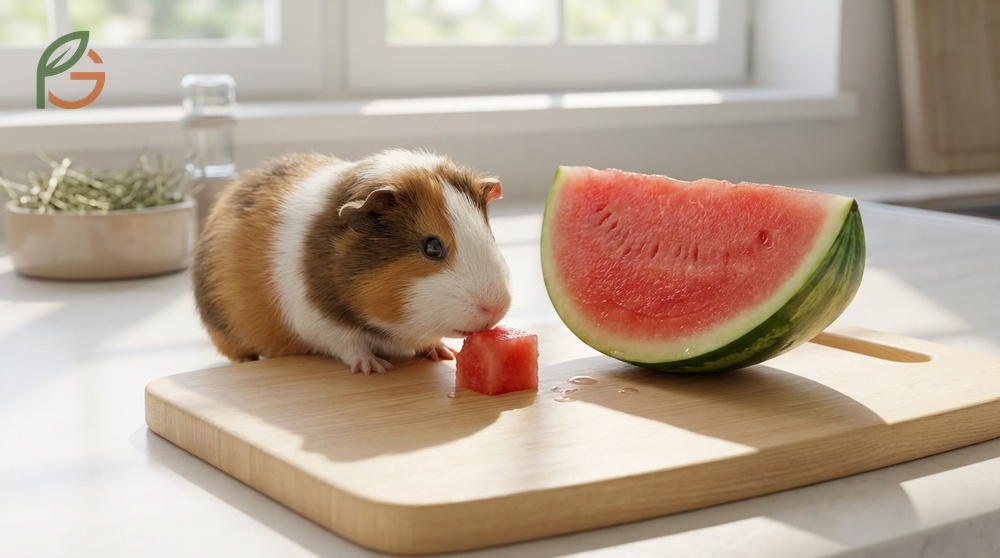
Can guinea pigs eat watermelon? Yes, they can, but only in strict moderation. Studies show that watermelon provides essential hydration and 8.1mg of vitamin C per 100g[1], yet its high sugar content means you’ll need to limit portions to prevent digestive issues. FruitGarden synthesizes current veterinary research to help you safely introduce this hydrating summer treat into your piggy’s diet.
Quick Answer
- Feed only 2-3 small cubes (1 teaspoon-size each) once or twice weekly maximum[2]
- Watermelon is 91% water and contains 6.2g sugar per 100g[3], making it more hydrating than nutritious
- Guinea pigs need 10-20mg vitamin C daily[4]—watermelon alone won’t meet this requirement
- Rind safety remains debated: some sources recommend it for lower sugar, while others warn against digestive risks
Can Guinea Pigs Eat Watermelon
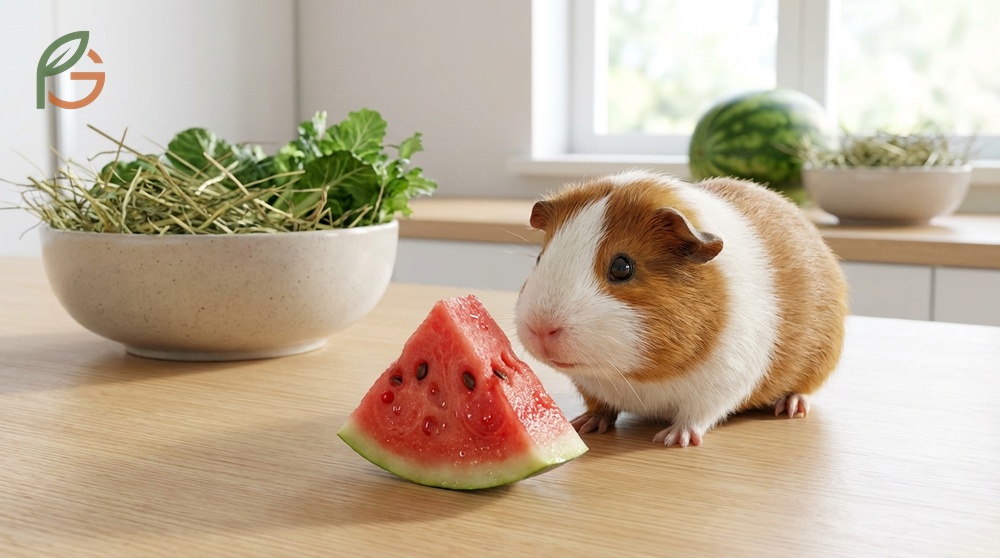
Research shows guinea pigs can safely eat watermelon flesh when it’s offered as an occasional treat, not a dietary staple. This summer fruit delivers essential nutrients like vitamin C and potassium while providing hydration through its 91% water content[3]. However, it’s not ideal as a primary food source.
Unlike hay and leafy greens that form the foundation of a guinea pig’s natural diet, watermelon should make up no more than 5% of their daily food intake[2]. The high sugar and water levels can disrupt their sensitive digestive system if you overfeed it. Think of watermelon as a refreshing snack rather than a meal replacement.
Most guinea pigs enjoy the sweet taste and juicy texture, making it useful for encouraging hydration on hot days. Just remember that their digestive systems evolved for fibrous grasses and vegetables, not sugary fruits.
Nutritional Benefits for Guinea Pigs
Watermelon offers several key nutrients that support your guinea pig’s health. Each 100g serving provides 8.1mg of vitamin C[1], which helps prevent scurvy since guinea pigs can’t produce this vitamin on their own. It’s also rich in vitamin A for eye health and lycopene, an antioxidant that fights cellular damage.
The potassium content helps regulate your piggy’s heartbeat and muscle function while supporting kidney health. Current veterinary data indicates that potassium can help prevent kidney stone formation, a common issue in guinea pigs[5]. Magnesium and phosphorus work together to maintain strong bones and teeth.
- Vitamin C (8.1mg per 100g) – Supports immune function and prevents scurvy
- Vitamin A – Maintains healthy vision and skin condition
- Potassium – Regulates heartbeat and prevents kidney stones
- Lycopene – Acts as a powerful antioxidant to fight disease
- Fiber – Aids digestion, though less than hay or leafy greens provide
- Magnesium and phosphorus – Build and maintain bone density
Hydration Advantages
Watermelon’s primary benefit lies in its exceptional water content. If your guinea pig isn’t drinking enough from their water bottle, especially during summer heat, a small piece of watermelon can boost hydration. The fruit’s moisture helps maintain proper body temperature and supports organ function.
That said, water-rich foods shouldn’t replace actual drinking water. Too much watermelon can backfire—the excess liquid may cause diarrhea, which then leads to dehydration. It’s a counterintuitive problem that many guinea pig owners don’t anticipate.
Important note: Never use watermelon as your guinea pig’s primary hydration source. Always provide fresh, clean water in a bottle or bowl, and treat watermelon as a supplementary moisture boost only on hot days.
Watermelon Serving Size for Guinea Pigs
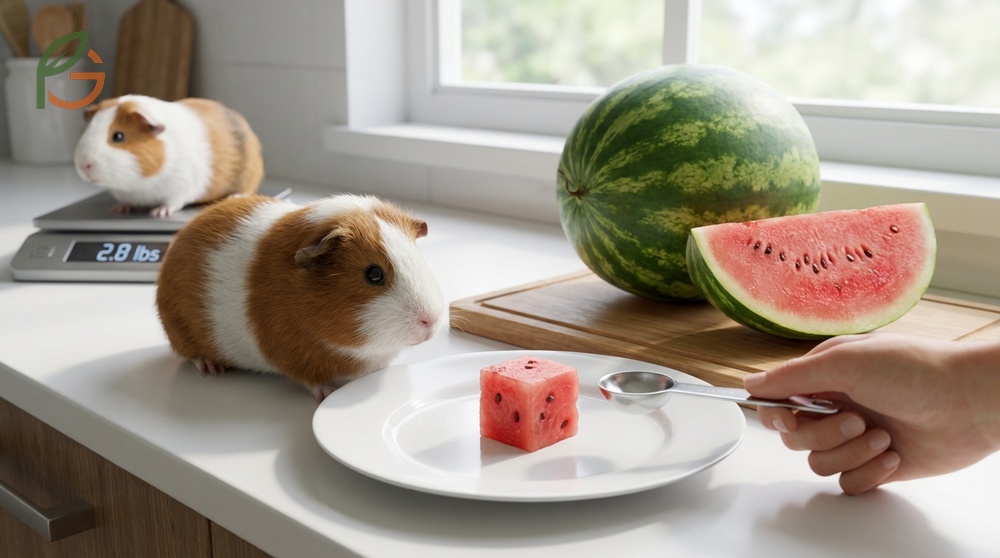
Veterinary guidelines recommend limiting watermelon to one teaspoon-size cube (approximately 1 square inch) once or twice weekly[2]. This conservative approach prevents the digestive upset that commonly occurs when guinea pigs consume too much fruit. Some sources suggest 2-3 cubes, but starting smaller is safer if you’re new to feeding watermelon.
The serving size might seem tiny compared to what you’d eat, but guinea pigs weigh less than 3 pounds on average. What looks like a small snack to you represents a significant portion of their diet. Overfeeding causes bloating, diarrhea, and potential weight gain from excess sugar.
Baby guinea pigs under 3 weeks old shouldn’t have watermelon at all. For young piggies just starting solid foods, offer only a piece the size of a small fingernail and watch carefully for any digestive reactions[2].
Proper Portion Guidelines
Start with a single small cube the first time you offer watermelon. Monitor your guinea pig for 24 hours to check for soft stools, reduced appetite, or lethargy. If they handle it well, you can gradually increase to the recommended 2-3 cubes, but don’t exceed this amount.
Treats like watermelon should never exceed 5% of your guinea pig’s total daily food intake. The remaining 95% should come from unlimited timothy hay, fresh vegetables high in vitamin C, and quality pellets formulated for guinea pigs.
- Adult guinea pigs – 1-3 teaspoon-size cubes, once or twice weekly maximum
- Baby guinea pigs (under 3 weeks) – No watermelon recommended
- Young guinea pigs (3+ weeks) – Tiny piece (fingernail-size), once weekly
- Pregnant or nursing guinea pigs – Same as adults, but prioritize vitamin C-rich vegetables instead
- Guinea pigs with digestive sensitivity – Skip watermelon entirely or limit to half a cube monthly
Preparation Tips
Always remove seeds before offering watermelon to your guinea pig. While watermelon seeds aren’t toxic, they pose a choking hazard and can cause intestinal blockages. Cut the flesh into small, manageable cubes rather than large slices that might overwhelm your pet.
Wash the watermelon thoroughly under running water, even if you’re not feeding the rind. Pesticides and bacteria on the outer surface can transfer to the flesh when you cut it. Room temperature watermelon is easier on your guinea pig’s stomach than cold fruit straight from the refrigerator.
Pro tip: If your guinea pig refuses watermelon or shows no interest, don’t force it. Some piggies prefer other fruits like strawberries or apples. There’s no nutritional requirement to feed watermelon specifically.
Can Guinea Pigs Eat Watermelon Rind
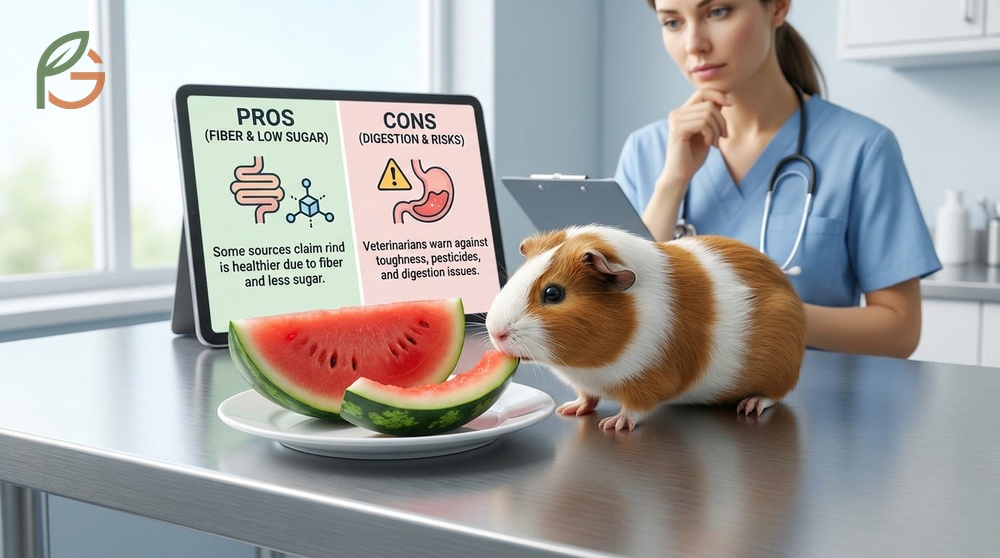
The watermelon rind debate divides guinea pig experts and veterinarians. Some sources claim the rind is actually healthier than the flesh because it contains more fiber and significantly less sugar[5]. Other veterinary professionals warn against it due to toughness, pesticide concentration, and potential bacterial contamination.
Research from exotic animal veterinarians indicates that watermelon rind can be difficult for guinea pigs to digest properly. The rind’s tough texture might cause choking or intestinal blockage in smaller animals. Additionally, agricultural chemicals used during growing concentrate more heavily on the outer rind than the inner flesh.
If you choose to offer rind, use only organic watermelon and remove the hard green outer layer completely. Feed only the white or light green portion closest to the pink flesh. Start with a piece no larger than half a teaspoon and observe your guinea pig’s reaction for 48 hours.
This table compares nutritional content and safety considerations between watermelon flesh and rind for guinea pigs, with expert recommendations.
| Component | Pink Flesh | White/Green Rind | Recommendation |
|---|---|---|---|
| Sugar Content | High (6.2g per 100g)[3] | Lower (minimal sugar) | Rind has advantage here |
| Fiber Content | Low (0.4g per 100g) | Higher (better for digestion) | Rind provides more fiber |
| Digestibility | Easy to chew and digest | Tough texture, harder to break down | Flesh is safer |
| Pesticide Risk | Lower (inside fruit) | Higher (outer surface exposure) | Flesh is safer unless organic |
| Choking Hazard | Minimal when cut properly | Higher due to toughness | Flesh is safer |
The safest approach is to stick with the pink flesh and avoid the rind entirely, especially if you’re unsure about the watermelon’s growing conditions. If your guinea pig accidentally eats a small piece of rind, watch for signs of digestive distress but don’t panic—one tiny exposure rarely causes serious problems.
- Only use organic watermelon to minimize pesticide exposure on the rind
- Remove the hard dark green outer layer completely before offering
- Feed only the soft white or light green portion closest to the flesh
- Start with a piece smaller than your pinky fingernail
- Watch for choking, reduced appetite, or abnormal droppings for 48 hours
- If your guinea pig shows any negative reaction, discontinue rind immediately
How Often Can Guinea Pigs Eat Watermelon
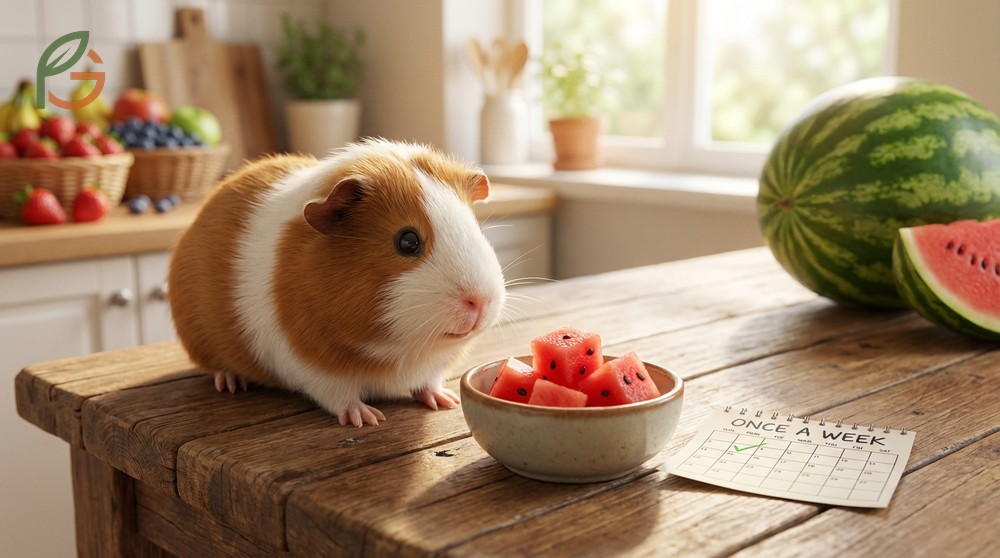
Current veterinary guidance recommends feeding watermelon no more than once or twice per week[1]. This frequency prevents sugar overload while still letting your guinea pig enjoy the treat occasionally. Some conservative veterinarians suggest once weekly, especially for guinea pigs with weight issues or diabetes risk factors.
The “once weekly” rule works well for most healthy adult guinea pigs. Space out fruit treats so you’re not giving watermelon, strawberries, and apples all in the same week. Rotate different fruits to provide variety without exceeding the 5% treat guideline.
If your guinea pig has experienced digestive problems in the past, limit watermelon to twice monthly instead. Guinea pigs with chronic soft stools or sensitivity to dietary changes should stick with safer, lower-sugar vegetables like bell peppers and cucumber.
During hot summer months when hydration becomes critical, you might consider offering watermelon twice weekly rather than once. Just reduce the portion size slightly to compensate for the increased frequency. Always monitor their droppings—firm, uniform pellets indicate healthy digestion, while soft or irregularly shaped droppings signal you’re feeding too much fruit.
Seasonal adjustment: Guinea pigs don’t need more watermelon in summer just because it’s hot. Adequate drinking water and air-conditioned environments prevent heat stress more effectively than extra fruit servings.
Sugar Content for Guinea Pigs
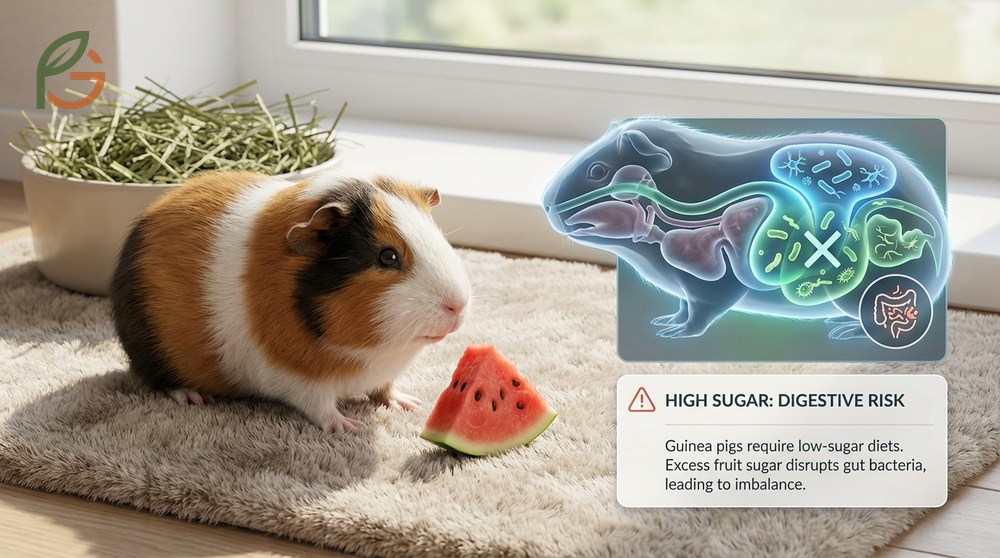
Guinea pigs evolved to eat low-sugar grasses and plants, which makes their digestive systems poorly equipped to process concentrated sugars found in fruit. Watermelon contains 6.2g of sugar per 100g[3], which might seem modest compared to other fruits, but it’s still significant for a small animal weighing under 3 pounds.
Excess sugar disrupts the beneficial bacteria in your guinea pig’s gut, leading to a condition called gastrointestinal dysbiosis. This bacterial imbalance can cause diarrhea, bloating, and in severe cases, life-threatening illness[2]. The high water content in watermelon compounds this problem by diluting digestive enzymes.
Unlike humans who can metabolize sugar relatively efficiently, guinea pigs lack the enzymes to break down large amounts quickly. This creates fermentation in their intestines, producing gas and discomfort. What seems like a harmless treat to you might cause significant internal distress for your pet.
- Gastrointestinal dysbiosis – Bacterial imbalance causing diarrhea and bloating
- Weight gain and obesity – Excess calories from sugar lead to unhealthy weight
- Diabetes risk – Chronic high sugar intake stresses insulin production
- Dental problems – Sugar contributes to tooth decay and gum disease
- Reduced hay consumption – Sweet fruit decreases appetite for essential fiber
- Digestive slowdown – Sugar fermentation causes gas and intestinal stasis
The best approach is treating all fruits as occasional indulgences rather than regular foods. If you notice your guinea pig begging for watermelon or refusing their hay after fruit treats, you’re feeding too much sugar too often.
Vitamin C for Guinea Pigs
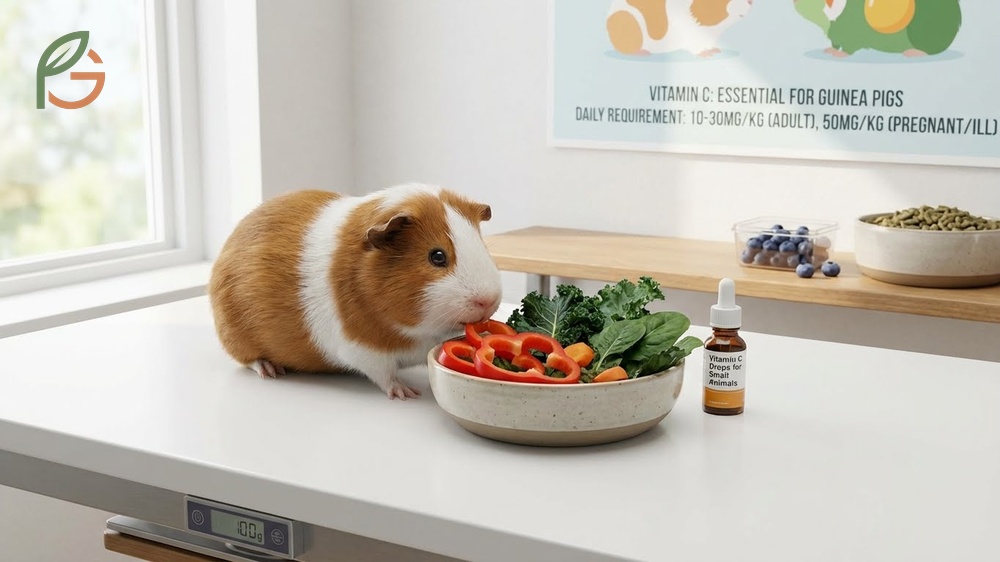
Guinea pigs can’t synthesize their own vitamin C, making them one of the few mammals that require dietary sources of this essential nutrient. Healthy adult guinea pigs need 10-20mg of vitamin C daily, while pregnant, nursing, or growing guinea pigs need 30-40mg per day[4]. Without adequate intake, they develop scurvy within 2-3 weeks.
Watermelon provides only 8.1mg of vitamin C per 100g[1], which means a small cube delivers roughly 1-2mg at most. This represents just 5-10% of their daily requirement, making watermelon an inadequate primary source of vitamin C despite being marketed as “nutritious.”
Better vitamin C sources include bell peppers (120-190mg per 100g), kale (80-120mg per 100g), and parsley (130mg per 100g). These vegetables provide 6-15 times more vitamin C than watermelon without the problematic sugar content. Guinea pig pellets should also be fortified with stabilized vitamin C, though this degrades quickly after the bag is opened.
Vitamin C deficiency causes lethargy, rough coat, joint pain, bleeding gums, and reluctance to eat. If you’re relying on watermelon to meet your guinea pig’s vitamin C needs, they’re almost certainly not getting enough. Structure their diet around vitamin C-rich vegetables and supplement with quality pellets, not fruit.
Critical reminder: Never put vitamin C supplements in your guinea pig’s water bottle. Vitamin C degrades rapidly in water and creates an unpleasant taste that discourages drinking. Use food sources or give supplements directly by mouth if recommended by your vet.
Conclusion
The evidence is clear: guinea pigs can eat watermelon safely when you limit portions to 1-3 small cubes once or twice weekly. This hydrating summer fruit offers modest vitamin C and potassium benefits, but the high sugar content and potential for digestive upset mean it shouldn’t become a dietary staple. Prioritize unlimited timothy hay, vitamin C-rich vegetables like bell peppers and kale, and quality pellets instead.
Current veterinary guidance emphasizes that fruits are treats, not nutritional necessities. If you’re choosing between watermelon and a bell pepper slice, the bell pepper wins every time for nutritional value. FruitGarden combines research-based pet nutrition with practical feeding strategies to help you make informed decisions about your guinea pig’s diet—because what grows in your garden can nourish more than just your family.
Frequently Asked Questions
Can guinea pigs eat watermelon seeds?
No, you should remove all seeds before feeding watermelon to guinea pigs. While the seeds aren’t toxic, they pose choking hazards and can cause intestinal blockages. Always cut the flesh into seed-free cubes before offering it to your pet.
Is watermelon rind safe for guinea pigs?
The rind’s safety is debated among veterinarians. Some recommend it for lower sugar and higher fiber content, while others warn against its toughness and pesticide concentration. If you offer rind, use only organic watermelon, remove the hard green outer layer, and start with tiny portions to test tolerance.
How much watermelon is too much for a guinea pig?
Anything beyond 2-3 teaspoon-size cubes per week is too much for most guinea pigs. Signs of overfeeding include diarrhea, bloating, reduced hay consumption, and lethargy. If your guinea pig shows these symptoms after eating watermelon, stop offering it and consult a veterinarian if problems persist beyond 24 hours.
What fruits are safer than watermelon for guinea pigs?
Strawberries, blueberries, and apple slices (without seeds) are generally safer options because you can control portions more easily and they’re less watery. However, all fruits should be limited to once or twice weekly. Vegetables like bell peppers and cucumbers provide better hydration and nutrition without the sugar risks.
Can baby guinea pigs eat watermelon?
Baby guinea pigs under 3 weeks old shouldn’t have watermelon at all. Once they reach 3+ weeks and are eating solid foods regularly, you can offer a piece the size of a small fingernail once weekly. Wait until they’re fully mature (4+ months) before giving standard adult portions.
Does watermelon provide enough vitamin C for guinea pigs?
No, watermelon alone can’t meet a guinea pig’s vitamin C needs. With only 8.1mg per 100g, a small treat cube provides just 1-2mg, while guinea pigs need 10-20mg daily. Feed vitamin C-rich vegetables like bell peppers, kale, and parsley as primary sources, not watermelon.
What should I do if my guinea pig ate too much watermelon?
Remove all remaining watermelon immediately and monitor for diarrhea, bloating, or lethargy over the next 24-48 hours. Ensure they have unlimited access to fresh hay and water. If symptoms persist beyond 24 hours or worsen, contact an exotic animal veterinarian familiar with guinea pig care.





