
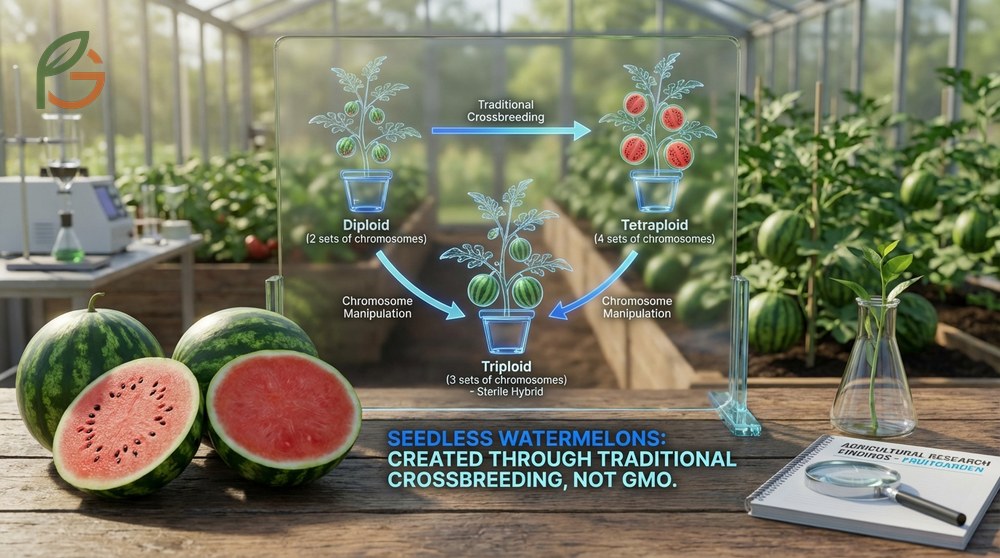
Are Seedless Watermelons GMO? No, seedless watermelons aren’t genetically modified organisms. Research shows they’re created through traditional crossbreeding techniques that produce triploid plants—sterile hybrids with three chromosome sets instead of two[1]. What often gets overlooked is that this process uses chromosome manipulation, not DNA alteration from other species. FruitGarden synthesizes current agricultural research to help you understand exactly what you’re eating and growing.
Quick Answer
- Seedless watermelons are not GMOs—they’re bred through traditional hybridization[2]
- Created by crossing diploid (2x) and tetraploid (4x) plants to produce triploid (3x) offspring[3]
- First developed in 1939 by Professor Hitoshi Kihara at Kyoto University, Japan[4]
- Both seeded and seedless varieties contain 91% water and high lycopene levels[5]
Are Seedless Watermelons GMO
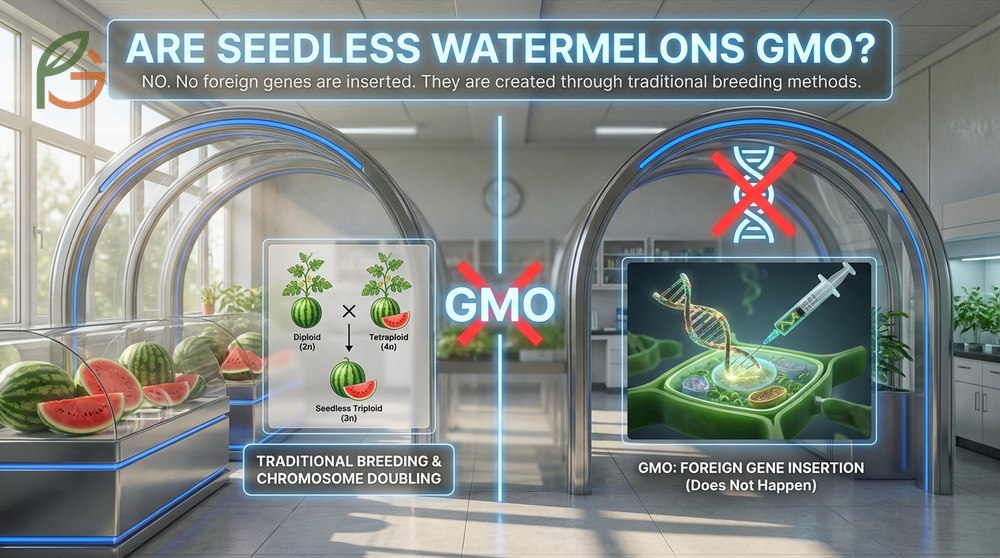
Seedless watermelons aren’t genetically modified organisms because no foreign genes are inserted into their DNA. The confusion stems from the fact that scientists do alter their chromosomes—but that’s fundamentally different from genetic engineering[6]. GMOs involve taking genes from one species and splicing them into another’s DNA, which doesn’t happen with seedless watermelons.
The process uses traditional plant breeding combined with chemical chromosome doubling. Scientists treat watermelon seeds with colchicine (a compound from autumn crocus) to double their chromosome count from two sets to four sets. When these tetraploid plants are crossed with normal diploid plants, the result is a sterile triploid—your seedless watermelon[3].
Think of it like breeding a horse with a donkey to get a mule. The mule is sterile and can’t reproduce, but it’s not a GMO—it’s a hybrid. Seedless watermelons work the same way, just with chromosome manipulation instead of cross-species breeding.
From My Experience: My cousin in Guadalajara, Mexico grows both watermelon types in his backyard garden. He tried saving seeds from his seedless variety in summer 2024—none germinated, confirming they’re truly sterile just like the research indicates.
Important Note: The Non-GMO Project has officially verified that seedless watermelons aren’t GMOs. If you see organic seedless watermelons at farmers markets, they’re legitimately organic[1].
How Seedless Watermelons Are Made
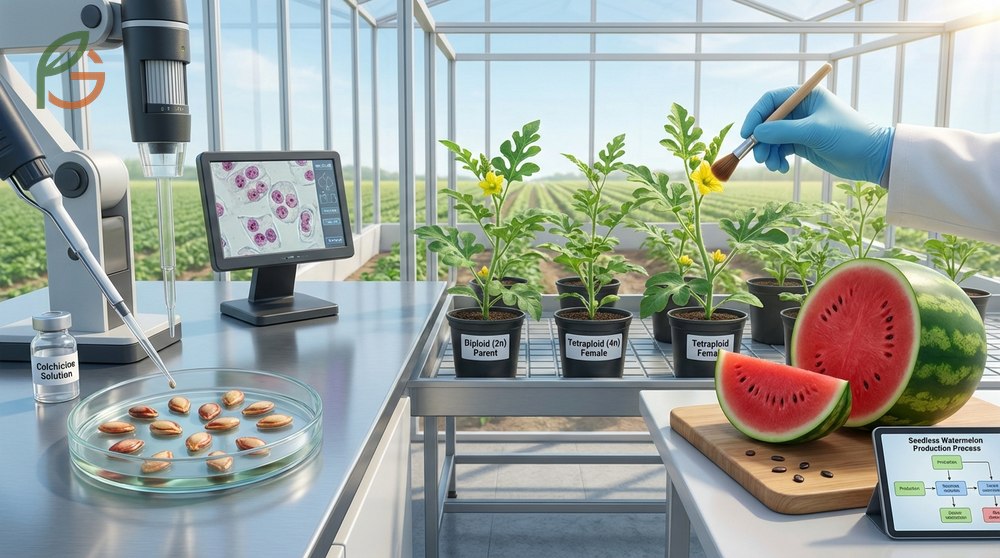
Creating seedless watermelons requires a multi-year breeding process that starts with chromosome manipulation. Breeders begin with normal diploid watermelon seeds containing two chromosome sets (22 chromosomes total). These seeds are treated with colchicine, which disrupts cell division and forces chromosome doubling[3].
The resulting tetraploid plants have four chromosome sets (44 chromosomes). Breeders then cross-pollinate these tetraploid females with pollen from diploid males. This produces triploid seeds with three chromosome sets—an odd number that makes normal cell division impossible during reproduction.
When you plant triploid seeds, they grow into healthy watermelon plants that produce fruit. However, the plants can’t complete meiosis properly because they can’t evenly divide their chromosomes. This sterility is exactly what prevents mature black seeds from forming inside the fruit.
Colchicine Treatment Process
Colchicine is an alkaloid compound originally used to treat gout in humans. In plant breeding, it acts as a mitotic inhibitor that blocks the formation of microtubules during cell division. When applied to watermelon seedlings at precise concentrations, it prevents one round of cell division while still allowing the plant to grow normally afterward.
The technique was first discovered in 1937 by researchers at Cold Spring Harbor Laboratory in New York. They used an atomizer purchased from Woolworths for twenty cents to apply the chemical to experimental plants. Finding the right dosage and timing took years of trial and error—too much kills the plant, too little has no effect.
Technical Detail: Developing stable tetraploid lines that produce enough seed for commercial production can take over a decade. Each generation must be screened to confirm it maintains four chromosome sets before advancing to the next breeding cycle[3].
Diploid vs Triploid Watermelon
Diploid watermelons are the standard seeded varieties you’ve eaten your whole life. They have two sets of chromosomes (2x), can produce viable pollen and seeds, and reproduce naturally. These plants serve as the foundation for all watermelon breeding programs.
Triploid watermelons have three chromosome sets (3x) and are completely sterile. They produce fruit but can’t create functional seeds because three chromosome sets can’t divide evenly during meiosis. The tiny white seed coats you sometimes see in “seedless” watermelons are undeveloped seed husks that never matured.
For pollination, growers must plant diploid watermelons alongside triploid plants. Bees carry pollen from the diploid males to triploid females, triggering fruit development without fertilization. This is why commercial seedless watermelon fields always contain some seeded plants scattered throughout.
Seedless vs Seeded Watermelon
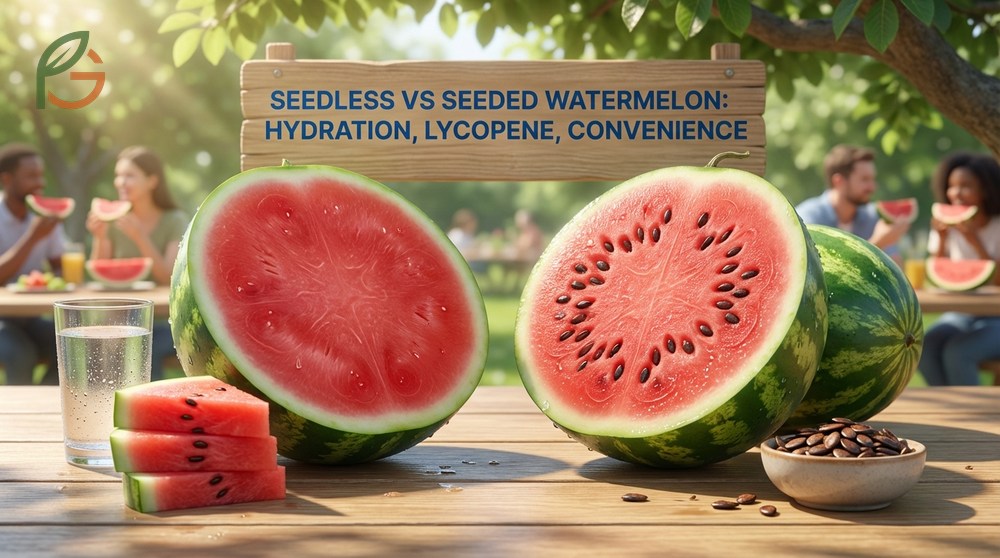
Both types offer the same core nutritional benefits. Watermelon flesh contains 91% water, making it excellent for hydration during hot summer months[5]. The red color comes from lycopene—watermelon has higher concentrations than any other fruit or vegetable, including tomatoes.
The main difference lies in convenience versus additional nutrients from seeds. Seedless varieties are easier to eat and serve at gatherings without the spitting-seeds issue. Seeded watermelons require more effort to consume but offer bonus nutrition if you eat the seeds.
Production differs significantly between the two. Seeded watermelons reproduce naturally and can be grown from saved seeds year after year. Seedless varieties require purchasing new triploid seeds annually since they can’t produce viable offspring—making them more expensive for both farmers and consumers.
Taste Difference
Contrary to popular belief, neither type is inherently sweeter than the other. Sweetness depends on genetics, growing conditions, and crop management—not seed presence[7]. Modern watermelons (both seeded and seedless) contain the CIVST1 gene mutation that dramatically increases sugar content compared to wild watermelons.
Some consumers report texture differences, with seedless varieties having firmer, more consistent flesh. This makes them better for cutting decorative shapes or preparing fruit trays. Seeded watermelons tend to be juicier with slightly softer texture, though this varies by cultivar more than seed type.
If you’re tasting differences between specific watermelons, it’s likely due to variety, ripeness, or growing conditions rather than whether seeds are present. A perfectly ripe seeded watermelon from good soil will taste amazing, just like a well-grown seedless one.
Nutritional Comparison
The flesh of both types provides identical nutritional value. You get potassium for blood pressure regulation, lycopene for antioxidant protection, and vitamins A and C. The 91% water content supports hydration without adding many calories—roughly 30 calories per 100 grams.
Seeded watermelons have one nutritional advantage: edible seeds. These black seeds contain magnesium, phosphorus, copper, zinc, B vitamins, essential fatty acids, and amino acids[5]. However, you must chew them thoroughly to access these nutrients—swallowing them whole provides minimal benefit since they pass through undigested.
You can roast watermelon seeds like pumpkin seeds or grind them into a tahini-style butter. Sprouting the seeds maximizes nutrient availability, though most people find that too labor-intensive for casual snacking. For practical purposes, the flesh nutrition matters more than seed nutrition for typical consumption.
- Lycopene (highest concentration of any fruit or vegetable)
- Potassium (supports heart health and blood pressure)
- Vitamins A and C (immune function and skin health)
- Citrulline (amino acid that converts to arginine)
- 91% water content (excellent for hydration)
History of Seedless Watermelon
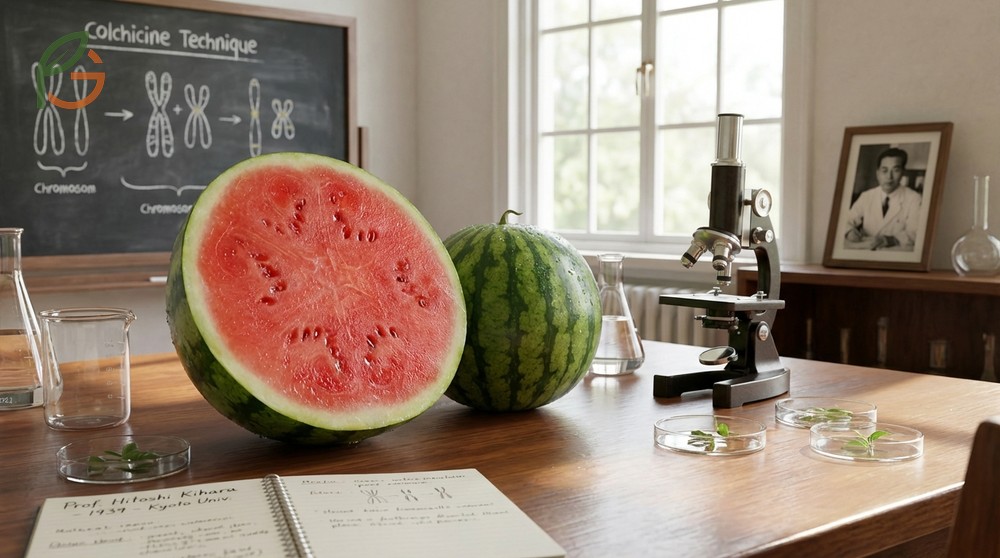
Professor Hitoshi Kihara at Kyoto University in Japan pioneered seedless watermelon development in 1939. He applied the newly discovered colchicine chromosome-doubling technique to watermelons, though perfecting the process took years of experimentation[4]. The challenge was creating tetraploid plants that were vigorous enough to produce commercially viable triploid seeds.
Commercial triploid hybrids became available in 1951, twelve years after Kihara’s initial experiments. However, they didn’t gain significant market traction until the late 20th century. Early seedless varieties had inferior flavor and texture compared to traditional watermelons, making consumers reluctant to switch.
By the 1990s and 2000s, breeding improvements made seedless watermelons competitive with seeded varieties in taste and quality. Today, approximately half of watermelons grown in California are seedless. Many consumers under 30 have never eaten a traditionally seeded watermelon, viewing the seeds as an unnecessary inconvenience rather than a normal fruit characteristic.
From My Experience: When my friend in Oaxaca, Mexico hosted a summer party in 2023, younger guests (under 25) complained about the seeded watermelons she served. They’d only ever eaten seedless types and didn’t know how to handle the seeds—reflecting how quickly consumer preferences have shifted.
- 1937: Colchicine chromosome-doubling technique discovered at Cold Spring Harbor Laboratory
- 1939: Hitoshi Kihara begins seedless watermelon experiments in Japan
- 1951: First commercial triploid hybrids become available
- 1950s-1960s: Limited adoption due to inferior flavor
- 1990s-2000s: Improved breeding makes seedless competitive with seeded varieties
- 2020s: Seedless watermelons dominate retail markets in many regions
Are Seedless Watermelons Natural
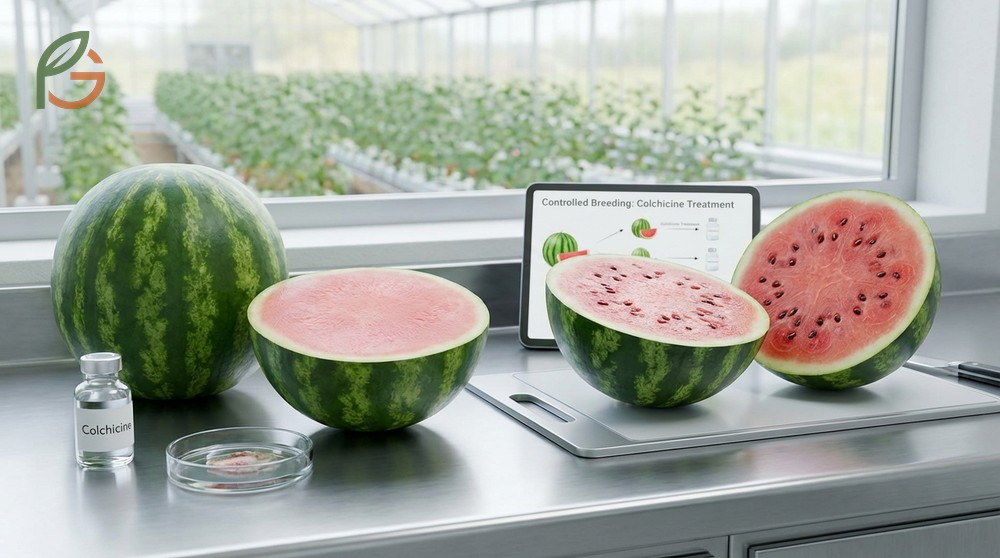
This depends on how you define “natural.” Seedless watermelons don’t occur spontaneously in nature—they require human intervention through colchicine treatment and controlled breeding. In that sense, they’re as “unnatural” as most modern agricultural crops, which have been extensively modified through selective breeding.
However, the breeding techniques used aren’t fundamentally different from traditional agriculture practiced for thousands of years. Farmers have always selected and crossed plants to enhance desired traits. Seedless watermelons simply take this concept further by using chromosome manipulation discovered in the 1930s.
The key distinction is that no genetic material from other species is introduced. The watermelon remains 100% watermelon—no fish genes, bacterial DNA, or other foreign genetic material. This is why organic certification boards and the Non-GMO Project consider seedless watermelons acceptable[1].
If seedless watermelons had to survive in the wild, they’d disappear within one generation since they can’t reproduce. This sterility makes them dependent on human cultivation—but that’s true for most domesticated crops, including seedless grapes, bananas, and many citrus varieties.
Sustainability Concern: Seedless watermelons can’t reproduce, which means farmers must buy new seeds every season instead of saving seeds from their harvest. This creates ongoing dependency on seed companies and increases production costs for growers.
- Wild watermelons are bitter, small, and full of large seeds
- Modern seeded watermelons are sweet due to centuries of selective breeding
- Seedless varieties add chromosome manipulation to traditional breeding
- No watermelon variety you buy is truly “natural” in the wild sense
- Organic seedless watermelons are certified because no transgenic modification occurs
Conclusion
The evidence is clear: seedless watermelons aren’t GMOs, despite common misconceptions. They’re created through traditional plant breeding combined with chromosome doubling using colchicine, not through genetic engineering that inserts foreign DNA. This distinction matters for consumers concerned about genetically modified foods but comfortable with conventional breeding techniques.
Both seeded and seedless varieties offer excellent nutrition and hydration benefits. Your choice between them comes down to convenience versus the ability to save seeds for future planting. FruitGarden encourages you to try both types and decide which fits your gardening goals and eating preferences—there’s no wrong answer when it comes to enjoying this refreshing summer fruit.
Frequently Asked Questions
Can You Plant Seedless Watermelon Seeds?
You can plant the triploid seeds sold by seed companies to grow seedless watermelon plants. However, you can’t save seeds from the fruit itself—those white seed coats are sterile and won’t germinate. Growers must purchase new triploid seeds each season because seedless watermelons can’t reproduce on their own.
Where Can You Buy Watermelon With Seeds?
Seeded watermelons are available at farmers markets, ethnic grocery stores, and some mainstream supermarkets that stock both varieties. Look for labels specifying “seeded” or “traditional” watermelon. Asian and Hispanic markets often carry seeded varieties since many customers prefer them for roasting and eating the seeds.
Is Seedless Watermelon Genetically Modified?
No, seedless watermelon isn’t genetically modified. It’s produced by crossing diploid and tetraploid plants through traditional breeding techniques, not by inserting genes from other organisms. The Non-GMO Project and organic certification programs both approve seedless watermelons as non-GMO products.
Who Invented Seedless Watermelon?
Professor Hitoshi Kihara at Kyoto University in Japan invented seedless watermelon in 1939. He applied the newly discovered colchicine chromosome-doubling technique to create tetraploid watermelon plants. Commercial varieties became available in 1951, though they didn’t gain widespread popularity until decades later.
Do Seedless and Seeded Watermelons Taste Different?
Neither type is inherently sweeter or more flavorful than the other. Taste depends on the specific variety, growing conditions, and ripeness rather than seed presence. Modern breeding has created delicious options in both categories, so flavor differences you notice are likely due to cultivar selection rather than whether seeds are present.
Are Seedless Watermelons Healthy?
Yes, seedless watermelons are just as healthy as seeded varieties. Both provide 91% water content, high lycopene levels, potassium, and vitamins A and C. The only nutritional difference is that seeded watermelons offer edible seeds containing magnesium, zinc, and healthy fats—but you’d need to chew them thoroughly to access these nutrients.
Why Don’t Seedless Watermelons Have Seeds?
Seedless watermelons have three sets of chromosomes (triploid) instead of the normal two sets (diploid). This odd number prevents proper cell division during reproduction, making the plants sterile. They can produce fruit but can’t create mature seeds—only small white seed coats that never fully develop.





