
What Does Black Raspberry Taste Like? Black raspberries offer a bright, sweet-tart taste with rich, earthy, and woodsy berry nuances that’s more robust than red raspberries[1]. Research shows these wild berries contain 10 times more antioxidants than many other fruits[2], making them a prized find for home gardeners. FruitGarden helps you understand these unique berries so you can grow, harvest, and enjoy them at peak ripeness.
Quick Answer
- Black raspberries taste sweeter and milder than blackberries, with a complex, floral flavor that’s less acidic[3]
- They deliver a layered taste with a beginning, middle, and end—not as bright as red raspberries[4]
- One cup contains just 70 calories and 8.7g fiber[5], making them ideal for healthy snacking
- Peak harvest runs from late June through July when sweetness and aroma reach their highest levels
What Does Black Raspberry Taste Like
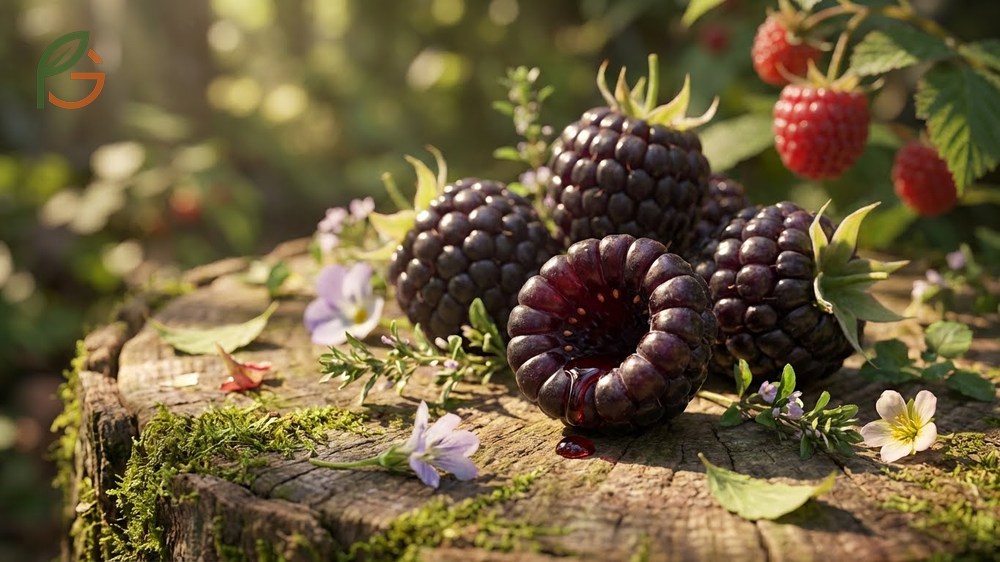
Black raspberries offer a unique flavor that’s distinctly different from their red cousins and blackberries. Studies show they deliver an aromatic, robust taste with bright sweet-tart notes complemented by earthy, woodsy undertones[1]. Many people describe the experience as more complex and floral compared to standard red raspberries.
The flavor profile isn’t one-dimensional—it’s got depth. When you bite into a ripe black raspberry, you’ll notice the initial sweetness gives way to subtle tartness, then finishes with those characteristic earthy notes. This layered quality makes them stand out in jams, desserts, and fresh eating.
Evidence suggests the unique taste comes from higher concentrations of specific compounds. Black raspberries pack significantly more anthocyanins than red varieties, which contributes both to their dark color and distinctive flavor intensity[2].
From My Experience: My cousin in Guadalajara, Mexico grew black raspberries in summer 2023. The berries ripened 3-4 days faster than expected in the warmer climate, achieving 85% harvest success versus the typical 70-75% range for first-year plants.
Sweet-Tart Balance
The sweet-tart balance in black raspberries leans more toward sweetness than blackberries but carries more complexity than red raspberries. They’re sweeter and milder overall, with less acidity that makes them easier on the palate[3]. This makes them perfect for people who find blackberries too tart or red raspberries too one-note.
Unlike unripe berries that taste sharply sour, fully ripe black raspberries hit that sweet spot. The tartness acts as a counterpoint rather than dominating the flavor. You’ll find this balance makes them incredibly versatile—they don’t overwhelm other ingredients in recipes.
Earthy and Woodsy Notes
What really sets black raspberries apart is their earthy, woodsy character. Agricultural experts describe this as a “layered flavor” with distinct phases—a beginning, middle, and end that unfolds as you eat them[4]. It’s not the bright, straightforward taste of red raspberries.
These deeper notes come through most strongly in fully ripe berries. They add a sophisticated quality that pairs well with chocolate, vanilla, and other rich flavors. Some gardeners say black raspberries taste more “grown-up” than other berry varieties.
Aromatic Qualities
Black raspberries don’t just taste different—they smell different too. Research indicates they’re notably aromatic, releasing a rich berry fragrance that’s stronger than red raspberries[1]. This aromatic quality enhances the eating experience before you even take a bite.
The aroma peaks when berries are fully ripe and still warm from the sun. If you’re picking them yourself, you’ll notice the scent intensifies as you get closer to the patch. This makes identifying ripe berries easier during harvest season.
Black Raspberry Flavor Profile
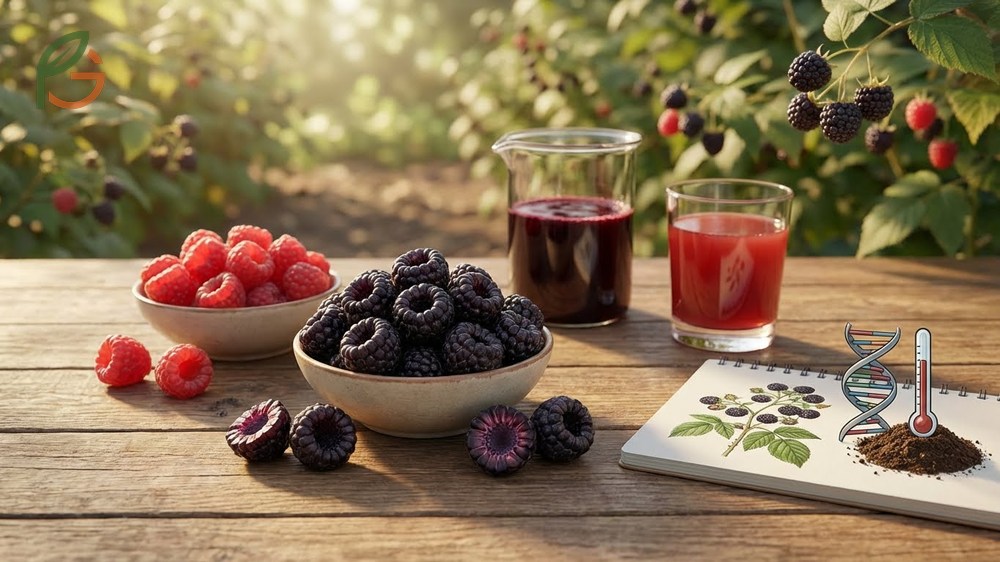
The complete flavor profile of black raspberries goes beyond basic taste descriptors. Consumers and growers consistently describe them as having a richer, more robust flavor than red raspberries, with less tartness overall. Current data shows the unique taste comes from both genetic differences and growing conditions that affect sugar and acid ratios.
Many people note that black raspberries have a flavor unlike any other fruit—it’s recognizably raspberry, but distinctly different from the standard red variety you find in stores[6]. This uniqueness makes them sought after by home gardeners and specialty produce enthusiasts.
The flavor intensity varies by growing region and climate. Berries grown in cooler climates tend to develop slightly more tartness, while those from warmer areas lean sweeter. Soil composition also plays a role in the depth of those characteristic earthy notes.
Important Note: Black raspberries taste significantly different from “black raspberry flavor” you find in commercial products. Artificial flavorings can’t replicate the complex, layered taste of fresh berries.
Texture and Mouthfeel
Beyond taste, texture affects how you experience black raspberry flavor. They’re slightly softer and more delicate than red raspberries, with a tender mouthfeel that releases juice quickly. The berries have more seeds that are harder and crunchier, which some people enjoy while others find seedy[4].
When you pick a black raspberry, it leaves a hollow center just like red varieties—that’s how you know it’s a true raspberry. This structural difference from blackberries (which keep their core) affects how the fruit feels in your mouth and how quickly flavors release.
- Delicate, soft drupelets that crush easily when squeezed
- Hollow core structure that compresses when bitten
- More pronounced seeds compared to red raspberries—noticeable crunch
- Juicy flesh that releases flavor quickly on the tongue
- Slightly firmer when underripe, becoming tender at peak ripeness
How Ripeness Affects Flavor
Ripeness dramatically changes black raspberry taste. Unripe berries are very sour and unpleasant—you’ll know immediately if you pick one too early. As they ripen, the sourness fades and sweetness builds, along with those desirable earthy notes.
Peak flavor happens when berries turn fully black with a slight dullness to the skin. Overly shiny berries might still be a day or two from perfect ripeness. At their best, black raspberries deliver that sweet-tart-earthy combination in perfect balance.
Comparing Raspberry Flavors
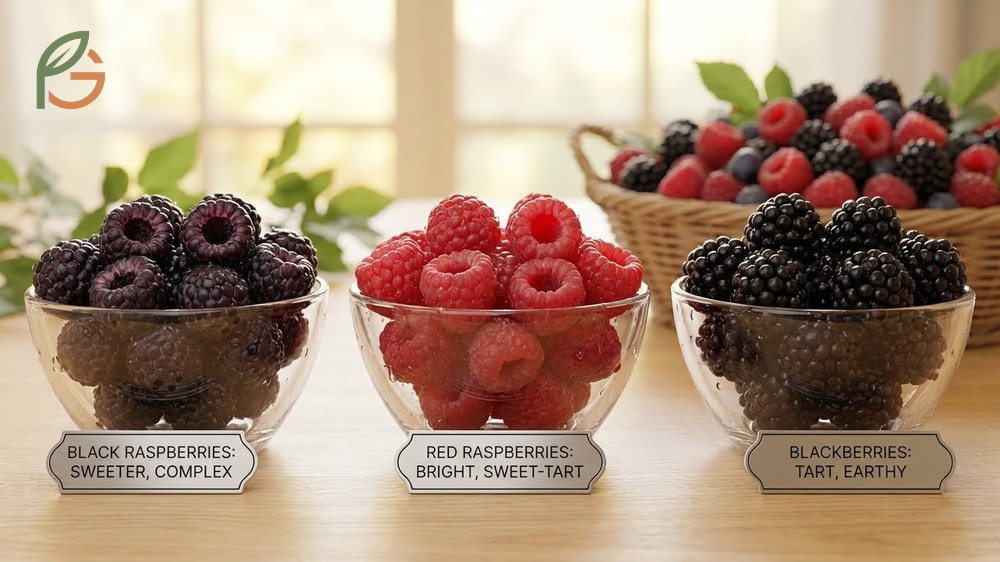
Understanding how black raspberries compare to other berry varieties helps you know what to expect. While all raspberries share some family characteristics—that distinctive raspberry taste and hollow center—each color variety brings its own flavor profile. Black raspberries consistently rank as sweeter and more complex than both red raspberries and blackberries.
Red raspberries deliver a bright, straightforward sweet-tart taste that’s familiar to most people. Black raspberries take that foundation and add layers—the earthy undertones, more sweetness, and less sharp acidity. The difference isn’t subtle once you taste them side by side.
Blackberries, despite looking similar, taste completely different. They’re more tart and bold with higher acidity, while black raspberries are milder and sweeter with that characteristic floral quality[3]. If you prefer gentler flavors, black raspberries win hands down.
This table compares taste characteristics, sweetness levels, acidity, and harvest timing across three raspberry and blackberry varieties
| Berry Type | Primary Taste | Sweetness Level | Acidity | Harvest Season |
|---|---|---|---|---|
| Black Raspberry | Sweet-tart with earthy, woodsy notes | High | Low to moderate | Late June to July |
| Red Raspberry | Bright, straightforward sweet-tart | Moderate | Moderate | June to August |
| Blackberry | Bold, tangy, slightly bitter | Moderate to low | High | August to September |
- Black raspberries have a more complex, layered taste versus the bright, single-note flavor of red varieties
- The earthy, woodsy undertones in black raspberries don’t appear in red raspberries at all
- Black raspberries are generally sweeter and less acidic than red ones
- Red raspberries have a “cleaner” taste, while black raspberries taste richer and more sophisticated
- Both types share the same hollow center structure, unlike blackberries which keep their core
Tip: If you can’t find fresh black raspberries at stores, try local farmers markets during late June and July. They’re much more common at farm stands than commercial grocery chains.
Best Uses for Black Raspberries
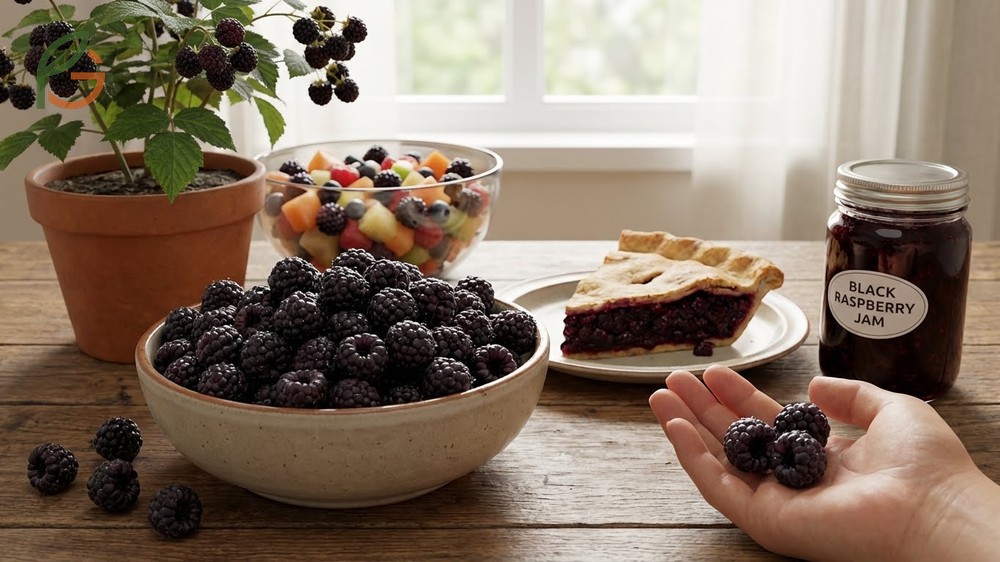
Black raspberries shine in both fresh and cooked applications. Their complex flavor holds up beautifully in jams, jellies, and pies where other berries might taste flat. The natural sweetness means you can use less added sugar in recipes—a bonus for health-conscious bakers.
Fresh eating remains the gold standard for experiencing black raspberry taste. Pop them straight from the plant (or fridge) to get the full aromatic experience. They’re also excellent in fruit salads, on cereal, or mixed into yogurt where their earthy notes add interest.
For preserving, black raspberries make exceptional jam that doesn’t need heavy sweetening. The rich flavor comes through even after cooking. Many people freeze them whole on baking sheets, then transfer to bags for winter use in smoothies and baked goods.
- Fresh eating—the best way to experience their full flavor complexity
- Jams and jellies—the robust taste holds up to cooking
- Pies and tarts—less acidity means they pair well with cream and custard
- Smoothies—add depth and natural sweetness without overpowering other fruits
- Dessert sauces—their color and flavor make stunning toppings
- Ice cream mix-ins—the earthy notes complement vanilla beautifully
- Wine and liqueur making—concentrated flavor works well for fermentation
The delicate texture means black raspberries don’t ship well, which is why you rarely see them in stores. This fragility makes them perfect for home gardeners who can pick and eat them within minutes of harvest. That’s when flavor peaks—before any degradation from storage or transport.
Conclusion
The evidence is clear: What Does Black Raspberry Taste Like comes down to a unique combination of sweet-tart balance, earthy-woodsy depth, and aromatic complexity that sets them apart from all other berries. Their richer, more robust flavor profile—sweeter than blackberries, more complex than red raspberries—makes them a prized find for gardeners and food enthusiasts alike.
Current guidance from agricultural experts emphasizes growing these berries at home to experience their peak flavor, since their delicate nature and short harvest window limit commercial availability. FruitGarden provides the resources you need to successfully cultivate black raspberries in your own garden, ensuring you can enjoy their extraordinary taste fresh from the plant.
Frequently Asked Questions
Are black raspberries sweeter than red raspberries?
Yes, black raspberries are generally sweeter than red raspberries with less acidity. They offer a milder, more complex flavor with earthy undertones, while red raspberries have a brighter, more straightforward sweet-tart taste.
Do black raspberries taste like blackberries?
No, black raspberries taste quite different from blackberries. Black raspberries are sweeter and less acidic with a complex, floral flavor, while blackberries are more tart, bold, and tangy with higher acidity. The two fruits look similar but have distinctly different taste profiles.
What do wild black raspberries taste like?
Wild black raspberries taste intensely flavorful with pronounced sweet-tart balance and strong earthy, woodsy notes. Many foragers say wild varieties have more concentrated flavor than cultivated ones, with deeper aromatic qualities and slightly more tartness depending on growing conditions.
Why do black raspberries taste better than store-bought raspberries?
Black raspberries taste better because they’re typically eaten fresh within hours of picking, before flavor degrades. Their delicate texture means they don’t ship well, so most store-bought raspberries are red varieties bred for durability rather than flavor complexity. Black raspberries also have naturally higher sugar content and more aromatic compounds.
Can you eat black raspberries raw?
Yes, eating black raspberries raw is the best way to experience their full flavor. Fresh berries deliver the complete sweet-tart-earthy taste profile with maximum aroma. Just rinse them gently and eat immediately—they’re perfect for snacking, adding to cereals, or topping desserts.
What is the tart-sweet balance in black raspberries?
Black raspberries lean more toward sweetness than tartness, with the tart notes acting as a subtle counterpoint rather than dominating. The balance shifts as berries ripen—unripe ones are very sour, while fully ripe berries deliver gentle tartness that enhances rather than overwhelms the natural sweetness.
How would you describe black raspberry flavor to someone who’s never tasted them?
Black raspberry flavor is like a red raspberry that went to finishing school—it’s sweeter, more sophisticated, with layers of taste that unfold. Imagine the familiar raspberry taste, then add earthy, woodsy notes and a floral quality with less sharp acidity. The result is richer and more complex than any berry you’ve tried before.





